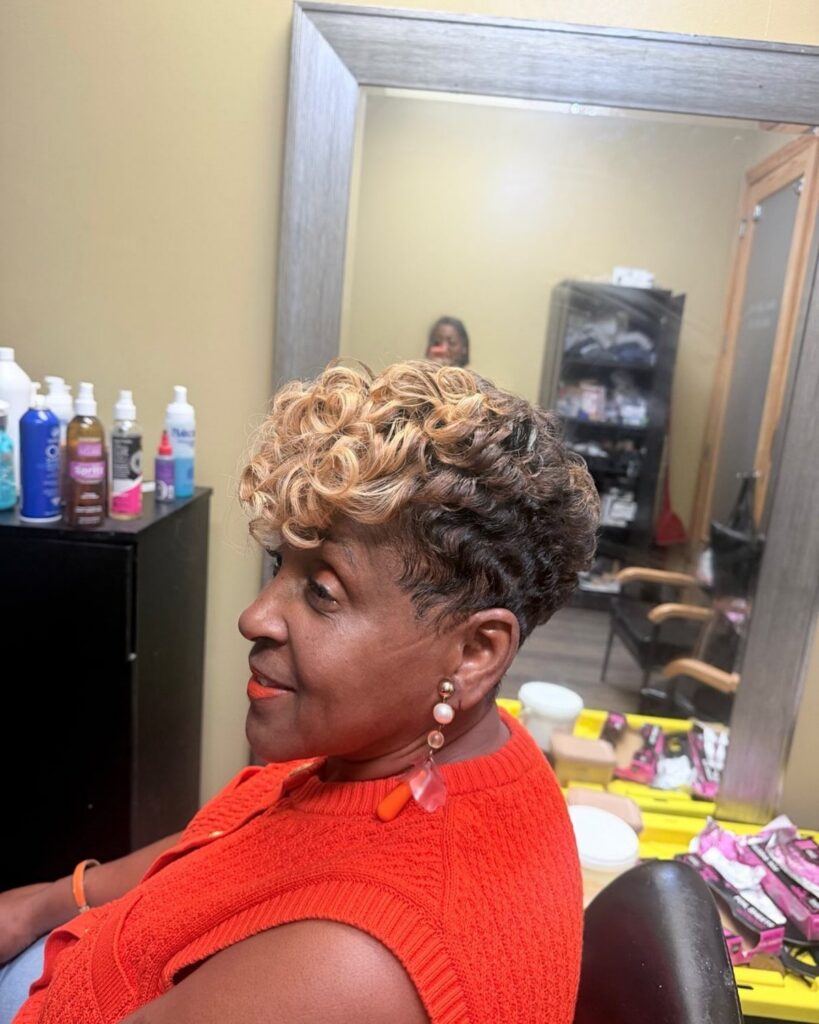
The choice depends on how much morning work you’re willing to do: textured crops and pixies need paste or mousse worked through damp hair and a few minutes with the blow-dryer for root lift, while blunt-cut bobs can air-dry or take a quick pass with a paddle brush.
1. Textured Crop
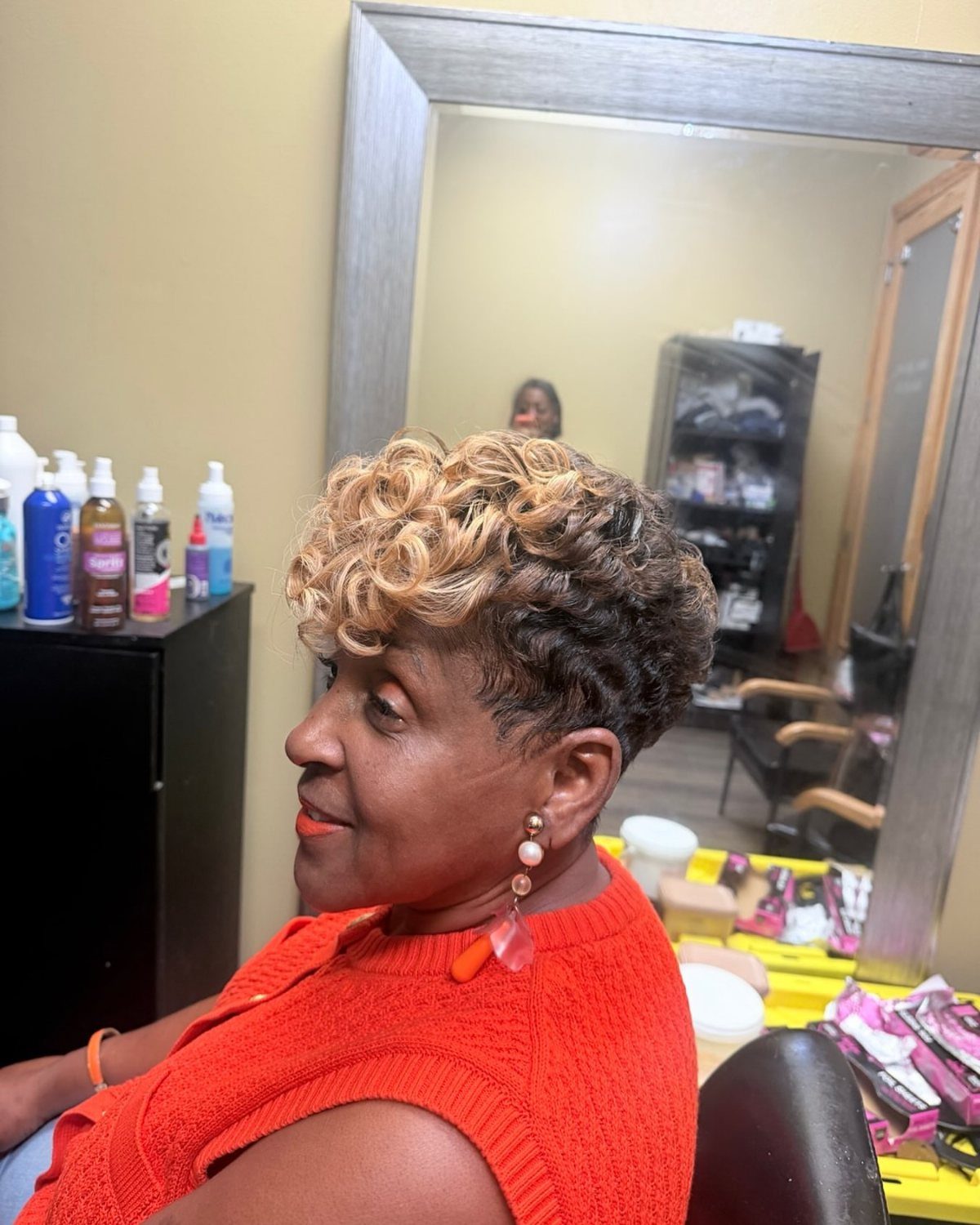
Layers of different lengths stack up on top, with the shortest pieces holding volume where thinning hair typically flattens. The sides and back stay close, so all the fullness concentrates where you see it first.
Blonde highlights lift the color and make each strand more visible, which adds to the fuller effect. Ask for point-cutting or razor texturing at the ends so the pieces separate instead of clumping together.
This cut needs almost no morning work. Rub texturizing paste between your palms and work it through damp hair, then let it air-dry or use a diffuser.
2. Textured Pixie
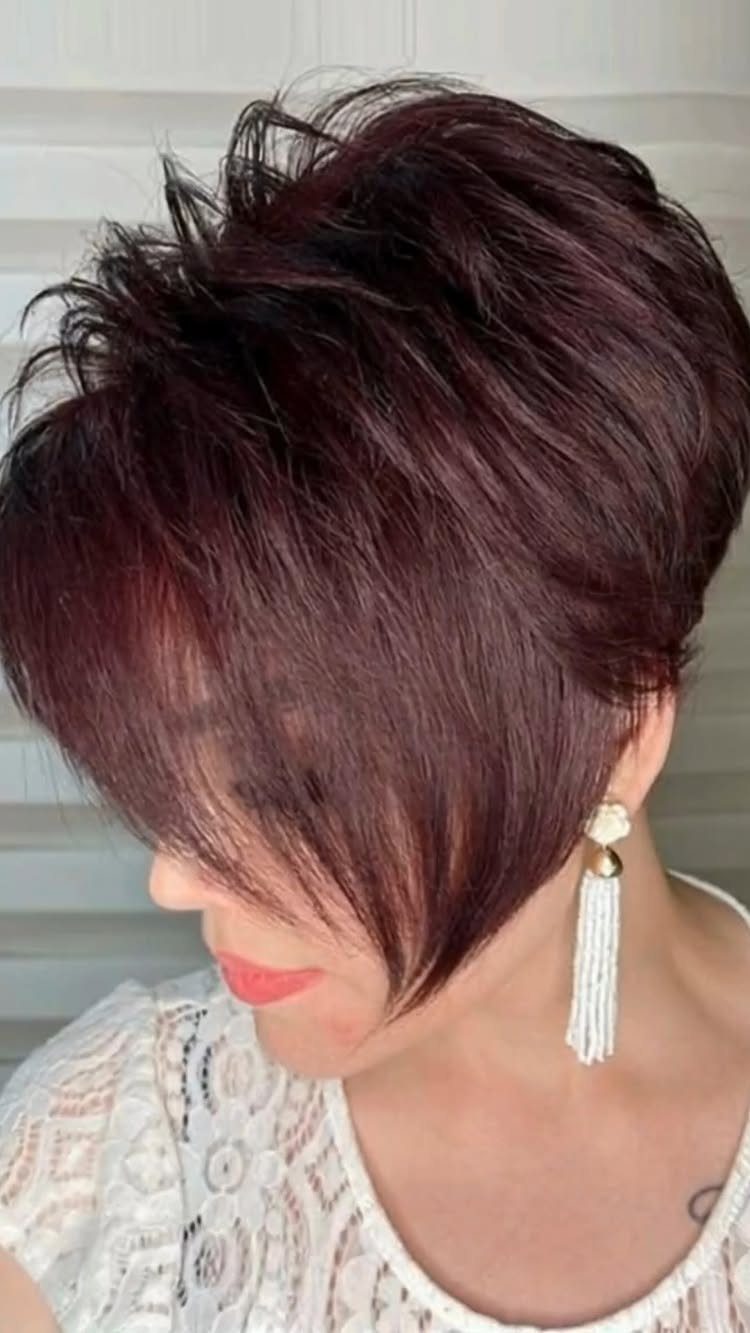
Pixie cuts can look flat when hair thins, but this one adds movement by varying the length throughout. The longest pieces sit at the crown and the front, so you get height where it counts.
Texture makes each strand more distinct, and that reads as more hair overall. A stylist can create it with point-cutting, slide-cutting or a razor, depending on your hair type.
The color here is a rich burgundy, which shows dimension better than a single flat tone.
Style it by scrunching mousse into towel-dried hair, then tousling it with your fingers as it dries.
3. Salt-and-Pepper Bob
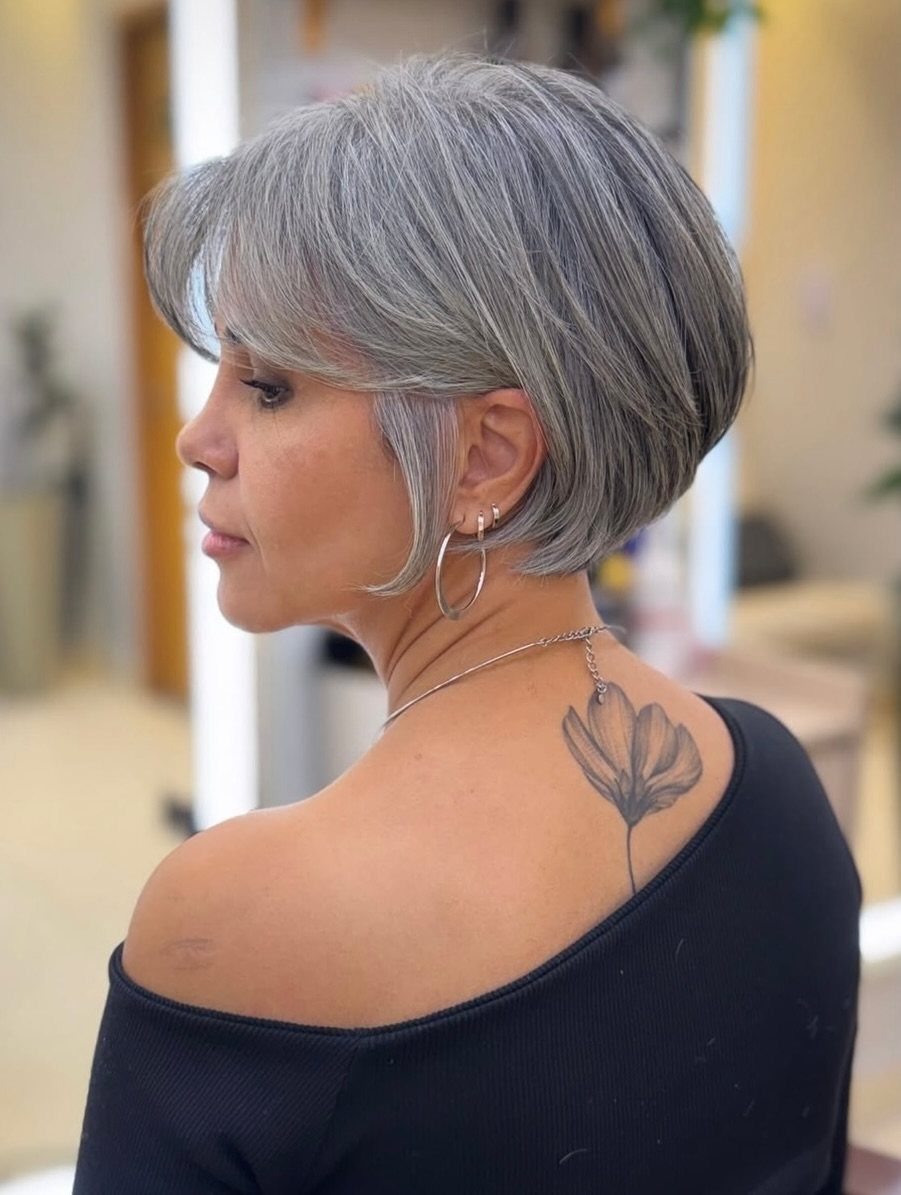
Natural gray mixed with darker strands creates depth that makes hair look thicker. A single solid color can wash you out and show more scalp, but the contrast between tones gives the cut more dimension.
Blunt ends keep the perimeter looking full instead of wispy.
If you’re growing out gray, this is the stage where it actually starts working for you instead of against you. No color appointment needed, just regular trims to keep the shape clean.
4. Short Layered Bob with Bangs
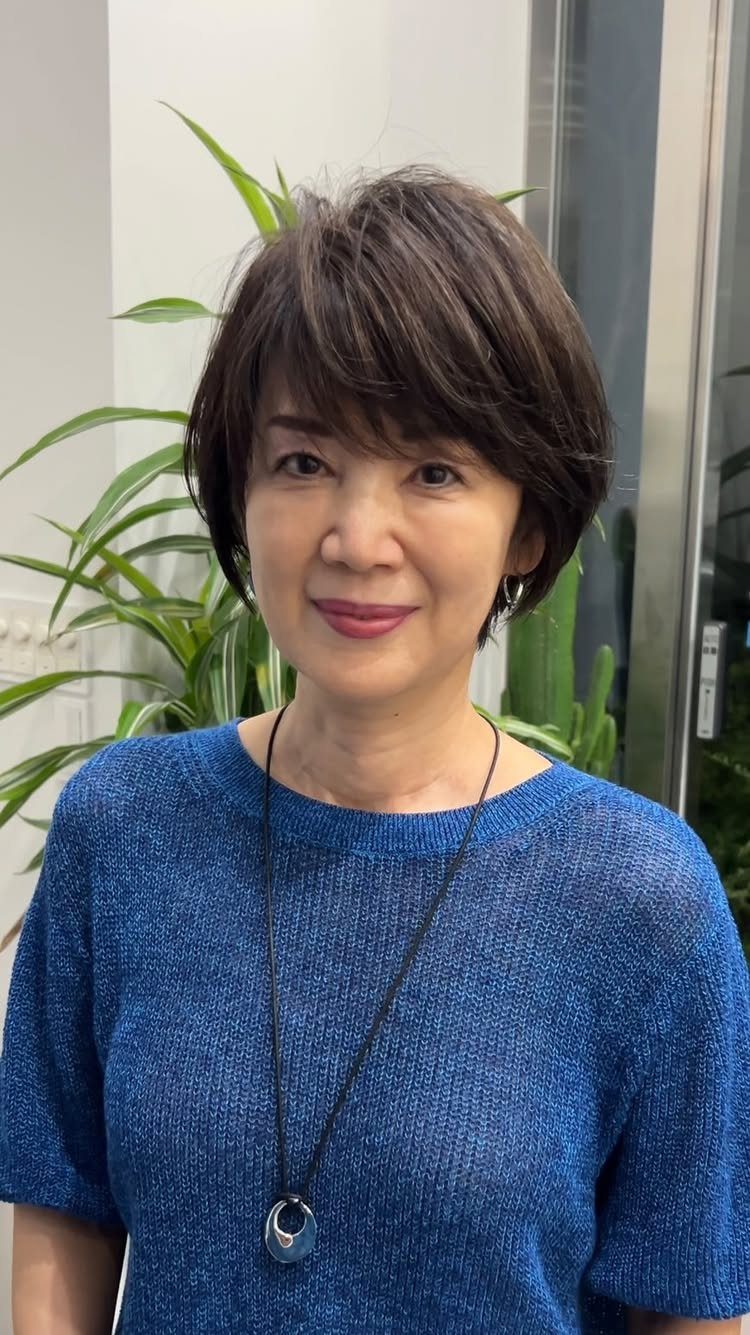
Bangs draw attention forward and cover part of the forehead, which shifts focus away from any thinning at the crown. Soft, side-swept bangs blend into the layers rather than forming a hard line across your forehead.
Layers throughout the bob add lift without removing too much weight. Fine hair can go limp with too many layers, so ask your stylist to keep them subtle and concentrated around the face and crown.
The chin-length cut here softens your jawline without enough weight to pull flat.
Blow-dry with a round brush at the roots for extra volume, or let it air-dry and run a flat iron through just the ends for a polished finish.
5. Short Layered Grey Cut
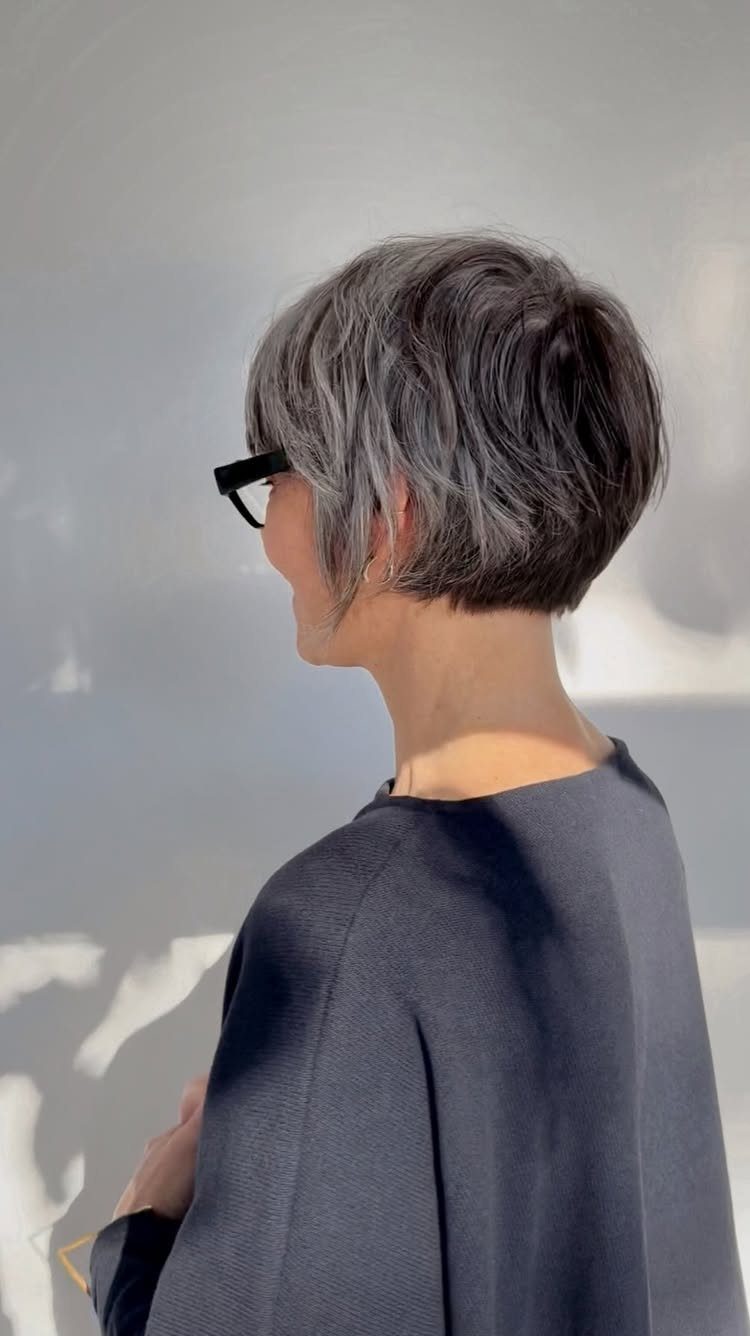
Feathered layers cut at an angle lift away from the head instead of lying flat.
Gray hair can be coarser than pigmented hair, which actually helps hold the shape of a layered cut like this. The texture works in your favor instead of needing to be tamed.
This cut sits close at the nape and builds volume through the crown and top.
Volumizing mousse worked into damp roots before blow-drying will hold the lift all day. The glasses here are a good pairing because they balance the height at the top with a horizontal line across the face.
6. Voluminous Classic Bob
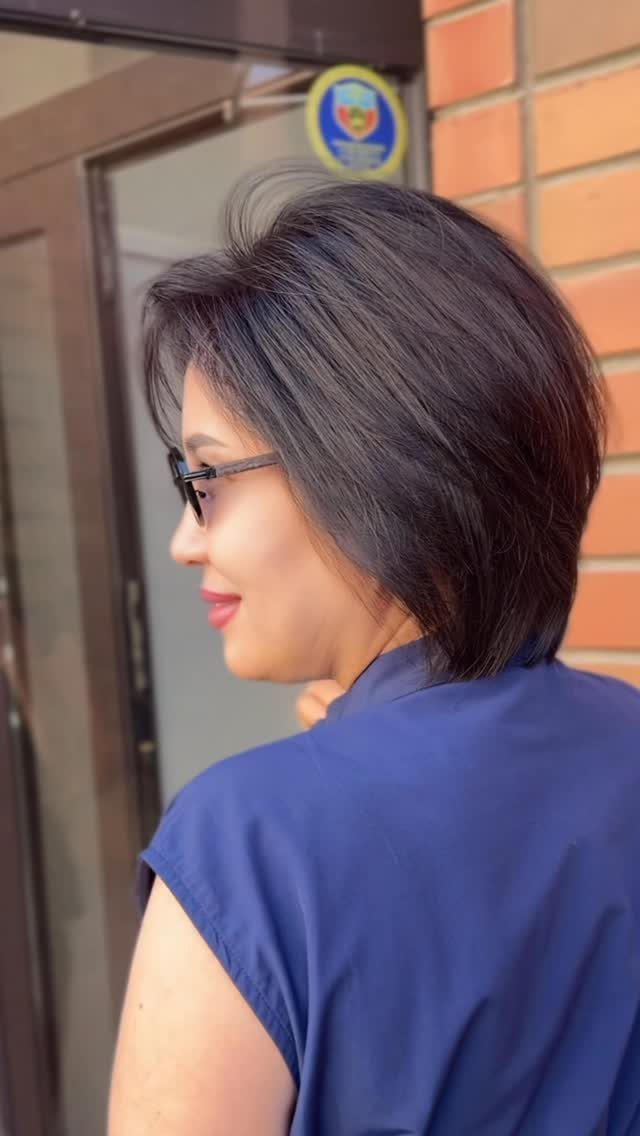
A blunt cut at one length keeps the ends dense instead of wispy. The bob here has enough weight to curve under naturally, which frames the face without needing a curling iron every morning.
Volume comes from the root lift, not from layers that thin out the ends. Blow-dry upside down or use Velcro rollers at the crown while you do your makeup, then remove them and smooth the surface with your hands.
The glasses add structure to the overall look, which keeps the voluminous hair from overwhelming your features.
7. Short Layered Cut with Undercut
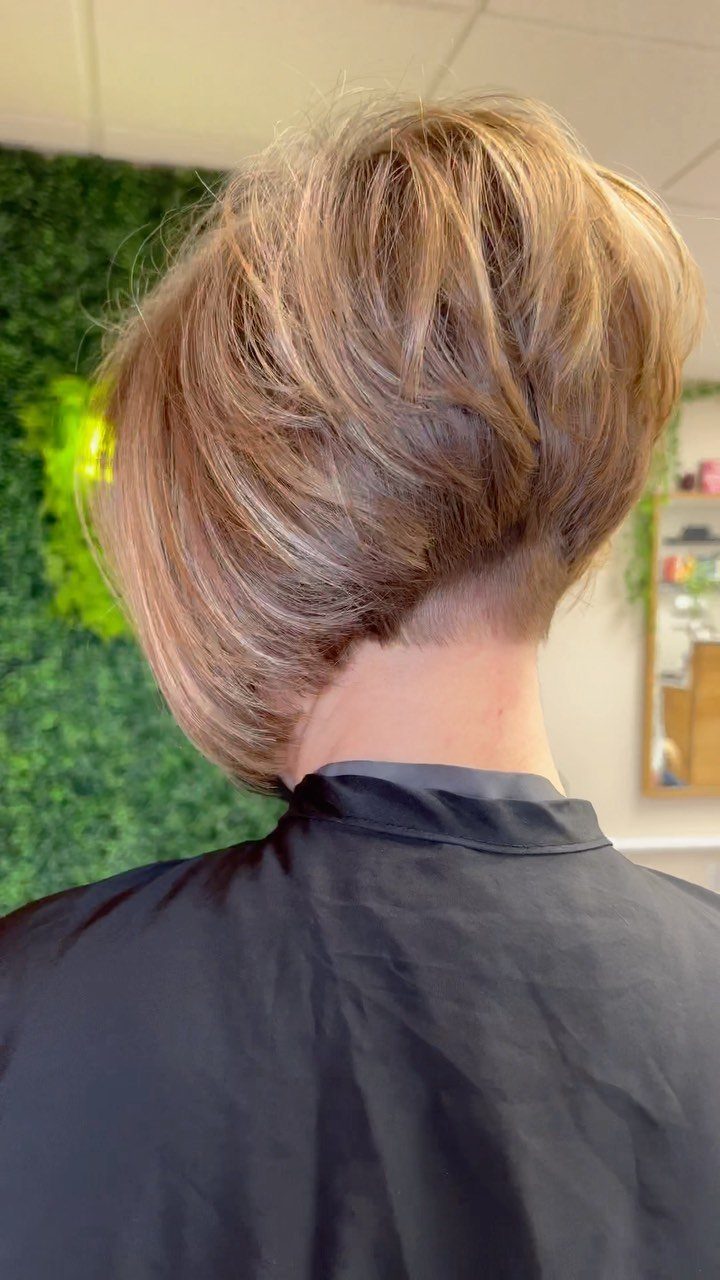
The undercut removes bulk at the nape where fine hair can look heavy or stick out awkwardly as it grows.
What’s left on top gets all the attention, and the layers there add movement without the weight underneath pulling them down.
This works best if you have enough density on top to style into texture. The shaved section grows back quickly, so plan on regular touch-ups to keep the line clean.
Blonde tones here lighten the overall look, but the undercut itself works with any color. Ask your stylist to blend the layers into the shaved line so there’s no harsh step between the two.
The lob sits somewhere between the jaw and the collarbones, and it’s known for being wonderfully low-maintenance and easy to style. While a trim every 3–4 months helps keep the shape fresh, it can also be left to grow gracefully into a mid-length cut.
8. Blunt-Cut Silver Bob
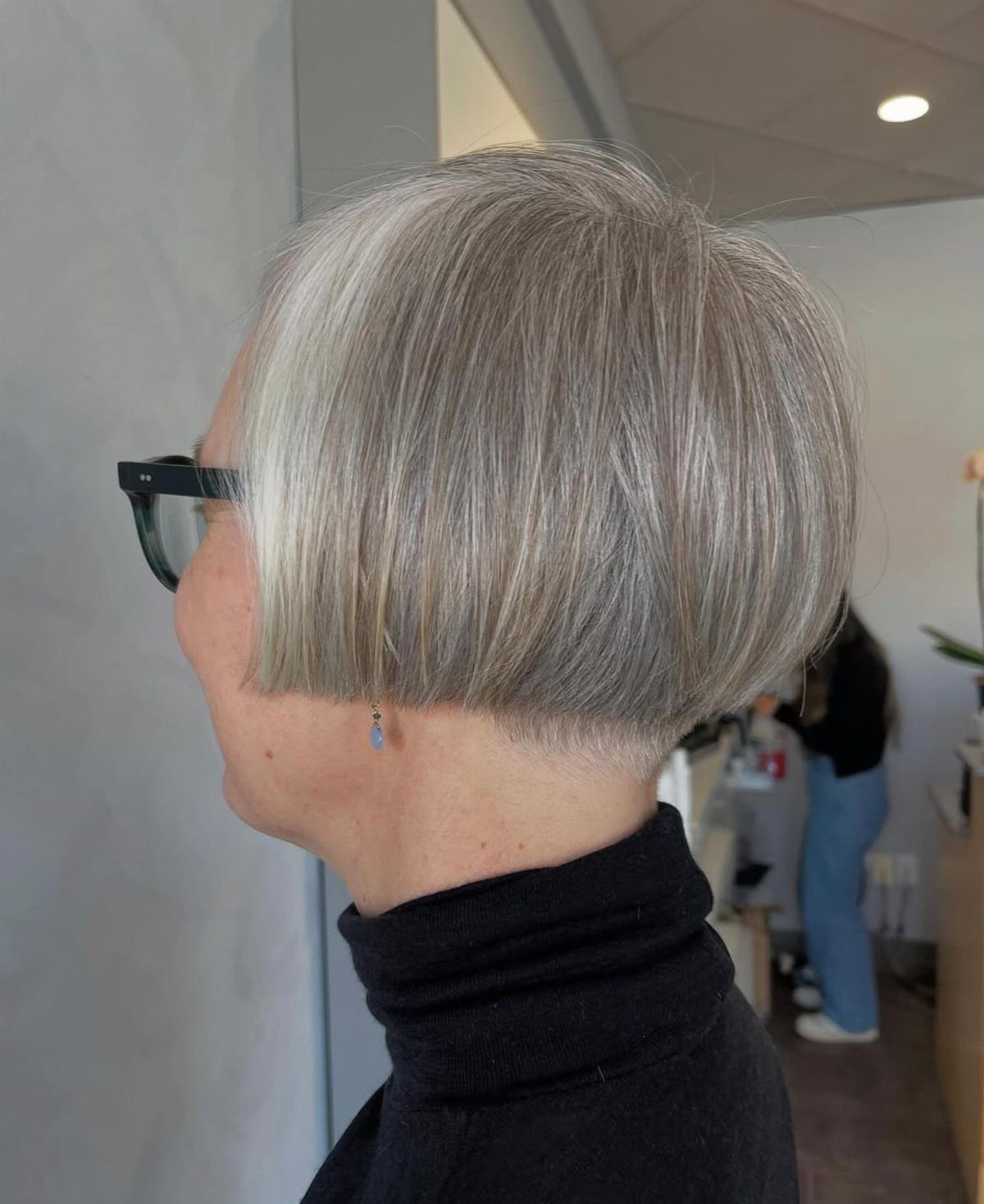
Silver hair can go thin and wispy at the tips, but cutting straight across prevents that scraggly look.
The glasses here add a horizontal line that balances the clean perimeter of the bob. If you wear glasses, this cut works in your favor because the 2 elements reinforce each other instead of competing.
Blow-dry with a paddle brush to smooth the surface, or let it air-dry if your hair holds a straight shape on its own. The lack of layers means less styling time and fewer decisions each morning.
9. Short Shaved Geometric Design Cut
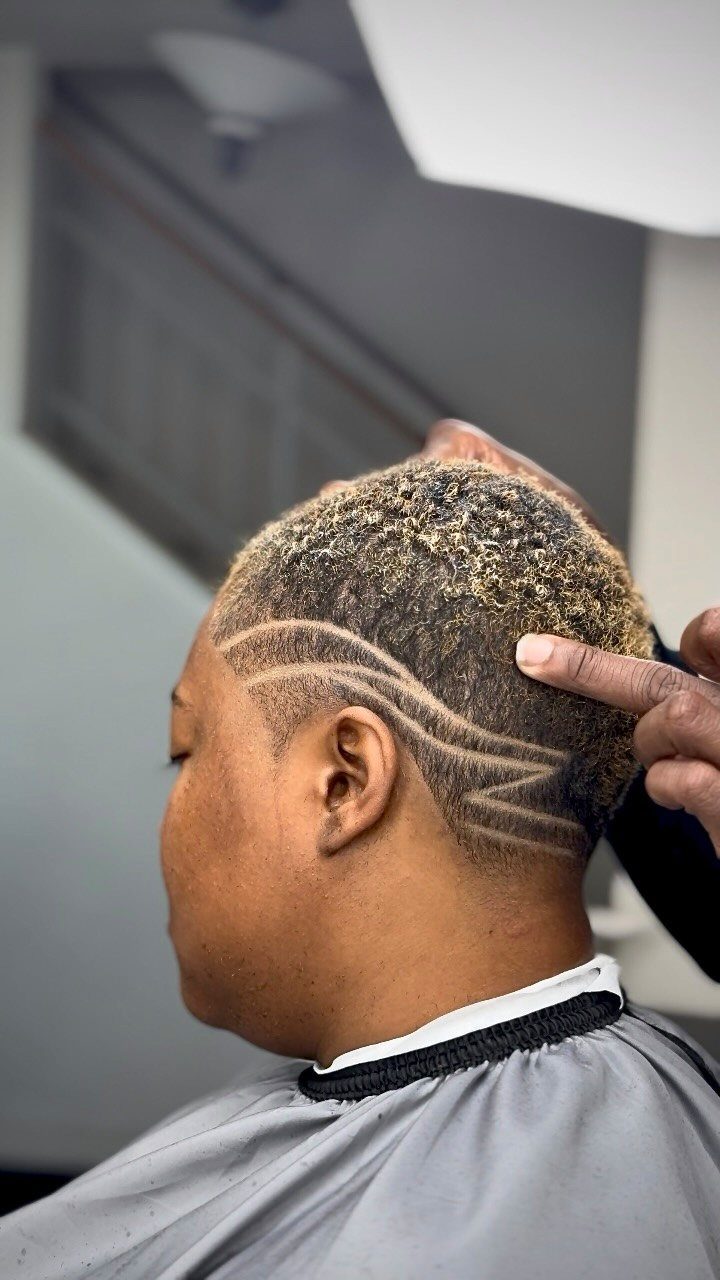
Shaved geometric lines add detail to a short curly cut without requiring product or heat styling. The pattern sits just above the ear, so it’s visible from the side but not overwhelming from the front.
Curly hair holds volume naturally, which helps balance thinning at the crown. Salt-and-pepper color adds dimension, and the shaved design gives the cut a finished, intentional look even on days when you do nothing to it.
The pattern grows out quickly, so this is a higher-maintenance choice than a simple short cut. If you don’t want to keep it up, the design can be clipped short and eventually blended back in.
Lightweight Volumizing Products
Mousse and root-lift spray work best because they add structure without the weight that flattens fine hair. Rice protein and hydrolyzed wheat protein plump each strand temporarily, while panthenol keeps hair flexible and adds shine.
Texturizing products that contain sea salt or volcanic minerals create lift and separation when worked through damp hair. Biotin and niacinamide support scalp health over time, which can improve texture as hair grows.
Skip heavy oils like coconut oil and shea butter, waxes, pomades, and non-water-soluble silicones such as dimethicone. Stick to lightweight, water-based formulas that rinse clean.
Routine Trims and Upkeep
A trim every 4 to 6 weeks keeps the shape clean and prevents frizzy ends that dull the overall look. Short cuts show imperfections more than long layers do, so regular maintenance matters.
Use a wide-tooth comb, sulfate-free shampoo, and cool water after washing to preserve protein and add shine.
Apply volumizing cream or light gel at the roots to build structure, then finish with a light mist of hairspray.
Skip silicones and the hair moves freely without that heavy, stuck-down feeling. Low heat and moisture-focused care protect fragile strands over time.
Blow-dry for Root Lift
A hot air brush works well for adding volume at the top without juggling a separate dryer and brush.
Work through one section at a time, pulling the brush up and away from the scalp as you direct heat at the roots.
A finishing spray holds the lift, just use less than you think you need.
Fine hair is fragile, and too much product can weigh it down or make it stiff. A light mist is enough to keep the volume in place.
Frequently Asked Questions
What are some good short haircuts for older women with fine hair?
Textured pixies, layered bobs, and crops with feathered layers work well because they concentrate volume at the crown and keep the perimeter from looking wispy.
Point-cutting or razor texturing separates the ends instead of letting them clump, which makes each strand more visible. Blunt cuts at one length keep the tips dense, while soft side-swept bangs shift focus forward without adding weight.
What not to do with fine, thin hair?
That means no coconut oil, shea butter, wax, pomade, or silicones like dimethicone that don’t rinse out.
These weigh hair down and make it look flat or greasy. Instead, look for rice protein, panthenol, or hydrolyzed wheat protein in lightweight, water-based products that add body without residue.
Does thinning hair look better longer or shorter?
Shorter cuts remove the weight that pulls fine hair flat and show fewer scraggly ends, so thinning hair often looks fuller at shorter lengths.
Short cuts with layers and movement keep each strand visible and hold their shape longer as they grow.
Why are short hairstyles great for thin hair over 60?
Short cuts eliminate the weight that drags fine hair flat, and light layers or texture create the illusion of fullness without thinning out the ends.
They hold their shape longer, take less time to style each morning, and concentrate volume where you see it first.
Should you get bangs with fine hair?
Side-swept bangs blend into layers and pull focus forward without sitting in a blunt line that emphasizes density. Thick, blunt bangs can overwhelm fine hair and show more scalp, so keep them wispy and start longer if you’re unsure.
Can you improve the thickness of fine hair over time?
You can’t change the diameter of each strand, but scalp care, protein-rich nutrition, and lightweight products with biotin or niacinamide can improve hair health and density over time.
If thinning worries you, ask your doctor about minoxidil, and steer clear of high heat and styles that pull tight enough to snap fine strands.