Castor oil conditions hair and may reduce breakage, but no published studies establish that it stimulates new growth in humans.
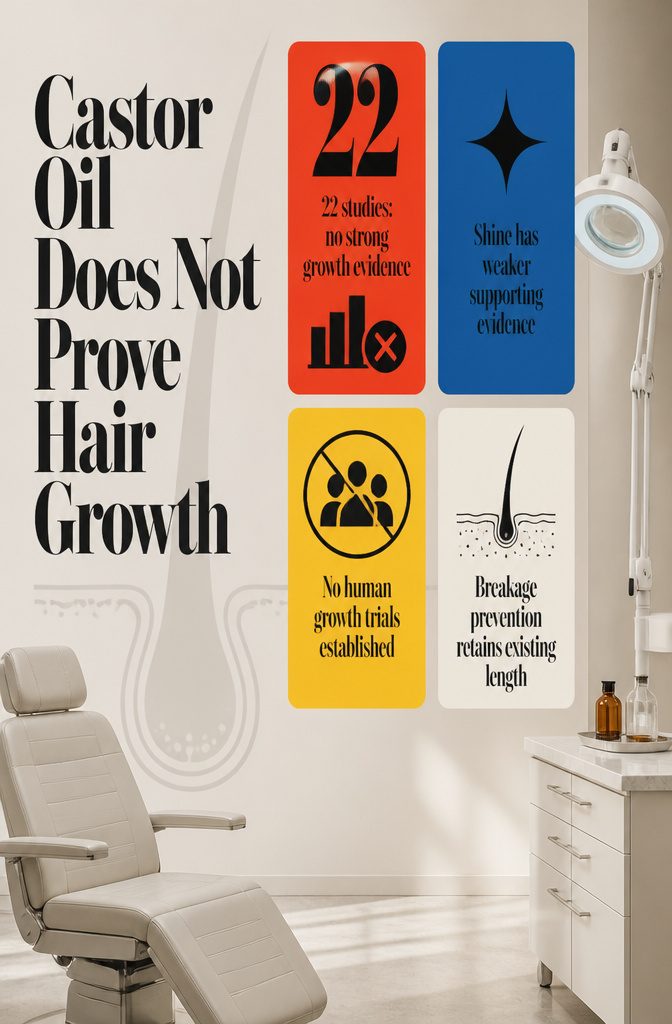
The confusion comes from conflating length retention with follicle stimulation. A 2022 systematic review of 22 studies found no strong evidence for growth, only weaker evidence that castor oil might increase shine.
1. Does Castor Oil Actually Grow Hair?
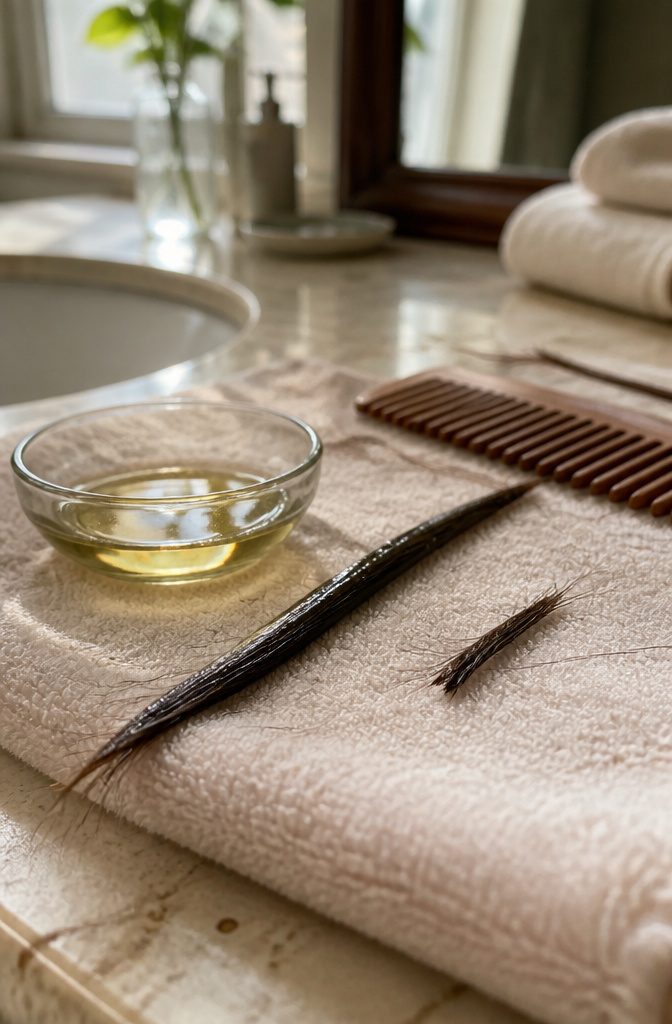
Castor oil may help reduce breakage and condition the hair, but the evidence that it stimulates human follicle growth is weak at best.
The oil’s thickness coats strands and can improve moisture retention, which gives the appearance of healthier, fuller hair. That is not the same thing as making hair grow faster from the root.
One 2022 research review looking at the benefits of oils such as coconut, castor, and argan oil for hair found weak evidence that castor oil may improve hair growth or quality.
No published studies or reports establish that castor oil benefits human hair growth. A 2008 study found that a lotion containing 35% castor oil increased the length, thickness, and softness of rabbit hair, but further research on human hair is necessary.
The distinction matters: length retention from preventing breakage is real, but that is a conditioning benefit rather than follicle stimulation.
2. What Castor Oil Can Do for Your Hair
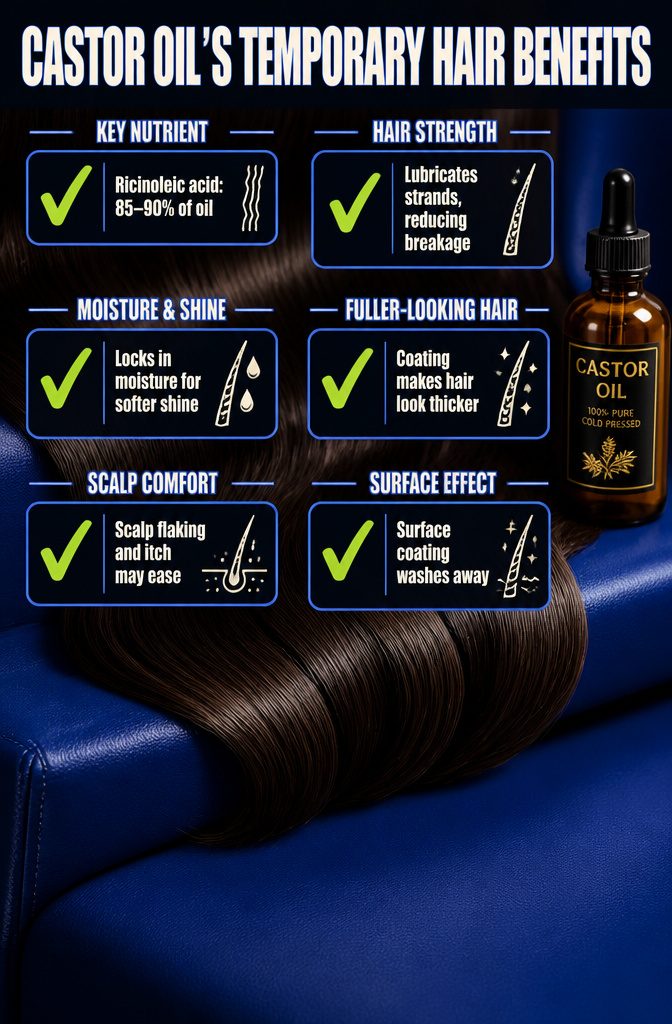
Castor oil conditions and coats the hair shaft, which is where most of its appeal comes from. Ricinoleic acid makes up 85–90 percent of the oil and carries moisturizing, anti-inflammatory, and antimicrobial properties that benefit both hair and scalp.
What sources report castor oil doing:
- Reduces breakage by lubricating the shaft and increasing flexibility at fragile points
- Locks in moisture, which helps dry or brittle hair feel softer and look shinier
- Coats each strand, making hair appear thicker without changing the actual diameter
- Soothes scalp flaking and itchiness through its anti-inflammatory effect
- Protects against damage from heat tools and environmental stress
The coating effect is real but temporary. The oil sits on the surface rather than altering the structure of the strand, so the added thickness you see washes away.
3. The Evidence for Hair Growth Is Weak
When you search for castor oil and hair growth, you’ll find thousands of posts claiming it regrows hair and reverses thinning.
A systematic review of 22 studies found no strong evidence supporting castor oil for hair growth, only weaker evidence that it might increase shine.
A separate 2022 review came to the same conclusion: weak evidence at best, and no human clinical trials establishing benefits for growth.
The confusion comes from mixing up two different things.
Hair growth happens at the follicle, where new strands form. Length retention is keeping the hair you already grew by preventing breakage at the ends.
Castor oil helps with the second part by moisturizing and strengthening strands, which means less breakage and longer hair over time. That’s not the same as stimulating new growth from dormant follicles.
Anecdotal claims are everywhere, but none of them are backed by controlled studies on human hair. If thinning or density loss is your primary concern, you need ingredients with stronger clinical backing.
4. How to Use Castor Oil on Hair and Scalp
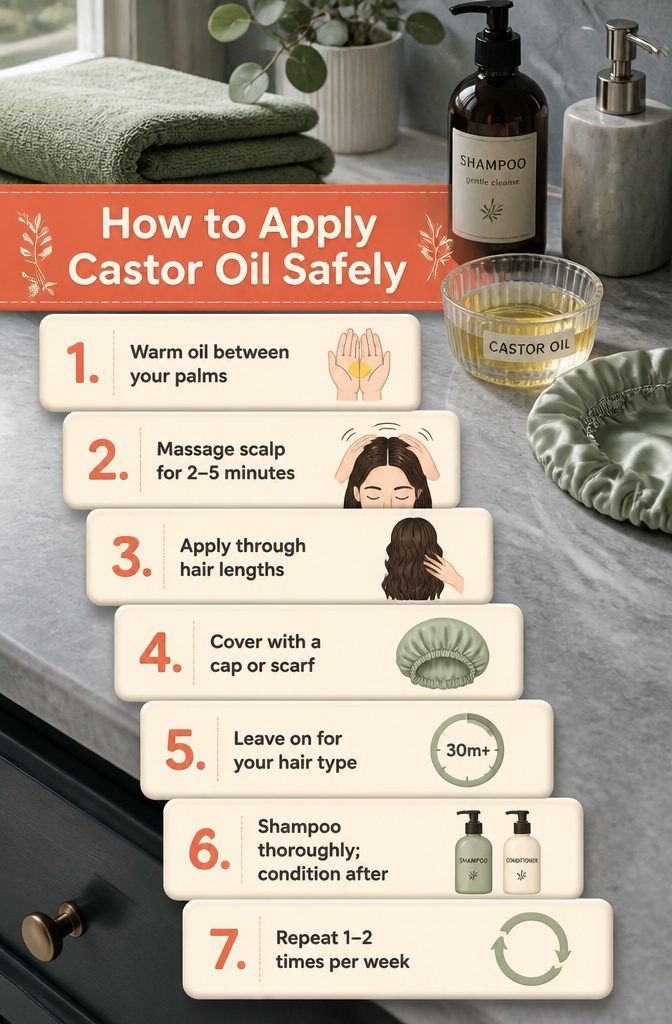
- Warm a small amount of castor oil between your palms. If the oil feels too thick, mix it with a lighter carrier oil like coconut or jojoba first.
- Massage the oil into your scalp for 2–5 minutes. Work in small circles to help the oil absorb and stimulate circulation.
- Apply oil through the length of your hair. For general conditioning, work from roots to ends. If your hair is fine, apply only to the bottom 2–3 inches to avoid weighing it down. Focus extra product on any damaged areas.
- Cover your hair with a shower cap or silk scarf. Castor oil stains fabric, so protect pillowcases if you plan to leave it on overnight.
- Leave the oil on based on your hair type. Fine or medium hair does well with 30 minutes before washing. Thick or coarse hair can handle an overnight treatment. If you have a hair steamer, 20 minutes under steam works too.
- Shampoo thoroughly to remove all residue. You may need to lather twice. Follow with conditioner.
- Repeat 1–2 times per week. More frequent use risks buildup without added benefit.
5. Risks: Irritation, Buildup and Hair Felting
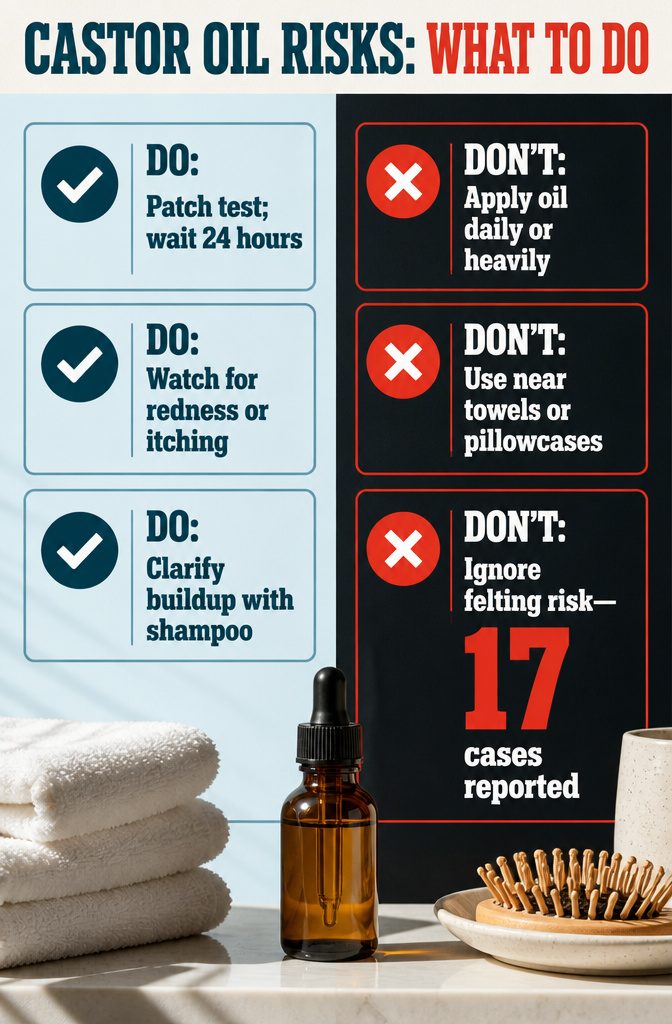
Before you apply castor oil to your whole scalp, do a patch test on a small area of skin.
Ricinoleic acid can trigger irritation or contact dermatitis, especially if you have sensitive skin prone to breakouts. Apply a small amount to the inside of your wrist or behind your ear, wait 24 hours, and watch for redness or itching.
The oil’s thickness becomes a problem when you use too much or apply it daily.
It can clog pores, sit heavy on fine hair, and leave buildup that requires a clarifying shampoo to remove. Castor oil also stains fabric, so keep it away from pillowcases and towels.
The rarest but most serious risk is acute hair felting. Only 17 cases have been reported worldwide, but one involved a 20-year-old woman whose hair matted into a hard, tangled mass after using castor oil and washing with warm water.
The high viscosity, combined with friction and long hair, caused irreversible felting that required cutting.
The condition cannot be combed out. Long, fine, or easily tangled hair carries higher risk.
6. Cold-Pressed Versus Jamaican Black Castor Oil
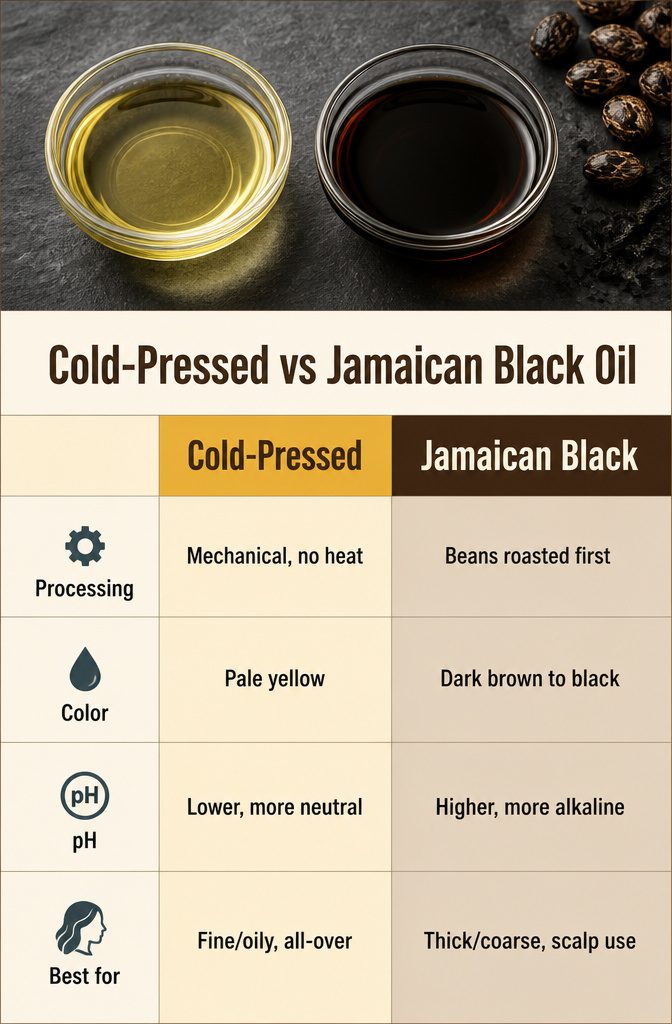
The two forms come from different processing. Cold-pressed castor oil is extracted mechanically without heat, leaving it pale yellow and closer to the natural state.
Jamaican black castor oil is made by roasting the beans before pressing, which produces a darker color, a smoky scent, and a higher pH from the ash created during roasting.
| Attribute | Cold-Pressed | Jamaican Black |
|---|---|---|
| Processing | Mechanical extraction, no heat | Beans roasted before pressing |
| Color | Pale yellow | Dark brown to black |
| pH | Lower (more neutral) | Higher (more alkaline) |
| Best for | Fine or oily hair, all-over application | Thick, coarse, dry hair; scalp use and low porosity hair |
The pH difference matters for penetration. Jamaican black’s alkaline nature is said to help open the cuticle for better absorption, which makes it better suited to low porosity hair and scalp massage.
Cold-pressed is gentler and works across all hair types. Avoid hydrogenated or refined castor oil, which is chemically extracted and stripped of much of its ricinoleic acid.
Who Should Take Extra Care
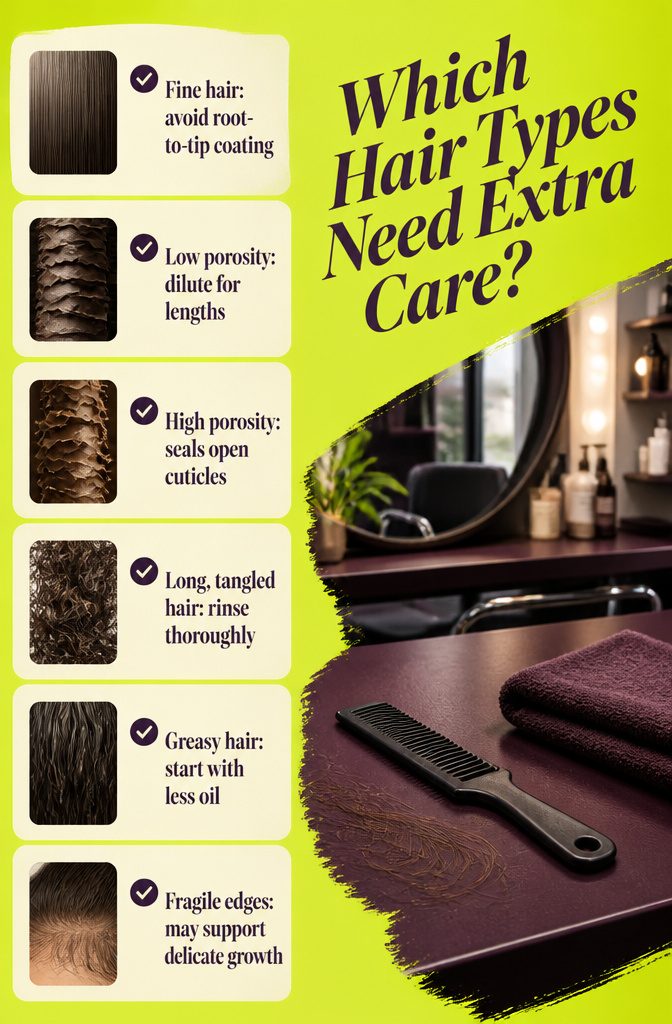
Castor oil works well for some hair types and poorly for others, so knowing where you land makes the difference between sleek ends and a greasy mess.
- Fine or thin hair: skip full-strand application. Use castor oil only on the scalp and ends, never root to tip, or it will weigh hair down and look flat.
- Low porosity hair: pure castor oil may sit on top without absorbing. Jamaican black castor oil works better on the scalp; for length, dilute with a lighter carrier oil.
- High porosity hair: castor oil is ideal here. Its weight seals the open cuticle and locks moisture in.
- Long hair that tangles easily: castor oil’s high viscosity contributed to a rare case of acute hair felting, where hair matted into a hard mass that had to be cut off. Distribute the oil carefully and rinse thoroughly.
- Greasiness: using more oil than your hair can absorb leaves heavy residue and buildup on the scalp. Start with less than you think you need.
- Fragile edges and hairline: castor oil may strengthen delicate growth around the hairline and support the scalp in those areas.
What Has Stronger Growth Evidence
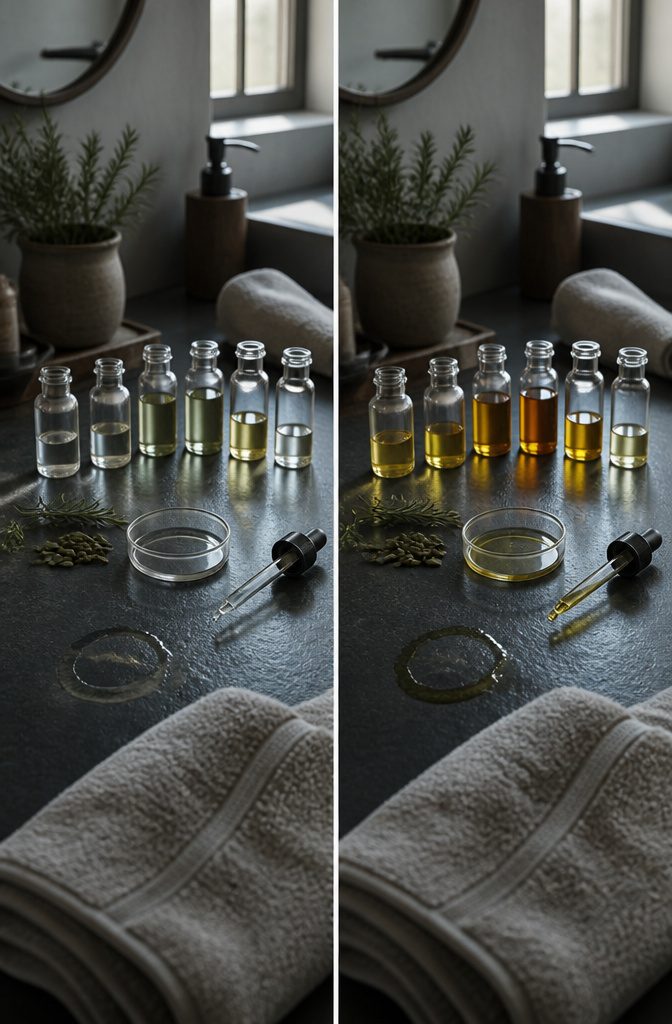
Minoxidil is the only FDA-approved topical ingredient for stimulating new hair growth, which means it has passed the clinical threshold castor oil has not. That is where the comparison becomes unflattering.
Pumpkin seed oil is one of the most promising botanicals for hair density. A clinical trial found it increased hair count over 24 weeks compared to placebo, working by managing DHT, the hormone most linked to pattern hair loss.
Saw palmetto works a similar pathway, and a systematic review found it supports density and reduces shedding with consistent use.
Rosemary oil has the strongest head-to-head data I have seen: a trial compared it directly against 2% minoxidil and found comparable improvements in hair count after six months, with fewer side effects like scalp itching.
If you do use these oils, dilute them with jojoba or coconut oil as carriers rather than applying them neat to the scalp.
Products Worth Considering
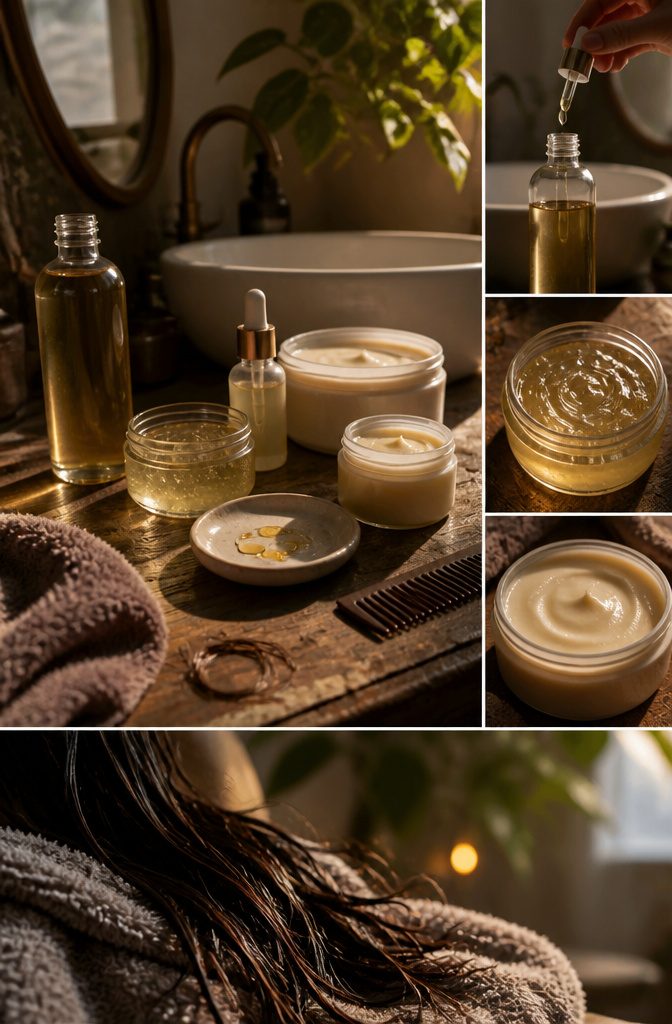
If you want to try castor oil on your hair, a handful of products package it in forms that are easier to work with than straight oil.
- BRIOGEO B. Well Organic + Cold-Pressed 100% Castor Oil gives you the pure ingredient, cold-pressed to preserve its ricinoleic acid content.
- SheaMoisture Jamaican Black Castor Oil Style & Smooth Treatment Gel wraps the oil in a gel base that helps with styling and frizz control at the same time.
- Eden BodyWorks Papaya Castor Scalp Massaging Serum blends castor oil with papaya extract for a lighter texture that spreads more easily across the scalp.
- Grow Gorgeous Repair Strengthening Hair & Scalp Mask is a rinse-out treatment that combines castor oil with other conditioning agents.
- Qhemet Biologics Amla & Olive Heavy Cream layers castor oil into a thick cream formula meant for sealing moisture into dry ends.
I find the serum and gel formats less messy than straight oil, especially if you’re applying anything close to your roots.
Frequently Asked Questions
Does castor oil thicken hair?
Castor oil can make hair look thicker by coating each strand and locking in moisture, but it does not increase the actual diameter of the hair or stimulate new growth.
The effect is temporary and washes away once you stop using it.
Is castor oil or rosemary oil better for hair growth?
Rosemary oil has stronger evidence for hair growth.
A clinical trial found it performed as well as 2% minoxidil after 6 months, while castor oil has no comparable studies for follicle stimulation. Castor oil works better for conditioning and preventing breakage.
What type of castor oil is best for hair?
Cold-pressed castor oil works well for fine or oily hair and all-over application.
Jamaican black castor oil, which is roasted before pressing, has a higher pH that helps it penetrate low porosity hair and works better for scalp massage and thick, coarse, or dry hair.
Will castor oil grow my hair faster?
No.
Castor oil does not speed up growth from the follicle. It helps you retain length by preventing breakage and keeping strands flexible, which means less hair lost at the ends over time.
Can I use castor oil every day?
No, daily use causes buildup and weighs hair down. Use castor oil 1 to 2 times per week for best results without residue.
Does castor oil work for low porosity hair?
Pure castor oil may sit on top of low porosity hair without absorbing.
Jamaican black castor oil’s alkaline nature can help open the cuticle for better penetration, or you can dilute regular castor oil with a lighter carrier oil like jojoba or coconut.
How long should I leave castor oil in my hair?
Fine or medium hair needs at least 30 minutes before washing.
Thick or coarse hair can handle an overnight treatment. Use a shower cap to protect fabric from stains.
Can castor oil cause scalp problems?
Yes, ricinoleic acid can trigger irritation or contact dermatitis, especially on sensitive skin. Do a patch test on the inside of your wrist or behind your ear 24 hours before applying it to your scalp.
Why does my hair feel greasy after using castor oil?
You applied more oil than your hair can absorb. Castor oil is thick and heavy, so start with a smaller amount and focus it on the scalp and ends rather than coating every strand.
Is castor oil good for edges?
Castor oil may strengthen fragile edges and support the scalp around the hairline. Its moisturizing and anti-inflammatory properties can help protect delicate growth in those areas.
Can we put castor oil directly on hair?
Yes, you can apply castor oil directly to your scalp and hair. Warm a small amount between your palms first, and if it feels too thick, mix it with a lighter oil like coconut or jojoba before applying.
Which is better, coconut oil or castor oil?
Castor oil is better for locking in moisture and preventing breakage because of its thickness and ricinoleic acid content. Coconut oil is lighter and absorbs more easily, making it better for general conditioning and adding shine without weighing hair down.
What are the disadvantages of castor oil on hair?
Castor oil can cause irritation or contact dermatitis, clog pores, leave heavy buildup, and stain fabric.
In rare cases, it has caused acute hair felting in people with long hair, where strands mat into a hard, tangled mass that cannot be combed out and must be cut off.