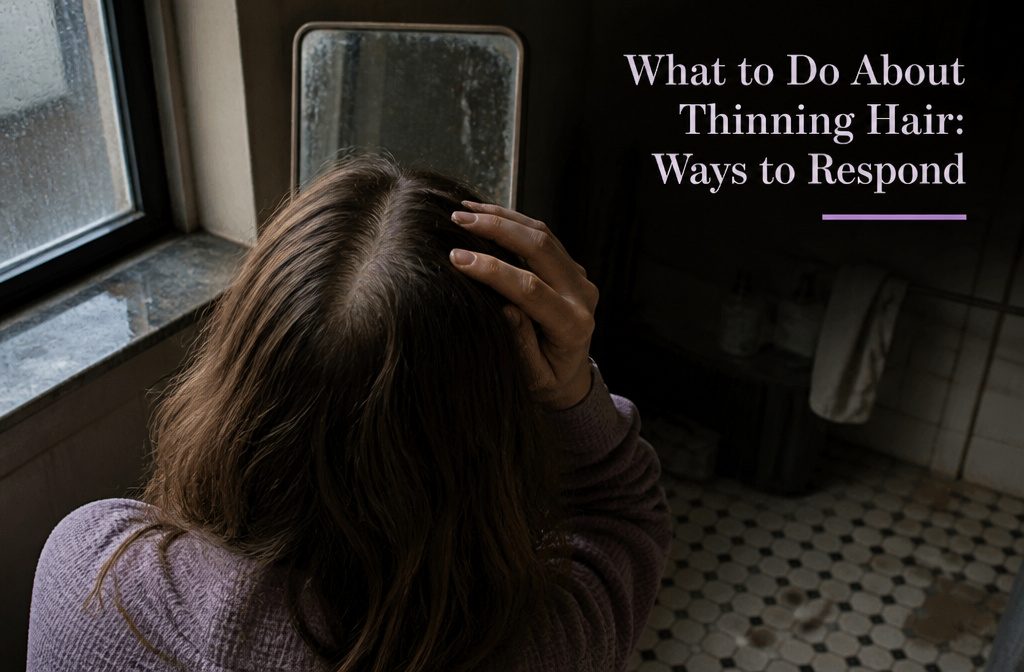
Start treatment as soon as you notice thinning, because medications like minoxidil and finasteride work better the earlier you begin, and some types of hair loss become permanent once follicles shut down completely.
The approach depends on what’s driving the loss in the first place: female-pattern hair loss affects about 30 million people in the US and follows a different timeline than telogen effluvium, which arrives suddenly after fever or surgery and usually resolves in three to six months.
1. Get the Cause Assessed Early
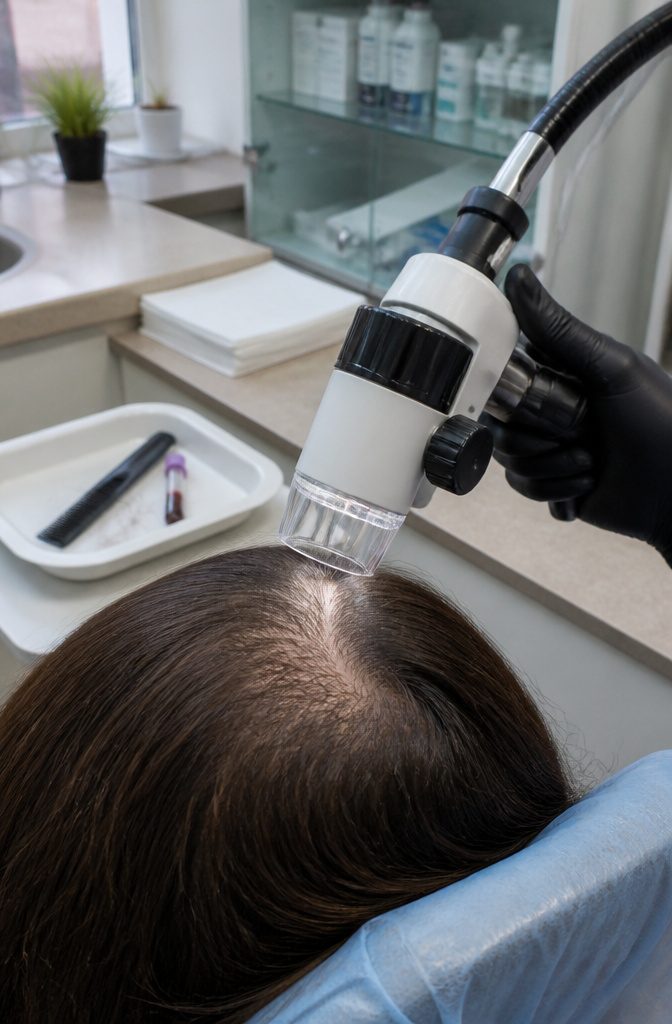
When you first notice thinning, see a doctor or dermatologist as soon as possible. Treatment works better the earlier you start, and a professional can identify what’s driving the loss in the first place.
Your primary care physician can rule out underlying conditions, review medications that might be contributing, and check for hormone changes. A board-certified dermatologist who specializes in hair loss brings the full menu of treatment options.
The exam itself is straightforward.
A dermatologist will look at your scalp under a microscope, gently pull on your hair to see how many strands come out, and may order blood tests to check vitamin and mineral levels like vitamin D, iron, zinc, and thyroid hormones.
If the loss is sudden or patchy, that’s a signal to go sooner rather than later.
Patchy loss can point to a medical condition that needs attention, and hormonal imbalances like those in hypothyroidism or PMOS can slow regrowth until they’re addressed.
2. Treat the Cause and Consider Medical Treatments
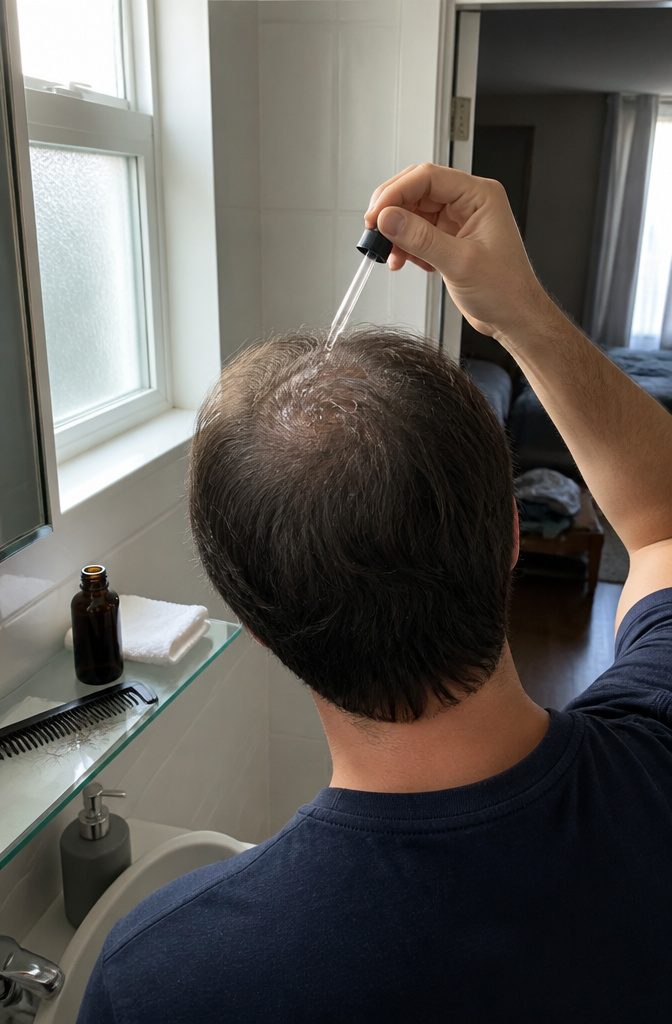
Minoxidil is the only over-the-counter medication approved by the FDA for hair loss in both women and men. It comes as Rogaine, Theroxidil, or generic forms in liquid, foam, or spray.
The two strengths are 2% and 5%. Applied directly to dry scalp twice a day where hair has started thinning, it gradually thickens hair in balding areas.
You’ll wait four to six months before seeing any change, sometimes as long as sixteen weeks. If you stop using it, the hair you kept or regained will fall out again, often faster than before.
Oral minoxidil at 2.5 to 5 mg daily is prescribed off-label for hair loss and works about as well as the topical version.
It’s an option if the scalp application irritates or if you don’t want to apply something twice a day indefinitely.
Finasteride, sold as Propecia, is a daily pill that blocks DHT, the hormone behind male pattern baldness. It slows or stops loss in nearly 90% of men.
About two-thirds regrow some hair. It’s not approved for women and unsafe during pregnancy.
Some men experience sexual side effects, though that’s uncommon. Many dermatologists prescribe both finasteride and minoxidil together because one grows hair and the other addresses why follicles shrink in the first place.
3. Protect Fragile Hair and Scalp
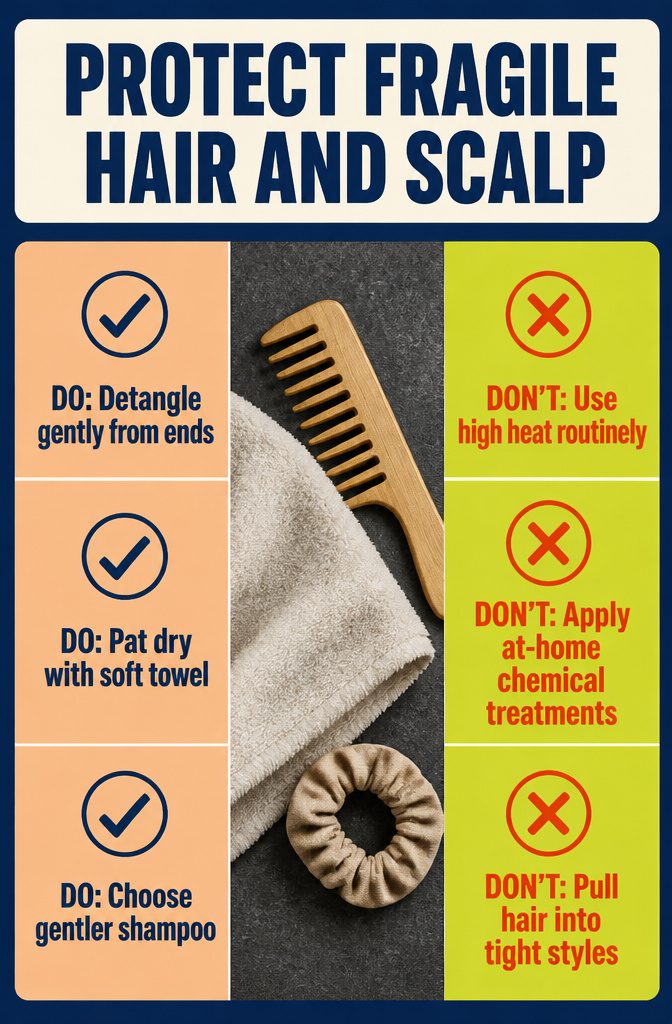
Washing thinning hair calls for a lighter hand than you might be used to. Detangle gently with a wide-tooth comb or your fingers, working from the ends up rather than dragging through from the roots.
Wet hair stretches and breaks more easily, so patting it dry with a soft towel beats rubbing it hard. Sulfate shampoos strip natural oils and leave strands brittle; gentler formulas hold moisture better and make what you have look fuller.
Heat weakens hair that’s already fragile.
Flat irons, curling wands and hot combs all belong in the drawer except for occasions that genuinely matter. If you blow-dry, use the coolest setting that still gets the job done, or let it air-dry when time allows.
The same caution applies to chemical treatments: at-home color, relaxers and perms can damage the scalp and slow regrowth, so if you want those services, find a salon where someone will examine your hair first and choose products that won’t make thinning worse.
Tight ponytails, braids and buns pull on follicles and can cause permanent loss over time, a pattern called traction alopecia. Looser styles and softer hair ties take that tension off.
4. Support Hair Health With Diet and Targeted Supplements

Hair is built from protein, and your body pulls from what you eat to keep making it. The standard recommendation sits at 0.8 grams per kilogram of body weight, but health research points to 1.2 to 2.0 grams per kilogram for better results.
Iron and zinc matter too, since they support the follicle environment where new strands form. A deficiency in any of these can slow growth or trigger shedding.
Before reaching for a supplement bottle, get tested. A blood panel shows whether you actually need extra iron, zinc or anything else, and taking more than your body requires does nothing helpful.
Too much selenium, vitamin A or vitamin E has been linked to hair loss rather than regrowth. Multivitamins can fill real gaps, but they can also overshoot.
Fermented foods like kimchi, sauerkraut and miso, along with fiber from leafy greens and broccoli, support gut health.
That matters because inflammation in the gut interferes with nutrient absorption, and inflamed follicles enter the shedding phase early. The connection is indirect but real.
5. Manage Stress and Other Lifestyle Factors

Chronic stress can push hair follicles out of their normal growth cycle.
Elevated cortisol, the stress hormone released during prolonged difficult periods, disrupts that cycle and can lead to temporary shedding known as telogen effluvium. In some cases, stress may even trigger autoimmune responses that attack the follicles directly.
The fix isn’t quick, but finding reliable ways to bring cortisol back down—whether that’s through meditation, therapy, or carving out time for something you genuinely enjoy—can stop the disruption and let the cycle reset.
Smoking also limits nutrient delivery to the follicles, and rapid weight loss throws off the balance your hair relies on.
If you’ve lost a significant amount of weight in a short window, your body prioritizes more critical functions, and hair growth takes a back seat.
Avoiding smoking and steadying your diet after any dramatic change both give follicles a better chance to recover and grow normally again.
6. Consider Procedures or Devices as Additional Options
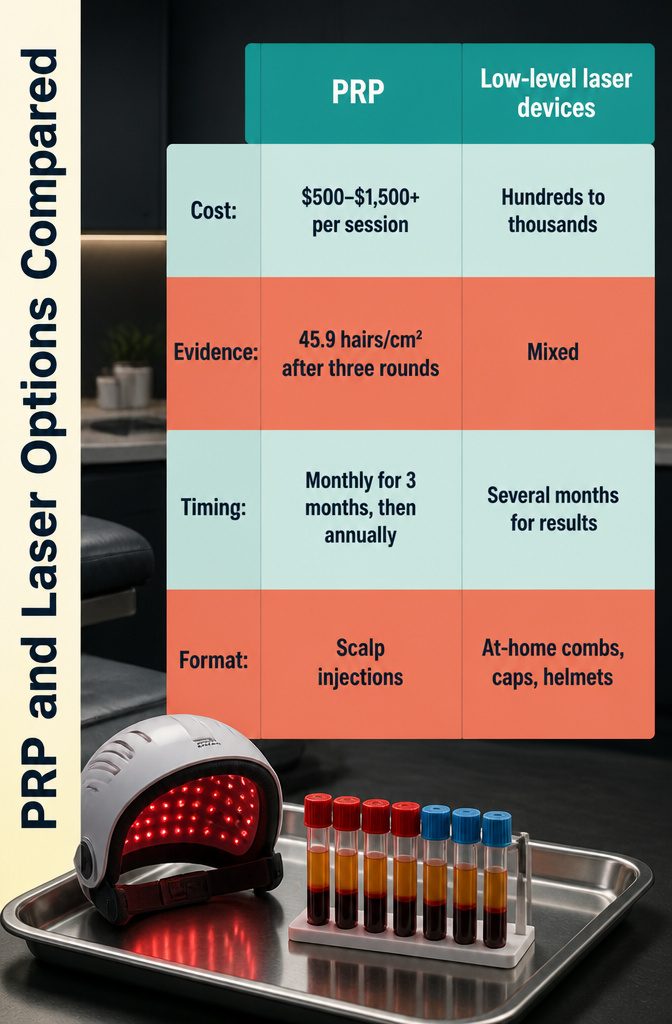
When medications and topicals aren’t enough on their own, a handful of procedures and devices can provide extra support. Platelet-rich plasma (PRP) injections use concentrated platelets from your own blood, reinjected into the scalp to stimulate growth.
One study found PRP increased density by 45.9 hairs per cm² after three rounds of treatment. Cost is the main barrier: each session runs $500 to $1,500 or more, repeated monthly for 3 months and then annually for maintenance.
For any of these treatments, the key is starting them as soon as you detect hair loss. Once hair follicles stop working, the only option is hair transplant surgery.
That timing matters because once follicles shut down completely, regrowth requires transplantation.
Low-level laser devices (combs, caps, helmets you use at home) cost hundreds to thousands of dollars and may take several months to show results, though evidence remains mixed. Microneedling can pair with PRP to improve outcomes.
Hair transplantation moves healthy follicles to thinning areas; follicular unit extraction takes about six months for roughly a thousand follicles to re-enter growth, with regrowth beginning between six and nine months and full results visible at 12 to 15 months.
These options work best as additions to medication, not replacements.
7. Use Styling or Camouflage to Improve Appearance
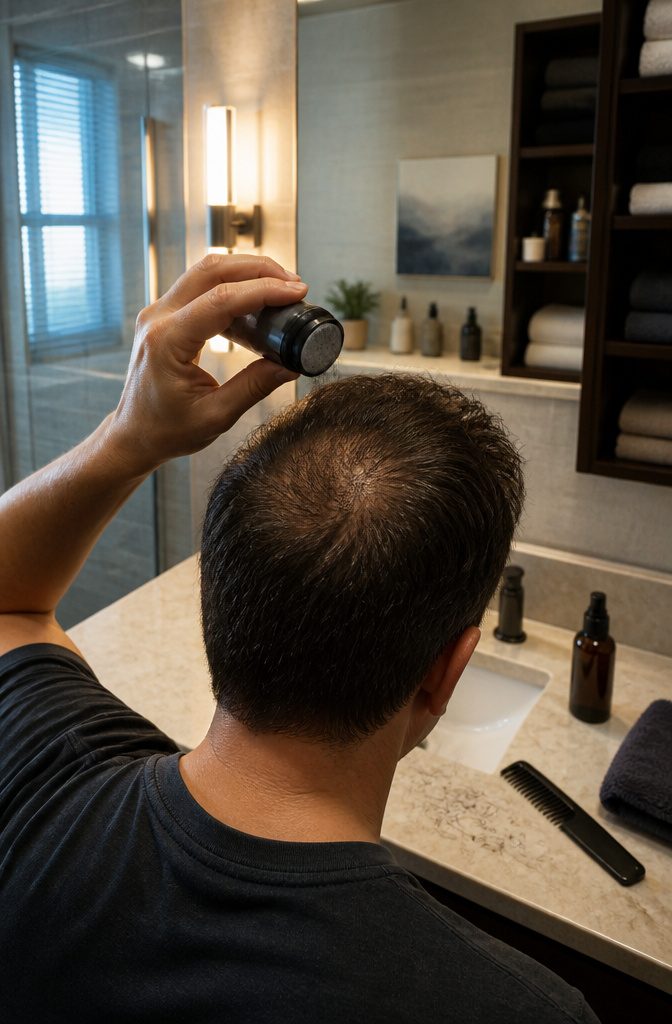
While regrowth work happens or where it stays limited, styling and camouflage can make thinning far less visible.
Volumizing shampoos that skip sulfate detergents add body without stripping the scalp, and changing your hair color brings in dye that increases strand volume.
Cutting hair shorter or adding layers shifts how light catches the scalp, and some people find that a very short cut on men or a style change on women camouflages loss better than fighting it.
Hair fibers in powder or spray form settle onto existing strands and make coverage look denser.
They work well enough for daily use, though they wash out and need reapplication. Hairpieces and wigs give full coverage but require regular maintenance, and owners on Reddit mention the cost adding up over time.
Scalp micropigmentation tattoos tiny pigment dots onto the scalp to mimic hair follicles, creating the appearance of a shaved head or thicker hair. It runs £800 to £3500 depending on the area treated and lasts three to eight years before fading.
Causes and the Importance of Identifying Them
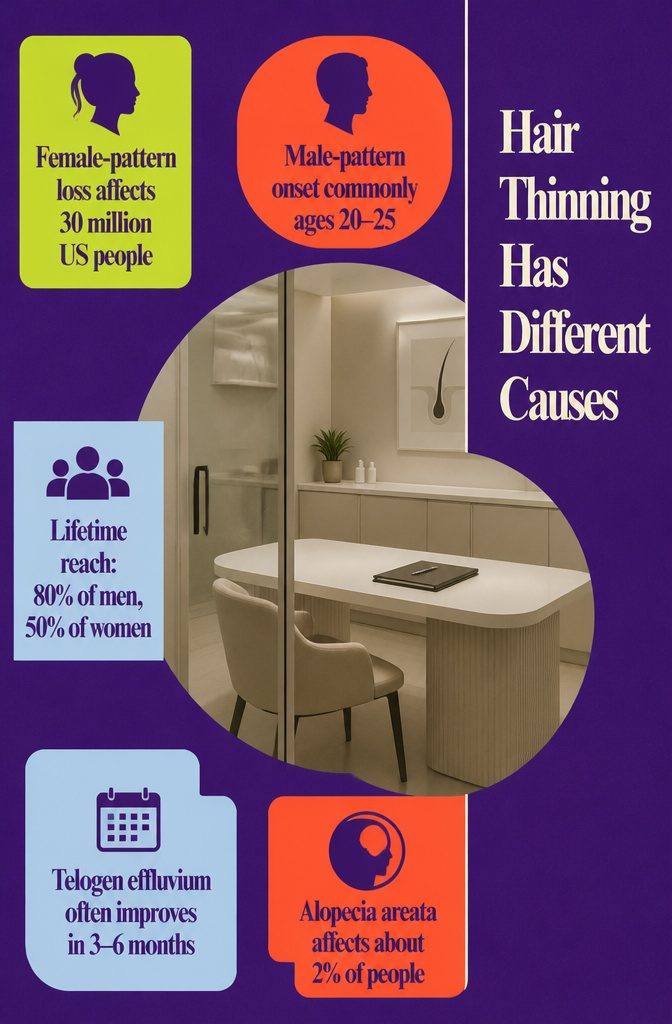
Thinning may trace back to genetics or hormones. Female-pattern hair loss affects about 30 million people in the US, and more than half of all women experience noticeable loss at some point.
Male-pattern onset commonly sits between 20 and 25, eventually reaching up to 80% of men and 50% of women over a lifetime. But pattern loss is gradual.
Stress, illness, medication, nutritional gaps or how you handle your hair can also drive thinning. Telogen effluvium arrives suddenly, often after fever, surgery or childbirth, and usually improves in three to six months.
Alopecia areata is less common, affecting about 2% of the population, and shows up as patchy loss rather than widespread thinning. The right approach depends entirely on which cause is behind the shedding you see.
Hair Growth Cycle and Types of Shedding
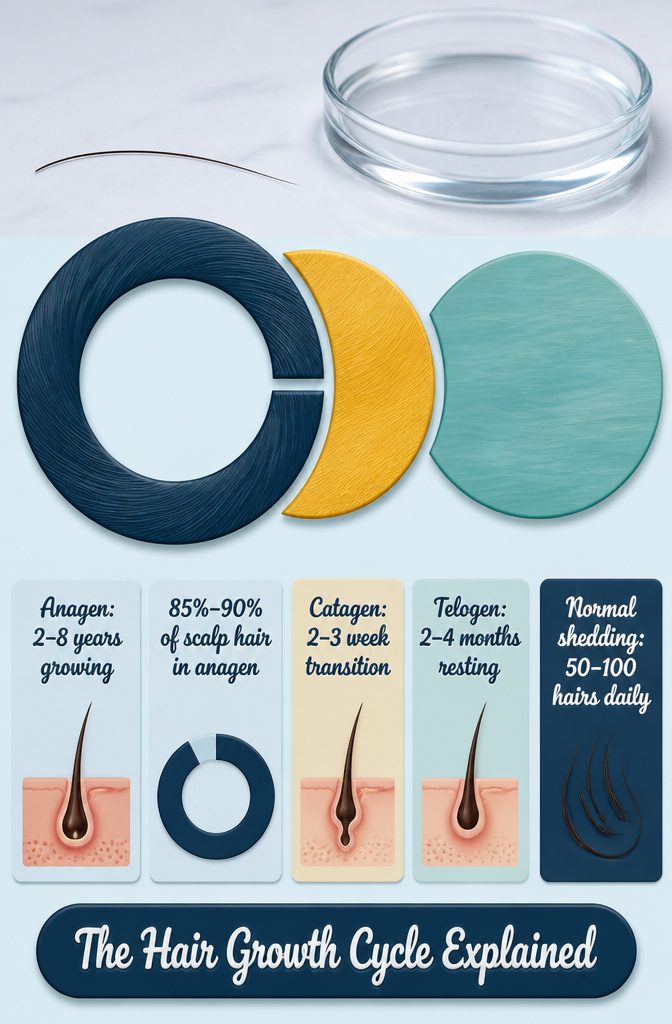
Every hair on your head moves through the same cycle. Anagen is the growing phase, lasting anywhere from two to eight years, and at any given moment about 85% to 90% of your scalp hair sits in this stage.
That percentage matters because it explains why most of your hair looks stable even when some is shedding.
After anagen, the follicle shrinks during catagen, a brief two- to three-week transition, then enters telogen, the resting phase that lasts two to four months. At the end of telogen, the hair falls out.
Losing 50 to 100 hairs per day is normal, part of the telogen cycle finishing its work. Anything beyond that rate suggests something else is happening.
Thinning hair happens gradually rather than all at once, which gives you time to identify whether the loss is following the usual cycle or being pushed into telogen early by stress, hormones, or another underlying cause.
Frequently Asked Questions
What causes hair to thin?
Thinning can stem from genetics, hormones, stress, illness, medications, nutritional gaps, or how you handle your hair.
Female-pattern hair loss affects about 30 million people in the US, while male-pattern onset commonly sits between ages 20 and 25. Telogen effluvium arrives suddenly after fever, surgery, or childbirth and usually improves in 3 to 6 months.
Can hair grow back from thinning?
Regrowth depends entirely on what caused the loss. Thinning triggered by nutrient deficiencies, stress, pregnancy, or other temporary factors can reverse itself once the underlying issue resolves.
Pattern hair loss tied to genetics and hormones requires ongoing treatment, and once follicles shut down completely, only transplantation can restore them.
How do you fix thinning hair?
Start by seeing a dermatologist to identify the cause, then treat it directly where possible.
Minoxidil applied twice daily or taken as a 2.5 to 5 mg pill can thicken hair over 4 to 6 months, and finasteride blocks the hormone behind male pattern baldness in nearly 90% of men.
Many dermatologists prescribe both together because one grows hair and the other addresses why follicles shrink.
What vitamin deficiency causes hair loss?
Deficiencies in vitamin D, iron, and zinc can all slow growth or trigger shedding, since these nutrients support the follicle environment where new strands form.
Get tested before reaching for supplements, though, because taking more than your body requires does nothing helpful and too much selenium, vitamin A, or vitamin E has been linked to hair loss rather than regrowth.
Can a lack of iron cause hair thinning?
Yes.
Iron supports the follicle environment, and a deficiency can slow growth or trigger shedding. A blood panel will show whether you actually need extra iron, and taking more than your body requires does nothing helpful.
What shouldn’t you do if your hair is thinning?
Avoid tight ponytails, braids, and buns, since pulling on follicles can cause permanent loss over time.
At-home color, relaxers, and perms can damage the scalp and slow regrowth, and heat from flat irons and curling wands weakens hair that’s already fragile.
Smoking limits nutrient delivery to follicles, and rapid weight loss throws off the balance your hair relies on.
Is thinning hair normal with age?
Pattern hair loss is common as you age, eventually reaching up to 80% of men and 50% of women over a lifetime.
Male-pattern onset commonly sits between ages 20 and 25, and more than half of all women experience noticeable loss at some point. Thinning also has other possible causes, so seeing a dermatologist early helps identify what’s driving it.
What are the big 3 for thinning hair?
Minoxidil, finasteride, and a ketoconazole shampoo make up the standard trio.
Minoxidil applied twice daily or taken as a pill thickens hair over 4 to 6 months, finasteride blocks DHT to slow or stop loss in nearly 90% of men, and ketoconazole shampoo treats scalp inflammation that can interfere with growth.
Why is my hair so thin I can see my scalp?
Visible scalp usually means either widespread pattern hair loss or a condition pushing follicles into the shedding phase early.
See a dermatologist as soon as possible, since treatment works better the earlier you start and a professional can identify what’s driving the loss. If the thinning is sudden or patchy, that’s a signal to go sooner rather than later.