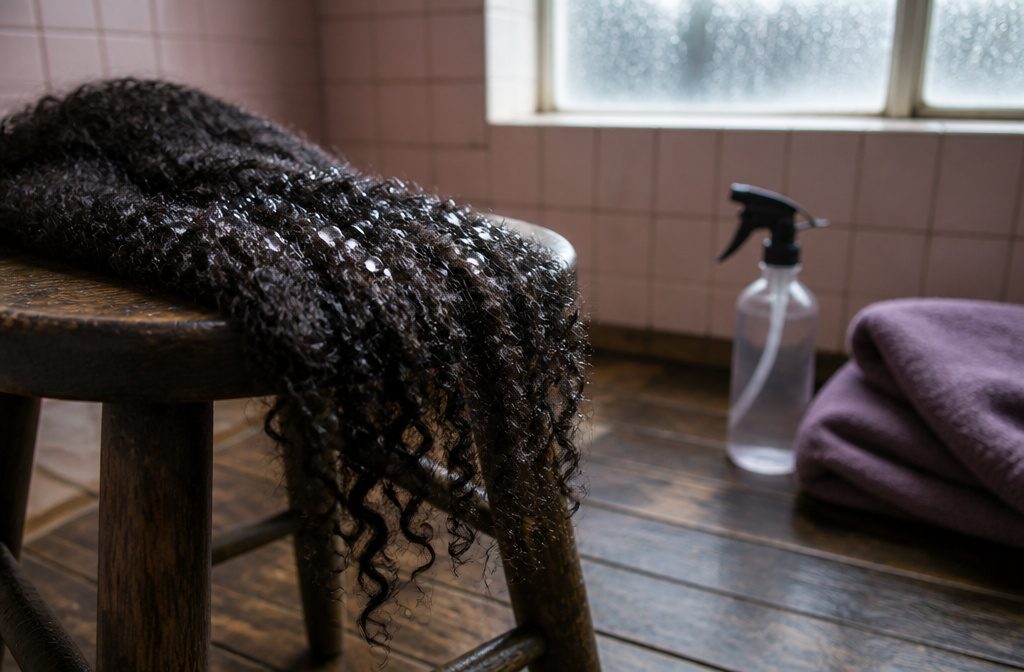
Low porosity hair needs moisture to penetrate tightly sealed cuticles rather than sitting on the surface, which is why the seven methods here center on heat, water-based products, and clarifying rather than heavy oils and butters.
The spray test gives you a reliable read: mist clean, dry hair with room temperature water, and if beads sit on the surface or roll off, your cuticles are likely sealed tight.
What Hair Porosity Means and Why It Matters
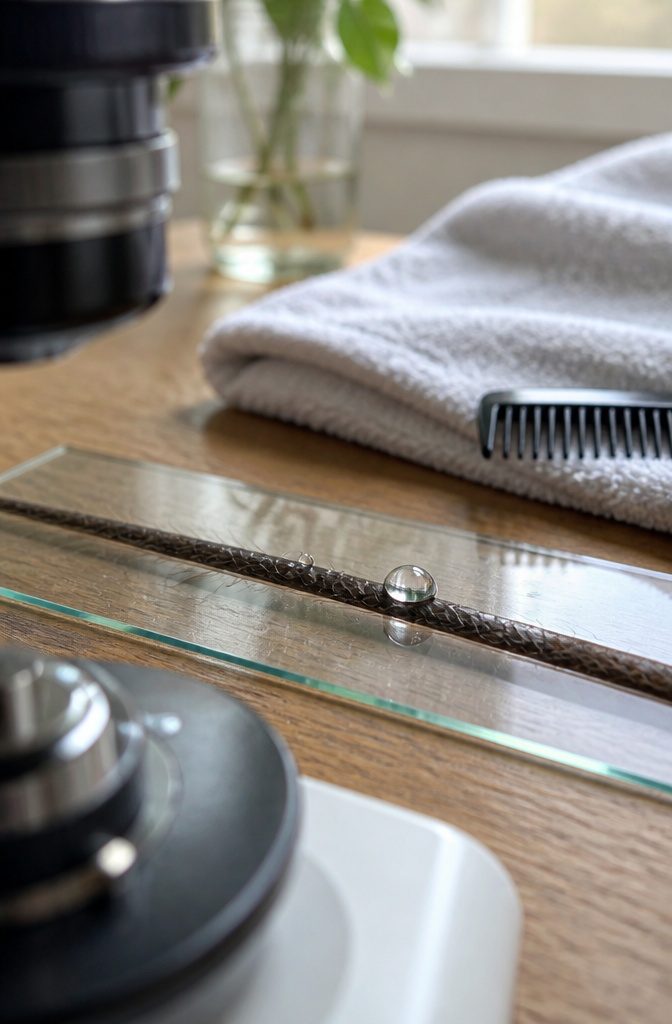
Porosity measures how easily your hair absorbs and holds onto moisture. That comes down to the cuticle, the outermost layer of each strand, made of overlapping cells that sit like tiles on a roof.
In low porosity hair, those cuticles lie flat and tightly packed together. Water and products struggle to get past them.
Once moisture does make it through, though, most sources agree it tends to stay put. The real challenge is getting it in to begin with.
Low porosity is usually genetic.
Heat styling and chemical treatments typically raise porosity rather than lower it, damaging the cuticle in a way that lifts the scales and creates gaps. That makes high porosity hair, which absorbs moisture quickly but loses it just as fast.
Low porosity sits at the opposite end: resistant to water in the shower, slow to saturate, and prone to product buildup on the surface because nothing penetrates easily.
1. How Low Porosity Hair Behaves
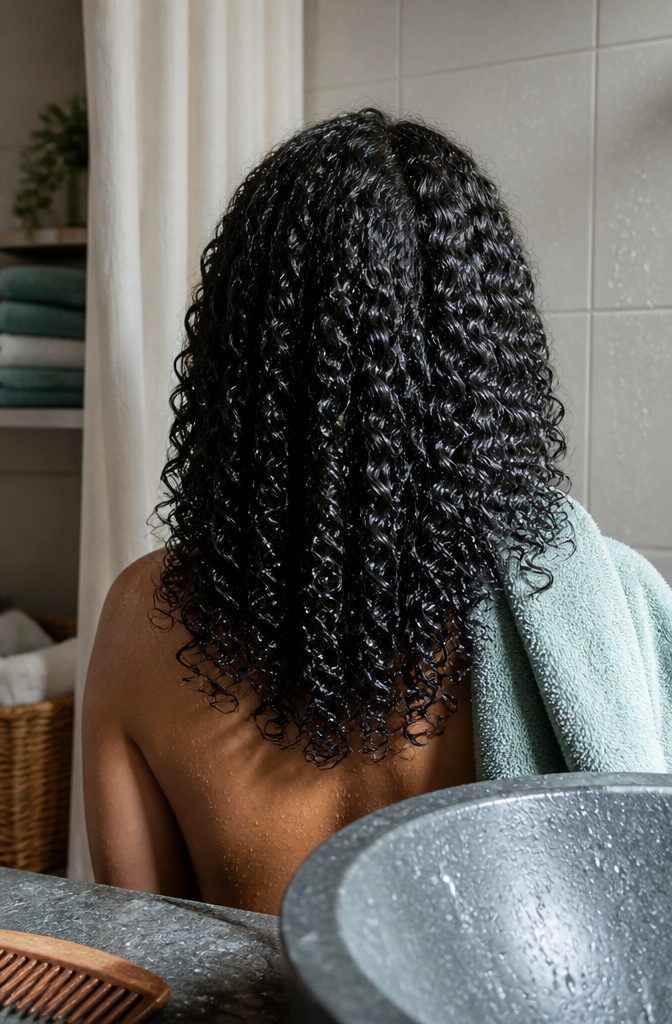
The structure of low porosity hair explains why it acts the way it does. Cuticle scales lie flat and tightly packed, so moisture and product struggle to get past the surface.
Once water or conditioner does make it in, it stays, which is why this hair type tends to look smooth and shiny. The practical side is harder:
- Water beads up in the shower or takes several minutes to saturate the hair completely
- Air drying can take hours, not minutes
- Products sit on the surface instead of absorbing, leaving a film or greasy coating
- Buildup accumulates quickly, especially from oils and butters
- Ends may feel dry even right after conditioning
- Protein treatments can leave hair feeling stiff
- Hair color often doesn’t take well
While low-porosity hair can often look shiny, it may still feel dry because moisture isn’t easily getting inside the strand.
— Allure
That disconnect between how your hair looks and how it feels is the frustration most people with low porosity run into first.
What Influences Your Porosity
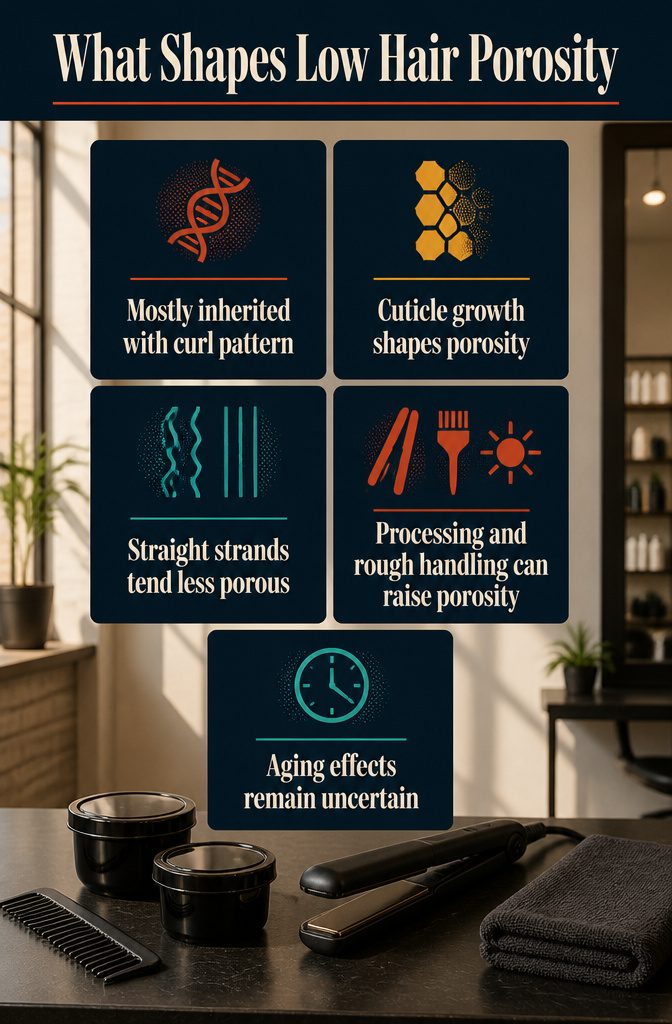
Most sources describe low porosity as largely genetic. You inherit it along with your curl pattern and strand thickness, and in most cases it’s the way your cuticle grows rather than something that happened to your hair along the way.
Straight hair tends to be less porous than curly hair, since the bends and twists in a curly strand create more places for the cuticle to lift.
That said, sources differ on how readily porosity changes. Heat styling, bleaching, color, chemical processing, sun exposure, and rough handling can all raise porosity by lifting or weakening the cuticle.
Whether that damage is enough to turn low porosity hair into high porosity hair depends on how often you process your hair and how much protection you use.
Aging also plays a role. Some sources suggest low porosity hair can become more porous with time, others say porosity generally doesn’t change much once damage is minimized.
The Spray Test and Float Test
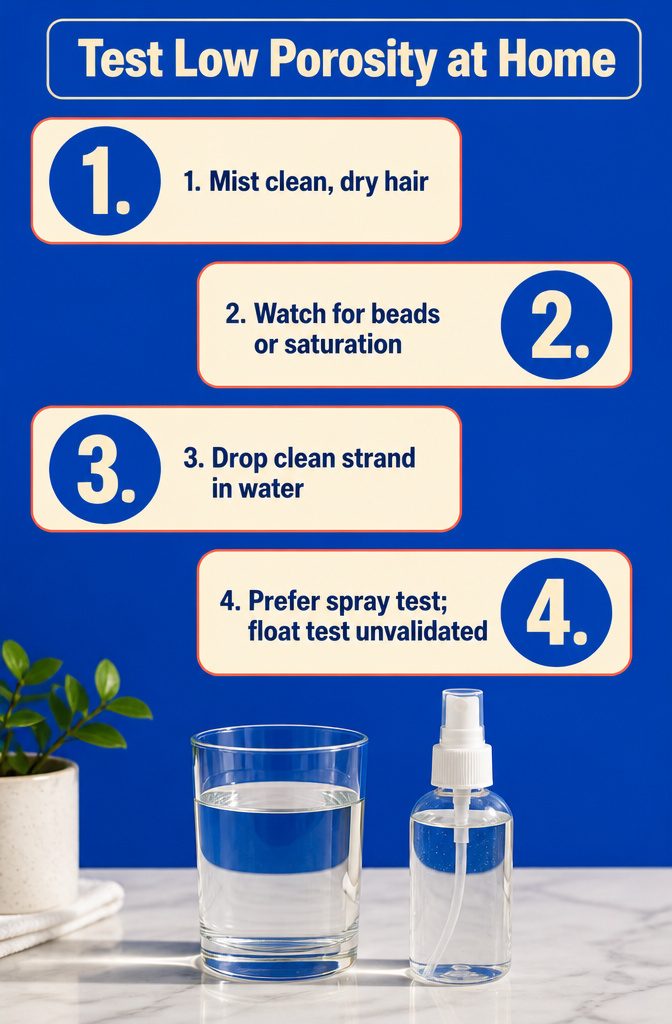
The two home tests people try most often are the spray test and the float test, and one holds up better than the other.
For the spray test, you mist clean, dry hair with room temperature water and watch what happens.
If you see beads sitting on the surface or the water rolls off, that points to low porosity. If the hair darkens and saturates almost immediately, that’s high porosity.
Somewhere in between is medium. You can do the same check in the shower without a bottle by noticing how long your hair takes to feel properly wet.
The float test involves dropping a clean strand into a glass of room temperature water and watching where it goes.
Hair that floats for a minute or two before sinking may show medium porosity. Floating on top suggests low porosity, and sinking fast suggests high.
Medical experts have not scientifically validated this method, and product residue or other test conditions can skew the result. The spray test gives you a more reliable read.
2. Clarify to Remove Buildup
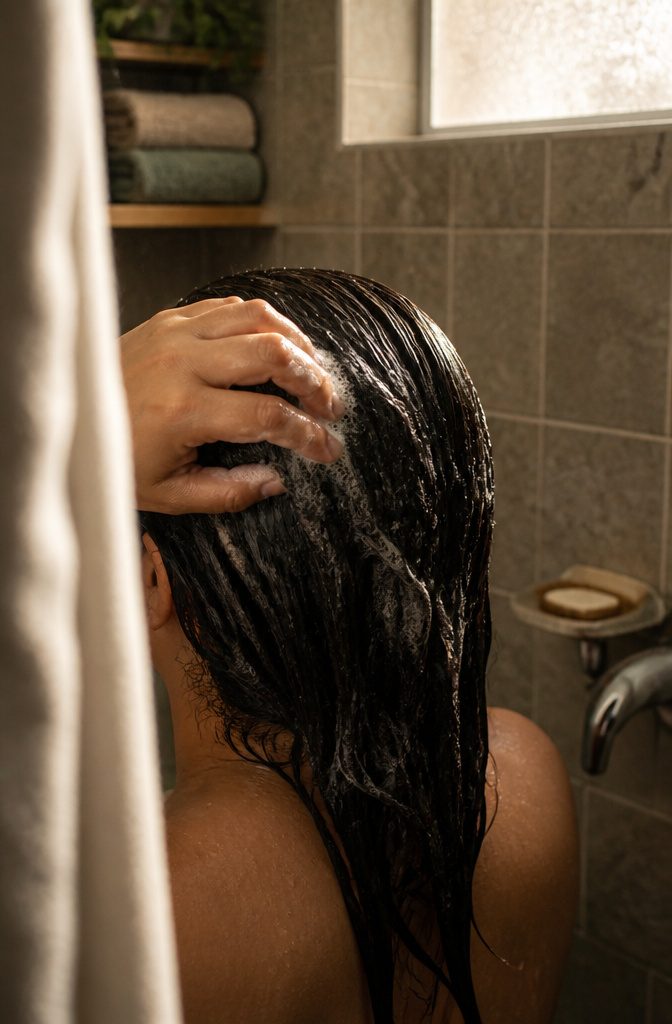
Product, hard water minerals, and your own scalp oils sit on the surface of low porosity hair, blocking everything you apply afterward. A clarifying shampoo removes that layer and lets moisture reach the cuticle again.
Neutrogena Anti-Residue Shampoo once a week handles most buildup without stripping. Kinky-Curly Come Clean ($37 for a three-pack or $12 at Sally Beauty) uses phytic acid to grab hard-water minerals like calcium and magnesium and rinse them out.
DpHue ACV Hair Rinse ($38) works two to three times a week and balances scalp pH while it clarifies.
Once or twice a month is enough for a lot of people, according to Holistic Enchilada.
My own fine hair needs weekly clarifying or it feels coated and limp. If products stopped working or your hair feels heavy, buildup is usually the reason.
An apple cider vinegar rinse from Mielle costs nothing to mix: one tablespoon vinegar diluted in one cup of water, massaged through after shampooing and before conditioning.
3. Choose Lightweight or Water-Based Products
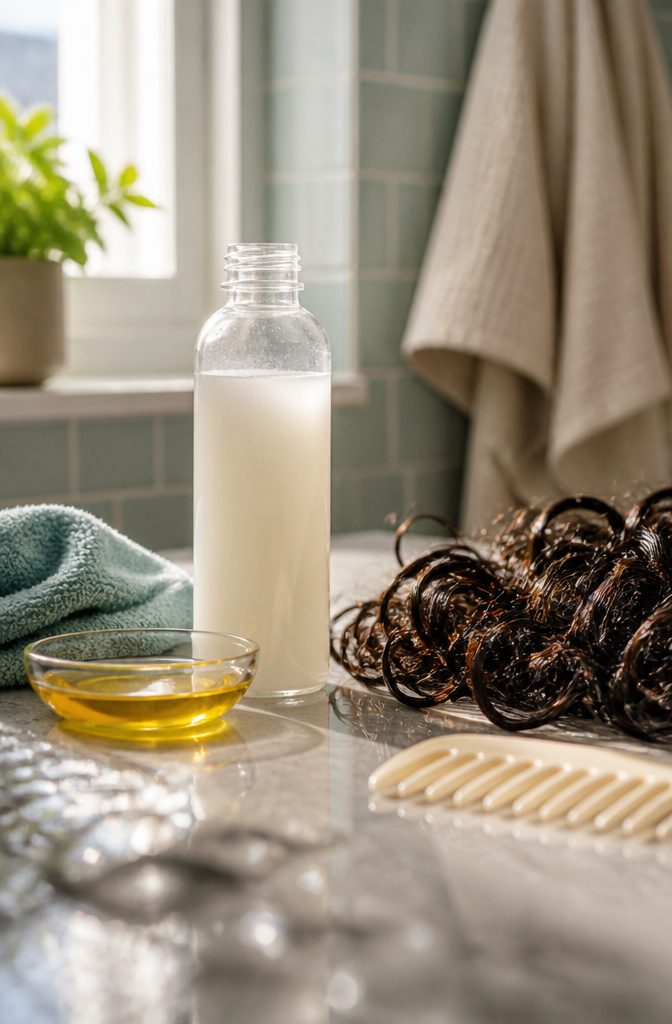
Low porosity hair needs products that can actually get inside the cuticle rather than sitting on top of it.
Water-based formulas and lightweight oils absorb better than heavy creams or butters, which tend to coat the strand and turn into buildup.
Humectants pull moisture into the hair.
Look for glycerin, hyaluronic acid, and honey in your leave-ins and styling products. Davines OI All in One Milk works well because milk conditioners have a thinner consistency.
Curlsmith Weightless Air Dry Cream ($27) and Donna’s Recipe Sweet Potato Pie Extra Creamy Hair Cream ($16) both deliver moisture without flakes or residue. Eden Bodyworks Curl Defining Creme defines curls while keeping them soft.
For oils, stick with almond, argan, grapeseed, jojoba, or sweet almond.
These penetrate more easily than heavier options. If you want to try coconut oil, start with a dime-sized amount and see how your hair responds.
Skip mineral oil, petrolatum, and waxes entirely. Heavy butters like shea and cocoa repel water and leave a coating that blocks the moisture you are trying to get in.
4. Apply Products to Damp or Wet Hair
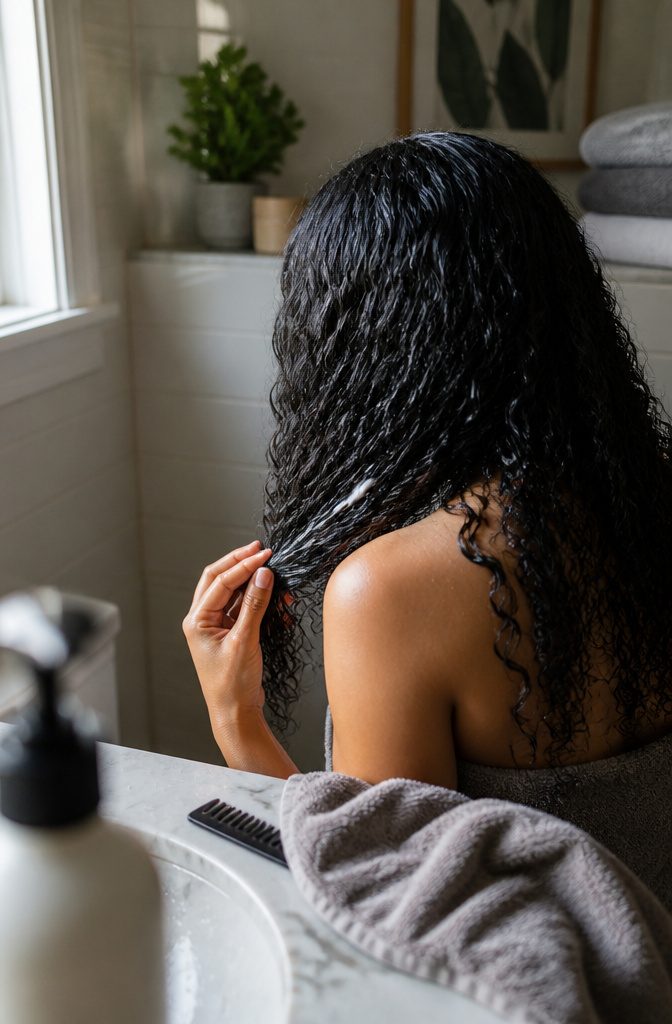
Apply products to damp or wet hair rather than waiting until your hair has dried. Low-porosity cuticles lie flat and resist entry when dry, so moisture and oils sit on the surface instead of sinking in.
Damp hair opens that path slightly. The cuticle is already lifted from the water you just rinsed out, and the product can slip through before everything seals back down.
I apply leave-in conditioner and any styling cream section by section right after washing, while my hair is still soaking wet. If I wait even ten minutes, the same amount of product does half the work.
Water-based formulas absorb fastest at this stage. Then I seal the ends with a light oil, which locks in what the hair just took rather than blocking it from getting in at all.
5. Use Warm Water, Steam, or Heat When Conditioning
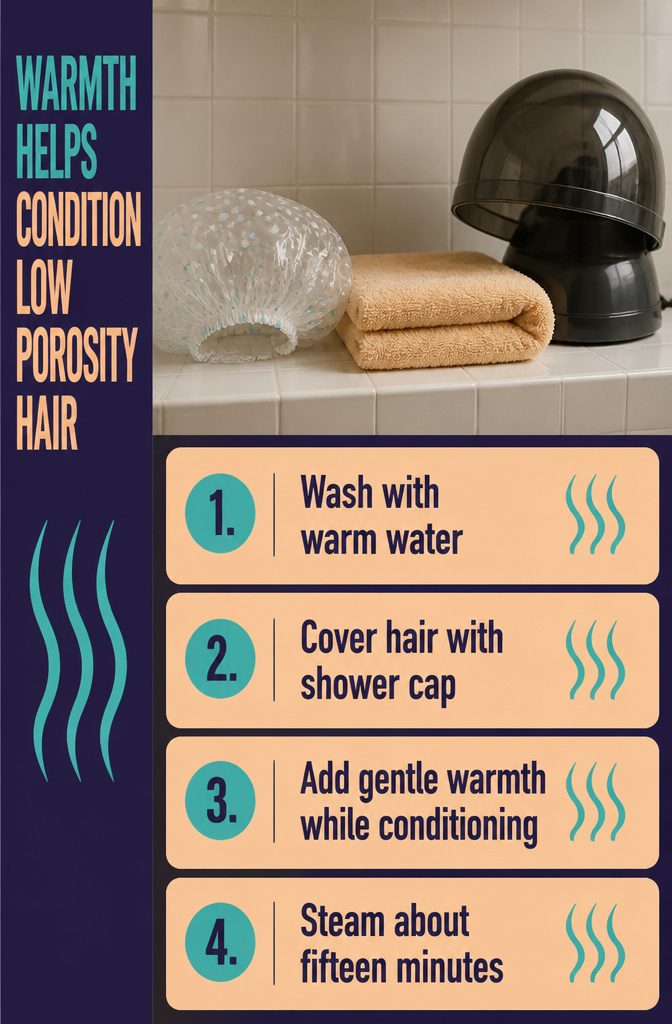
Warmth helps the cuticle lift so conditioner can actually get in. Wash with warm rather than cold water—cold rinses are advice meant for high porosity hair that needs to seal, and yours needs the opposite.
Not hot. Warm.
When you deep condition, cover your hair with a shower cap and warm it under a blow dryer on the warm setting for a few minutes, or sit under a hooded dryer for fifteen to twenty minutes.
Steaming under a shower cap for about fifteen minutes works too.
You can also wrap a warm towel over the cap to hold heat in. A deep conditioner sitting on closed cuticles mostly stays on the surface; warmth is what gets it in.
For deep conditioning two to three times a week, try DevaCurl One Condition Original, Jessicurl Deep Conditioning Treatment, Briogeo Don’t Despair, Repair!, or Ouidad Curl Quencher Moisturizing Conditioner ($24).
Amika Soulfood Nourishing Mask ($36) is designed for weekly use and stays lightweight despite the thick texture.
6. Go Light on Protein Treatments
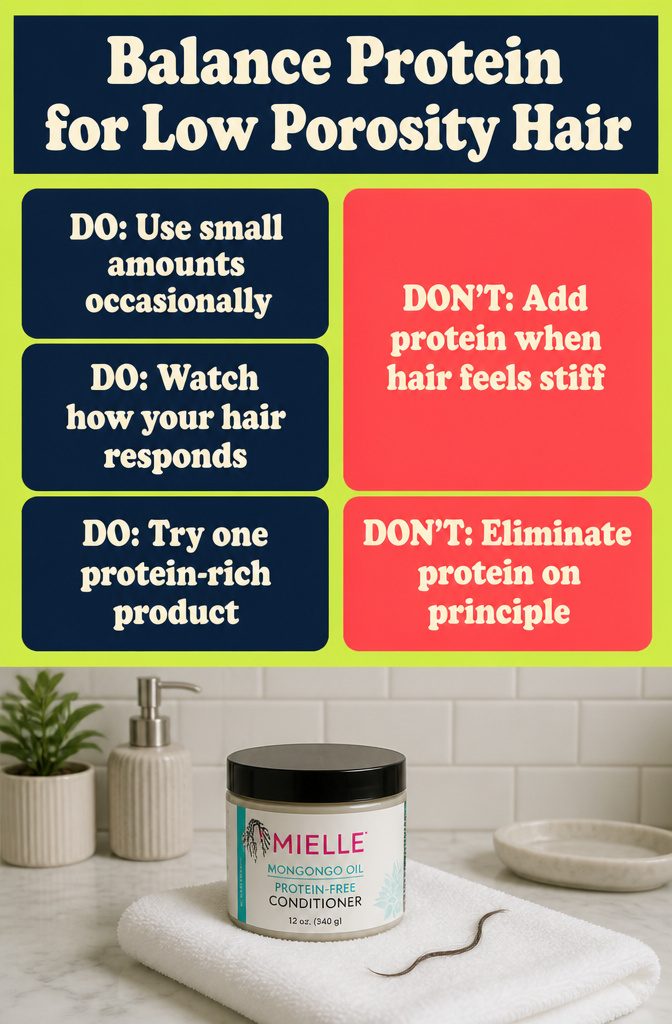
Protein advice splits down the middle. Mielle and Medical News Today warn that protein can leave low-porosity hair stiff or fragile, since the cuticles are already tightly packed and don’t need more reinforcement.
If your hair feels hard or straw-like after a protein treatment, that’s your cue to pull back. Curlsmith suggests using only one protein-rich product at a time to avoid tipping into overload.
Holistic Enchilada takes a different line: skip protein entirely and hair can go soft and mushy, which is hygral fatigue. The recommendation there is small amounts, occasionally, rather than cutting it out altogether.
I lean toward watching how your hair responds rather than eliminating protein on principle. If you want to test a protein-free routine, Mielle’s Mongongo Oil Protein-Free Conditioner is one option worth trying.
7. How to Layer Products: LCO, LOC, or Simpler
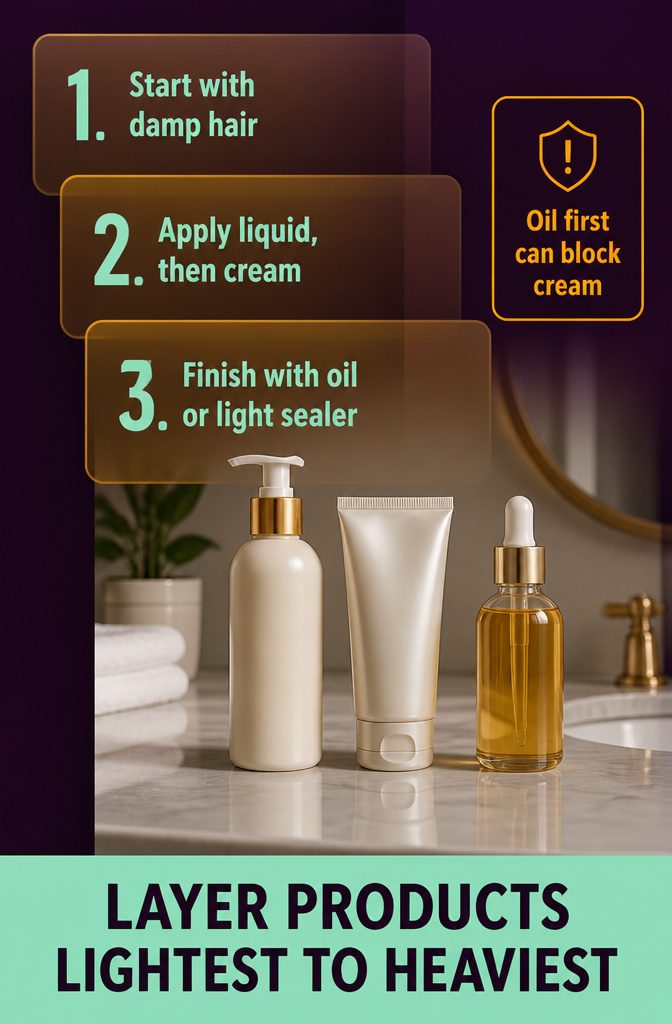
Sources differ on the right sequence, and low-porosity hair often does better with LCO or a simpler liquid-and-cream pairing than the LOC method.
LCO means liquid, cream, then oil, applying products lightest to heaviest so each layer sinks in rather than sitting on the surface. Oil before cream can form a barrier that keeps the cream out entirely, which defeats the point.
I start with damp hair and a water-based leave-in like Mielle’s Pomegranate & Honey Leave-In Conditioner, follow with a light sealer, and finish with something that locks it all down without weight.
L’Oréal Paris Hair Elvive Hyaluron + Pure Oil Erasing Serum clears buildup before you layer anything new, and the Hyaluron + Pure Purifying Shampoo and Rehydrating Conditioner hydrate without dragging the hair down.
Mielle’s Honey & Ginger Styling Gel defines curl and smooths edges with no residue.
Color Wow Extra Strength Dream Coat ($32) mists on every three to four shampoos and needs heat to activate, but it manages frizz on thick or coily hair without coating it.
How Often to Wash
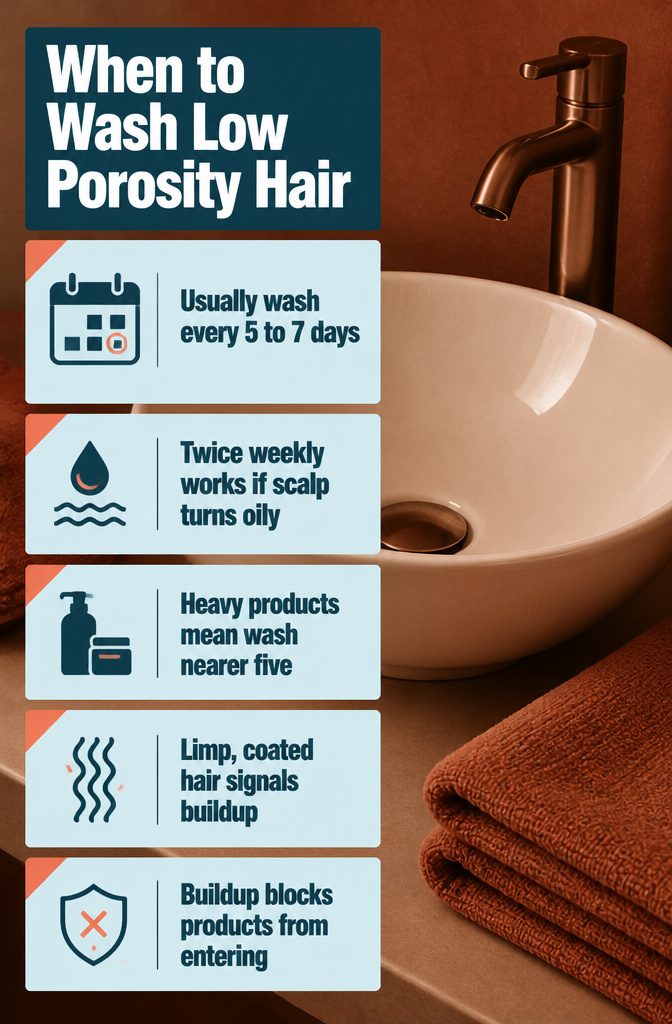
Most people wash every 5 to 7 days, though twice a week works just as well if your scalp feels oily sooner or you layer heavy products.
The risk with stretching it longer is buildup, which sits on the surface of low porosity hair and blocks whatever you apply next.
Once that coating sets in, your hair feels dry even after conditioning, because nothing is actually getting in.
I adjust timing based on how much leave-in and oil I use that week. A light routine lets me push to seven days; a heavier one means I wash closer to five.
If your hair suddenly feels limp or coated, or products that used to work stop performing, that’s buildup talking and a sign to wash sooner next time.
Curl Pattern, Texture, and Porosity
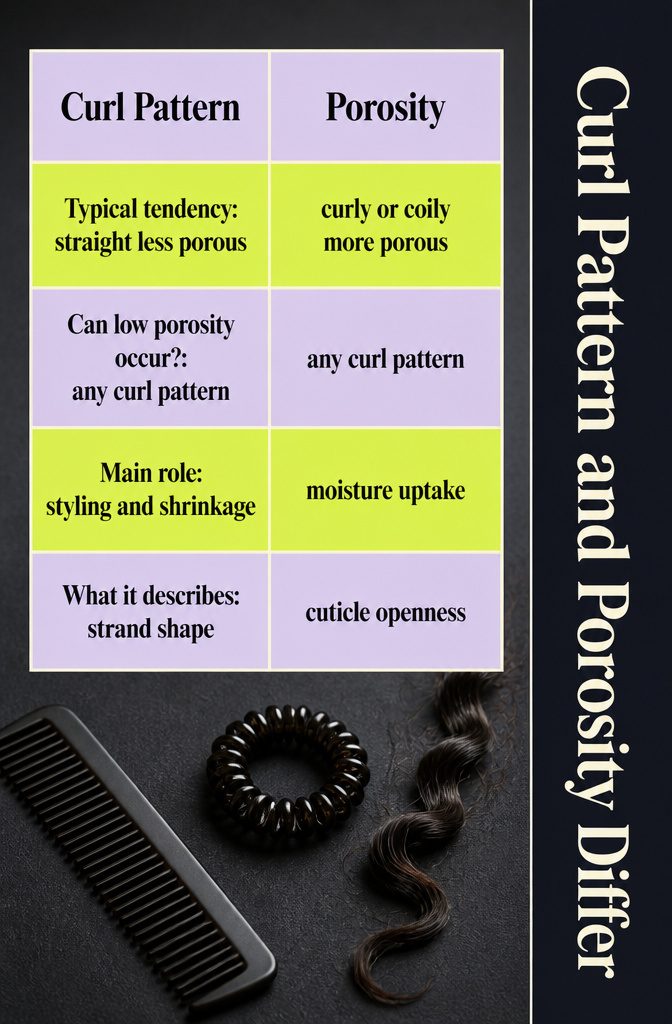
Porosity isn’t the same thing as curl pattern. Straight hair does tend to be less porous, since those flat strands give the cuticle fewer chances to lift.
Curly or coily hair is more likely to be higher porosity, because each bend along the strand creates a place where the cuticle can lift away from the shaft.
But low porosity can appear in any curl pattern. Curlsmith sorts curl into three categories: Wavy (2A–2C), Curly (3A–3C), and Coily (4A–4C).
I’ve seen plenty of people with 3A or 3B curls who still have tightly sealed cuticles and all the same product struggles that come with low porosity.
The twist pattern matters for styling and shrinkage. Porosity determines whether your hair drinks up moisture or sits there looking shiny and damp for an hour.
Frequently Asked Questions
What is low porosity hair?
Low porosity hair has cuticles that lie flat and tightly packed, making it harder for moisture and products to get in.
Once water does penetrate, it tends to stay longer than it would in high porosity hair. The structure is usually genetic rather than something caused by styling or damage.
What are the signs of low porosity hair?
Water beads up on your hair in the shower and takes several minutes to fully saturate the strands.
Air drying can take hours, products sit on the surface instead of absorbing, and buildup accumulates quickly. Your hair may look shiny but still feel dry because moisture isn’t getting inside the strand.
How often should I wash low porosity hair?
Most people wash every 5 to 7 days, though twice a week works if your scalp gets oily sooner or you use heavier products.
Stretching longer than a week risks buildup that blocks moisture from reaching the cuticle. If your hair feels coated or products stop working, that’s a sign to wash sooner.
What ingredients are good for low porosity hair?
Humectants like glycerin, hyaluronic acid, and honey pull moisture into the hair.
Lightweight oils such as almond, argan, grapeseed, and jojoba absorb more easily than heavy options. Water-based formulas work better than thick creams or butters that sit on the surface.
Is protein bad for low porosity hair?
Too much protein can leave low porosity hair feeling stiff or straw-like, since the cuticles are already tightly packed.
If your hair turns hard after a protein treatment, pull back on protein-heavy products and focus on moisture instead. Small amounts occasionally are usually fine, but watch how your hair responds.
Should I use the LOC or LCO method?
Low porosity hair often does better with LCO (liquid, cream, oil) or a simpler liquid-and-cream pairing.
Applying oil before cream can form a barrier that keeps the cream from absorbing at all. Layering lightest to heaviest lets each product sink in rather than sitting on top.
Can low porosity hair change?
Low porosity is largely genetic and stays that way unless you damage your hair.
Heat styling, bleaching, color, and chemical processing can raise porosity by lifting or weakening the cuticle over time. Aging may also shift porosity, though sources differ on how much it changes naturally.
Is low porosity hair healthy?
Low porosity is neither healthier nor less healthy than other porosity types.
It’s simply a description of how your cuticle lies. Dryness and brittleness can occur if moisture is neglected, but the hair itself isn’t damaged just because it has tightly sealed cuticles.
Should you rinse low porosity hair with cold water?
No. Warm water helps lift the cuticle so moisture and conditioner can get in.
Cold rinses are advice meant for high porosity hair that needs to seal, and low porosity needs the opposite. Wash with warm water, not hot, to open the path for products to absorb.
Can you have low porosity hair with curly or coily hair?
Yes. Porosity and curl pattern are separate things.
Curly or coily hair is more likely to be higher porosity because the bends along each strand give the cuticle more places to lift, but plenty of people with 3A, 3B, or coily curls still have tightly sealed cuticles and all the same absorption struggles.





