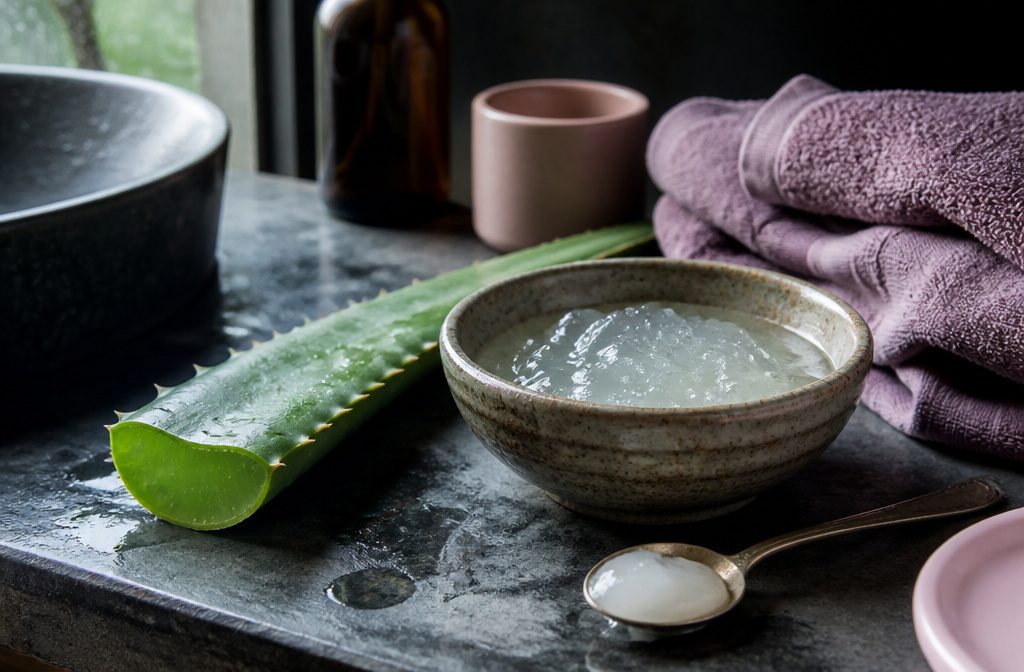
Aloe vera masks soften hair and calm scalp irritation by binding moisture to strands and delivering anti-inflammatory enzymes directly where they’re needed.
The simplest version takes two tablespoons of aloe gel and one tablespoon of coconut oil, left on for thirty minutes before rinsing.
Richer combinations add honey or castor oil for extra conditioning, while apple cider vinegar versions target flakes and itch when used every other week.
1. Aloe Vera and Coconut Oil
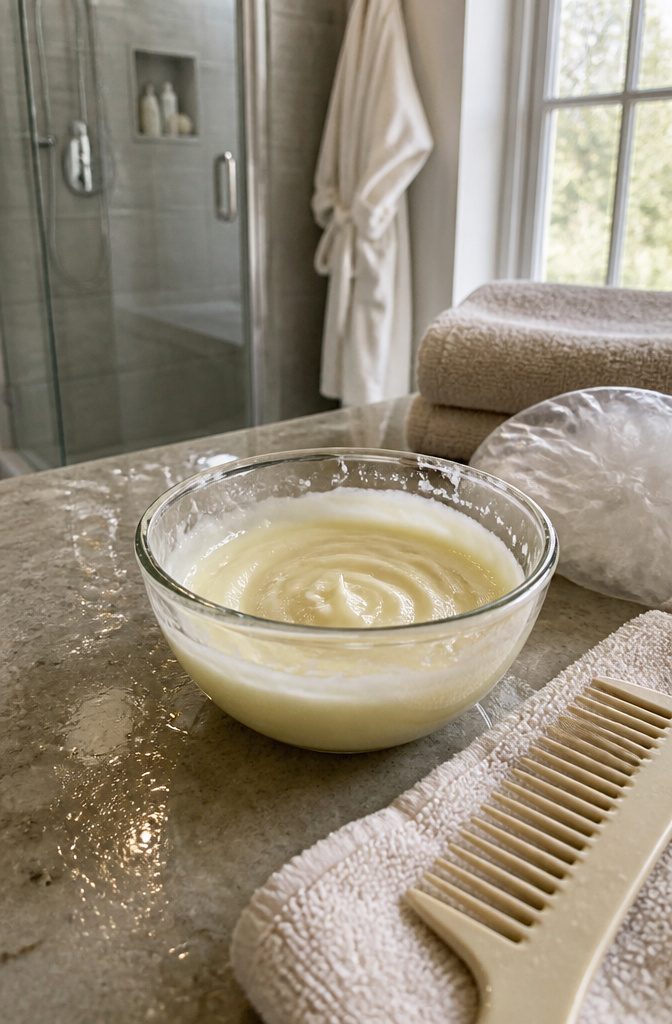
The simplest version pairs 2 tablespoons of aloe vera gel with 1 tablespoon of coconut oil, stirred until you have a smooth paste.
Use virgin coconut oil at room temperature; if yours is solid, warm it in the microwave first. Coconut oil’s fatty acids seal the hair cuticle while aloe vera adds lightweight moisture, so the combination leaves hair soft without heaviness.
I massage the mixture onto my scalp first, then work it through to the ends.
For long or thick hair, double the recipe so you’re not stretching it thin. Cover your hair with a shower cap and a towel to keep the mask from dripping and to stop the hair drying out while it sits.
Leave it on for 30 minutes, or up to an hour if your hair is very dry.
Rinse thoroughly and wash with shampoo to clear any filmy residue the aloe can leave behind. You can use this mask as often as once a week in place of your usual conditioner.
2. Aloe Vera, Coconut Oil, and Honey
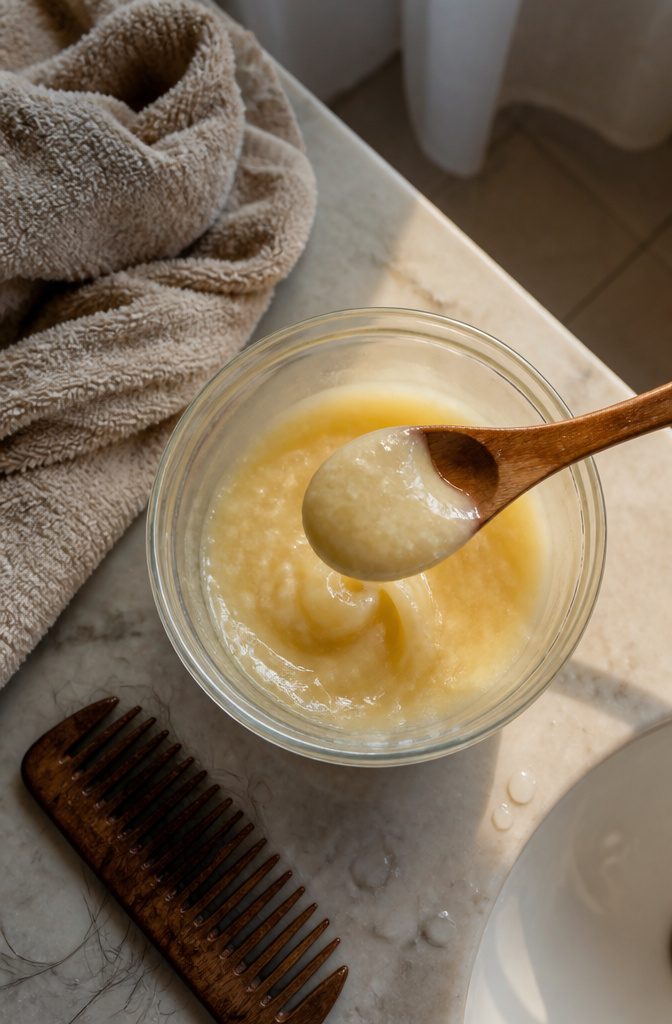
This mask adds honey to the aloe-and-coconut pairing, and the texture comes out thicker.
Mix 3–4 tablespoons of aloe vera gel with 6–8 tablespoons of coconut oil and 1–2 tablespoons of honey, stirring until smooth. If you have long hair, double the recipe so you have enough to coat everything.
Apply it to wet hair, working section by section if that makes coverage easier.
Comb it through so the scalp and strands are evenly coated, then wrap your head in an old towel or plastic wrap. The warmth opens pores and keeps the mixture from drying out while it sits.
Leave it on for around 30 minutes, then rinse thoroughly. The coconut oil and honey both add moisture, so this one lands heavier than aloe alone and works well when your hair feels particularly dry or stiff.
3. Aloe Vera and Apple Cider Vinegar for Flaky Scalp
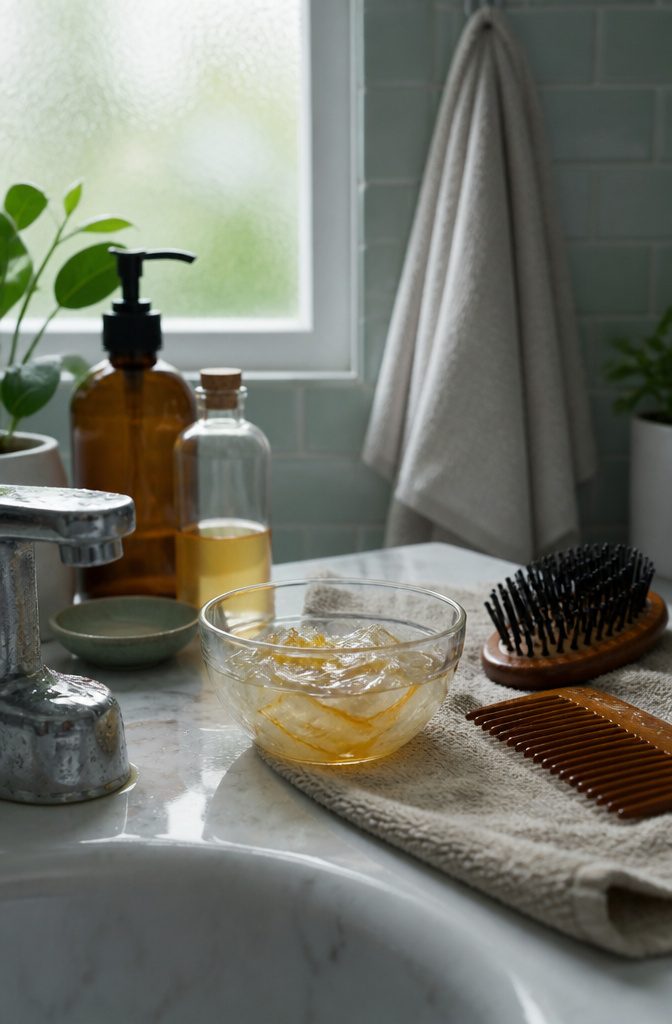
Flakes and itch usually mean dead skin sitting where it shouldn’t, and apple cider vinegar lifts it off while killing the bacteria that make things worse.
The mask is 4 tablespoons aloe gel, 2 teaspoons apple cider vinegar, and 1 teaspoon honey if you want extra moisture lock and smoothing.
Start at the scalp this time rather than the ends. Massage the mixture in, then work it through to saturate the length.
A wet brush or wide-tooth comb spreads it evenly without pulling. Leave it for 20 minutes, rinse with warm water, then follow with a mild shampoo and conditioner to clear any vinegar smell.
Run this mask every other week rather than weekly. Vinegar is acidic enough that daily use would strip more than you want gone, but spaced out it keeps the scalp clean without overdoing it.
4. Aloe Vera and Yogurt
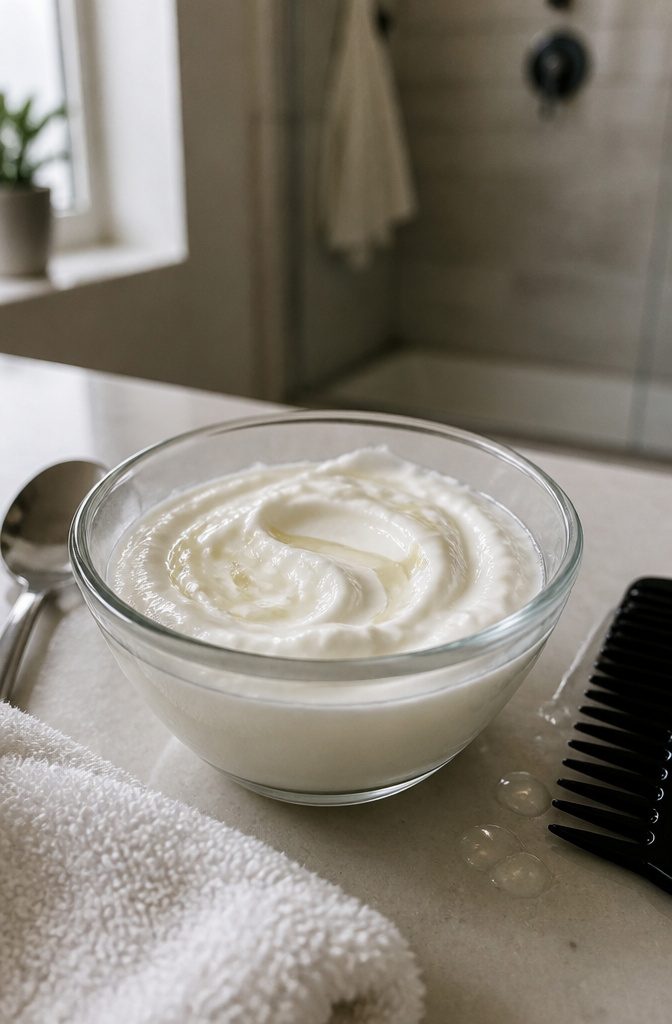
Yogurt brings probiotic properties that may help with dandruff, according to a 2017 study.
Mix 2 tablespoons of full-fat plain Greek yogurt with 2 tablespoons of aloe gel, and add 2 teaspoons of honey if you want extra moisture. I like the yogurt for masks that need to stay put without sliding off the scalp.
Apply the mixture from roots to ends, working it through in sections.
Leave it on for 20 to 30 minutes, no longer. The probiotics need time to work on the scalp, but yogurt can start to smell sour if it sits too long.
Rinse thoroughly with cool water, then shampoo once. Use this mask once a week if dandruff is an active concern, less often once it clears.
5. Aloe Vera and Green Tea
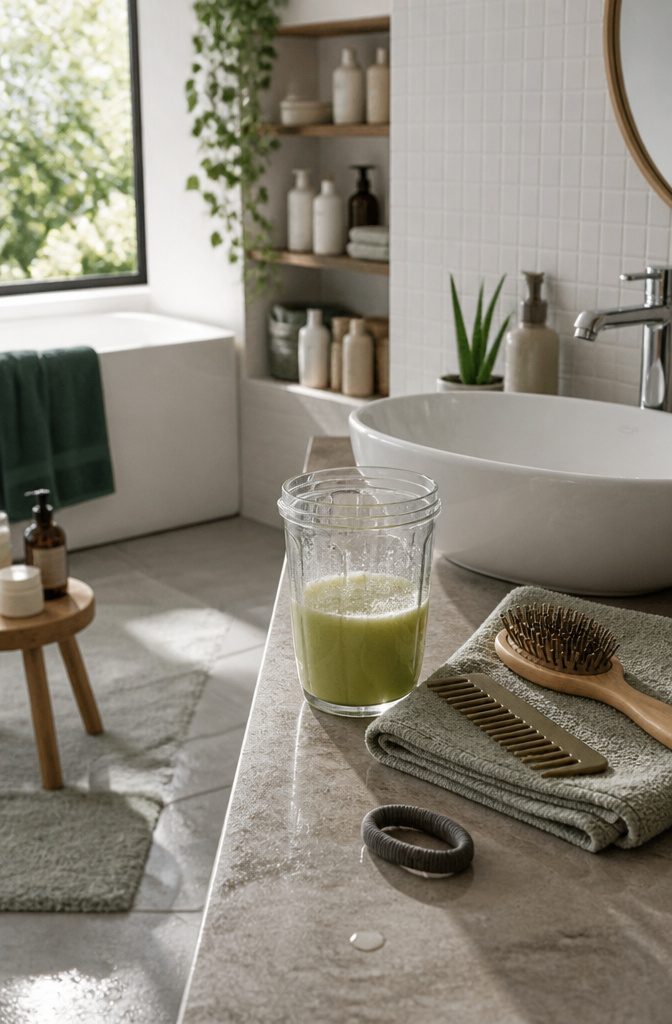
Green tea brings antioxidants believed to support hair growth, and blended with aloe it makes a simple once-a-week mask.
Combine ½ cup freshly brewed green tea with ½ cup fresh aloe vera gel in a blender and run it until smooth, no lumps left to catch in your hair.
Massage the mixture onto your scalp first, then work it through to the ends until everything is saturated.
A wet brush or wide-toothed comb helps distribute it evenly. Leave it on for up to 20 minutes, then rinse with cool water.
The green tea adds a light astringent feel that leaves hair clean without stripping it, and the aloe keeps things conditioned enough that you won’t need anything heavier afterward.
6. Aloe Vera, Castor Oil, and Rosemary for Growth Support
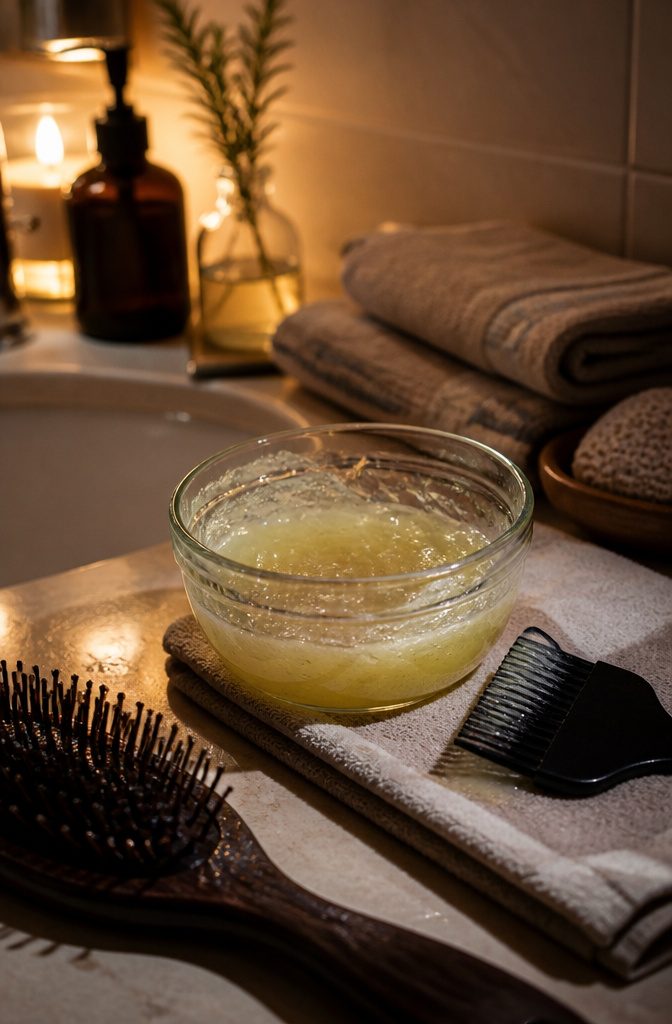
This one goes straight onto the scalp rather than running through the lengths.
The three tablespoons of aloe gel carry the moisture and the anti-inflammatory enzymes, the tablespoon of castor oil thickens the mix and coats each follicle, and a few drops of rosemary essential oil bring the circulation boost that makes this feel like a scalp treatment rather than a conditioning mask.
The castor oil sits heavy, so this works best when growth rather than bounce is the goal.
Massage it into the scalp for five minutes before you let it sit. That massage moves the oil around, gets blood flowing to the roots, and stops the castor oil from pooling in one spot.
Leave the whole thing on for thirty to forty minutes, then shampoo twice to cut through the oil. The scalp feels clean and slightly tingly after rinsing, and regrowth takes weeks to show rather than days.
What Aloe Vera Does for Hair and Scalp
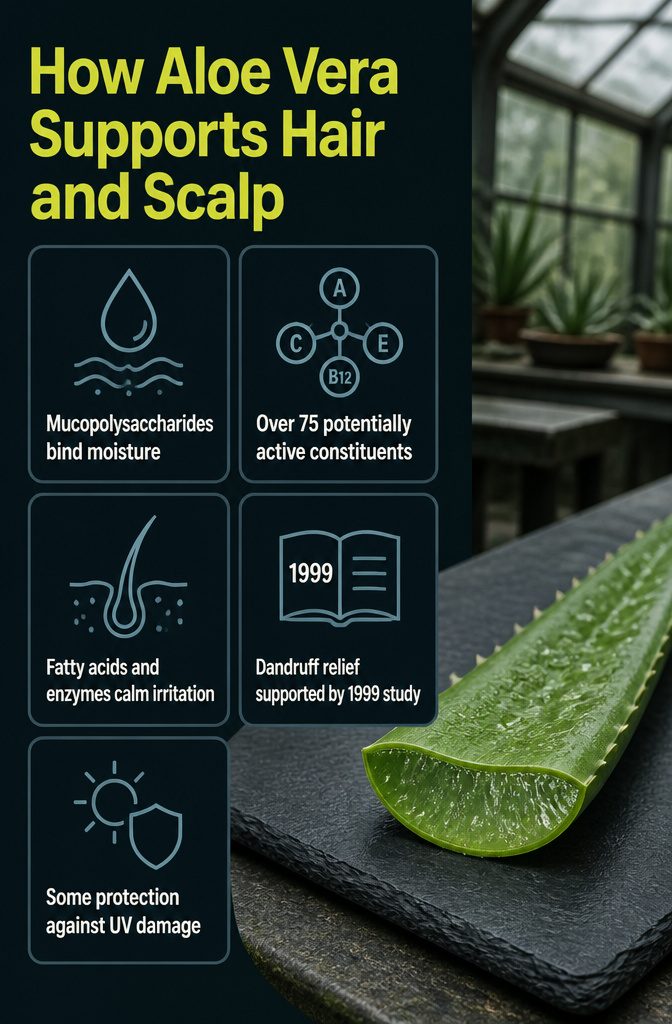
Aloe vera gel moisturizes dry hair and soothes an irritated scalp, both backed by how the plant is structured. The gel contains over 75 potentially active constituents, including vitamins A, C, E, and B12, plus minerals like zinc and magnesium.
These compounds may help strengthen hair and support healthy cell growth. The plant’s mucopolysaccharides bind moisture to strands, which is why hair treated with aloe often looks shinier and feels softer.
The anti-inflammatory properties come from fatty acids and enzymes that calm redness and itching tied to dandruff and other scalp conditions.
A 1999 study found aloe effective for dandruff relief, though research on other hair benefits remains limited. Aloe also offers some protection against UV damage, useful if your scalp or ends have been sun-exposed.
The natural pH level sits close to that of hair and scalp, so it works gently enough for regular use without stripping or irritation.
Who Can Use an Aloe Vera Mask
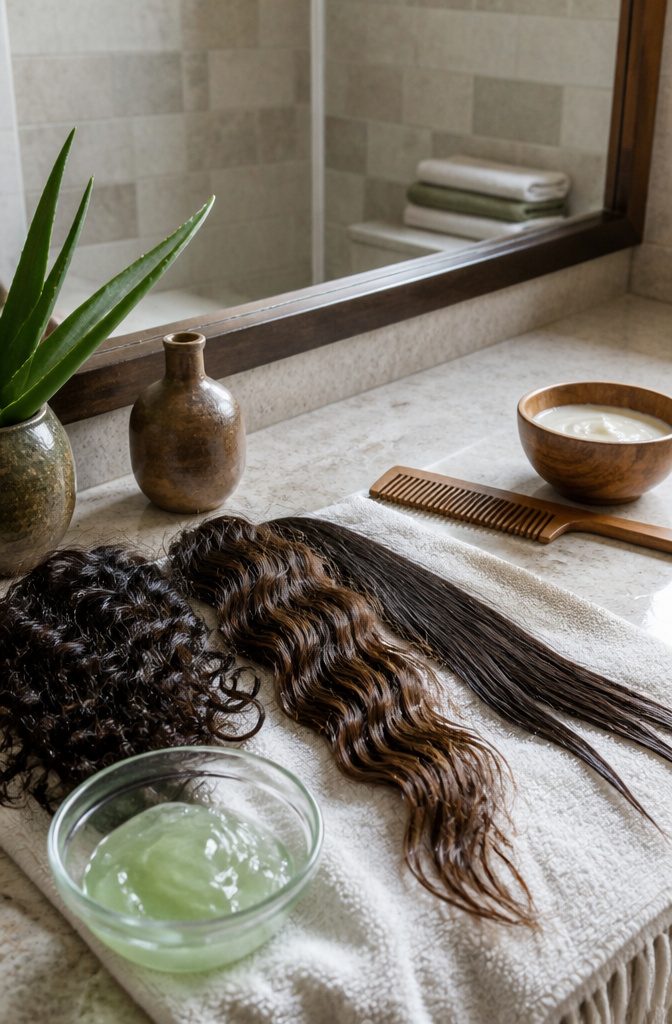
Professionals often recommend aloe vera masks for oily, brittle, dry, damaged, curly, or natural hair, and the variety really does suit a range of types.
If you want extra hydration and your scalp is dry or flaking, adding an aloe mask to your weekly routine can make a noticeable difference. Thin and thick hair both respond well, as do straight, wavy, and curly textures.
The application changes slightly by hair type. Very fine hair benefits from lighter applications of aloe gel on its own, especially in humid summer months when anything heavy can weigh strands down.
Thick, dry hair does better with richer combinations that include coconut oil or another moisturizing ingredient, particularly in winter when moisture loss accelerates. You may notice a film after using aloe gel, so wash it out completely after treating.
How to Apply and Rinse the Mask
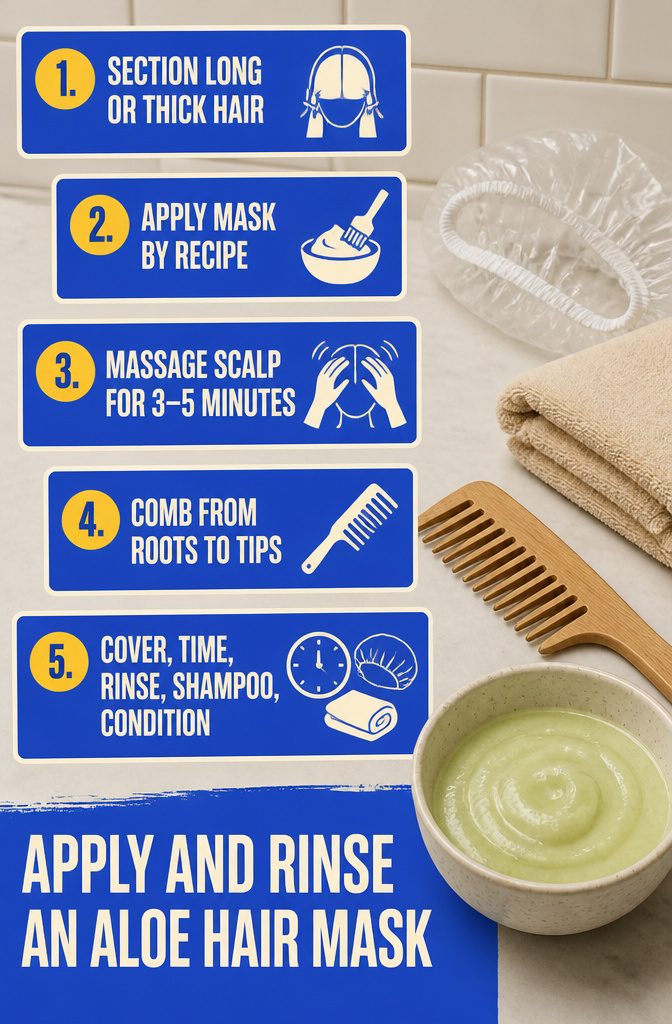
- Section your hair if it’s long or thick, parting it into workable pieces so the mask reaches every part evenly.
- Apply the mask where the recipe directs. Most hydrating masks start mid-shaft and work toward the ends, then go back to coat the scalp gently. Recipes for dandruff or flakiness start at the scalp instead.
- Massage your scalp for 3 to 5 minutes using circular motions with your fingertips. This spreads the product and helps it absorb.
- Comb through with a wide-toothed comb to distribute the mask evenly from roots to tips.
- Cover your hair with a shower cap or plastic wrap, then wrap a towel around your head. Warming the towel first can help the mask penetrate deeper.
- Leave the mask on for the time the recipe calls for. Most sit for 30 minutes to an hour; apple cider vinegar masks rinse after 20 minutes, and overnight treatments stay on while you sleep.
- Rinse thoroughly with warm water, then shampoo. Pure aloe gel can leave a slight film that washes away easily with shampoo, so don’t skip that step.
- Condition from mid-shaft to ends after rinsing out the shampoo.
Patch Test Before Full Application
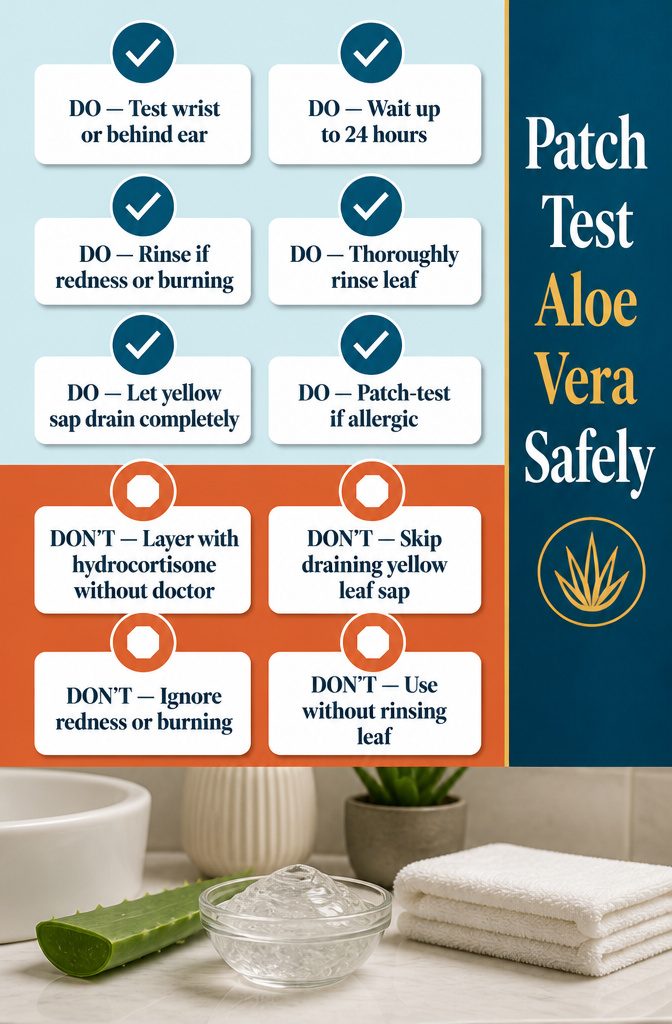
Before you blend any of these masks, apply a small amount of aloe gel to the inside of your wrist or behind your ear and wait.
Two schools: some wait an hour or two to catch fast reactions, others hold the full twenty-four to see delayed sensitivity. If redness or burning shows up, rinse and skip aloe altogether.
If you use a hydrocortisone cream anywhere on your scalp, aloe can push more cortisone through your skin than you planned for, so check with your doctor before layering the two.
Fresh aloe from the plant carries a yellow sap that some people find irritating. If you cut your own leaves, let that bitter latex drain completely and rinse the leaf under running water before you scoop the clear gel.
Thorough rinsing solves most of the sting, but if you still feel heat after applying it, wash it out right away. People allergic to garlic, onions or tulips should patch-test carefully since aloe sits in the same plant family.
Frequently Asked Questions
How often should you use an aloe vera hair mask?
Use an aloe vera hair mask once or twice a week. Masks that include apple cider vinegar work best every other week rather than weekly, since the acid can strip too much if used more often.
Overuse can make hair look oily and create conditions where bacteria or yeast thrive on the scalp.
How long should I leave aloe vera in my hair?
Most aloe vera hair masks sit for 30 minutes to an hour depending on how dry your hair is.
Masks with apple cider vinegar rinse after 20 minutes, while overnight treatments can stay on while you sleep if you cover your hair with a shower cap.
Will aloe vera make my hair sticky?
Pure aloe gel can leave a slight film, but it washes away easily with shampoo. Blend the gel thoroughly before applying and rinse completely after the treatment to avoid any residue.
Can aloe vera help with hair fall?
Aloe vera soothes the scalp and may support conditions that favor growth, but it cannot stop genetically determined hair loss. It works best as one part of a broader routine that includes proper nutrition and gentle hair care.
Is aloe vera suitable for all hair types?
Yes, aloe vera works across straight, wavy, curly, fine, and thick hair. Very fine hair does better with lighter applications to avoid weighing strands down, while thick, dry hair benefits from richer combinations that include coconut oil or honey.
Can I use aloe vera gel on my hair every day?
You can apply aloe vera gel to your scalp daily for soothing relief, though people with very oily hair may prefer every other day. Hair masks themselves should stay at once or twice a week rather than daily use.
What can I mix with aloe vera for hair?
Coconut oil adds moisture and seals the cuticle, honey thickens the mixture and locks in hydration, and apple cider vinegar lifts flakes while balancing scalp pH.
For growth support, castor oil and rosemary essential oil massage into the scalp to stimulate circulation. Yogurt brings probiotics that may help with dandruff, and green tea adds antioxidants.