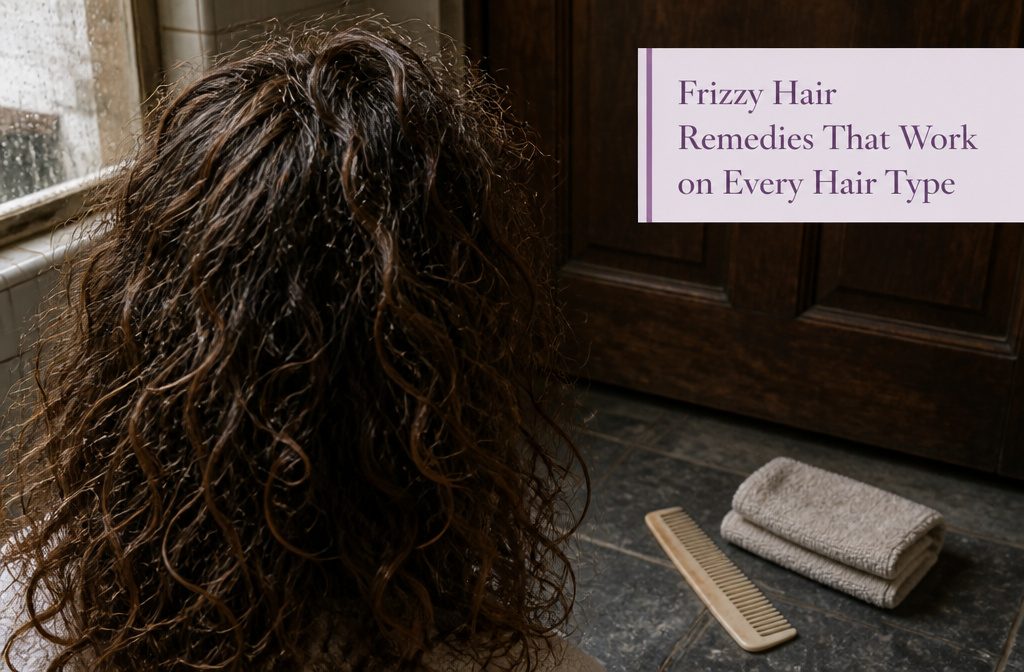
Frizzy hair responds to moisture first, but the method that works depends on your texture, how often you wash, and whether you’re fighting dryness or humidity.
Heat above 200°C cracks the cuticle layer and makes frizz worse with every pass, while curly hair frizzes faster because sebum can’t travel evenly down each spiral.
1. Use Moisturizing Shampoo, Conditioner and Leave-In Products
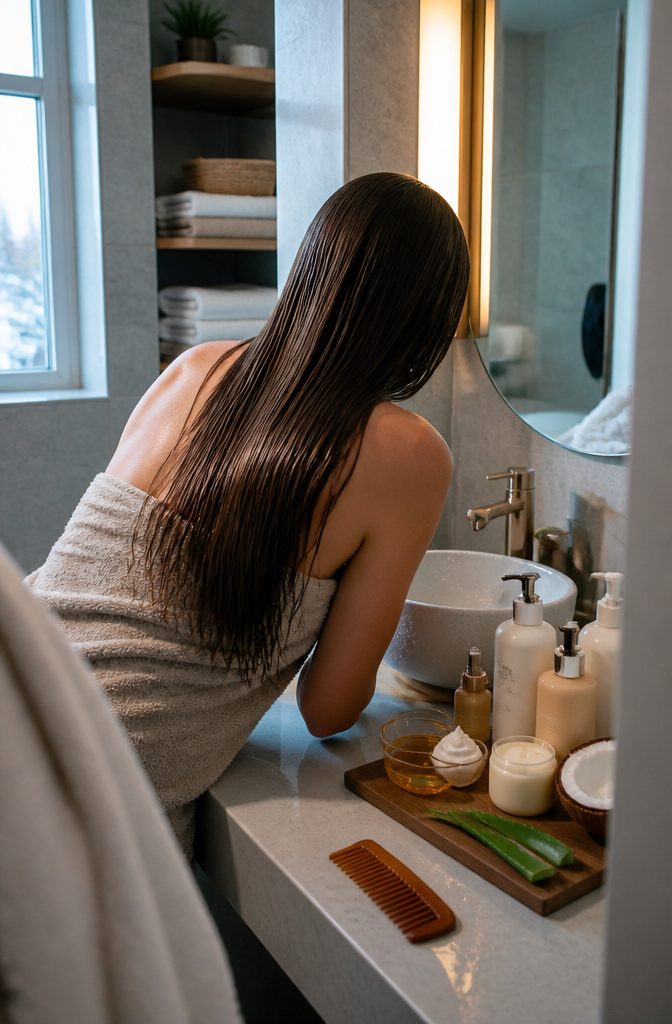
Frizz comes down to moisture, and the fastest way to restore it is with hydrating shampoo, conditioner and leave-in products that rebuild what dryness strips away.
I look for sulfate-free formulas with argan oil, shea butter, aloe vera or coconut oil, all of which smooth the cuticle instead of sitting on top the way synthetic silicones can.
Protein-infused conditioners add shine and manage frizz without weighing hair down.
Rinse-out conditioner goes in every wash and sits for two to five minutes before rinsing.
Leave-in conditioner applies the same way but stays on damp hair to lock in hydration all day. For touch-ups, a small amount of watered-down conditioner on the tips smooths frizz without rewetting the whole head.
A weekly mask delivers deeper nourishment, particularly formulas with macadamia or jojoba oil. Some people rinse for only five seconds to leave a light protective film that fights frizz between washes.
2. Wash Less Often and Skip Harsh Cleansers
Shampooing every day strips the oils your scalp produces to keep hair soft and protected. Without them, the cuticle lifts, moisture escapes, and frizz takes over.
Cutting back to two or three washes a week gives those oils time to work their way down the hair shaft, and most people with frizzy or dry hair find that rhythm keeps things balanced.
On the days between, dry shampoo handles oil at the roots without starting from scratch.
The formula matters as much as the frequency.
Sulfates cleanse hard but take too much with them, leaving hair even drier after you rinse. A sulfate-free shampoo cleans without stripping, and some people skip traditional shampoo altogether in favor of co-washing with a rinse-out conditioner.
That approach keeps moisture in while still lifting dirt and buildup. I look for formulas with oils or butters listed early, the kind that put back what water and friction pull out.
3. Apply Natural Oils to Damp Hair
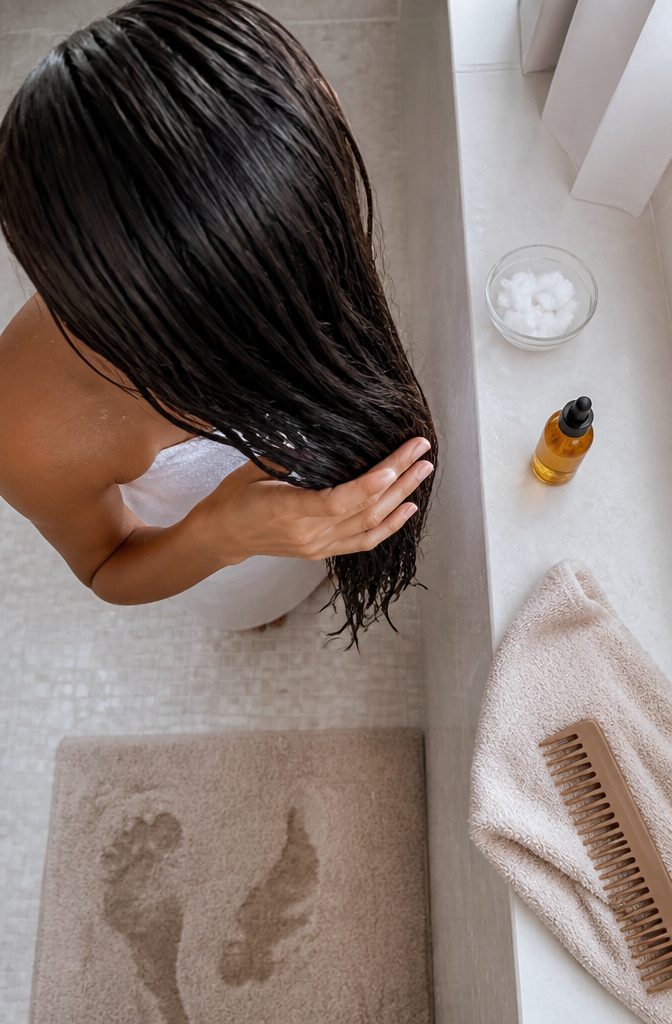
A few drops of oil on damp hair can seal the cuticle and lock in moisture before it escapes.
Coconut oil sits high on the list because its small molecular structure lets it penetrate the hair shaft rather than sitting on the surface.
Argan oil brings vitamin E and fatty acids without the weight, which suits finer textures. Jojoba, almond, avocado and macadamia oils all work the same way: they add hydration and create a barrier against humidity.
I put a small amount in my palms, warm it slightly by rubbing my hands together, then work it through from mid-length to the ends.
Too much and the hair looks greasy. Start with two or three drops and add more only if the hair absorbs it completely.
On coarse or thick hair you can afford a heavier hand; on fine hair the line between smooth and slick sits closer than you think.
Some people leave coconut oil in overnight as a deep treatment, rinsing it out in the morning, but for daily frizz control damp application after the shower does the job without the extra wash.
4. Make a Mask From Avocado, Eggs, Honey or Yogurt
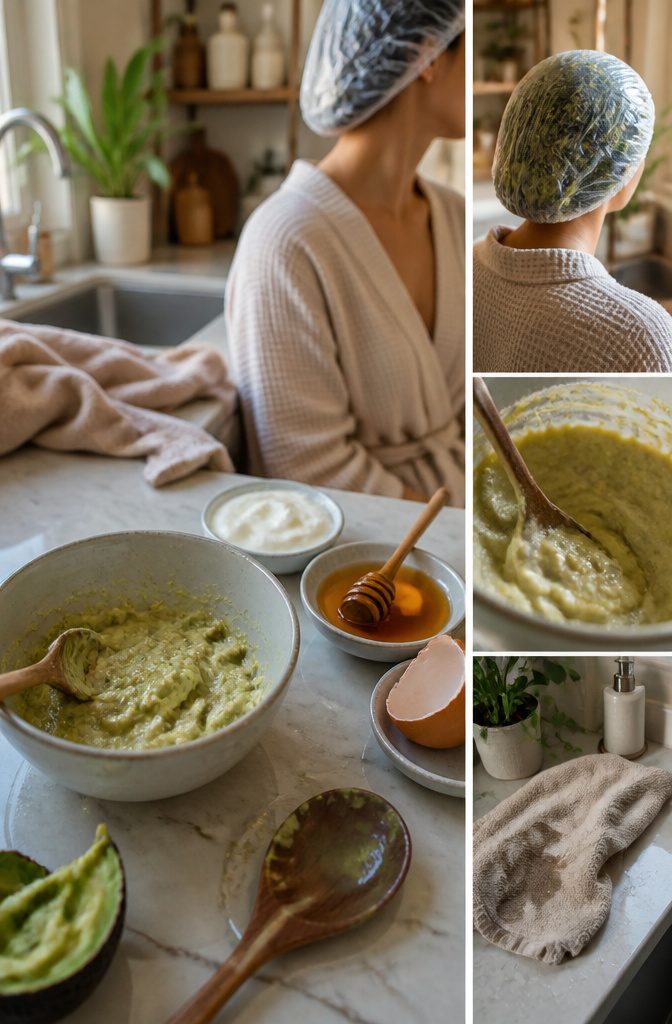
Kitchen ingredients show up in a lot of mask recipes, and the combinations work because each one adds something different. Avocado brings natural oils and vitamins A and E that strengthen hair while adding moisture.
Eggs deliver saturated fats and biotin, though the evidence linking them to frizz reduction is thin. Honey acts as a humectant, pulling moisture from the air and holding it in the strand.
Yogurt deep-conditions with lactic acid while it cleans gently, and mayonnaise combines eggs and oil in one step if you find a version without seed oils.
The proportions vary by recipe.
Mash half a ripe avocado with two tablespoons of coconut oil, or mix half a cup of plain yogurt with two tablespoons of honey. Whip two eggs until frothy, or combine one with argan oil.
Apply the mask to damp or shampooed hair, cover with a plastic cap, and leave it for 20 to 30 minutes before rinsing thoroughly. Once or twice a week keeps moisture levels up without weighing hair down.
5. Blot With a Microfiber Towel or T-Shirt Instead of Rubbing
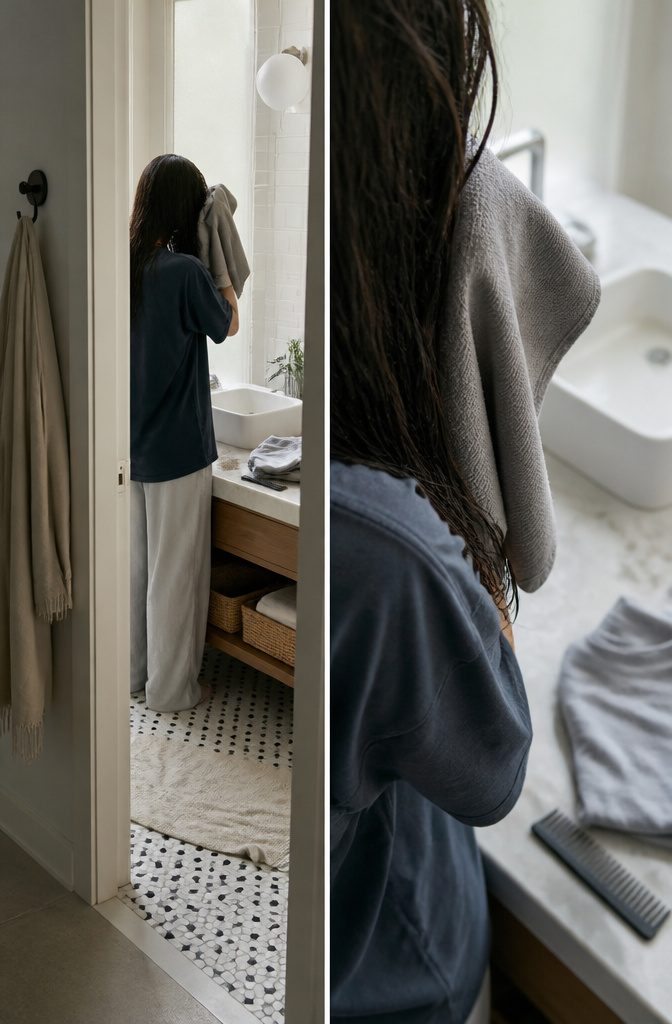
Wet hair stretches more than dry hair and the protein structure is weaker, which makes blotting a smarter move than rubbing.
I switched to a microfiber towel a few years ago and the difference in frizz was immediate. The fibres are finer than cotton, so there’s less friction dragging across the cuticle.
If you don’t have a microfiber towel, an old t-shirt works the same way: press it gently against your hair to soak up water rather than scrubbing back and forth.
Air-drying is another option, either all the way through or until your hair is damp enough to style.
In humid weather, though, air-drying can backfire and leave you with more frizz than you started with. On those days I blot first, then reach for a diffuser on low heat.
6. Cut Back on Heat Tools and Always Use Protectant
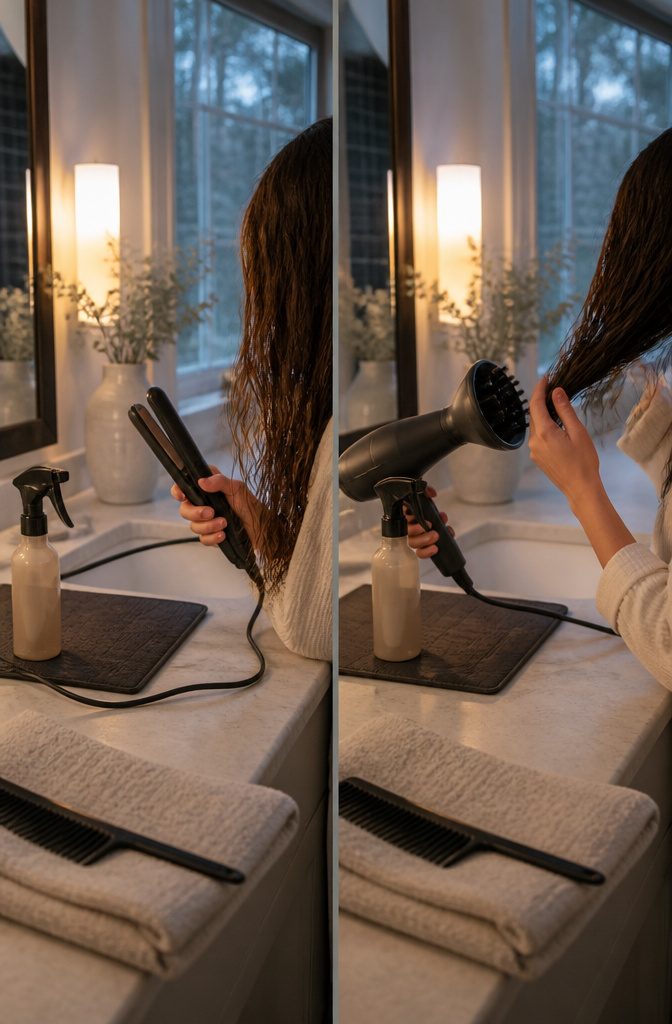
Heat strips moisture from hair faster than anything else you do on a regular morning. Flat irons and curling wands pull water out of the strand, leaving the cuticle rough and open to humidity later in the day.
Heat above 200°C cracks the protective cuticle layer and damages the keratin inside, making frizz worse with every pass.
I limit hot tools to once or twice a week when I can, and on those days a heat protectant goes on damp hair before the dryer even starts.
The spray creates a barrier that slows moisture loss while the tool is in contact with the strand, which is the only thing keeping frizz at bay when you style with heat.
I keep the iron moving instead of holding it in one spot, and the temperature stays as low as the style allows. Air drying is gentler when there’s time for it.
7. Rinse With Diluted Apple Cider Vinegar
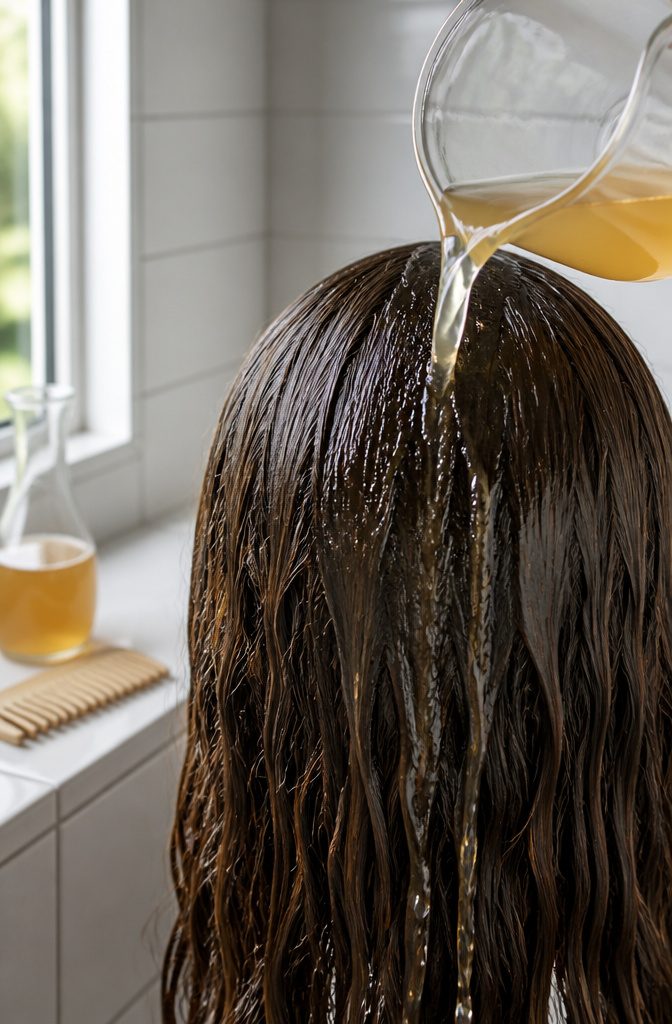
A diluted apple cider vinegar rinse is said to restore hair’s natural pH balance, which sits between 4.5 and 5.5 when cuticles lie flat and smooth. When hair becomes too alkaline, cuticles lift and the result is frizz.
Healthy hair has an acidic pH level, which ranges between 4.5 and 5.5. When hair’s pH balance is in this range, the cuticles remain closed and flat. When hair gets too alkaline, cuticles can open up, giving a frizzy appearance.
That is where apple cider vinegar comes in.
As a mildly acidic alpha hydroxy acid, it may help tame frizz, though the evidence remains anecdotal. It also dissolves buildup from styling products and conditioner, which leaves hair looking shinier.
Mix one part apple cider vinegar with two parts water (or 1/3 cup to one quart), pour it over freshly shampooed hair, and leave it for one to three minutes before rinsing with cool water.
The vinegar smell fades as your hair dries. Use once or twice weekly.
8. Sleep on Silk or Satin

Cotton pillowcases pull moisture out of your hair all night and create enough friction to lift the cuticle, which is why you wake up with frizz you didn’t go to bed with.
Switching to silk or satin solves both problems at once. The smooth surface lets hair glide instead of snag, and the fabric doesn’t strip natural oils the way cotton does.
If a pillowcase swap feels like too much upkeep, a satin cap does the same job and travels better.
Either option works on straight, wavy, curly and coily hair, because the friction problem is universal even if the frizz pattern changes by texture.
Loose protective styles help too. The pineapple technique gathers curly hair high on the head with a soft silk scrunchie, keeping curls from flattening overnight without the tension that causes breakage.
Loose braids work the same way for longer or straighter hair. Contain the hair loosely so it stays in place rather than rubbing in every direction as you move.
9. Finish Each Wash With Cool Water
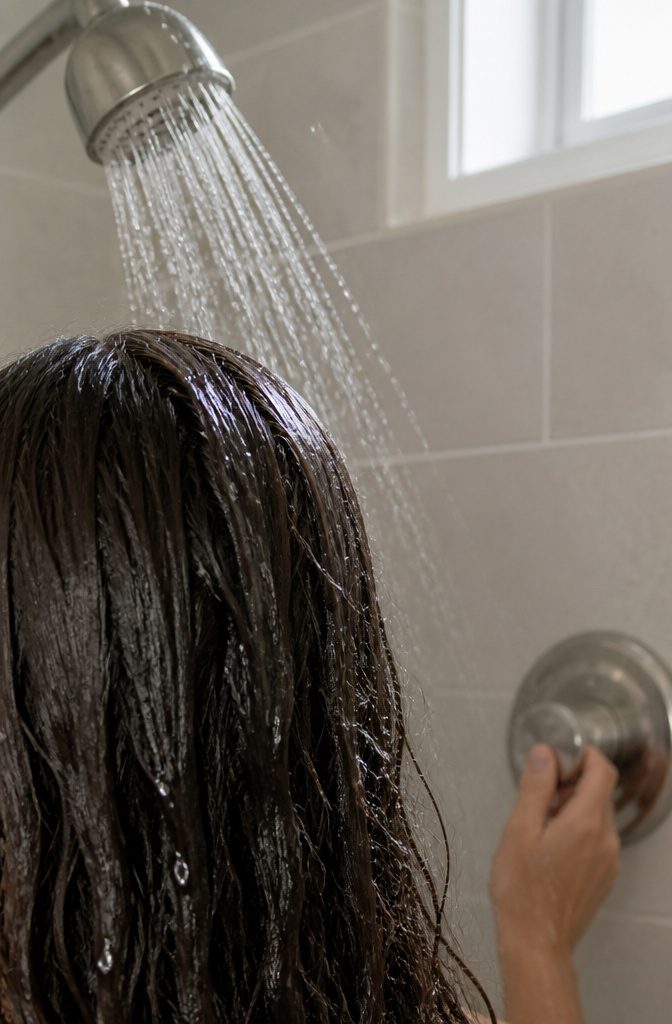
Cool water at the end of your wash helps seal the hair cuticle, locking in moisture and smoothing the surface so it catches less light and frizzes less through the day.
The contrast matters more than the absolute temperature. Wash and condition in warm water so the cuticle lifts enough to let product in, then drop the dial for the final rinse.
If cold feels brutal on your scalp, aim for cool rather than icy. Even a few seconds makes a difference.
Hot water strips natural oils and weakens the roots, and it can make hair overly porous, which invites breakage and leaves it vulnerable to humidity later.
I finish every wash this way now, and my hair holds smooth longer between styling sessions.
10. Trim Split Ends Every Few Months
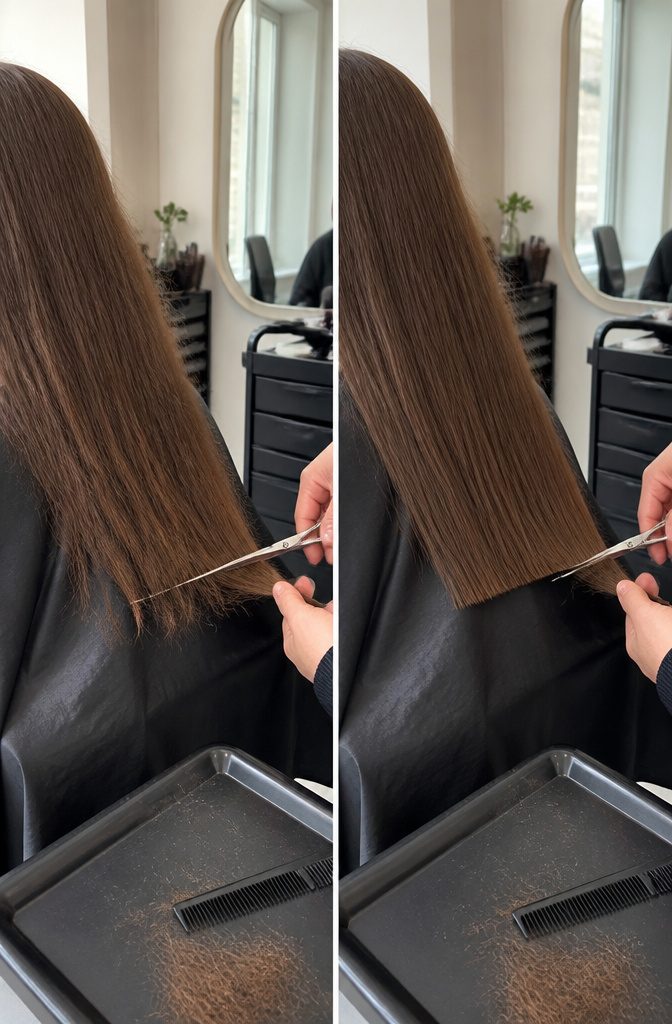
Split ends travel up the hair shaft, weakening each strand and making it easier for frizz to take hold.
Once the damage is there, products can smooth the surface temporarily, but only a haircut stops them in their tracks. The rough texture from those damaged ends is what catches humidity and refuses to lie flat.
Regular trims keep that roughness from spreading.
Aim for every 6–8 weeks to remove split ends before they turn into breakage that works its way further up. The cut doesn’t need to be dramatic; a tiny trim is enough to nip the problem before it ruins the strand.
If you’re in a humid climate, ask for blunt lines rather than layers. The weight of a blunt cut holds the hair down and makes it harder for individual strands to lift and frizz in damp air.
I know it feels counterintuitive when you’re trying to grow length, but keeping the ends clean means the hair you do have looks stronger and behaves better.
Frayed ends don’t just look scraggly; they set you up for more damage with every wash and brush.
11. Dry Curls With a Diffuser
Dry Curls With a Diffuser
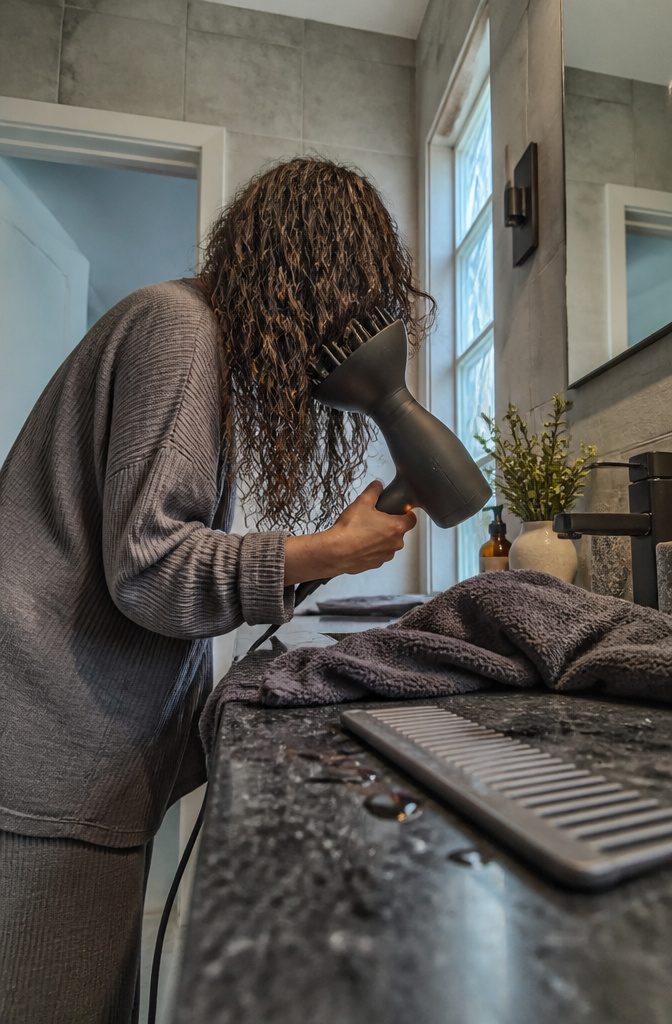
If you have curls or waves, attaching a diffuser to your hairdryer keeps frizz under control by limiting how much your hair gets tossed around as it dries.
Without one, the direct blast of air tangles and knots curls, and you end up with frizz the moment you try to brush through it.
The diffuser spreads heat more evenly across a wider area, so each curl dries in place rather than whipping around the room.
I set the dryer to the lowest heat that still feels useful. High heat lifts the cuticle scales and lets moisture escape, which is exactly what makes hair frizz in the first place.
Low heat with a diffuser attached gives you bounce and definition without the damage, and your curls dry detangled instead of matted.
12. Match Products to Your Hair Type and the Weather
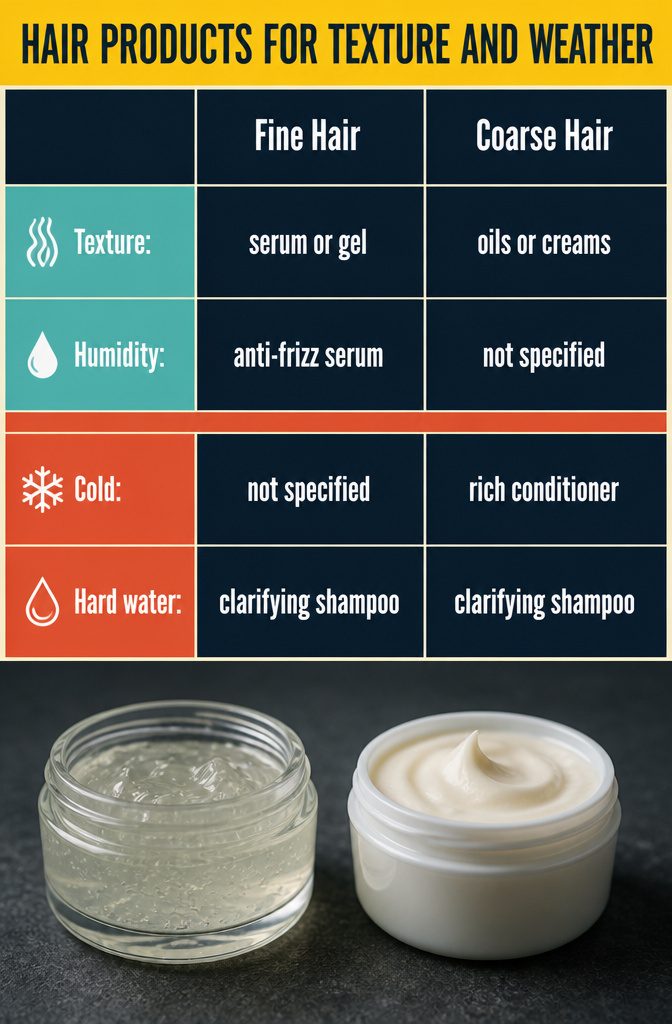
The formula you reach for shifts depending on whether your hair is fine, coarse, or somewhere in between. Fine hair frizzes just as easily as thick curls, but a rich cream that smooths coarse strands will weigh fine ones flat.
Lighter serums and gels work better on fine or thin hair, while thicker, coarser textures can handle heavier oils and creams without losing volume.
Weather changes the equation. Humidity swells the hair shaft and invites frizz, so I swap in anti-frizz serums and lightweight stylers the moment the forecast turns muggy.
Cold air does the opposite, drying hair out and making it brittle, so richer conditioners and protective treatments take over in winter.
Hard water adds another layer: mineral buildup coats each strand and blocks moisture, which means a clarifying shampoo every few weeks keeps the surface clean enough for conditioner to actually sink in.
13. Drink Water and Eat Foods That Support Hair Health
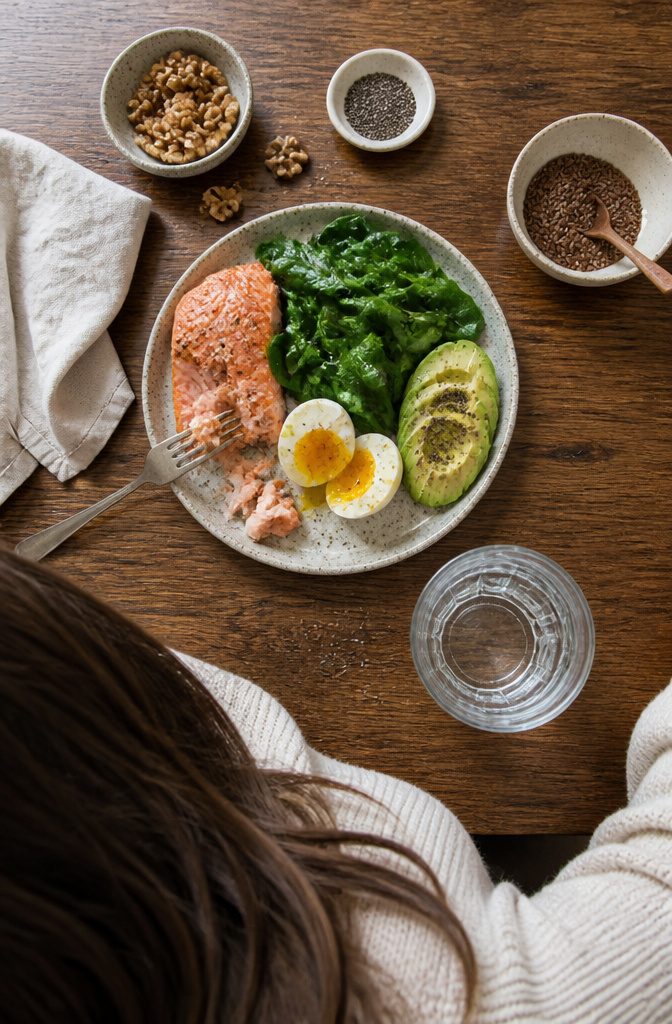
What you eat and how much water you drink both show up in your hair.
Frizz tends to worsen when the strand itself is dry, and drinking at least one and a half liters of water a day makes a measurable difference in hair quality.
Hydration is the baseline; nutrition is where the detail comes in.
Foods rich in omega-3 fatty acids help hair stay resilient and less prone to breakage.
Salmon, flaxseed, chia seeds, walnuts and spinach all supply omega-3, while biotin comes from egg yolks, nuts, seeds, sweet potatoes and avocados. Vitamin A supports scalp oil production, and vitamins C and E work as antioxidants that protect the strand.
Zinc and omega-6 fatty acids round out the list: meat, whole grains, citrus fruits and kiwi all contribute to hair that holds moisture better and frizzes less.
Stress complicates this from the inside. High cortisol levels can alter the hair growth cycle and worsen dryness, which is why many people notice frizz spiking during demanding periods.
Managing stress is part of managing frizz, even if it does not show up in a product aisle.
What Causes Frizz in the First Place
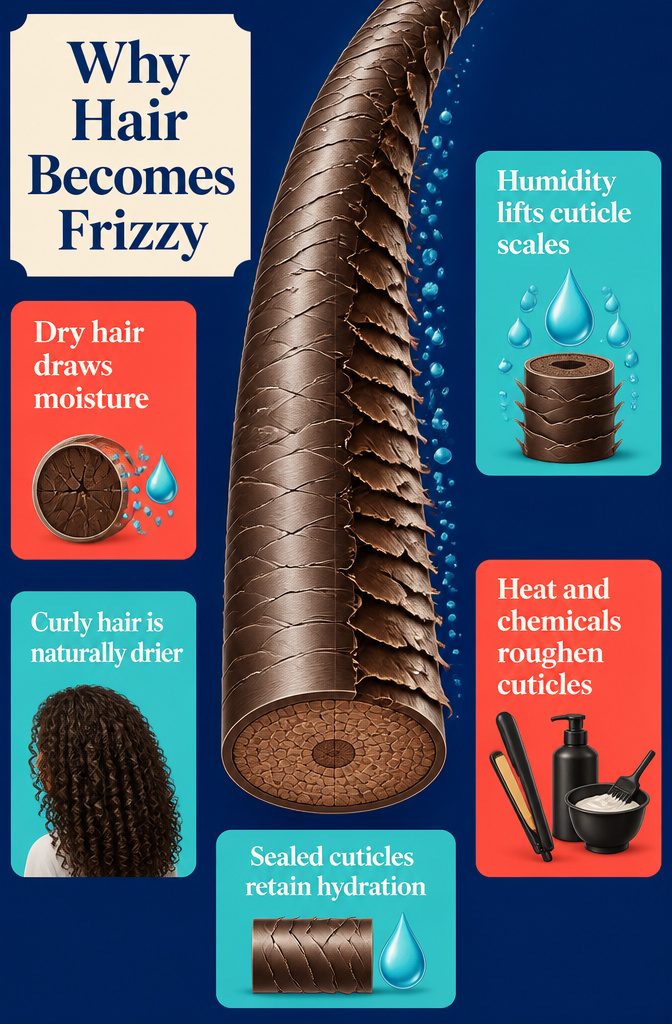
Frizz starts with dry hair that pulls moisture from humid air, which lifts the cuticle and makes the strand swell. The cuticle is made of overlapping scales that lie flat when hair is healthy.
When it’s dehydrated, those scales separate and rise, letting in moisture from the atmosphere. The result is that fluffy, rough texture that shows up worst in humid weather.
Anything that strips moisture makes the problem worse. Heat tools, alkaline shampoos, chemical treatments and even towel-drying rough up the cuticle.
Hair texture plays a role too. Curly hair tends to be drier by nature, which is why it frizzes more easily than straight hair under the same conditions.
The fix comes down to keeping the cuticle sealed and the hair shaft hydrated, which is exactly where the remedies below come in.
Why Curly Hair Frizzes More Easily
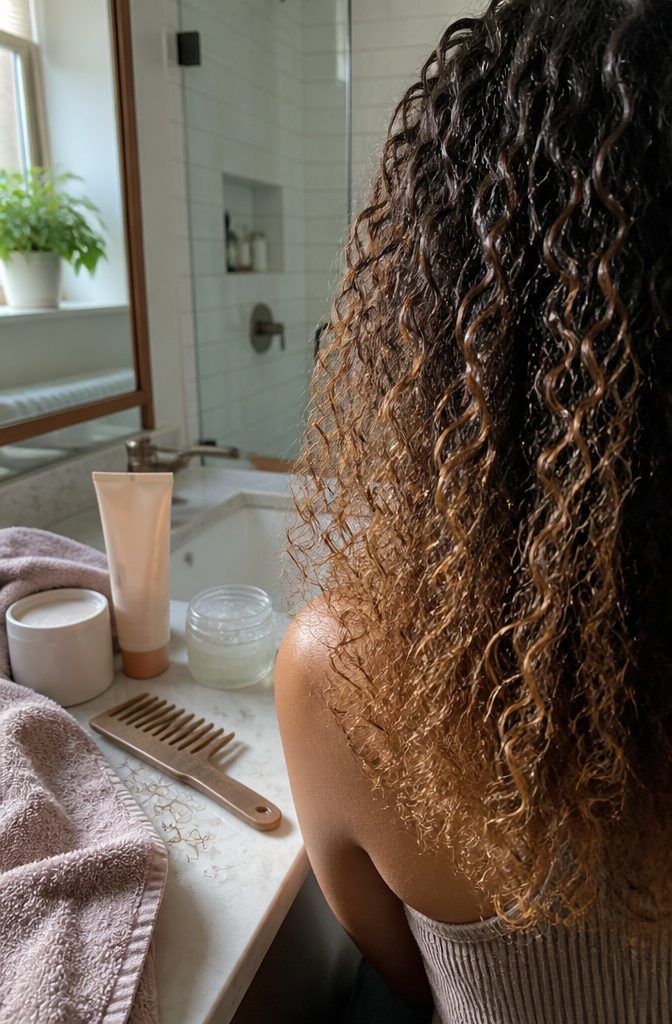
Curly hair frizzs faster than straight because sebum from the scalp can’t travel evenly down each spiral, leaving the lengths and ends with less natural protection.
That means the cuticle lifts more easily, especially when hydration drops. Without enough moisture, the curl loses its shape, swells and reads as frizz instead of definition.
The fix starts with products made for the texture. Curl-specific shampoos, conditioners and gels hydrate without weighing hair down, and co-washing with conditioner instead of sulfate-based shampoo keeps more of that moisture in place.
I focus on washing the scalp rather than scrubbing the lengths, then saturate the hair with conditioner and detangle with a wide-tooth comb before rinsing.
Scrunching in a silicone-free gel while the hair is still soaking helps hold the curl pattern as it dries.
Frequently Asked Questions
What causes frizzy hair?
Frizz happens when dry hair pulls moisture from humid air, lifting the cuticle and making each strand swell.
Heat tools, alkaline shampoos, chemical treatments and rough towel-drying strip moisture and damage the cuticle further. Curly hair frizzes more easily because natural oils from the scalp can’t travel down each spiral, leaving the lengths drier and more vulnerable.
How often should I wash frizzy hair?
Washing 2 to 3 times a week gives your scalp’s natural oils time to travel down the hair shaft and keep the cuticle sealed.
Daily shampooing strips those oils, which makes hair drier and more prone to frizz. On the days between washes, dry shampoo handles oil at the roots without starting from scratch.
How can I reduce frizz in my hair naturally?
Natural oils like coconut, argan and jojoba seal the cuticle when applied to damp hair, while a diluted apple cider vinegar rinse restores the hair’s natural pH balance between 4.5 and 5.5.
Aloe vera acts as a light styling product that adds hydration, and masks made from avocado, honey or yogurt deliver deep moisture without synthetic ingredients.
Which hair masks work best to reduce frizz?
Masks with avocado, eggs, honey or yogurt work because each adds different benefits: avocado brings oils and vitamins A and E, honey pulls moisture from the air and holds it in the strand, and yogurt deep-conditions while cleaning gently.
Weekly use keeps moisture levels up without weighing hair down, especially when combined with coconut or argan oil.
How do I fix dry frizzy hair?
Start with hydrating shampoo, conditioner and leave-in products that contain argan oil, shea butter or coconut oil to rebuild what dryness strips away.
Cut back to 2 or 3 washes a week, apply a few drops of natural oil to damp hair, and limit heat tools to once or twice weekly with a protectant spray.
A weekly mask with macadamia or jojoba oil delivers deeper nourishment between washes.
Can oiling reduce frizzy hair?
A few drops of oil on damp hair seal the cuticle and lock in moisture before it escapes.
Coconut oil penetrates the hair shaft rather than sitting on the surface, argan oil brings vitamin E without weight, and jojoba, almond and avocado oils all add hydration while creating a barrier against humidity.
Apply from mid-length to ends, starting with 2 or 3 drops and adding more only if the hair absorbs it completely.
How to prevent frizzy hair in humid weather?
Switch to lightweight anti-frizz serums and leave-in conditioners the moment the forecast turns humid, since moisture in the air swells the hair shaft.
Protective styles keep strands contained without tension, and finishing each wash with cool water seals the cuticle so it resists lifting later. Avoid washing too often, which strips the natural oils that protect against humidity.
Can dry hair be permanently cured?
Consistent care improves texture and reduces dryness, but hair type itself can’t be changed.
Regular hydration, deep conditioning, gentle handling and protection from heat all make hair behave better over time, though naturally frizzy hair will always need ongoing maintenance rather than a one-time fix.
How to fix frizzy hair in 5 minutes?
Apply a small amount of coconut, argan or jojoba oil to damp hair, working it through from mid-length to ends.
Alternatively, smooth on aloe vera gel, mist with diluted apple cider vinegar, or scrunch gently with a microfiber towel or old t-shirt to absorb water without lifting the cuticle.





