Type 2 waves behave differently than type 4 coils, and what defines one can sit heavy on the other. A wide-tooth comb keeps clumps intact, protective styles cut down on friction, and the right curl cream seals in moisture without building up.
1. Use a Curl Cream
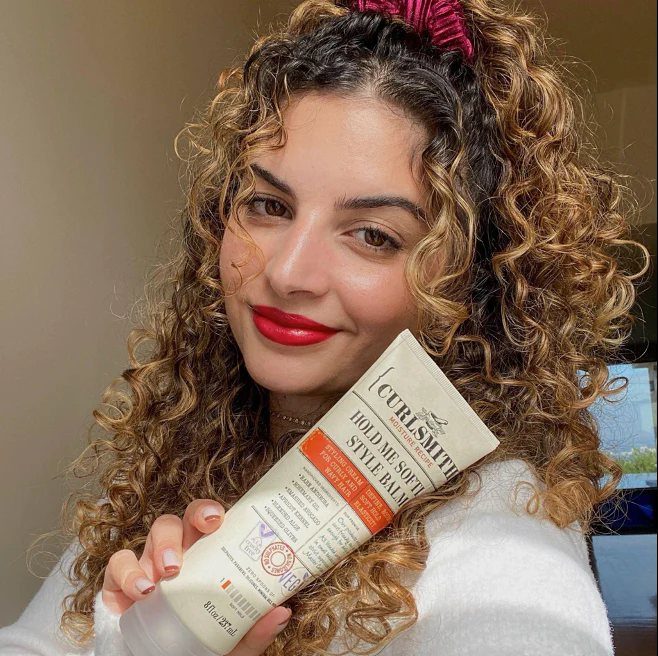
A curl cream smooths the cuticle and locks in moisture, so curls dry defined rather than fluffy. Apply it to soaking wet hair, section by section, and scrunch upward to encourage your natural curl pattern.
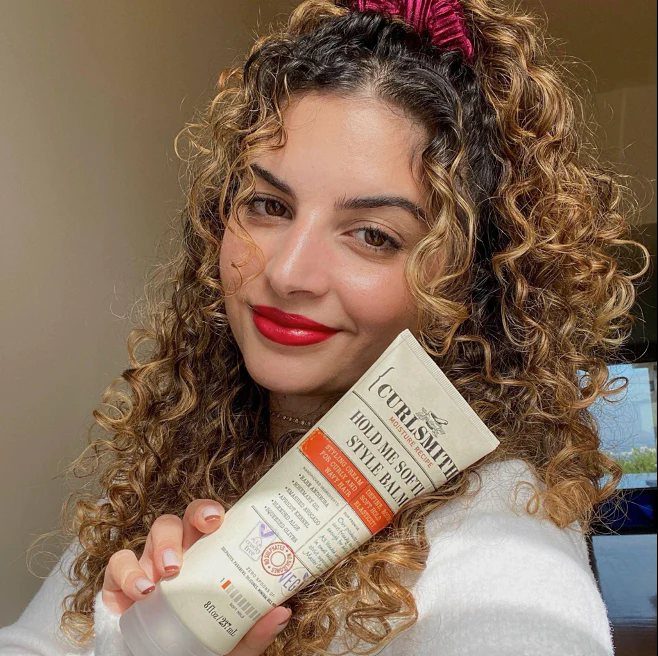
The balm visible here is thick enough to support curls without weighing them down, and it works on most curl types.
If your hair is fine or easily weighed down, start with a dime-sized amount and add more only where you need it.
2. Curl Type

Different curl patterns frizz for different reasons, and the fix that works for loose waves may fall flat on tight coils.
Type 2 waves tend to frizz when they dry too fast or get brushed out. Type 3 curls need enough moisture to clump together, and type 4 coils frizz when they’re dry or handled roughly.
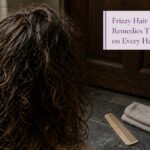
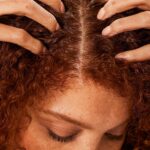
Figure out which type you have, and you can stop trying products meant for someone else’s hair. The woman here has type 3 curls, which respond well to leave-in conditioner and a curl cream applied while the hair is still wet.
3. Use a Wide-tooth Comb
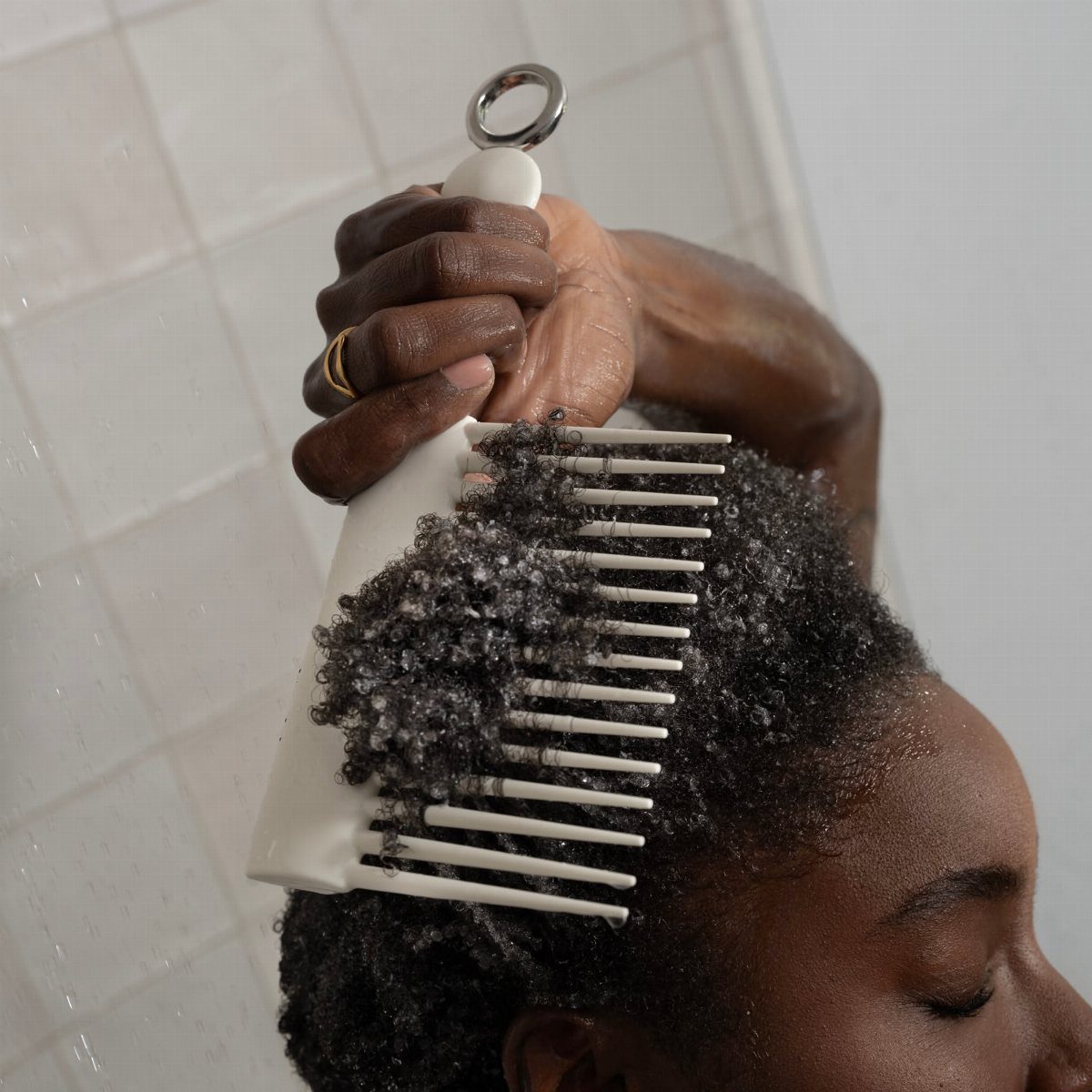
A wide-tooth comb detangles without breaking up the curl clumps that keep frizz at bay. Work through your hair in the shower while conditioner is still in, starting at the ends and moving up toward the roots.
A brush or fine-tooth comb pulls curls apart and roughens the cuticle, which is exactly what creates frizz. Save the comb for wet hair only; once your curls are dry, leave them alone or scrunch them gently with your hands.
If you’re a curly girl, a blow-dry may scare you, but there’s a better solution for them: Use a diffuser. Traditional hair dryers jostle your curls too much, but a diffuser will soften the air flow so your curls are bouncy, not frizzy.
— Glamour
4. Wear a Protective Style

Humidity swells each strand and loosens your curl pattern, which is why a humid day can turn smooth curls into a frizzy cloud.
A high bun or a loose braid keeps most of your hair covered and lets you pull it down once you’re indoors.
Silk or satin scrunchies prevent the creasing and breakage that elastic bands cause. If you’re out for hours, bring a small bottle of anti-frizz serum to smooth any flyaways without weighing down the rest.
Why Curls Become Frizzy
Frizz happens when the outer layer of each strand lifts and pulls in humidity. That water swells the strand from within and disrupts the smooth alignment that keeps curls sharp.
Curly hair is more vulnerable because of its shape. The spiral structure makes it harder for scalp oils to travel down the strand, so curls end up drier than straight hair and lose moisture faster.
Dry hair lifts its cuticle more easily, which is why curls frizz even on a normal day.
Damage speeds this up. Friction from towels or cotton pillowcases, heat styling without protection, and chemical treatments all rough up the cuticle and make it absorb moisture faster.
Buildup from heavy products can also seal the cuticle unevenly, leaving some sections open and prone to swelling.
Frequently Asked Questions
How do I stop curly hair from frizzing?
Apply curl cream or leave-in conditioner to soaking wet hair, detangle only with a wide-tooth comb, and avoid friction from towels or rough fabrics.
Curls need moisture locked in at the start, and gentle handling keeps the cuticle smooth so humidity can’t lift it and create frizz.
What causes frizzy hair?
When the cuticle layer opens, each strand pulls moisture from the surrounding air, swells, and loses the clean shape that defines a curl.
Dryness makes curls lift their cuticle more easily, and damage from friction, heat, or chemicals speeds the process by roughing up the surface.
Which hair types experience the most frizz?
Spirals and coils stay drier because natural oils can’t slide down the bend as easily, so the strand grabs ambient moisture instead and the texture goes fuzzy.
Any hair type can frizz when it’s dry or damaged, but curls lose moisture faster.
What is the best haircut for curly frizzy hair?
Regular trims remove the damaged ends that lift and frizz, keeping the rest of your hair healthier as it grows. A dry cut shaped while curls are in their natural state can also control volume better than cutting wet hair.