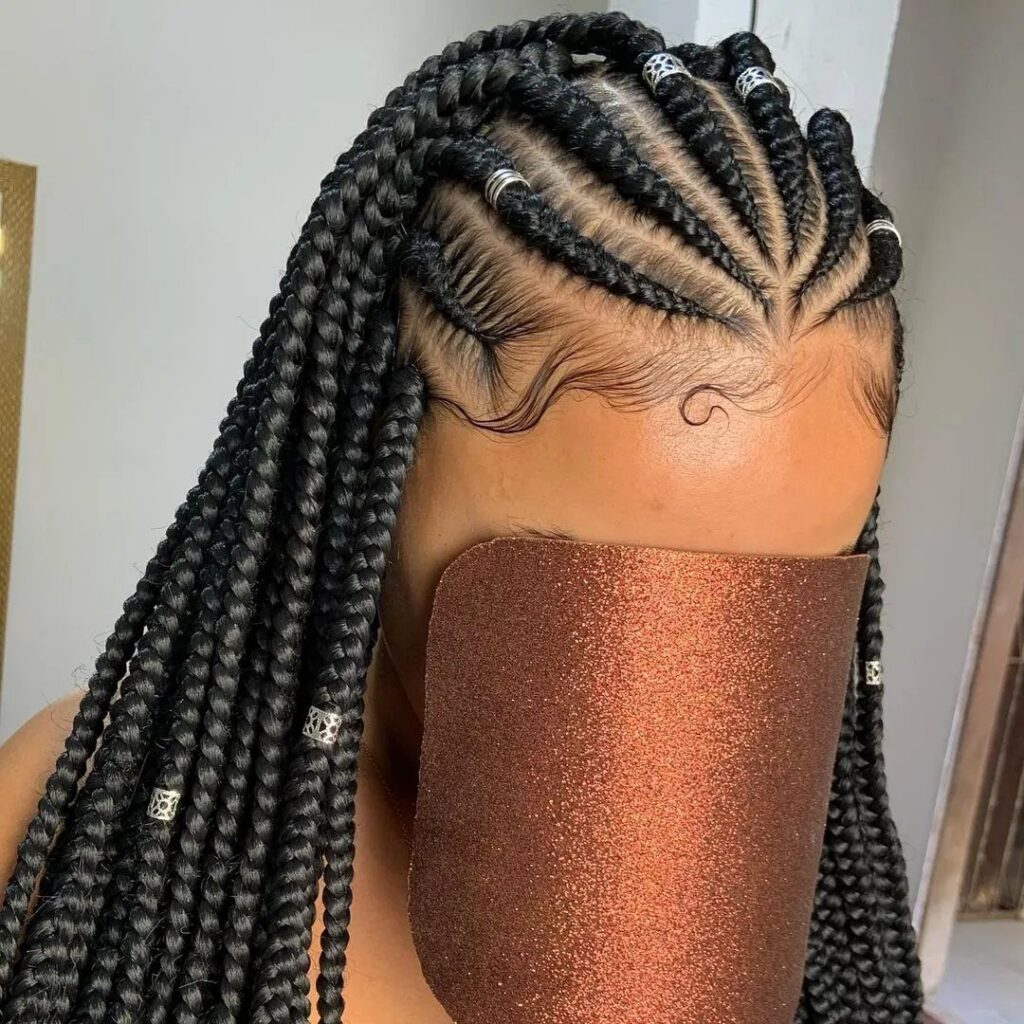
Most of these styles hold for several weeks once they’re in, which makes them practical for anyone who wants a polished look without daily styling.
The right choice depends on how much chair time you can spare up front and how much of your hair you want controlled at the scalp.
1. Straight-Back Cornrows
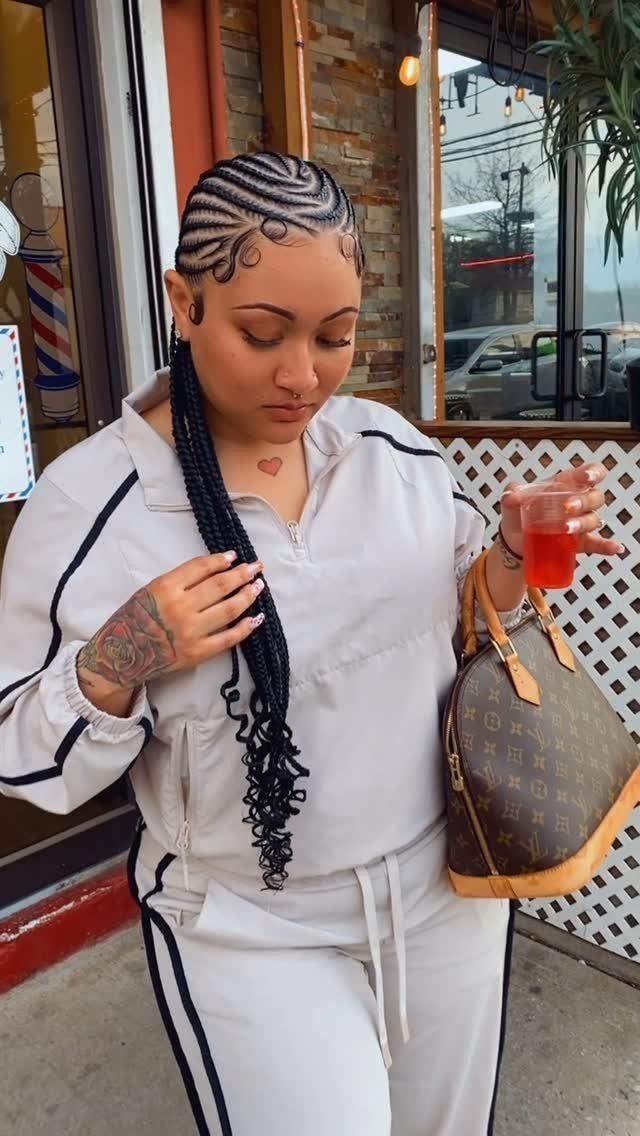
Straight-back cornrows run parallel from hairline to nape, flat against the scalp with no part geometry to plan.
Extensions braided in at the ends add length and a curl finish, which is an easy way to get the look if your natural hair is shorter.
Installation takes a few hours, and the style holds for several weeks with a silk scarf at night.
2. Knotless Braids
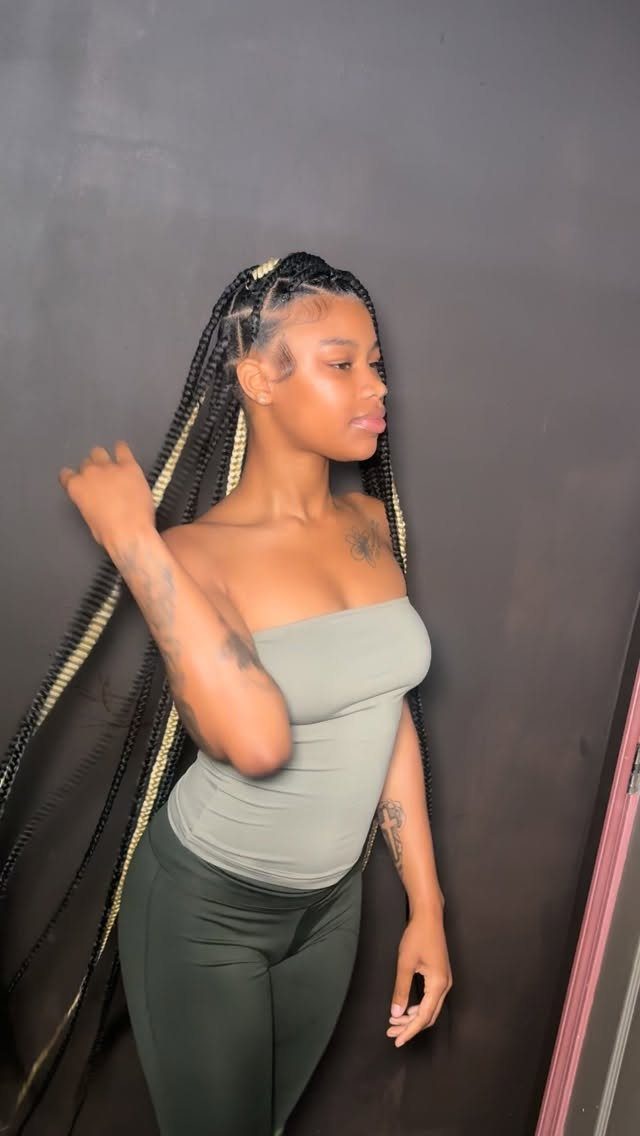
Knotless braids take longer to install, but the flat, knot-free root is what makes that extra chair time worth it.
The extension hair feeds in gradually as the braid builds, so the weight spreads along the length instead of pulling at the root, and that’s why these wear more comfortably than traditional box braids by the time you’re into week two or three.
Color works beautifully here. The blonde pieces give the braids dimension without a full bleach commitment.
3. Braided Ponytail
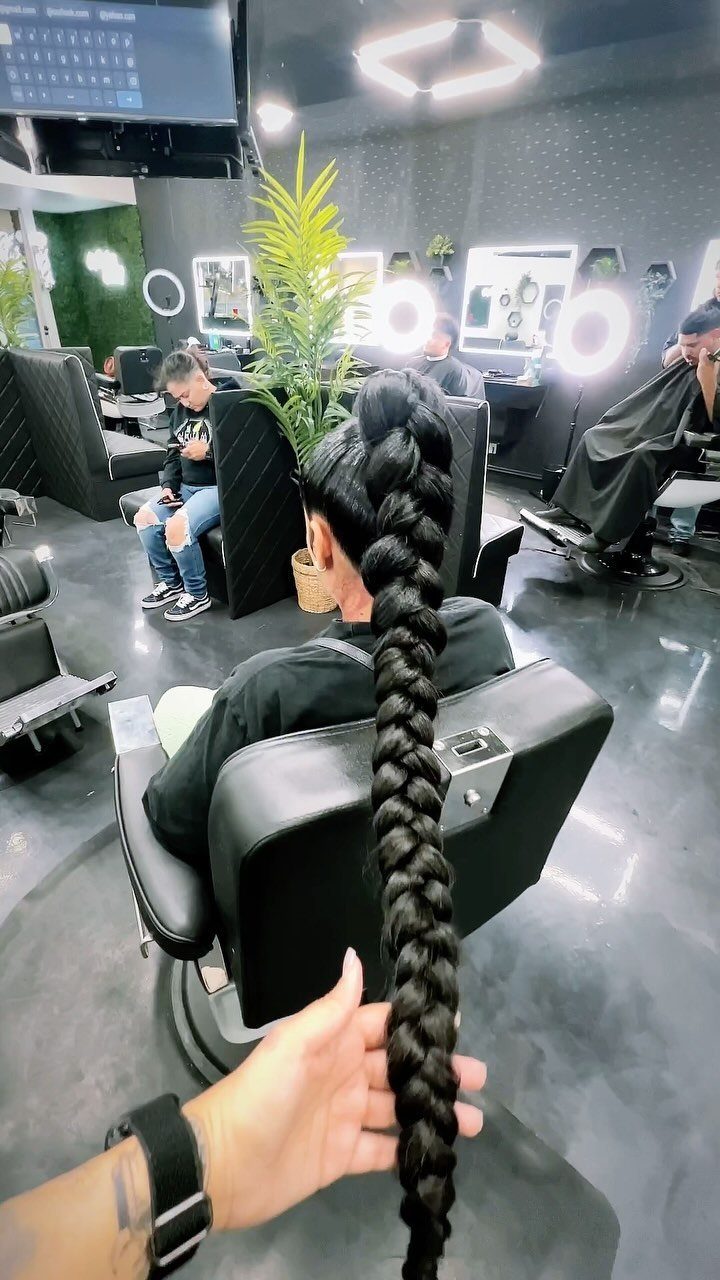
Gathering braids into a ponytail is one of the cleanest ways to add instant length and fullness at the same time. A thick, blunt-cut finish makes a braided ponytail read more sculptural than a tapered one would.
Cornrows along the perimeter, feeding into the base, keep the ponytail looking neat rather than bundled, and that foundation is what holds a heavy extension ponytail in place through a long day.
4. Cornrow Bun
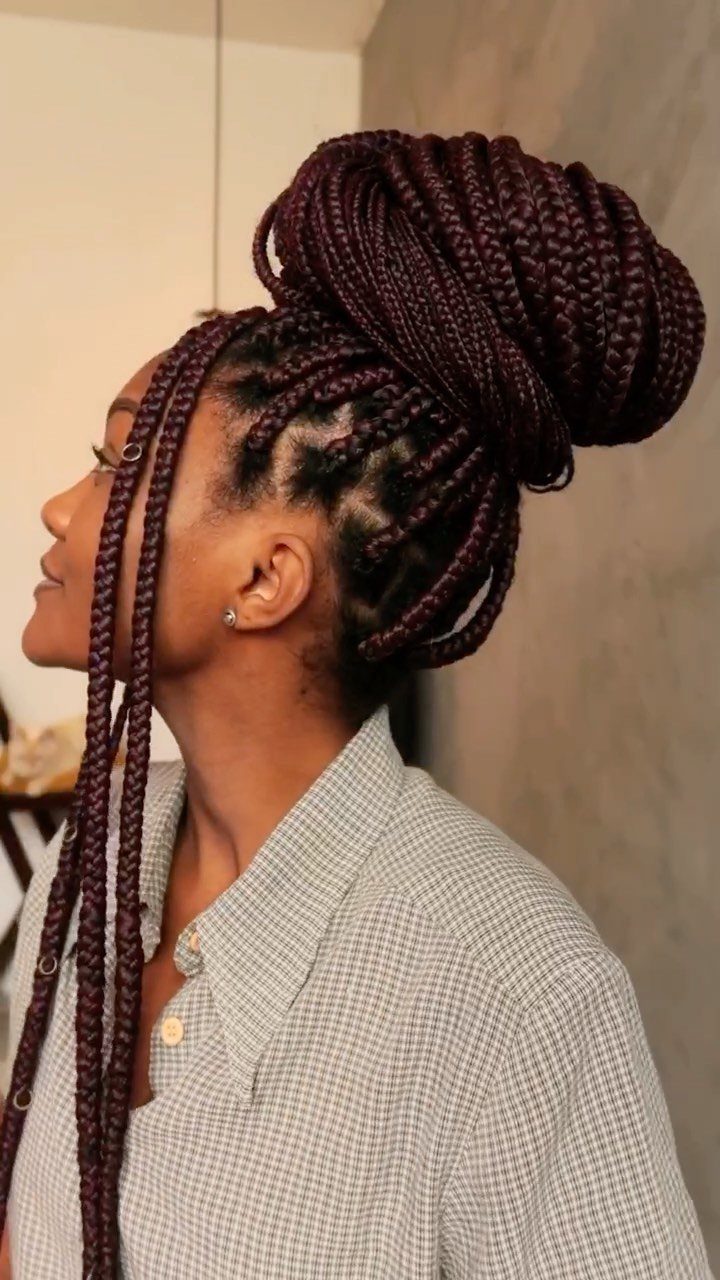
Cornrows styled into a bun pull double duty: the scalp-flat sections read polished from the front, and the bun gives you an updo without a single loose strand to manage.
A burgundy tint is a low-key way to make a sleek cornrow bun feel like yours rather than just neat.
2 hanging braids at the back soften the whole thing, so it doesn’t end up feeling too severe.
5. Fulani Braids
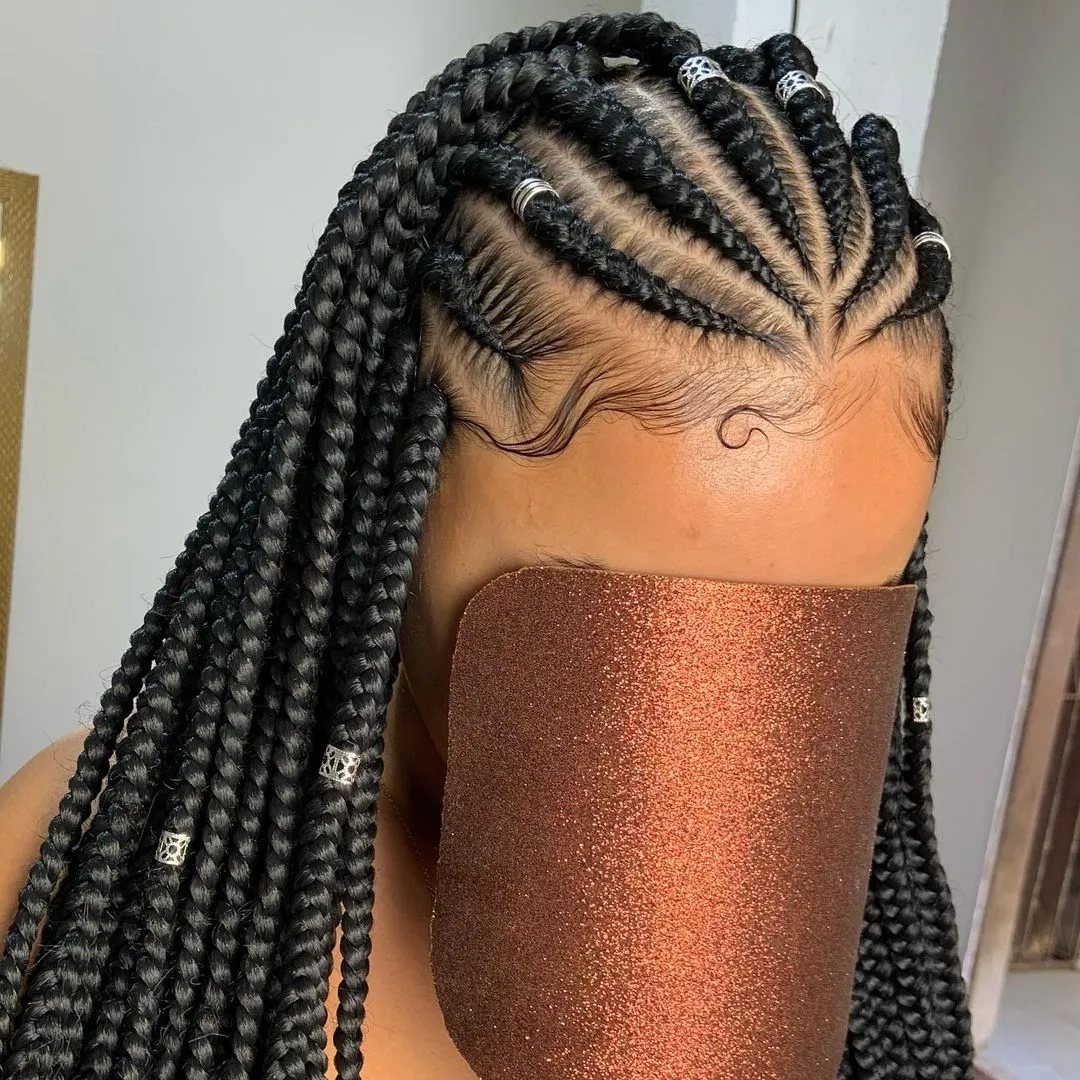
Fulani braids blend 2 braid types in one style: cornrows run along the front and sides of the scalp, and individual braids hang from the back.
Silver beads threaded onto the ends are a traditional detail that also make the style immediately recognizable.
If you’re going to a stylist, bring a reference photo of where the cornrows stop and the individual braids begin, since that boundary shifts the entire balance of the look.
6. Half-Up Half-Down Braids
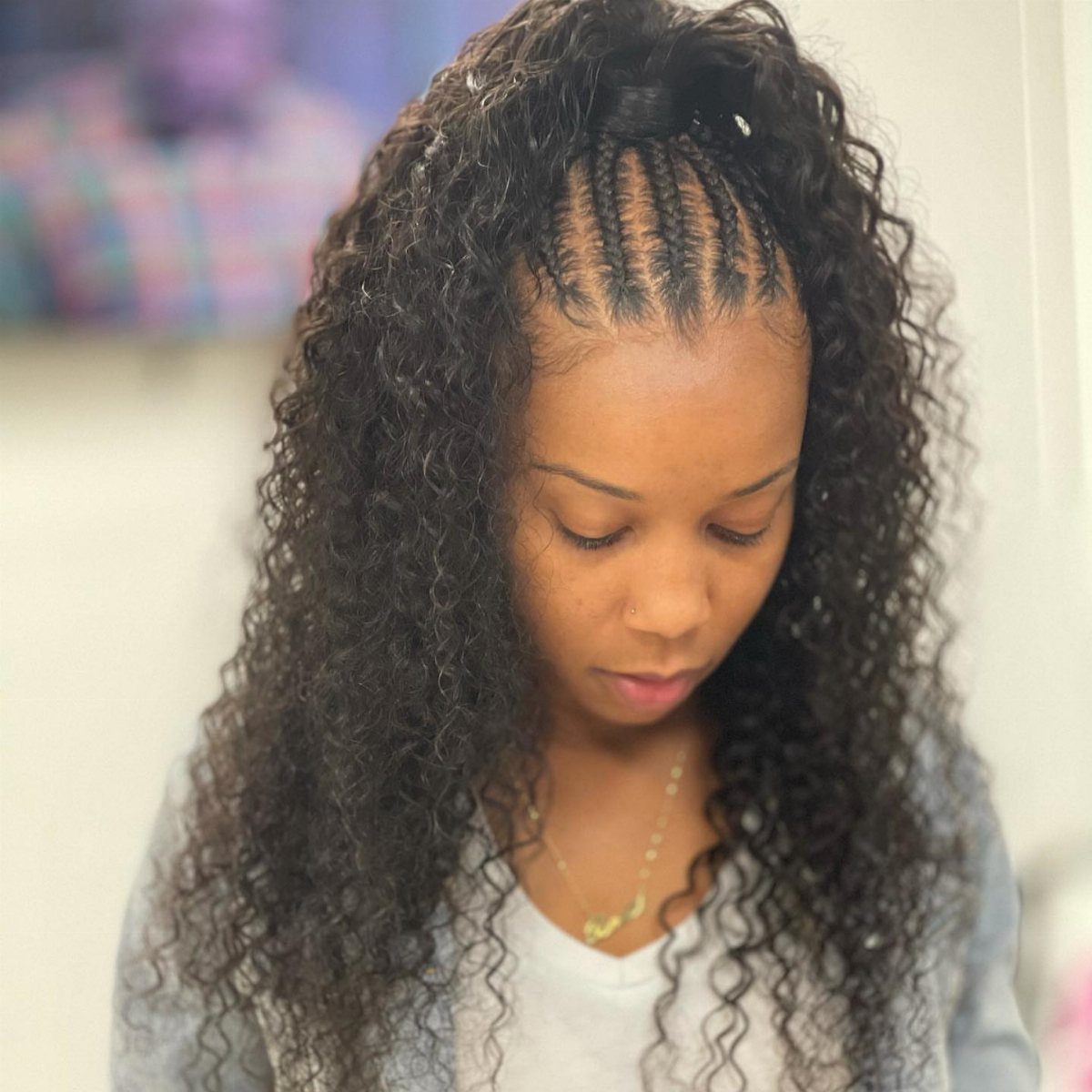
Pulling just the top section back into braided cornrows while the rest of the hair stays loose keeps this style feeling casual rather than formal.
The cornrows control the hair most likely to frizz or puff up around the face, which makes it a practical option for wavy or curly hair that you don’t want to braid all the way down.
A half-up style also works well as a midweek refresh if your full braids have started to loosen at the front.
7. Box Braids
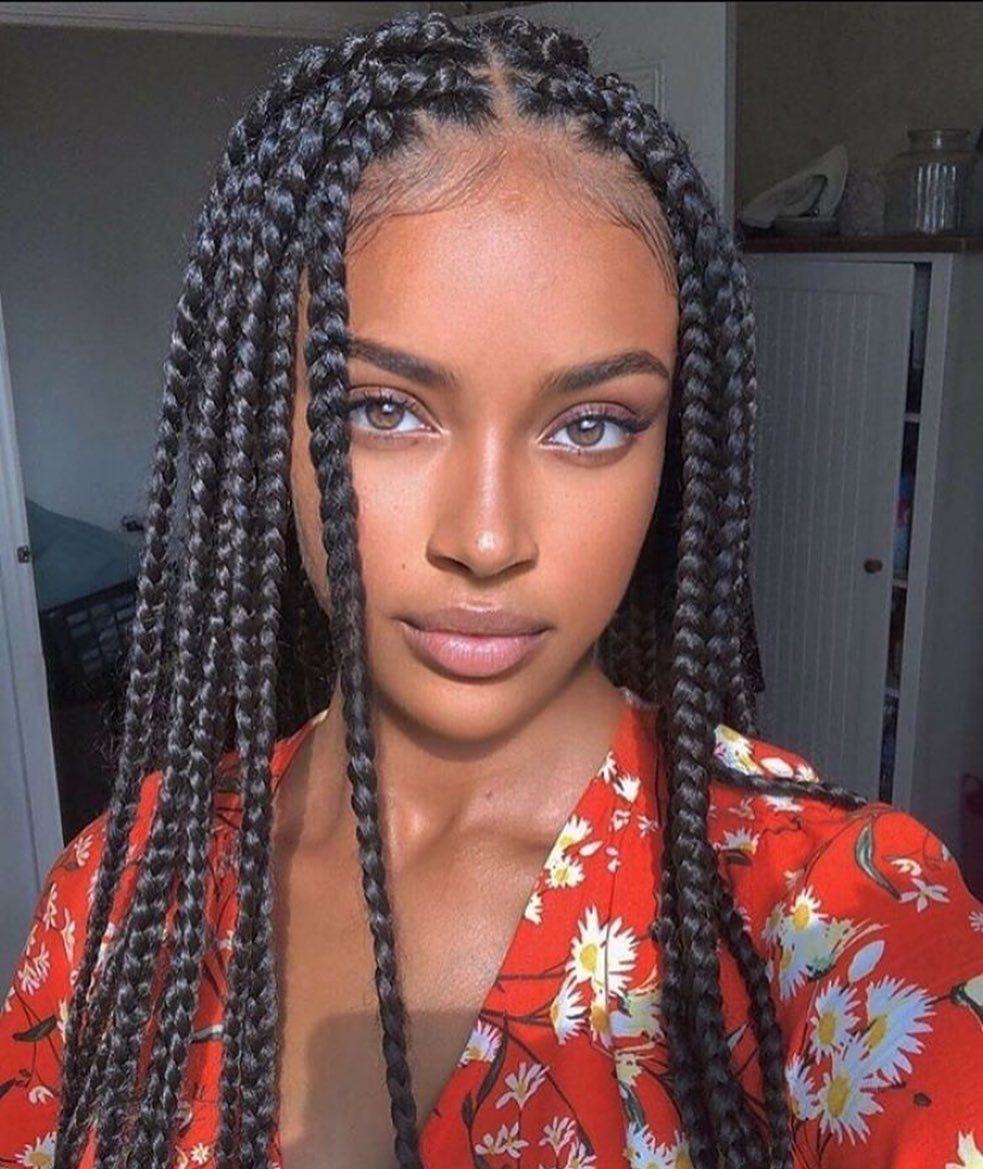
Each braid starts from a clean square section of the scalp, which is what gives box braids their even, grid-like pattern at the roots.
Box braids take color well if you want contrast with the natural black. Size is the main variable to settle before you sit down: larger sections mean faster installation, smaller sections mean more flexibility once they’re in.
8. Lemonade Braids
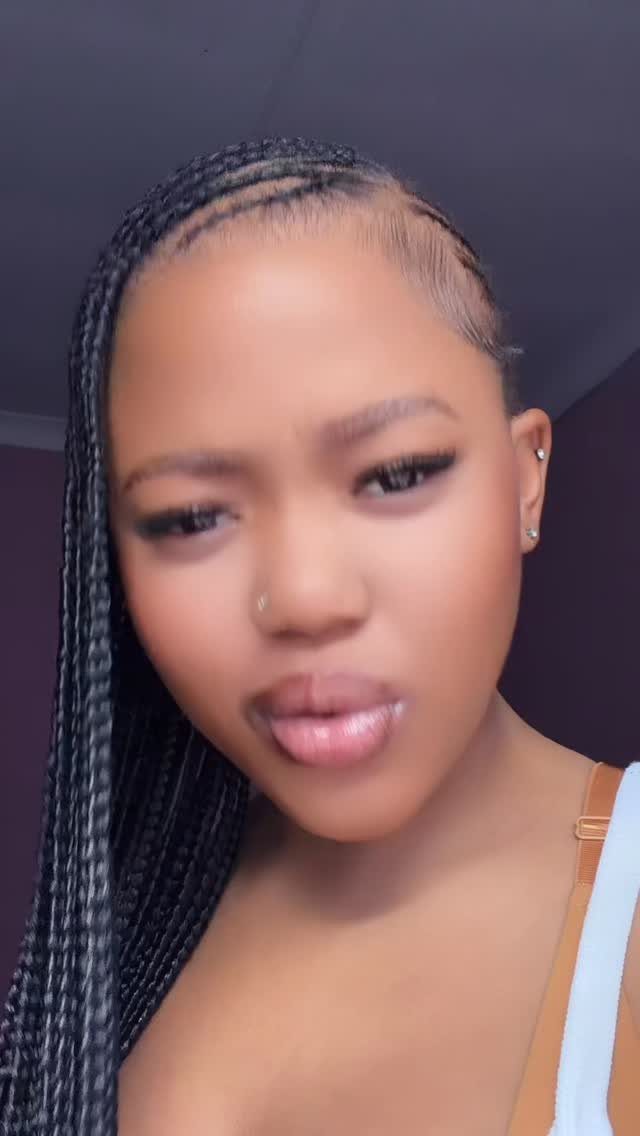
Side-swept cornrows curve around the head in one direction and fall to the side rather than straight back, which is what separates lemonade braids from every other cornrow layout.
The directional pull means all the length lands on one side, so face shape matters here. Longer face shapes tend to wear this better than very round ones, since the asymmetry adds width on one side rather than balancing it.
9. Boho Braids
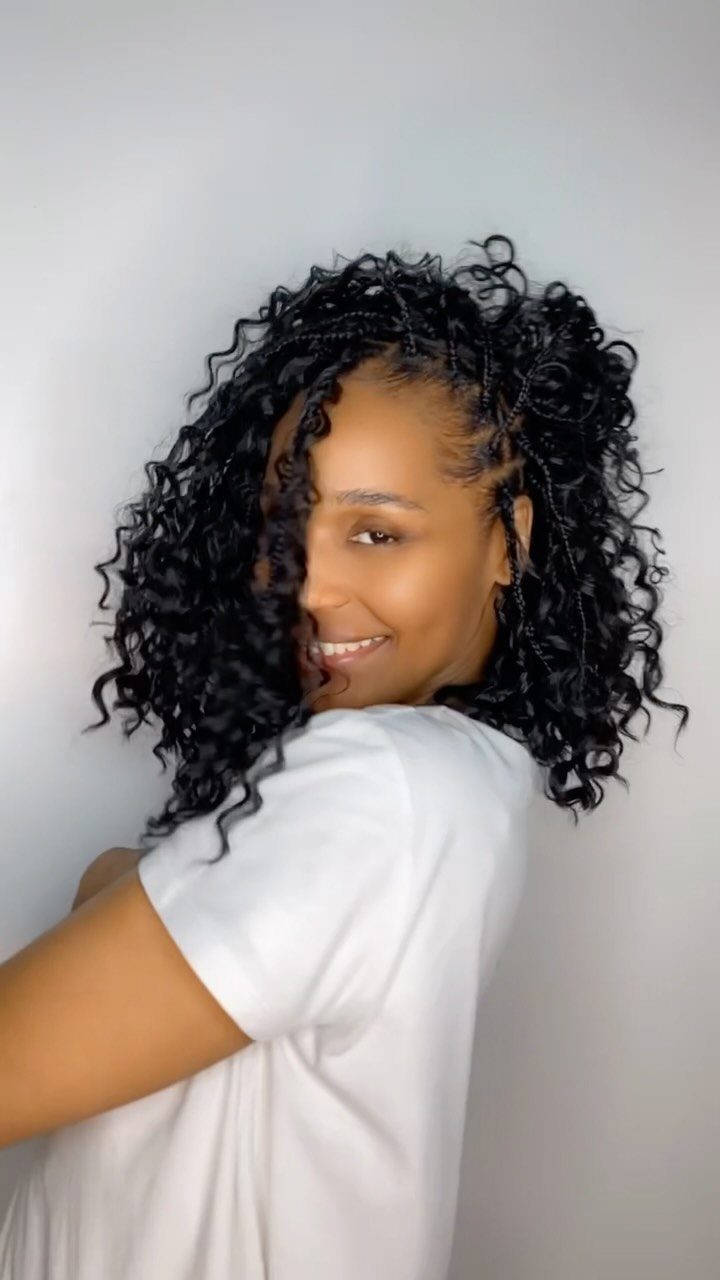
Loose curls or waves left out among the braids are what give boho braids their relaxed quality: the texture contrast between the tight scalp sections and the soft, free-hanging pieces is the whole idea.
Getting this right is mostly about how much hair you leave loose and where. Leaving pieces out near the face keeps it soft around the hairline without the braids losing their structure.
10. Braided Bob
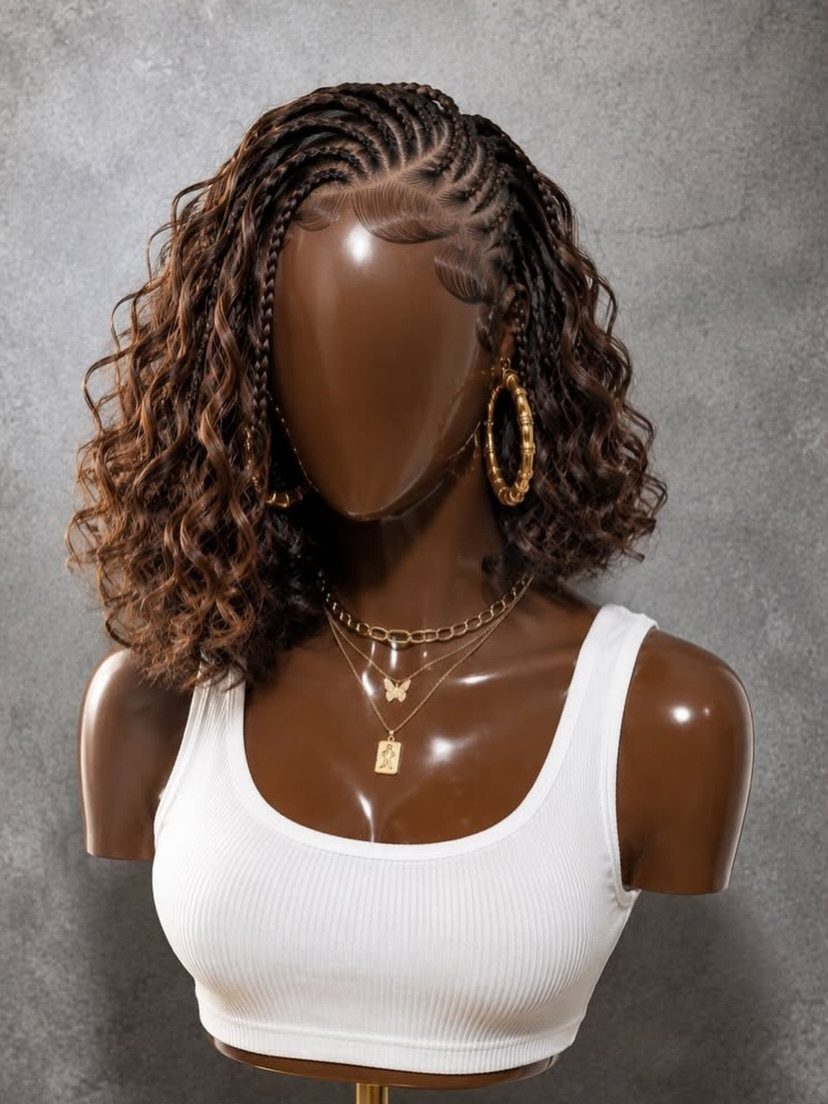
Stopping the braids at chin length changes the proportion of the whole style, and curly ends are one clean way to finish it.
Bob-length braids suit anyone who wants the scalp-flat look without the weight of a full-length set. Because there’s less length to manage, a braided bob also tends to feel lighter and easier to sleep in than longer versions.
11. Micro Braids
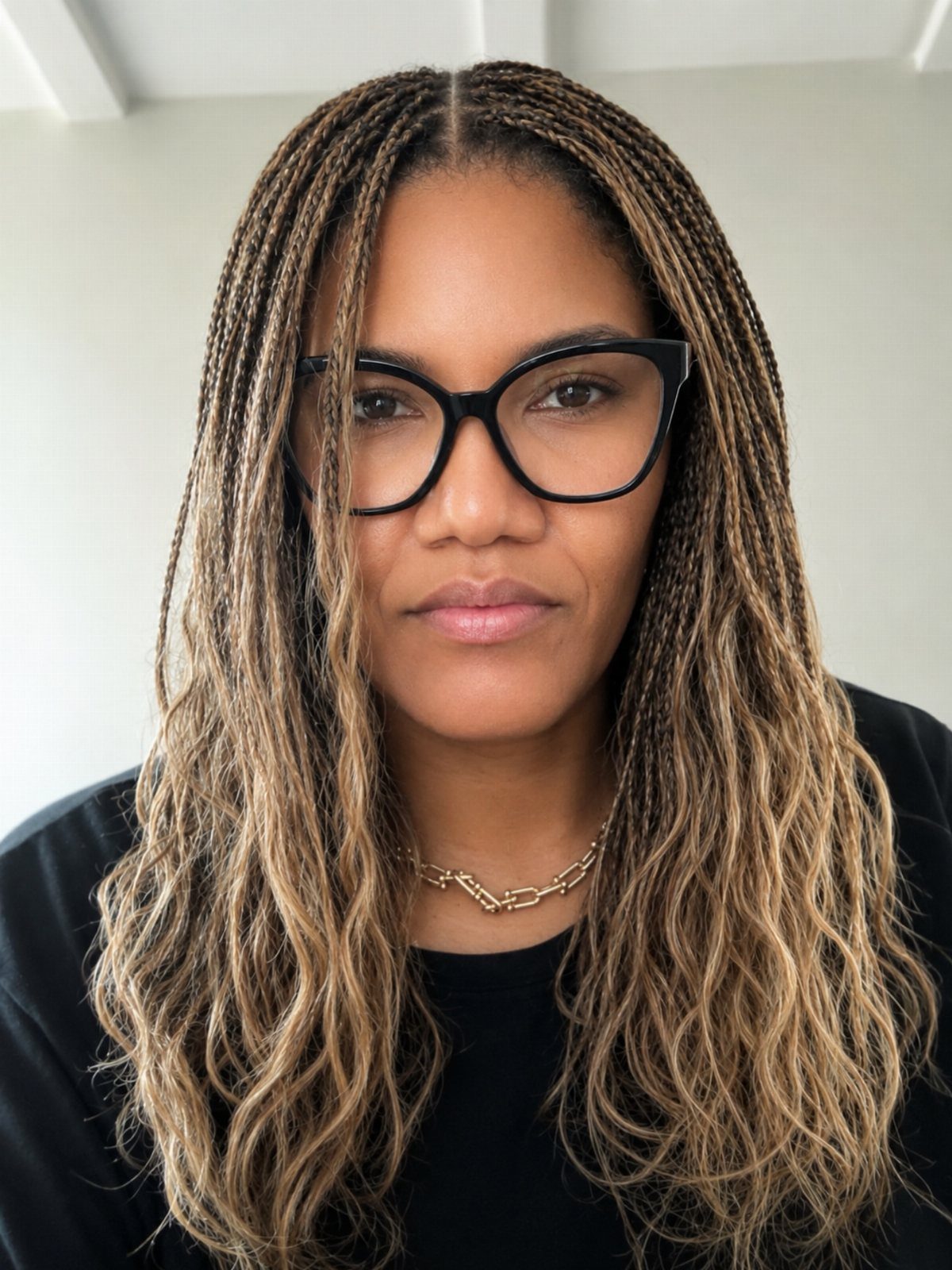
Thin braids this fine take serious chair time to install, but a style that moves like loose hair and holds up for weeks makes that time worth it.
For anyone who wants low daily effort once they’re in, micro braids are hard to beat.
12. Stitch Braids
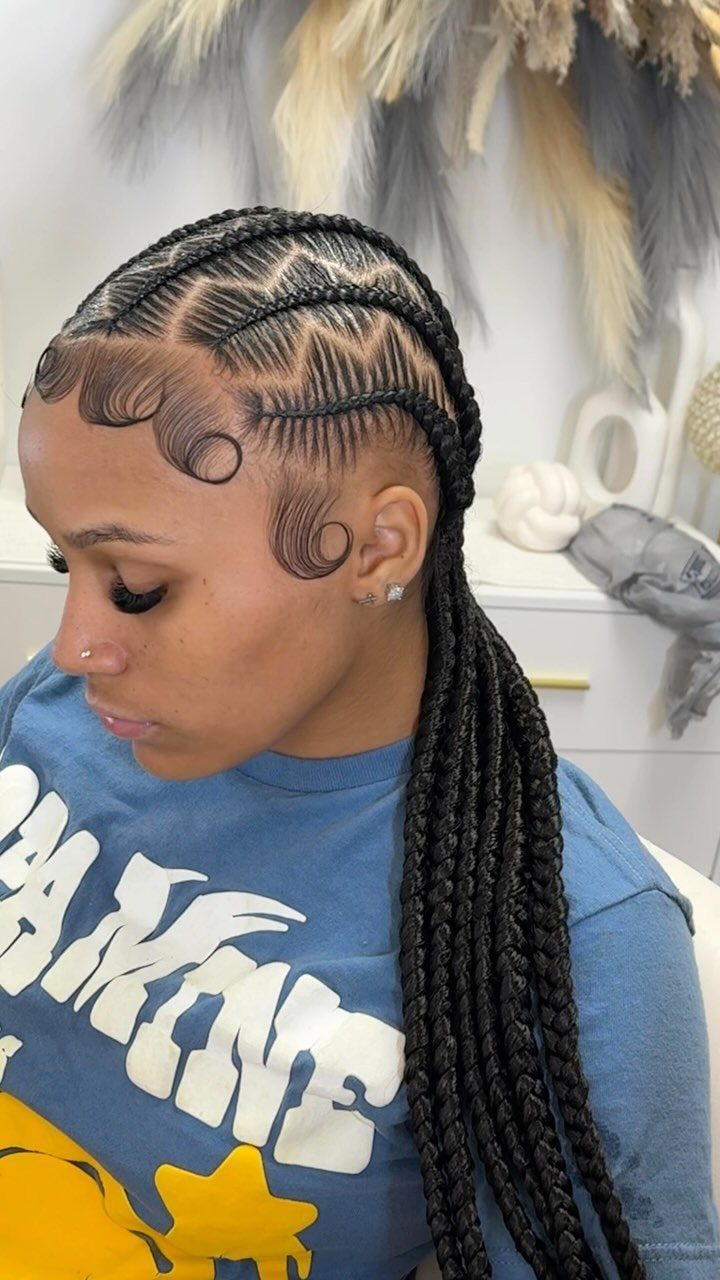
Sharp, evenly spaced partings run across the scalp in a zigzag, and the horizontal lines those partings leave are the visual signature of stitch braids.
The precise geometry means any looseness at the root shows quickly, so a good stylist and a clear reference photo make a real difference.
Laid edges along the hairline tie the crisp lines of the partings together and keep the finished look sharp rather than just neat.
13. Feed-In Braids
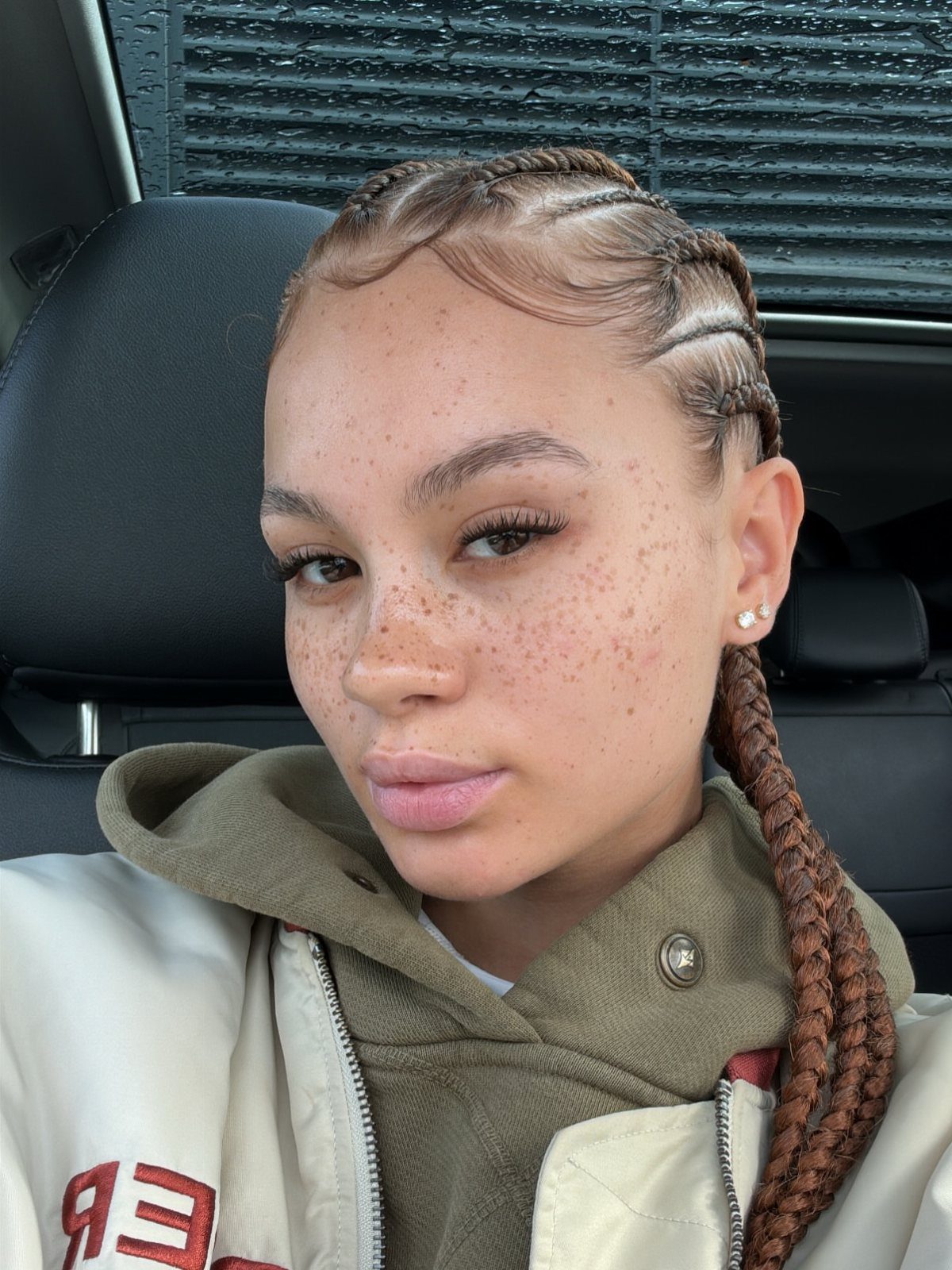
Extension hair is added gradually as each braid forms, so the root stays flat without the knot that traditional braids start with.
The smooth base distributes tension better than a bulky starting point would, which makes feed-in braids more comfortable to wear and easier on the scalp over several weeks.
The technique takes longer to install because the stylist has to control the feed rate as they braid, but the finished look is worth the extra chair time.
You get clean lines at the hairline and no visible bulk where the extension begins.
14. Crown Braid
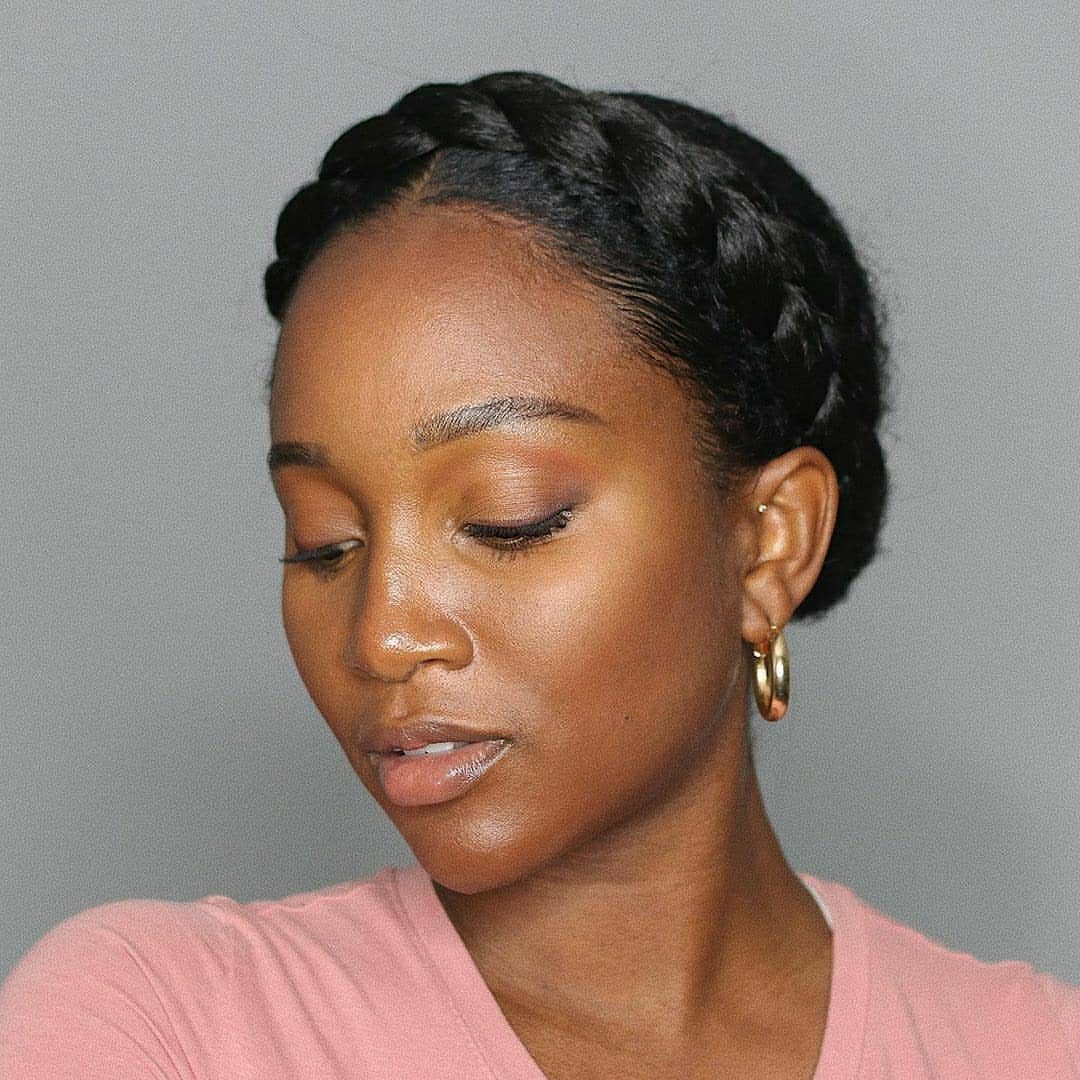
The circle stays visible from the front, which makes this one of the few braided styles that reads as an accessory rather than just a way to contain hair.
It suits medium to long hair, since shorter lengths may not reach all the way around without extensions.
A crown braid keeps hair off the face completely, so it’s practical for workouts or long days in heat, and the structure holds without pins if the braid is tight enough at the base.
15. Braided Pigtails
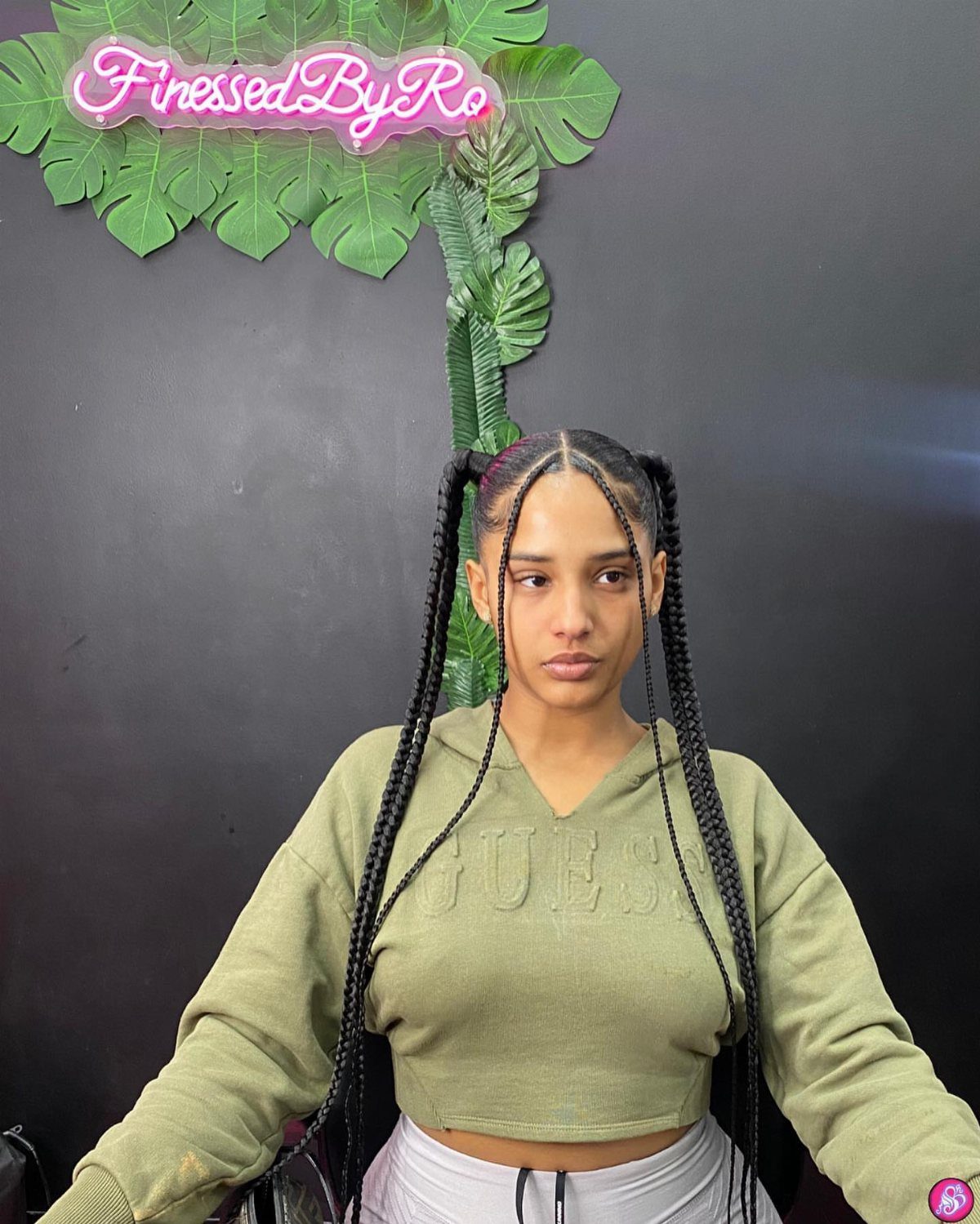
Dividing the hair down the center and braiding each side into a pigtail gives you 2 long, contained braids that sit low and move freely. These read casual enough for everyday errands and the gym, not dressy events.
If you’re braiding your own hair, pigtails are easier to manage than a single back braid because you can see what you’re doing on each side.
They also distribute weight evenly, so if your hair is thick or long, pigtails feel more balanced than gathering everything into one heavy braid.
16. Criss-Cross Cornrows
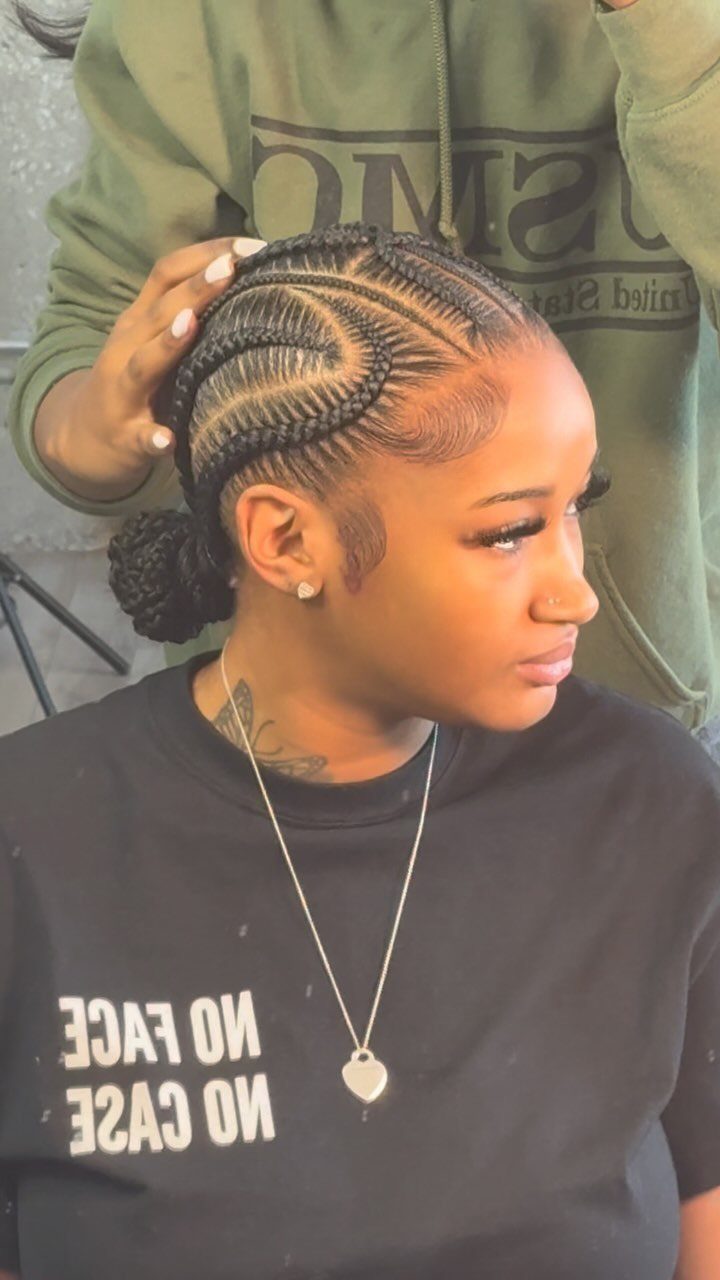
Cornrows that intersect as they curve across the scalp create a woven pattern that stands out more than straight rows ever could. The ends can be gathered into a low bun, left loose, or pulled into a ponytail.
Installation takes longer than simple straight-back cornrows because each crossing point has to align, so the pattern reads clearly rather than accidental. If you’re doing this at home, map the pattern with clips before you start braiding.
17. Goddess Locs
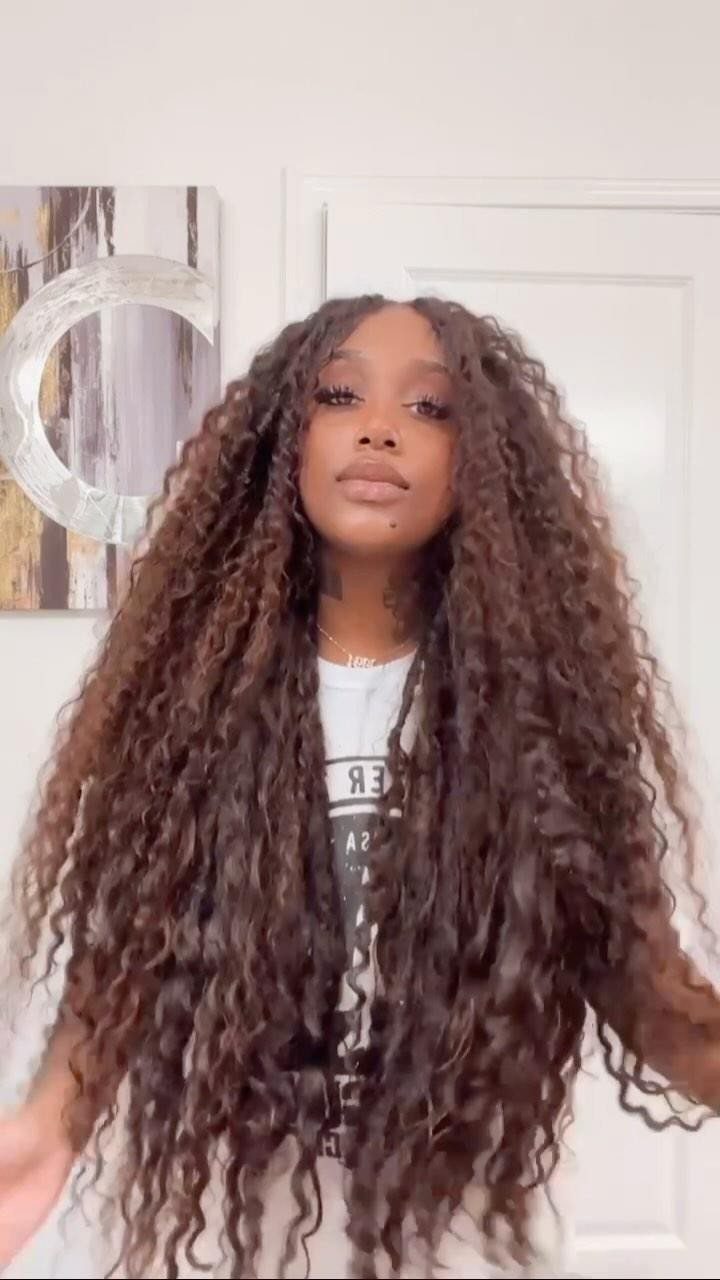
Loc-shaped crochet extensions with loose, curly ends give you the silhouette of freeform locs without the months of cultivation. The texture contrast between the wrapped loc body and the soft, unraveled tips is the defining detail.
Installation is faster than individual braids because the locs attach via crochet rather than hand-braiding from the root.
Once they’re in, the style holds with minimal daily upkeep. A mousse or light gel keeps the curly ends defined without weighing them down.
18. Braids with Loose Afro Curls
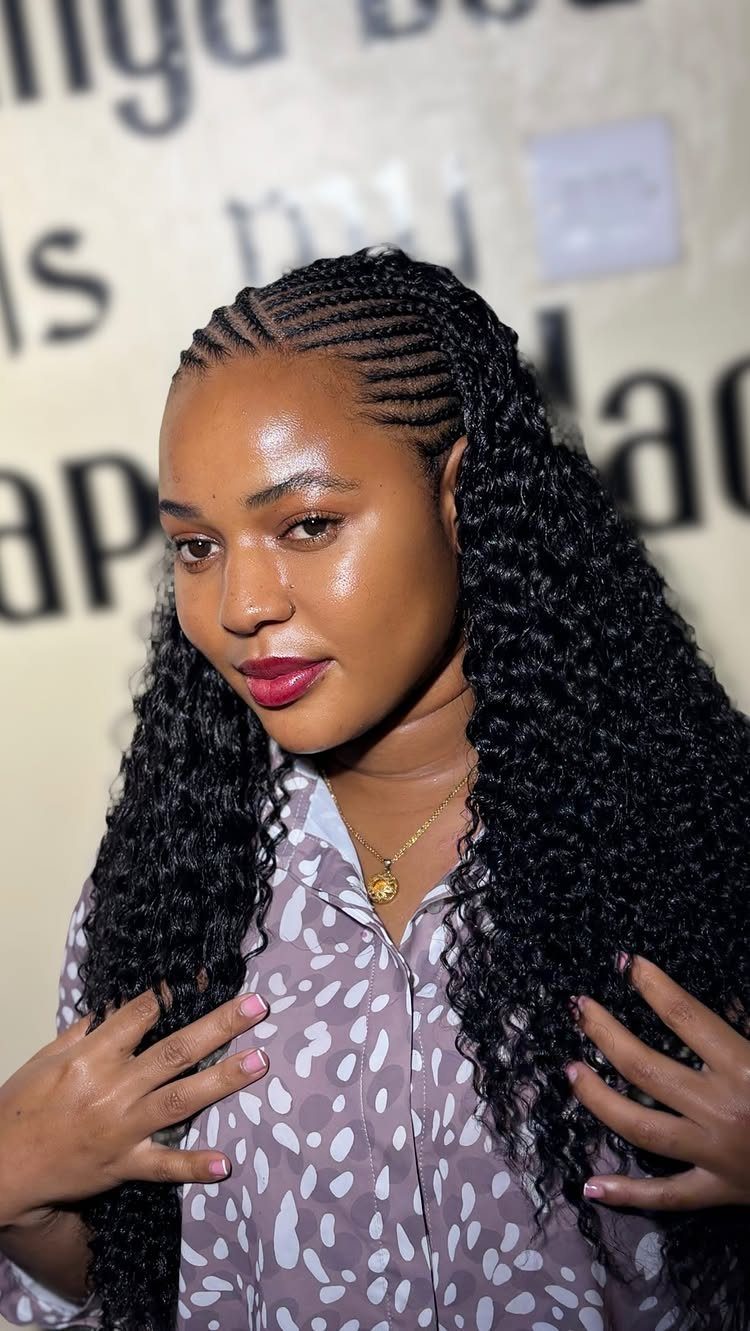
The braids anchor the crown and leave the length free, which keeps definition where you want it and texture everywhere else.
The texture contrast between the flat braids and the volume of the curls is what makes this feel finished rather than halfway done.
If your curls tend to shrink or flatten by midday, the braided section keeps the shape through the crown while the loose hair does what it wants.
Because only part of the head is braided, there’s less pull overall compared to cornrows that run from front to back.
19. Braided Faux Hawk
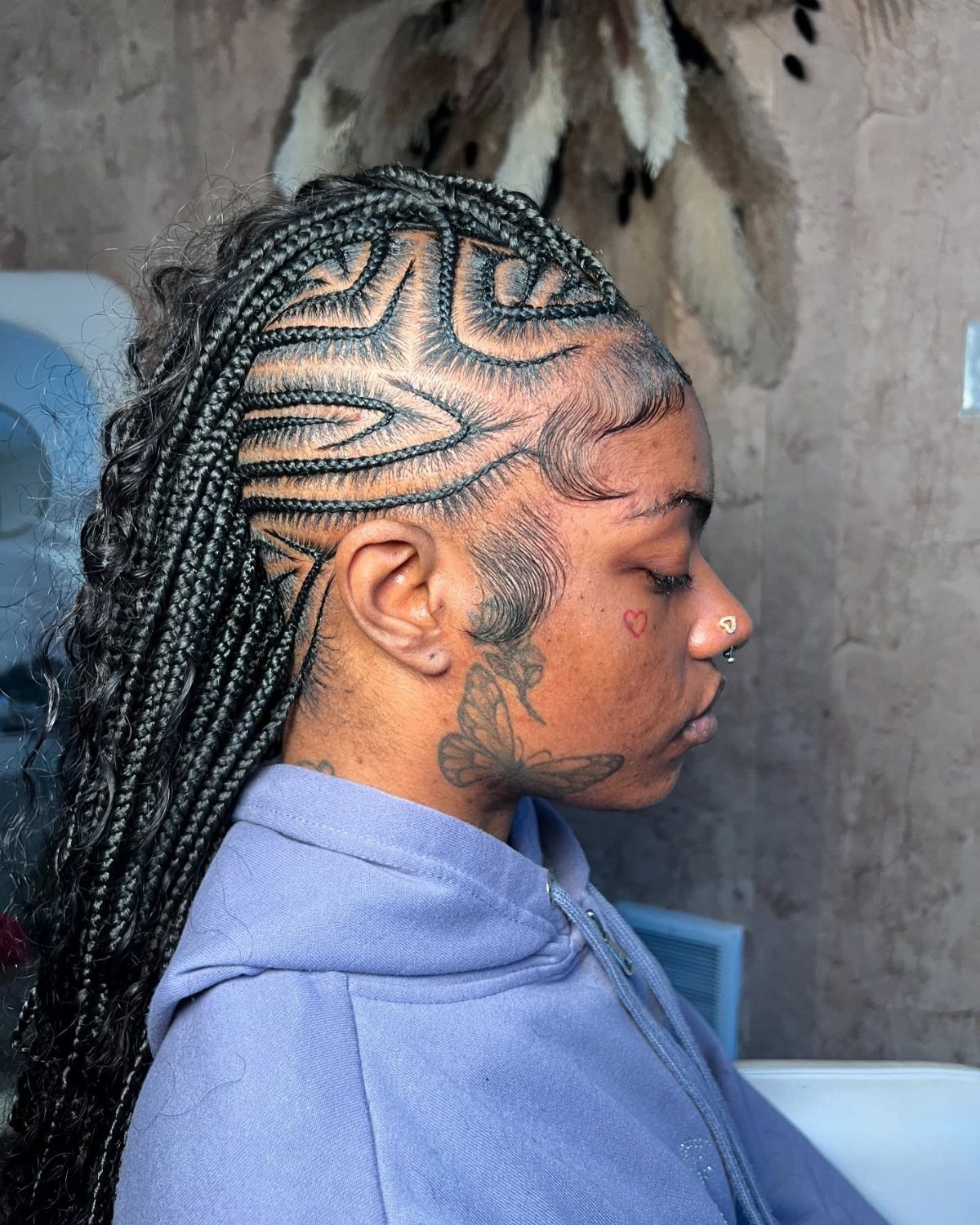
Cornrows pulled tight to the sides and left voluminous through the center mimic the silhouette of a mohawk without clippers. The contrast between flat scalp and raised braids is what sells the look.
If your hair is dense enough to hold height on its own, this works beautifully. Thinner hair may need extensions braided into the center section to get that lifted profile.
20. Triangle Part Braids
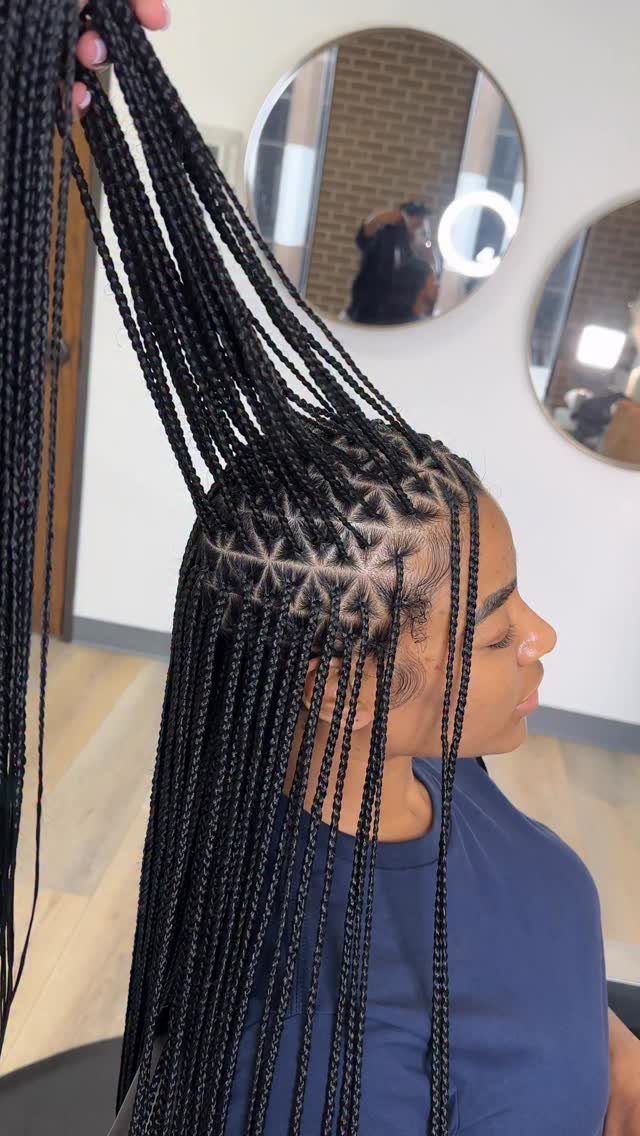
Triangular sections at the scalp replace the square grid of traditional box braids, and those angled parts give the style a sharper, more geometric look from every angle.
The triangular base also distributes tension differently at the root, which some people find more comfortable over a long wear period.
21. Jumbo Box Braids
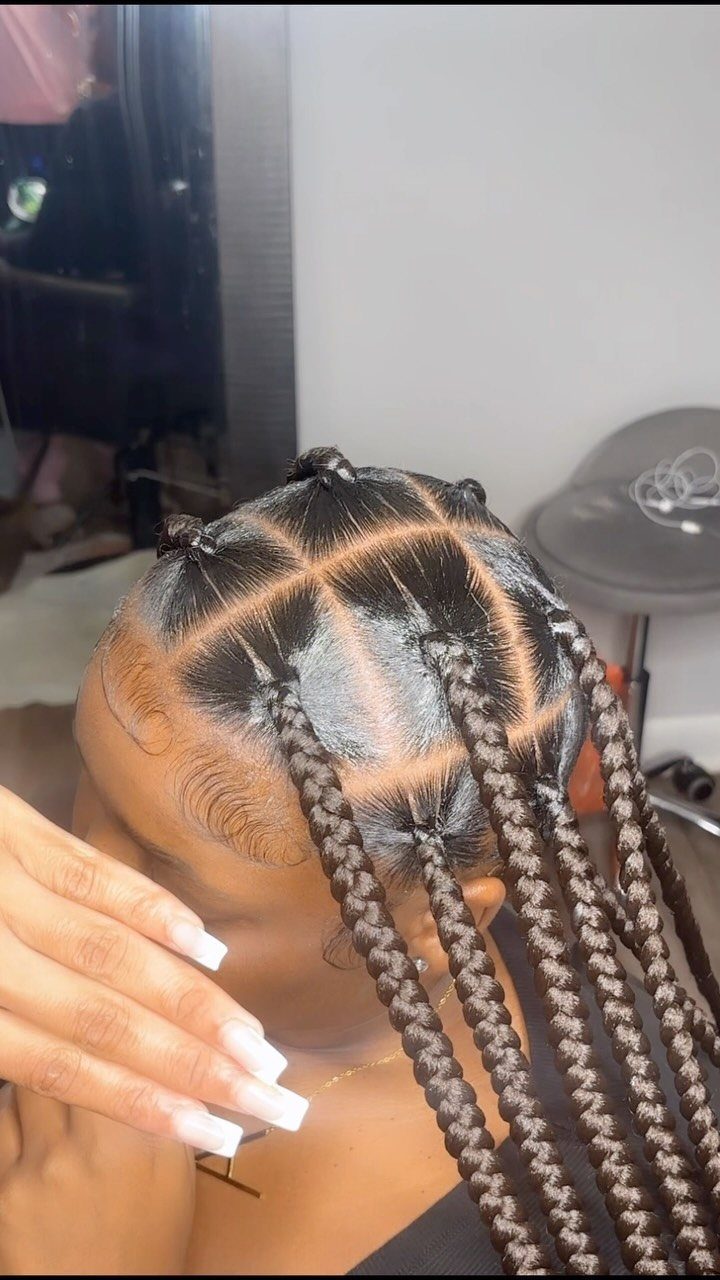
Thick sections mean faster installation and a bolder silhouette. Each braid is substantial enough to read as sculptural rather than delicate, and that makes jumbo box braids a good match for anyone who wants presence without a long appointment.
They’re heavier than smaller braids, so if your scalp is sensitive to weight, consider medium-sized sections instead.
22. Halo Braid
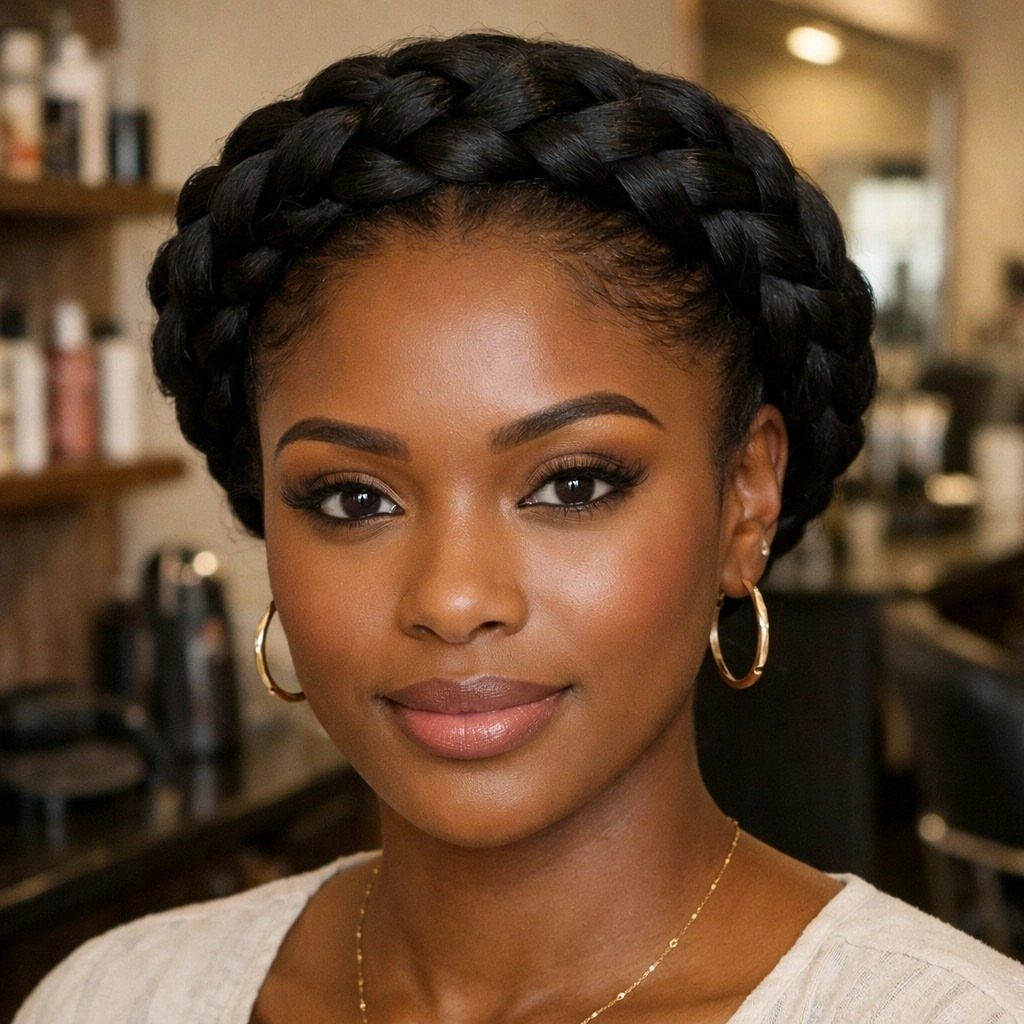
A single braid wraps around the perimeter of the head, following the hairline from ear to ear. The finished circle sits like a crown, which is why this reads as formal without needing any embellishment.
It works across age ranges because the structure itself is simple and clean. A halo braid also keeps all the hair contained, so it’s practical for active days or humid weather.
23. Heart-Shaped Box Braids
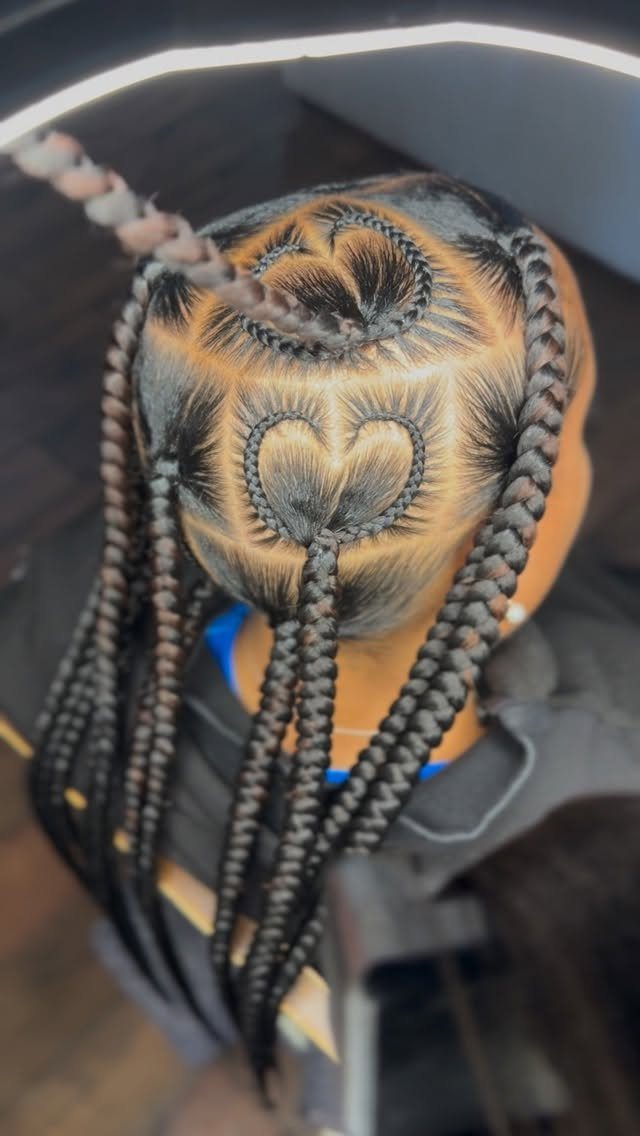
The sectioning at the scalp forms 2 hearts, visible only when you look straight down at the parting. Box braids follow from there, so the design sits at the root rather than running the full length.
Ask your stylist to mark the heart outline before they begin braiding, since the shape has to be precise or it reads as accidental rather than intentional.
24. Feed-In Braids Ponytail with Charms
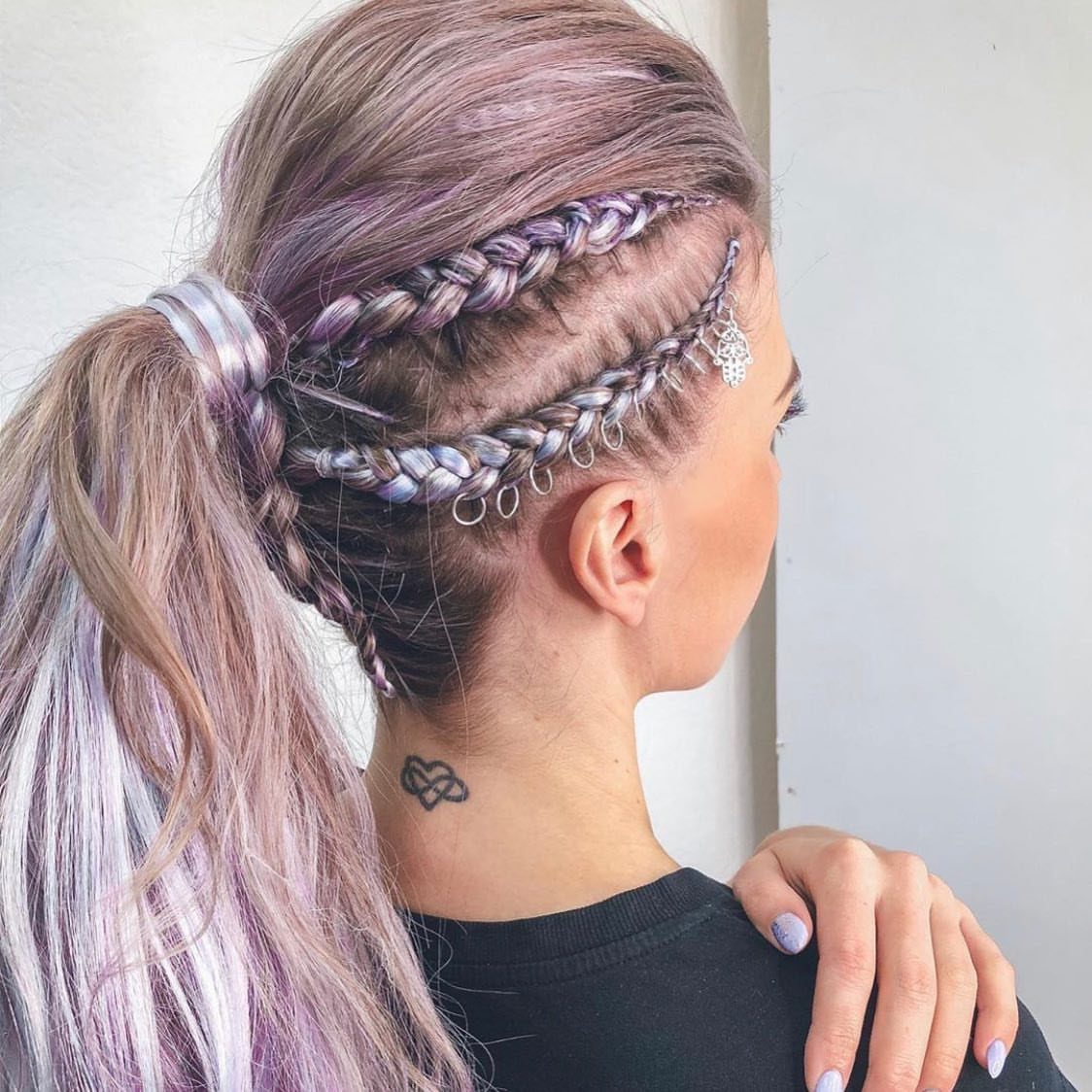
Feed-in braids gathered at the crown turn into a ponytail base, and metal rings or charms threaded onto individual braids add detail.
Charms slide on after the braids are finished, so you can add or remove them depending on the occasion. Keep the rings lightweight or they’ll pull on the ends.
25. Braids with Curly Ponytails
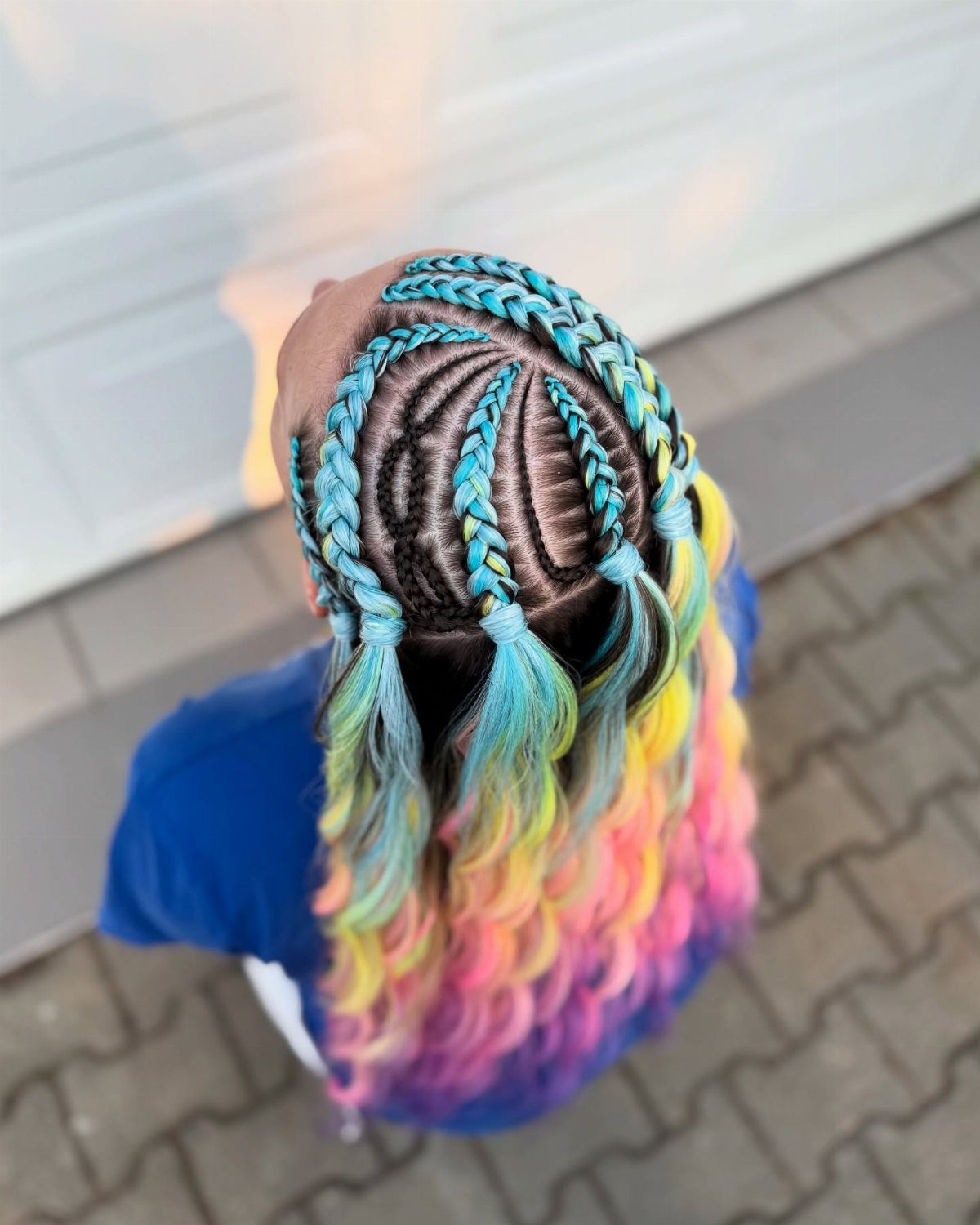
Cornrows at the scalp transition into ponytails finished with synthetic curls, and the color variation from root to tip is what makes this version playful rather than neutral.
Curly ponytail attachments clip or braid onto the ends, which means you can swap them out for a different texture or color without redoing the base braids.
26. Ghana Braids
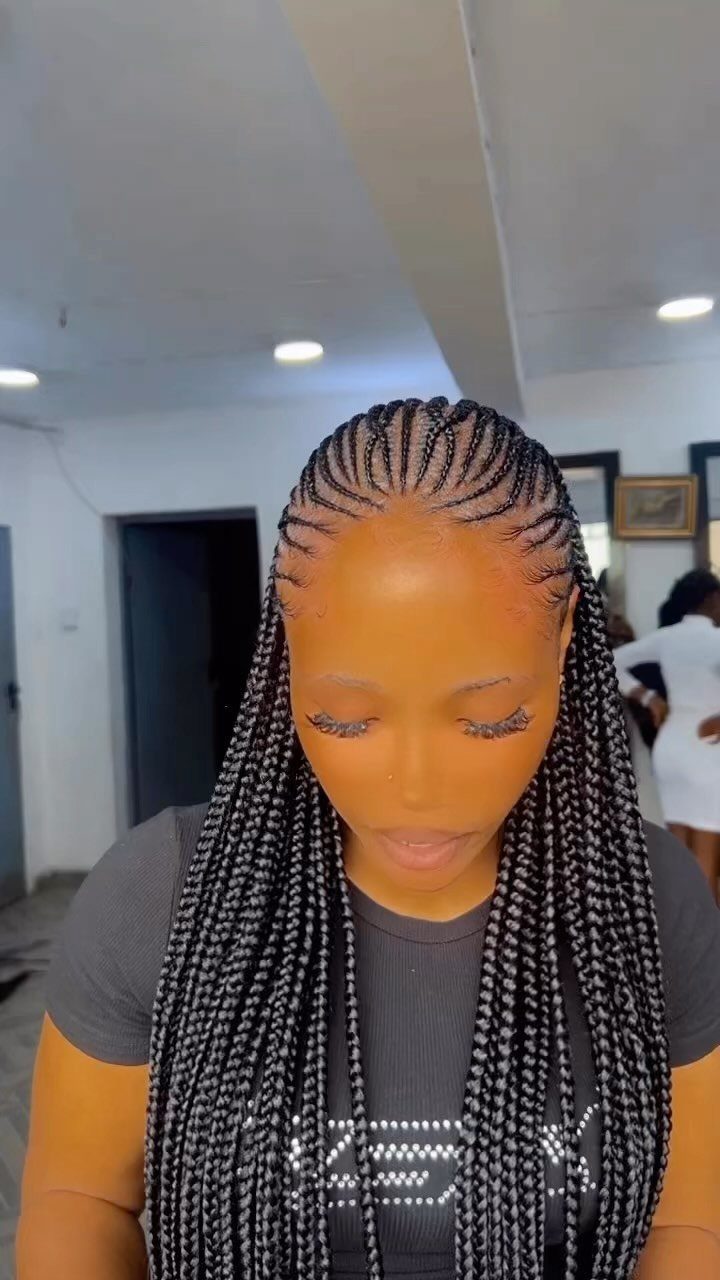
Ghana braids start thin at the hairline and thicken as extension hair feeds in, creating a tapered look from root to mid-length before the braid continues at full thickness.
That gradual build gives the style a sculptural quality that flat, uniform braids don’t have.
The technique takes longer than basic cornrows because the feed-in has to be smooth, but the result wears comfortably and holds its shape for weeks.
Scalp and Tension Care
Choose a braider who uses appropriate tension. Braids should feel secure but not painful at the root, and pain is a sign to speak up immediately so the braid can be adjusted or redone.
Excessive tension damages edges and causes breakage, so scalp comfort matters more than matching a reference photo exactly.
Smaller sections with lighter extensions put less strain on fragile edges than large, heavy ones.
Keep the scalp moisturized with a light oil or scalp spray 2–3 times a week. I reach for coconut, jojoba, or olive oil to soften the hair and stop itching without leaving the braids heavy.
Expect some shedding when you remove braids: you lose up to 100 strands a day naturally, and those stayed caught in the style.
For most styles (like box braids and cornrows), your scalp is more exposed than usual.
Night and Wash Maintenance
Cotton pillowcases rough up braids overnight, so I use a silk bonnet, satin scarf, or silk pillowcase to cut frizz by morning. A bonnet costs a few dollars and cuts flyaways around the hairline.
Wash braids by diluting shampoo with water, applying it to the scalp, and massaging gently.
Between washes, rinse after swimming and make sure braids dry completely, since trapped moisture leads to buildup and odor.
Choosing a Style
Braid size changes the final result more than most people realize. Smaller braids give you more styling flexibility after they go in, while larger ones look cleaner and need less daily effort.
Knotless braids, box braids, and cornrows need the least upkeep over several weeks. Crown braids and braided chignons hold their shape through a long evening, so I pick them for weddings and formal events.
Look past which photo you save: the right style has to suit your natural hair, your scalp, your schedule, and how much daily work you actually want to do.
Frequently Asked Questions
What hair types can have braids?
Braids work across straight, wavy, curly, coily, and afro-textured hair, and styles exist for both long and short lengths.
Extension hair can add length or volume to shorter natural hair, so the style you want doesn’t require a specific starting length.
Can a 50 year old woman wear braids?
Yes.
The structure is clean and unfussy, which is why they suit women at any age. The technique and installation quality matter more than age when choosing a braided style.
How to section hair while braiding?
Box braids use square sections at the scalp, while triangle part braids use angled sections that distribute tension differently. Clip the pattern out first so you know where each crossing point lands.
Can you braid hair extensions?
Yes.
If your own hair is short, braid extensions in at the ends for added length and a curled finish. Both methods add extension hair bit by bit as you go, keeping the root flat with no bulky knot.
Can braids help your hair grow?
Braids reduce daily manipulation, which can protect hair from breakage, but they don’t make hair grow faster. Hair grows at the same rate whether it’s braided or loose.
Do braids cause hair breakage?
Excessive tension and poor maintenance contribute to breakage. If it hurts at the root, say something right away so it can be loosened or redone.
How long do braids last?
Box braids and knotless braids hold for 6 to 8 weeks with proper care. Cornrows typically last 2 to 4 weeks, and styles with larger sections show new growth more quickly than smaller ones.
What are the most popular braided hairstyles?
Knotless braids with curly pieces, lemonade braids that sweep to one side, and box braids in different sizes rank among the most requested styles. Fulani braids and stitch braids also get frequent requests for their distinct patterns at the scalp.