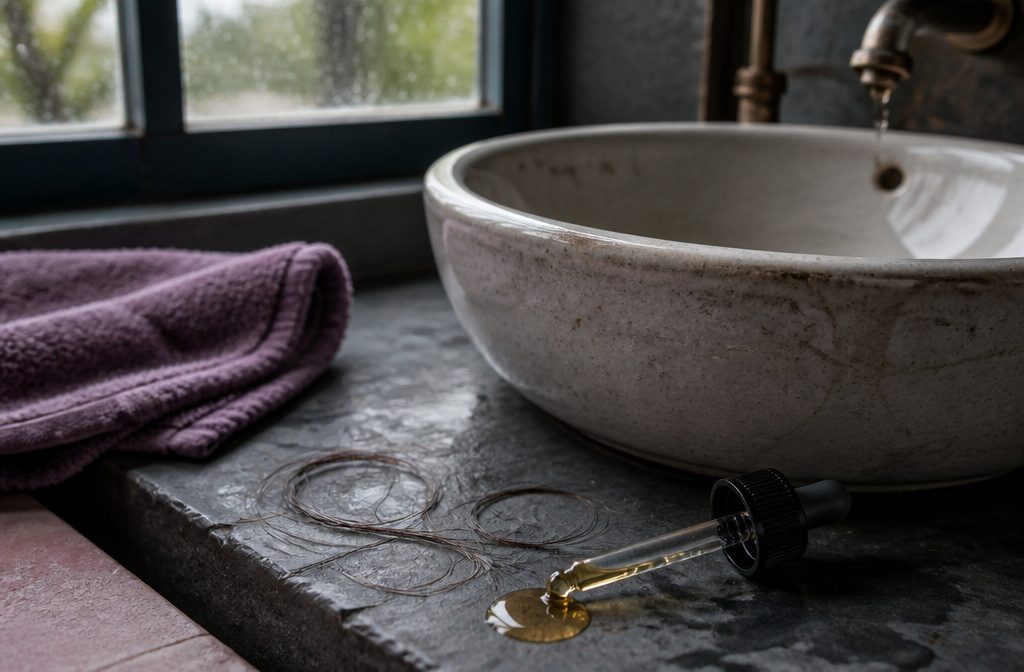
Castor oil moisturizes hair, reduces breakage, and may soothe scalp irritation, but no large study has tested whether it grows new hair.
The optimism rests on a computer simulation of ricinoleic acid, its main fatty acid, that suggested it might behave like prostaglandin analogues used to counter hair loss.
That simulation did not involve people or animals, and no clinical trial has followed it up.
What Castor Oil Is and What People Expect It to Do
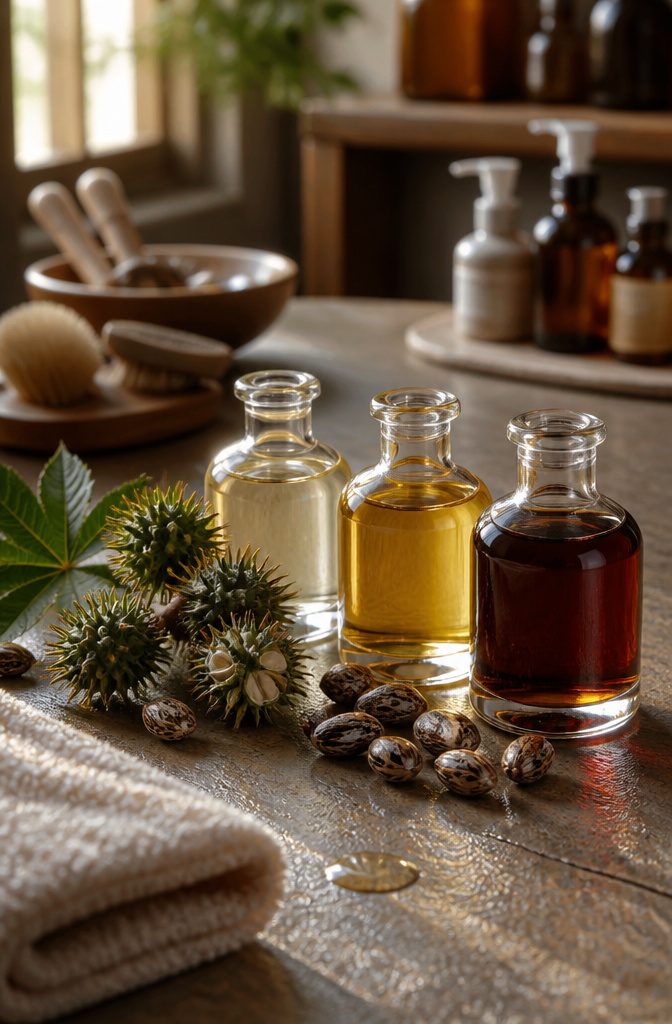
Castor oil comes from the seeds of the castor bean plant, Ricinus communis, native to India and East Africa. It’s a vegetable oil that can be colorless, yellow, or dark brown depending on how it’s produced.
People have used it for centuries as a laxative, but it’s earned a second reputation in beauty routines: the main claims are that it stimulates hair growth, adds thickness, locks in moisture, and boosts shine.
The oil also has anti-bacterial, anti-fungal, and anti-inflammatory properties, which is why some apply it to the scalp for conditions like eczema and psoriasis.
You’ll find three main types in stores.
Cold-pressed castor oil is extracted from fresh seeds under pressure, similar to juicing. Black castor oil is made from seeds that are roasted before pressing.
Jamaican castor oil involves boiling the seeds in water, then roasting and grinding them with a mortar and pestle. Each type looks and behaves slightly differently, but all share the same core ingredient.
Moisturizing, Shine, and Reduced Breakage
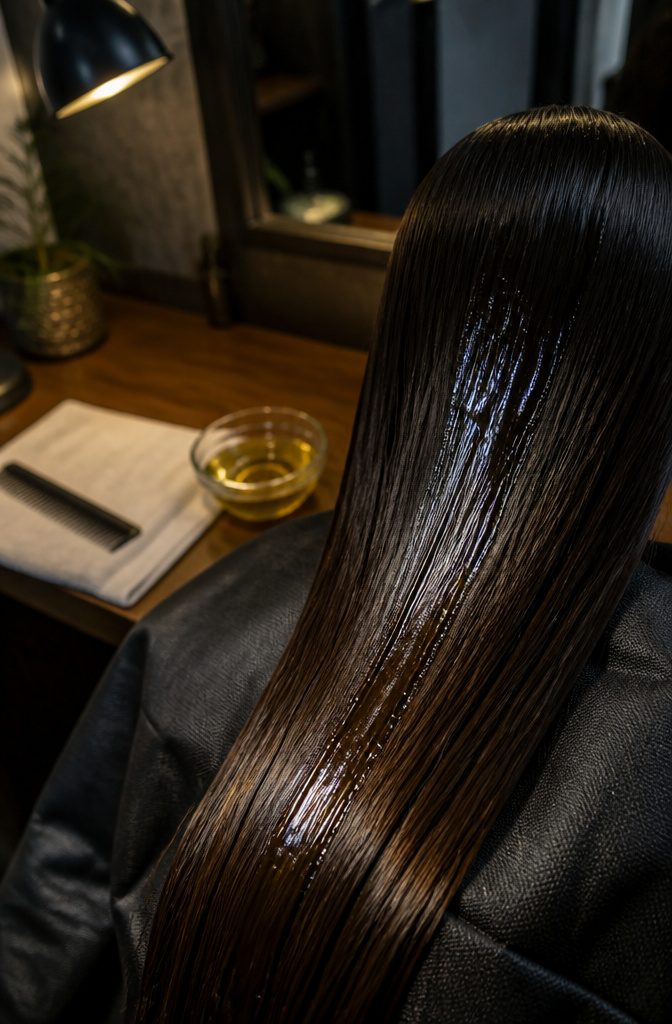
Ricinoleic acid makes up roughly 90 percent of castor oil’s fatty acid profile, and it works as both a humectant and an occlusive.
That means it pulls moisture from the air into your hair and then locks it in place with a barrier over the hair shaft.
The result is less dryness, less breakage, and hair that actually looks shinier because the cuticle lies smoother.
I find the scalp benefits just as useful. Ricinoleic acid has antimicrobial and anti-inflammatory properties, so it can soothe irritation and help keep the scalp clean.
Winter flaking responds well to it, and some people use it to manage dandruff since it addresses both the fungal component and the inflammation that makes the scalp itch.
The oil coats each strand, which gives you some protection against future damage and split ends. It won’t reverse breakage that already happened, but it can stop more from starting if your hair runs dry or brittle.
Whether It Promotes New Hair Growth
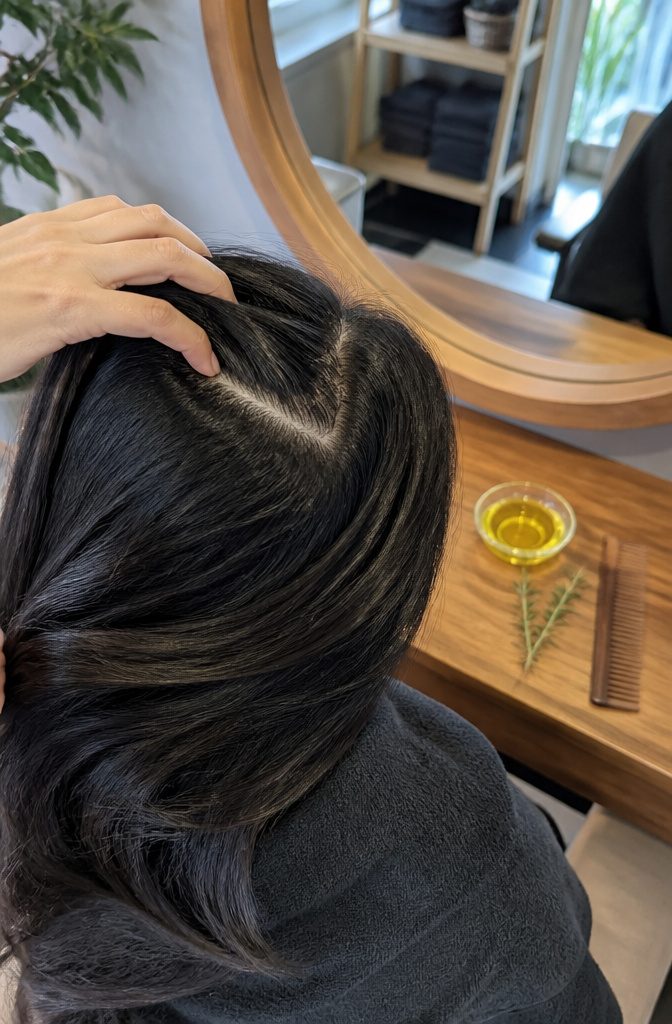
No large study has tested whether castor oil grows new hair. Most dermatologists say the evidence is absent and caution that castor oil benefits hair that has already grown rather than stimulating new follicles.
The optimism comes from a computer simulation that suggested ricinoleic acid, the main fatty acid in castor oil, might behave like prostaglandin analogues, drugs used to counter hair loss.
That study did not test the acid on people or animals, and no clinical trial has followed it up.
Some sources point to indirect support.
Castor oil contains omega-6 and omega-9 fatty acids and vitamin E, which reduce inflammation, and research from 2022 to 2025 has found that blends pairing rosemary and castor oil improved hair growth rate, thickness and density in one trial.
The thinking is that a healthier scalp creates better conditions for hair to grow, even if the oil does not act on follicles directly.
That distinction matters if your hair loss has a specific cause. Castor oil may help inflammatory scalp conditions but will do little for male or female pattern hair loss or deficiencies that require other treatment.
Who May Benefit and Who Should Be Cautious
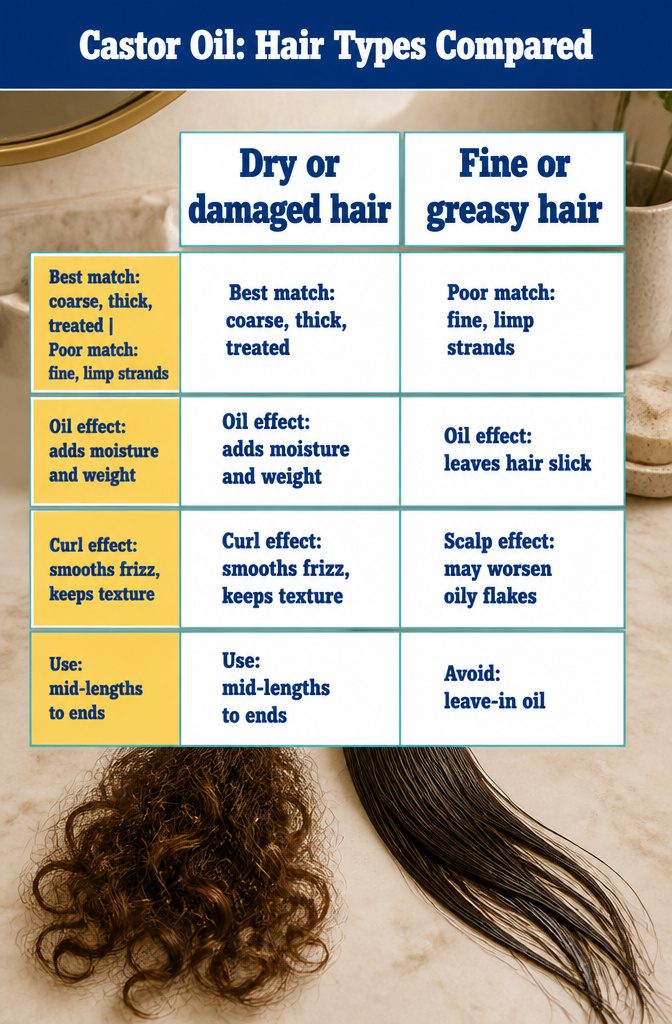
Castor oil suits dry, brittle, damaged, curly, or frizzy hair best. If your scalp is oily or you have fine, greasy strands, it may leave hair weighed down and slick rather than nourished.
Here’s who benefits and who should skip it:
- Dry or damaged hair: Castor oil adds moisture and weight, making it a good match for coarse, thick, or chemically treated strands.
- Curly or frizzy hair: The oil helps smooth the cuticle and reduce frizz without stripping natural texture.
- Fine or greasy hair: Castor oil is thick and can make fine hair look limp and oily, especially if you use it as a leave-in. Stick to lightweight creams or skip oil treatments altogether in favor of a clarifying shampoo.
- Oily or flaky scalp: If you tend toward greasiness or have dandruff caused by fungus, castor oil may worsen the problem rather than clear it.
I apply it from mid-lengths to ends on my medium-textured hair, which is prone to dryness but not oily at the roots.
If your hair is fine and you still want to try it, use a pre-shampoo treatment that rinses out rather than a leave-in formula.
How to Apply It to Scalp or Hair
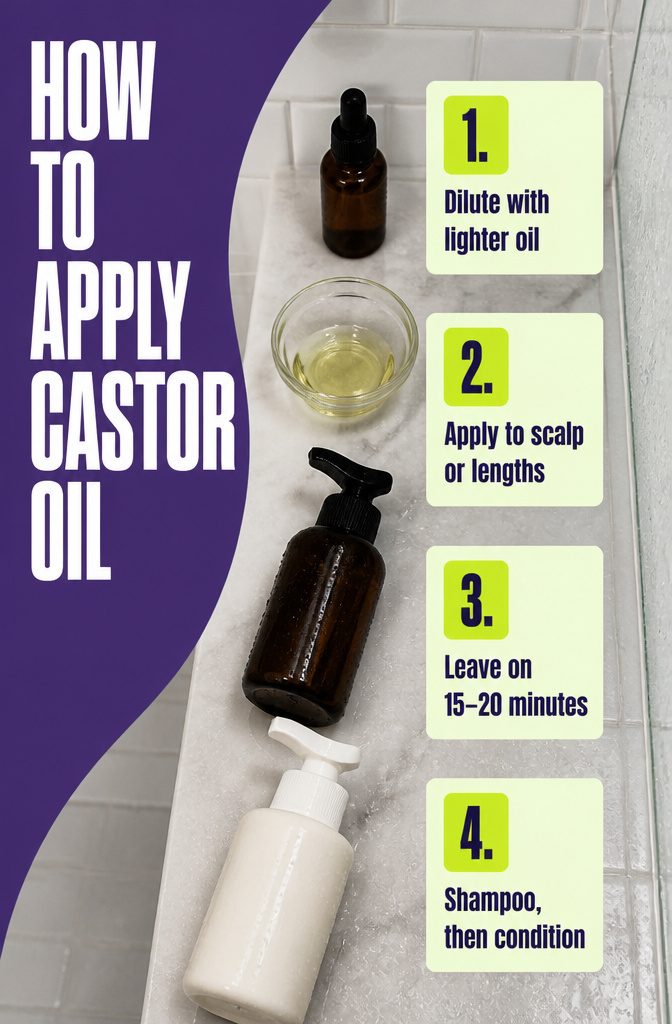
Castor oil is thick enough to feel like work if you use it straight, so most people dilute it with a lighter carrier oil before they start.
Coconut oil is the usual choice: mix equal parts of each, or lean further toward coconut with one part castor to three parts coconut if your hair is fine or gets greasy easily.
Jojoba and olive oil thin it just as well.
You can also add a few drops of essential oil for scent or for claims around scalp health: seven drops of rosemary and five drops of peppermint blended into an ounce of castor is one common ratio.
The most common method is a pre-shampoo treatment. Massage the oil into your scalp for five to ten minutes, then work it through the length of your hair if it tends toward dry or damaged.
If your hair is fine to medium and leans oily, keep the oil from mid-lengths to ends and skip the roots entirely.
If using as a pre [shampoo], you can apply to the hair to coat the strands, leave it on for 15 to 20 min then shampoo.
That 15 to 20 minutes gives the oil time to sit without turning your scalp into a slick. Rinse it out with a clarifying shampoo to cut through the weight, then follow with conditioner.
How Long to Leave It In and How to Wash It Out
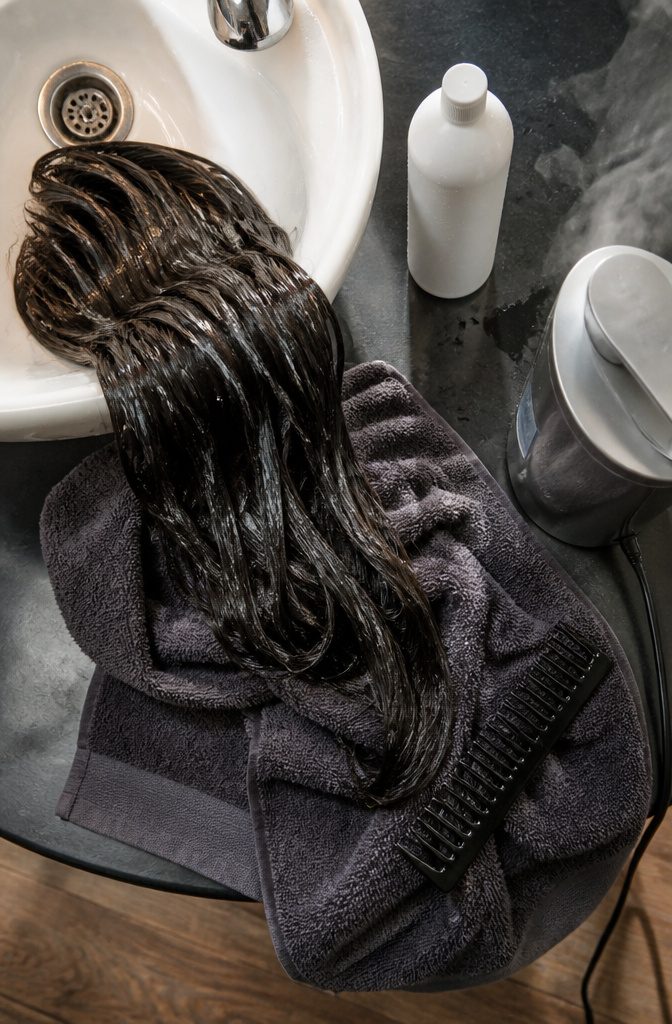
The recommended time depends on your hair type and whether you can tolerate leaving it on longer.
For a quick scalp massage, five to ten minutes is enough before shampooing. For a pre-shampoo treatment on the lengths, fifteen to twenty minutes works.
If you have coarse or dry hair and want deeper penetration, you can leave it on for twenty to thirty minutes or even overnight. Fine or thin hair should stick to the shorter end to avoid looking greasy.
Castor oil is thick and sticky, which makes rinsing a real chore.
Wet your hair first to help it absorb, and use a clarifying shampoo to cut through the residue. It may take more rinsing than usual to get it all out.
Sitting under a hair steamer for twenty to thirty minutes before washing helps the oil penetrate, though if your hair is fine you should shampoo right after steaming rather than waiting.
How Often to Use It
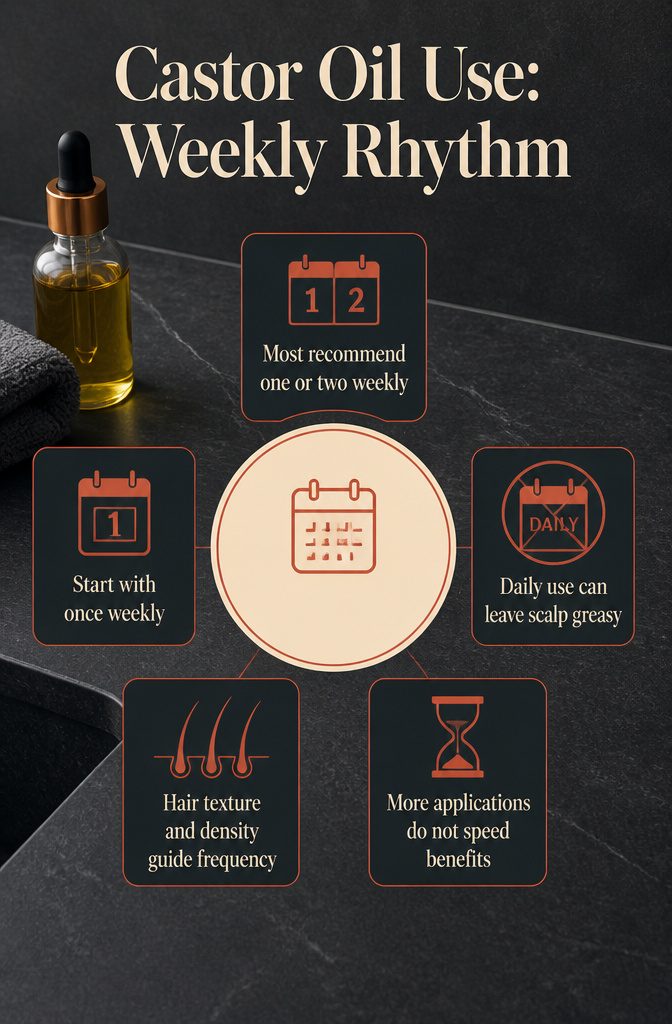
There’s no fixed schedule that works for everyone. Recommendations generally land at once or twice a week, though some stylists say there’s no standard at all and the right frequency depends on your hair’s texture and density.
What’s consistent is that daily use is a bad idea. Castor oil is thick enough to leave the scalp greasy, and overuse can weigh hair down rather than helping it.
I’d start with once a week and see how your hair responds over a couple of months. If it feels heavy or looks oily between washes, pull back.
If it tolerates the treatment well and you want to bump it up to twice weekly, that’s still within the range most stylists recommend. Consistency matters more than frequency, since benefits take time and extra applications won’t speed them up.
Safety and Side Effects
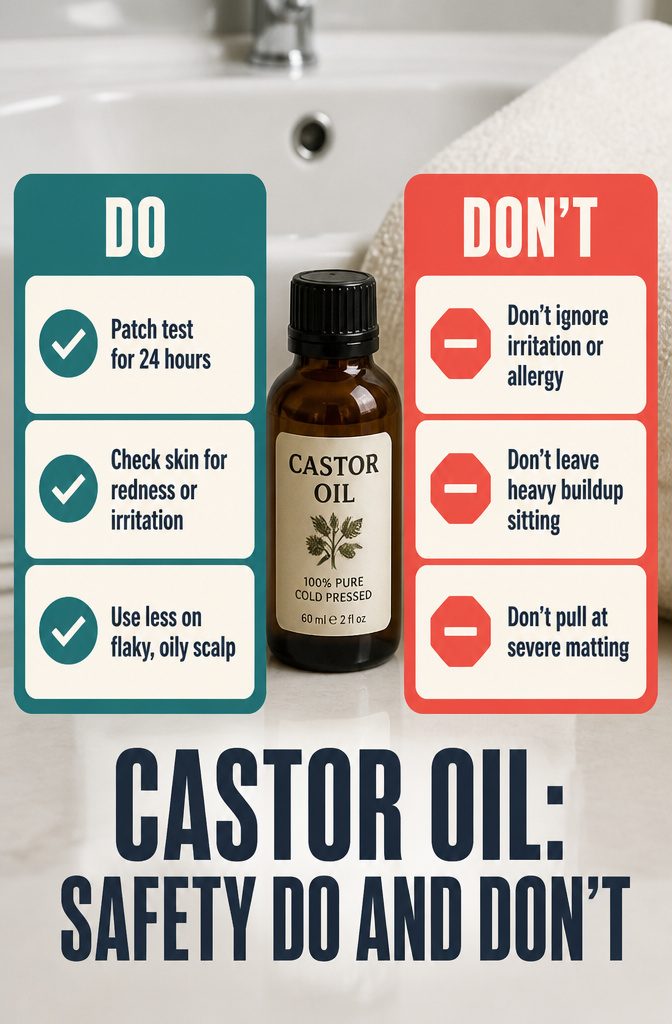
I recommend a patch test before your first use: apply a small amount to your inner forearm or the back of your neck, leave it on for 24 hours, and check for redness or irritation.
Beyond that, watch for these reactions:
- Allergic contact dermatitis, skin irritation, and eye or respiratory irritation if you’re sensitive to the oil or any additives in the formula
- Buildup on the scalp and hair because castor oil is so thick, which can clog pores, cause itching or flaking, and turn into a stubborn wash-out job
- Acute hair felting, a rare matting disorder documented in a 2017 case report after a woman used a mix of castor oil, coconut oil, and water; the high viscosity makes even a few drops difficult to remove, and severe tangling may require cutting the matted section out
If you have a flaky, oily scalp condition like seborrheic dermatitis, castor oil can make it worse when left on. Less is genuinely more here.
Eyebrows and Eyelashes
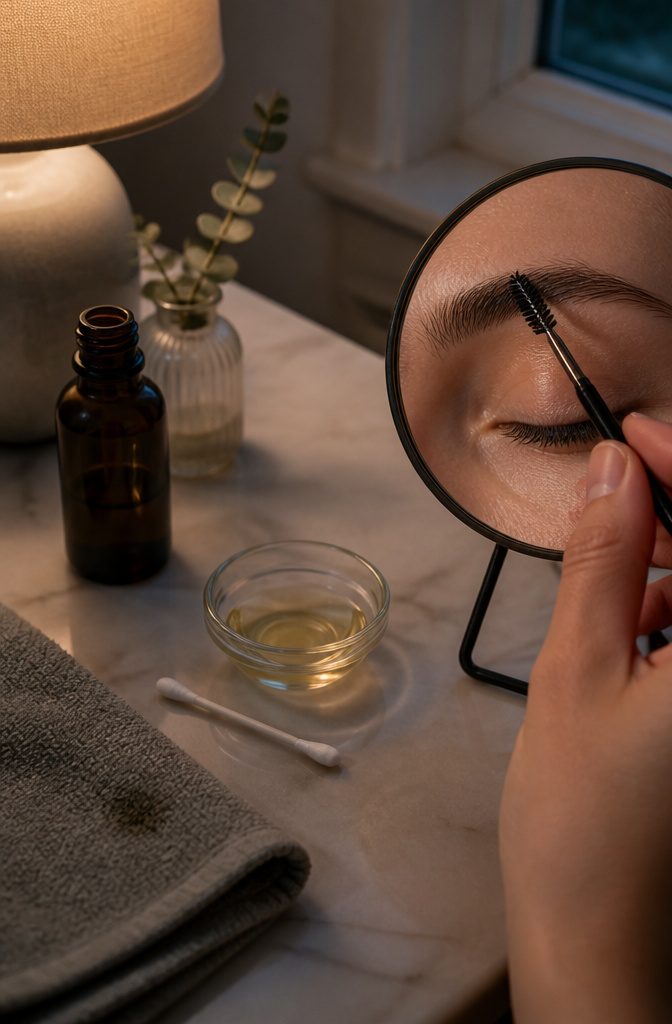
I wouldn’t rush to put castor oil on your eyebrows or lashes without understanding what you’re actually getting.
The evidence for growth here is entirely anecdotal, and the eye area demands more caution than your scalp. If any oil gets into your eyes, irritation is a real risk.
If you want to try it, use a clean spoolie or mascara wand and apply only a small amount before bed.
A cotton swab works too, giving you tighter control over placement. Less is genuinely more with castor oil, since it’s thick and a little covers more area than you’d expect.
Stick to once a week at most to avoid reactions, and keep it away from your lash line if you’re prone to sensitivity.
Alternatives and Products
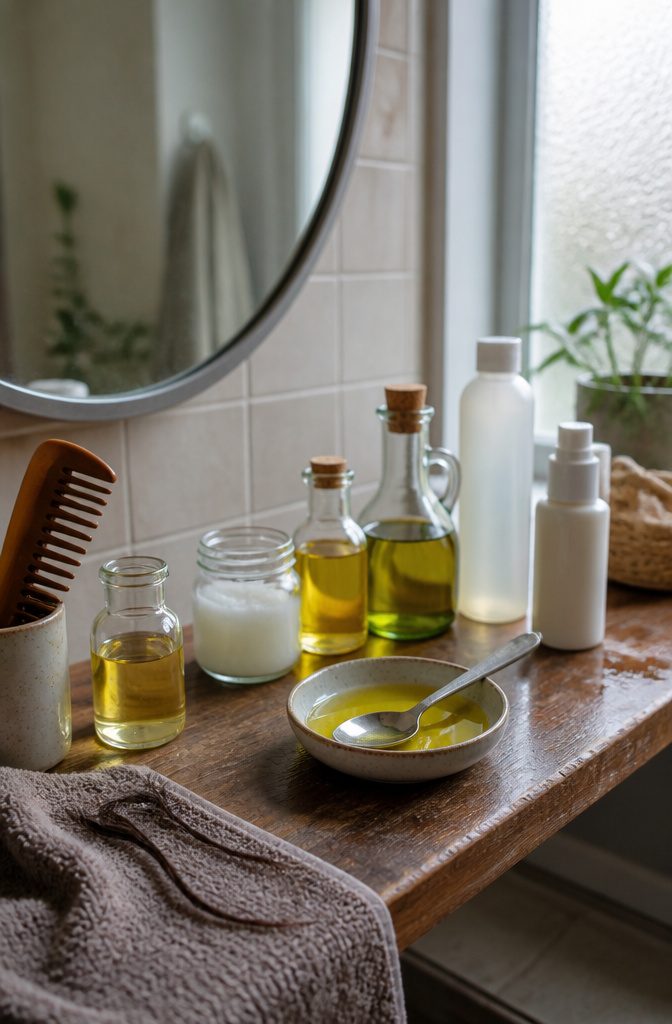
If you find castor oil too thick or heavy for your hair type, dilute it with a carrier oil like coconut, jojoba or olive oil before applying.
The blend spreads more easily and rinses cleaner. Those with fine or greasy hair often skip castor oil entirely and reach instead for a clarifying shampoo, which strips buildup without adding weight.
Formulated products give you castor oil in a lighter vehicle.
Kate Blanc Cosmetics Castor Oil, Briogeo B. Well, SheaMoisture Jamaican Black Castor Oil, Nioxin Night Density Rescue, Philip Kingsley Elasticizer and Suave Professionals Castor & Mango Butter all land castor oil on the scalp or strand without requiring you to wash out pure oil afterward.
The Philip Kingsley treatment blends castor and olive oil in a pre-shampoo conditioner meant to boost elasticity and cut frizz.
For noticeable hair loss, see a dermatologist or hair professional rather than treating it as a cosmetic problem. Minoxidil is FDA-approved for regrowth; castor oil is not, and severe pattern hair loss or nutritional deficiency needs more than moisturizing.
Hair Type and Application By Texture
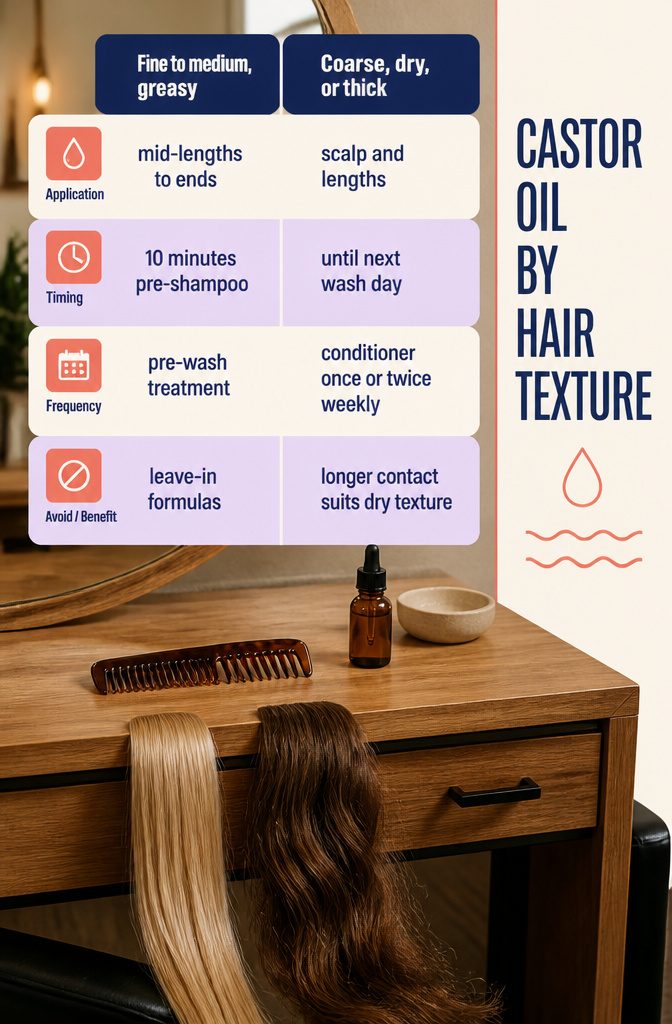
Fine to medium hair that gets greasy should only see castor oil from mid-lengths to ends for 10 minutes before shampooing. The roots pick up oil fast, and heavier coverage turns flat quickly.
Different textures need different timing:
- Medium to thick hair prone to puffiness: Add a few drops to conditioner once or twice a week instead of applying straight oil. This tames the volume without coating every strand.
- Coarse, damaged, or very dry hair: Apply to the scalp and wait until next wash day to rinse. The texture can hold the weight, and dry scalp benefits from longer contact.
- Fine hair in general: Skip leave-in formulas entirely. They sit too heavy. Look for lightweight creams or pre-shampoo treatments that rinse out cleanly.
Dry or frizzy hair suits castor oil best. Fine hair can use it, just not in forms that stay in all day.
Frequently Asked Questions
Does castor oil help hair growth?
No large study has tested whether castor oil grows new hair, and most dermatologists say the evidence is absent. The oil benefits hair that has already grown by moisturizing and reducing breakage, but it does not stimulate new follicles.
Some optimism comes from a computer simulation suggesting ricinoleic acid might behave like hair-loss drugs, but that study tested neither people nor animals and no clinical trial has followed up.
How long should you leave castor oil in hair?
For a quick scalp massage, 5 to 10 minutes is enough before shampooing. For a pre-shampoo treatment on the lengths, 15 to 20 minutes works.
If you have coarse or dry hair and want deeper penetration, you can leave it on for 20 to 30 minutes or even overnight, though fine or thin hair should stick to the shorter end to avoid looking greasy.
Can you use castor oil on eyelashes and eyebrows?
The evidence for growth on eyebrows or lashes is entirely anecdotal, and the eye area demands more caution than your scalp.
If you want to try it, use a clean spoolie or cotton swab and apply only a small amount before bed, once a week at most. If any oil gets into your eyes, irritation is a real risk.
What are the side effects of using castor oil for hair?
Watch for allergic contact dermatitis, skin irritation, and eye or respiratory irritation if you’re sensitive to the oil or any additives. Buildup on the scalp and hair can clog pores, cause itching or flaking, and make washing difficult.
A rare matting disorder called acute hair felting was documented in a 2017 case report after a woman used a mix of castor oil, coconut oil, and water.
Should anyone avoid castor oil for hair?
Fine or greasy hair may be weighed down and look limp and oily, especially with leave-in formulas.
If you tend toward greasiness or have dandruff caused by fungus, castor oil may worsen the problem rather than clear it. Stick to lightweight creams or skip oil treatments altogether in favor of a clarifying shampoo.
Is coconut oil or castor oil better for hair?
They serve different functions. Coconut oil hydrates and adds shine because it absorbs easily into the hair shaft.
Castor oil acts as a heavier occlusive that locks in moisture and may support scalp health, though it does not stimulate new growth. Many people dilute castor oil with coconut oil before applying to get the benefits of both.
What are the main benefits of castor oil for hair?
Ricinoleic acid makes up roughly 90 percent of castor oil’s fatty acid profile and works as both a humectant and an occlusive, pulling moisture from the air into your hair and locking it in place.
The result is less dryness, less breakage, and hair that looks shinier because the cuticle lies smoother. The oil also has antimicrobial and anti-inflammatory properties that can soothe irritation and help keep the scalp clean.
What’s the best way to use castor oil for hair and can it be applied daily?
Most people dilute castor oil with a lighter carrier oil like coconut, jojoba or olive before applying.
Use it as a pre-shampoo treatment once or twice a week: massage the oil into your scalp for 5 to 10 minutes, work it through the length if your hair tends toward dry or damaged, leave it on for 15 to 20 minutes, then rinse with a clarifying shampoo.
Daily use is a bad idea because the oil is thick enough to leave the scalp greasy and weigh hair down.
What hair types is castor oil best for?
Castor oil suits dry, brittle, damaged, curly, or frizzy hair best because it adds moisture and weight.
If your scalp is oily or you have fine, greasy strands, it may leave hair weighed down and slick rather than nourished. Fine hair can use it in pre-shampoo treatments that rinse out, but should skip leave-in formulas entirely.