Castor oil is a thick, pale yellow oil pressed from castor beans that coats the hair shaft and seals the cuticle, making hair shinier and smoother within one or two applications.
It does not speed up hair growth or reverse thinning. What it does do is reduce breakage, lock moisture into dry strands, and make hair look temporarily thicker by adding physical diameter to each piece.
What Castor Oil Does for Hair
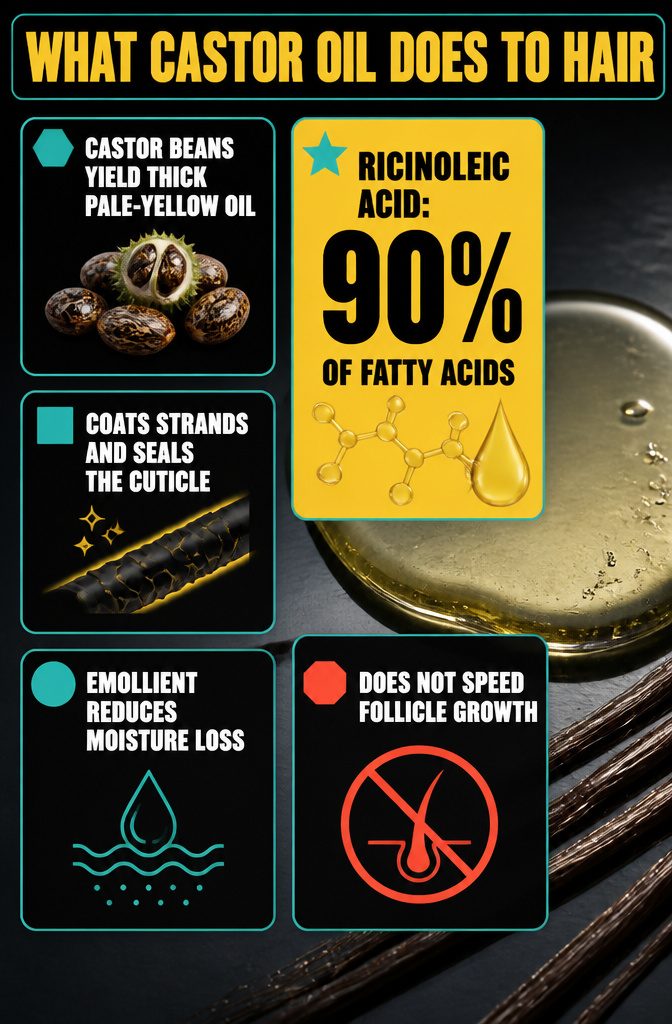
Castor oil is pressed from castor beans and arrives as a thick, pale yellow liquid that feels heavier than most hair oils. What makes it different is ricinoleic acid, which accounts for ninety percent of its fatty acid content.
That composition gives it a structure thick enough to coat each strand and seal the cuticle, which is why hair treated with it looks shinier and feels smoother almost immediately.
The oil works as an emollient rather than a growth stimulant. It reduces moisture loss from the hair shaft, cuts down on the rough, lifted feeling that comes with dryness, and makes hair easier to manage.
Because it coats the strand, it can also make hair look and feel temporarily thicker. What it does not do is speed up the rate at which follicles divide or reverse thinning.
No clinical evidence supports the idea that castor oil, or any topical oil, alters the genetic pace of hair growth, despite the before-and-after claims that fill social media.
Strengthens Hair and Reduces Breakage
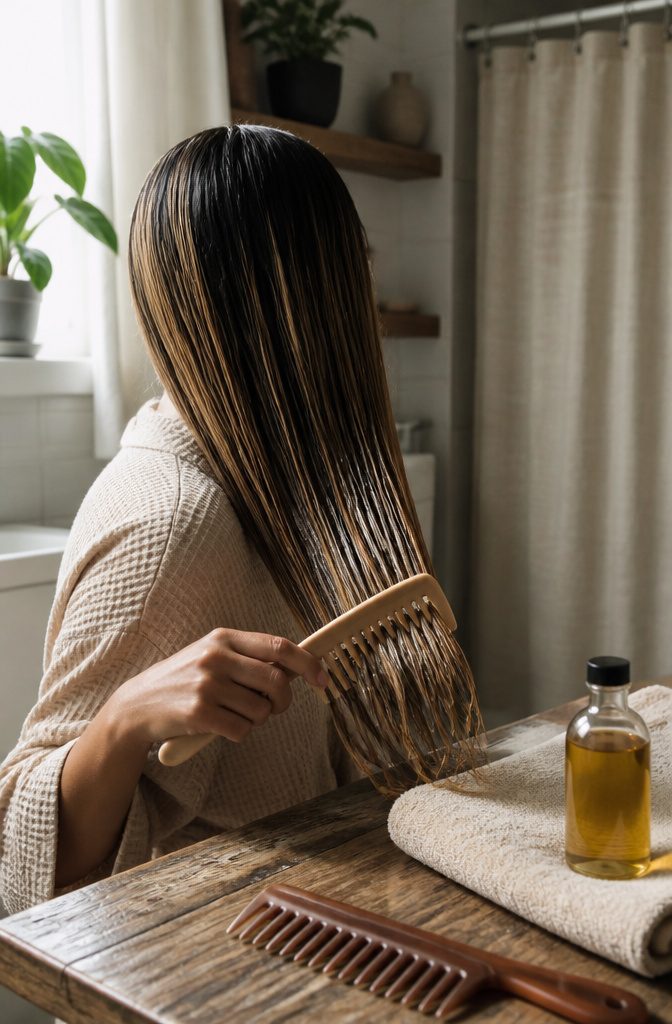
Castor oil’s most reliable benefit is keeping the hair you already have. The oil coats each strand with a thick lipid film that reduces friction during combing, detangling, and brushing, so hair slides past itself instead of snagging.
That coating also temporarily seals the cuticle surface, cutting down on the microabrasion that accumulates from daily handling, heat tools, and fabric friction.
Hair that is chemically treated, color-processed, or heat-damaged has a compromised cuticle layer and is more vulnerable to mechanical stress.
The fatty acid content in castor oil, particularly ricinoleic acid, creates a protective barrier that helps maintain moisture levels and improves elasticity. Strands become less likely to snap or split under tension.
This is not about growing more hair.
It is about length retention. Users who apply castor oil once or twice per week over four to six weeks report noticeably less breakage during detangling and reduced hair fall during washing.
For anyone trying to grow hair longer, preventing breakage at the ends is what actually moves the needle.
Seals Moisture Into Dry Hair
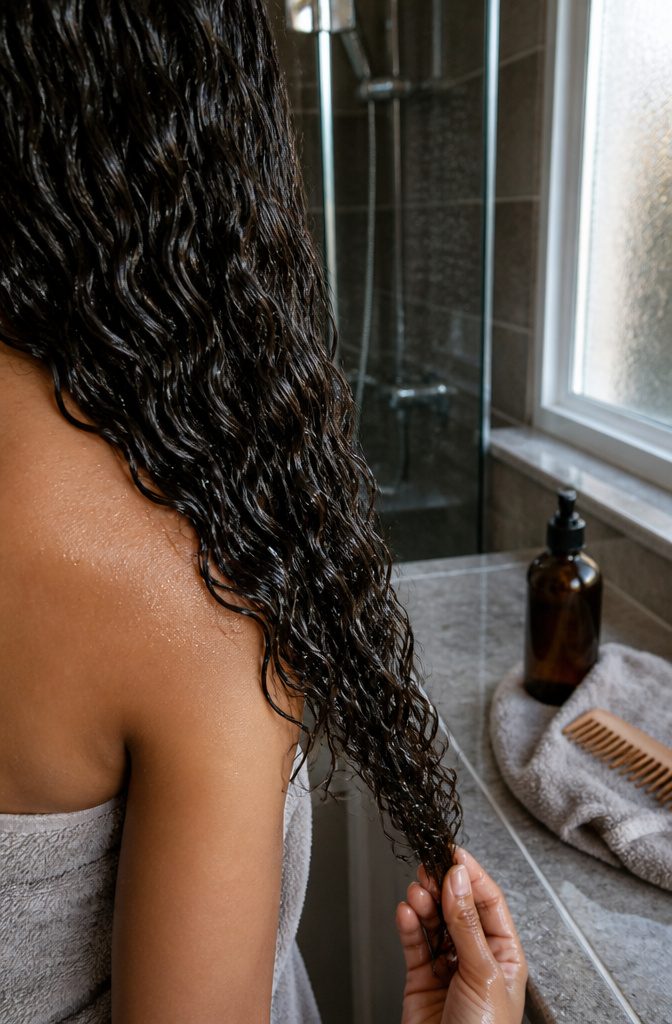
Castor oil locks moisture in by sitting on top of the hair shaft. It works as an occlusive, which means it forms a barrier that stops water from evaporating rather than drawing moisture in the way a humectant does.
The oil does not hydrate dry hair on its own. It seals in water that is already there.
That makes timing matter.
Apply castor oil to damp hair, not dry. On dry strands, you are just coating the surface with no moisture underneath to trap.
On soaking-wet hair, too much water blocks the oil from adhering properly. Slightly damp is the window where castor oil can bond to the cuticle and hold hydration in place between washes.
Curly, coarse, and chemically treated hair lose moisture faster than fine or untreated types, so the sealing effect matters most there. The thicker the texture or the more porous the strand, the more you gain from an occlusive that lasts.
Over time, that translates to softer hair with more natural shine, because the cuticle is not constantly drying out and roughening up.
Adds Shine and Smooths Frizz
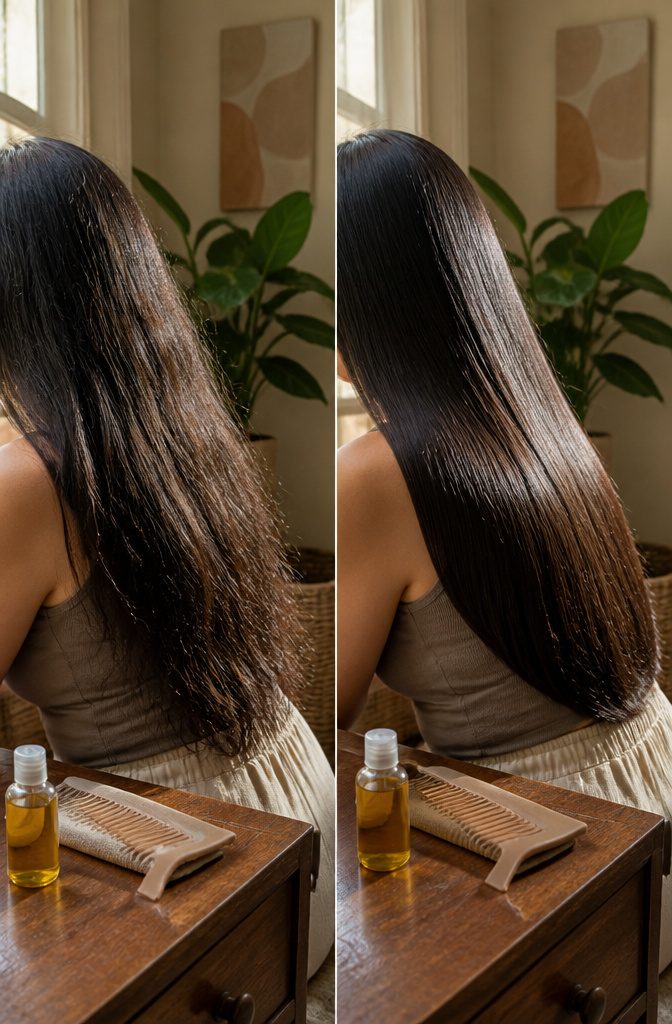
The oil’s thick consistency smooths the cuticle layer along each strand, letting light reflect evenly instead of scattering.
That uniform reflection is what registers as shine. You notice it within one or two applications, especially on hair that looked dull or felt rough before.
The same coating tames flyaways.
By weighting down the fine hairs that lift away from the main mass, castor oil creates a smoother silhouette. Any oil can do this to some degree, but castor oil’s viscosity makes the effect more pronounced.
I focus application from mid-lengths to ends. Roots don’t need the extra coating, and too much oil near the scalp tips the look from glossy to greasy.
Fine hair crosses that line faster than thick hair, so if your strands are on the finer side, use less and keep it away from your roots entirely.
Improves Scalp Condition
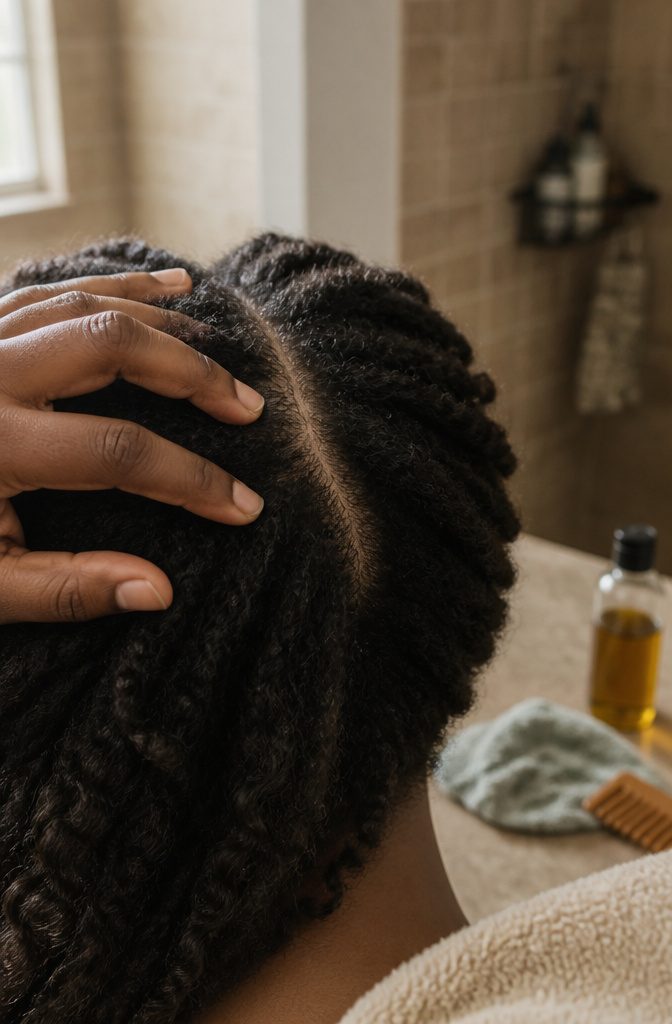
Castor oil moisturizes a dry, flaking scalp the same way it seals moisture into hair. The ricinoleic acid it contains has anti-inflammatory and antimicrobial properties, so applying it to the scalp may calm irritation and reduce flaking caused by dryness.
When you massage it in, it also softens buildup and lifts away dirt without stripping the skin.
What it will not do is cure dandruff caused by fungal overgrowth, the kind dermatologists call seborrheic dermatitis. That condition needs antifungal treatment, and castor oil’s thick texture can actually trap the Malassezia fungus and make inflammation worse.
If you have an oily scalp or sticky dandruff, skip castor oil entirely. Persistent itching, redness or scaling calls for professional evaluation, not just oil application.
Makes Hair Look and Feel Thicker
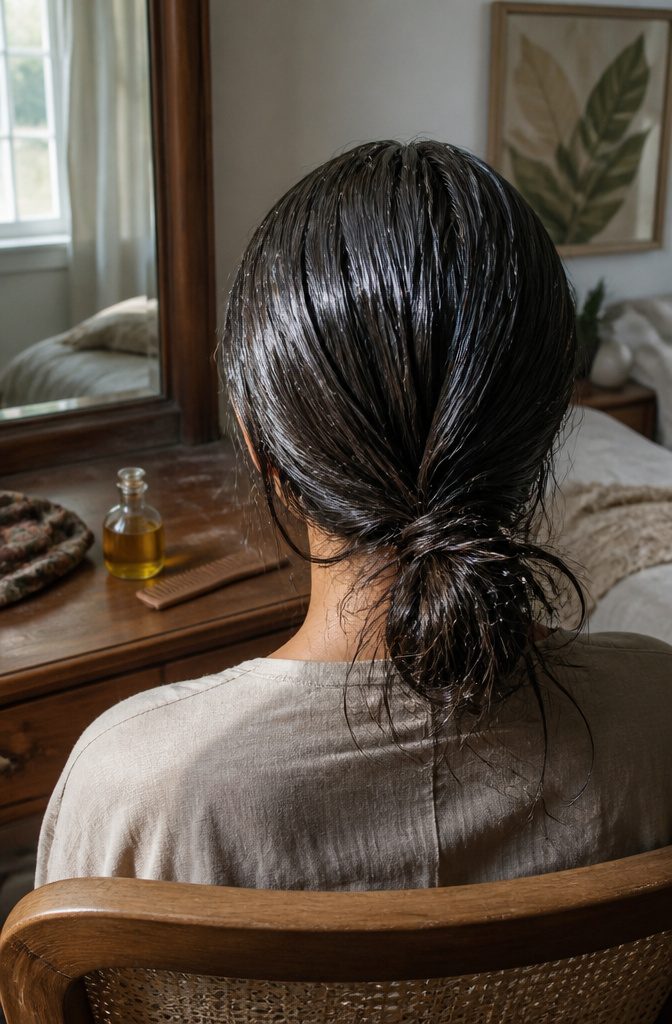
Castor oil coats each strand with a thick layer that adds physical diameter and weight, so hair looks and feels fuller right away. The effect is purely cosmetic.
You are not growing new follicles or changing the number of hairs on your head. The oil film sits on the outside of the strand, smoothing the cuticle and making each piece look slightly thicker and more substantial.
This matters most for fine hair or anyone seeing early thinning, because the visual density improves even when follicle count has not.
The effect washes out.
You get the thicker appearance while the oil is in your hair, and it disappears when you shampoo it away. Regular use can keep that fuller look going, but it remains a surface coating rather than a structural change.
The shine helps too: when the oil smooths raised cuticle scales flat, light reflects cleanly off the strand instead of scattering, so hair reads as glossy and well cared for.
That combination of added thickness and clean reflection is often visible after just one or two applications.
Conditions Damaged and Chemically Treated Hair
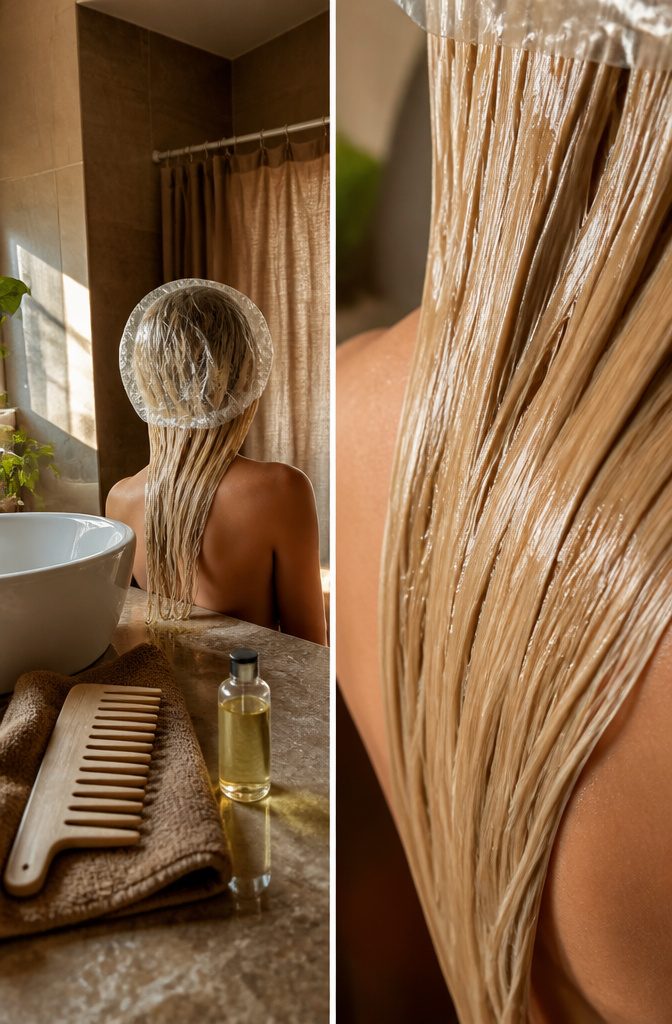
Heat and bleach open up the hair cuticle, the protective outer layer, and harsh processing leaves it roughed up and unable to close completely.
Castor oil works by sitting on the surface and filling in the gaps where cuticle scales have lifted or chipped away.
The result is smoother texture, less frizz, and a temporary barrier that stops moisture from evaporating out of the strand before you’ve had a chance to seal it in properly.
The oil is too thick to use as a leave-in for most people, so the method that gets the best result is a pre-shampoo treatment.
Work it through the mid-lengths and ends on dry hair, leave it for twenty minutes to an hour, then shampoo twice to remove it.
You can also mix a tablespoon into a deep conditioning mask and leave that on damp hair under a shower cap. Both methods let the oil sit long enough to coat damaged areas without weighing down the finished style.
How to Use Castor Oil on Hair
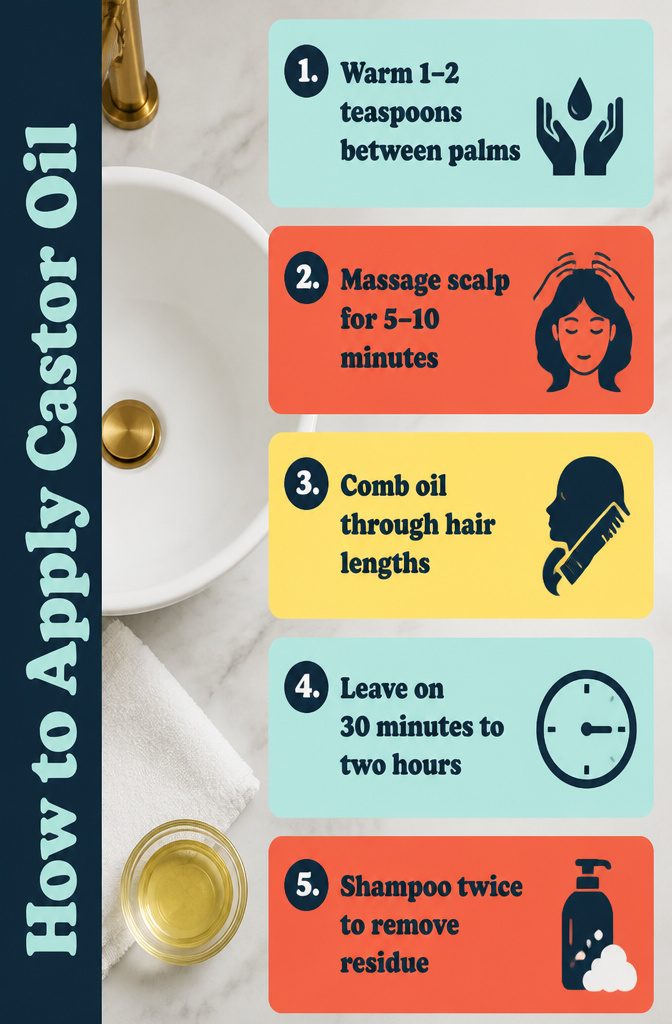
- Warm 1–2 teaspoons of castor oil between your palms—about that much covers shoulder-length hair. The oil is thick, so mixing it half-and-half with coconut or jojoba thins it out and makes shampooing easier later.
- Massage the oil into your scalp with your fingertips, working in small circles for five to ten minutes. Cover the whole scalp, especially anywhere the hair looks thinner.
- Run what’s left through the length of your hair, concentrating on the ends if they’re dry or damaged. Comb through once to spread it evenly.
- Leave it on for 30 minutes to two hours. Some people go overnight, but half an hour is enough for conditioning and an hour gives the scalp treatment time to work. Cover with a shower cap if you’re sitting that long.
- Shampoo twice. Castor oil doesn’t rinse clean on the first pass, and leaving residue makes hair look greasy and weighs it down.
Another way: mix a teaspoon or two into your usual deep conditioner, apply to damp hair from mid-lengths to ends, and leave for 20–30 minutes before rinsing.
This skips the scalp massage but still moisturizes just as well. Apply castor oil to damp hair rather than soaking wet—too much water blocks absorption.
Jamaican Black Castor Oil vs. Regular Castor Oil
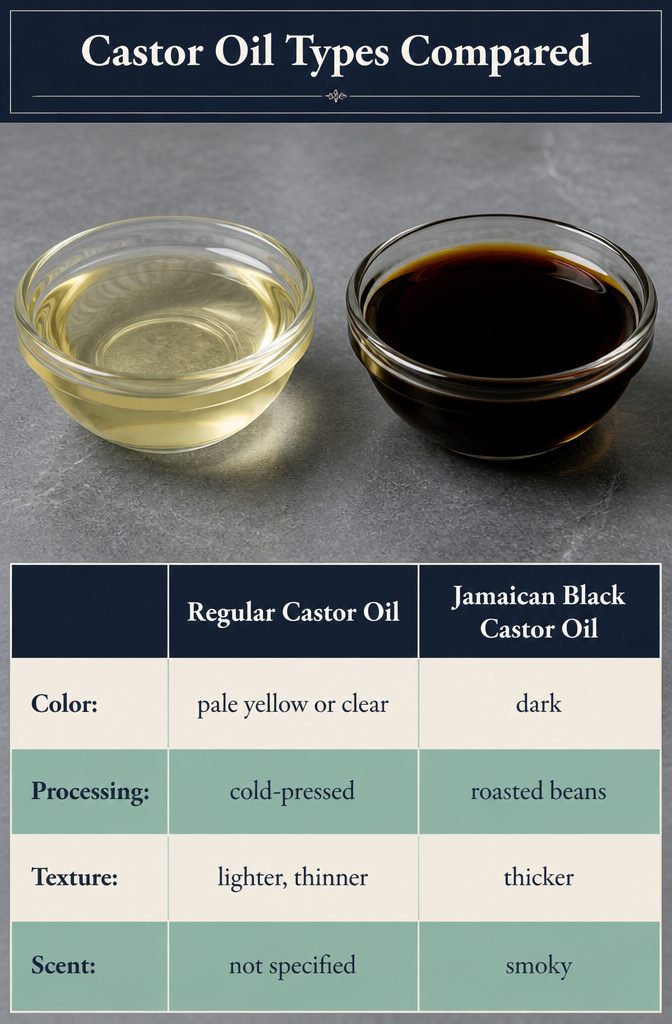
Regular castor oil and Jamaican black castor oil both come from the same castor beans, but they look and feel different because of how they’re processed.
Regular castor oil is pale yellow or clear and cold-pressed, which means the oil is extracted under pressure without heat. That method keeps it lighter and thinner.
Jamaican black castor oil gets its dark color from roasting the beans before extraction, and the ash from that roasting process stays in the oil. The roasting makes it thicker and gives it a smoky scent.
Both types contain ricinoleic acid, the fatty acid that gives castor oil its moisturizing properties, so they work the same way on hair.
The black version is popular in natural hair care, especially for coarse or very dry hair, but the difference is mostly thickness and appearance.
If you want something lighter that spreads easily, regular cold-pressed castor oil does the job. If you prefer a heavier oil with more grip, Jamaican black castor oil delivers that without changing what the oil actually does.
What Castor Oil Does Not Do
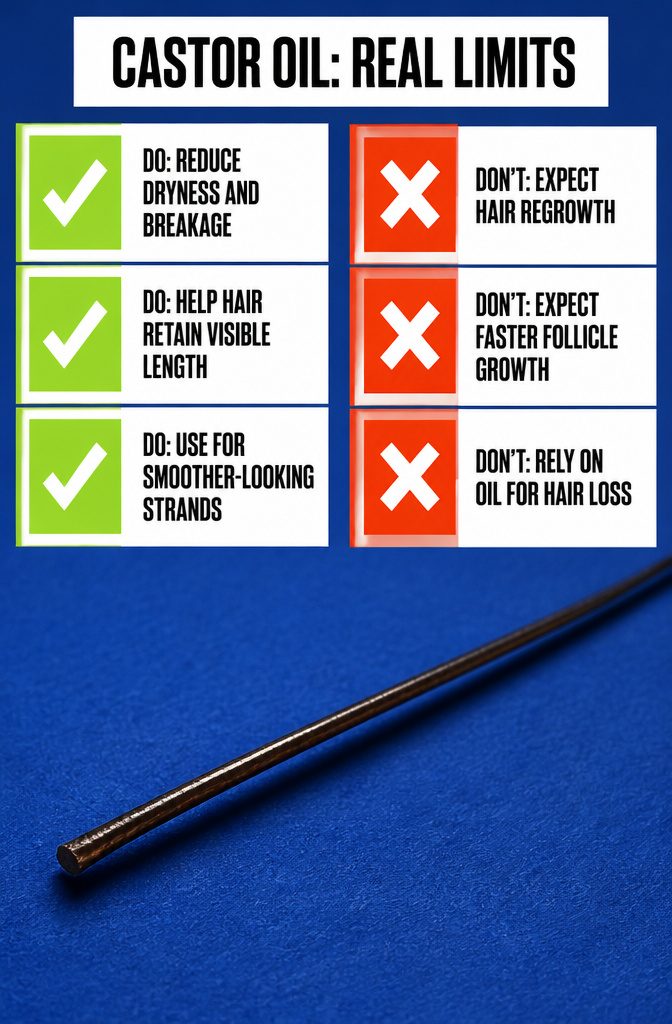
Castor oil does not regrow hair, reverse balding, or speed up the hair growth cycle. No peer-reviewed clinical evidence shows that it stimulates dormant follicles or accelerates the rate at which hair grows from the scalp.
The before-and-after photos online and the personal stories claiming dramatic regrowth reflect something else: healthier hair that breaks less and survives long enough to reach visible length.
The confusion makes sense. When hair stops snapping off at the ends, it looks longer over time, and that can feel like faster growth.
Improved scalp hydration makes the scalp feel better, which some people interpret as stimulation. But castor oil acts as an emollient that coats the hair shaft and reduces dryness.
It does not alter the genetic rate at which follicles divide, and it does not address the underlying causes of hair loss tied to genetics, hormones, nutrition, age or health conditions.
If you are dealing with true hair loss or thinning, relying on castor oil alone will not solve it. The oil helps hair look better and break less, but it does not change how fast your hair grows.
Side Effects and When to Skip It
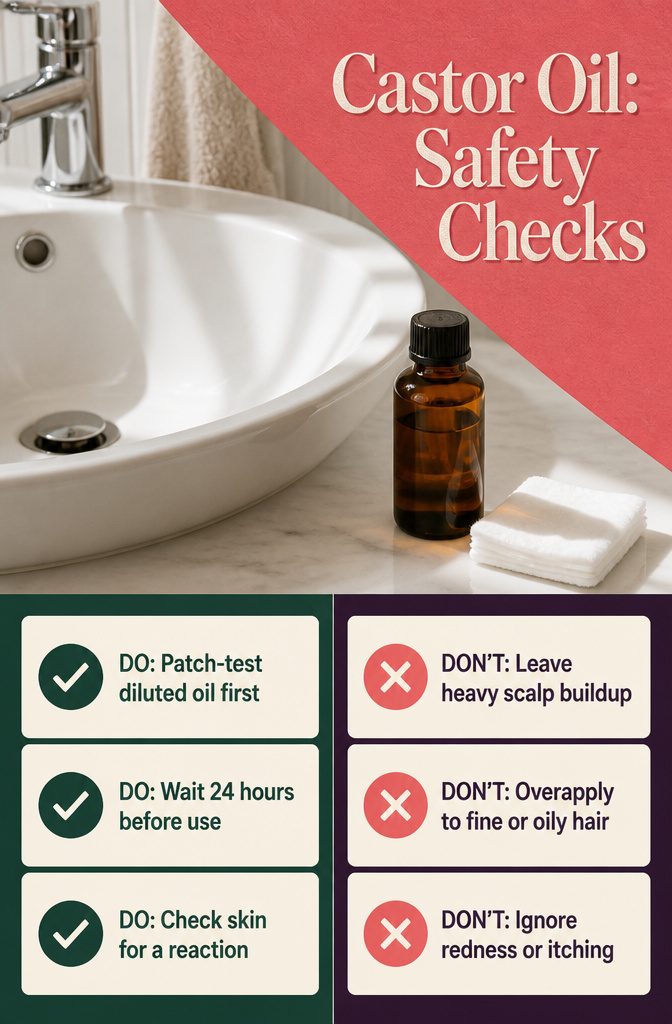
Castor oil is safe for most people, but a few things can go wrong.
The thickness that makes it so moisturizing also makes it difficult to rinse out completely, and anyone with fine or oily hair will find it weighs strands down fast.
Problems to watch for:
- Heavy buildup on the scalp if not washed thoroughly, which can clog pores and worsen existing oiliness or conditions like seborrheic dermatitis
- Greasy, flat appearance when too much is used
- Redness, itching or contact dermatitis in people with sensitive skin
- Rare cases of hair felting, where strands tangle into a dense, irreversible mass
I always recommend a patch test before the first use. Apply a small amount of diluted oil to your inner wrist or behind your ear, wait 24 hours, and check for any reaction before putting it on your scalp.
Frequently Asked Questions
Does castor oil help hair growth?
Castor oil does not speed up hair growth or stimulate follicles.
It can indirectly support length retention by reducing breakage and inflammation, so hair survives longer and reaches visible length. No clinical evidence shows it accelerates the rate at which hair grows from the scalp.
Is castor oil thick and sticky?
Yes, castor oil is much thicker than most hair oils because ricinoleic acid makes up 90% of its fatty acid content.
That viscosity makes it effective for coating strands and sealing moisture, but it also makes application messier and requires thorough shampooing to rinse out completely.
What type of castor oil is best for hair?
Cold-pressed castor oil retains the most nutrients and spreads more easily because it’s extracted without heat.
Jamaican black castor oil is thicker and works well for very dry or coarse hair, but both types contain the same ricinoleic acid and deliver the same conditioning benefits.
Can people with oily scalp use castor oil?
No, people with an oily scalp or sticky dandruff should skip castor oil entirely. Its thick texture can trap the Malassezia fungus that causes seborrheic dermatitis and make inflammation worse instead of calming it.
How long does castor oil take to work on hair?
Shine and smoothness show up after one or two applications. For reduced breakage and improved scalp condition, most people see results after 4 to 6 weeks of applying the oil once or twice per week.