Hair grows about half an inch per month no matter what you buy, and the real work is keeping that length from breaking off before you notice it.
The methods that help are split across your scalp, your diet, and the way you handle wet hair, where a microfiber towel instead of rubbing cuts the kind of friction that snaps strands.
1. Trim Damaged Ends to Retain Length
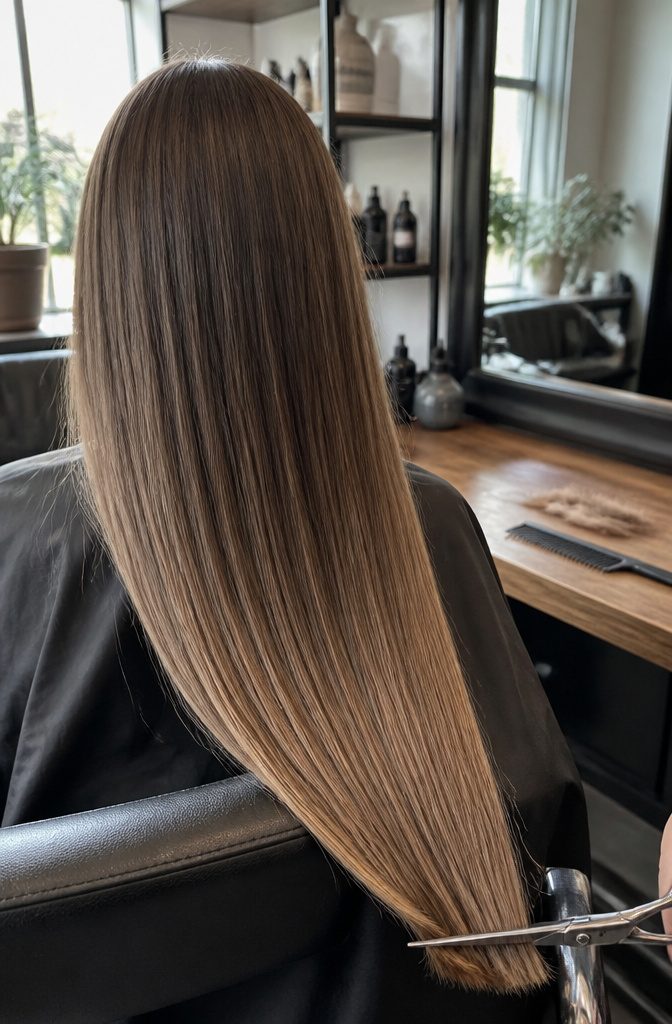
Trimming does not make hair grow faster at the root.
What it does is stop breakage from eating the length you have. A split end will travel up the shaft if you leave it alone, snapping off centimeters you already grew.
How often depends on your hair’s condition. Every 8 weeks works for color-treated or heat-styled hair that accumulates damage quickly.
Every 2–3 months is reasonable for lower-maintenance hair. A ¼-inch trim every 3 months is a lighter option for anyone trying to lose as little length as possible.
A split end will continue to break up higher and higher on the strand if it’s not removed. Communicate with your hairdresser and let them know you’re growing out your hair so that they can take it into account.
— Vogue
Tell your stylist you’re growing it out before they pick up the scissors.
2. Eat Enough Protein and a Balanced Diet
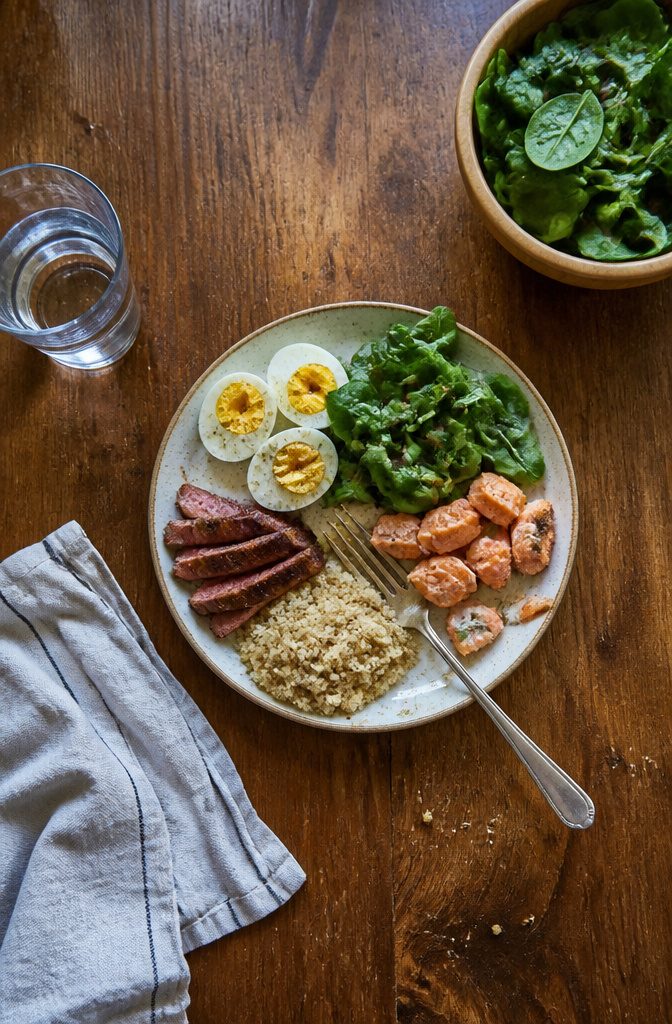
Hair is made of keratin, a protein, so aim for at least 50 grams of protein daily to give your body enough raw material to build each strand.
When intake drops short, the body redirects amino acids to organs it considers more pressing, and hair growth stalls or sheds faster than usual.
Restrictive diets make this worse, and they tend to pull down multiple nutrients at once. Vitamins A, B, C, D, and E, plus zinc, iron, and omega-3 fatty acids all support the hair growth cycle.
An iron deficiency in particular is a common, underappreciated reason hair stops reaching its full length. Eggs, leafy greens, oily fish, lean meats, and whole grains cover most of these bases without requiring a complete diet overhaul.
3. Treat Supplements as Conditional, Not a Shortcut
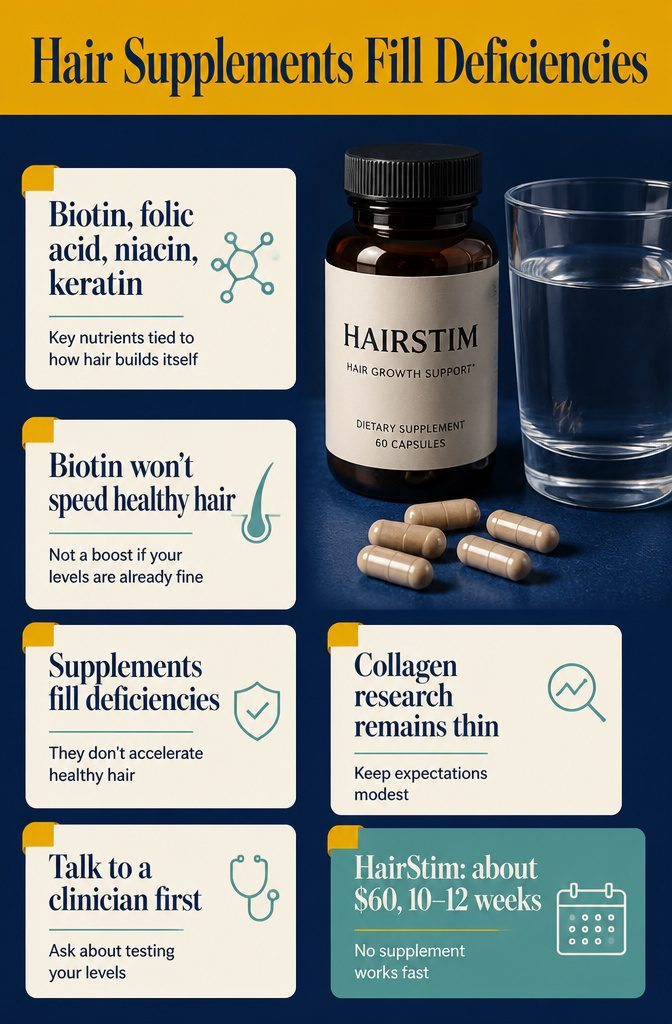
Biotin (vitamin B7), folic acid, niacin, and keratin are the names most often attached to hair growth supplements, and each has real biochemical ties to how hair builds itself.
That connection does not mean popping a biotin gummy will speed things up if your levels are already fine.
Supplements fill deficiencies; they don’t accelerate healthy hair. Talk to a clinician before starting anything, and ask about getting your levels tested first.
Collagen gets a lot of shelf space right now, and the research behind it is still thin enough that I’d keep expectations modest.
A targeted formula like HairStim runs about $60 and takes 10–12 weeks before results show, which is a useful reminder that no supplement works fast.
4. Wash and Condition for Your Scalp and Hair Type
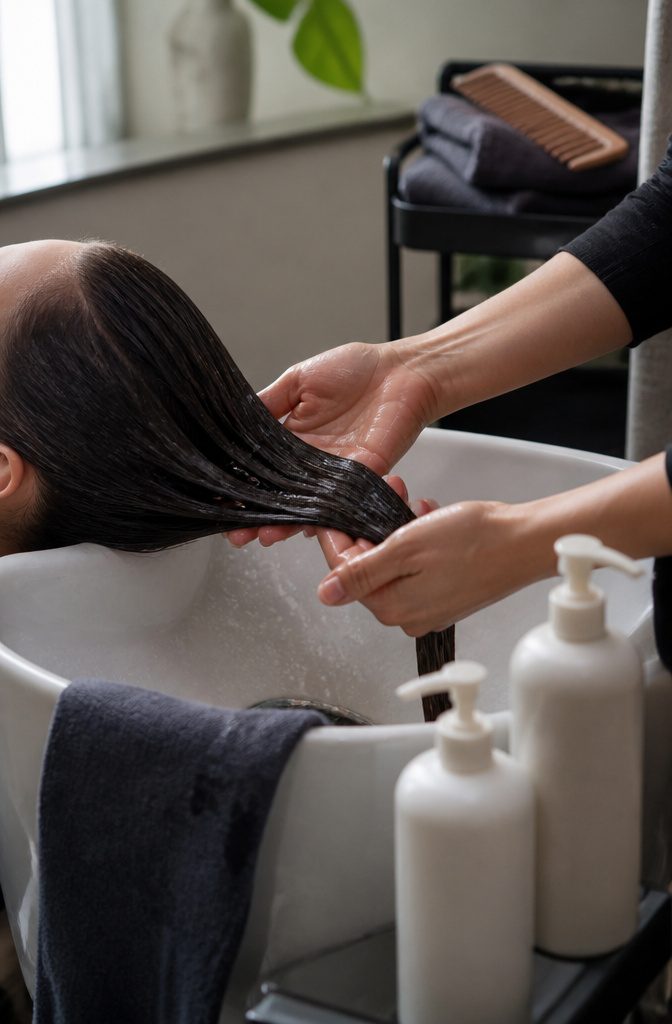
How often you shampoo matters as much as which product you use. Washing 2–3 times a week lets your scalp’s natural oils work down the hair shaft, hydrating and repairing as they go.
Shampoo more often than that and you strip moisture; less often on an oil-prone scalp and buildup starts to clog follicles and slow growth.
Check the label for SLS, SLES, parabens, and silicones (dimethicone is the silicone you’ll see most often).
Those ingredients build up on the scalp and make washing less effective. Conditioner belongs in every wash, not just occasional ones, applied to the lengths where ends tangle and feel rough rather than worked into the scalp.
5. Care for the Scalp With Cleansing and Massage
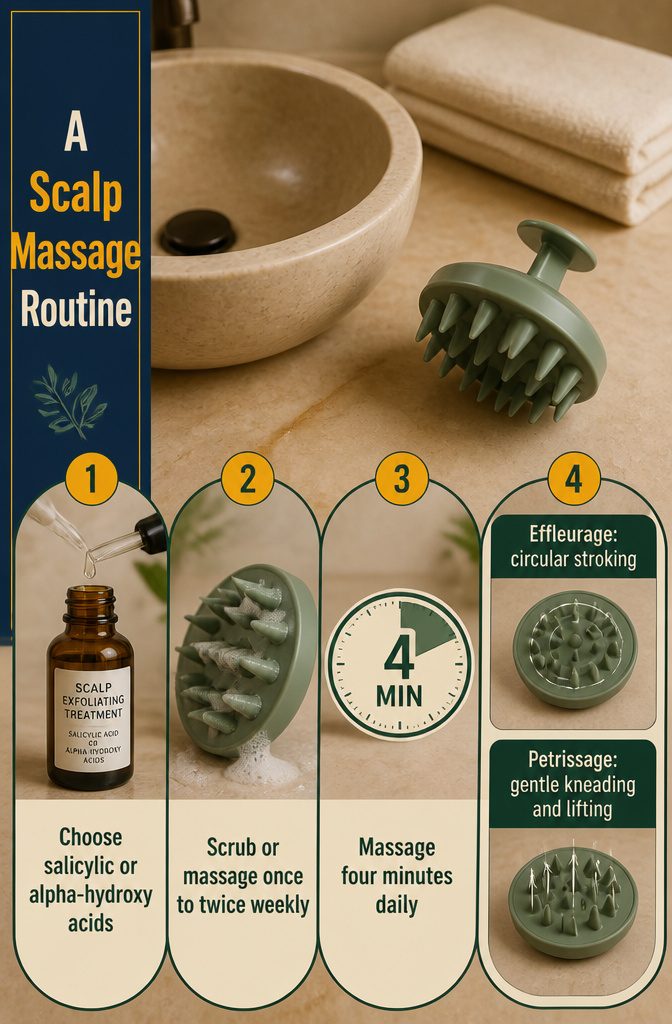
The scalp is where hair growth actually starts, so keeping it clean and exfoliated matters more than most people expect.
Look for scalp products with salicylic acid or alpha-hydroxy acids to dissolve dead skin buildup without harsh physical scrubbing. A scalp scrub or massager once to twice a week handles both exfoliation and circulation in one step.
Massage is the part that has actual numbers behind it, even if modest ones. A 2016 study found measurable increases in hair thickness after 4-minute daily massages over 24 weeks, and a 2019 survey of 340 people reported 68.9% saw stabilization or regrowth.
Evidence is limited, but the cost of trying is basically zero. The 2 techniques worth knowing are effleurage, which uses circular stroking motions, and petrissage, a gentle kneading and lifting of the scalp.
6. Handle Wet Hair Gently
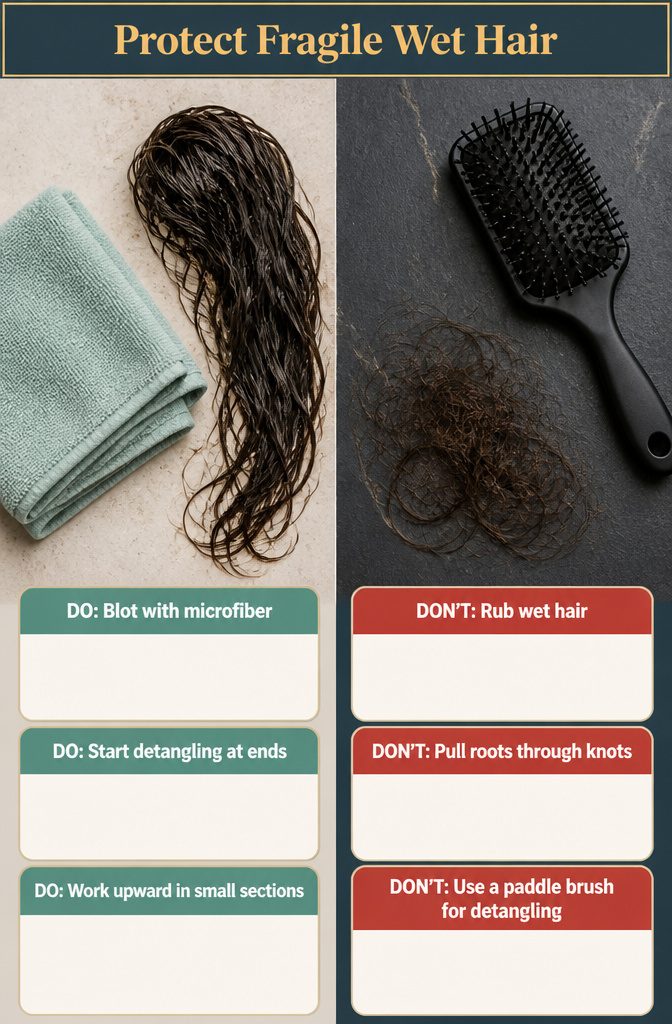
Wet hair is at its most vulnerable point in your whole routine. Water swells and stretches the hair shaft, which lifts the outer cuticle layer, and any rough handling in that state causes breakage.
Blot excess water with a microfiber towel rather than rubbing, which also keeps the cuticle flatter and reduces frizz.
When detangling, start at the ends and work upward in small sections, releasing each knot before moving higher. Pulling from the roots through a tangle doesn’t speed things up; it snaps strands.
If you have textured hair, detangle while damp with a wide-tooth comb and a leave-in conditioner to cut friction. A cushioned brush with rounded plastic prongs is gentler than a paddle brush for the same job.
7. Limit Heat Styling and Use Protection
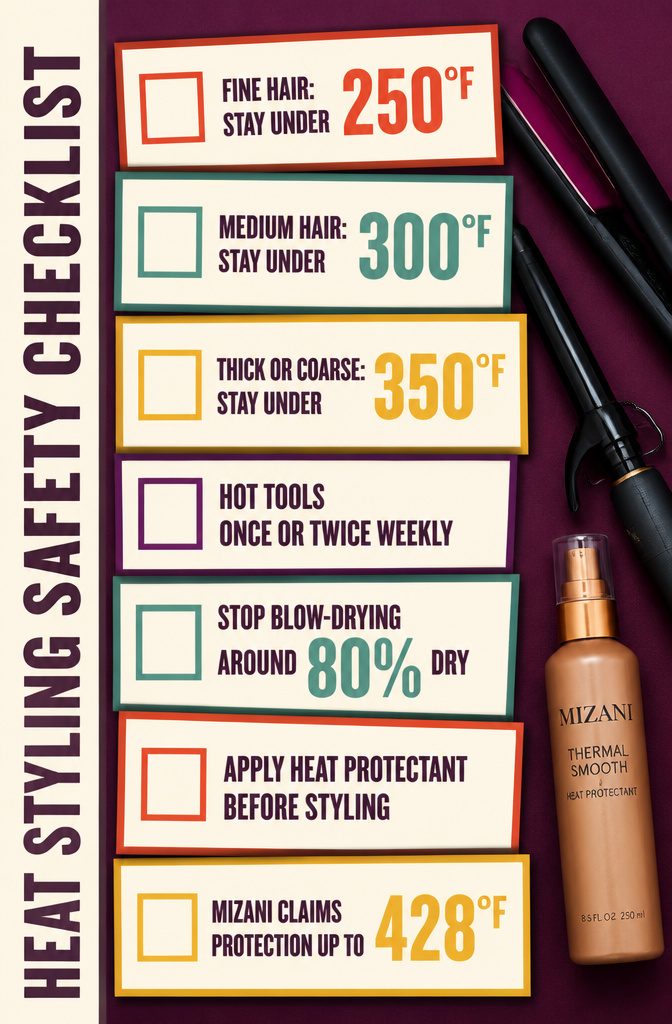
**Keep your flat iron or curling wand under 350°F for thick or coarse hair, under 300°F for medium hair, and under 250°F for fine hair.**
Using hot tools once or twice a week gives the cuticle time to recover between sessions.
When blow-drying, stop at around 80% dry and let the rest finish on its own. Wet hair stretched under heat is far more fragile than hair that air-dries the last stretch.
A heat protectant applied before any hot tool forms a barrier that slows moisture loss during styling. Some formulas, like Mizani's, claim protection up to 428°F. ```
## 8. Limit Bleaching, Dyeing, and Chemical Treatments
<figure class="wp-block-image size-large"><img src="https://cdn.hairgrowthnotes.com/how-to-grow-long-hair-faster/limit-bleaching-dyeing-chemical-treatments.jpg" alt="Hair shown as an example for an article about growing long hair" loading="lazy"/><figcaption>Chemical treatments can leave hair brittle and prone to breakage.</figcaption></figure>
Chemical processing severs the disulfide bonds that give hair its tensile strength, and every session of bleaching or dyeing leaves the strand more brittle than it was before.
That brittleness translates directly into breakage, and breakage is the main reason hair stays short despite months of growth.
If you relax your hair, **space touch-ups at least 2–3 months apart** to let new growth come in without compounding the stress on already-processed lengths.
For hair that's heavily bleached or chemically treated, a bond-building treatment once a week gives the cortex something to work with. Mild color damage is a lighter problem; once or twice a month is enough.
The goal isn't to quit color entirely. It's to stop adding damage faster than the hair can be retained.
## 9. Reduce Tension and Friction From Hairstyles and Sleep
<figure class="wp-block-image size-large"><img src="https://cdn.hairgrowthnotes.com/how-to-grow-long-hair-faster/reduce-tension-friction-hairstyles-sleep.jpg" alt="Loose low ponytail secured with a silk scrunchie on a satin pillowcase" loading="lazy"/><figcaption>A loose ponytail and silk scrunchie rest against a satin pillowcase.</figcaption></figure>
Tight hairstyles put sustained tension on the follicle, and over time that stress causes real damage.
**Switch to looser styles** — low ponytails, styles that leave short pieces out rather than yanking them back, silk scrunchies instead of elastic — and your scalp will thank you.
If a bun or ponytail hurts while you're wearing it, it's already too tight.
The same logic applies at night. A silk or satin pillowcase reduces friction, tangling, and the kind of mechanical breakage that quietly steals length you've already grown.
For extensions or weaves, the limit is **2–3 months at a stretch**, and changing your overall hairstyle on the same schedule keeps traction stress from settling into any one area.
## 10. Manage Stress and Investigate Underlying Causes
<figure class="wp-block-image size-large"><img src="https://cdn.hairgrowthnotes.com/how-to-grow-long-hair-faster/manage-stress-investigate-underlying-causes.jpg" alt="Hair growth infographic titled Stress Can Shift Hair Growth" loading="lazy"/><figcaption>The graphic explains how stress can shift hair into a resting phase.</figcaption></figure>
Chronic stress pushes follicles into a resting phase where they shed instead of grow, and the shedding often doesn't show up until 6 to 12 weeks after the triggering event, which makes the cause easy to miss.
Cortisol is part of the mechanism: elevated levels from sustained anxiety directly affect the hair growth cycle.
Sleep matters here too.
**7–9 hours a night** keeps melatonin production intact, and melatonin plays a direct role in regulating hair growth. Cutting sleep short cuts that signal.
Smoking is worth flagging: smokers are more than twice as likely to experience thinning hair. If unexpected shedding, patchy loss, or a persistent scalp problem shows up, that is a conversation for a doctor, not a new product routine.
## 11. Consider Targeted Hair-Loss Treatments With Medical Guidance
<figure class="wp-block-image size-large"><img src="https://cdn.hairgrowthnotes.com/how-to-grow-long-hair-faster/consider-targeted-hair-loss-treatments-medical-guidance.jpg" alt="Hair loss infographic titled Hair-Loss Treatment Options Compared" loading="lazy"/><figcaption>The graphic compares treatment options for hair loss.</figcaption></figure>
When you're losing more hair than you're keeping, a topical or oral treatment may do what conditioner alone cannot. **Minoxidil is FDA-approved for hair regrowth**; Women's Rogaine and Hers 2% solution both contain it, though a 5% formula is usually sufficient.
Results can take up to 12 months, so patience counts here. Prescription options include spironolactone and finasteride, which address hormonal drivers of thinning.
Rosemary oil performed comparably to 2% minoxidil in a 2015 study.
Use once daily, a few drops left on the scalp for at least 15 minutes. Pumpkin seed oil showed significant regrowth after 3 months in participants with female pattern baldness in a 2021 study.
Piroctone olamine shampoo or leave-in treatment, studied over 24 weeks, is another option. Ingredients like green tea, mangosteen, goji berries, rosemary, and lavender carry anti-inflammatory or antioxidant properties that support scalp health.
PRP (platelet-rich plasma) involves scalp injections of growth factors drawn from your own blood.
It usually requires four treatments costing $600–$1,200 each, or once a month for 3 months then every 6 months for maintenance. One estimate reported 20% of patients saw significant improvement, 20% little to none, and 40% a 10–15% improvement.
John Frieda's PROfiller+ Hair Growth Scalp Serum was clinically proven to improve visible growth by 30% within 4 weeks and reduce visible hair loss by 50% over 12 weeks in a 34-subject study.
Apply it to damp or dry hair before bed so it has time to work overnight.
## 12. Keep Expectations Realistic
<figure class="wp-block-image size-large"><img src="https://cdn.hairgrowthnotes.com/how-to-grow-long-hair-faster/keep-expectations-realistic.jpg" alt="Long hair falling over a shoulder against a plain background" loading="lazy"/><figcaption>Long hair rests over a shoulder, showing the length a careful routine can help retain.</figcaption></figure>
Hair grows roughly half an inch per month regardless of what you put on it. Hormones, genetics, age and overall health set that rate, and no shampoo, serum or conditioning treatment changes the underlying number.
**What routine care actually does is protect the length you already have** by reducing breakage. Those are two different things: growth happens at the root, retention happens along the shaft.
A strand that snaps off at mid-length looks exactly like hair that stopped growing. Most of what fills a "grow longer hair" routine is really a breakage-prevention routine, and calling it that is more honest about what you can expect.
## How Fast Hair Actually Grows
<figure class="wp-block-image size-large"><img src="https://cdn.hairgrowthnotes.com/how-to-grow-long-hair-faster/how-fast-hair-actually-grows.jpg" alt="Hair growth infographic titled Hair Grows About Half An Inch Monthly" loading="lazy"/><figcaption>The graphic illustrates the steady pace of hair growth over a month.</figcaption></figure>
Hair grows at about **half an inch a month**, which adds up to 6 inches a year.
Some counts put it more precisely at 0.35 millimeters per day, though either way the pace is steady rather than dramatic. Your scalp holds 80,000–120,000 follicles, and roughly 80% of them are actively growing at any given time.
How fast yours actually grows is shaped by genetics, age, hormones, and overall health.
Those factors are mostly fixed. What shifts them at the margins is diet, stress, and how well you treat the hair you already have.
## The Four Growth Phases
<figure class="wp-block-image size-large"><img src="https://cdn.hairgrowthnotes.com/how-to-grow-long-hair-faster/four-growth-phases.jpg" alt="Hair growth cycle infographic titled The Four Stages Of Hair Growth" loading="lazy"/><figcaption>The graphic traces a strand through its 4 stages of growth.</figcaption></figure>
Each strand of hair cycles through 4 stages: anagen, catagen, telogen, and exogen. Anagen is the active growth phase, and **85–90% of your scalp hair sits in this phase at any given moment**, with each follicle staying there for 2–6 years.
That range is why two people can follow the same routine and end up with very different maximum lengths.
Catagen is a brief transition. Telogen is rest, covering roughly 10–15% of hair at once.
Exogen is when the follicle releases the strand and it sheds. A protein called FGF5 signals that shift from growth to rest; its only job is to tell the follicle to stop.
## Normal Shedding Is 50–100 Hairs Daily
<figure class="wp-block-image size-large"><img src="https://cdn.hairgrowthnotes.com/how-to-grow-long-hair-faster/normal-shedding-50-100-hairs-daily.jpg" alt="Loose hair strands collected in a hairbrush" loading="lazy"/><figcaption>Loose strands caught in a brush are part of normal daily shedding.</figcaption></figure>
Losing **50–100 hairs a day** is normal. The NHS puts the figure there, and most of that shedding happens without you noticing: a few strands on your brush, a couple in the shower drain.
On a full head of hair, that turnover is just the growth cycle doing its job.
What warrants attention is a sudden increase, not the daily baseline. If noticeably more hair is coming out than usual, and it persists, that is worth a conversation with your doctor to rule out something driving it from the inside.
## Hair-Type-Specific Care
<figure class="wp-block-image size-large"><img src="https://cdn.hairgrowthnotes.com/how-to-grow-long-hair-faster/hair-type-specific-care.jpg" alt="Several hair textures shown in a comparison of hair types" loading="lazy"/><figcaption>Different hair textures call for different washing and detangling routines.</figcaption></figure>
Different hair types lose length in different ways, and the fix depends on knowing which one you're dealing with.
- **Textured and Black hair** does best washed once a week or once every 2 weeks, with a conditioner every time. Detangle while the hair is damp, never dry, using a wide-tooth comb and working from ends to roots in small sections.
- Braids, cornrows, and weaves should sit loose at the scalp. Tight styles stress the follicle and cause breakage at the root.
- Dry hair needs a heavier conditioner and less frequent washing. Fine or very curly hair breaks easily, so skip brushing while wet entirely.
- A weekly mask applied to damp hair, left on under a warm towel for 5 minutes, adds moisture and helps restore elasticity regardless of hair type.
## When to Seek Professional Evaluation
<figure class="wp-block-image size-large"><img src="https://cdn.hairgrowthnotes.com/how-to-grow-long-hair-faster/when-seek-professional-evaluation.jpg" alt="Doctor examining a patient's scalp for thinning hair" loading="lazy"/><figcaption>A clinician can assess unexpected shedding, thinning patches, or scalp problems.</figcaption></figure>
Unexpected shedding, patches of thinning, or a scalp problem that won't clear up all deserve a doctor's appointment rather than a new product.
Stress, nutritional deficiencies, hormonal shifts, and underlying medical conditions are among the real causes of significant hair loss, and **none of them respond to a better shampoo routine**.
Telogen effluvium, one of the most common patterns of widespread shedding, can be triggered by rapid weight loss or a drop in protein intake.
Hair typically grows back once the underlying cause is addressed. That's the part worth holding onto: a dermatologist can identify what's actually happening and treat it, where a supplement stack or a growth serum mostly can't.
## Why Routine Care Does Not Guarantee Rapid Growth
<figure class="wp-block-image size-large"><img src="https://cdn.hairgrowthnotes.com/how-to-grow-long-hair-faster/why-routine-care-does-not-guarantee-rapid-growth.jpg" alt="Long hair strand attached at the root with a visible split midway down" loading="lazy"/><figcaption>A split midway down the strand shows how breakage can erase retained length.</figcaption></figure>
Hair grows at roughly half an inch per month, and no shampoo, mask, or supplement changes that number.
What routine care actually does is protect the length you already have by reducing breakage, so more of what grows out the follicle survives to become the length you see.
**Biology sets the growth rate; your routine determines how much of it you keep.** A strand that splits and snaps mid-shaft loses the progress that month of growth bought you.
Good habits close that gap, but they don't widen it. Expecting your regimen to accelerate the follicle itself is where most product promises quietly fail.
## Low-Maintenance Hairstyles That Reduce Damage
<figure class="wp-block-image size-large"><img src="https://cdn.hairgrowthnotes.com/how-to-grow-long-hair-faster/low-maintenance-hairstyles-reduce-damage.jpg" alt="Loose braid and low ponytail secured without tight tension" loading="lazy"/><figcaption>A low-maintenance style keeps hair loose and reduces pulling at the scalp.</figcaption></figure>
Let me analyze this task carefully.
I need to write ONE section of a blog article about growing long hair faster. The specific section heading is "Low-Maintenance Hairstyles That Reduce Damage."
Key requirements:
- State that no hairstyle directly grows hair, but low-maintenance styles that avoid tension may reduce damage
- Cover loose braids, low ponytails, and avoiding styles that pull tight or cause friction
- Present as a bulleted list with a short lead-in sentence
- First person singular ("I"), but only 7% of sentences should OPEN with "I"
- Flesch-Kincaid grade 8-9
- HARD CEILING: 120 words
- American English
- No em dashes
- No banned words
- Bold the thing the reader came for (1-2 times max)
- No heading, no intro, no summary
- Lead with substance
- Every sentence delivers one of five things: recommendation, measurement, how-to move, cost/limit, or judgment call
Let me look at the source passages for facts I can use:
1. No hairstyle can directly promote healthy hair growth
2. Natural styles that don't need maintenance may prevent damage to follicles
3. Some hairstyles could damage hair: ponytails, buns, cornrows
4. Avoid pulling hair tightly with elastics, clips, hairbands
5. Low ponytails are relatively innocuous
6. Silk scrunchies as ponytail holders that won't damage hair
7. Repeated tension can damage hair; AAD explains risks of tightly pulled hairstyles
8. If a bun or ponytail hurts, loosen it
9. Once hair reaches far enough to gather, avoid pulling tightly just to capture shortest pieces; looser style with those pieces left out is better starting point
10. Protective styles: loose twists, rolls, French braids you can DIY at home
Now let me write this section. It needs a short lead-in sentence, then bullets.
Max 120 words. Let me be careful about the "I" placement — only 7% of sentences should open with "I."
Let me draft:
No hairstyle makes hair grow faster, but styles that skip tension keep the length you already have.
The ones that cause damage are the obvious culprits: tight ponytails, buns, and cornrows put stress on the roots. A few swaps that reduce breakage:
- **Low ponytails** sit below the stress line and let the hairline rest; high ponies pull all day.
- Loose braids and French braids keep ends from tangling and drying out without cinching the scalp.
- Silk scrunchies hold without the grab of plain elastics, clips, or tight hairbands.
- If a bun or ponytail hurts, loosen it. Pain means the style is already pulling on follicles.
Let me count words: "No hairstyle makes hair grow faster, but styles that skip tension keep the length you already have." - 18 words "The ones that cause damage are the obvious culprits: tight ponytails, buns, and cornrows put stress on the roots." - 19 words "A few swaps that reduce breakage:" - 6 words "- Low ponytails sit below the stress line and let the hairline rest; high ponies pull all day." - 18 words "- Loose braids and French braids keep ends from tangling and drying out without cinching the scalp." - 15 words "- Silk scrunchies hold without the grab of plain elastics, clips, or tight hairbands." - 13 words "- If a bun or ponytail hurts, loosen it.
Pain means the style is already pulling on follicles." - 17 words
Total: about 106 words. That's under 120.
Wait, let me reconsider. The instruction says "I" should appear but only 7% of sentences open with it.
I haven't used "I" at all yet. Let me add one "I" mid-sentence somewhere to bring in the first-person voice.
Let me also check: the lead-in should be a single short sentence before the bullets. Let me restructure.
Let me also check banned words: none used.
No em dashes: none used. Good.
Let me revise to include "I" naturally, mid-sentence:
No hairstyle makes hair grow faster, but I'd argue low-maintenance styles that skip tension are the cheapest way to keep the length you already have.
The damage comes from the obvious culprits: tight ponytails, buns, and cornrows put stress on the roots.
- **Low ponytails** sit below the stress line and let the hairline rest; high ponies pull all day.
- Loose braids and French braids keep ends from tangling without cinching the scalp.
- Silk scrunchies hold without the grab of plain elastics, clips, or tight hairbands.
- If a bun or ponytail hurts, loosen it. Pain means the style is already pulling on follicles.
Let me count: "No hairstyle makes hair grow faster, but I'd argue low-maintenance styles that skip tension are the cheapest way to keep the length you already have." - 25 words "The damage comes from the obvious culprits: tight ponytails, buns, and cornrows put stress on the roots." - 17 words "- **Low ponytails** sit below the stress line and let the hairline rest; high ponies pull all day." - 18 words "- Loose braids and French braids keep ends from tangling without cinching the scalp." - 13 words "- Silk scrunchies hold without the grab of plain elastics, clips, or tight hairbands." - 13 words "- If a bun or ponytail hurts, loosen it.
Pain means the style is already pulling on follicles." - 17 words
Total: about 103 words. Good, under 120.
Wait, "the cheapest way" — is that a cost/limit? That's fine, it's a judgment call.
Actually, let me reconsider "I'd argue" — is that too clunky? Let me try a different placement.
Actually the voice sample uses "I" quite naturally. Let me try:
No hairstyle makes hair grow faster. The styles worth keeping around are the ones that skip tension, because I keep coming back to the fact that breakage, not slow growth, is what steals length.
Hmm, that's getting wordy. Let me keep it tighter.
Let me try again:
No hairstyle makes hair grow faster, but low-maintenance styles that skip tension are the easiest way to keep the length you already have.
I count loose braids, low ponies, and silk scrunchies among the small changes that add up. A few worth making:
- **Low ponytails** sit below the stress line and let the hairline rest; high ponies pull all day.
- Loose braids and French braids keep ends from tangling without cinching the scalp.
- Silk scrunchies hold without the grab of plain elastics, clips, or tight hairbands.
- If a bun or ponytail hurts, loosen it. Pain means the style is already pulling on follicles.
Word count: "No hairstyle makes hair grow faster, but low-maintenance styles that skip tension are the easiest way to keep the length you already have." - 22 words "I count loose braids, low ponies, and silk scrunchies among the small changes that add up." - 16 words "A few worth making:" - 4 words "- Low ponytails sit below the stress line and let the hairline rest; high ponies pull all day." - 18 words "- Loose braids and French braids keep ends from tangling without cinching the scalp." - 13 words "- Silk scrunchies hold without the grab of plain elastics, clips, or tight hairbands." - 13 words "- If a bun or ponytail hurts, loosen it.
Pain means the style is already pulling on follicles." - 17 words
Total: about 103 words. Good.
Sentences that open with "I": 1 out of about 7 sentences = 14%. Hmm, the target is 7%.
But with this few sentences, one "I"-opening sentence is about 14%. Let me move the "I" to mid-sentence instead.
Actually, re-reading: "only 7% of sentences OPEN with 'I'".
So I should avoid opening with "I". Let me put it mid-sentence.
"No hairstyle makes hair grow faster, but low-maintenance styles that skip tension are the easiest way to keep the length you already have. What I keep coming back to is that breakage steals more length than slow growth ever did."
Hmm, "What I keep coming back to" — that's a bit of a filler. Let me think about this differently.
Actually, the instruction says the voice should sound like someone who knows the subject. Let me just use "I" once, mid-sentence, naturally.
Let me try:
No hairstyle makes hair grow faster, but low-maintenance styles that skip tension are the easiest way to keep the length you already have.
The damage comes from tight ponytails, buns, and cornrows, which is why I'd start by swapping those out. A few changes worth making:
- **Low ponytails** sit below the stress line and let the hairline rest; high ponies pull all day.
- Loose braids and French braids keep ends from tangling without cinching the scalp.
- Silk scrunchies hold without the grab of plain elastics, clips, or tight hairbands.
- If a bun or ponytail hurts, loosen it. Pain means the follicles are already under strain.
Sentences opening with "I": 0.
"I" appears mid-sentence once ("which is why I'd start"). Good — that's under 7%.
Word count: "No hairstyle makes hair grow faster, but low-maintenance styles that skip tension are the easiest way to keep the length you already have." - 22 "The damage comes from tight ponytails, buns, and cornrows, which is why I'd start by swapping those out." - 18 "A few changes worth making:" - 5 "- Low ponytails sit below the stress line and let the hairline rest; high ponies pull all day." - 18 "- Loose braids and French braids keep ends from tangling without cinching the scalp." - 13 "- Silk scrunchies hold without the grab of plain elastics, clips, or tight hairbands." - 13 "- If a bun or ponytail hurts, loosen it.
Pain means the follicles are already under strain." - 17
Total: ~106 words.
Under 120. Good.
Let me check every sentence against the five-things test:
1. "No hairstyle makes hair grow faster, but low-maintenance styles that skip tension are the easiest way to keep the length you already have." — judgment call + recommendation. ✓
2. "The damage comes from tight ponytails, buns, and cornrows, which is why I'd start by swapping those out." — recommendation + judgment. ✓
3. Bullets all deliver recommendations/how-to. ✓
4. "If a bun or ponytail hurts, loosen it." — how-to move. ✓
5. "Pain means the follicles are already under strain." — judgment/explanation. ✓
Banned words check: none used. ✓ No em dashes: ✓ American English: ✓ Bolding: I have one bold — "**Low ponytails**". Actually, the instruction says bold "the thing the reader came for" — the measurement, the rule, the price ceiling, the mistake.
Is "Low ponytails" the thing they came for? Let me think about what's most worth stopping on.
Maybe the pain rule is the key insight: "If a bun or ponytail hurts, loosen it." Or the rule about no hairstyle grows hair.
Actually, maybe I should bold something more substantive. Let me bold "If a bun or ponytail hurts, loosen it" — no wait, that's a whole sentence, and the instruction says bold a phrase not a sentence.
Let me bold a phrase within a bullet. Maybe "loosen it" in the last bullet?
Or maybe the opening claim is worth bolding? "No hairstyle makes hair grow faster" is the key fact the reader needs to know.
Actually, re-reading: "Bold the thing the reader came for. Someone scanning at speed should stop on the bold text and have the answer."
The answer here is: no style grows hair, but low-tension styles reduce damage. The most scannable fact might be the pain rule.
Let me bold the key actionable phrase.
Maybe: "If a bun or ponytail **hurts, loosen it**" — that's the most concrete, actionable takeaway. Or I could bold "low ponytails" since that's a specific recommendation.
I think the most valuable bold for a scanner is the pain rule because it's a concrete signal anyone can check. Let me adjust:
- If a bun or ponytail hurts, **loosen it**. Pain means the follicles are already under strain.
And I'll remove the bold from low ponytails to keep it to one bold. Or keep both?
The instruction says "once or twice in the section and never more." Two is fine.
Let me keep the low ponytail bold and add the loosen one. Actually, let me reconsider.
"Low ponytails" as bold text — a scanner would see "low ponytails" and know that's a recommended style. That's useful.
And "loosen it" as bold tells them the action. Both are good.
Let me finalize:
No hairstyle makes hair grow faster, but low-maintenance styles that skip tension are the easiest way to keep the length you already have.
The damage comes from tight ponytails, buns, and cornrows, which is why I'd start by swapping those out. A few changes worth making:
- **Low ponytails** sit below the stress line and let the hairline rest; high ponies pull all day.
- Loose braids and French braids keep ends from tangling without cinching the scalp.
- Silk scrunchies hold without the grab of plain elastics, clips, or tight hairbands.
- If a bun or ponytail hurts, **loosen it**. Pain means the follicles are already under strain.
That's 2 bolds. Good.
Let me recount words precisely:
"No hairstyle makes hair grow faster, but low-maintenance styles that skip tension are the easiest way to keep the length you already have." = 22 words "The damage comes from tight ponytails, buns, and cornrows, which is why I'd start by swapping those out." = 18 words "A few changes worth making:" = 5 words "Low ponytails sit below the stress line and let the hairline rest; high ponies pull all day." = 17 words "Loose braids and French braids keep ends from tangling without cinching the scalp." = 13 words "Silk scrunchies hold without the grab of plain elastics, clips, or tight hairbands." = 13 words "If a bun or ponytail hurts, loosen it.
Pain means the follicles are already under strain." = 17 words
Total: 22 + 18 + 5 + 17 + 13 + 13 + 17 = 105 words. Under 120. ✓
Let me check the "I" placement: "which is why I'd start by swapping those out" — "I" appears mid-sentence. No sentences open with "I". ✓
- "No hairstyle makes hair grow faster" — Passage 1: "No hairstyle can directly promote healthy hair growth." ✓ (I rephrased)
- "low-maintenance styles that skip tension" — Passage 1: "natural styles that don't need a lot of maintenance may prevent damage to your follicles." ✓
- "tight ponytails, buns, and cornrows" — Passage 1: "Some hairstyles could damage your hair, such as ponytails, buns, and cornrows." ✓
- "Low ponytails sit below the stress line" — Passage 2 recommends low ponytails, says avoid high-tension styles. "Below the stress line" is my phrase — is it accurate? The passage says "stick to something relatively innocuous, like the low pony." I'm interpreting that low ponytails reduce tension. "Below the stress line" is a reasonable description. ✓
- "high ponies pull all day" — Passage 2 says avoid high-tension styles like ponytails. ✓
- "Loose braids and French braids" — Passage 4: "loose twists, rolls, and French braids." ✓ (I used French braids)
- "keep ends from tangling without cinching the scalp" — Passage 4: "Hair that's left down is prone to tangling up and drying out." ✓
- "Silk scrunchies" — Passage 2: "silk scrunchies." ✓
- "plain elastics, clips, or tight hairbands" — Passage 1: "Avoid pulling your hair tightly with elastics, clips, hairbands." ✓
- "If a bun or ponytail hurts, loosen it" — Passage 3: "If a bun or ponytail hurts, loosen it." ✓ (This is almost verbatim — let me rephrase slightly to avoid copying.)
- "Pain means the follicles are already under strain" — Passage 3: "the AAD explains the risks of tightly pulled hairstyles." ✓ (my interpretation)
Let me rephrase the pain line to avoid being too close to the source: "If a bun or ponytail aches, it's too tight."
Or "A style that hurts is already doing damage." Let me try:
"If a bun or ponytail aches, it's too tight. Pain means the follicles are already under strain."
Hmm, "aches" vs "hurts" — the passage says "hurts."
Let me use a different word. "If your bun or ponytail hurts, that's your signal to loosen it."
Actually the passage literally says "If a bun or ponytail hurts, loosen it."
I need to not copy that sentence. Let me rework:
"A bun or ponytail that hurts is already too tight; loosen it before the tension reaches the follicles."
That's reworded enough.
Let me check word count: 16 words. Fine.
Let me also reconsider "the stress line" — I made that up.
Is it a commonly published concept? Low ponytails are below the crown, which reduces tension at the hairline.
I should either attribute it as a general concept or rephrase. Low ponytails reduce tension compared to high ones.
Let me revise:
- **Low ponytails** reduce tension on the hairline compared to high ponies, which pull all day.
Let me finalize:
No hairstyle makes hair grow faster, but low-maintenance styles that skip tension are the easiest way to keep the length you already have.
The damage comes from tight ponytails, buns, and cornrows, which is why I'd start by swapping those out. A few changes worth making:
- **Low ponytails** reduce tension on the hairline compared to high ponies, which pull all day.
- Loose braids and French braids keep ends from tangling without cinching the scalp.
- Silk scrunchies hold without the grab of plain elastics, clips, or tight hairbands.
- A bun or ponytail that hurts is already too tight; **loosen it** before the strain reaches the follicles.
Word count: 22 + 18 + 5 + 15 + 13 + 13 + 16 = 102 words. ✓
Let me do one more check. The layout calls for "Present most of this section as a bulleted list, one clear point per bullet, with a short lead-in sentence."
I have two lead-in sentences before the bullets. That's fine — "a short lead-in sentence" (singular), but having a lead-in paragraph of two sentences is reasonable.
Actually, the instruction says "a short lead-in sentence" — singular. Let me condense to one sentence.
"No hairstyle makes hair grow faster, but low-maintenance styles that skip tension keep the length you already have, since tight ponytails, buns, and cornrows are what damage the follicles."
That's one long sentence — 26 words.
It might be a bit long for grade 8-9 readability. Let me try to split it into two shorter sentences but keep it as a brief lead-in:
"No hairstyle makes hair grow faster. Low-maintenance styles that skip tension are the easiest way to keep the length you already have, since tight ponytails, buns, and cornrows are what damage the follicles."
That's two sentences, 25 words total.
Still a reasonable lead-in. But the instruction says "a short lead-in sentence" (singular).
Hmm. Let me just do one sentence:
"No hairstyle makes hair grow faster, but low-tension styles are the easiest way to keep the length you already have, since tight ponytails, buns, and cornrows are what damage the follicles."
24 words.
That works as a single lead-in. But where does "I" fit?
Let me add it to a bullet instead. Actually, th
## Frequently Asked Questions
### How can you grow your hair faster naturally?
A balanced diet with at least 50 grams of protein daily, plus vitamins A, B, C, D, E, zinc, iron, and omega-3s, gives your body the raw materials it needs to build hair.
Reducing heat styling, washing 2–3 times a week to let natural oils hydrate the shaft, and gentle handling of wet hair all cut down on breakage so more of what grows at the root survives to become visible length.
Natural remedies like rosemary oil and scalp massage have some evidence behind them, though results are modest and take months to show.
### Can you really make your hair grow faster?
Not beyond the rate your genetics, hormones, age, and health already set.
Hair grows roughly half an inch per month regardless of which product you use. What changes is how much of that growth you keep: good care protects length by reducing breakage, but it does not speed up the follicle itself.
### How fast does hair grow?
About half an inch per month, or 6 inches a year.
Some counts put it at 0.35 millimeters per day. Your scalp holds 80,000–120,000 follicles, and roughly 80% are actively growing at any given time, so individual results vary based on genetics, age, and overall health.
### Which hairstyles promote healthy hair growth?
No hairstyle makes hair grow faster, but low-maintenance styles that skip tension reduce breakage.
Low ponytails, loose braids, and silk scrunchies keep stress off the roots, while tight buns, high ponytails, and cornrows pull on follicles and cause damage over time. If a style hurts while you wear it, it is already too tight.