Leave-in conditioner hairstyles start with a product applied to damp hair after washing that adds moisture, slip and heat protection, then gets shaped into curls, waves or straight styles as it dries.
The formula only works if you match the amount to your hair type: fine hair needs a pea-sized portion to avoid going limp, while thick or coarse hair can take a quarter-size or more without looking heavy.
What Leave-In Conditioner Does for Your Hair
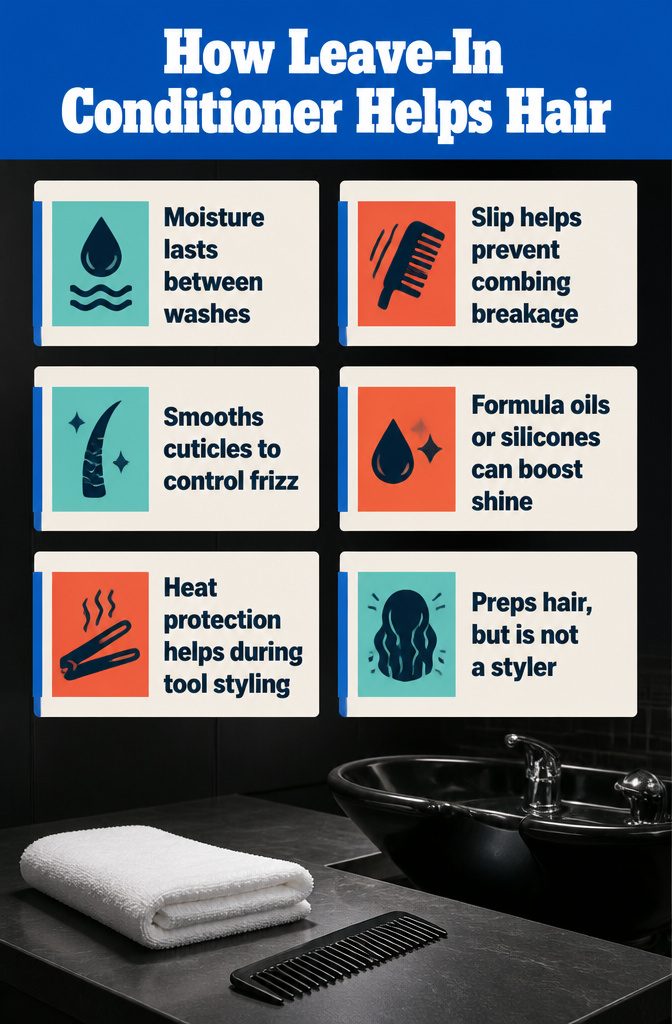
Leave-in conditioner adds moisture that lasts between washes, which keeps hair softer and less prone to the kind of dryness that leads to frizz and breakage.
It also creates slip, the slick coating that lets a comb glide through wet hair instead of catching and snapping strands. That matters most right after washing, when tangles form easily and yanking through them tears hair apart.
Beyond detangling, leave-ins help control frizz by smoothing the cuticle and can boost shine depending on the oils or silicones in the formula.
Many also offer heat protection, so if you blow-dry or flat-iron, the product sits between your hair and the tool.
It is not a styling product on its own, but it preps hair so that whatever you do next works better and causes less damage.
Matching the Formula to Your Hair Type
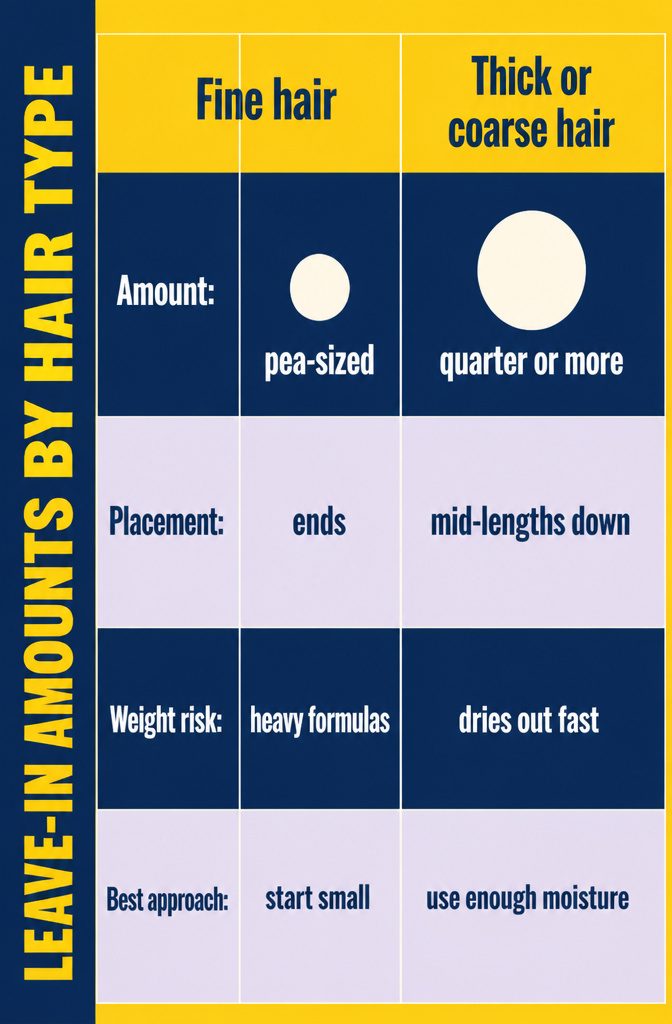
Fine hair needs barely anything: a pea-sized amount keeps it from going limp or greasy.
You want hydration at the ends without coating the strands, so start with less than you think and add only if the tips still look dry.
Fine-haired users can go smaller still, pinching off just enough to run through the lengths.
Medium-density hair takes about a dime-sized amount. Thick or coarse hair can need a quarter or more, focused mid-lengths down.
Color-treated hair sits somewhere in that range depending on thickness, but the processing usually means more thirst. Heat-damaged hair also leans toward the dime-sized mark, concentrated where flat irons or curlers hit hardest.
The weight risk runs one direction and the moisture need runs the other. Thin hair recoils at heavy formulas while thick, curly or damaged hair dries out fast without enough product.
Under-applying beats over-applying every time, because you can always layer a little more but rinsing out a sticky mess costs you the whole styling session.
How to Apply Leave-In and When
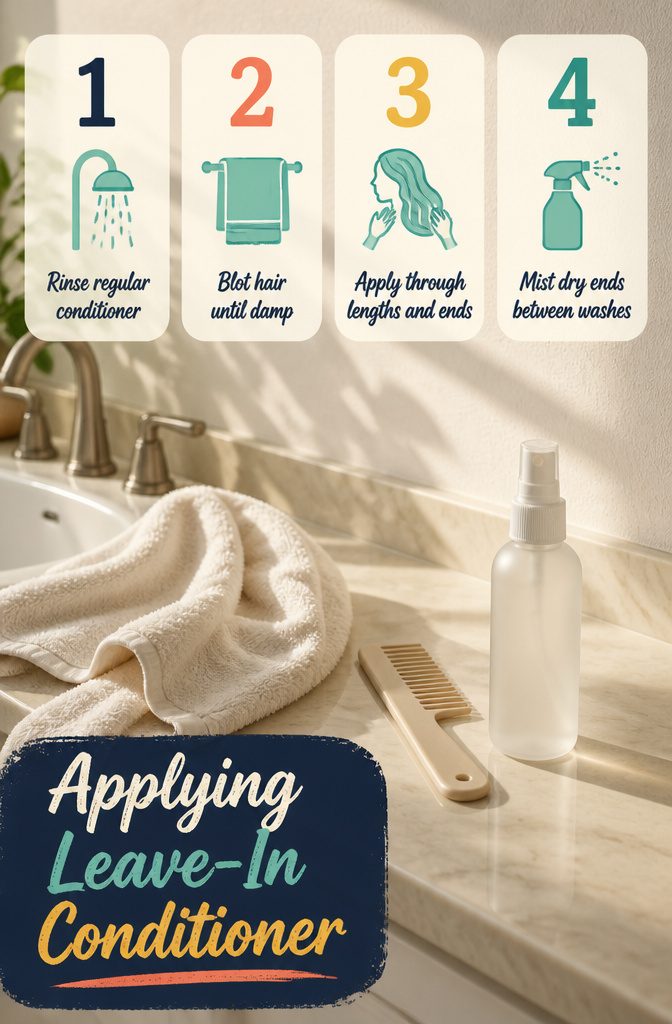
Apply leave-in on clean, damp hair right after you rinse your regular conditioner. Blot gently with a towel so the hair is damp rather than dripping, then work the product through from mid-lengths to ends.
I focus on the lengths and ends because too much at the roots looks oily and weighs everything down.
Users on Reddit mention the same habit: spray it into your hands first, then scrunch into the tips and middle sections while keeping it off the scalp entirely.
Some formulas also work on dry hair between washes.
Mist lightly to tame frizz or revive ends that feel dry, though the main application stays with damp hair after washing. That timing lets the product absorb properly and sets you up for whatever styling comes next.
Defining and Setting Curls with Leave-In
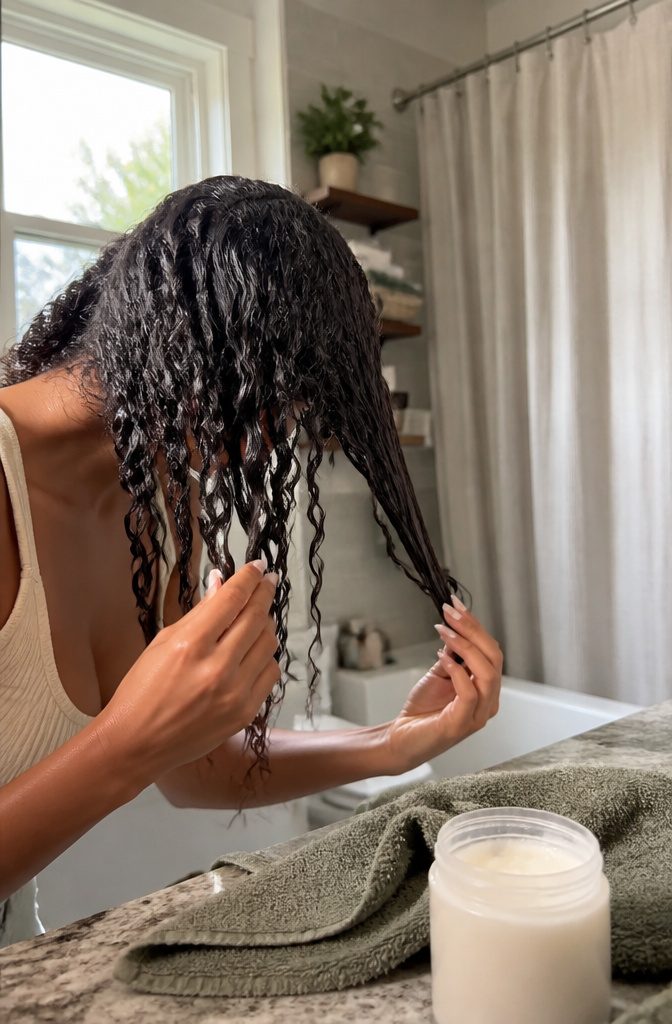
Leave-in gives curls structure before they dry. The product coats each strand and helps neighbouring strands clump together rather than frizz apart, so you get defined spirals instead of a cloud.
The timing matters: apply to very wet hair, which seals in the water and encourages curl formation from the start.
Split your hair into four to eight sections for even coverage.
Smaller sections help, particularly if your curl pattern is tight or your density varies. For fine or low-density hair, rake a pea-to-dime amount through each section, then smooth to encourage clumping.
Medium-density hair takes a small coin size per section. High-density or very dry hair needs more product and often benefits from sealing with a light oil on top.
Two layering methods show up everywhere: LO (leave-in then oil) and LOC (leave-in, oil, then cream). LO works well for fine hair that prefers lighter layering.
LOC adds a cream as the final step if you need extra hold or humidity control. After application, air-dry or diffuse on low to set the curl without disrupting the clumps you just formed.
Using Leave-In Before Heat Styling or Air-Drying
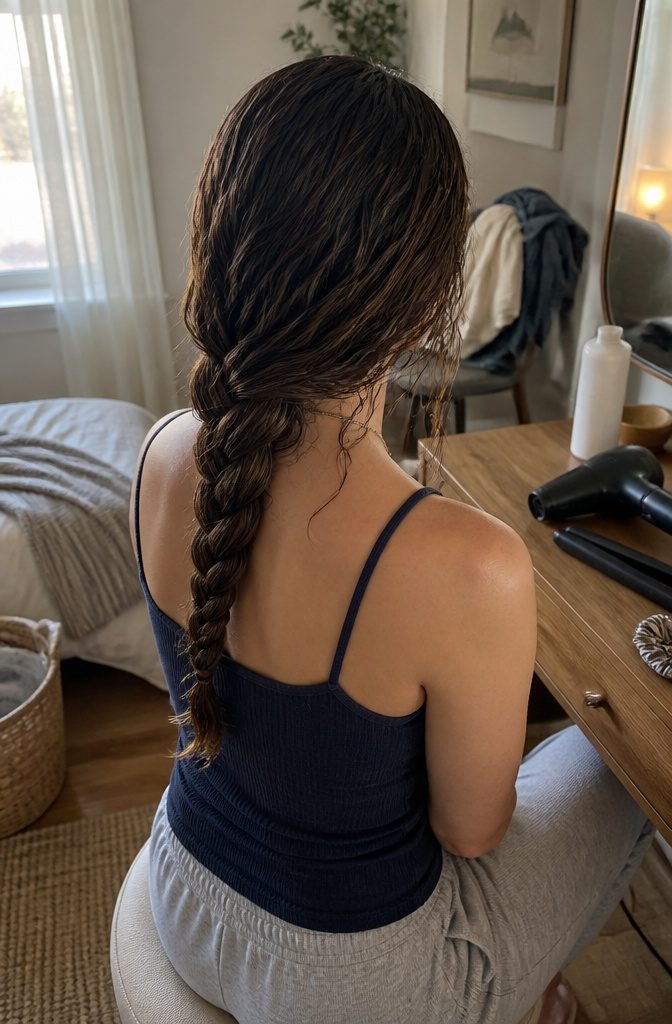
Heat styling calls for a leave-in that doubles as thermal protection. Apply it to damp hair before blow-drying, flat ironing or curling so the formula sits between your strands and the hot plate.
Some formulas protect up to 446°F, others to 450°F, which covers the full range most styling tools reach. The barrier keeps cuticles from cracking under direct heat and locks moisture in while you work.
Air-drying works differently but still benefits from leave-in.
Damp hair with product distributed through it can be twisted into a bun or worked into a loose braid as it dries, which gives natural waves more structure than they’d have hanging loose.
The leave-in holds the bends in place and stops frizz from forming as the water evaporates.
Refreshing Hair Between Washes
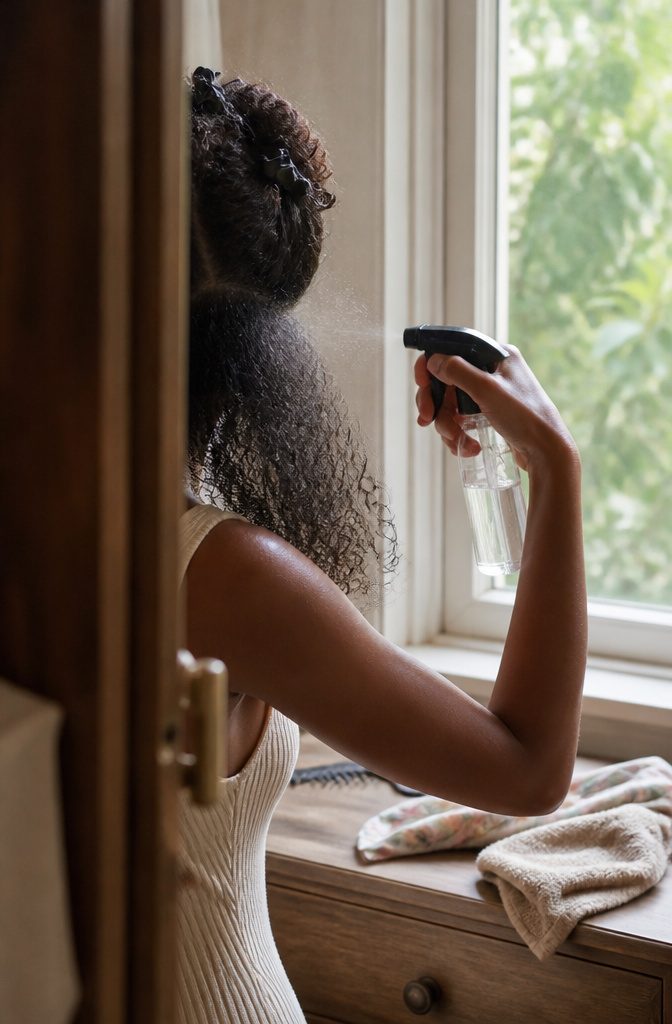
Between washes, you can bring back softness and definition without starting over.
Mist your hair lightly with water to reactivate whatever leave-in is still sitting in the strands. The water wakes up the product, so you get slip and moisture again without layering on more.
Smooth a small amount of fresh leave-in through any sections that look frizzy or feel rough, and run a bit through the ends if they have dried out since the last wash.
If you are working with curls, clip them into place while they dry so they set with shape rather than falling flat.
One formula claims to hold softness for up to three days, which lines up with how long most people wait between washes anyway. The refresh takes a few minutes and stretches the work you did on wash day.
Frequently Asked Questions
What does leave-in conditioner do?
Leave-in conditioner adds moisture that lasts between washes, which keeps hair softer and less prone to dryness, frizz and breakage.
It creates slip so a comb glides through wet hair instead of catching, helps control frizz by smoothing the cuticle, and can boost shine. Many formulas also offer heat protection if you blow-dry or flat iron.
When should I apply leave-in conditioner?
Apply leave-in on clean, damp hair right after you rinse your regular conditioner.
Blot gently with a towel so the hair is damp rather than dripping, then work the product through from mid-lengths to ends. Some formulas also work on dry hair between washes to tame frizz or revive dry ends.
How much leave-in conditioner should I use?
Fine hair needs a pea-sized amount to avoid going limp or greasy. Medium-density hair takes about a dime-sized amount, while thick or coarse hair can need a quarter or more, focused mid-lengths down.
Under-applying beats over-applying every time, because you can always layer more but rinsing out a sticky mess costs you the whole styling session.
Can I use leave-in conditioner on all hair types?
Yes, with different formulas and amounts for different hair needs. Fine hair needs barely any product to keep from going limp, while thick, curly or damaged hair can handle more and often needs it to stay hydrated.
Will leave-in conditioner make my hair heavy?
The right amount and formula should not weigh hair down.
If your hair feels heavy, reduce the amount you are using or choose a lighter formula. Fine hair recoils at heavy formulas, so start with less than you think and focus on the ends only.
Can I use leave-in conditioner to style my hair?
Leave-in is not a styling product on its own, but it preps hair so that whatever you do next works better and causes less damage.
It gives curls structure before they dry, helps set waves when twisted or braided, and sits between your strands and hot tools during heat styling.
Should I rinse out leave-in conditioner?
No. Leave-in conditioner is made to stay in the hair to provide ongoing moisture and slip.
Can I use leave-in conditioner every day?
Use as needed. Many people refresh with a small amount between wash days by misting hair lightly with water to reactivate the product, then smoothing a bit through any sections that look frizzy or feel rough.
Does leave-in conditioner make hair silky?
Leave-in adds moisture and creates slip, the slick coating that makes hair feel softer and smoother. Depending on the oils or silicones in the formula, it can also boost shine, which contributes to that silky feel.





