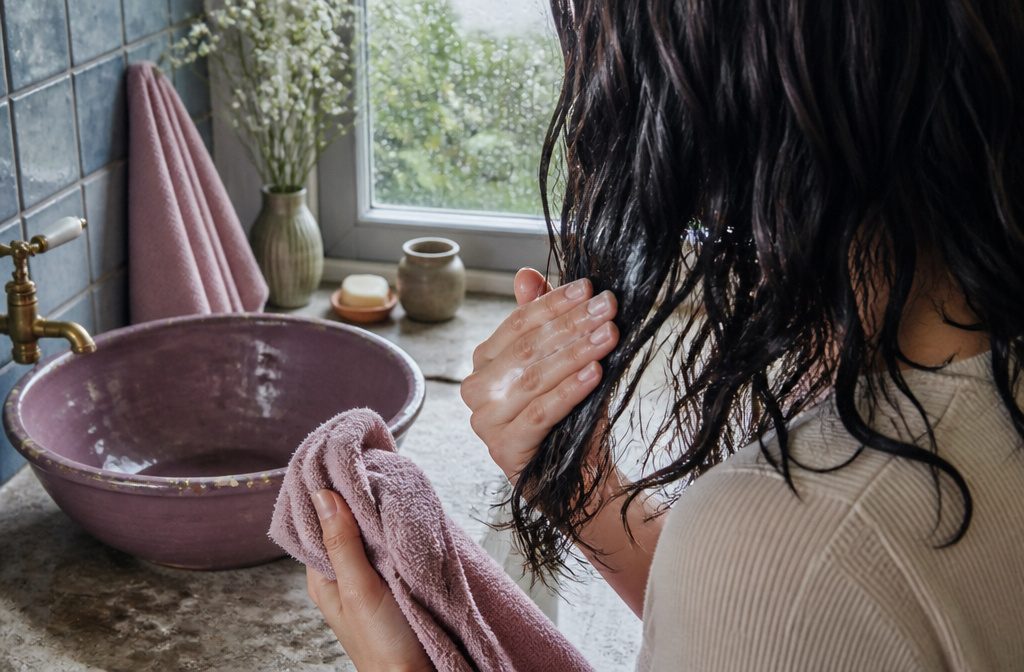
Leave-in conditioner sits on damp hair after you wash, giving moisture and frizz control that lasts all day without rinsing. Most people apply it to soaking-wet strands, which dilutes the formula and stops it from penetrating the cuticle.
The fix is towel-drying first: damp hair absorbs product better because the cuticle sits slightly open, letting the conditioner lock in moisture before everything dries.
1. Wash and Rinse Your Hair Thoroughly
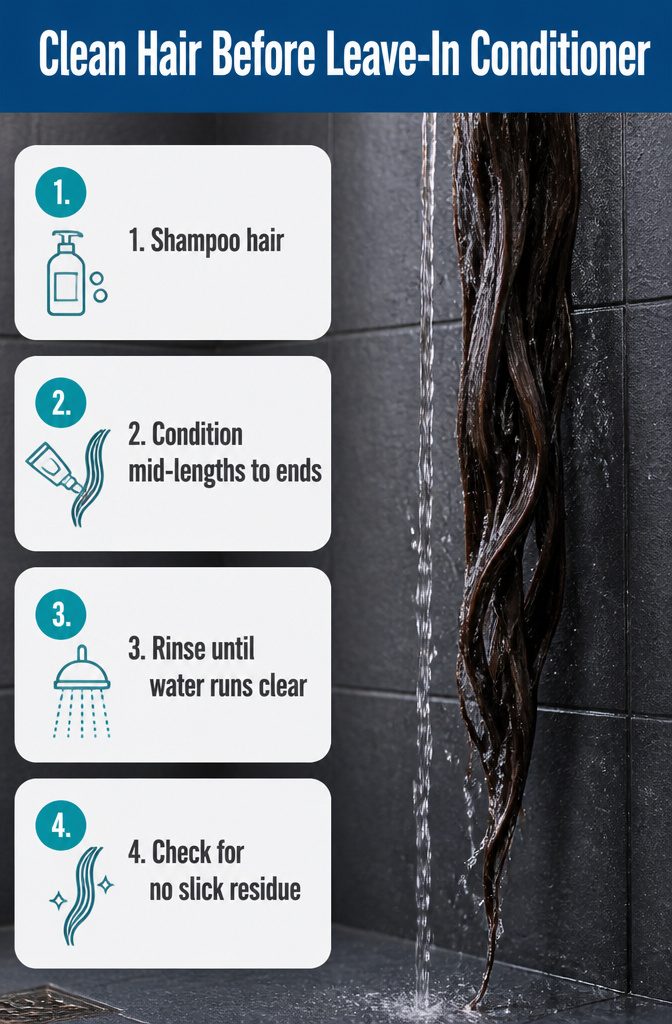
Start with freshly shampooed hair and rinse that conditioner completely. Leave-in works on a clean base, and any leftover rinse-out sitting in your hair will layer up into buildup that weighs everything down or leaves it feeling coated.
I wash and condition in the shower the way I would on any other day, applying the rinse-out conditioner from mid-length to ends, then rinse until the water runs clear and there’s no slick feeling left.
That step matters more than it sounds like it should. If you skip a thorough rinse, the leave-in you add next sits on top of product that was meant to come out, and the result reads greasy rather than hydrated.
2. Towel-Dry to Damp, Not Soaking Wet
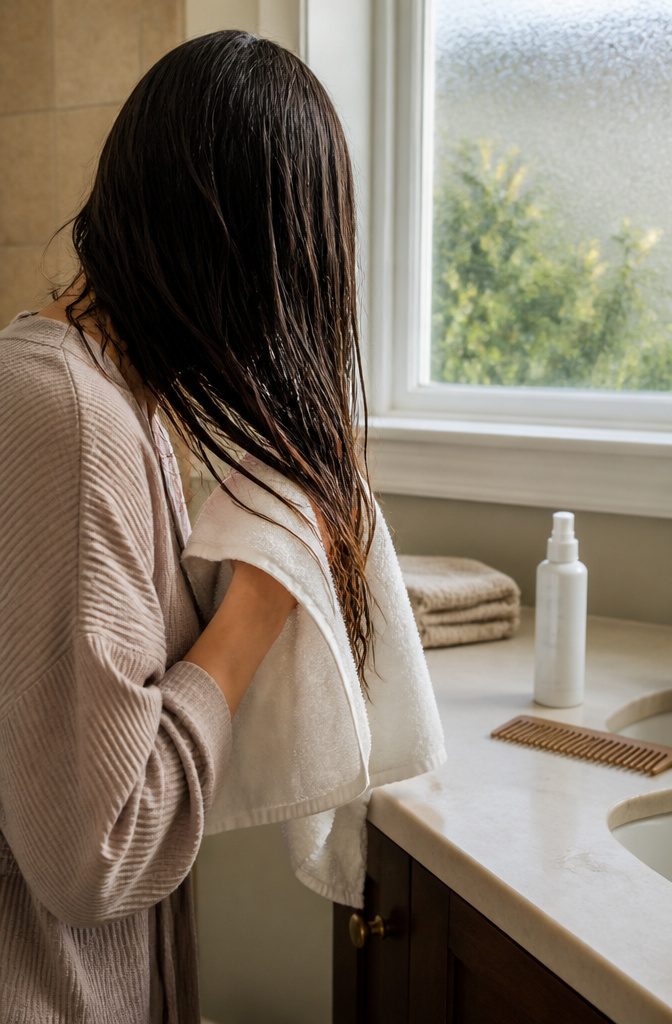
Towel-Dry to Damp, Not Soaking Wet
Apply leave-in right after washing, when hair is damp rather than soaking wet. Dripping strands dilute the product and prevent it from penetrating the cuticle, so you lose the conditioning benefit you’re after.
Pat with a towel instead of rubbing—wet hair breaks far more easily than dry, and friction from a rough towel-off can snap fragile ends before the leave-in even reaches them.
Damp hair absorbs product better because the cuticle sits slightly open after washing. That half-open state lets the conditioner lock in moisture before the hair dries completely.
I think of it as timing: you want enough water left to help distribute the product evenly from root to end, but not so much that it slides off or gets watered down.
3. Start With a Small Amount and Adjust for Your Hair Type
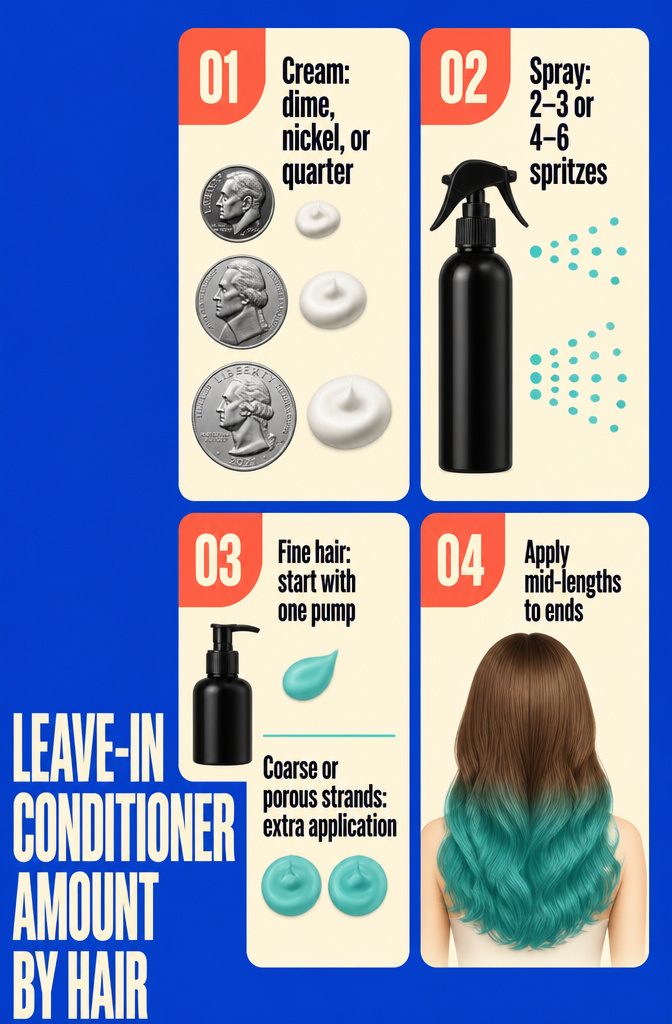
Start with a dime-sized amount for short hair, a nickel-sized portion for medium length, or a quarter-sized dollop if yours falls past your shoulders.
Those measurements come from cream formulas. For spray bottles, two to three spritzes cover short or fine hair, while thick or long hair needs four to six.
Hair texture changes the math too. Fine hair does more with one pump of product, while coarse or porous strands might need an extra application once you see how the first round absorbs.
I always start lighter than feels right and add more if the ends still look dry, because too much leaves a greasy film that weighs everything down.
Focus the product from mid-length to the ends, where hair dries out and splits. Keeping it off the roots and scalp prevents buildup and that flat, oily look that makes hair look unwashed by afternoon.
4. Distribute the Product and Detangle Gently
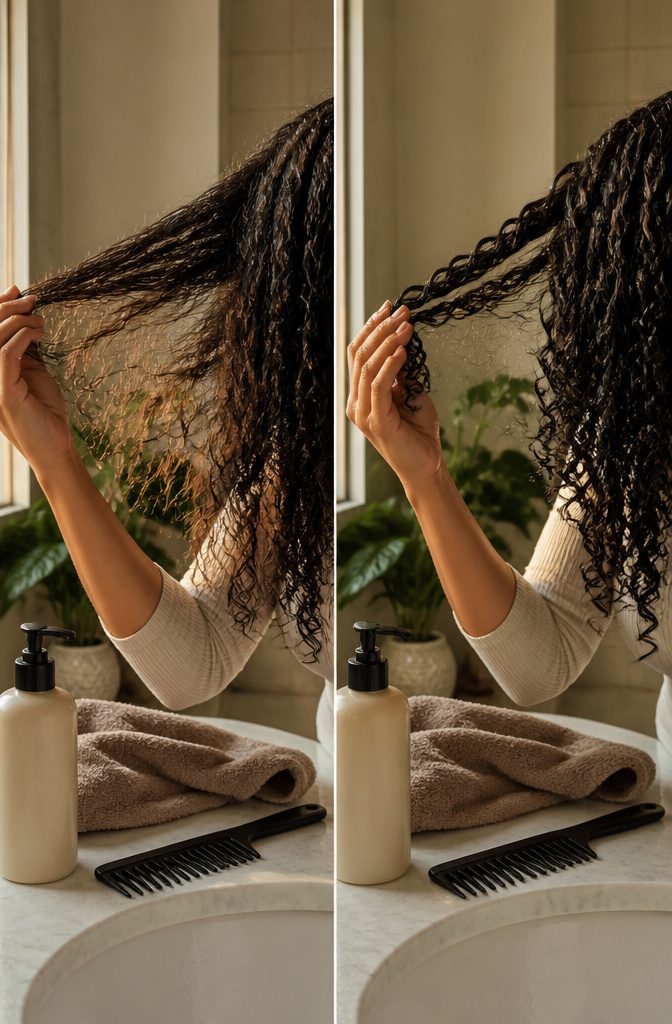
Once the product is in, use your fingers or a wide-toothed comb to spread it evenly and work through any tangles while the hair is still damp.
How you detangle depends on your texture. Straight or wavy hair responds well to a wide-toothed comb pulled gently from mid-length to ends, which distributes the conditioner and smooths the cuticle in one pass.
Curly hair does better with finger detangling: work section by section, gently separating knots with your fingertips, then scrunch upward to encourage the curl pattern and help the product settle into each coil.
Scrunching while damp keeps definition and cuts down on frizz as it dries. Even coverage without dragging or snapping strands means keeping tension light and starting from the ends, moving up only as knots release.
5. Use Texture-Specific Styling Techniques
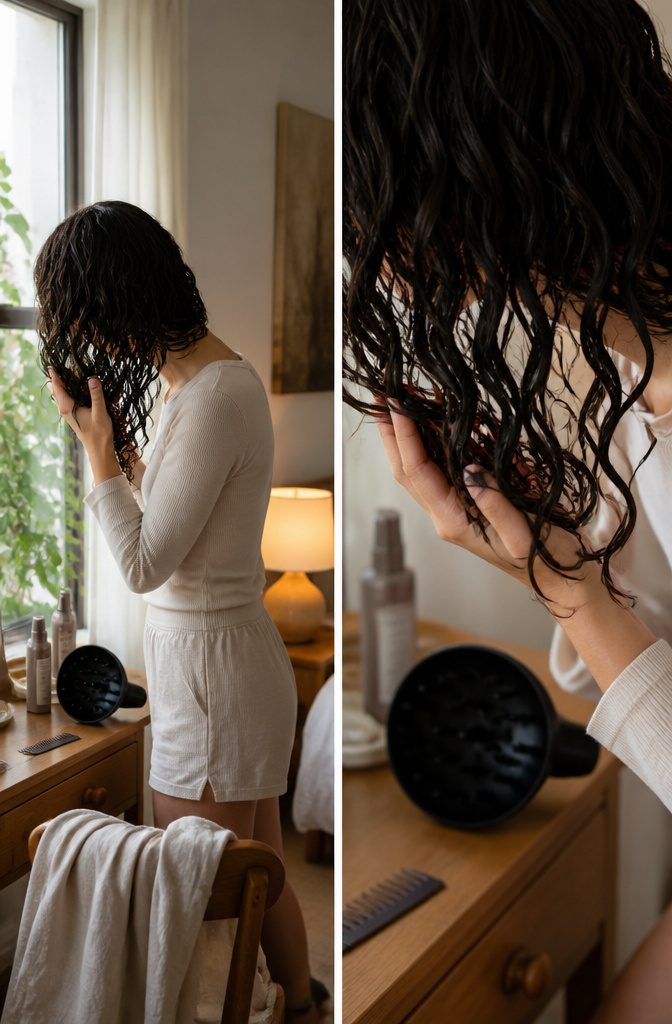
If you have curls or waves, scrunch upward from the ends while your hair is still damp. This motion encourages the curl to clump and hold its shape, supporting definition without stiffness.
Apply the leave-in first, then gather sections at a time and scrunch gently toward the roots. Air dry or use a diffuser to finish.
Before you pick up a flat iron or curling wand, check the label on your leave-in. Not all formulas include heat protection.
If yours does not list it, layer a separate heat protectant over the leave-in before styling. Skipping this step leaves the hair vulnerable to damage at higher temperatures, and the moisture from the leave-in alone will not shield it.
6. Dry and Style Without Rinsing
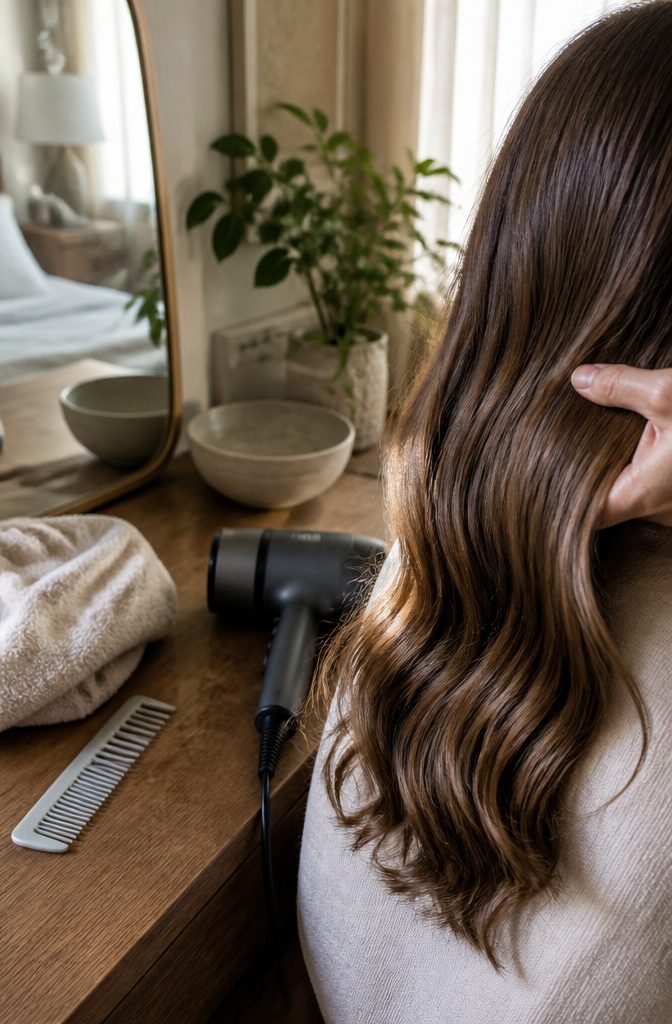
Once you’ve applied and combed the product through, do not rinse. Leave-in conditioner stays put while your hair dries and throughout the day.
From here you can air-dry or blow-dry, whichever your routine calls for. Air-drying is gentler and gives leave-in time to work into the strand as it dries naturally, keeping frizz in check without heat.
If you’re reaching for the blow dryer, the conditioner acts as a barrier between your hair and the hot air, so you get a polished finish without as much damage. Either way works.
Style as you normally would once your hair is dry or nearly dry. The product is already in, doing its job, so there’s no extra step to remember before you pick up a flat iron or curl your hair.
What Leave-In Conditioner Is and How It Differs From Rinse-Out
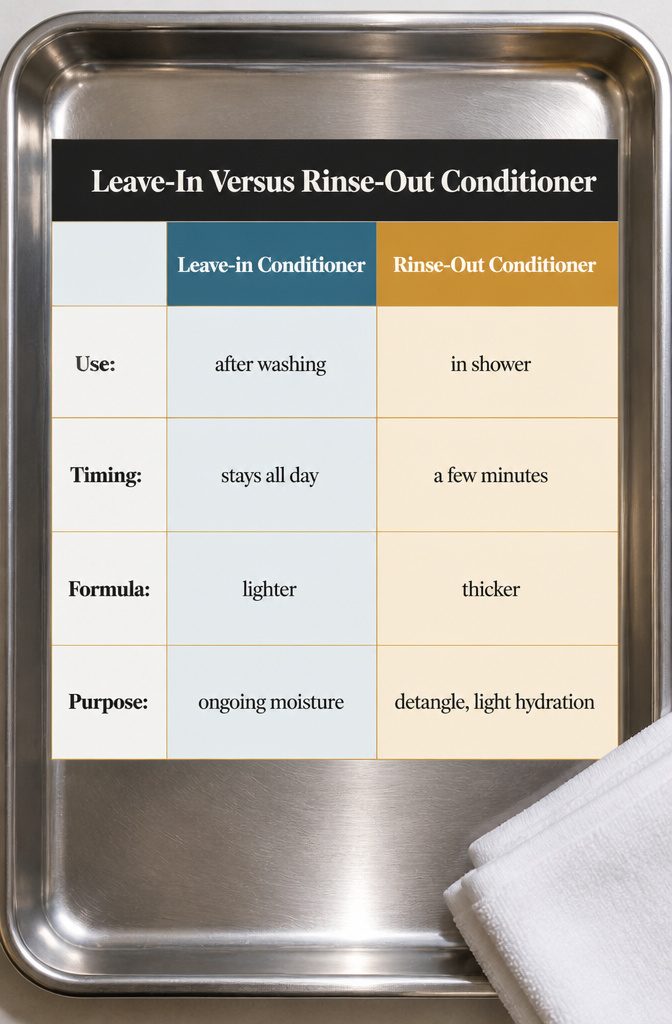
Leave-in conditioner is formulated to stay in your hair after washing rather than being rinsed away. Regular conditioner works in the shower for a few minutes to detangle and add light hydration before you wash it out.
Leave-in conditioner applies to damp hair after you step out and remains there, giving moisture, frizz control and protection that last through the day.
The formula itself is lighter and less concentrated than rinse-out conditioner, designed so it won’t weigh hair down or cause buildup when left on strands.
That lighter weight lets it penetrate slowly, which is why it works for ongoing hydration rather than a quick coat-and-rinse.
Using a regular conditioner as a leave-in isn’t recommended, since those thicker formulas can leave residue and make hair feel heavy or greasy by midday.
Choosing a Formula for Your Hair Type
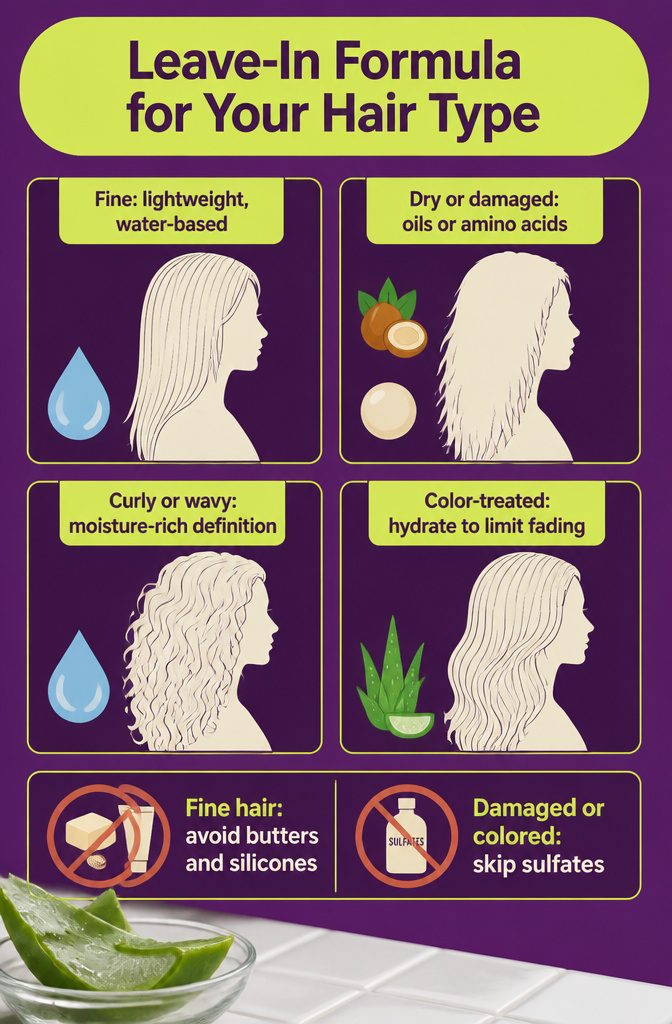
The formula you reach for needs to match what your hair actually asks for.
Fine hair does well with lightweight, water-based formulas that condition without drag, often in a spray or ultra-light cream. A thick, creamy leave-in that works beautifully on curls will flatten fine hair and leave it looking greasy by midday.
Your regular conditioner probably needs extra support for specific hair concerns. That’s where a specially formulated leave-in conditioner for fine, dry, or curly hair works its magic.
— Garnier
If your hair is dry, damaged, or chemically treated, you want something richer. Look for natural oils like coconut or argan, or formulas built on amino acids.
Curly and wavy hair benefits from moisture-rich products that define texture. Color-treated hair needs hydration to keep color from fading and strands from drying out.
Ingredients like coconut oil deliver deep hydration, chamomile soothes irritation, and aloe vera adds moisture without weight. Avoid heavy butters and silicones on fine hair, and skip sulfates entirely if your hair is damaged or color-treated.
Using Leave-In on Dry Hair to Refresh or Tame Frizz
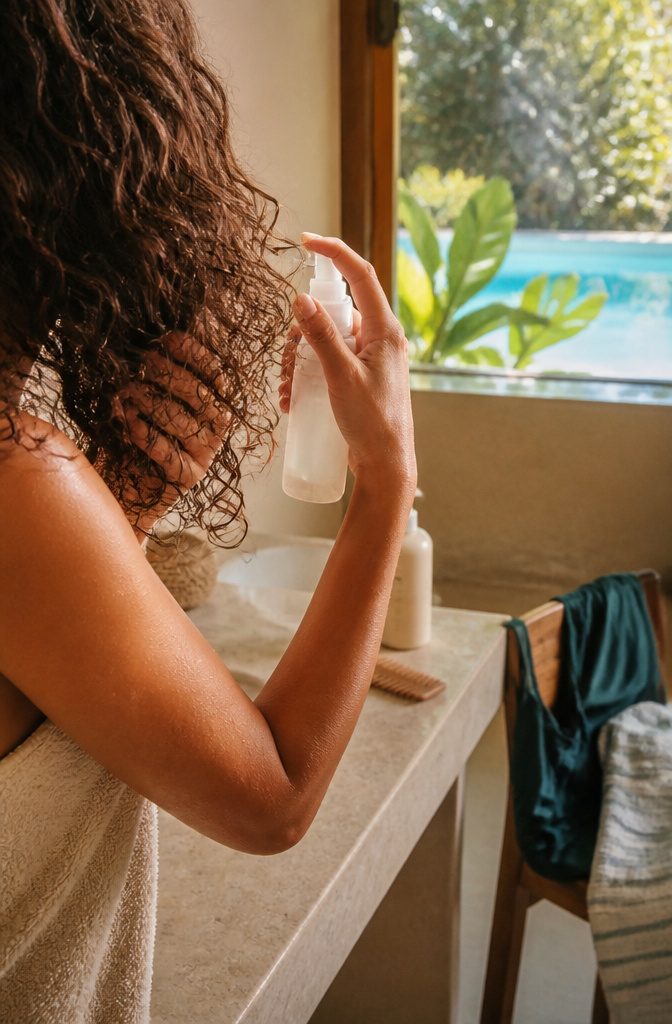
Most leave-ins work on damp hair, but you can smooth a small amount through dry hair to tame frizz or refresh curls that have lost definition since morning.
Not every formula handles this well, so check the bottle before you commit. The ones rich in natural oils tend to deliver the most hydration when hair feels parched mid-day.
I reach for it on dry hair after sun exposure or a swim, when chlorine or saltwater has stripped moisture out and the texture turns straw-like.
A light mist of water before application helps the product spread without sitting heavy on the surface. Go lighter than you would on damp hair—too much and you cross into greasy territory fast.
How Often to Use Leave-In Conditioner
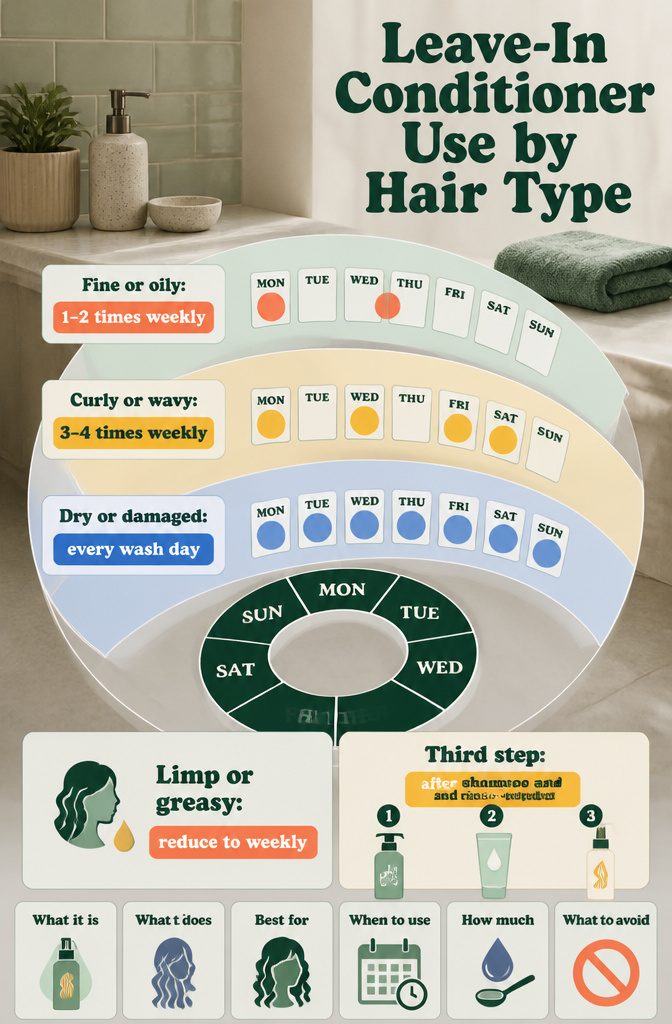
The frequency depends on how quickly your hair dries out. Fine or oily hair usually needs leave-in once or twice a week to avoid buildup weighing it down.
Curly and wavy hair holds onto less moisture, so three or four times per week keeps definition without going greasy. Dry or damaged hair can take it every wash day.
I treat leave-in as the third step after shampoo and rinse-out conditioner, not a replacement for either. The rinse-out does the heavy conditioning work; leave-in seals it in and adds a layer of protection for styling.
If your hair feels limp or greasy the day after applying leave-in, pull back to once a week and see if that clears it. Hair that still feels dry by midweek probably needs it more often.
Frequently Asked Questions
How often should I use a leave-in conditioner?
It depends on your hair type and how quickly it dries out.
Fine or oily hair usually needs it 1 or 2 times per week to avoid buildup, while curly and wavy hair benefits from 3 or 4 times weekly. Dry or damaged hair can handle it every wash day.
Can I use leave-in conditioner on dry hair?
Yes, you can smooth a small amount through dry hair to tame frizz or refresh curls that have lost definition.
Use less than you would on damp hair, and look for formulas rich in natural oils for the best hydration on dry strands.
Can I replace my regular conditioner with a leave-in conditioner?
No, leave-in is meant as a third step after shampoo and rinse-out conditioner, not a replacement. Rinse-out conditioner does the heavy work in the shower, while leave-in seals in moisture and adds protection for styling.
What does leave-in conditioner do for curly hair?
It provides moisture, helps with detangling, and supports curl definition while keeping hair soft and manageable. Curly hair holds onto less moisture than other types, so leave-in helps keep coils hydrated and reduces frizz throughout the day.
Should I use a leave-in conditioner before I style my hair?
Yes, apply it to damp hair after washing and before you blow-dry or use heat tools. It acts as a barrier between your hair and hot air or styling tools, so you get a polished finish with less damage.
What is leave-in conditioner supposed to do?
Leave-in conditioner stays in your hair after washing to provide ongoing moisture, frizz control, and protection that lasts through the day. Its lighter formula penetrates slowly for lasting hydration without weighing hair down or causing buildup.