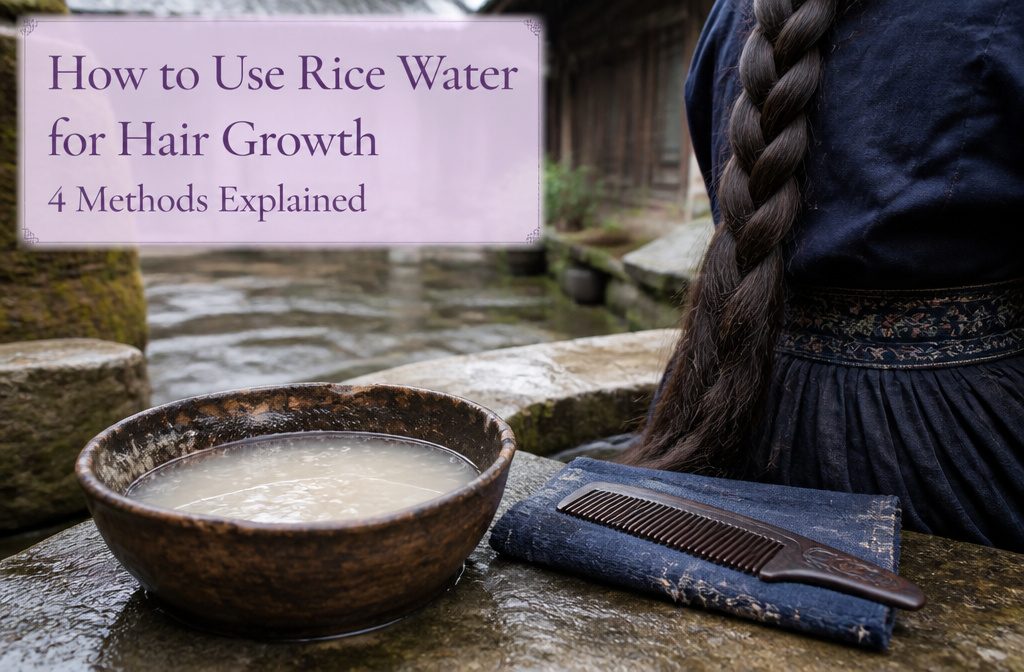
Rice water takes thirty minutes to two hours if you soak it, fifteen if you boil it, and up to three days if you ferment it.
The method changes the pH and nutrient concentration, but none of them make hair grow faster from the scalp.
What they may do is cut breakage by coating the strand in starch, which is how the Yao women of Huangluo, China, kept hair averaging 6 feet long using fermented rice water in clay pots.
1. Does Rice Water Make Hair Grow Faster?
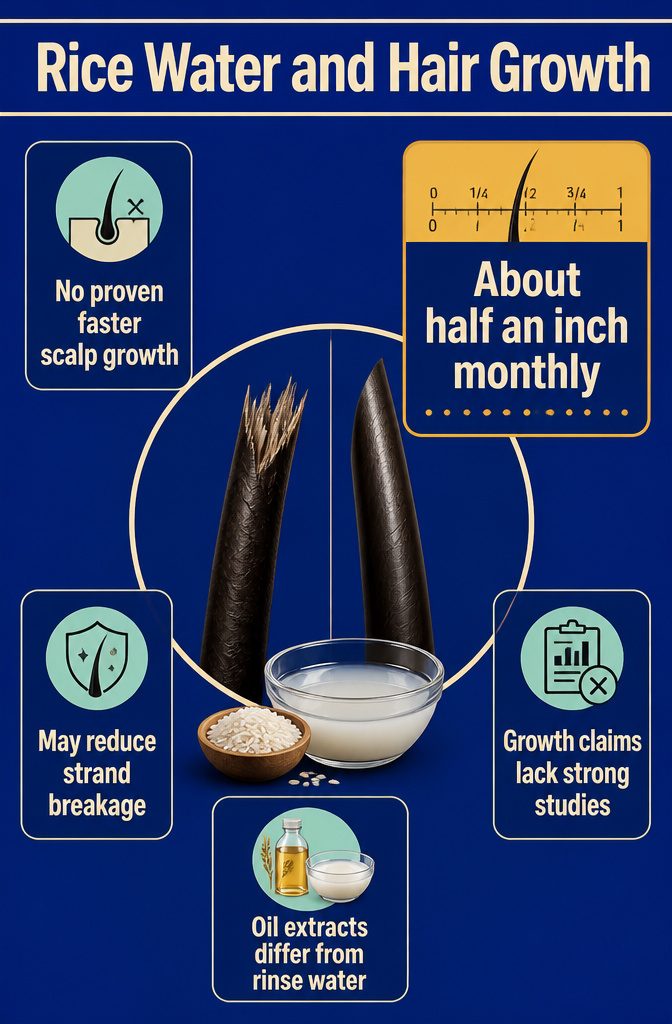
Rice water does not make hair grow faster from the scalp, but it may help you retain length by cutting down on breakage.
The growth claims lack strong scientific backing. What limited evidence exists often points to rice-bran oil or extracts used in commercial products rather than the water left over from rinsing rice at home.
Traditional use among communities in Asia is sometimes cited as proof, but anecdote and centuries of practice are not the same as controlled studies showing measurable gains in growth rate.
Hair grows around half an inch per month on average regardless of what you rinse it with. If rice water does anything, the benefit lies in smoother cuticles and fewer snapped strands, not in speeding up the follicle itself.
2. What Rice Water May Do for Strength and Texture
The starch in rice water is what creates most of the effects people report. Rice grains contain 80% to 90% starch, and when you soak or cook rice, that starch leaches into the water.
Once applied to hair, the starch coats the outer cuticle of each strand. That coating appears to reduce friction between individual hairs, which can mean less breakage when you brush or style.
The effect shows up as smoother texture, more shine, and hair that feels fuller or less frizzy.
Some users describe better elasticity and easier detangling. These are anecdotal benefits rather than clinically proven outcomes.
Rice water also carries vitamins, minerals, and amino acids that are common in conditioners, and those may contribute to the softer feel and improved manageability that many people notice after a rinse.
The coating itself gives hair a temporary thickening effect, adding body without weight.
3. Which Nutrients Rice Water Carries
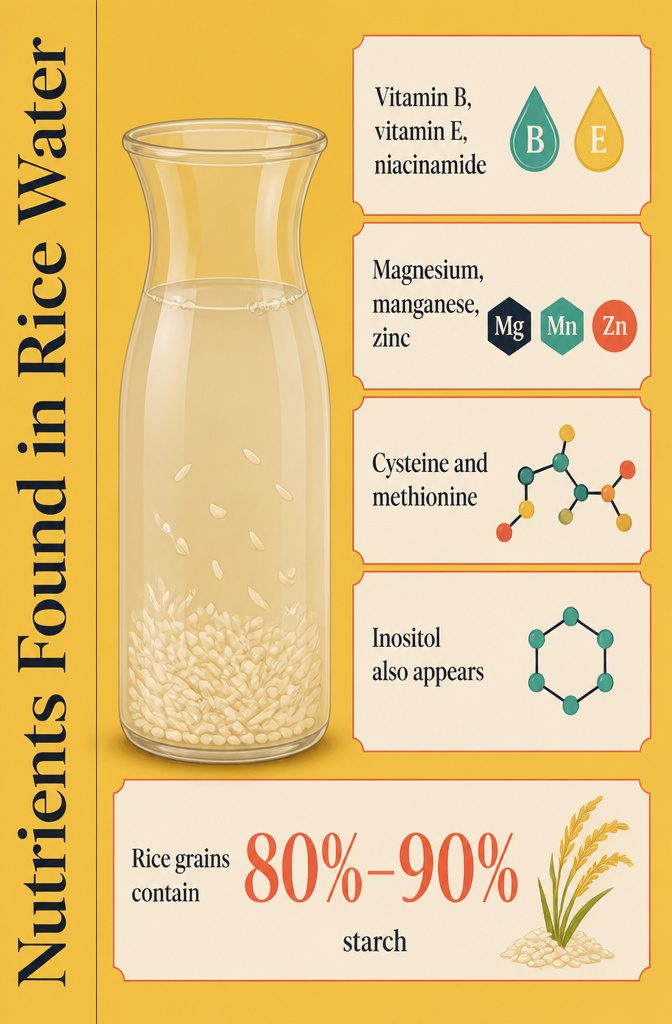
Rice water carries vitamin B, vitamin E, fiber, magnesium, manganese, zinc, and amino acids including cysteine and methionine.
You’ll also see inositol and niacinamide listed. Rice grains contain 80% to 90% starch, and when they soak, these nutrients saturate the water along with it.
Sources differ on how confidently they connect each one to growth or strengthening. Vitamin E has been shown to promote hair growth in people with alopecia.
Magnesium supplementation increased hair growth in women with thinning hair after 90 to 180 days. Biotin, a B vitamin, is tied to keratin production, and a deficiency is associated with hair loss.
Zinc deficiency can cause hair loss, and supplementing has been effective in reducing it. The amino acids cysteine and methionine strengthen the strand and reduce breakage.
Inositol is thought to strengthen and protect the hair follicle. Whether these remain at useful concentrations after soaking or fermenting is less clear.
4. How to Make Rice Water by Soaking
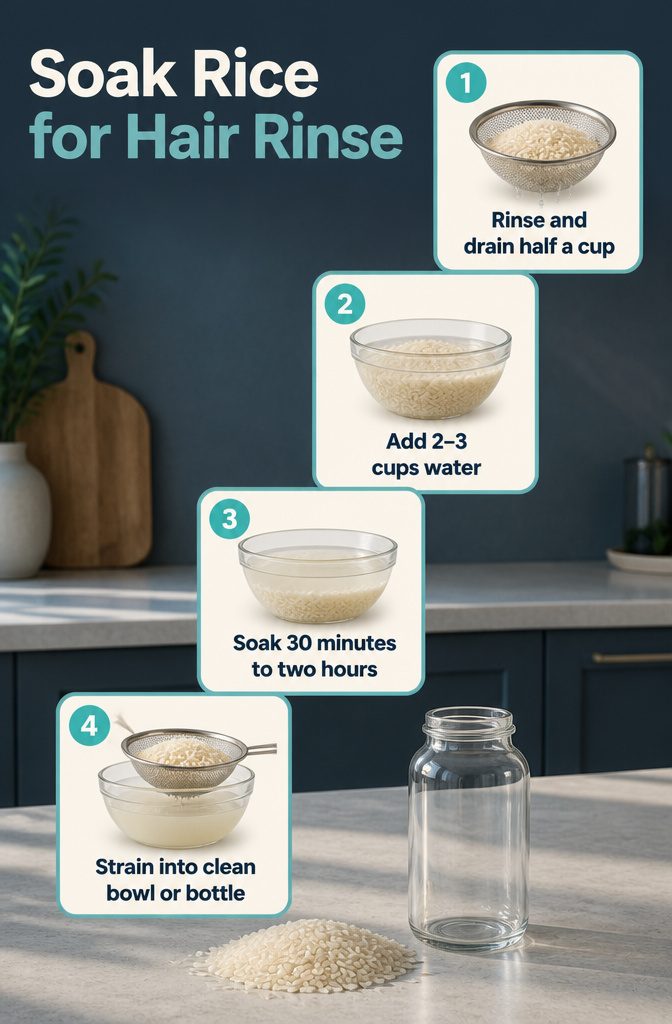
How to Make Rice Water by Soaking
- Rinse half a cup of uncooked rice thoroughly and drain. You can use any type—white, brown, jasmine, basmati—as long as it’s clean.
- Place the rinsed rice in a bowl with 2 to 3 cups of water.
- Let it soak for 30 minutes to two hours. Some people leave it up to 24 hours or overnight, though the shorter window gives you usable rice water faster.
- Strain the rice water into a clean bowl or bottle.
This is the quickest method and likely the safest.
Boiling may reduce some nutrients, and a very long soak risks introducing bacteria. The leftover rice is perfectly fine to cook and eat—soaking it actually cuts down the cooking time.
5. How to Make Fermented Rice Water
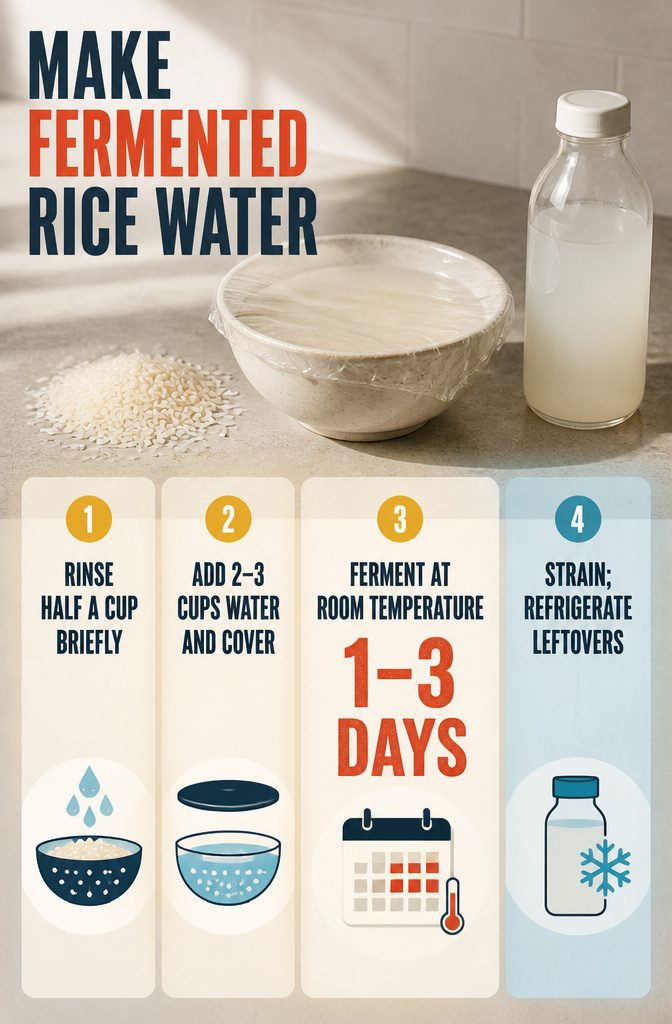
- Rinse half a cup of raw rice briefly to remove impurities, but keep the rinse short so you don’t wash away the starch.
- Place the rice in a bowl, add 2–3 cups of water, stir, and cover with a plate or plastic wrap.
- Leave the mixture at room temperature for 1 to 3 days. Some sources recommend 24 hours, others go up to 2 days. The longer it sits, the more it ferments.
- Strain the water into a clean bowl or bottle. You can use it right away or refrigerate what’s left to stop further fermentation.
Fermentation is supposed to lower the pH closer to hair’s natural level and increase antioxidants, but the claims aren’t uniform across sources. Some mention pitera, a fermentation byproduct linked to cell regeneration.
What is consistent: fermented rice water can develop a sour smell and may introduce bacteria. Refrigeration helps if you’re keeping it.
6. How to Make Rice Water by Boiling
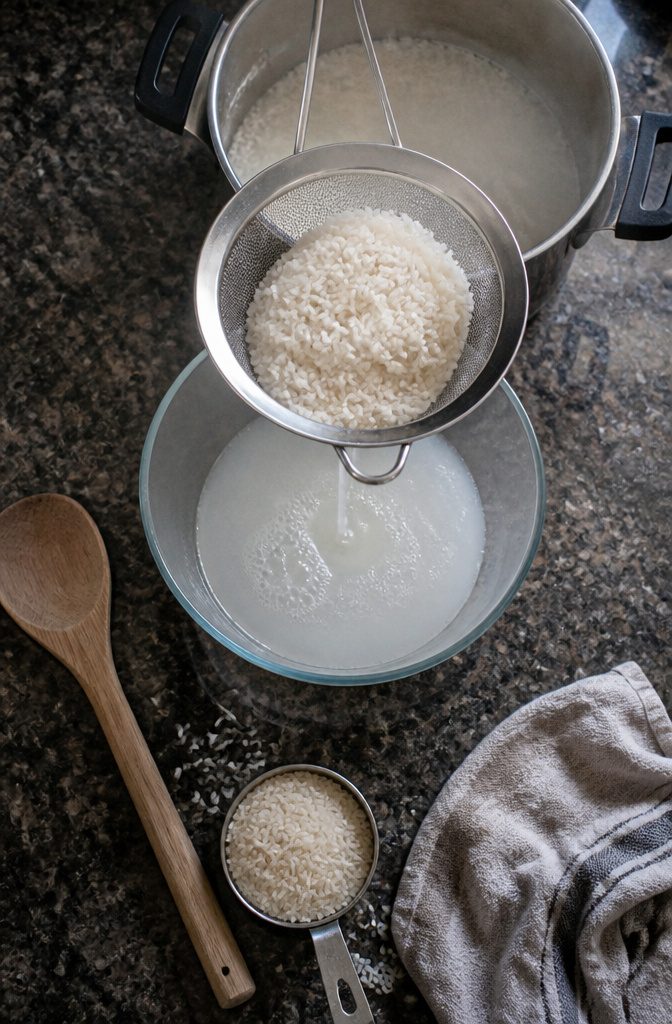
- Cover half a cup of rice with double the water you would normally use for cooking. If a cup of rice typically takes one cup of water, use two cups here.
- Bring the water to a boil with the rice in it.
- Cook the rice as usual, watching for the water to turn cloudy as starch releases.
- Strain the rice once it finishes cooking, collecting the liquid in a clean bowl.
- Let the rice water cool completely before using it on your hair.
This method is faster than soaking, which can take thirty minutes to two hours.
Boiling may reduce some of the vitamins that stay intact in a cold soak. If speed matters more than maximizing nutrient content, boiling gets you rice water in the time it takes to cook a pot of rice.
7. How to Apply Rice Water to Your Hair
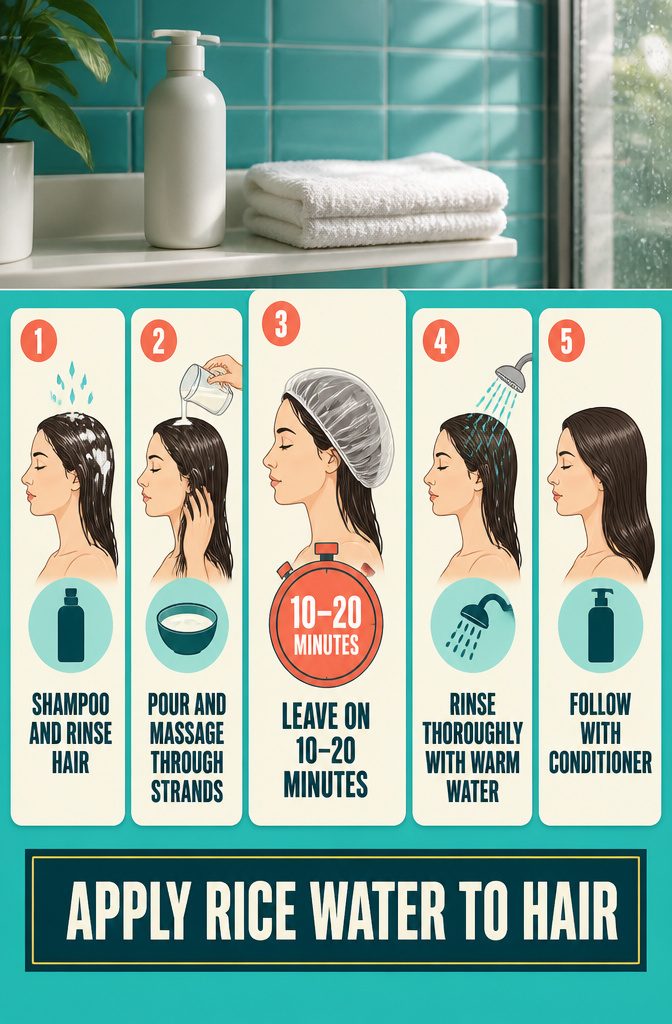
How to Apply Rice Water to Your Hair
- Shampoo and rinse your hair as you normally would.
- Pour the rice water over your hair and scalp. Massage it into the strands and scalp, working it through any dry or split ends.
- Leave the rice water on for 10 to 20 minutes. Some sources suggest up to an hour or even overnight, but leaving it on longer than 20 minutes risks drying out your hair and scalp instead of helping it. A shower cap keeps things tidy if you’re multitasking.
- Rinse thoroughly with warm water. You need to get all of it out or the protein buildup can backfire.
- Follow with conditioner. Rice water replaces your usual rinse treatment, not your conditioner.
How Often to Use Rice Water
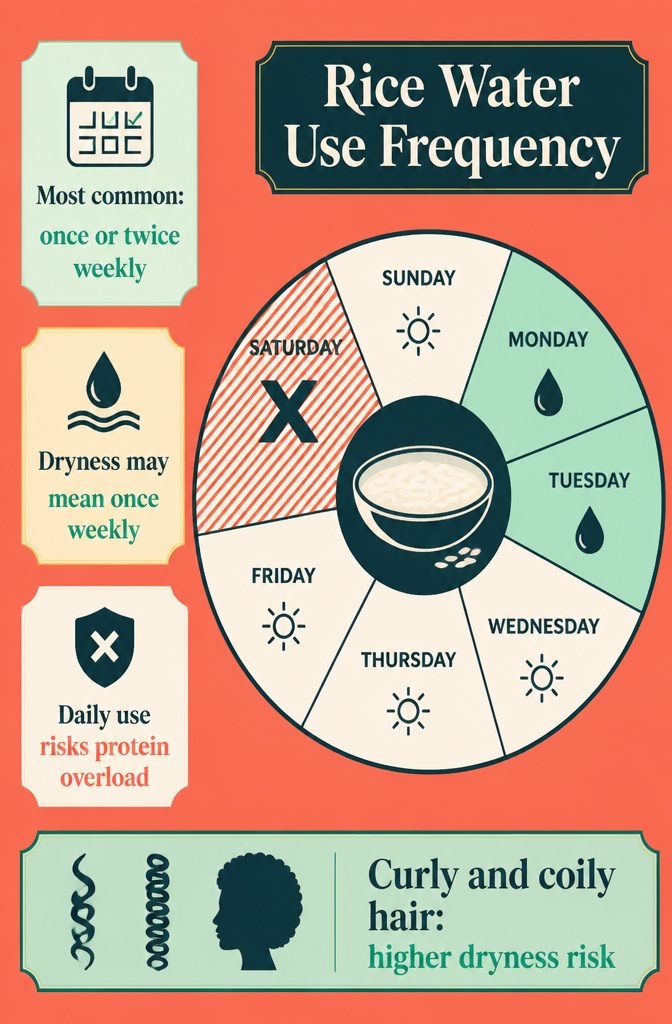
Sources give differing advice here, and none of it is based on consistent evidence across hair types.
Once or twice a week is the most common recommendation, with some suggesting you reduce to once weekly if your hair starts feeling dry.
Daily use is off the table entirely: it causes protein overload, the condition that leaves hair stiff and brittle rather than flexible and strong. Protein overload triggers the exact breakage you were trying to prevent, so more is not better.
If your hair is curly or coily, the dryness risk is higher. Type 4 hair needs water regularly to stay healthy, and too much rice water can tip the balance toward protein without enough moisture to match it.
What to Watch for: Dryness, Irritation and Protein Overload
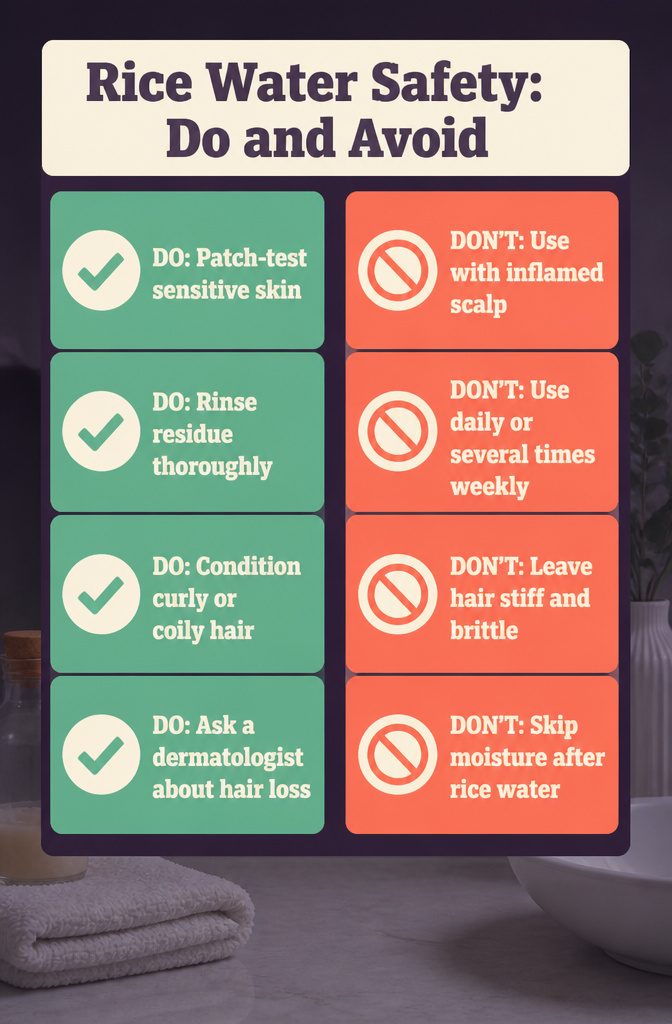
Rice water is generally safe, but a few issues can show up with regular use. Watch for these:
"There are no harmful chemicals or additives, so that limits your risk of damage. But if you’re dealing with scalp inflammation, [Dr. Khetarpal] cautions against using rice water to avoid additional irritation."
If you have eczema, psoriasis or dermatitis, skip rice water or patch-test a small area first.
- Protein overload is the big one. Using rice water daily or even several times a week can leave hair stiff and brittle, which causes the breakage you were trying to prevent. Stick to once or twice a week.
- Dryness hits curly and coily hair hardest. Type 4 hair needs moisture to stay healthy, and too much protein throws off that balance. Use rice water before a deep conditioning treatment with a protein-free conditioner or mask.
- Rinse thoroughly. Leaving residue on your scalp can dry it out or cause irritation.
- If you’re experiencing hair loss, talk to a dermatologist before trying rice water. Many causes of hair loss have proven treatments that work better.
When You Might See Results
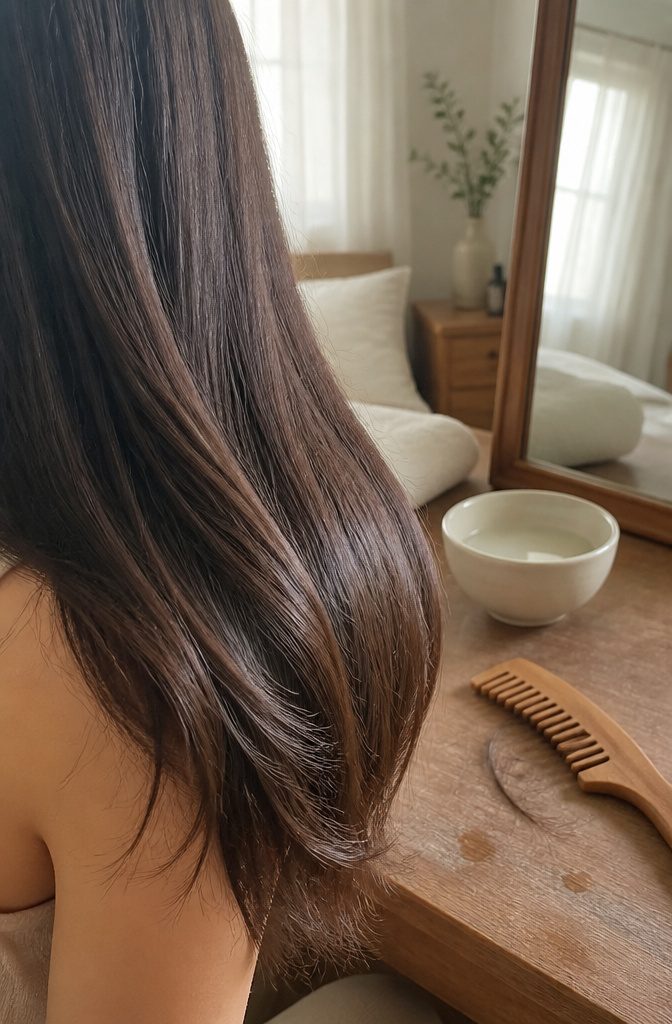
The timeline is longer than a miracle-cure video would suggest, but the changes build in a way you can actually track.
Most people using rice water consistently report softer, shinier, less brittle hair within the first one to three weeks, which is the strengthening effect arriving before anything else.
The texture shift comes next: fewer broken pieces and split ends show up around one to two months in, because the hair holds together better when you brush or style it.
Fuller-looking hair tends to appear after three months and beyond if you keep going, though that is retained length rather than faster growth out of the follicle itself.
None of this is guaranteed. Hair type, protein sensitivity and how damaged the starting point was all shape what you will see, and some people notice almost nothing.
The Yao Women and Traditional Use
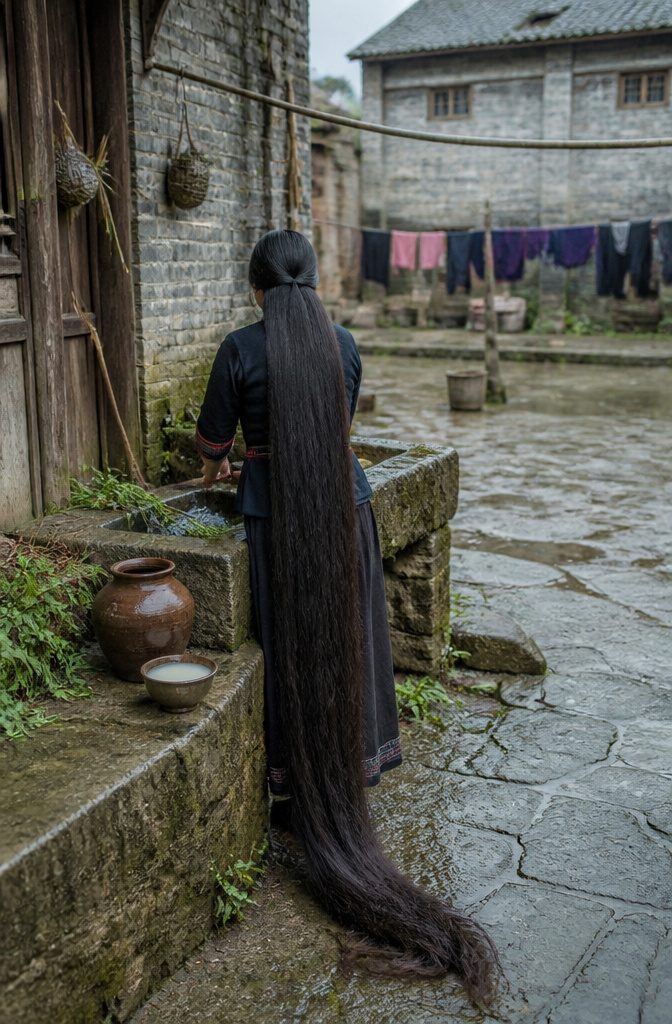
The Yao women of Huangluo, China, are known for hair averaging 6 feet long.
They’ve traditionally bathed their hair in fermented rice water prepared in a clay pot using rice, water and herbs, and they credit this practice with keeping their hair long and preventing gray until their 80s.
The village has won a Guinness World Records title for being the world’s longest-haired village.
The practice itself dates back centuries. In Japan, washing hair with rice water was documented as far back as the Heian Period, which ran from 794 to 1185.
This is context, not proof.
No scientific evidence supports the claim that rice water causes hair to grow faster or longer. The Yao women’s hair length comes from a mix of genetics, culture and their complete hair care routine, not necessarily from one ingredient.
Most studies on the vitamins and minerals found in rice water looked at oral supplementation in people who were deficient, not at topical application on hair that already gets adequate nutrition.
Frequently Asked Questions
Does rice water make your hair grow faster?
No. Rice water does not speed growth from the scalp, but it may help you retain length by reducing breakage.
Hair grows around half an inch per month on average regardless of what you rinse it with. The benefit lies in smoother cuticles and fewer snapped strands, not in speeding up the follicle itself.
How do you make rice water for hair?
Rinse half a cup of uncooked rice, place it in a bowl with 2 to 3 cups of water, and let it soak for 30 minutes to 2 hours. Strain the rice water into a clean bowl or bottle.
You can also boil rice with double the usual water and collect the starchy liquid after cooking, or let the soaked rice sit at room temperature for 1 to 3 days to ferment before straining.
How long should you leave rice water on your hair?
10 to 20 minutes is the standard recommendation.
Leaving it on longer than 20 minutes risks drying out your hair and scalp instead of helping it. You need to rinse it out completely or the protein buildup can cause the breakage you were trying to prevent.
How long does rice water take to grow hair?
Most people report softer, shinier, less brittle hair within 1 to 3 weeks.
Fewer broken pieces and split ends show up around 1 to 2 months in, and fuller-looking hair tends to appear after 3 months if you keep going. That is retained length rather than faster growth out of the follicle itself.
What are the negatives of rice water for hair?
Protein overload is the biggest risk. Using rice water too often leaves hair stiff and brittle, which causes more breakage.
Dryness hits curly and coily hair hardest, since too much protein throws off the moisture balance. If you have scalp inflammation, eczema, psoriasis or dermatitis, rice water can cause additional irritation.