Cut length ranges from less than an inch on top in a micro pixie to chin-length in a French bob, and every option in between earns its place here by adding the appearance of density rather than actual thickness.
The single thing that decides which cut belongs on your head is how much daily effort you’ll put in: a blunt bob or lob holds its shape with almost no styling, while a textured or layered pixie needs product and intention to look finished.
1. Blunt Bob
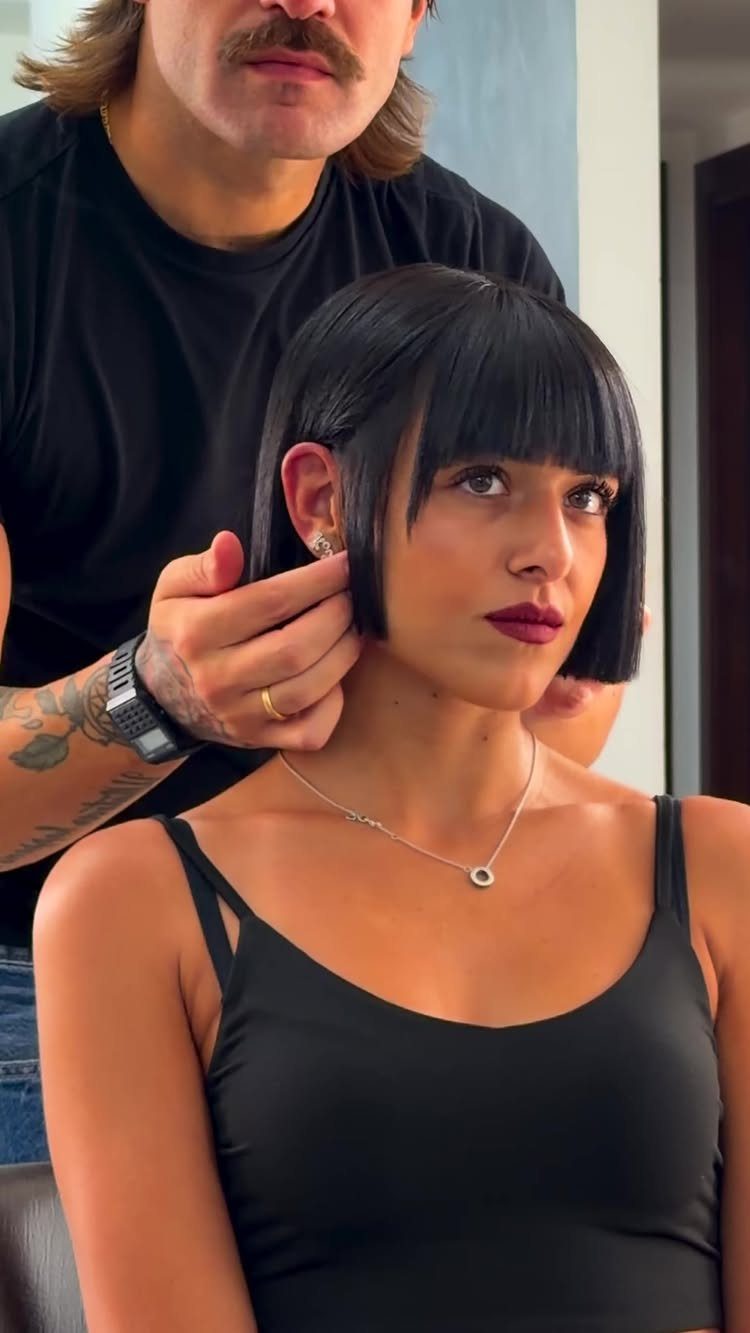
Weight at the ends is what makes this cut work. A single, clean horizontal line keeps all the hair’s bulk right at the perimeter, so even fine strands read as dense.
Ask your stylist for a blunt cut with no graduation. The line should be ruler-straight when dry.
It flatters straight and slightly wavy hair best. If your hair has significant curl, that clean edge can get lost once it dries.
2. Blunt Lob
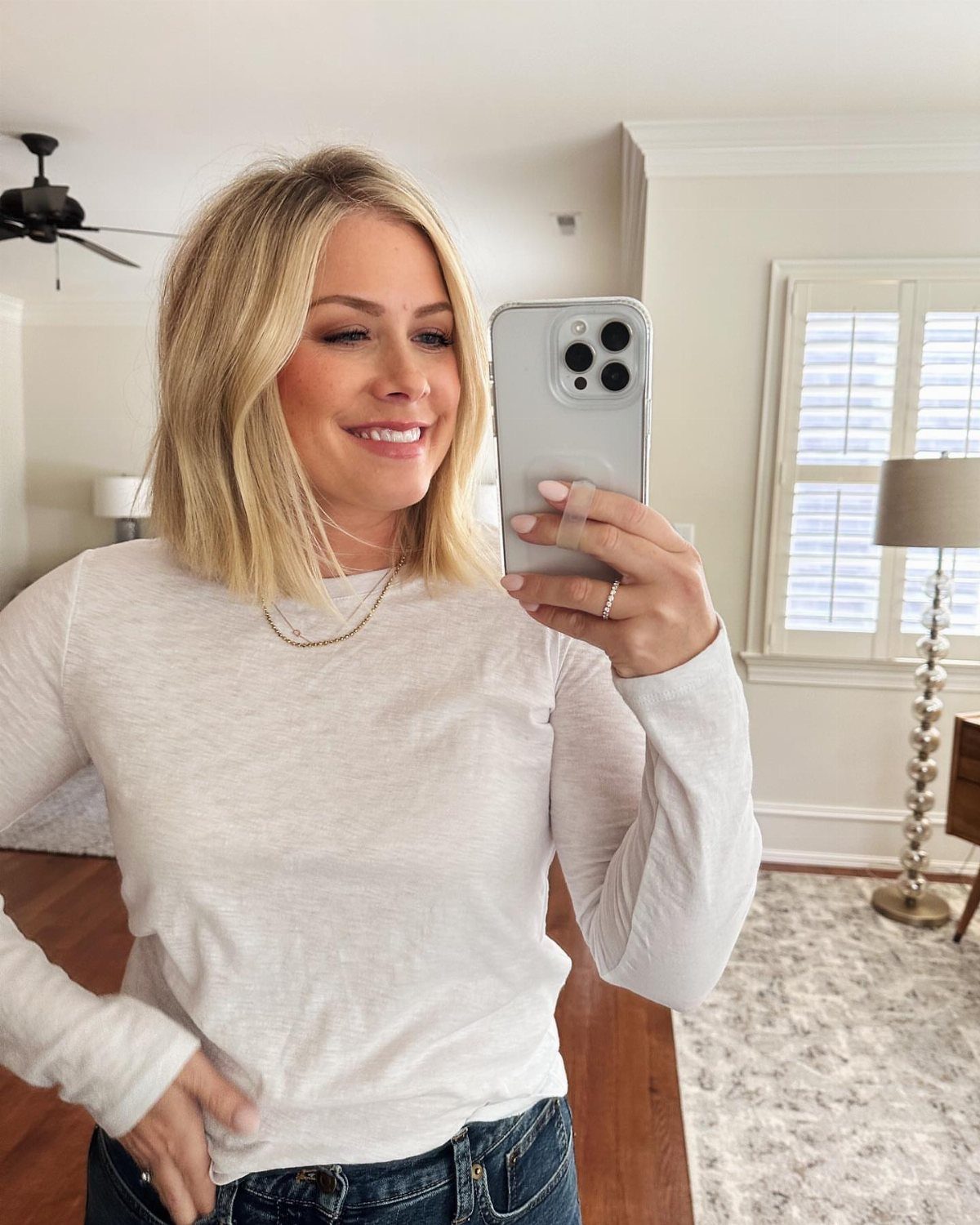
Longer than a bob but built on the same idea: a single blunt edge, cut straight across, holds enough weight to make the ends look thicker than they are.
The lob typically sits between the collarbone and the shoulder. That length gives fine hair enough heft to swing and hold its shape through the day.
3. Textured Bob
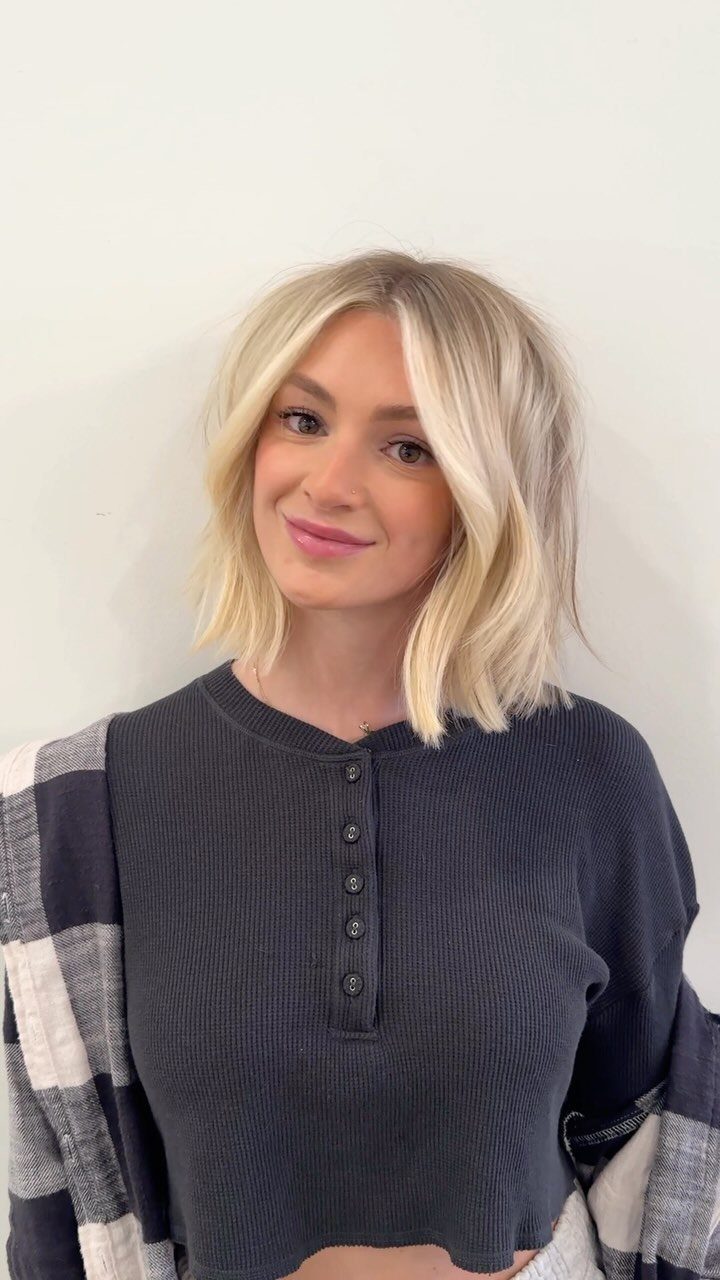
Thinning hair often looks flat even after a fresh cut, and that is the problem a textured bob solves. Piece-y, broken-up ends scatter light and read as volume, which a blunt edge alone cannot do.
Tell your stylist you want point-cutting or razor finishing, not a clean-line cut. The difference shows up in how the hair moves, not just in how it looks still.
4. Pixie Cut
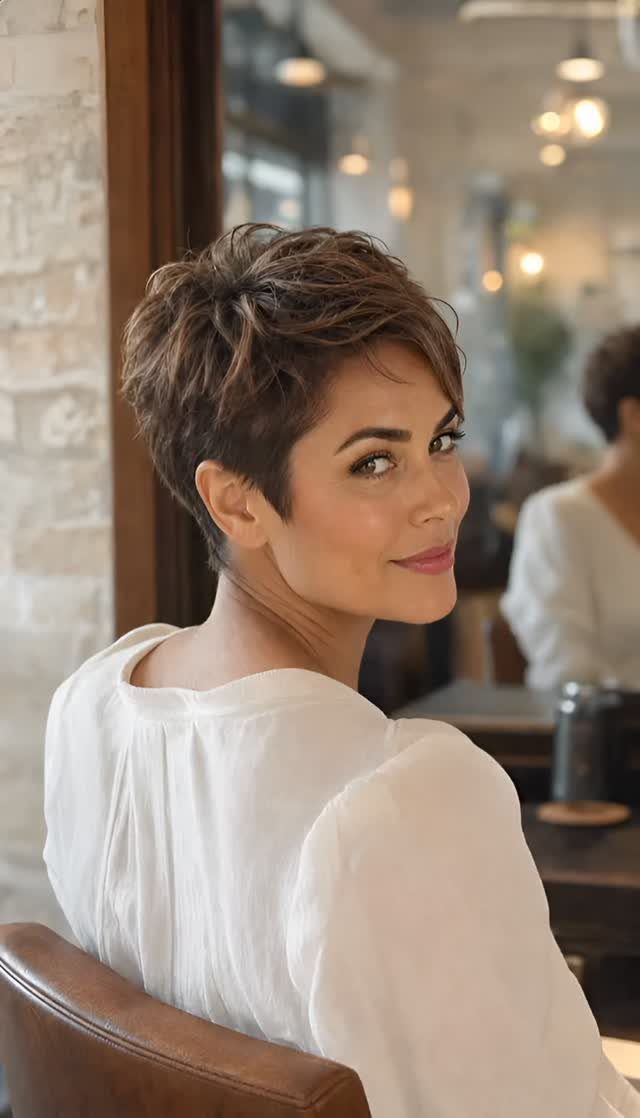
Short enough to remove most of the dead weight, long enough to style with your hands in minutes. Keeping the crown slightly longer and the sides tighter puts lift exactly where thinning hair needs it.
A good pixie on fine hair rarely needs more than a pea-size amount of texturizing paste worked through the roots while hair is still damp.
5. Micro Pixie
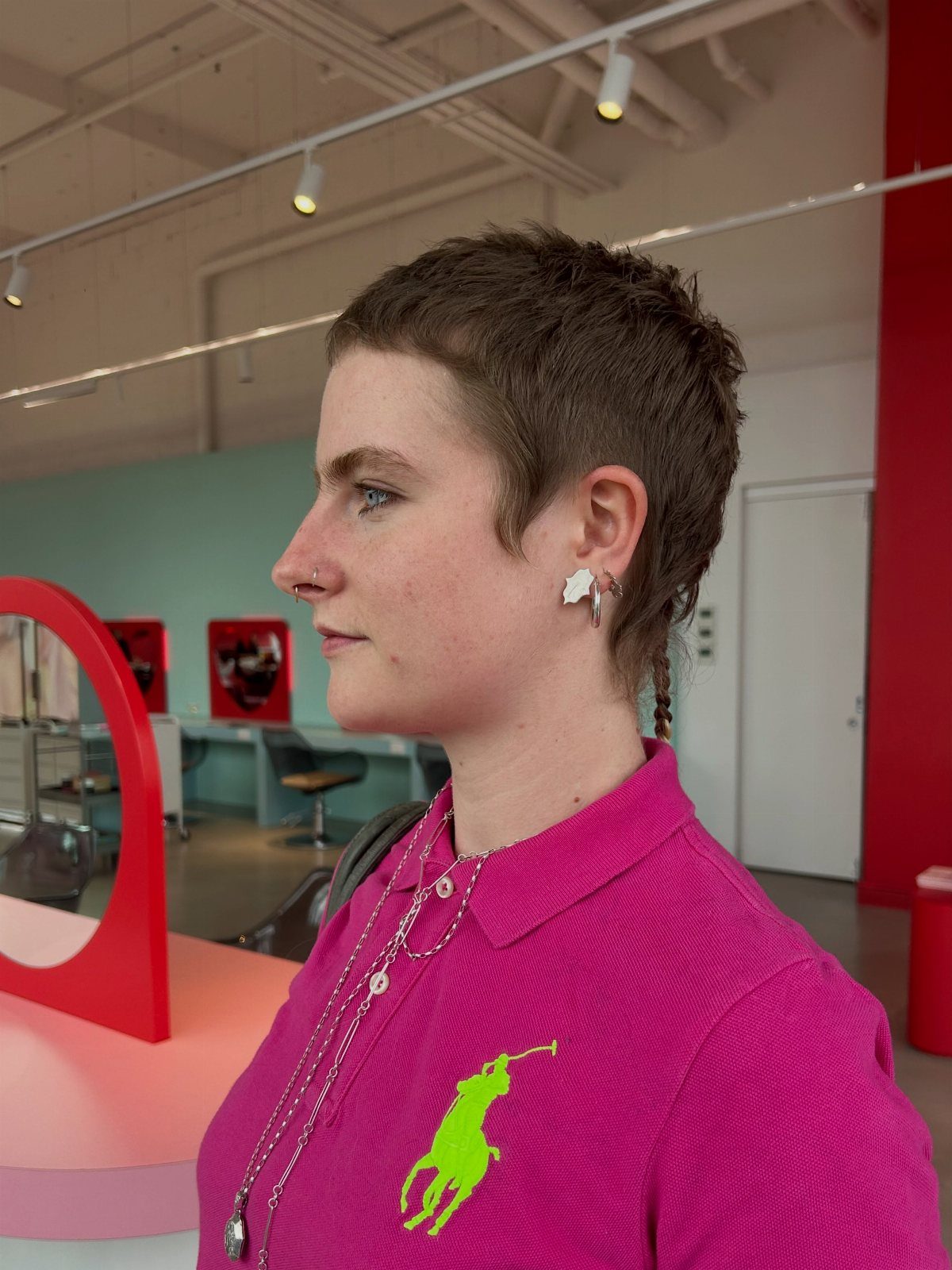
Less than an inch on top is all this cut keeps, and that brevity is the point. When there is almost no length to fall flat, fine hair sits up on its own and the scalp stays mostly hidden.
Of all the short cuts for thinning hair, this one requires the least daily effort. A quick scrunch with fingers and maybe a tiny amount of wax, and the texture holds.
“The shorter you cut fine hair, the thicker and healthier it tends to feel,” says Elle Clancy, Hadley Yates stylist.
— ELLE
6. Wavy Bob

Waves put air inside a bob that straight styling cannot. Each curve lifts the hair slightly away from the next strand, and that gap reads as thickness.
A small barrel, wrapped away from the face in loose sections and left without brushing out, gives this look without stiffness. Salt spray on damp hair before you blow-dry builds in some grip so the waves last past noon.
7. Short Hair with Side-Swept Bangs
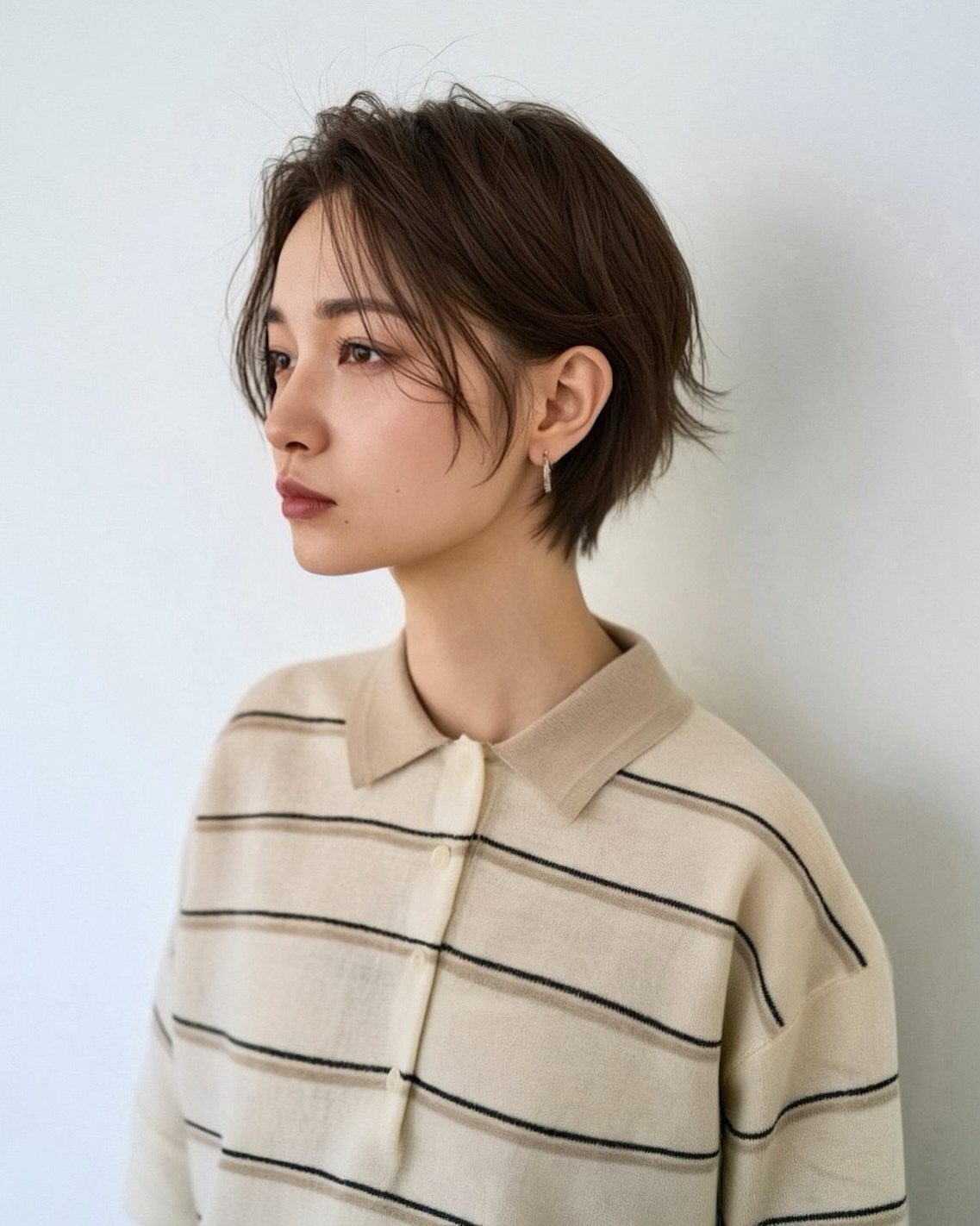
Side-swept bangs split the forehead diagonally, which pulls attention to the face rather than the hair’s density.
For fine hair, keeping the bangs longer than the face-framing pieces and blending them into the overall cut stops them from reading as a separate section. They should skim the cheekbone or tuck behind the ear easily.
This works on almost any short cut length. The side part that feeds into the sweep also lifts the roots at the crown, which is extra volume for free.
8. Layered Pixie
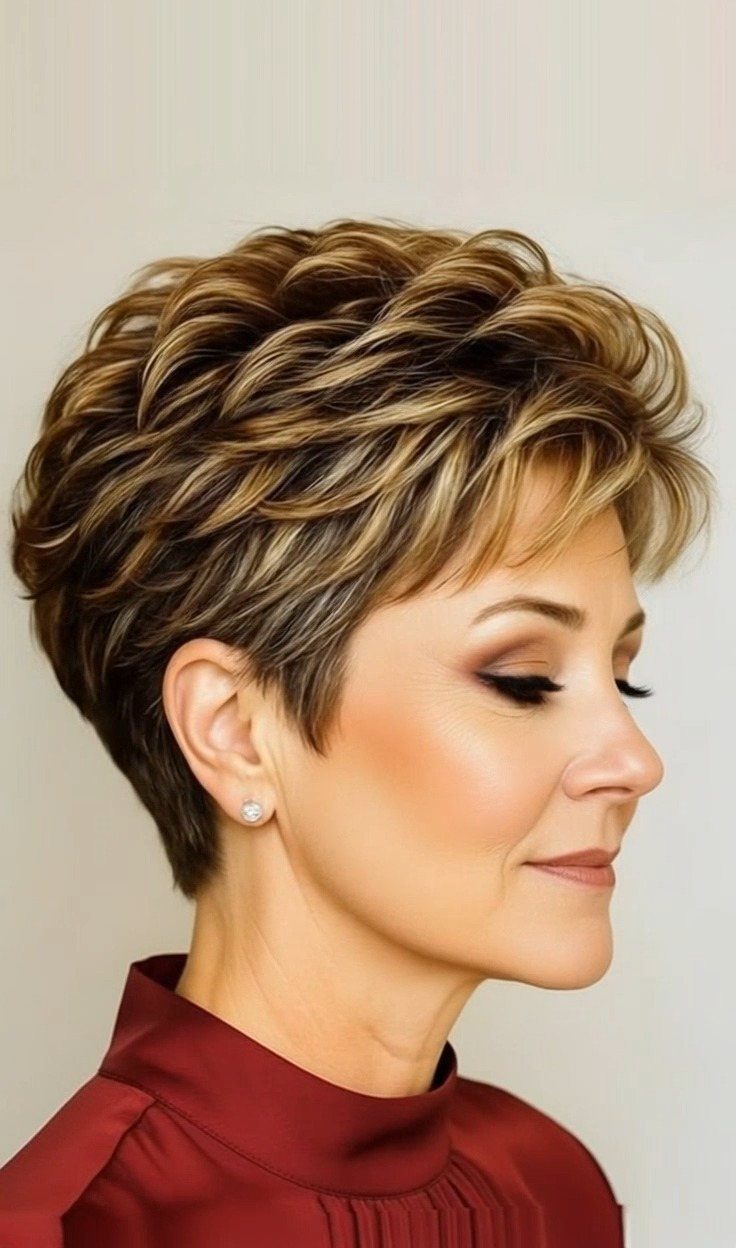
Layers in a pixie do a different job than layers in longer hair: they remove bulk at the perimeter while building height at the crown, so the silhouette reads rounder and fuller rather than flat.
Ask for shorter, choppier layers on top and a cleaner line through the sides. That contrast is what creates the lift visible in highlighted cuts like this one.
Color also plays a role here. The contrast between lighter and darker sections adds visual texture that reads as thickness even before any styling.
9. Cropped Side-Part Cut
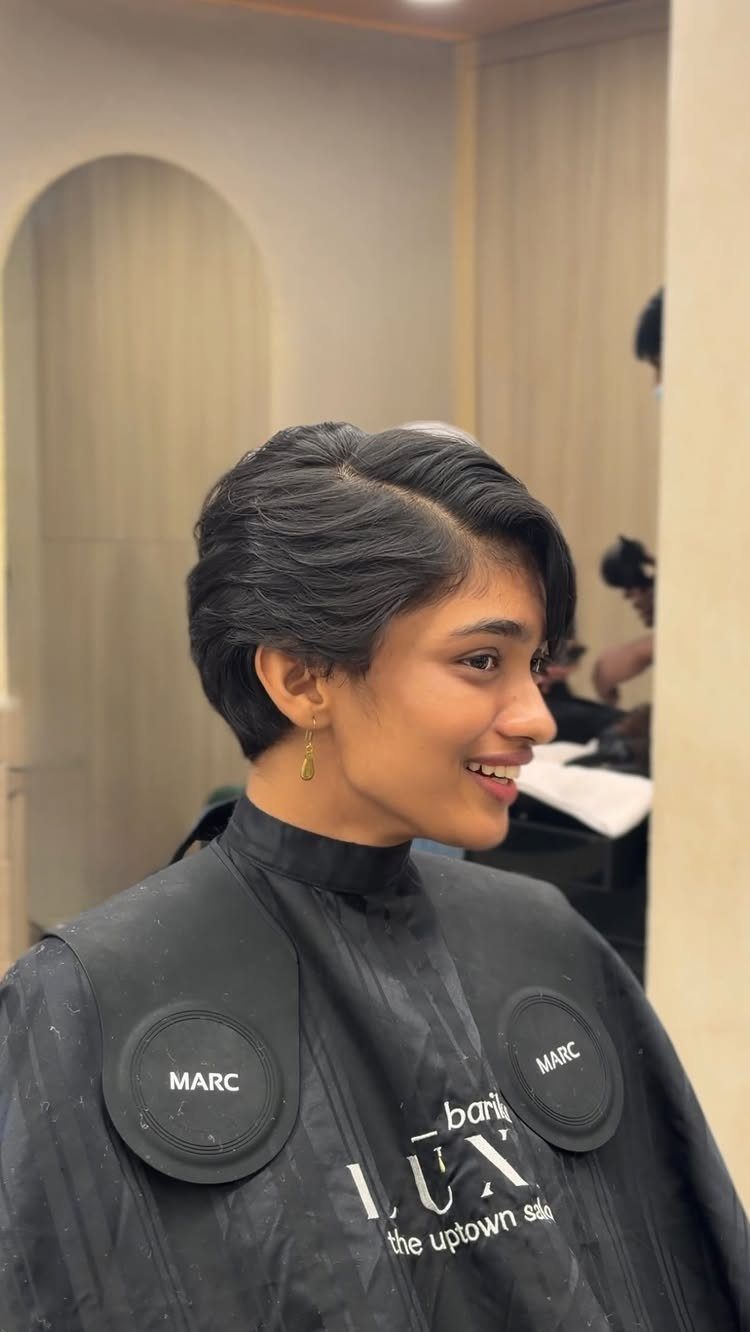
A deep side part on a cropped cut does 2 things at once: it sends a wave of hair across the top of the head, adding volume above the part, and the asymmetry distracts from any thinning at the crown.
At this length, the part works best when it runs from just above the arch of the brow back toward the crown. Any softer or closer to center and the effect flattens out.
A small amount of mousse at the roots, blown dry against the direction of growth, locks that lift in place.
10. Stacked Pixie
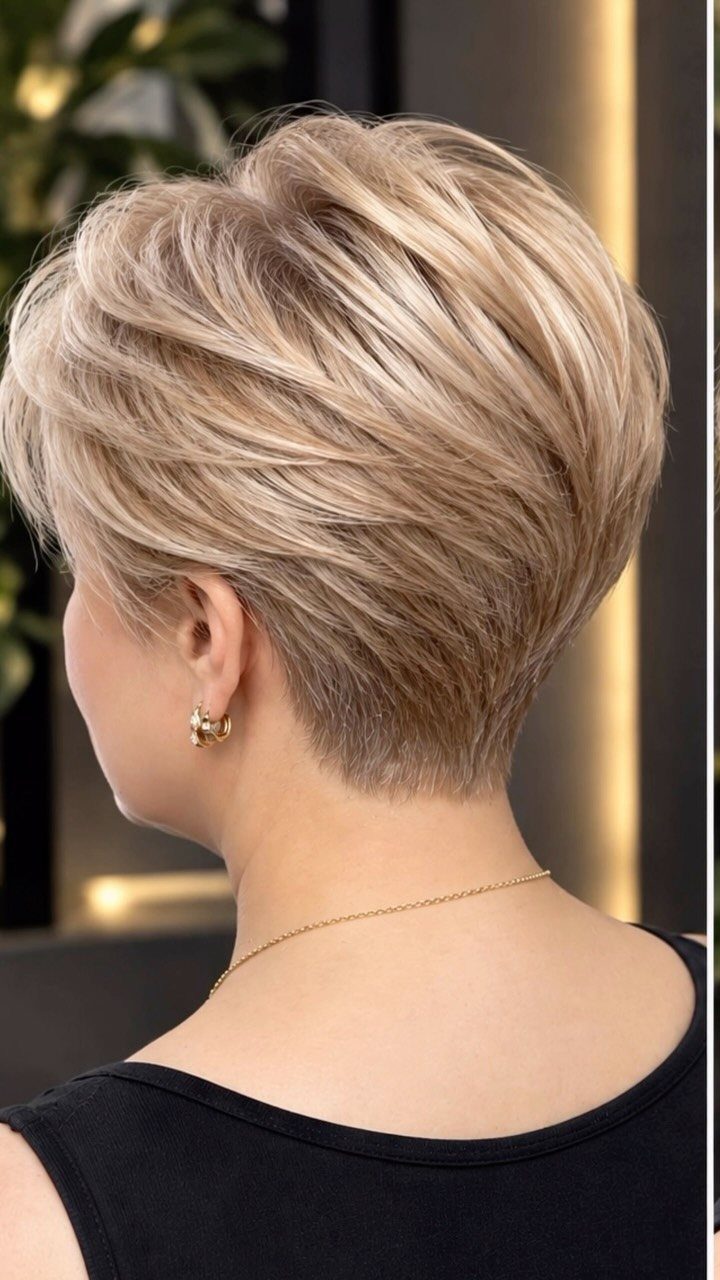
Stacking is what separates this from a standard pixie. The back is cut in graduated layers that angle inward, building a rounded shape that adds volume at the nape without relying on length to do it.
Fine, blonde hair shows the layering clearly. The fullness sits low and rounds the back of the head, which balances a longer face or a narrower chin.
Daily styling is minimal: a round brush and a small amount of volumizing mousse through the back layers is usually enough to hold the shape.
11. Sleek A-Line Bob
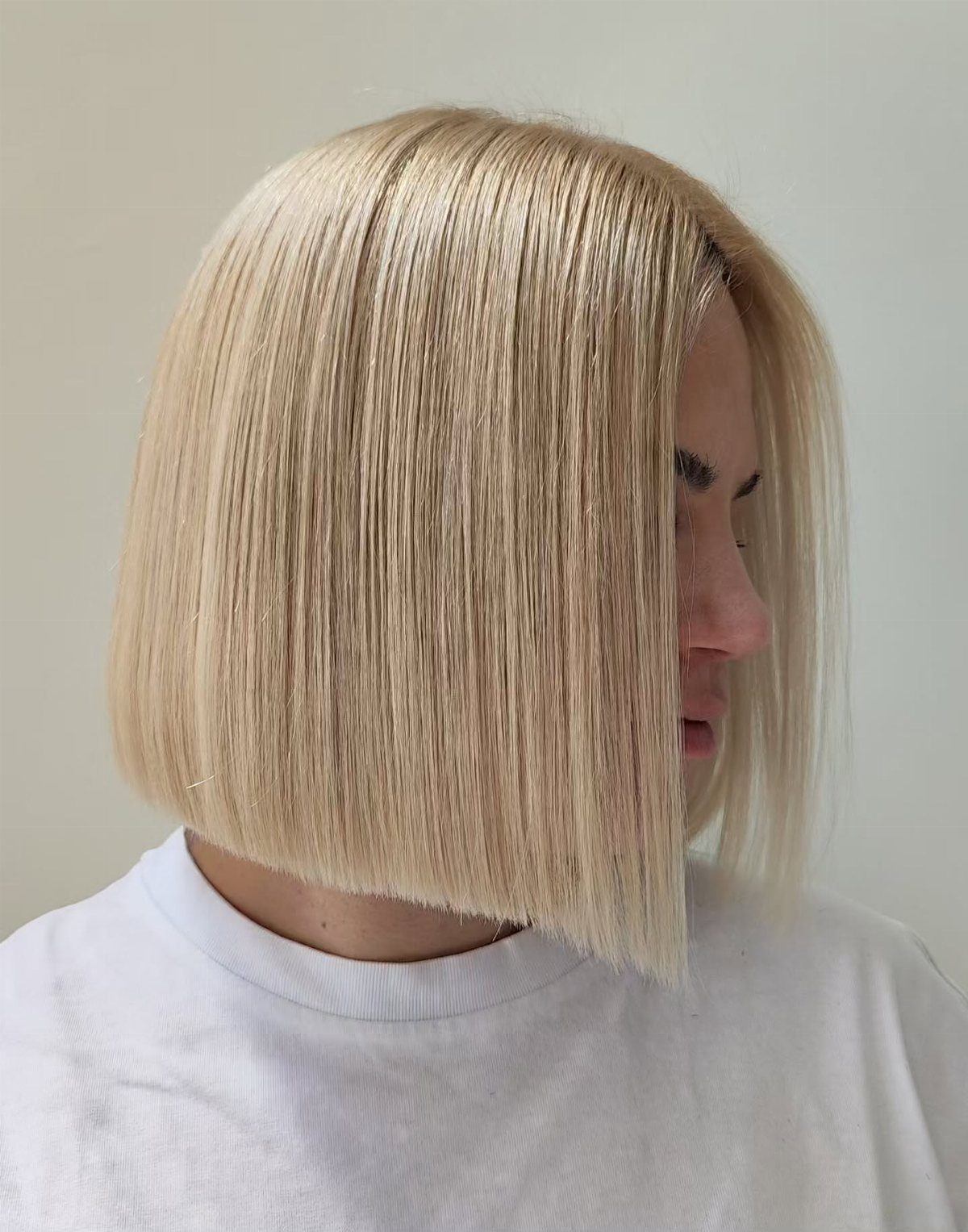
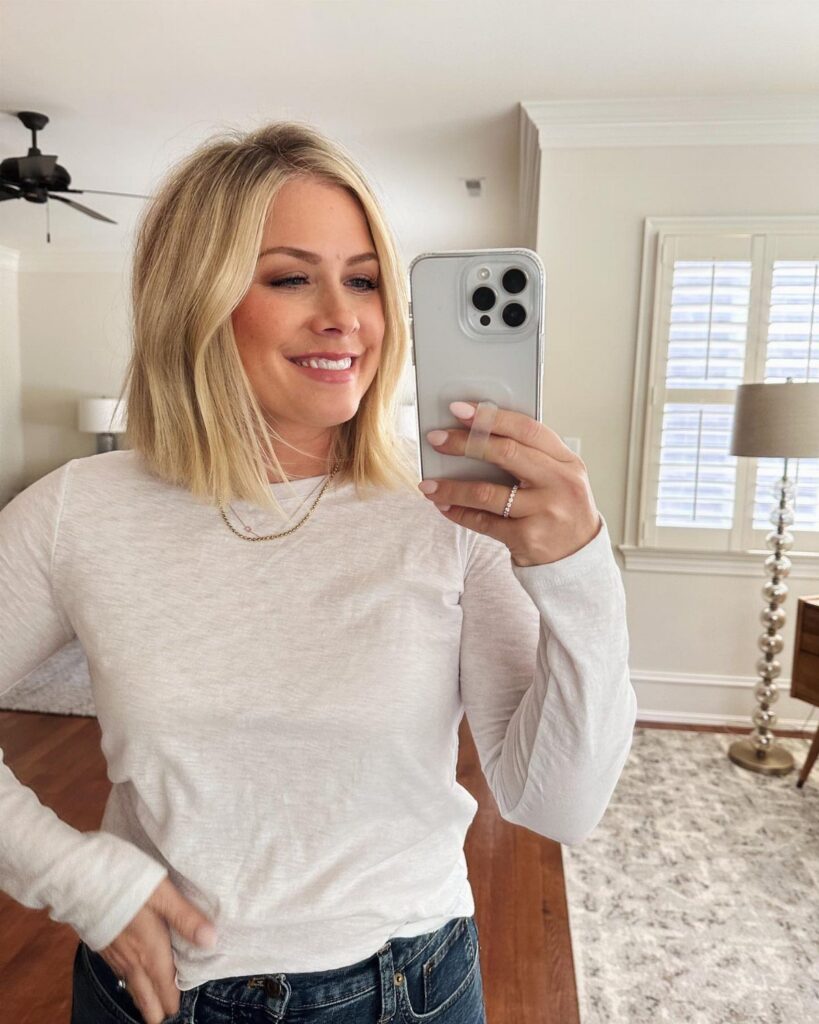
An A-line bob is longer at the front than the back, and that angle is what earns its place on this list.
The extra length at the jaw frames the face while the short, clean nape keeps the overall silhouette neat.
Straight, fine hair handles this cut particularly well. The sleek finish that works here is achieved with a flat iron and a light smoothing serum on dry hair, working from root to tip.
The sharper the angle, the more dramatic the frame. A subtle angle reads as a classic bob from the front; a steep one reads as a true A-line from any angle.
12. Slicked-Back Short Cut
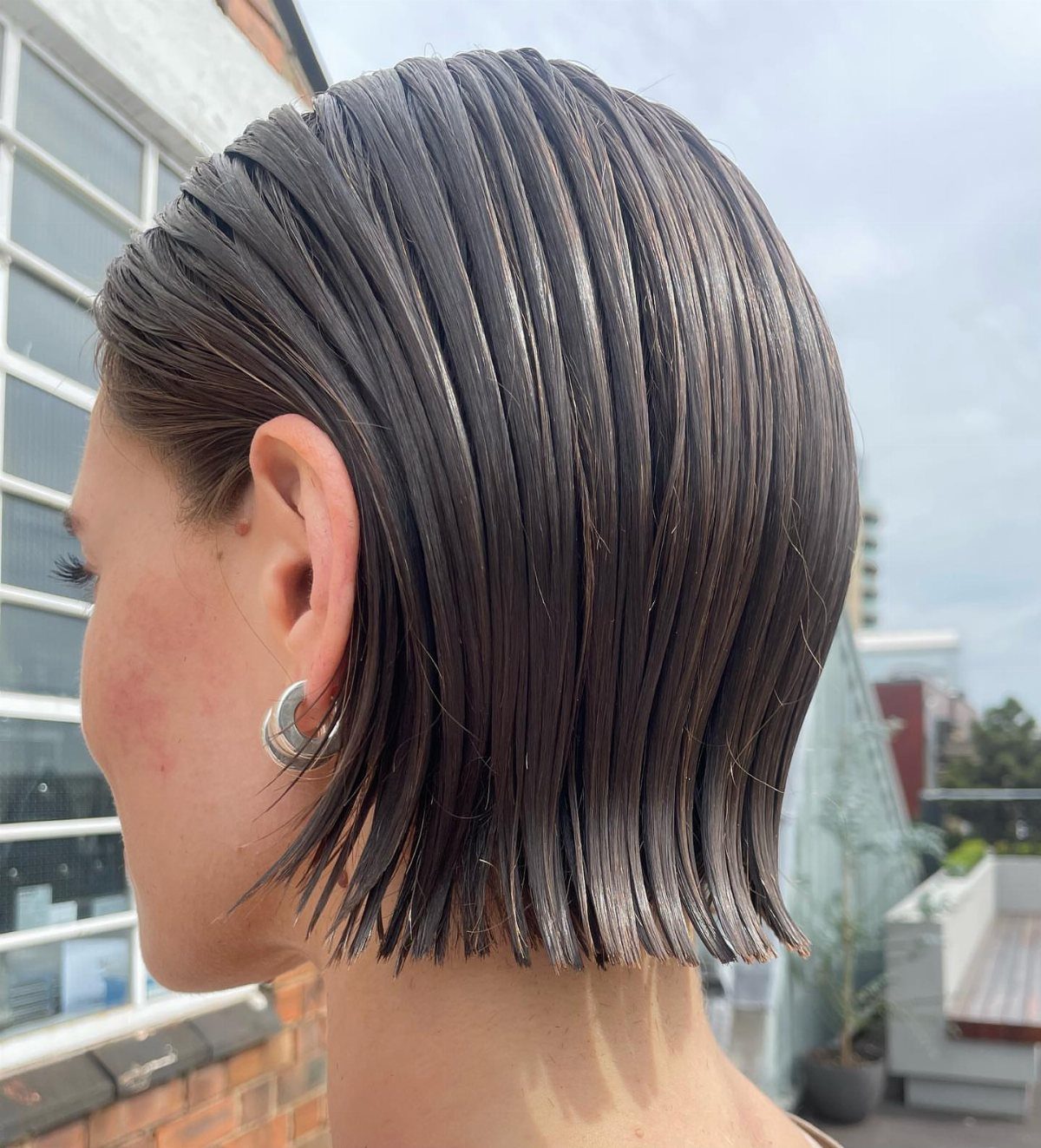
Pulling fine hair back and smoothing it flat is a counterintuitive choice, but the slicked silhouette replaces the problem of visible thinning with a deliberate, polished look where the shape of the cut does all the work.
A strong-hold gel, applied to damp hair and combed straight back, gives this its finish. The blunt ends at the neck keep it from reading as undone.
It suits hair that is fine and straight. Anything with texture will resist lying flat without a lot of product, and too much product tends to emphasize thinning rather than hide it.
13. French Bob

Chin length, with bangs that hit above the brow: the French bob keeps all its weight in a short, dense frame that reads as thick even on fine hair.
The texture is where the volume comes from. Wavy or loosely curled ends break up the perimeter and add body that a straight blunt cut cannot replicate at this length.
If your hair is very straight, a small barrel or a diffuser on damp hair gets you close. The bangs are non-negotiable to the look, and they do double work by covering a fine hairline.
Cut Upkeep and Styling
Trims every 6–8 weeks keep these cuts doing their job. Fine hair loses its shape fast, and a blunt edge that grows out even a little starts to look scraggly rather than dense.
Heat styles drop out of fine hair faster than most people expect.
Mousse applied before blow-drying builds grip that lasts longer than products added after, and dry shampoo right after blow-drying, while the hair is still clean, keeps it from going flat or oily by midday.
That trick matters most around bangs and face-framing pieces, which grease up first.
Heavy oils and rich leave-ins are worth skipping entirely. Fine hair doesn’t need the moisture the way coarser hair does, and anything that coats the strand just pulls it down.
Choosing Layers Carefully
Layers are genuinely useful on fine hair, but the margin for error is narrow. Face-framing pieces and a few light layers through the mid-lengths can add movement without costing density.
The problem comes when a stylist cuts too many: each one removes bulk from the ends, and ends that are thin enough to see through read as fragile rather than full.
A blunt baseline does something layers cannot. Layers work against that effect when they’re overdone.
Bringing this to a stylist with real experience on fine hair is worth the effort. The difference between a few well-placed layers and too many isn’t always obvious mid-cut, but it shows immediately once the hair is dry.