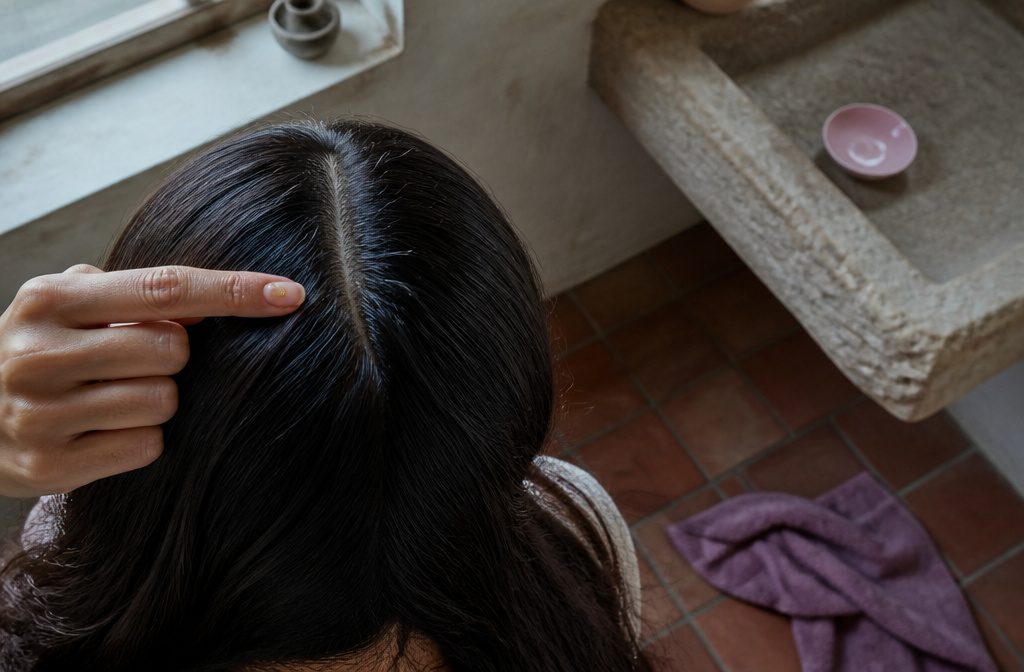
Most hair needs oil on the mid-lengths and ends, not at the scalp. The scalp is skin, and applying oil there can clog pores and trap buildup unless you wash first and keep it to 1–3 drops massaged in for 3–5 minutes.
If your scalp feels dry or flaky, oil may not fix the real problem, especially if dandruff comes from Malassezia yeast that feeds on oils like coconut, olive and castor.
Scalp Oil Against Hair Oil
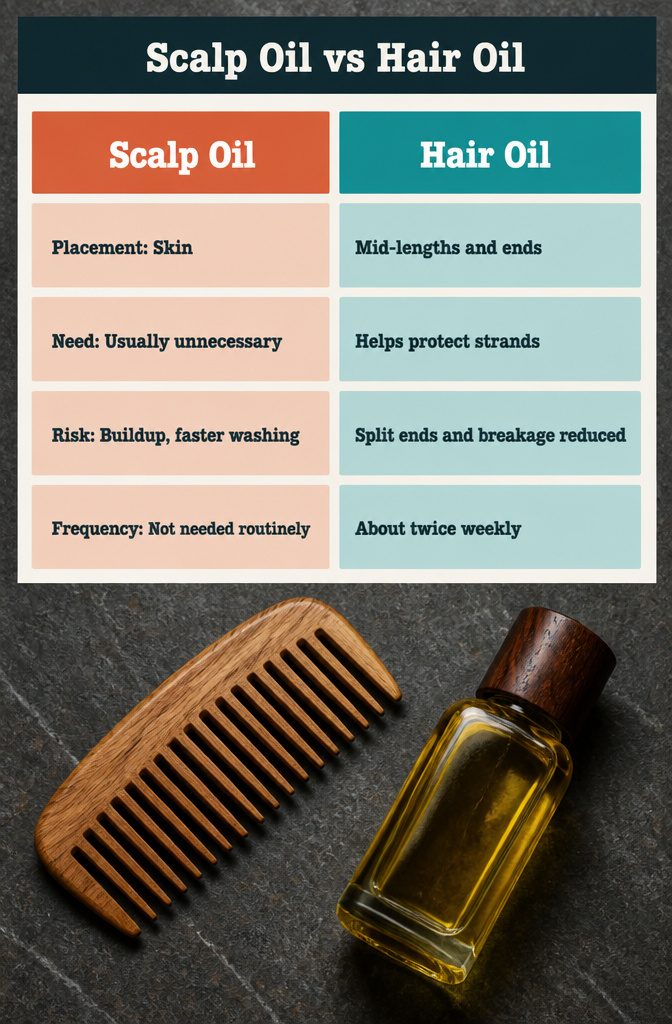
Scalp Oil Against Hair Oil
The scalp and the hair strands want different things.
Your scalp is skin. Your hair is not.
Most people don’t need to oil the scalp at all, and applying too much oil directly there can clog pores and cause buildup. If your scalp feels dry, itchy or flaky, oil may not fix the real problem.
Hair oil belongs on mid-lengths and ends, not at the roots. Length isn’t lost where the hair grows.
It’s lost when the ends split and break off. Oil on the mids and ends moisturizes so they don’t dry out, don’t split and don’t break.
That’s how it gives you length. Oil on the scalp just makes it get dirty faster, so you have to wash sooner.
For the strands, most people do well oiling about twice a week, or using it before shampooing.
What Scalp Oiling Does
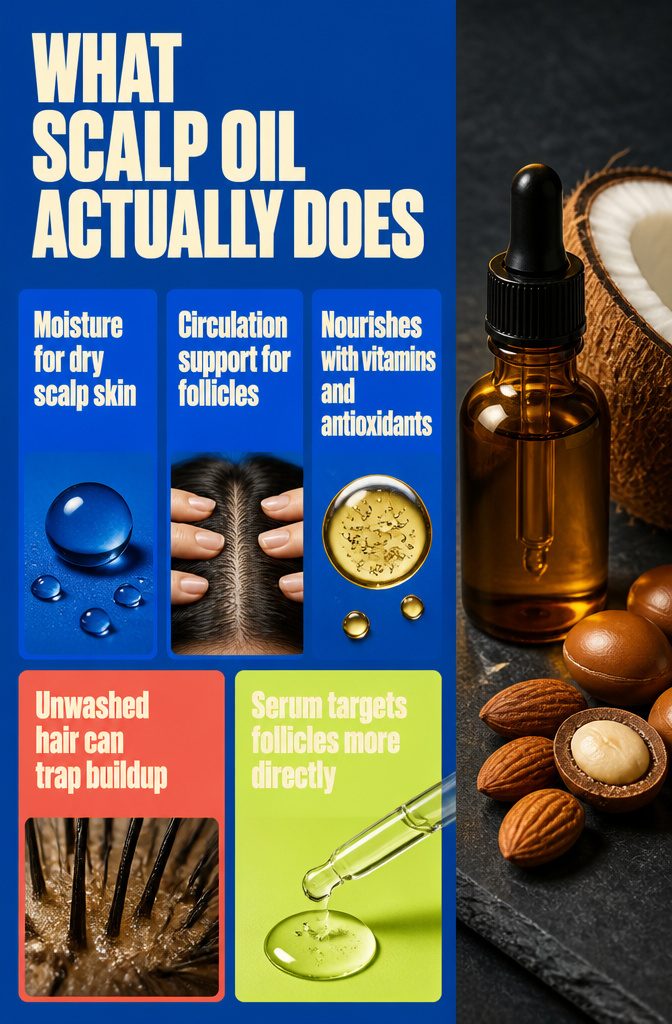
Scalp oiling brings moisture to dry skin, increases circulation to the follicles, and creates the conditions for stronger growth.
Natural oils like coconut, argan, and almond penetrate the scalp to nourish follicles and reduce inflammation, while delivering vitamins and antioxidants that hair cells need.
The practice also helps cut down on buildup when done correctly, though applying oil to unwashed hair does the opposite: it traps sebum, sweat, and styling residue in place, clogs follicles, and can irritate the skin or contribute to thinning over time.
One qualification worth noting: if your main concern is stimulating new growth rather than nourishing what you already have, scalp serum targets follicles more directly than oil.
Oil protects and strengthens strands, but the active ingredients in a serum are formulated to work on the follicle itself.
I think of oil as the foundation for scalp health and serum as the next step when you need more targeted support.
1. Match the Oil to Your Scalp and Hair
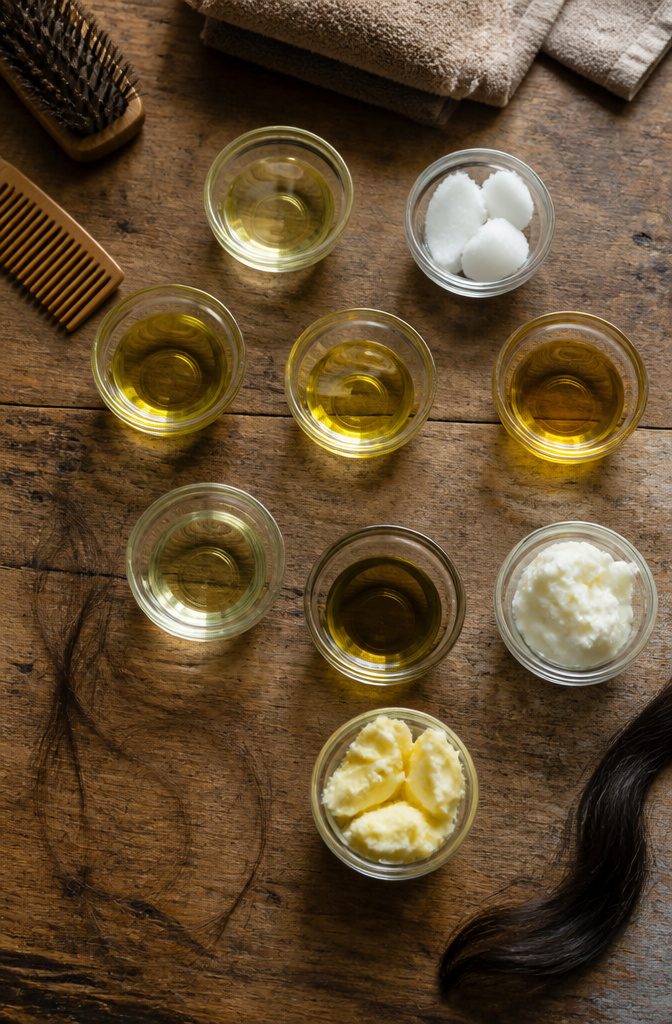
The right oil depends on how easily your hair absorbs moisture and how thick each strand is.
Porosity matters more than texture alone. Low-porosity hair resists moisture and gets buildup fast, so reach for jojoba or grapeseed oil.
Medium porosity takes jojoba or argan oil. High porosity needs heavier options like shea butter, mango butter, or castor oil, though fine high-porosity hair still works better with something lighter.
Strand thickness tells you how much weight your hair can carry:
- Lightweight oils (argan, jojoba, grapeseed) absorb quickly and won’t flatten fine or normal hair.
- Heavier oils (coconut, castor, olive) coat the strand and seal in moisture, which thick or dry hair needs.
Essential oils like tea tree or peppermint should never go directly on the scalp. Mix them into a carrier oil first.
2. How to Apply Oil to Your Scalp
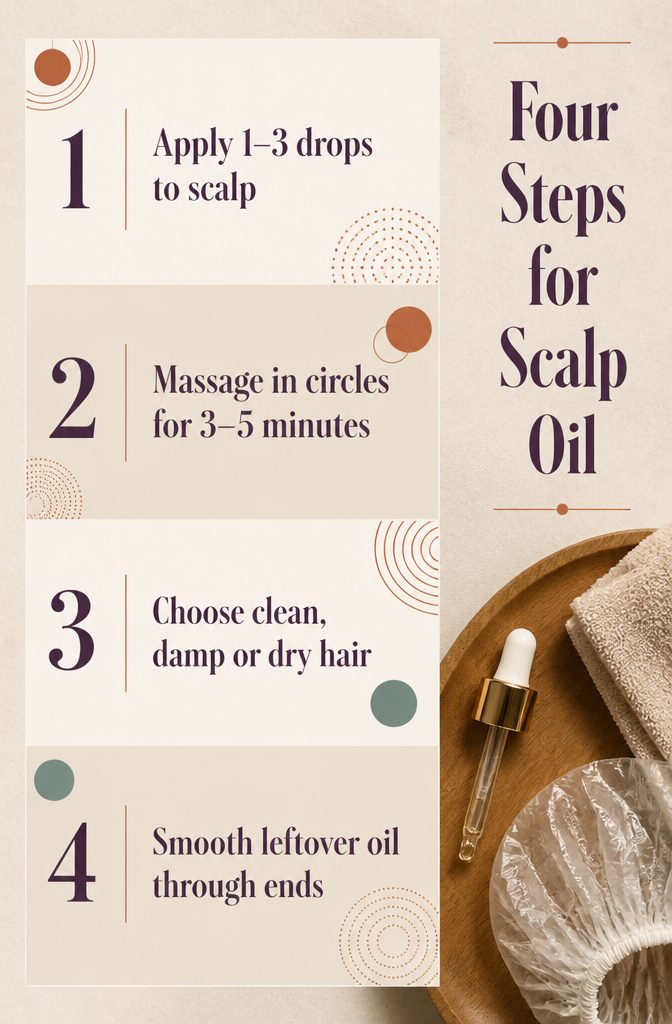
- Apply 1–3 drops directly to your scalp. Start at the nape of your neck if you’re covering everything, or just hit the areas that need it most.
- Massage with your fingertips in small circles for 3–5 minutes. Work upward toward the crown, then from the base of each ear to the top of your head. The massage matters: it spreads the oil evenly and boosts circulation.
- Decide whether to oil before or after washing. Most people apply to dry hair, cover with a towel or shower cap, leave it 45 minutes to an hour, then shampoo it out. But oiling a clean, slightly damp scalp after shampooing helps the oil absorb faster and keeps buildup from happening. I lean toward the second approach when my scalp feels flaky or inflamed.
- Run any leftover oil through your mid-lengths and ends, then style or leave it on as planned.
3. How Long to Leave It On
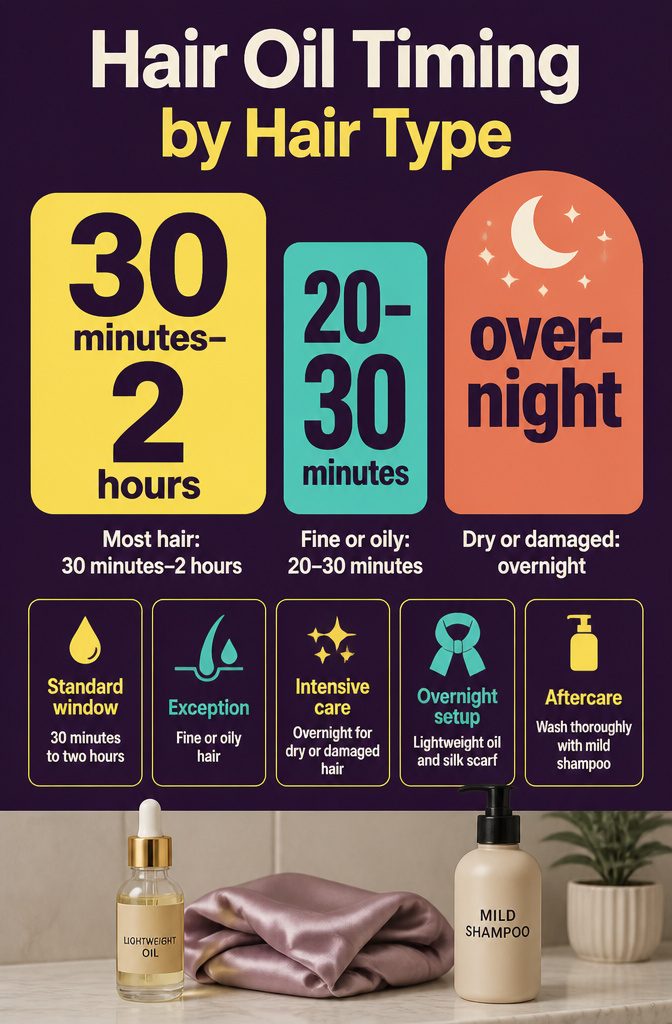
Most hair needs 30 minutes to two hours for the oil to work. That window gives your scalp time to absorb nutrients without sitting so long that buildup becomes a problem.
Fine or oily hair is the exception. Keep treatments short:
- 20 to 30 minutes for fine or oily hair to avoid weighing it down
- 30 minutes to two hours for most other hair types
- Overnight for intensive treatment if your hair is dry or damaged
I use a lightweight oil if I leave it on overnight, and I cover my hair with a silk scarf to keep the oil off my pillowcase and lock in warmth.
Either way, wash thoroughly afterward with a mild shampoo to clear any residue.
4. How Often to Oil
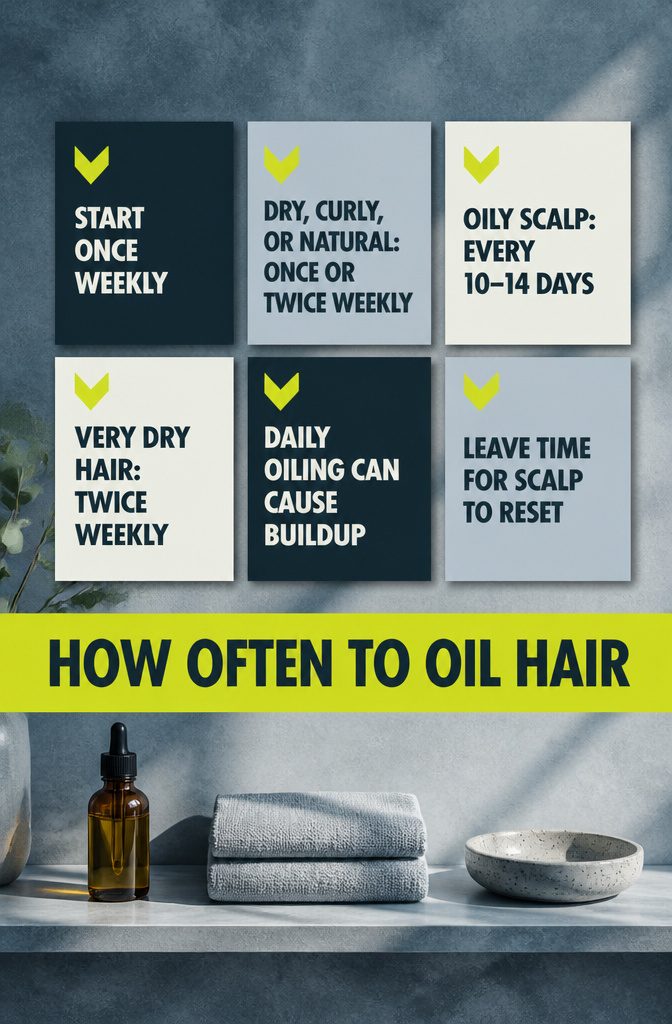
Start with once a week and adjust based on how your scalp responds. That frequency suits most hair types without overloading your scalp or weighing hair down.
Fine-tune from there:
- Dry, curly, or natural hair can handle once or twice weekly. The extra moisture helps prevent frizz and breakage without making strands heavy.
- Oily scalps should start every 10–14 days to avoid triggering more oil production. If that feels comfortable, you can move to weekly, but resist the urge to go more often.
- Very dry hair benefits from twice weekly, especially in winter or if you heat-style regularly.
I don’t recommend daily oiling.
Buildup irritates the scalp, clogs follicles, and makes hair look flat. Once or twice a week gives your scalp time to absorb the oil and reset before the next treatment.
5. Essential Oils Need Dilution
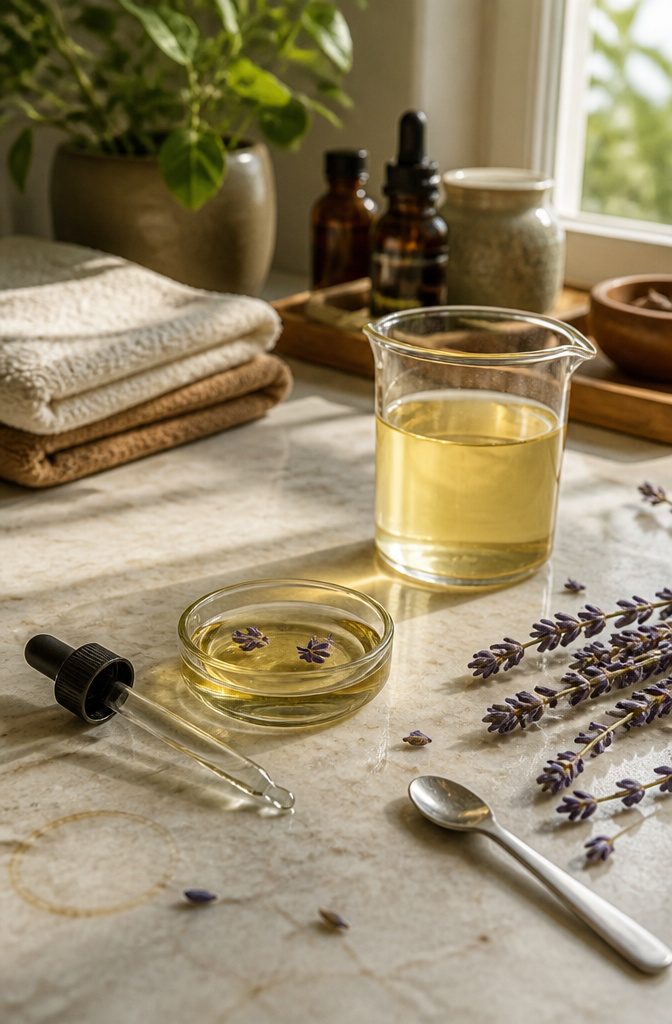
Essential oils are concentrated plant extracts that must be diluted in a carrier oil before they touch your scalp.
It takes 220 pounds of lavender flowers to make one pound of lavender oil, which gives you a sense of how strong these are. Mix a few drops into 2 ounces of a carrier oil such as jojoba, coconut or almond oil.
Undiluted essential oils can burn or irritate your scalp, and I would skip them on the hair strands entirely because they tend to make hair feel dry.
If you are allergic to plants such as ragweed, patch-test the diluted oil on a small area of your scalp first to make sure you do not react. A reaction caught early beats one that spreads.
6. Dandruff and Which Oils to Skip
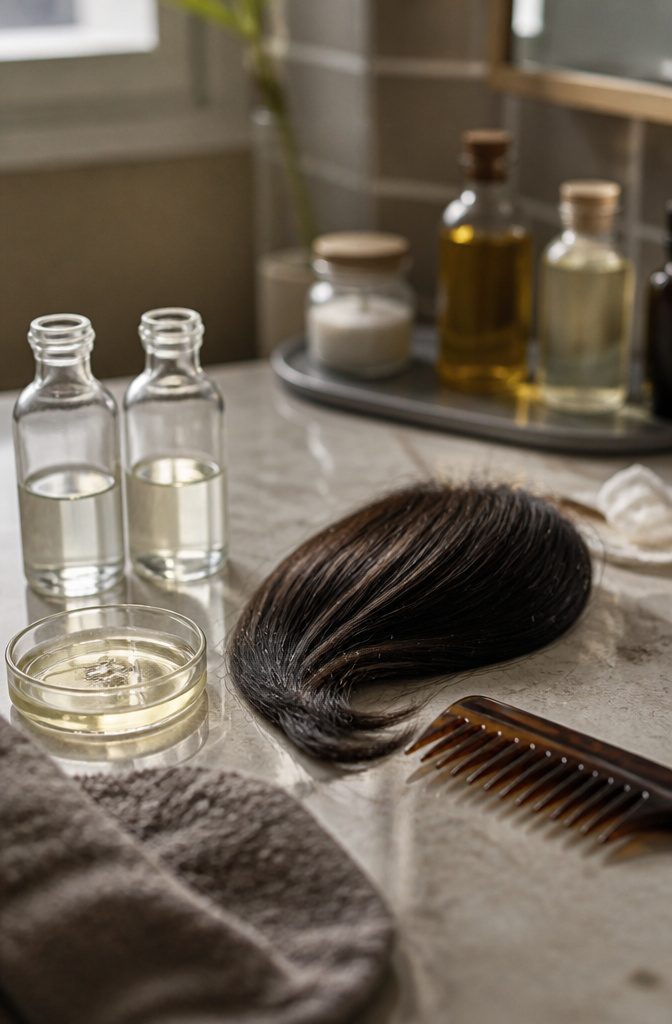
Dandruff and seborrheic dermatitis stem from Malassezia, a yeast that feeds on certain oils. That means olive, castor, and coconut oil can make flakes and itching worse for some people, not better.
The disconnect is real: plenty of advice treats dry or flaky scalp as something oil will fix, but if the flaking comes from Malassezia overgrowth, feeding it more of what it likes backfires.
If you need moisture on your scalp and have dandruff, MCT oil or squalane are the safer picks.
They don’t fuel the yeast the same way. Dermazen MCT Scalp Moisturizer is one ready-mixed option that may ease flakes and itching, though it won’t cure the underlying problem.
7. Scalp Serum Does Different Work
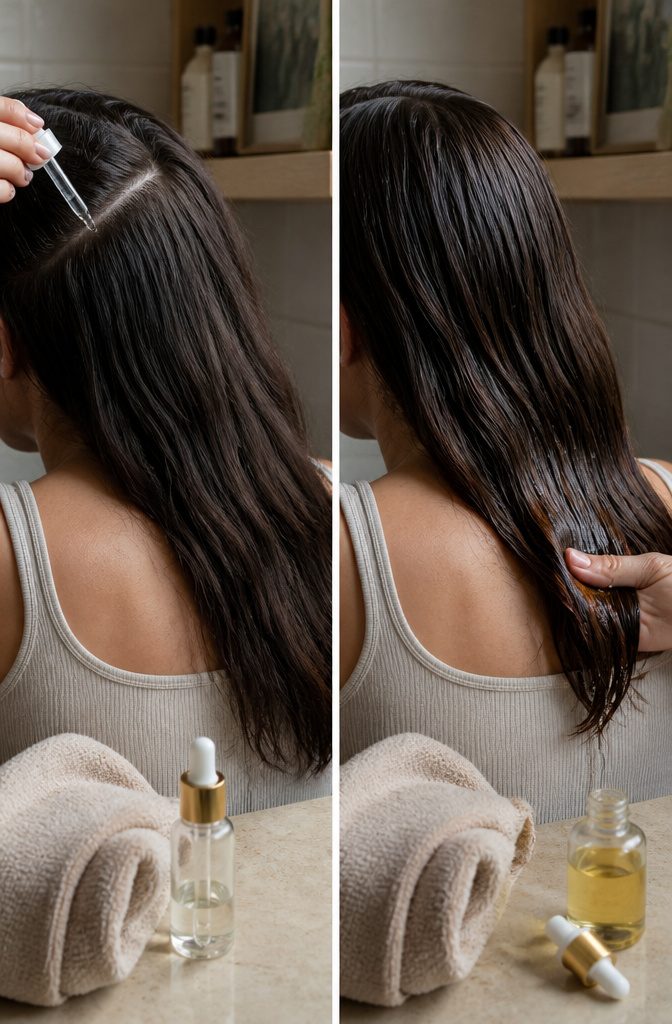
Serum and oil sound interchangeable, but serum targets the scalp while oil conditions the strand. If you’re dealing with flakes, excess oil production, or early thinning, a scalp serum with actives gets closer to the problem.
Hair oil sits on the surface and protects what’s already grown; serum delivers ingredients that work on follicles and skin.
The actives that make serum worth using include niacinamide, salicylic acid, rosemary extract, and peptides.
These address the underlying concern rather than just coating the hair. Oil can still play a role, but it won’t stimulate new growth or calm an irritated scalp the way a targeted formula does.
I apply serum two to three times a week, let it sit on the scalp, then follow with oil on mid-lengths and ends if they need it.
Serum first, oil second. That way each one does the work it’s built for.
What Goes Wrong With Too Much Oil
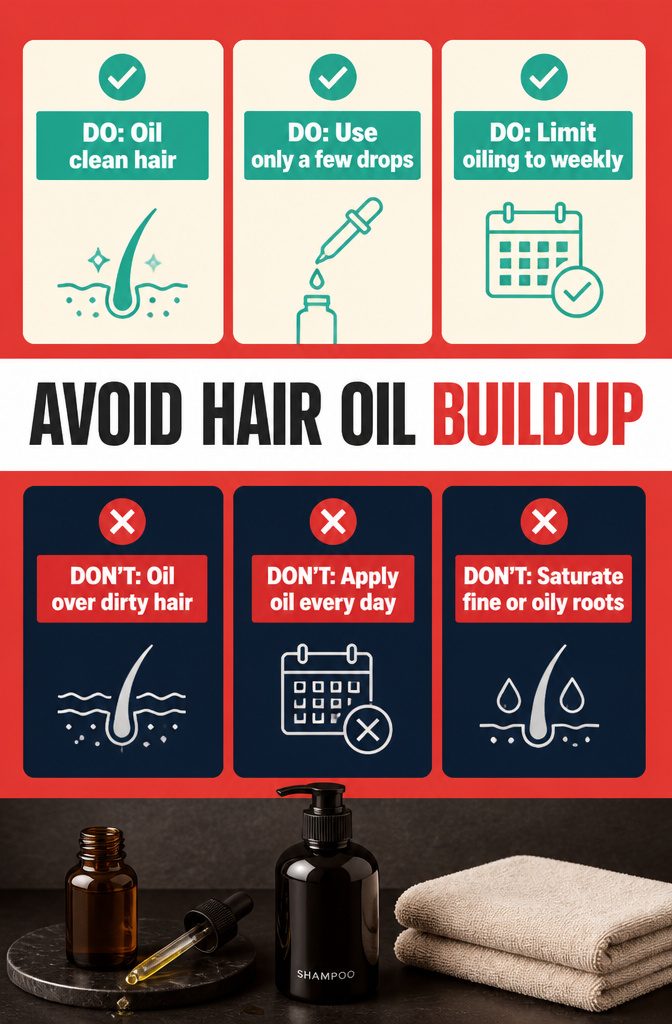
Too much oil causes more problems than it solves. Apply more than your scalp needs and you get buildup that traps dirt, clogs follicles and slows down absorption.
Over time that can irritate the skin or contribute to thinning. The mistakes worth avoiding:
- Oiling dirty hair. Oil applied over sebum, sweat or styling product residue locks all that debris in place instead of helping anything absorb.
- Using too much. A few drops diluted in a carrier oil is plenty. More than that clogs pores and leaves a greasy film.
- Oiling every day. Once or twice a week works. Daily application leads to buildup and irritation.
- Putting oil straight on fine or oily hair. Keep most of it on mid-lengths and ends if your scalp already produces enough oil, or limit treatments to 20–30 minutes to avoid weighed-down roots.
These are timing and placement fixes, not reasons to skip oil altogether.
Oils Named by Hair Type and Need
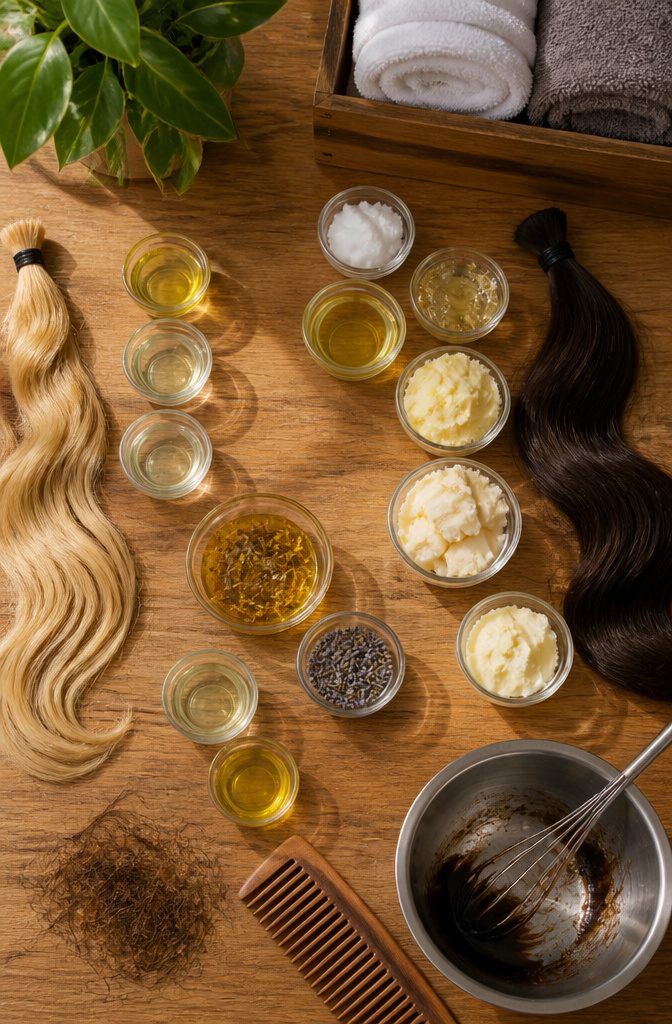
Match your oil to what your hair tolerates and what your scalp needs.
Lightweight oils like jojoba, argan, grapeseed, and squalane absorb quickly and won’t weigh down fine or already-oily hair. Jojoba sits close to the scalp’s own sebum, which makes it a reliable starting point for most people.
Heavier oils work better on thick, coarse, or high-porosity hair that needs more protection:
- Coconut oil softens hair and seals in moisture, though it can build up on low-porosity strands
- Castor oil is dense and nourishing, often used to coat damaged hair or support the scalp during growth phases
- Olive oil, shea butter, and mango butter are rich in fatty acids and suited to dry or heat-damaged hair
For a sensitive or inflamed scalp, calendula-infused oil and lavender oil calm irritation without feeling heavy.
Tea tree and peppermint improve circulation and help clear congestion, which can reduce flaking. One pre-wash formula combines bacuri butter, rosemary essential oil, and sweet almond oil to nourish the scalp while conditioning the length.
Frequently Asked Questions
How often should I oil my scalp?
Start with once a week and adjust based on your scalp’s response.
Dry, curly, or natural hair can handle once or twice weekly, while oily scalps should begin every 10 to 14 days to avoid triggering more oil production. Daily oiling causes buildup that clogs follicles and irritates the skin.
How long should you keep oil in your hair?
Most hair types need 30 minutes to 2 hours for the oil to absorb without causing buildup.
Fine or oily hair should keep treatments short at 20 to 30 minutes, while dry or damaged hair can leave oil on overnight if needed. Wash thoroughly afterward with a mild shampoo to clear any residue.
Can you leave oil in your hair overnight?
Yes, overnight treatments work well for dry or damaged hair.
Use a lightweight oil and cover your hair with a silk scarf to keep the oil off your pillowcase and lock in warmth. Shampoo it out the next morning to remove any residue.
Can you oil your hair every day?
No, daily oiling leads to buildup that irritates the scalp, clogs follicles, and makes hair look flat. Once or twice a week gives your scalp time to absorb the oil and reset before the next treatment.
What’s the difference between essential oils and carrier oils?
Essential oils are concentrated plant extracts that must be diluted in a carrier oil before touching your scalp, since it takes 220 pounds of lavender flowers to make 1 pound of lavender oil.
Carrier oils like jojoba, coconut, or almond provide moisture and dilute the essential oils so they don’t burn or irritate your skin.
Is it better to oil my scalp before or after shampooing?
Oiling a clean, slightly damp scalp after shampooing helps the oil absorb faster and prevents buildup.
Most people apply to dry hair before washing and leave it 45 minutes to an hour, but the post-shampoo approach works better when your scalp feels flaky or inflamed.
What oils are best for people with sensitive or inflamed scalp?
Calendula-infused oil and lavender oil calm irritation without feeling heavy.
Tea tree and peppermint improve circulation and help clear congestion, which can reduce flaking. Always dilute essential oils in a carrier oil and patch-test on a small area of your scalp first.
Which is better for hair growth: scalp serum or hair oil?
Scalp serum targets follicles more directly than oil when your main concern is stimulating new growth. Oil protects and strengthens strands by creating the conditions for stronger growth, but serum contains active ingredients formulated to work on the follicle itself.
Can hair oil clog the scalp?
Yes, applying too much oil directly to the scalp can clog pores and cause buildup. Most people don’t need to oil the scalp at all, and oil belongs on mid-lengths and ends where it prevents splits and breakage.
Does hair scalp need oil?
Most people don’t need to oil the scalp at all.
Your scalp is skin, and applying too much oil there can clog pores and cause buildup. If your scalp feels dry, itchy, or flaky, oil may not fix the real problem.
What oil is good for an oily scalp?
Lightweight oils like jojoba, grapeseed, or argan absorb quickly and won’t overload an oily scalp.
Jojoba sits close to the scalp’s own sebum, making it a reliable starting point. Limit treatments to once every 10 to 14 days and keep most of the oil on mid-lengths and ends.





