From a blended avocado mask to an egg-yogurt-oil mix to a seed-thickened yogurt gel, the 3 recipes here cover a real range of effort and ingredients. Rinse time matters too, especially when you’re ready to wash out the egg mask.
1. Blended Avocado Hair Mask
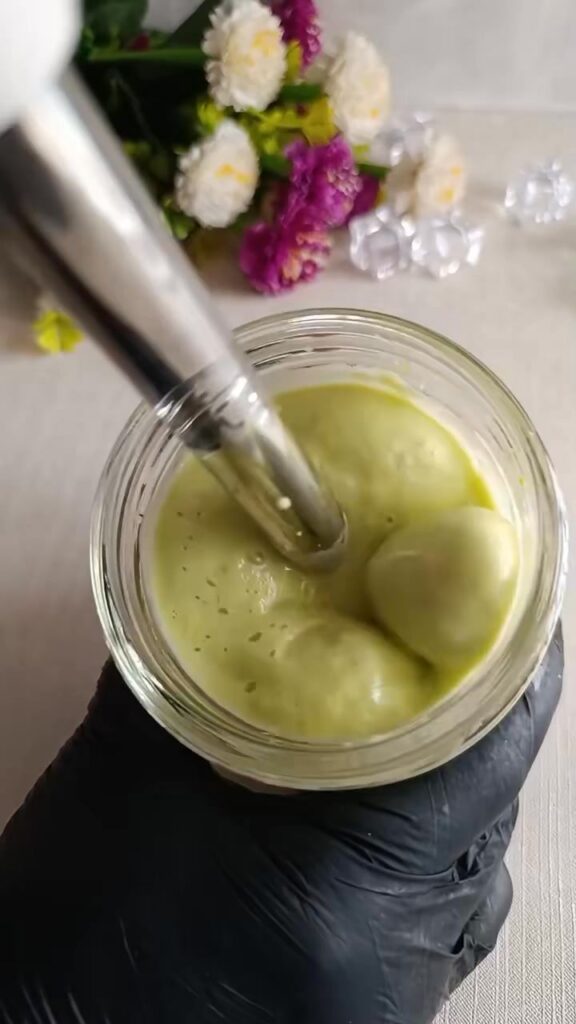
Avocado blends into a thick, pale green paste that coats dry strands with natural fats and moisture without any heat or mixing by hand.
Half a ripe avocado gives enough for shoulder-length hair. An immersion blender in a tall jar gets it completely smooth, which matters: lumps catch and pull when you try to rinse them out.
Apply it to damp hair, section by section, from mid-length to ends.
2. Egg, Yogurt, and Oil Mask
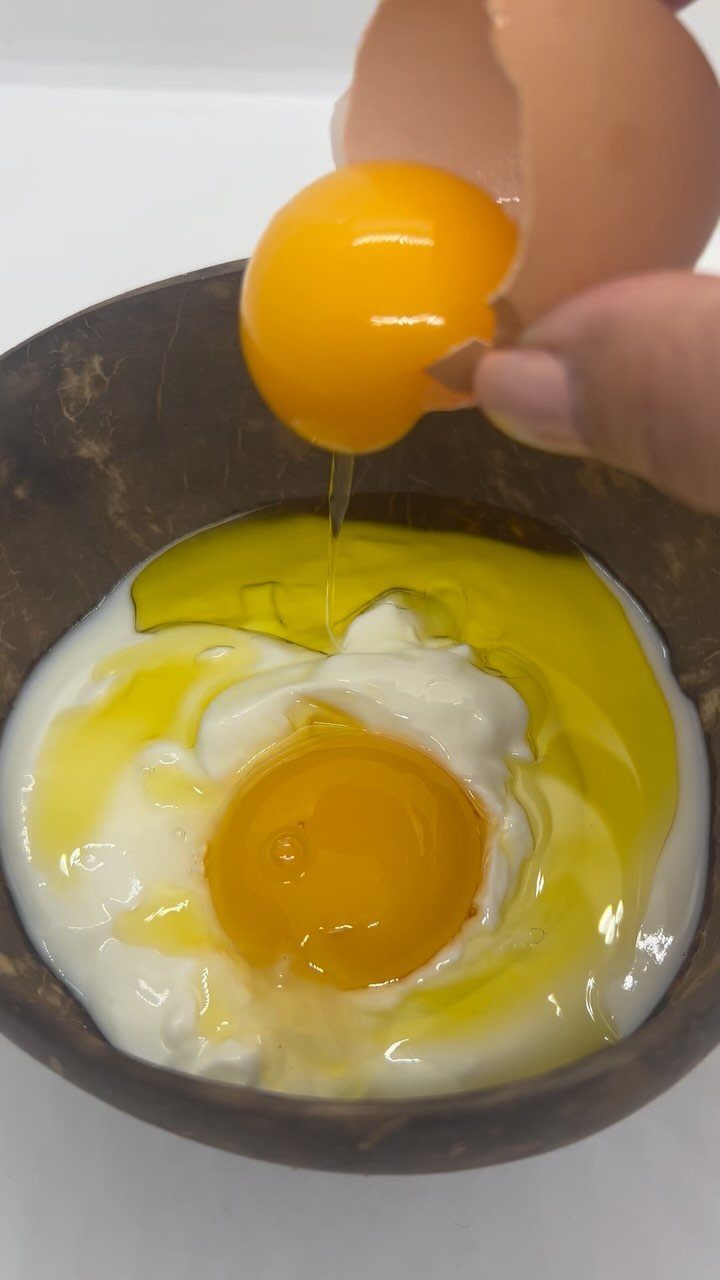
Cracking a raw egg into yogurt and oil pulls 3 different types of nourishment into one bowl: protein from the egg, lactic acid from the yogurt, and fatty acids from the oil.
Whisk until the yolk is fully broken in, otherwise you get yellow streaks that are hard to rinse clean.
Apply to dry or damp hair, focusing on the lengths, and leave it on for 20 minutes maximum. Rinse with cool water only; hot water cooks the egg protein onto the hair shaft.
3. Yogurt and Seed Blender Mask
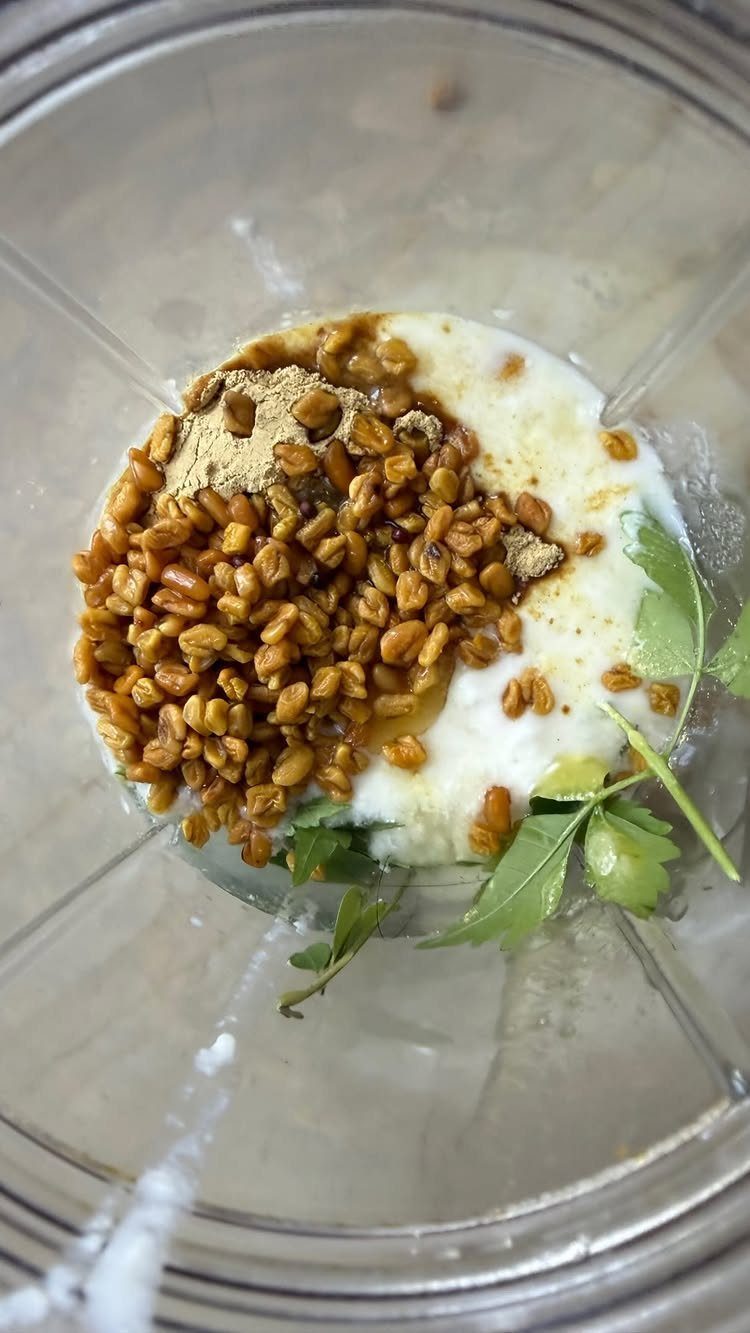
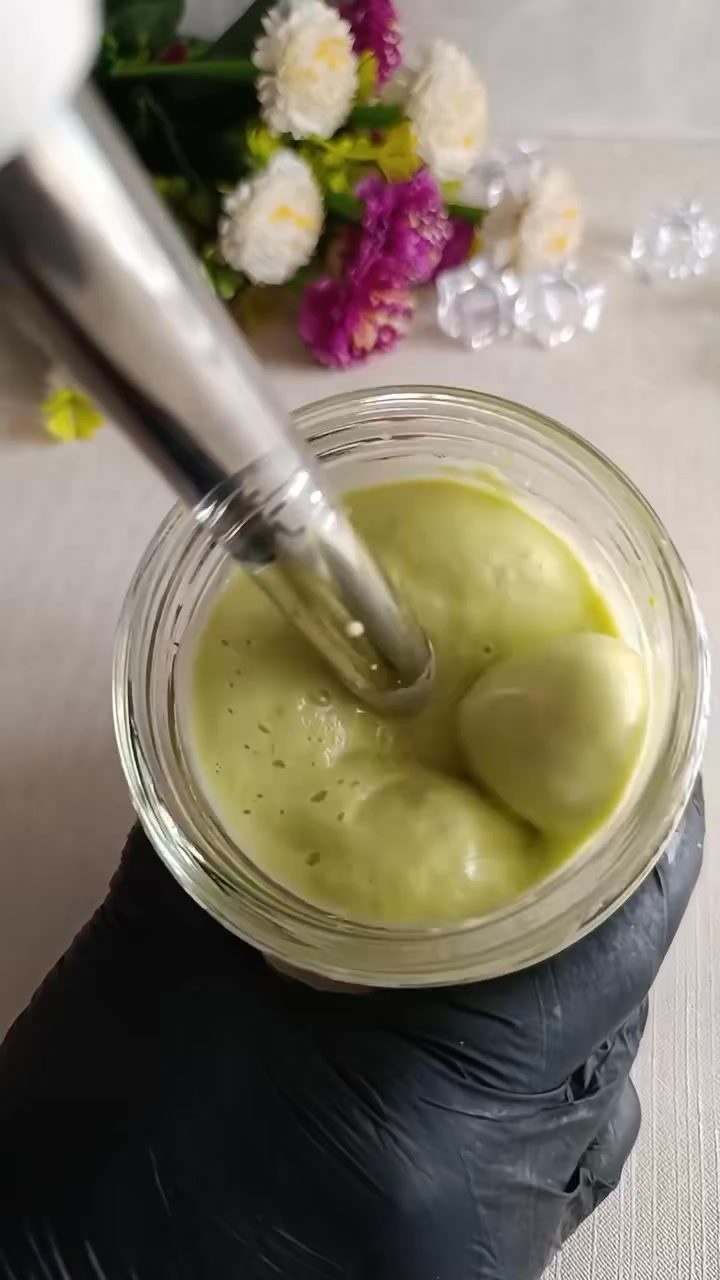
Seeds, powder, and fresh leaves blended into yogurt make a mask with more texture than a simple two-ingredient mix, and the blender jar tells you exactly how it’s made.
The seeds are the interesting part: whole flaxseeds, for example, release a gel when blended that helps the mask cling to hair rather than sliding off.
Blend until the seeds are broken down and the mixture is uniform. Work it through clean, damp hair, then rinse it out well, since seeds can catch in fine hair if the blend is too coarse.
Use Masks with Care
Before applying any mask, do a patch test on a small area of skin, especially with ingredients you haven’t used on your hair before. If you notice redness, itching, or irritation, skip that recipe.
Once or twice a week is enough. Going more often with a heavy, oil-rich mask can leave hair limp or paradoxically dry, since over-moisturized strands lose their ability to hold structure.
Wet hair is fragile, so detangle before you get in the shower rather than after. On damp hair, a wide-tooth comb starting at the ends and working upward causes far less breakage than a brush pulled from root to tip.
Reduce Everyday Hair Damage
Shampooing every other day instead of daily gives your scalp’s natural oils a chance to work their way down the shaft.
Skip the rubbing when you dry off. Wrapping hair in a towel and letting it sit does the same job without the friction that causes frizz and snapping.
Heat is the other big lever. Avoiding back-to-back days with a flat iron, curling iron, or blow-dryer gives hair time to recover.
When you do use heat, a protectant between the tool and the strand is non-negotiable. And the longer you can stretch between coloring, perming, or chemical straightening sessions, the better.
When to Seek Professional Advice
Some softness or shine can show up after a single use. Deeper changes to dry or damaged hair take longer, often several weeks of consistent care.
If you’re not seeing any real difference after a month, it’s worth talking to a professional stylist.
The right mask depends on your hair’s actual condition, and a stylist can assess whether your routine needs adjusting or whether a different kind of treatment makes more sense.
Frequently Asked Questions
Do DIY hair masks really work?
Yes, and the reason comes down to time: leaving a mask on for 20–30 minutes gives hair longer contact with conditioning ingredients than a rinse-out conditioner ever allows.
The extra dwell time matters most for dry, color-treated, or heat-damaged hair, where absorption is slower. Using gentle kitchen ingredients keeps the formula safe for scalp contact.
How do you use a hair mask for dry hair?
Work it through towel-dried hair in small sections, focusing on the mid-shaft and ends, and give it 20 to 30 minutes before you rinse.
Damp hair absorbs the mask better than soaking wet hair, and starting at the ends targets the driest part of the strand.
Which homemade mask works for dry, frizzy, or damaged hair?
Banana is the ingredient that comes up most consistently for frizz, because it’s high in potassium, natural oils, and carbohydrates that help seal the cuticle and lock in moisture.
Blending it with coconut oil adds fatty acids that condition chemically damaged strands. Mash or blend the banana completely smooth before applying, since lumps are hard to rinse out of fine hair.
What is the best hair mask for bleached hair?
Banana and coconut oil make a good first mask to try, since the silica and antioxidants in banana can help revive dye-damaged strands while the fatty acids in virgin coconut oil replace what bleach strips away.
Blend 1 ripe banana with 2 tablespoons of melted coconut oil, apply root to tip, cover with a shower cap for up to an hour, then rinse and shampoo as usual.
Results won’t be instant; consistent weekly use is where the difference shows up.
How often should you use a homemade hair mask?
Most dry hair does well with 1 or 2 masks a week.
Using a heavy, oil-rich mask more often than that can leave hair limp or, counterintuitively, drier over time, because over-moisturized strands lose their ability to hold structure. Fine hair generally does better at once a week than twice.
What’s a good DIY mask for fine, straight hair?
Milk and honey make a good pairing, adding moisture without the heaviness that oils bring to fine, straight hair.
Honey helps strengthen brittle hair and encourages a healthier scalp, while milk brings proteins, amino acids, and vitamins that soften strands without loading them down.
Aloe vera with a small amount of argan oil is another option that adds moisture without greasiness.