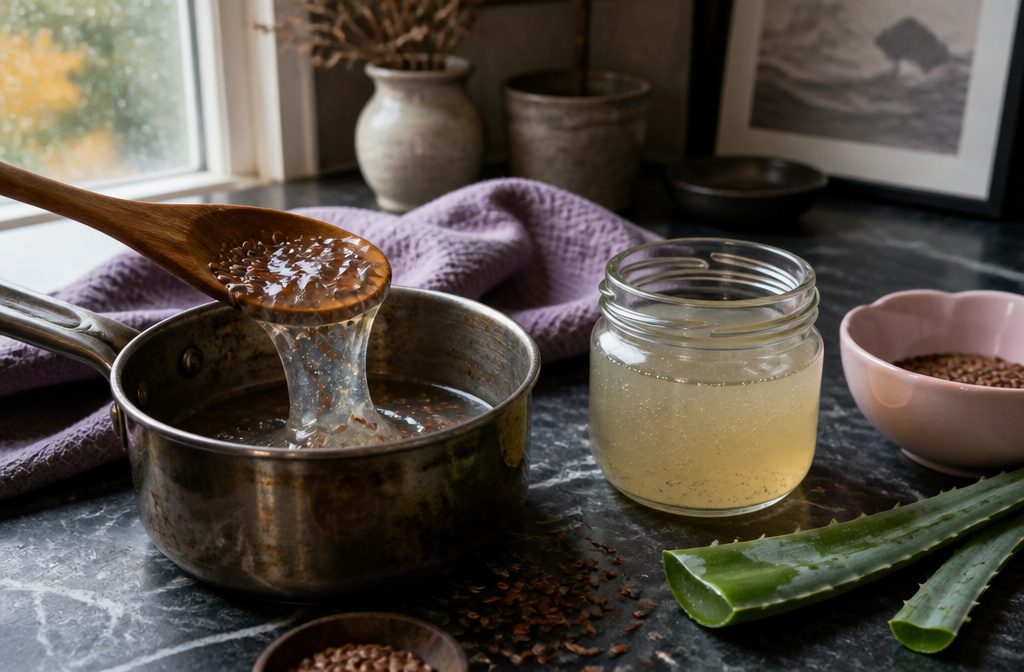
Flaxseed gel gives light-to-medium hold without the crunchy residue of most commercial gels, but it spoils in about two weeks even when refrigerated.
The standard recipe calls for ¼ cup whole flaxseeds simmered in 2 cups water for 7 to 15 minutes, strained while still hot, then cooled before you add optional ingredients like aloe or essential oils.
1. Choose Your Seeds and Water
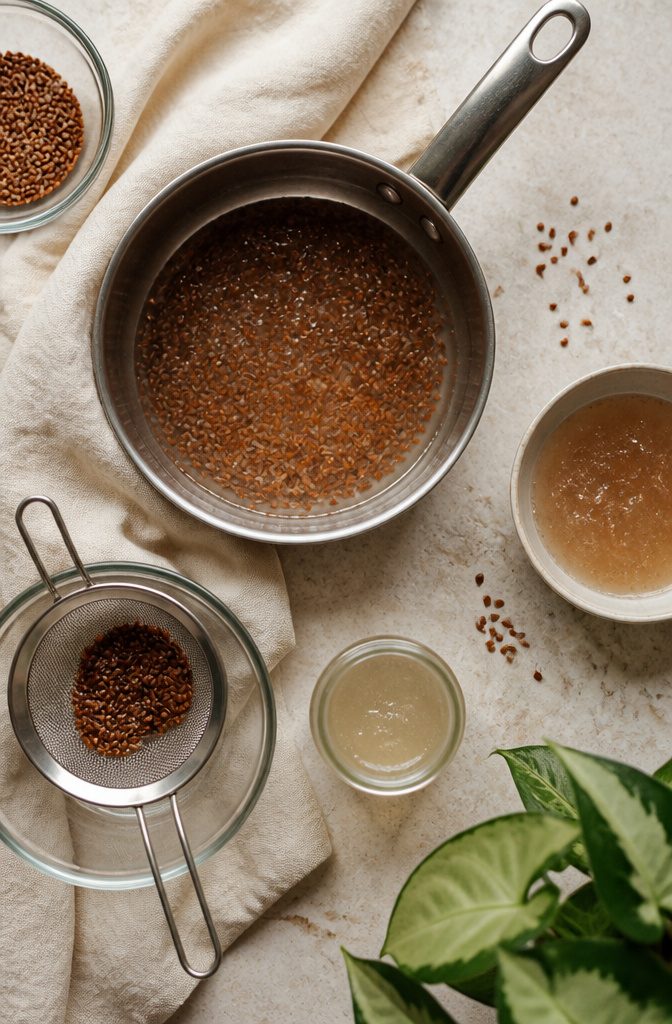
Most sources call for ¼ cup whole flaxseeds with 2 cups water, a ratio that yields a medium-hold gel suitable for most hair types.
A few push it higher: ½ cup seeds to the same 2 cups water produces a thicker, stronger-hold gel, though it can become difficult to strain if simmered too long.
One recipe drops the seed quantity to 5 tablespoons, another specifies brown flaxseeds with 32 ounces distilled water instead of 2 cups.
Whole seeds are the standard choice. One source states outright not to use milled flaxseeds, though at least two describe methods that accommodate ground seeds if that is what you have on hand.
Soaking the seeds for 8 hours before cooking is optional but increases the amount of gel you extract. Distilled or filtered water extends shelf life by reducing additives, though tap water will work if that is what you have.
2. Boil or Simmer Until the Gel Forms
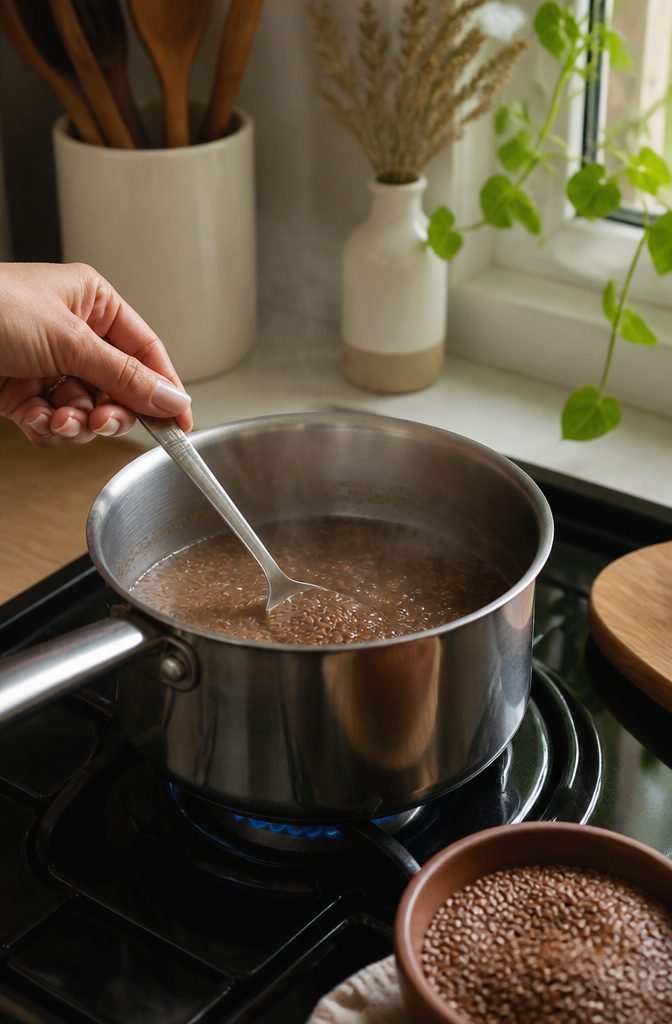
Add the seeds to boiling water or place both in the pot together and heat. Stir occasionally to keep the seeds moving through the water rather than settling and sticking to the bottom.
The mixture is ready when it turns slippery, stringy, and thick, with a texture that streams off your spoon like raw egg white instead of pouring like water.
Most recipes call for 7 to 15 minutes of simmering. A shorter time produces a thinner gel that strains easily, while longer cooking builds thickness.
Thicker gel holds better on coarse hair but turns stubborn when you try to separate it from the seeds, and gels with no added ingredients can flake more once they dry.
I stop before the mixture gets extremely thick, since the gel continues to set as it cools and judging the final consistency while it’s still hot is unreliable.
3. Strain While the Gel Is Still Hot
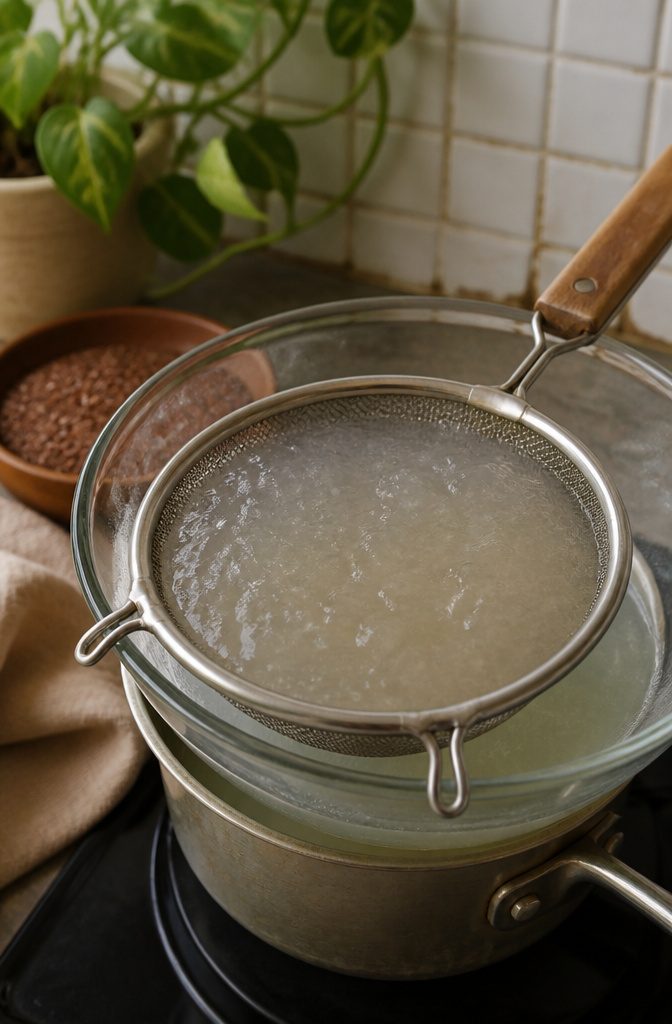
Strain the mixture while it is still hot or just cool enough to touch. A fine-mesh strainer works well.
So does cheesecloth, a nylon stocking, or clean pantyhose. The timing matters because cooled gel thickens and becomes harder to push through the cloth.
Ground flaxseeds sometimes slip through pantyhose openings.
If you see fine particles floating in the gel after the first pass, strain it again through cheesecloth or a cloth strainer. Whole seeds stay behind more easily, so one straining usually does it.
If the gel is already too thick to strain, add a little more water and warm it gently over low heat.
Stir it to loosen, then try straining again. You want it fluid enough to separate cleanly without forcing it through.
4. Cool and Add Optional Ingredients
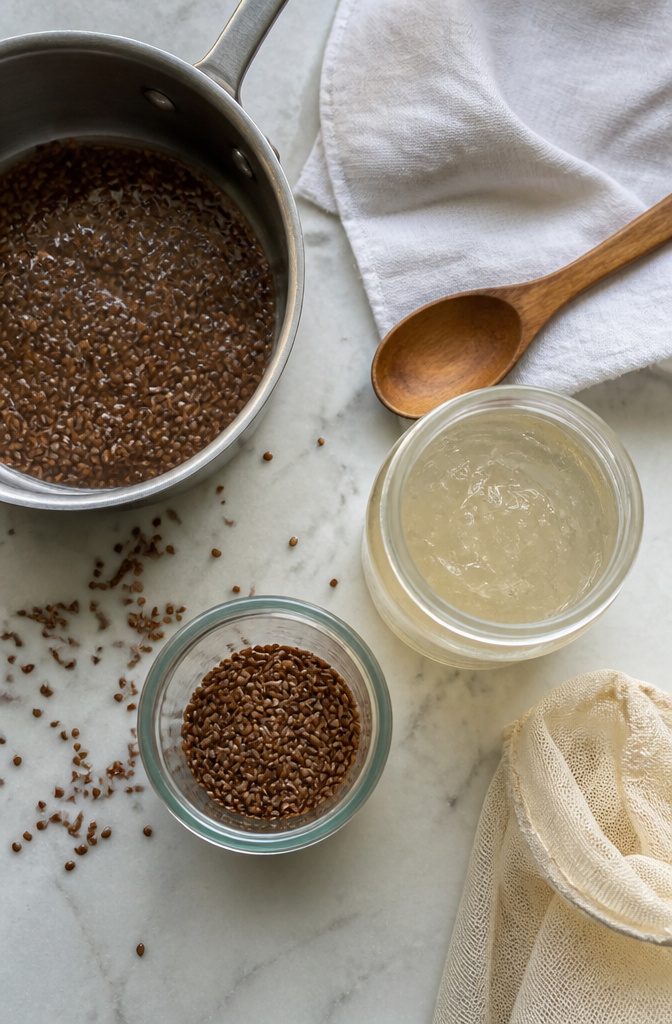
Let the gel cool to room temperature before you customize it. The base is too hot to hold essential oils or aloe without degrading them, and cooling gives you time to decide whether the batch needs anything at all.
I recommend keeping the first batch simple: flaxseed and water alone, nothing else. Every addition changes how the gel behaves on your hair and how long it keeps.
Once cool, optional additions include:
• 1–2 tablespoons aloe vera gel for slip • 1 tablespoon coconut oil for moisture • 5–10 drops rosemary or peppermint oil for scalp circulation • 1 tablespoon honey • 1 teaspoon apple cider vinegar to balance scalp pH • Vitamin E oil from 2–3 capsules • ¼ cup marshmallow root (boiled separately, then strained) • 1 teaspoon xanthan gum for thicker hold
Clove and cinnamon oils can dry skin and hair, so patch test or skip them. Do not treat essential oils or aloe as preservatives.
5. Store the Gel in the Refrigerator or Freezer
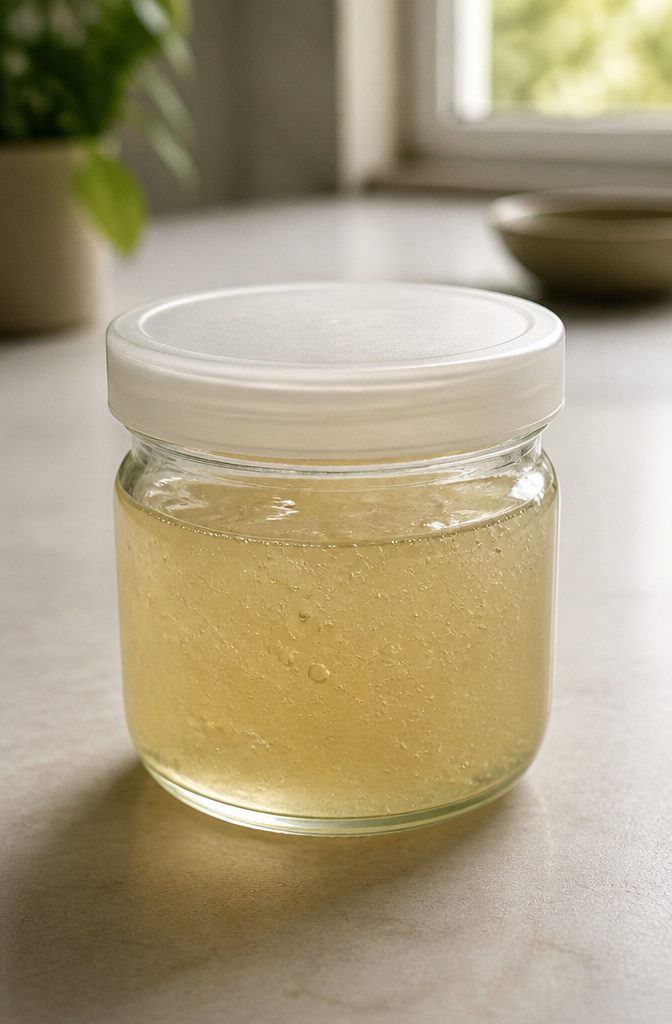
Store the gel in an airtight container in the refrigerator and expect about two weeks before it spoils.
Most batches go off between one and three weeks depending on how clean everything was when you made it, but two weeks is the reasonable planning window.
A jar with a spring-top lid keeps air and bacteria out better than a loose screw cap.
Refrigerate this gel for a much longer shelf life. If you make a lot at once, you can store some in the freezer for up to 6 months.
— wikiHow
Freezing in ice-cube trays means you can make a big batch and thaw one cube at a time without asking the same jar to survive in your fridge indefinitely. Discard any gel that smells off, turns cloudy, or changes texture.
A few drops of vitamin E oil or a splash of vodka may stretch refrigerator life closer to two weeks if you started with one, and some sources suggest essential oils can push it to a month or two, but the safer move is smaller batches or the freezer.
6. Apply to Damp Hair and Style
Apply to Damp Hair and Style
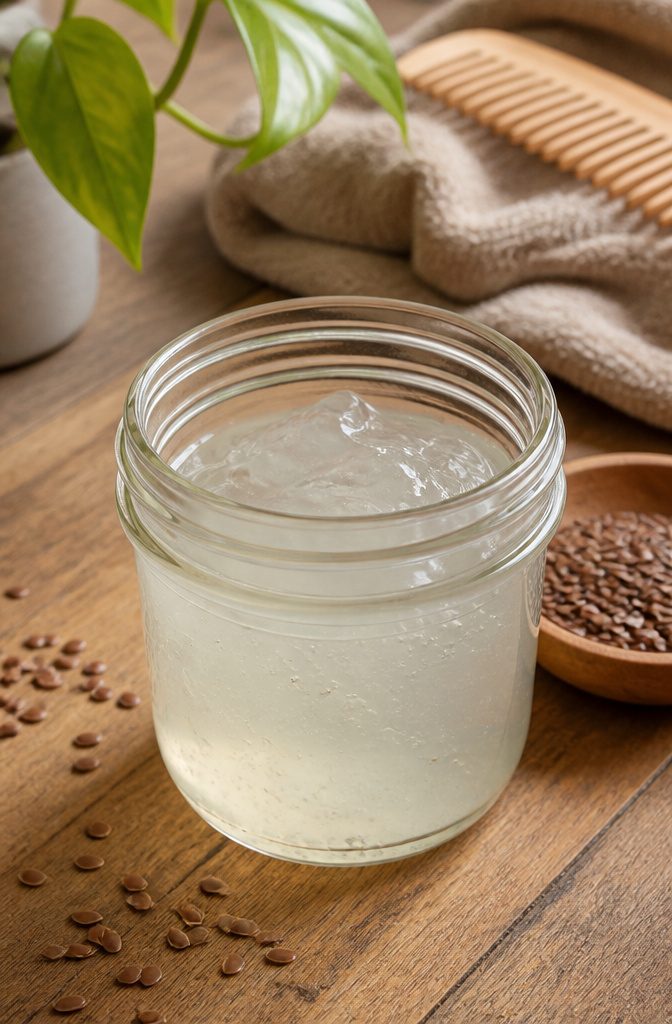
The gel works best on damp or wet hair, where it spreads evenly and gives the strongest definition. After washing, section your hair and work a small amount through from roots to ends with your fingers or a wide-toothed comb.
For curly hair I scrunch it upward to encourage bounce; for straight or wavy hair I smooth it down to tame flyaways and manage humidity. Keep a spray bottle nearby if sections start drying while you work.
Let your hair dry completely before touching it. Homemade flaxseed gel tends to form a soft cast, and breaking that cast while the hair is still damp turns definition into frizz.
Once dry, scrunch gently to release the hold. The gel gives light-to-medium hold depending on how much you apply, so you may need slightly more than a commercial product would call for.
Small amounts can touch up dry hair between washes. For a deep treatment, apply generously to damp hair, cover with a shower cap and leave for twenty to thirty minutes before rinsing.
How It Works on Different Hair Types
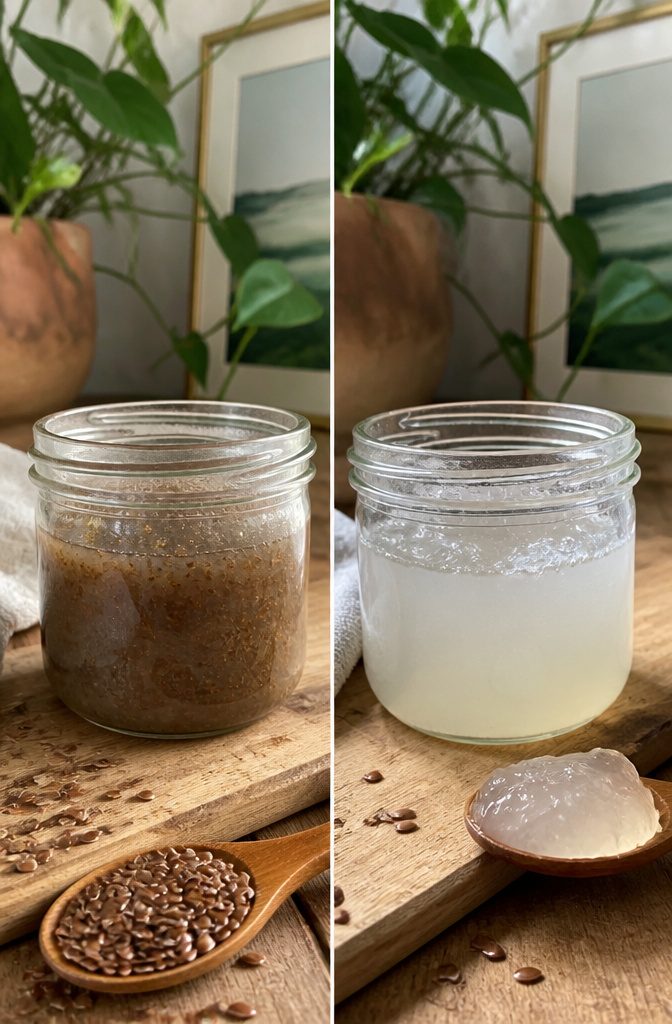
Flaxseed gel delivers softer, more flexible hold than most commercial gels, which makes it better suited to some styles than others.
For twist-outs, braid-outs, finger coils and wash-and-gos where definition matters more than iron grip, it performs beautifully on curly and coily textures including 4C hair.
If you need a highly defined wash-and-go that survives humidity for a week, you may prefer layering flaxseed gel with a stronger styler.
The natural mucilage provides hold without the crunchy residue many find annoying in store-bought gels.
On curly hair, scrunch it in with an upward motion to encourage bounce. On straight or wavy hair, smooth it through to tame flyaways and manage frizz.
You may need slightly more product than you would with a commercial gel to get the same result, and for sleek edges or high-tension styles you will likely still want a firmer gel around the perimeter.
What Ground or Milled Seeds Change
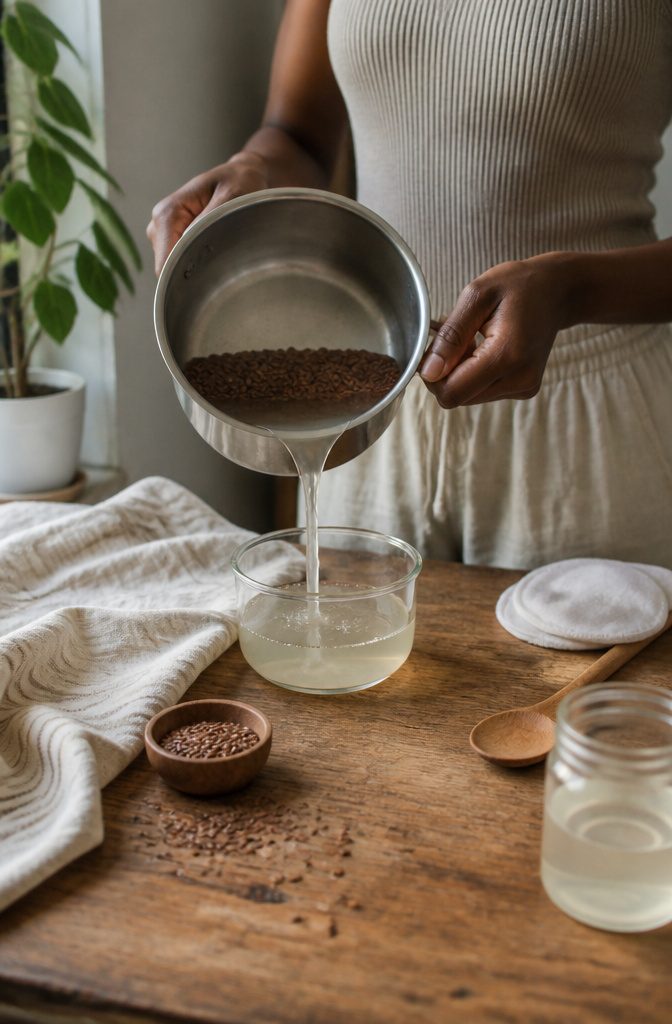
Ground seeds can work, but you’ll need to strain twice.
The standard recipe that calls for whole flaxseeds—¼ cup (37 g) seeds to 2 cups (470 mL) water in a 2–3 US-quart pot—holds when you use ground or milled seeds, but pantyhose alone won’t trap the fine particles that escape during the first strain.
A second pass through a cloth strainer catches what gets through. That extra step adds time and means more gel left behind in the fabric, which is why some recipes call ground seeds impossible and insist on whole.
I’d use whole seeds if you have them, but if ground flaxseed is what’s already in the cupboard, the method still delivers usable gel once you account for the finer mesh you’ll need.
Does Flaxseed Gel Support Hair Growth
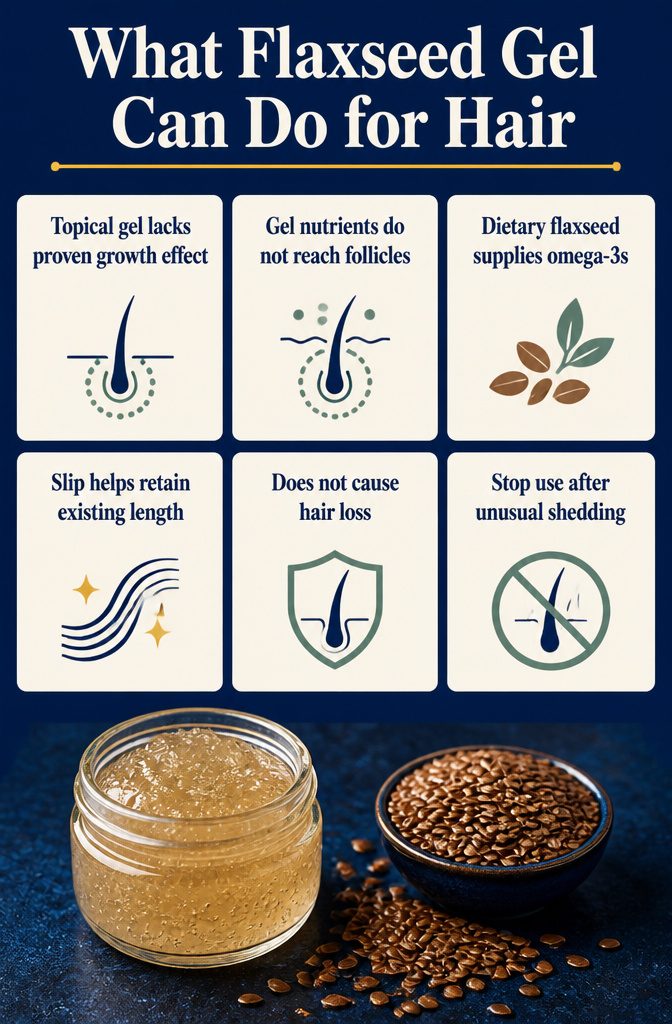
Flaxseed gel is not going to make your hair grow faster.
There is not strong evidence that topical gel directly stimulates follicles or speeds growth, and that distinction matters. Eating flaxseed gives you access to omega-3 fatty acids, lignans, protein and other compounds that may support healthy hair from the inside.
Boiling those seeds in water to make a styling gel is a different story. Growth happens at the follicle, and the nutrients in a topical gel do not reach it the way they would if you consumed the seeds.
What the gel can do is help with length retention.
If your styling product gives slip, reduces rough handling and lets you leave a style alone for days without re-manipulating it, you keep more of the hair you are already growing.
That is not the same as growing more hair, but it is what most of us actually need.
Flaxseed gel does not cause hair loss either.
If you notice unusual shedding after using it, stop and see a dermatologist. Patch test before using it, especially if you have seed allergies or plan to add essential oils.
Homemade Gel Compared With Store-Bought
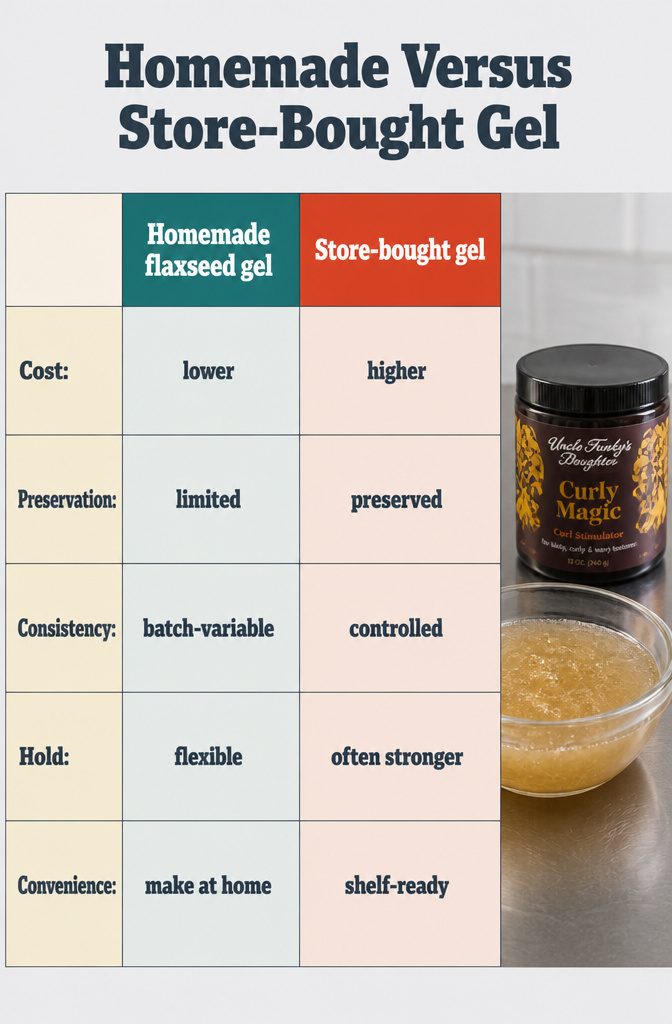
Homemade flaxseed gel wins on simplicity and price. A small bag of seeds gives you several batches for less than the cost of many commercial stylers like Uncle Funky’s Daughter Curly Magic or Camille Rose Curl Maker.
Store-bought gels win on preservation, convenience and consistency. A professionally formulated product includes preservatives, film-forming polymers, humectants and conditioning agents in carefully controlled proportions.
Homemade flaxseed gel can vary from one batch to another depending on the seed variety, water level and cooking time. Homemade gel may also have less hold than commercial gel.
Neither is automatically better. If you love making your products and enjoy flexible hold, homemade flaxseed gel is still one of the best DIY stylers natural hair ever adopted.
If you want stronger hold, predictable results and a product you can leave on your shelf, a commercial styling gel or one of the botanical gel alternatives may make more sense.
Frequently Asked Questions
Can I use milled flaxseeds?
Ground or milled flaxseeds work, but you need to strain the mixture twice.
The fine particles slip through pantyhose or a stocking on the first pass, so run it through a cloth strainer a second time to catch what escapes. Whole seeds are easier because one straining usually does it.
What is the shelf life of flaxseed gel?
Refrigerated flaxseed gel lasts about 2 weeks.
Discard it when it turns cloudy, smells off, or changes texture. Freezing in ice-cube trays extends shelf life to 6 months if you make a large batch.
How long do I boil flaxseed gel?
Simmer for 7 to 15 minutes.
Shorter cooking gives you thinner gel that strains easily, while longer times build thickness and stronger hold. Stop before it gets extremely thick because the gel continues to set as it cools.
Should I apply flaxseed gel on wet or dry hair?
Apply to damp or wet hair for even distribution and the strongest definition. Small amounts can touch up dry hair between washes, but the gel spreads better and holds more reliably when your hair is wet.
How long should you leave flaxseed gel in your hair?
Leave it in all day as a styling product. For a deep treatment, apply generously to damp hair, cover with a shower cap, and leave for 20 to 30 minutes before rinsing.
Can flaxseed gel help with hair growth?
There is not strong evidence that topical gel directly stimulates follicles or speeds growth.
What it can do is help with length retention by reducing rough handling and letting you leave a style alone for days, which means you keep more of the hair you are already growing.
Can flaxseed gel cause hair loss?
Flaxseed gel does not cause hair loss.
If you notice unusual shedding after using it, stop and see a dermatologist. Patch test before using it, especially if you have seed allergies or plan to add essential oils.
My gel mixture is too thick to strain. How do I fix this?
Add a little more water and warm it gently over low heat.
Stir to loosen the mixture, then try straining again. You want it fluid enough to separate cleanly without forcing it through the cloth.