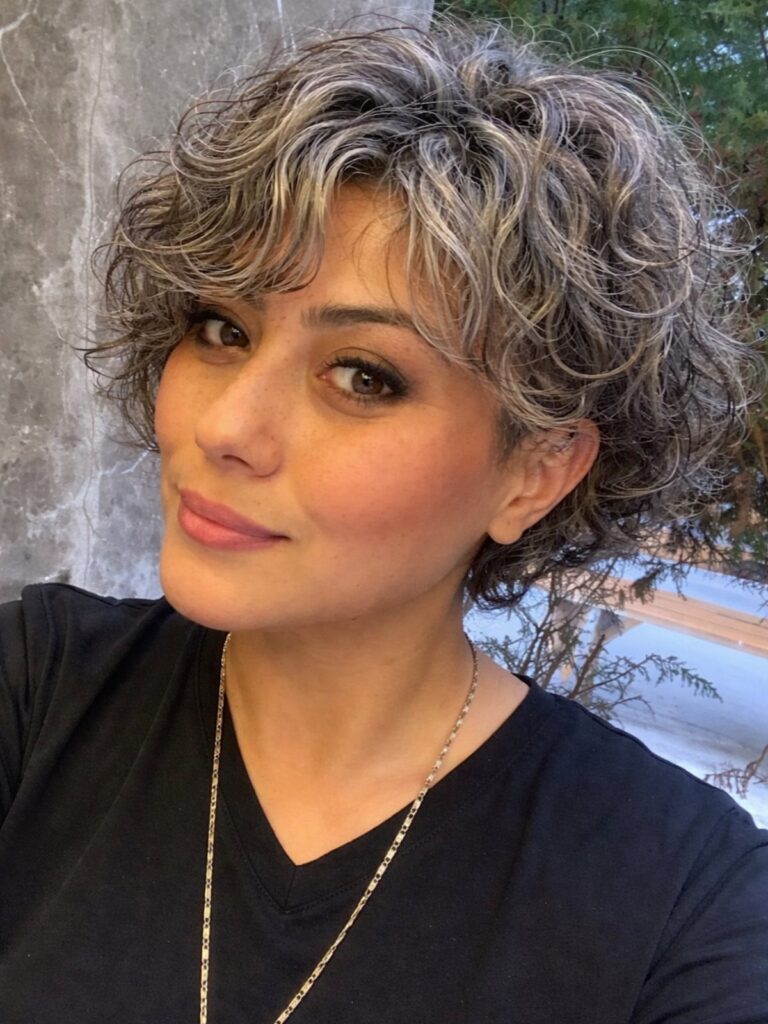
A short layered cut or pixie speeds the process, while salt and pepper waves, visible root grow-out and curly silver bobs each handle the contrast differently as natural gray inches down.
Which path you take depends on how much length you want to keep and how visible you are willing to let the in-between stage be.
Soft layers ease the line on longer cuts, curly texture folds the 2 tones together better than straight hair does, and a colorist can help close the gap between old color and new growth.
1. Short Softly Layered Cut
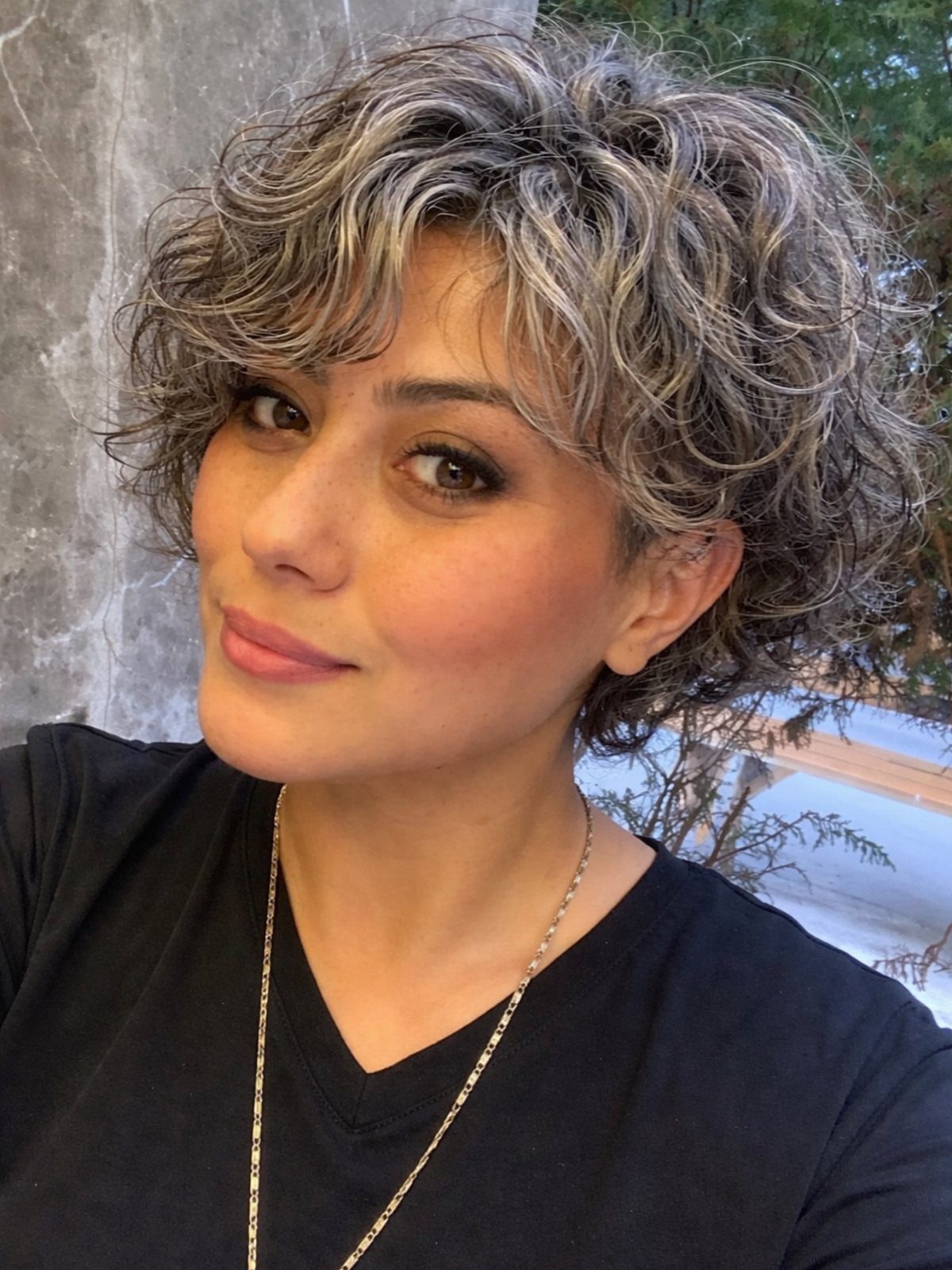
Layers are what make a short cut earn its place in a gray transition.
As new growth comes in lighter at the root and dyed color sits lower on the shaft, the layers fold those 2 tones together rather than leaving a hard line between them.
Ask your stylist to cut softly through the crown and keep some weight at the perimeter.
That shape works just as well on curly hair, because the layers lift volume at the top without removing the structure curl needs to hold its shape.
2. Soft Gray Hair
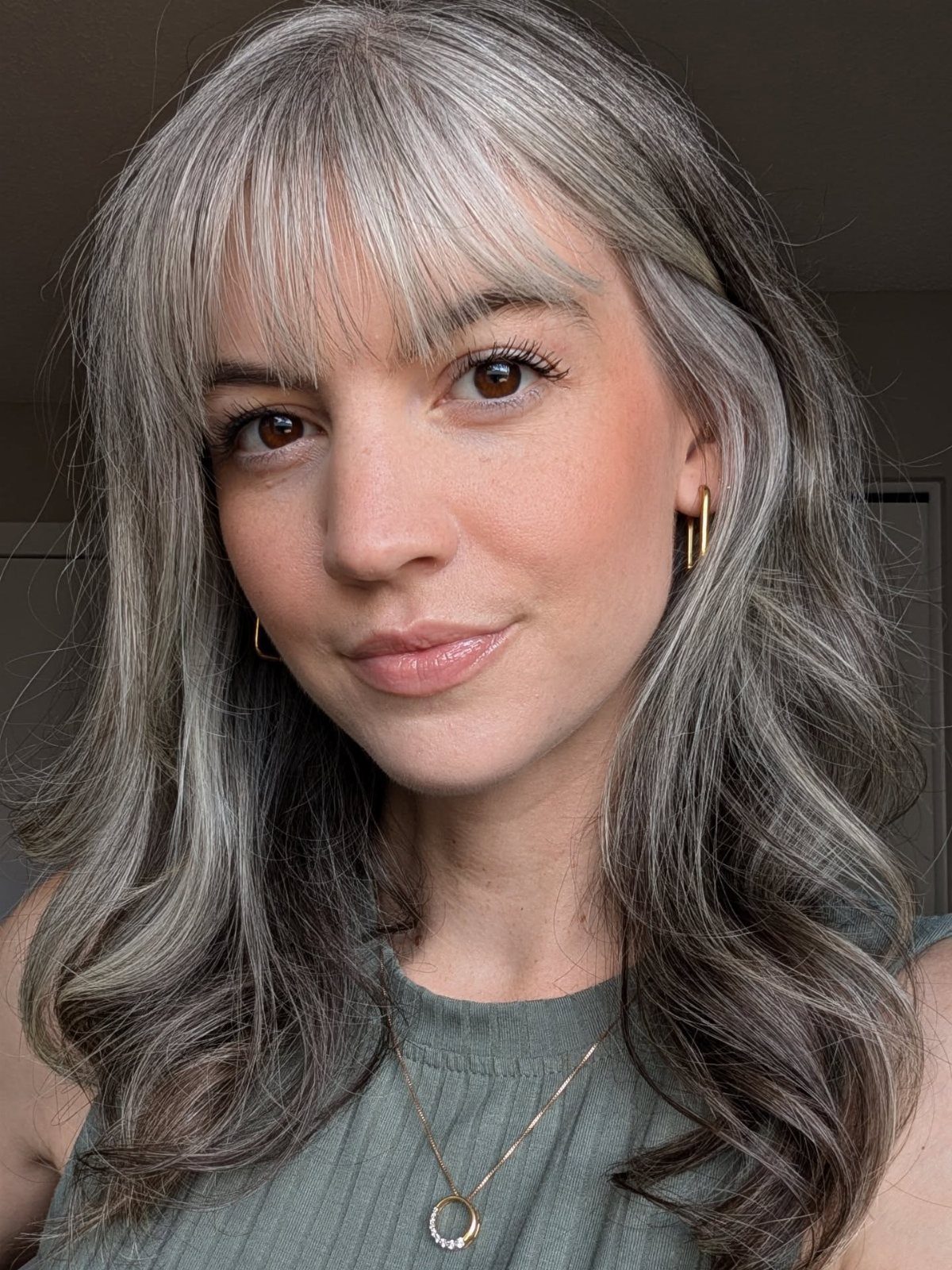
Dyeing dyed lengths to a soft gray or silver shade closes the gap between new growth and old color, so the whole head reads as one deliberate thing rather than two competing ones.
A colorist matches the tone of your incoming gray, which varies from cool ash to warm silver, so the shade chosen matters.
Wavy or straight, shoulder length works well here because enough hair shows to carry the tone without the weight pulling it flat.
3. Stylish Pixie Cut
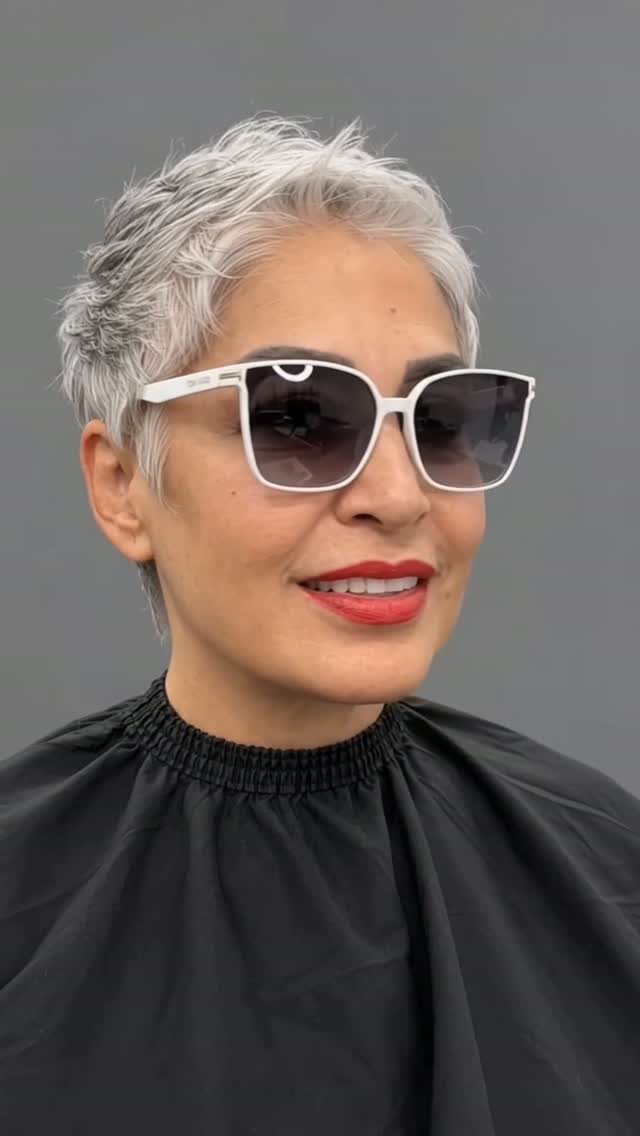
A pixie cuts the transition down to weeks instead of years by simply starting from scratch with short hair.
The silver reads clean and intentional at this length, and you lose the grown-out dye line entirely rather than managing it.
A good pixie also rewards bold accessories.
Ask your stylist to keep length at the crown for softness; a close-cropped nape and temples are what give the shape its edge without reading severe.
4. Long Gray Hair
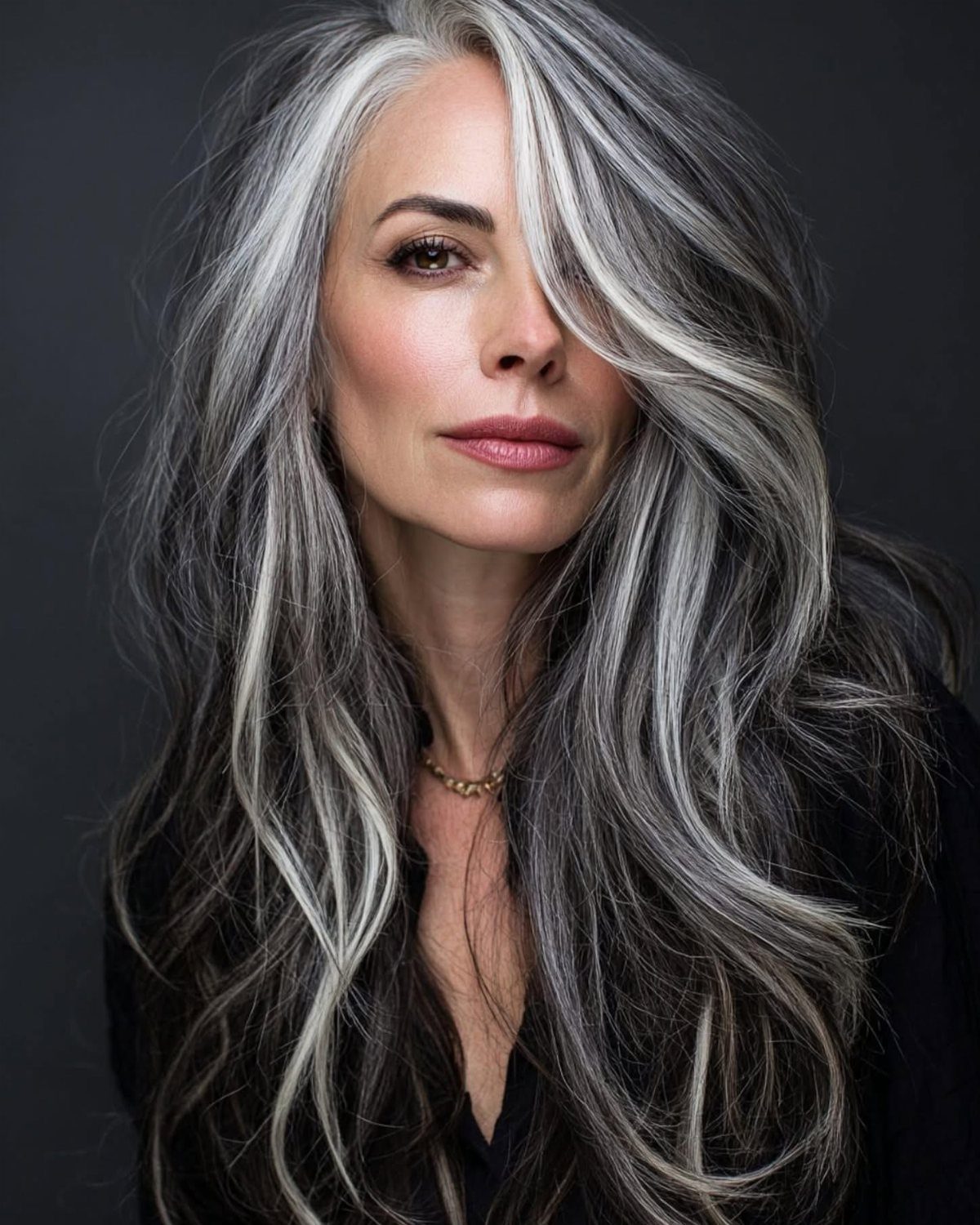
Keeping length through a gray transition is a real option, not a consolation prize for avoiding the chair.
Long hair does ask more of you: gray and silver strands tend to be coarser and drier, so a moisturizing routine matters more than it did before. A deep conditioner used weekly keeps the lengths from looking wiry.
The wave pattern visible here actually helps, since texture reads richer than a flat, fine strand would at the same length.
5. Salt and Pepper Merwaves
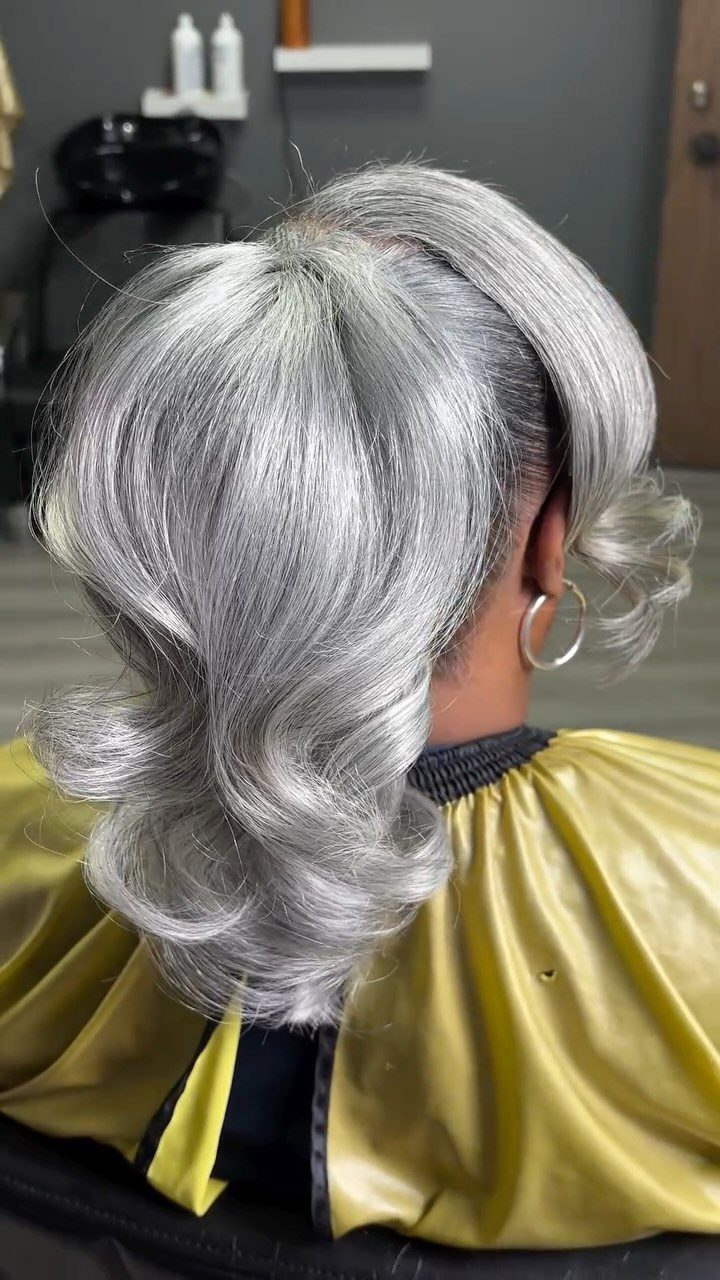
Soft waves are what make a salt-and-pepper grow-out read as styled rather than in-progress.
The movement blends the darker lengths into the lighter new growth better than straight hair does, so the two-tone contrast softens on its own without any color work.
A large-barrel wand or Velcro rollers on dry hair get you there. The wave breaks up the grow-out line at the root without hiding it.
This is probably the easiest style upgrade during a transition if your hair is past your shoulders.
6. Natural Gray Growing in
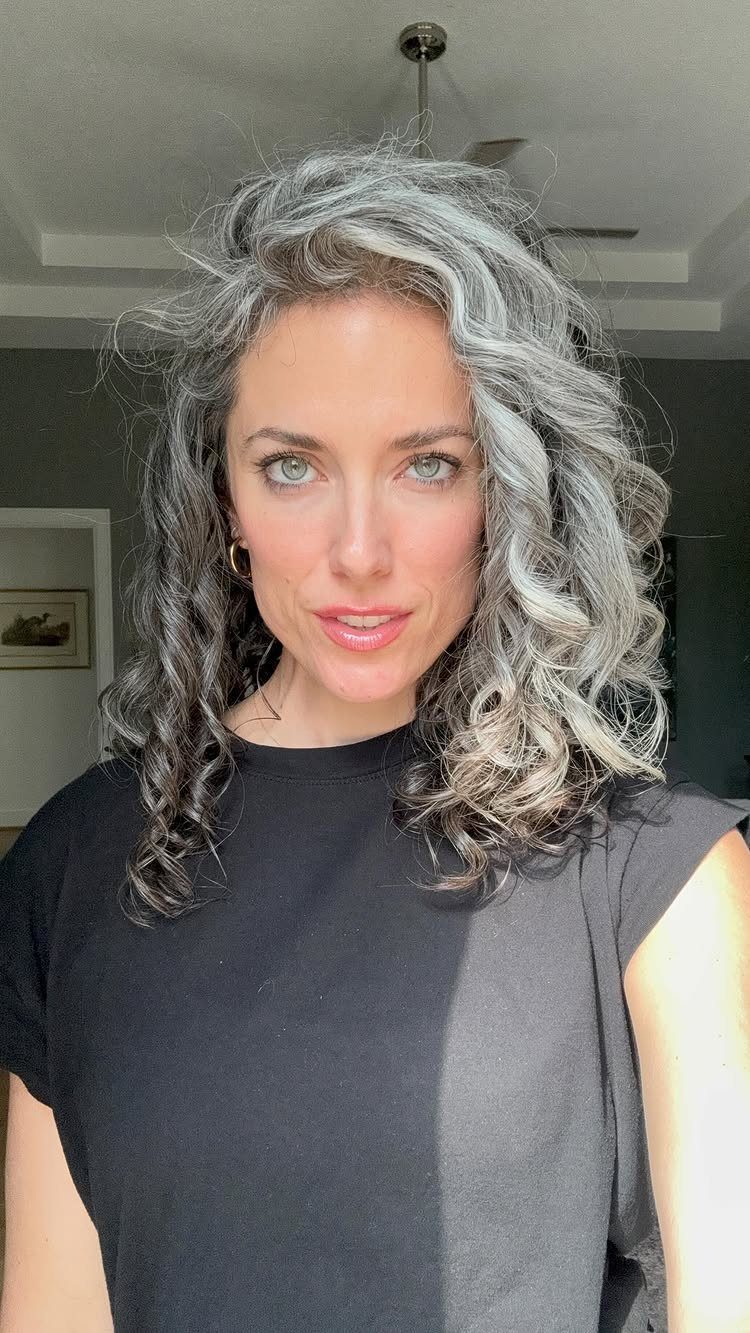
If you stop coloring now, the grow-out is simply time and patience until the dyed lengths can be trimmed away.
Curl blurs the contrast by folding dark and light together instead of laying them in parallel bands.
A good cut matters more than usual during the months in between.
Ask your stylist to shape the curl as it grows, so the silver coming in at the root and the darker lengths below look like one intentional mass rather than two competing ones.
7. Visible Gray Root Grow-out
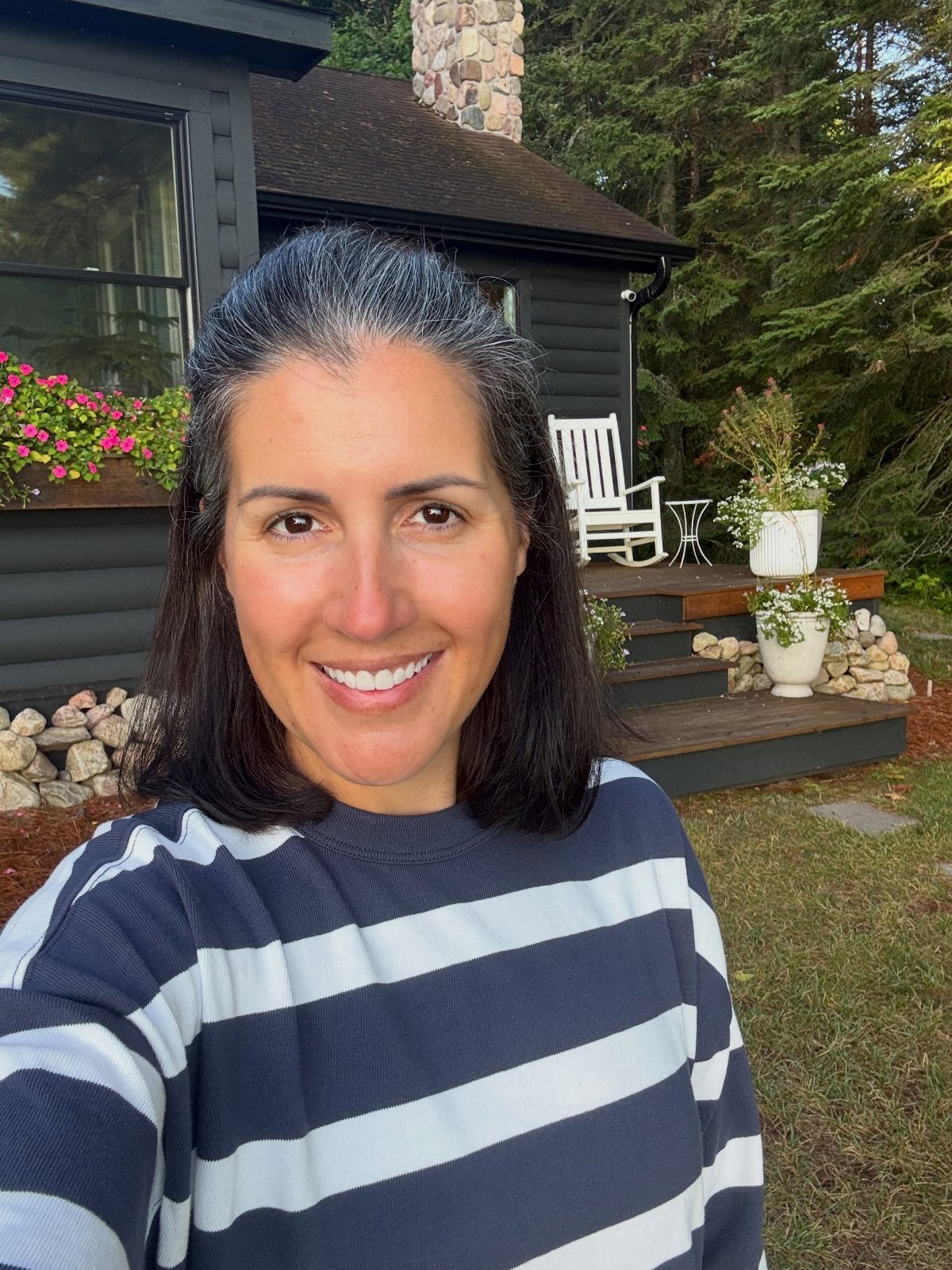
Letting the gray crown show against dark dyed lengths is one of the quieter ways to signal you are done fighting your roots.
The contrast reads intentional rather than neglected when the dyed ends stay healthy and well-shaped. Regular trims keep the line between new growth and old color clean enough that the two-tone reads as a choice.
If the grow-out line feels too abrupt, a colorist can soften it with a few face-framing highlights, which blur the boundary without adding full-head maintenance.
8. Curly Silver and Gray Bob
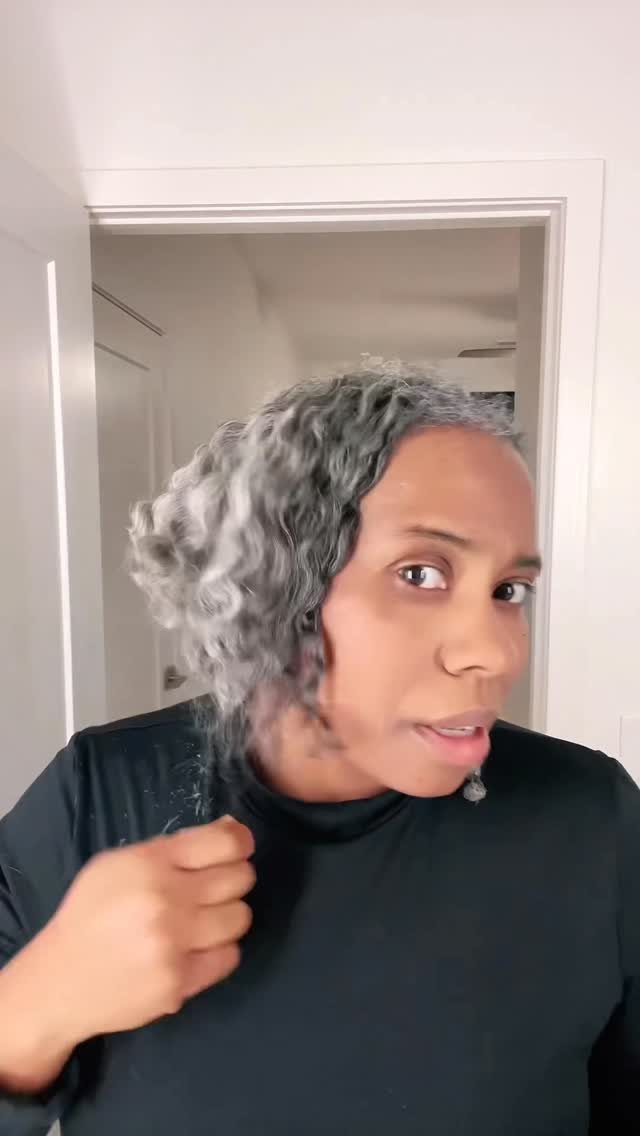
Fully transitioned silver on a curly bob is probably the lowest-upkeep version of this whole transition, once you are through it.
The cut suits the texture because the bob’s weight line keeps the curl from going wide, and the silver reads richer on curly hair than on straight.
Curl-specific styling products, not heat, are what keep this looking intentional day to day.
Transition Takes Patience
The grow-out phase takes months, sometimes over a year depending on where you started and how much length you want to keep.
Hair grows about half an inch per month, so if you have 6 inches of dyed ends and want to cut as little as possible, you are looking at a year before the color is entirely gone.
During that time, the line between gray roots and dyed lengths can look like overdue maintenance rather than a deliberate transition.
There is no way to speed up how fast hair grows, so the only real options are to manage the visual contrast with color work, cut the dyed hair away faster, or accept that the in-between stage simply looks in-between.
But the age you start graying and how long it takes to have a full head of gray hair can vary a lot. Some people go fully gray within 10 years of their first grays.
Consult a Colorist
A stylist familiar with gray transitions can shape a cut that suits your face and blends the 2 tones as they grow, or map out a color plan that softens the line between old dye and new growth.
Not every colorist is comfortable with gray work. Some still default to covering it, so if the first conversation does not feel right, ask someone else.
The right stylist will talk through whether a blended dye job, strategic highlights, or a shorter cut makes sense for your hair type and how much maintenance you are willing to take on during the months it takes to grow out.
Gray Hair Care
Gray hair tends to be drier and coarser than pigmented hair, because the scalp produces less oil as the follicle ages. That makes it more prone to breakage and gives it a duller surface.
Shampoo and conditioner with violet or silver tones prevent the yellow cast gray can develop over time.
Regular trims matter more than usual, since brittle ends snap off easily and make the whole head look ragged.
Blow-drying rather than air-drying also helps, because gray hair does not reflect light the way pigmented hair does and can look flat when left to dry on its own.
Frequently Asked Questions
How to gradually go gray?
Most people need 8 to 18 months to grow out a full dye job, because hair adds roughly half an inch each month and you’re waiting for every dyed inch to reach scissor length.
You can soften the line between new gray and old color with strategic highlights, speed things up with a shorter cut that removes dyed ends faster, or simply wait it out while regular trims keep the shape clean.
What causes grey hairs to grow?
Your hair turns gray when the melanocyte cells inside each follicle slow down or stop making melanin, the pigment that gave you your natural color.
Aging is the main cause, but certain medications, conditions like alopecia areata, and genetics also affect melanin levels.
How to Know if You Should Let Your Hair Go Gray?
If you’re already seeing a stripe of silver at your part or bright threads through the top, you’re closer to a full gray head than you think, and growing it out means you stop chasing that line every few weeks.
Being tired of the dye cycle or wanting to age naturally are both good reasons to stop fighting it.
Does stress cause gray hair?
Stress can affect pigment-producing cells and trigger gray hair, though the color change happens before the hair grows out rather than overnight.
Once the stress lifts, a few of those gray strands can revert to their old color as the follicle starts making pigment again.
Can you prevent or reverse gray hair?
Age-related graying cannot be stopped. Treating a vitamin deficiency or other underlying cause may slow new gray growth, but once a strand has turned gray for other reasons, it will stay that way.