Infused oils take anywhere from 2 hours of gentle heat to several weeks of passive steeping, depending on which method you pick.
If you want the oil directly on your scalp without greasy fingers, a comb applicator bottle parts your hair in rows and keeps the mess contained.
Jojoba and grapeseed rinse cleanest on fine or oily hair, while sweet almond and avocado work better for thick, dry strands that can handle the weight.
Each recipe below uses dried plant material and a carrier oil, though storage life and precautions vary by ingredient and how you make it.
1. Comfrey Leaf Infused Hair Oil
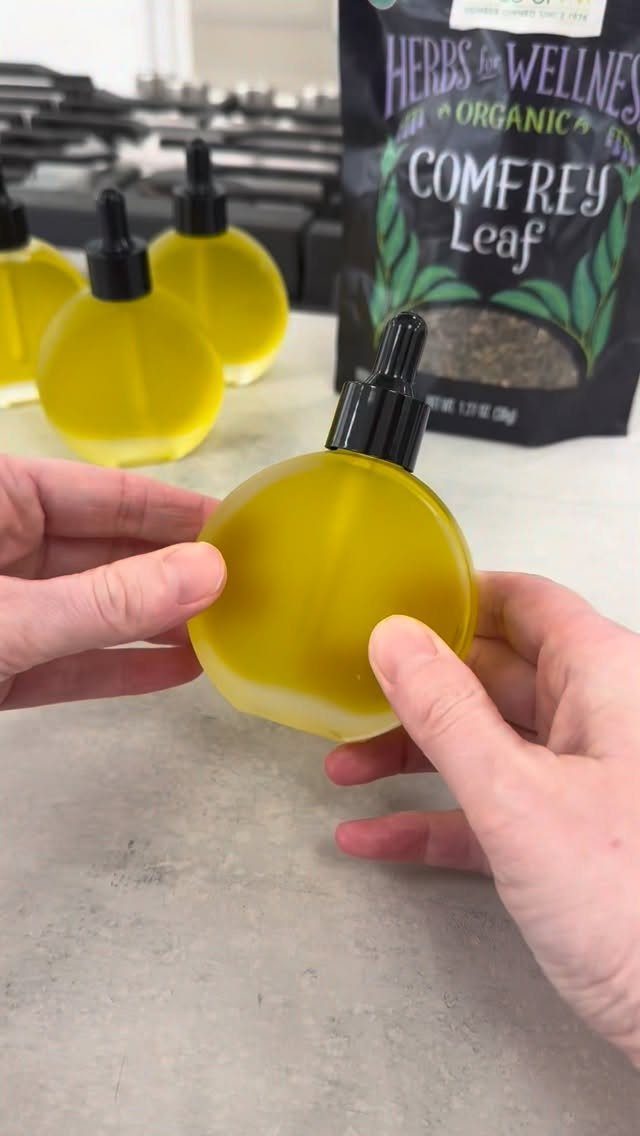
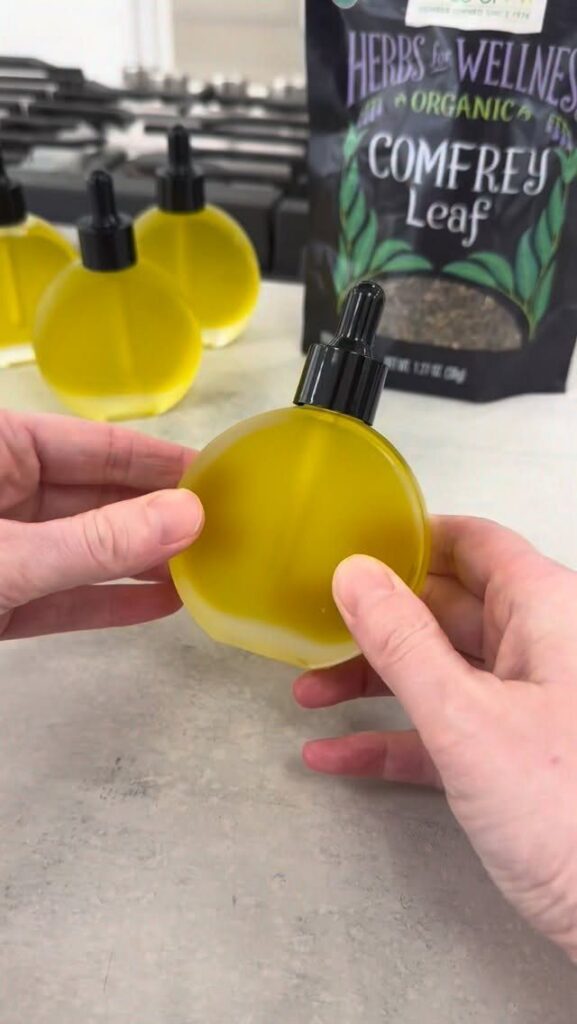
Comfrey leaf infused oil uses dried comfrey steeped in a carrier oil to pull out compounds traditionally used for scalp and strand care. It takes a bit of patience but needs only 2 ingredients.
Fill a jar with dried comfrey leaf, cover with a carrier oil like jojoba or sweet almond, cap it and place the jar in a water bath on low heat for 2 to 3 hours, stirring every 30 minutes.
Strain out the plant material and pour the finished oil into dropper bottles.
This gentle heat method speeds the infusion without scorching the oil. Apply it to your scalp or lengths before washing.
2. Floral Petal Infused Botanical Oil
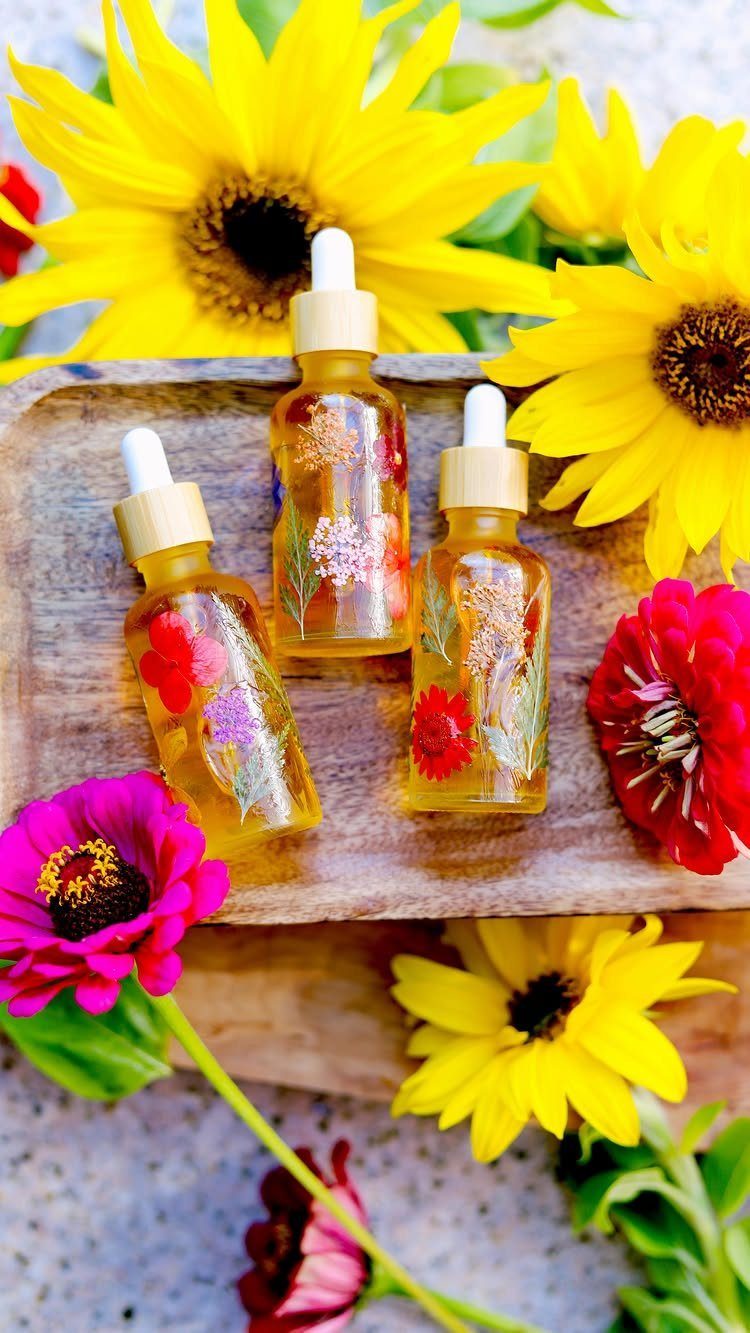
Infusing dried flower petals into oil gives you a botanical blend that smells like summer and adds shine. Sunflower petals, rose and calendula all work, and the process is straightforward.
Place dried petals in clean glass bottles, cover them with your carrier oil of choice and let the mixture sit in a cool, dark spot, shaking every few days until the oil takes on the scent and properties of the petals.
Strain and rebottle. The creator behind this version applies hers 1 to 2 times a week, leaving it in overnight for 8 hours before washing out.
The slow infusion pulls color and scent into the oil without heat, and the result is soft, shiny hair.
3. Scalp Oil in Comb Applicator Bottle
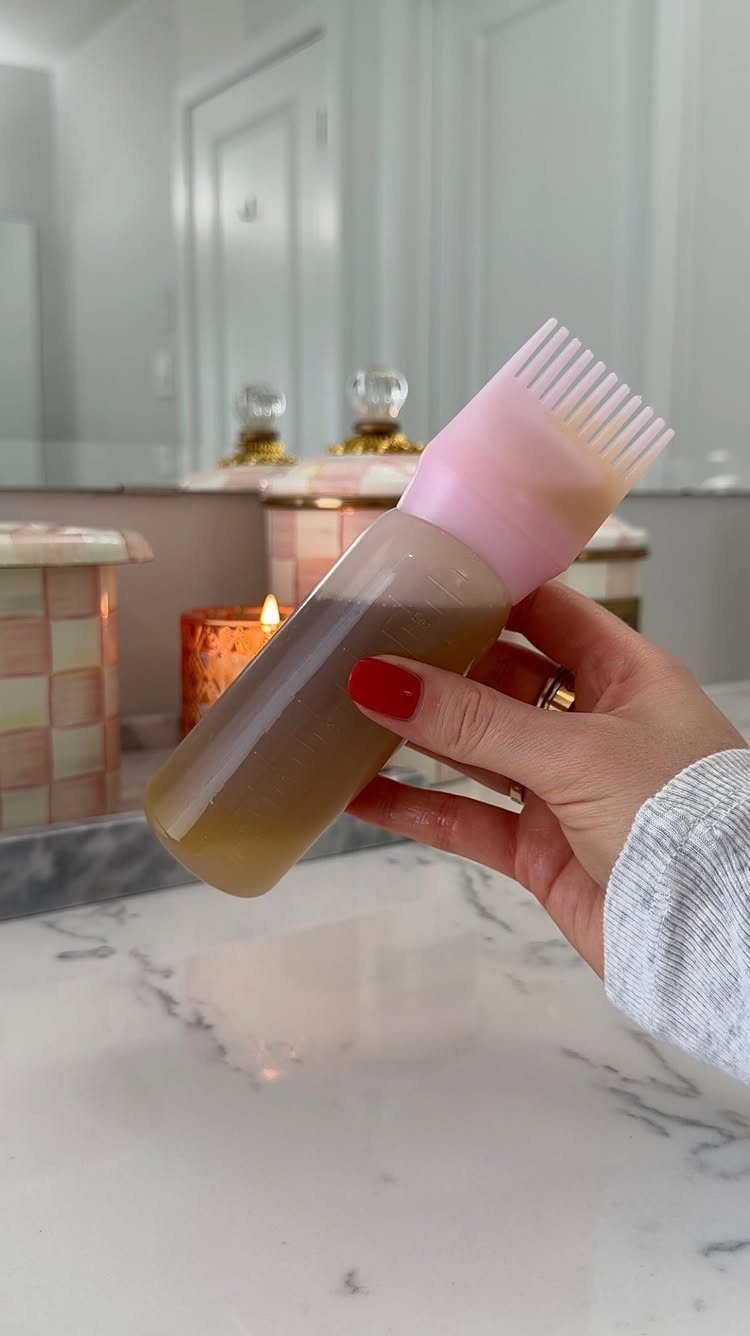
A comb applicator bottle lets you part sections and distribute oil directly onto your scalp without greasy hands or wasted product. The bottle holds your homemade oil blend, and the comb tip controls where it goes.
You can find comb applicator caps online that fit standard bottles, or buy empty bottles already fitted with one.
Fill with your preferred oil recipe and comb through your scalp in rows, massaging as you go. One creator has used this setup bi-weekly for over 2 years and calls it essential.
It keeps application clean and targeted, especially helpful if you have thick or textured hair.
4. Layered Scalp Oil with Applicator Brush
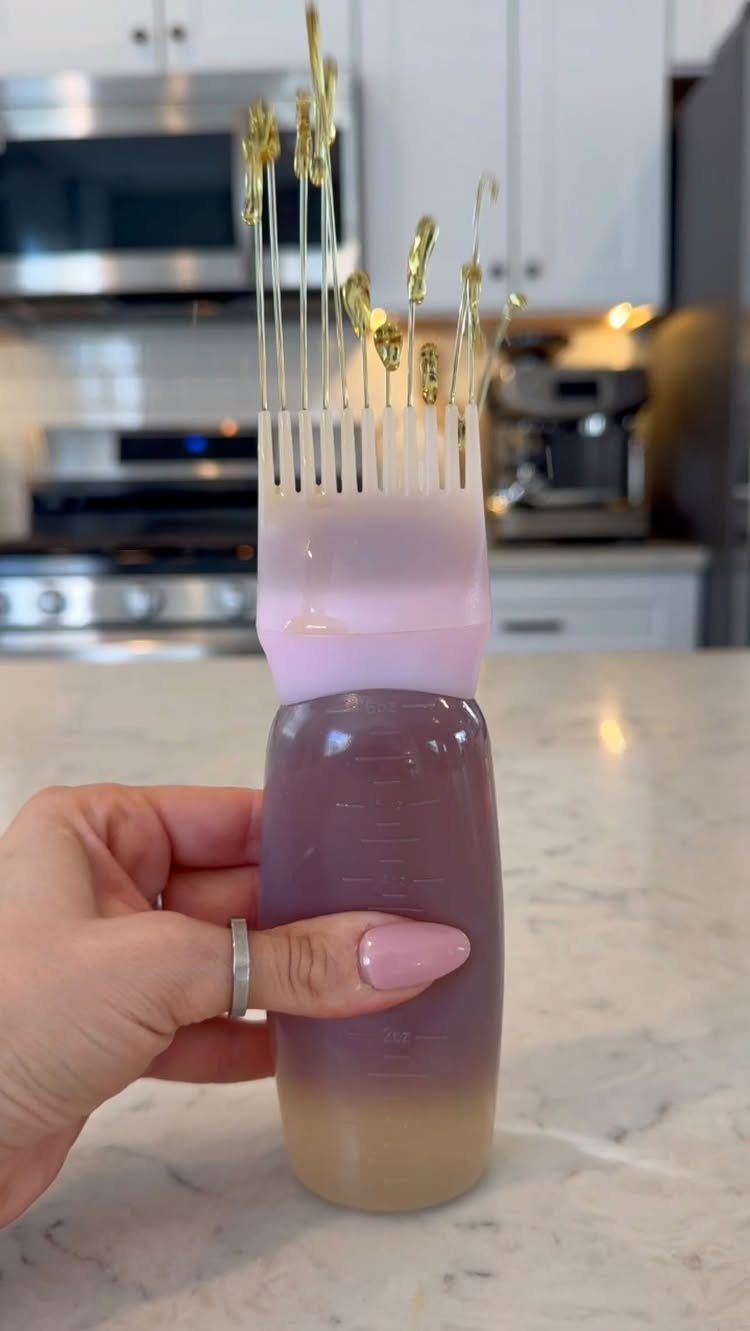
A dual-layered oil uses 2 oils that do not fully mix, giving you a visible separation of color and sometimes different benefits in one bottle.
The pink scalp massage brush cap makes application feel like a spa treatment while working the oil into your roots.
Shake before each use to blend the layers temporarily, or apply them separately by tipping the bottle. The brush stimulates your scalp as you apply, which feels good and helps distribute the oil evenly across your head.
Storage and Shelf Life
An amber or cobalt bottle shields the oil from light that breaks down the active compounds. Store it somewhere cool and dark, out of direct sun.
Most infused oils stay good for approximately 6 months, though blends with essential oils may hold up closer to 6–12 months if stored properly. If your oil starts to smell rancid or off, toss it.
Label each bottle with the date you made it and the ingredients inside. That way you can track which blend worked best and when it’s time to make a fresh batch.
Choosing Oil for Hair Type
Fine or oily hair does better with lighter oils that won’t weigh it down.
Jojoba and grapeseed both rinse clean and feel less heavy on the scalp. Jojoba’s waxy structure sits closer to water-soluble than most oils, so it rinses cleaner.
Thick, dry, or coarse hair can handle richer carriers.
Almond, avocado, and argan all add moisture without feeling thin. Curly or coily hair responds well to sweet almond mixed with castor for slip and definition.
If your scalp runs oily, concentrate the treatment on mid-lengths and ends, or cut back the frequency. Argan is another option for fine hair that still wants the benefits of an oil treatment.
Essential Oil Precautions
Essential oils are highly concentrated, and putting them directly on your scalp at high levels can cause irritation or burns. Always dilute them in a carrier oil first.
If you have a sensitive scalp, start with 2 drops per tablespoon and test your tolerance before going stronger.
Stop using any blend that stings, itches or irritates.
Frequently Asked Questions
What to add in homemade hair oil?
Pick a carrier oil that suits your hair type, then drop in a few essentials if you like the way they smell or the claims behind them.
Keep essential oils to 2 drops per tablespoon of carrier for sensitive scalps, or up to 3–5 drops per tablespoon for stronger blends.
You can also infuse dried herbs like comfrey leaf or flower petals directly into the carrier oil for a botanical treatment without essential oils at all.
Which essential oils are good for hair regrowth?
Rosemary oil shows up in studies alongside minoxidil, pushing blood flow to the follicle and nudging dormant strands back into growth.
Lavender helps regenerate new skin cells, peppermint stimulates the scalp, and cedarwood balances oil production while promoting growth. Dilute any of these in a carrier oil before applying them to your scalp.
Which 7 oils are good for hair growth?
Coconut slips inside the hair shaft and fights bacteria, jojoba mirrors your scalp’s own oil, argan brings vitamin E and fatty acids, and castor coats each strand in a thick, strengthening film.
Sweet almond works well for curly or coily hair when mixed with castor, avocado adds moisture for thick or dry hair, and grapeseed is light enough for fine or oily hair.
Pick based on your hair type rather than trying to use all of them at once.
How long does it take to see results from DIY hair oils?
You’ll feel softer hair and a calmer scalp inside a month if you stick to a schedule. Length takes longer because hair adds about half an inch every 4 weeks, so real progress shows up closer to the 2-month mark.
Can I mix different recipes or add ingredients to these DIY hair oils?
Yes, you can customize based on your hair’s needs and what you have on hand.
Keep essential oils under 3% of the total volume, and patch-test anything new on your inner arm before you massage it into your scalp. Mixing carrier oils is straightforward, but always dilute essential oils properly and watch for any irritation.
Are these DIY hair oils suitable for all hair types?
Nearly every recipe here can work for any texture if you swap the carrier to match.
How should I store my homemade hair oils?
Dark glass keeps light from breaking down the oils, so pour your batch into an amber or blue bottle and tuck it somewhere cool.
How often should I use this hair oil?
Once a week is enough to start; if your hair feels dry or the ends are splitting, go up to 2 or 3 sessions.
Work it through damp strands so it spreads easily, then leave it for 30 minutes minimum or sleep in it if you want deeper penetration. Consistency matters more than frequency, so pick a schedule you can stick to.





