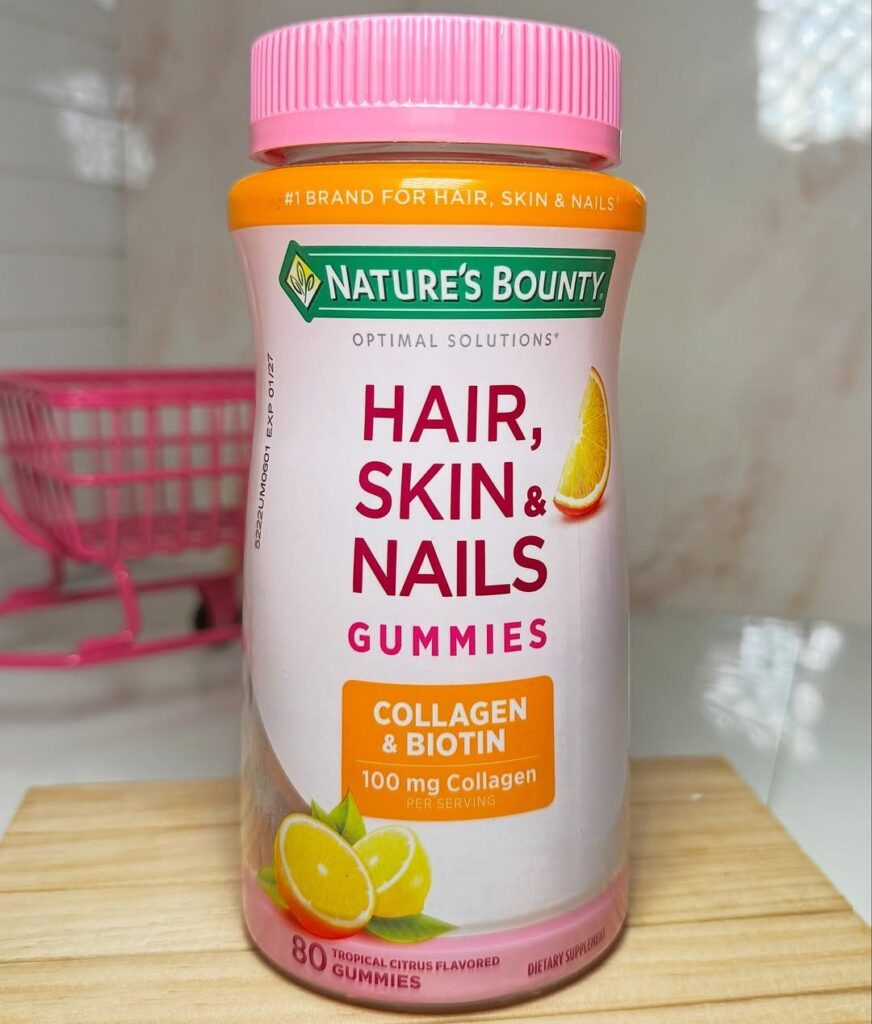
The options here run from single-ingredient 2500 mcg biotin gummies to a multivitamin format that adds zinc and vitamin D to the mix. Consistency over 3–6 months is what any of these require before visible results are a fair expectation.
1. Biotin Gummies
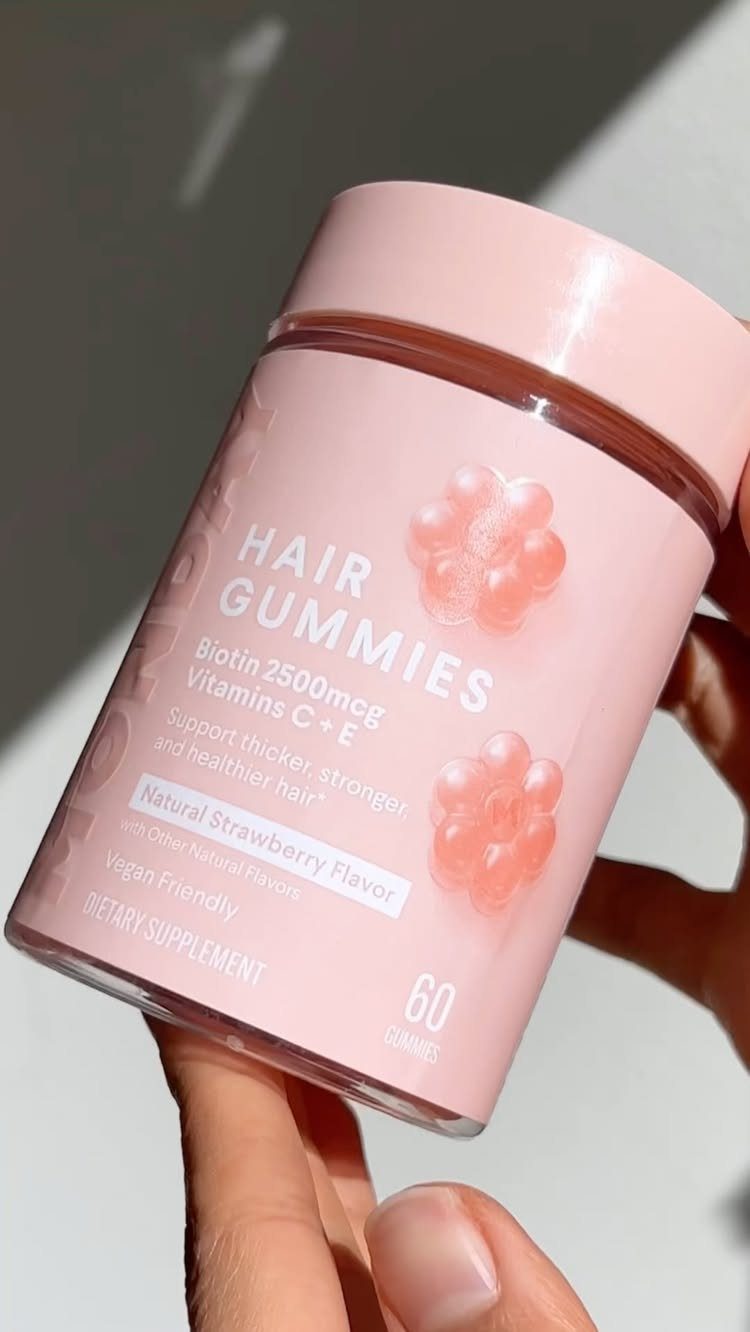
Biotin is the ingredient most gummy hair supplements lead with, and 2500 mcg is a common dose you’ll see on bottles like this one.
The evidence for biotin is strongest in people who are actually deficient, which is rarer than the marketing implies. If your diet already covers it through eggs, nuts, or meat, a top-up may not move the needle.
That said, biotin gummies are widely available, tend to be affordable, and pair here with vitamins C and E, which support scalp circulation and oxidative stress respectively.
2. Collagen Gummies
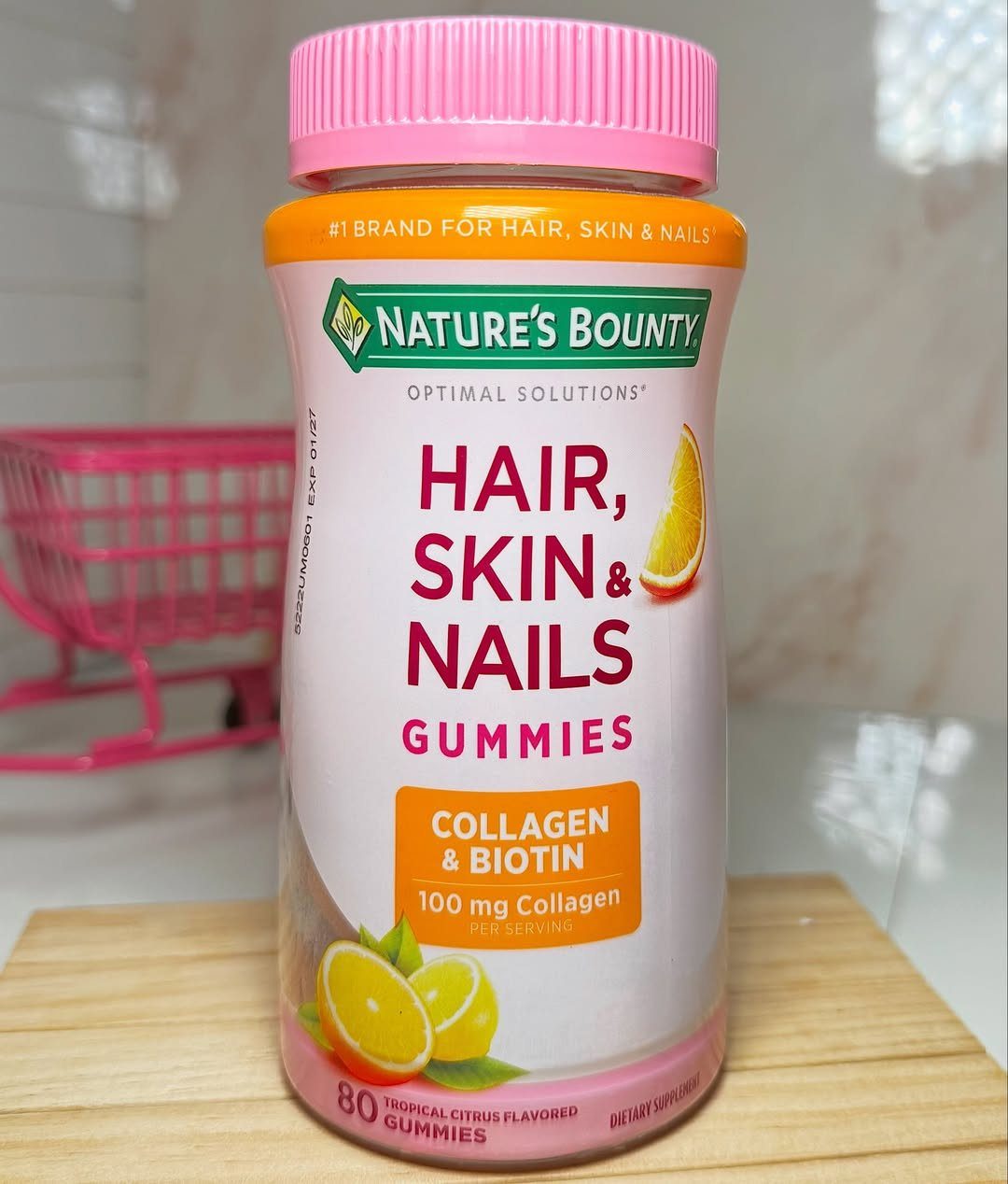
Collagen gummies work a step removed from hair directly: collagen breaks down into amino acids, including proline, which the body uses to build keratin.
The Nature’s Bounty bottle here pairs collagen with biotin, which is a reasonable combination since they address different parts of the hair structure.
Collagen support makes more sense if your hair feels brittle or your nails are splitting alongside it, since those share the same protein base.
At most drugstore price points, it’s a low-commitment way to add amino acid support without switching to powder or capsules.
3. Tropical Fruit Hair Health Gummies
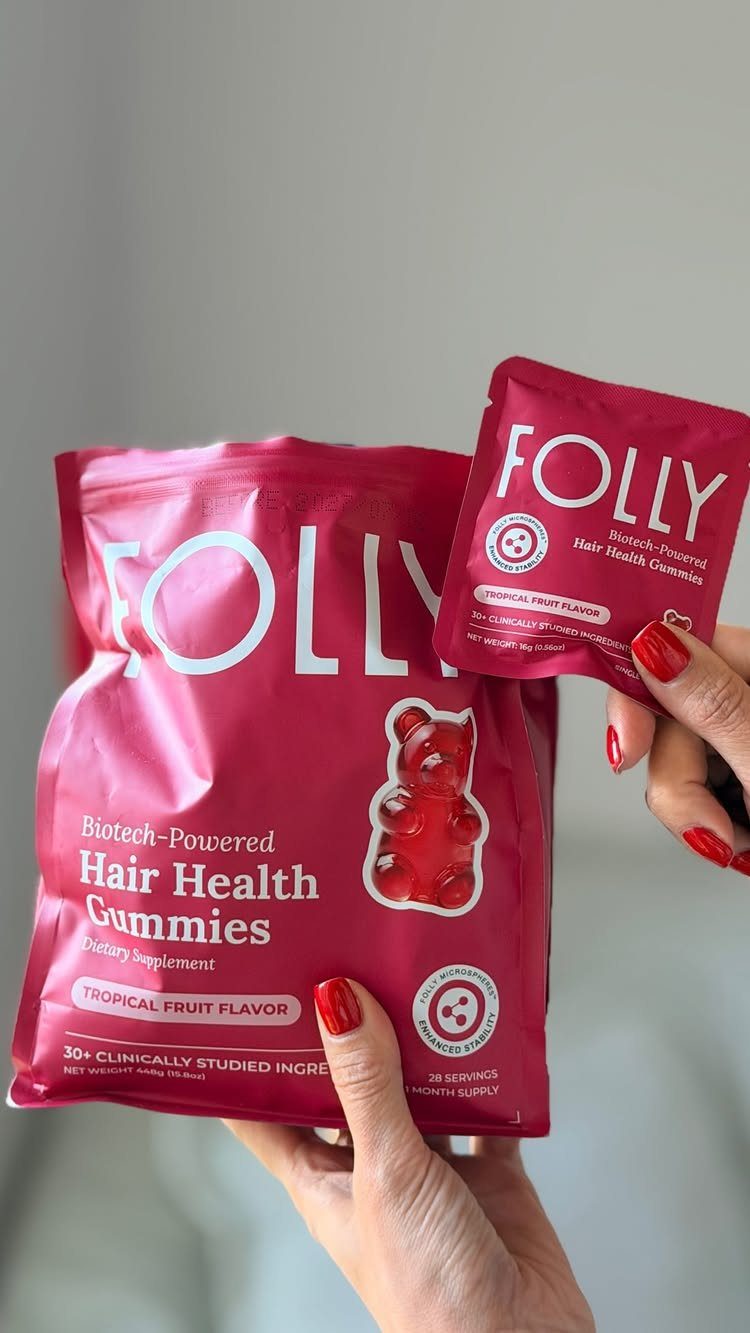
Tropical fruit flavor puts these in a different category from the standard berry-or-nothing options most hair gummies default to.
The Folly packaging describes them as biotech-powered, which signals a formulation angle beyond basic vitamins, though the specifics of what that means in practice are worth checking on the label before buying.
Single-serve packets like the one visible here make these easy to take without carrying a full bottle, which suits anyone who supplements inconsistently.
If portability is part of why gummies appeal to you over capsules, the format here is doing real work.
4. SugarBearHair Vitamins

SugarBearHair is one of the more recognized names in the hair gummy space, partly from years of social media presence.
Gummies from a brand this visible tend to carry a price premium. Whether the formula justifies that over a less-marketed alternative comes down to the ingredient list, which is worth comparing directly.
5. Centrum Hair Gummies
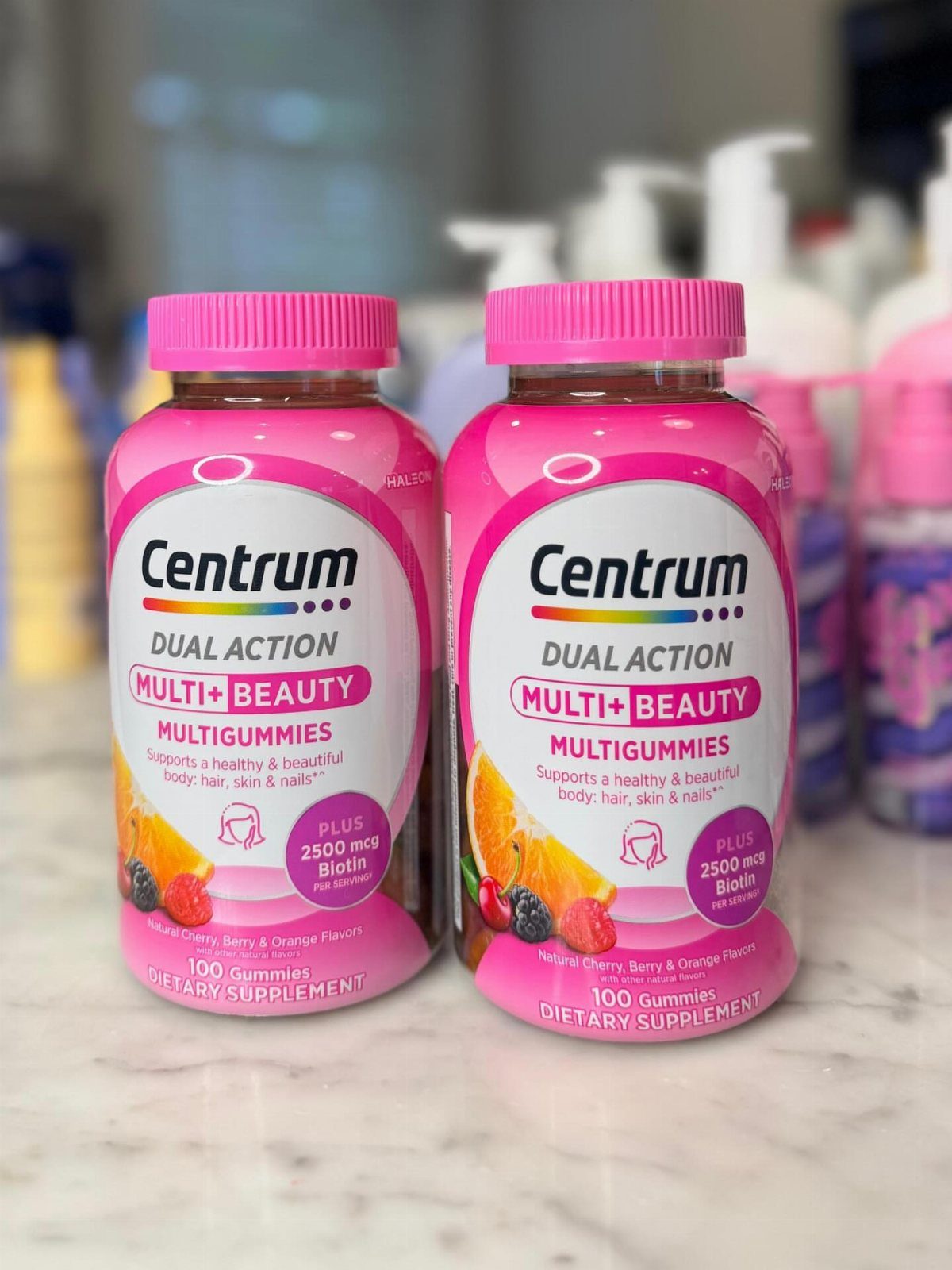
Centrum’s version comes in a dual-action format that combines a hair, skin, and nails focus with broader multivitamin coverage, which makes it a practical pick if you want one gummy doing two jobs.
The biotin inclusion is standard for this category; the multivitamin angle means you’re also covering gaps like vitamin D or zinc that show up as contributors to shedding when they’re low.
2 bottles on the counter reads as a monthly supply setup. For anyone not already taking a separate daily multi, this is the option that pulls the most weight per gummy.
Evidence Depends on Deficiency
Hair gummies are most likely to do something measurable if your hair loss or slow growth has a nutritional gap behind it.
Without a deficiency, the evidence that adding more of a vitamin you already have enough of will speed growth is thin.
That matters because the causes worth ruling out first are stress, hormonal shifts, and medical conditions, none of which a gummy addresses.
If something comes back low, a targeted supplement makes sense. If nothing does, the better question is what else might be driving the change.
Check Labels and Dietary Fit
Reading the Supplement Facts panel before buying saves real surprises. Gummy formulas tend to carry added sugar, which is worth checking if you’re watching your intake.
Some are made with beef gelatin; a few contain fish or shellfish derivatives, so the label matters if you keep a vegetarian or allergy-restricted diet.
It’s also worth cross-referencing with anything else you already take daily. Biotin and zinc appear in a lot of multivitamins, and doubling up without realizing it is easy to do.
Consistency and Realistic Timing
Consistency matters more than the brand. Taking a supplement sporadically and checking the mirror after a few days is not a fair test of anything.
Reported timelines vary a little by source: some put early results at 4–6 weeks of daily use; most supplement guidance lands closer to 3–6 months before visible change is reasonable to expect.
Hair grows roughly half an inch per month, so the math on seeing a difference is just slow by nature.
Starting a bottle is the easy part; the harder part is taking it every day until the window is actually up.
One study from the Journal of Clinical and Aesthetic Dermatology found that 79.5 percent of premenopausal women aged 20 to 45 with thinning hair saw major improvements after taking it daily for six months.
Frequently Asked Questions
Do hair gummies make your hair grow faster?
Not unless a nutritional deficiency is behind the slowdown.
Topping up a nutrient your body already has plenty of rarely moves the needle; the cases where gummies produce a noticeable change are almost always ones where a real deficiency was driving the problem.
Growth itself runs at roughly half an inch a month no matter what you take, so visible change is slow by nature and most guidance calls for 3 to 6 months of consistent use before drawing any conclusions.
Do hair growth supplements really work?
They can help when thinning is tied to a missing nutrient or an absorption issue, but they are not a fix for every cause of hair loss.
Hormonal shifts, chronic stress, and underlying medical conditions sit outside what a gummy can address, and identifying those first saves months of supplementing toward the wrong target.
Lab results pointing to a specific shortfall give a supplement something to actually fix; without that, the more productive question is what other factor might be behind the change.
What should I look for in hair growth gummies that actually work?
Start with the Supplement Facts panel and cross-reference it with anything else you already take daily, since biotin and zinc show up in many multivitamins and doubling up is easy to miss.
A formula built around a deficiency your bloodwork actually confirmed stands a real chance of doing something; one built around megadose biotin and vague growth claims does not.
If nothing on the panel lines up with a gap you actually have, a doctor can help find what is driving the thinning before you spend on a bottle.
Can you take prenatal vitamins for hair growth?
Prenatal vitamins overlap heavily with hair supplements in their ingredient profiles, though the amounts of each nutrient are calibrated for pregnancy rather than follicle support.
A supplement formulated for your age and health needs is usually the more useful pick than repurposing a prenatal, since the dose and balance are set for pregnancy rather than for thinning hair.
When should you see a doctor about hair loss?
Sudden shedding or patchy loss is the point to see a doctor rather than open a supplement bottle, because thyroid disease, autoimmune conditions, and other treatable causes can look exactly like ordinary hair loss.
A blood panel can show whether a nutritional gap is behind the change, which is the one case where a targeted supplement makes sense. Talking with a doctor before starting one is smart even when the loss is gradual.