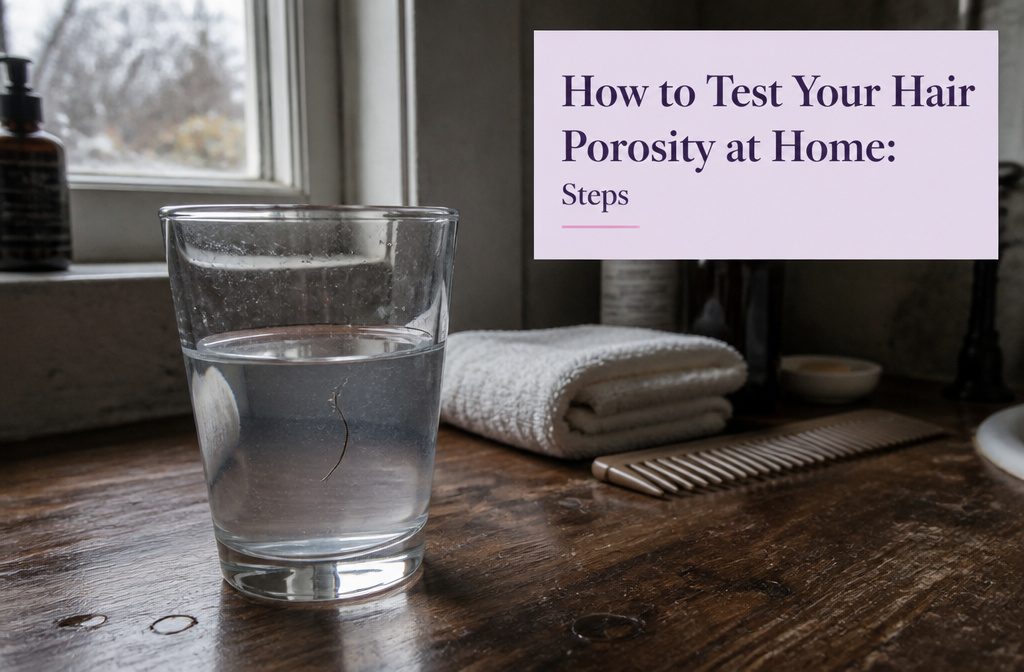
Testing your hair porosity at home takes about five minutes and costs nothing if you already have a clear glass and clean water.
Most people skip the repeat test, which matters because surface tension can make even high-porosity hair float when it shouldn’t. Hair that sinks in under three minutes suggests medium porosity; hair that floats for 10 to 15 minutes points to low.
1. Check How Your Hair Takes In Water
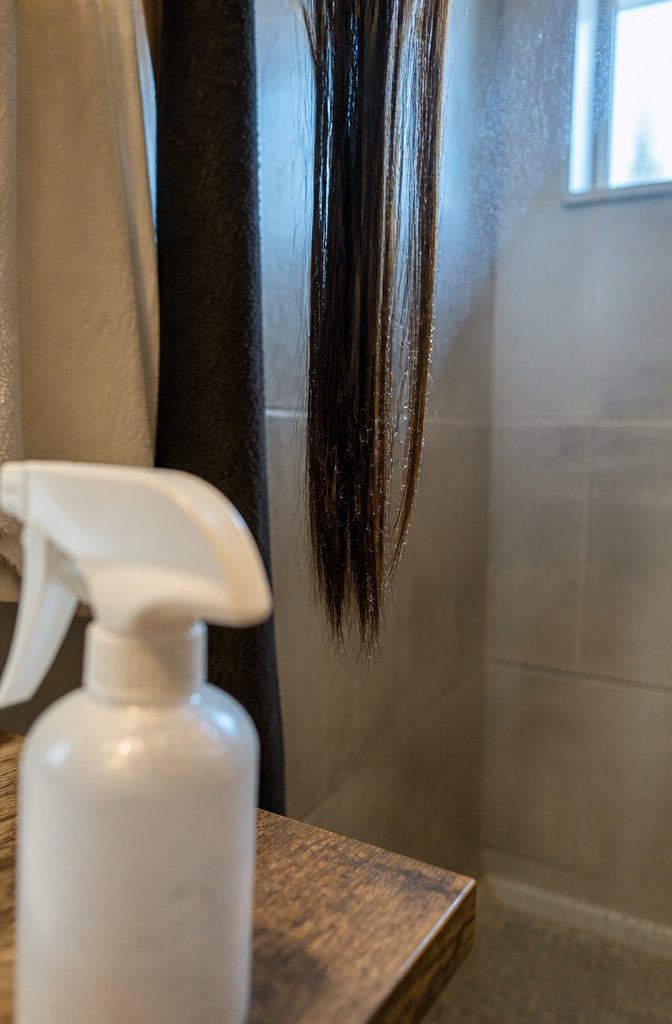
The shower already runs this test every time you wash your hair. Stand under the spray and watch whether water beads up and rolls off the surface or sinks in immediately.
Beading means the cuticle is sitting flat and water can’t penetrate easily, which points to low porosity. If your hair goes from dry to soaked in seconds, the cuticle is more open and you’re likely looking at high porosity.
I check this by misting a clean section of hair with a spray bottle before stepping into the shower. Low-porosity hair holds droplets on the surface long enough that you can see them sitting there.
High-porosity hair drinks the mist and darkens almost on contact. Medium falls somewhere in between: the water absorbs, but not instantly.
2. Watch How Long Your Hair Takes to Dry

After you wash your hair, take note of how long it stays wet.
Hair that takes more than eight hours to air-dry usually signals low porosity: the cuticle is lying so flat that it traps water inside once it finally gets in.
Hair that dries quickly, often within an hour, tends to indicate high porosity, because moisture escapes as easily as it entered through a lifted cuticle.
I watch this most clearly at the roots versus the ends. My roots can still feel damp at bedtime after a morning wash, while the ends dry much faster.
That split tells me what many people with long or color-treated hair find: porosity changes along the strand, low near the scalp where the hair is newer, higher at the ends where heat and chemicals have lifted the cuticle over time.
The drying window gives you a read on where your hair actually sits, and it beats guessing from a description.
3. Try the Strand-in-Water Test
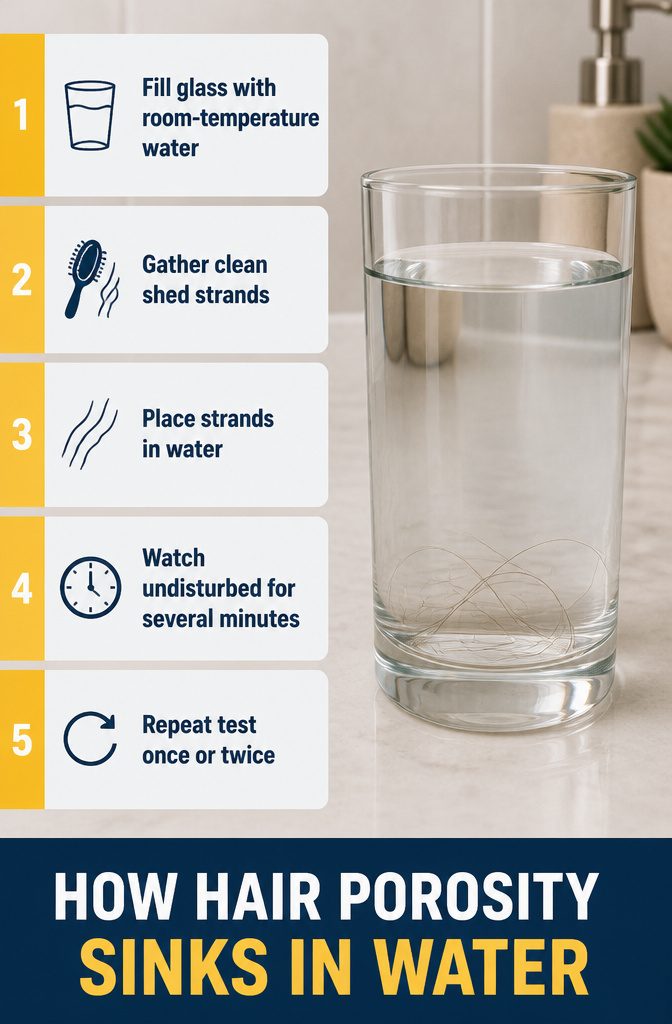
- Fill a clear glass with room-temperature water and set it somewhere you can check back in a few minutes.
- Collect a few clean, shed strands from your brush or pillowcase, not strands you’ve pulled from your scalp. Washing your hair first removes product buildup and sebum that can interfere with the result; testing freshly cleaned strands gives a more reliable read.
- Place the strands into the water and leave them undisturbed.
- Watch what happens over the next few minutes. Hair that floats at or near the surface for 10 to 15 minutes suggests low porosity. Hair that starts sinking after 3 to 5 minutes suggests medium porosity. Hair that sinks immediately suggests high porosity.
- Consider testing a second or third time. Surface tension and residue can make even high-porosity hair float when it shouldn’t, so repeating the test once or twice helps confirm the pattern.
4. Feel a Strand From End Toward Root

Run your fingers along a single clean strand from the tip back toward your scalp.
Smoothness under your fingertips suggests low porosity, where the cuticle lies flat and tight. Roughness or a bumpy texture points toward high porosity, the result of cuticles that have lifted or sustained damage.
Some strands fall in between, smooth enough not to catch but textured enough to register under light pressure. That middle result is medium porosity, and it shows up more often than the extremes.
I find this test easier to feel on dry hair, especially if the strand is longer than a few inches. The difference becomes obvious once you know what you are checking for.
5. Compare Signs and Account for Differences Across Your Head
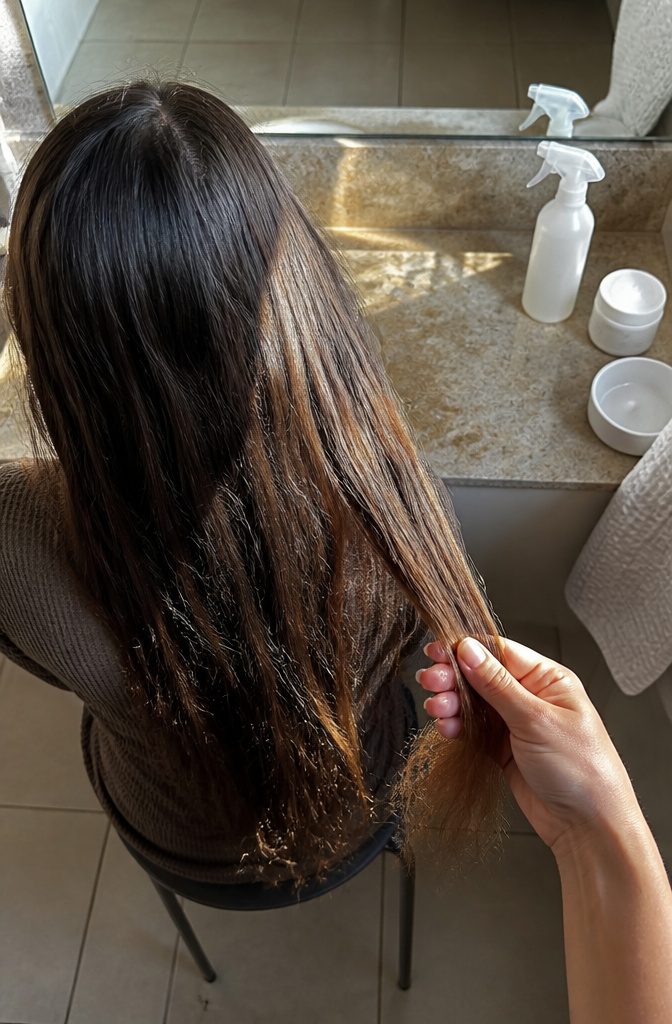
One strand tells you less than three. Hair porosity isn’t uniform across your whole head, and testing strands from different zones gives you a clearer picture than relying on a single piece of evidence.
Roots, mid-lengths and ends often behave differently because the ends are older, more processed hair that’s had longer to develop damage or open up from heat and color work.
The root area is newer growth with tighter cuticles, so it naturally reads lower in porosity than the weathered ends.
Highly porous hair is super permeable; it absorbs moisture like a sponge and releases it just as quickly, leaving hair dry, weaker, and more vulnerable to damage and frizz.
That sponge behavior explains why your ends can feel parched while your roots look greasy.
If test signals conflict, go with the majority result for your baseline routine, or treat sections differently: lighter products at the roots, richer oils and serums on the ends.
Mixed porosity is common enough that adjusting by zone makes more sense than forcing one approach on hair that doesn’t match itself.
6. Read Low, Medium, and High Porosity Results
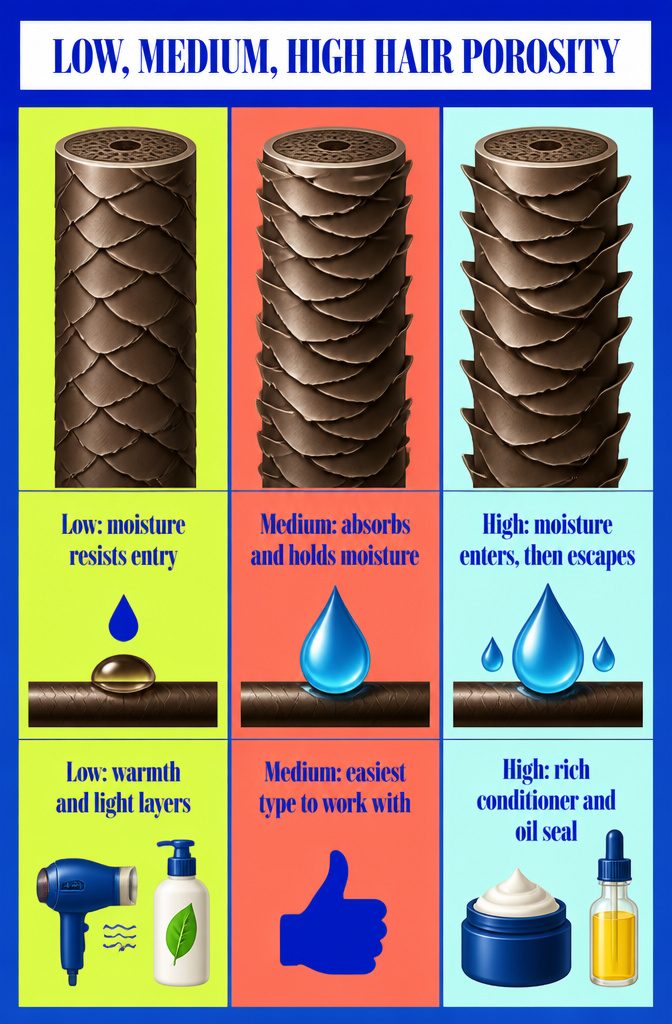
Low porosity means the cuticles lie tight and flat, so moisture is harder to get in—products may bead on the surface, and your hair can take hours to dry after washing.
Medium porosity sits in the balance: it absorbs and holds moisture without drama, and it’s the easiest type to work with.
High porosity has a more open or damaged cuticle, so water rushes in quickly but escapes just as fast, leaving hair thirsty again soon after you condition it.
Neither level is better or worse. Knowing which you have matters, because low-porosity hair needs warmth and light layers to help products penetrate, while high-porosity hair wants richer conditioners and a final oil seal to stop moisture leaking out.
If your hair wets instantly in the shower and air-dries in under an hour, you’re looking at high porosity; if water beads and drying drags on for much of the day, you’re low.
7. Use Your Result to Guide Product and Routine Choices
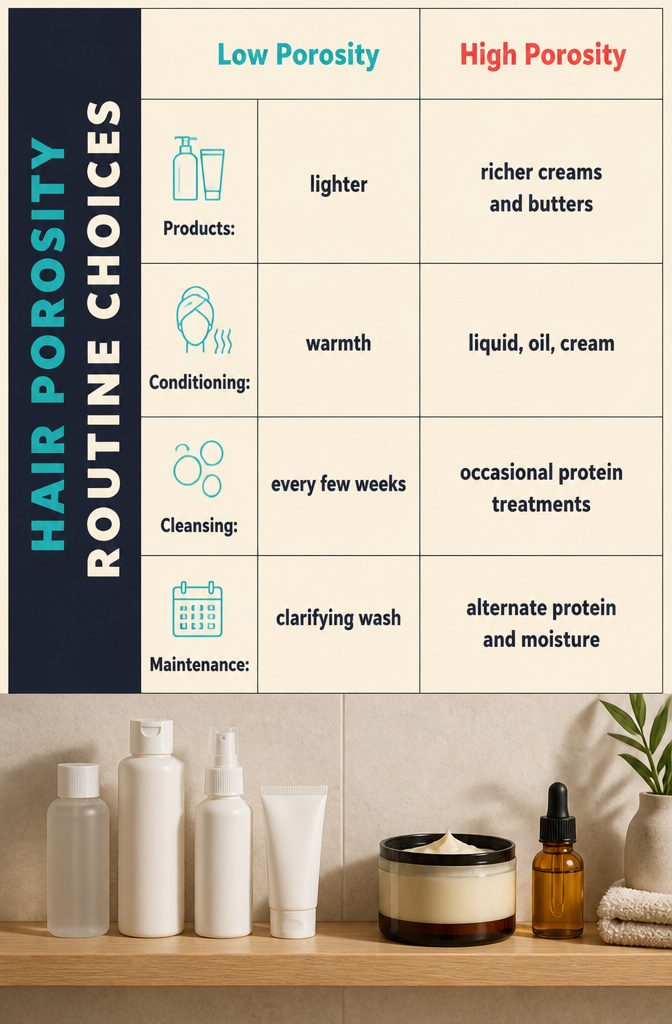
Once you know where your hair sits, the routine adjusts to meet it.
Low porosity hair does better with lighter products, warmth during conditioning to help them in, and clarifying washes every few weeks to strip buildup that sits on top rather than sinking in.
A detox shampoo like K18 Biomimetic Hairscience Peptide Prep gets through those tightly packed cuticles when regular formulas slide off.
High porosity hair needs the opposite approach: richer creams and butters, applied in the sequence liquid, oil, cream to seal moisture before it leaks back out.
I condition at every wash and follow with a leave-in, then a small amount of oil over the top to slow evaporation. Occasional protein treatments patch rough spots without leaving hair stiff if you alternate them with straightforward moisture-focused conditioning.
Medium porosity mostly asks you to maintain what already works. A deep-conditioning mask once a month, balanced products, and a clarifying wash every three to four weeks keep things steady without overthinking it.
What Hair Porosity Means and Why It Matters
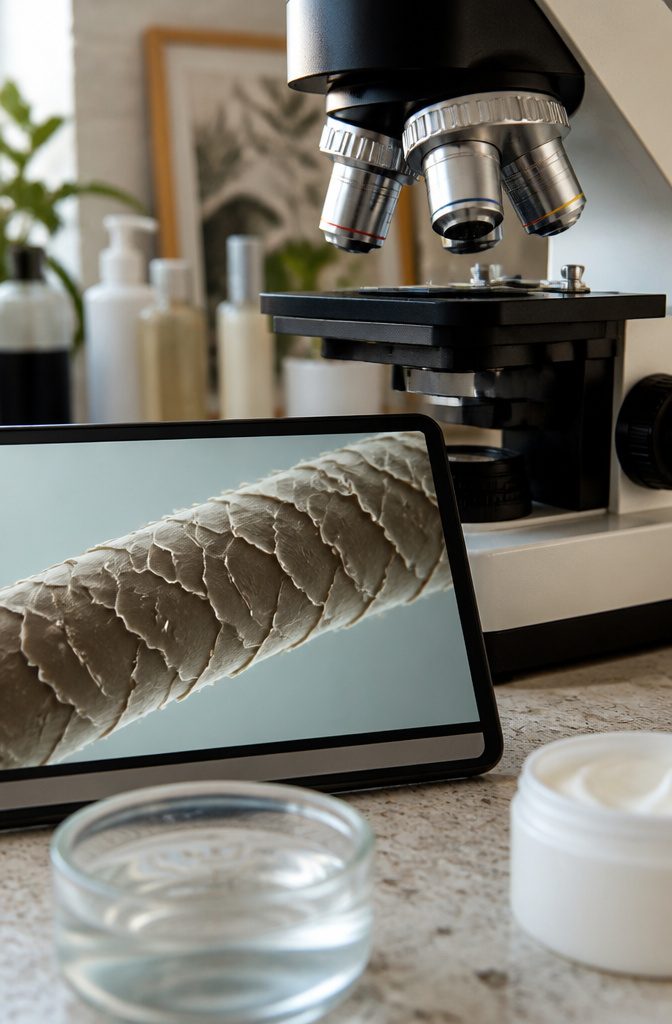
Porosity describes how easily moisture moves in and out of the hair shaft, and it comes down to the cuticle: five to ten overlapping layers of flattened cells arranged like shingles on a roof.
When those shingles lie flat and tight, water and conditioner have a hard time getting past them. When they’re lifted, chipped, or missing, the strand becomes a sponge, quick to absorb and just as quick to leak.
Healthy hair absorbs roughly 30 percent of its weight in water, while highly porous hair takes on even more and loses it faster.
Two things set your porosity.
The first is genetics: the cuticle you’re born producing, which varies by individual and often by hair texture. The second is everything you’ve done to the hair since it emerged.
Bleach, flat irons, chlorine, tight ponytails, and rough towels all lift or chip the cuticle, and because those layers are dead cells, porosity damage can be smoothed and coated but never biologically healed, only grown out and trimmed off.
Why it matters is simple mechanics.
A product formulated to penetrate the shaft behaves differently depending on whether the door is cracked open or bolted shut. Porosity doesn’t tell you everything about your hair, but it explains a surprising amount of the works-on-her-not-me mystery.
How Porosity Changes Over Time
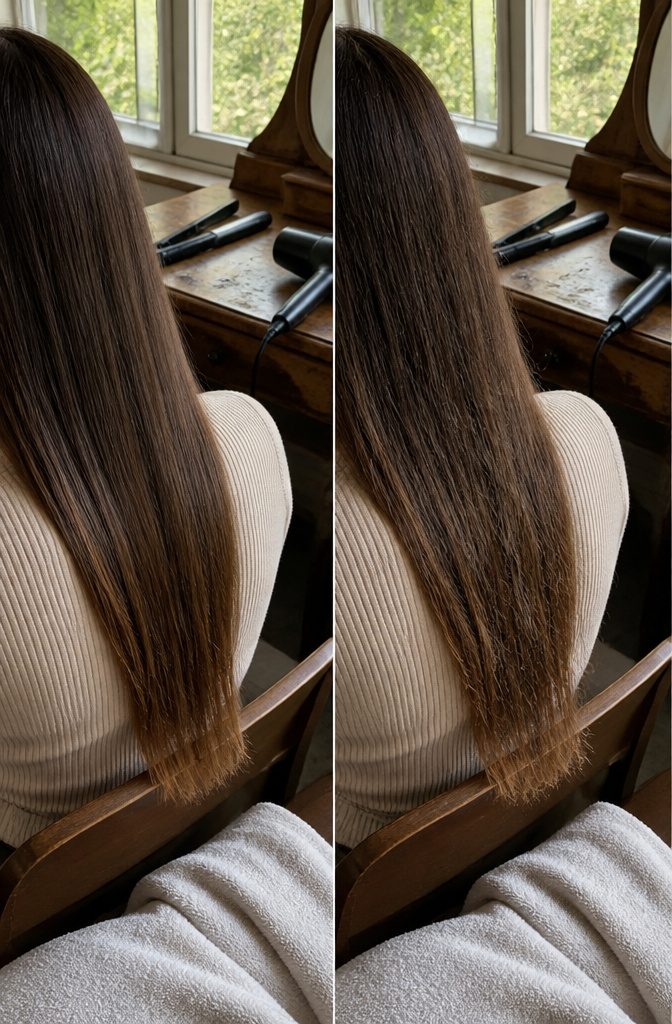
Your hair porosity isn’t written into you forever. Genetics do set a starting point, but chemical processing and regular heat styling can shift how open or closed the cuticle becomes, and damaged cuticle layers can’t biologically heal themselves.
Bleach strips the outer lipid coating called 18-MEA, leaving hair permanently more porous.
Flat irons and curling wands running at 350–450°F alter protein structure, especially on damp hair. Even blow-drying matters: hold the dryer about six inches away and keep it moving continuously.
Length adds its own layer of damage. Hair grows half an inch per month, so shoulder-length hair can carry five to six years of heat, friction, and UV exposure.
If your hair is twelve inches long, the ends are two to three years old. No strand survives that much handling intact, which is why porosity almost always climbs from root to tip.
Frequently Asked Questions
How do you test hair porosity at home?
Place a few clean, shed strands in a glass of room-temperature water and watch what happens over 10 to 15 minutes.
Hair that floats suggests low porosity, hair that sinks after 3 to 5 minutes suggests medium porosity, and hair that sinks immediately suggests high porosity.
You can also check how quickly your hair absorbs water in the shower or how long it takes to air-dry after washing.
Can hair porosity change over time?
Yes. Genetics set your starting point, but chemical processing and regular heat styling can shift how open or closed the cuticle becomes over time.
Bleach, flat irons, and even blow-drying alter the cuticle structure, and because those layers are dead cells, porosity damage can only be grown out and trimmed off, not healed.
What is low porosity hair?
Low porosity hair has cuticles that lie tight and flat, making it harder for moisture to get in.
Water may bead on the surface, products can sit on top rather than penetrating, and your hair can take more than 8 hours to air-dry after washing.
Is the water porosity test accurate?
The strand-in-water test is a useful starting point, not a clinically validated measurement.
Surface tension and residue can make even high-porosity hair float when it shouldn’t, so testing a second or third time and checking other signs like drying time gives a more reliable read.
What products work best for low porosity hair?
Low porosity hair does better with lighter, water-based products that won’t sit on the surface, plus warmth during conditioning to help them penetrate. A clarifying wash every few weeks strips buildup that can’t sink through tightly packed cuticles.
Can porosity be different at the roots versus the ends?
Yes. Roots are newer growth with tighter cuticles, so they naturally read lower in porosity than the ends, which are older and have had longer to develop damage from heat, color, and friction.
Testing strands from different zones gives you a fuller picture than relying on one area.
Is high porosity hair more prone to breakage?
Yes. The lifted or damaged cuticle in high porosity hair makes strands weaker and more vulnerable to damage because moisture escapes quickly, leaving hair dry and brittle.
Richer conditioners and a final oil seal help slow moisture loss and reduce breakage over time.
How often should I wash low porosity hair?
Wash frequency depends more on scalp oil production and product buildup than porosity alone, but low porosity hair benefits from a clarifying wash every few weeks to strip layers that sit on top rather than penetrating.
Between clarifying sessions, use lighter products that won’t accumulate as quickly.





