Options range from powder that hides a wider part in under 5 minutes to laser helmets that need months of consistent use before regrowth appears.
Your choice depends on whether sudden shedding appeared after a trigger like stress or illness, or if you’ve noticed a gradual widening part that’s crept up over months or years.
Minoxidil typically shows early results around the 2-month mark, while most people using low-level laser therapy see changes after 3 to 6 months of regular sessions.
If your loss traces back to surgery, illness or stress, telogen effluvium typically resolves within 3–6 months once the cause is removed.
1. Specialty Hair Products

Nioxin and similar systems layer a cleanser, conditioner and leave-in treatment designed to remove buildup and prep the scalp for healthier-looking growth.
Each step targets different needs: the shampoo clears oil and debris, the conditioner strengthens strands without weighing them down, and the treatment sits on the scalp to deliver active ingredients.
If your hair feels limp or your scalp is congested, a three-step system can make what you have look fuller while you address the underlying cause.
Most lines offer formulas matched to hair type and degree of thinning, so read the label before you buy.
2. Low-level Laser Therapy Helmet
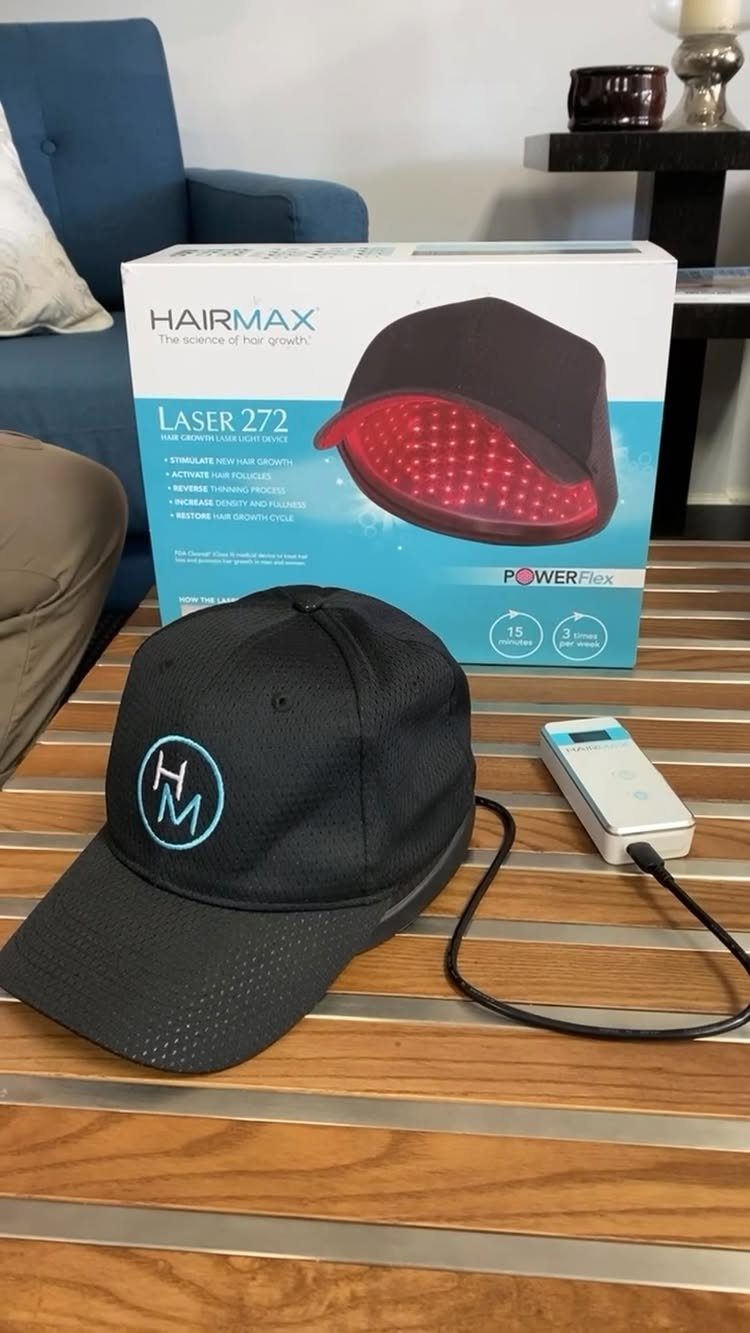
Laser caps and helmets emit red light meant to stimulate hair follicles over repeated sessions at home.
You wear the device for a set number of minutes several times a week, and the maker usually recommends at least a few months before you see results.
The appeal is convenience: no appointment, no downtime. Cost and commitment are the main downsides.
Devices like this one aren’t cheap, and if you stop using it, you’ll lose what you gained. Check whether your dermatologist thinks it suits your type of thinning before you invest.
3. Scalp Concealer Powder
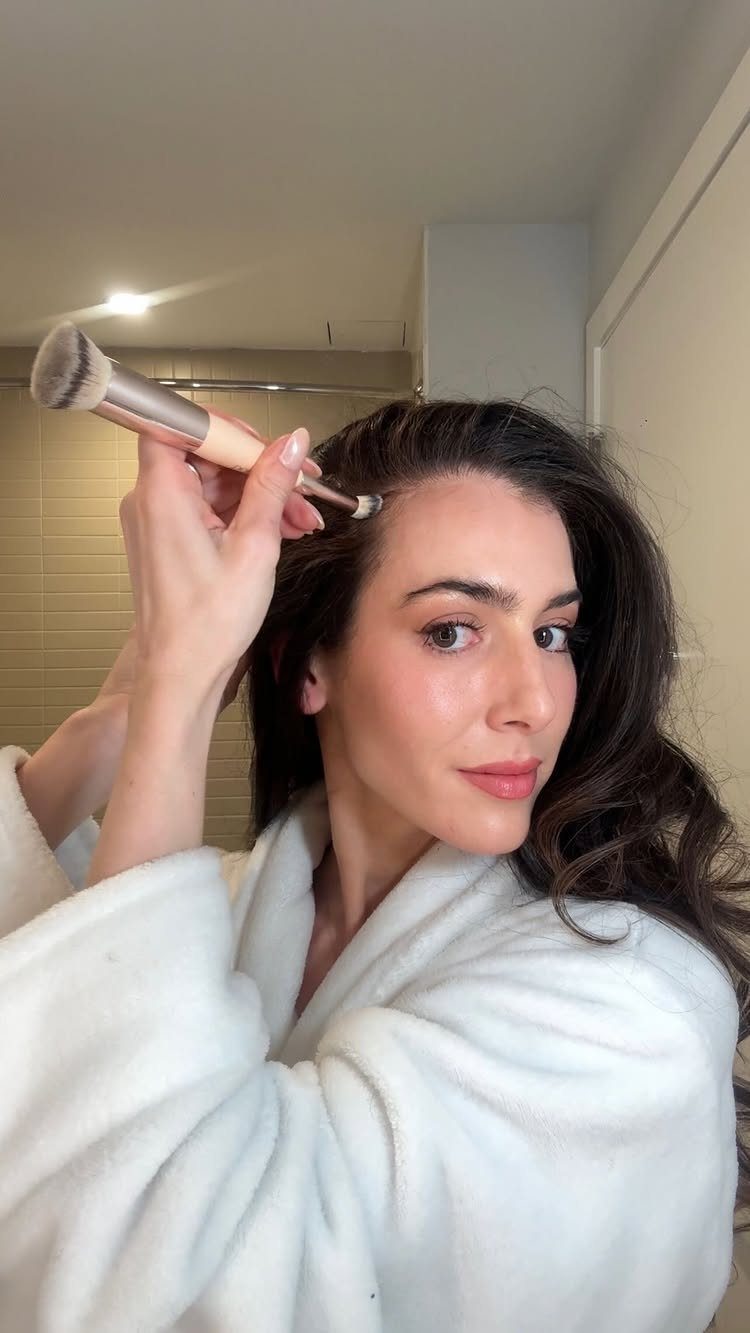
Concealer powder fills in sparse areas with pigment that clings to hair and scalp, blending the contrast so thinning looks less obvious.
A small angled brush gives control along the hairline and part, and most formulas dry matte so they don’t transfer onto your forehead or pillowcase.
The effect lasts until you wash your hair, making it a good option for events or days when you want extra coverage.
I keep one around for mornings when my part looks wider than usual. Matching your natural color matters: test the shade in daylight before you commit.
4. Clip-in Hair Topper
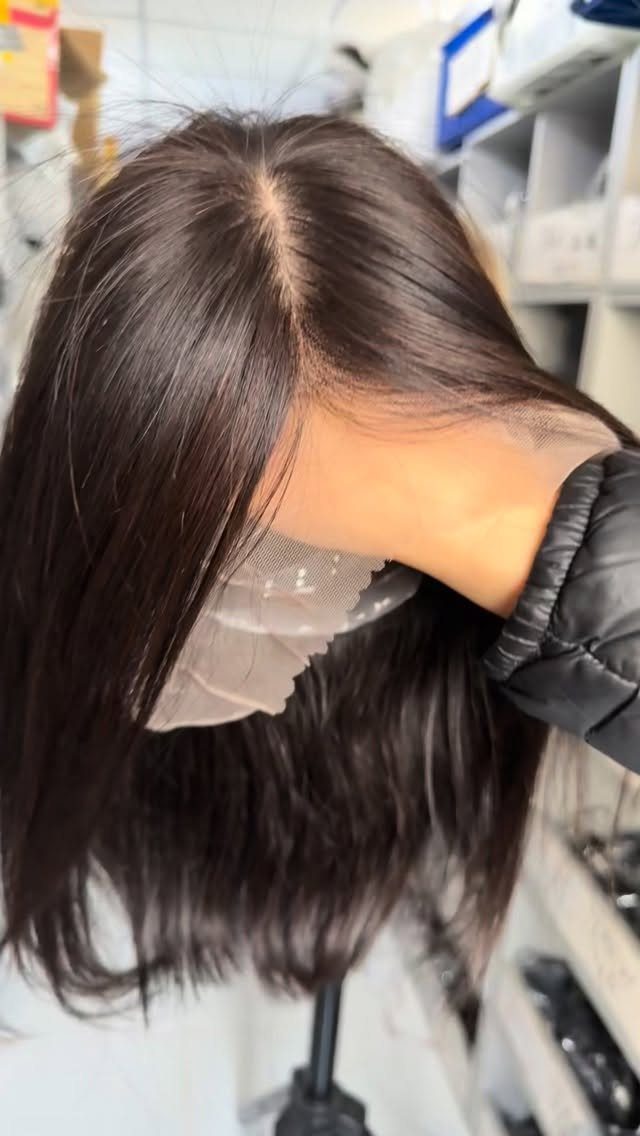
A topper adds volume and coverage where you need it most, clipping into your own hair at the crown or part.
The lace base sits flat against your scalp, and because your natural hair blends around the edges, the attachment stays hidden.
Toppers come in different base sizes and hair densities, so measure the area you want to cover and match the texture to your own.
Synthetic fiber holds its style longer, human hair takes heat tools and color. Either way, a good match means you can style your hair and the topper together without a visible line.
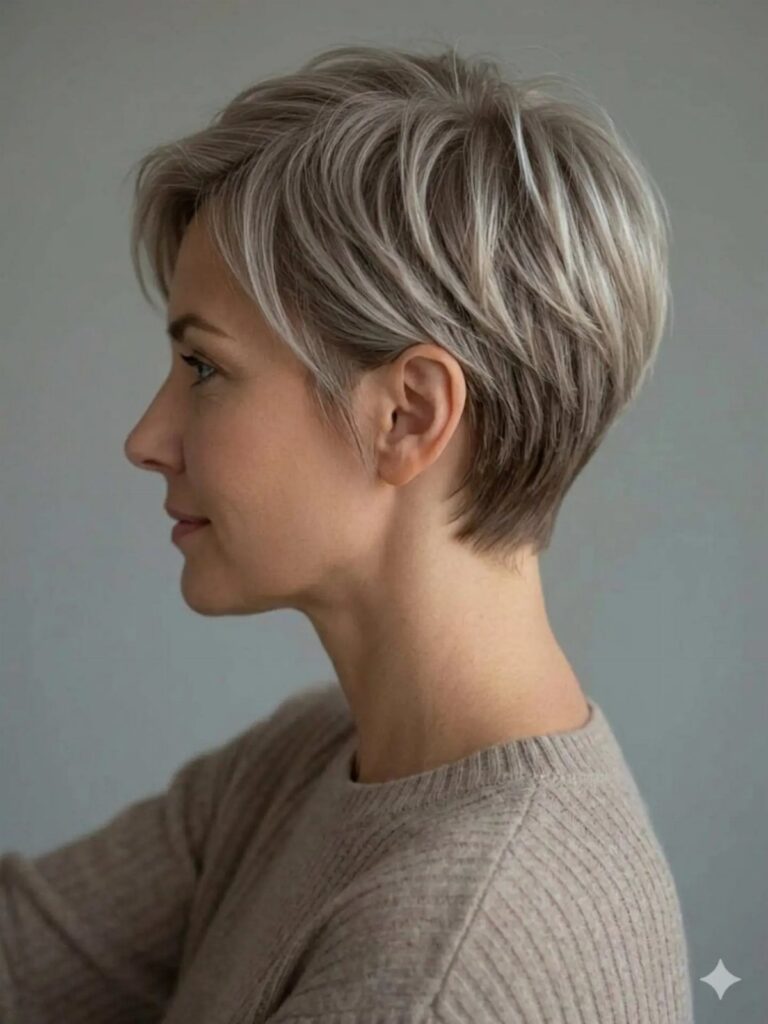
5. Layered Pixie Cut
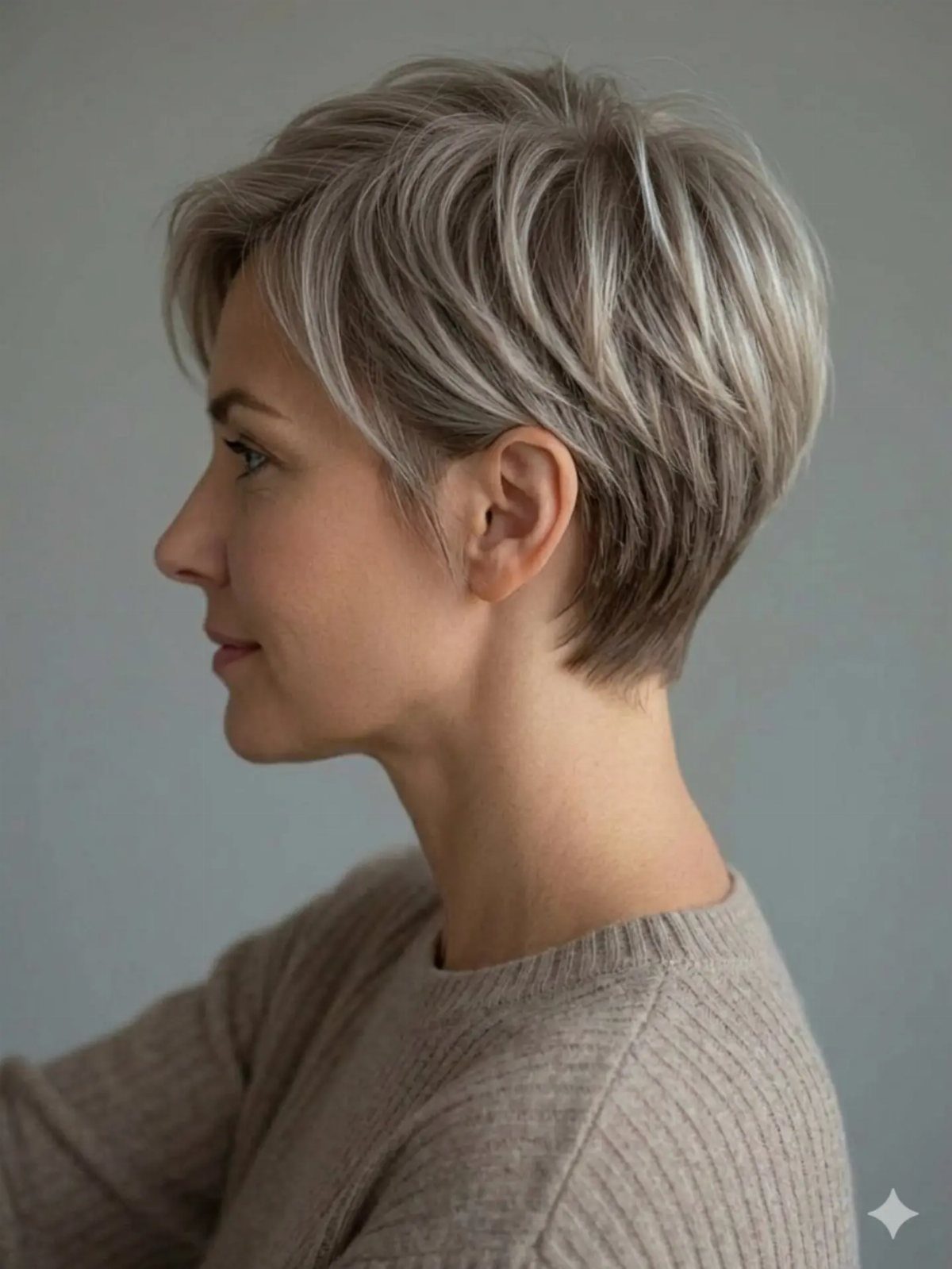
A textured pixie with layers cut at different lengths creates movement and lift, making thin hair look fuller without relying on length for volume.
The shorter sides keep weight off, and the longer top can be styled forward, swept back or tousled depending on where you need coverage.
This cut works best when your stylist cuts into the ends rather than blunt across, so each piece sits at its own angle.
Ask for point cutting or slide cutting if your hair is fine. The grow-out is manageable: book regular trims to keep the shape.
6. Lace Front Wig
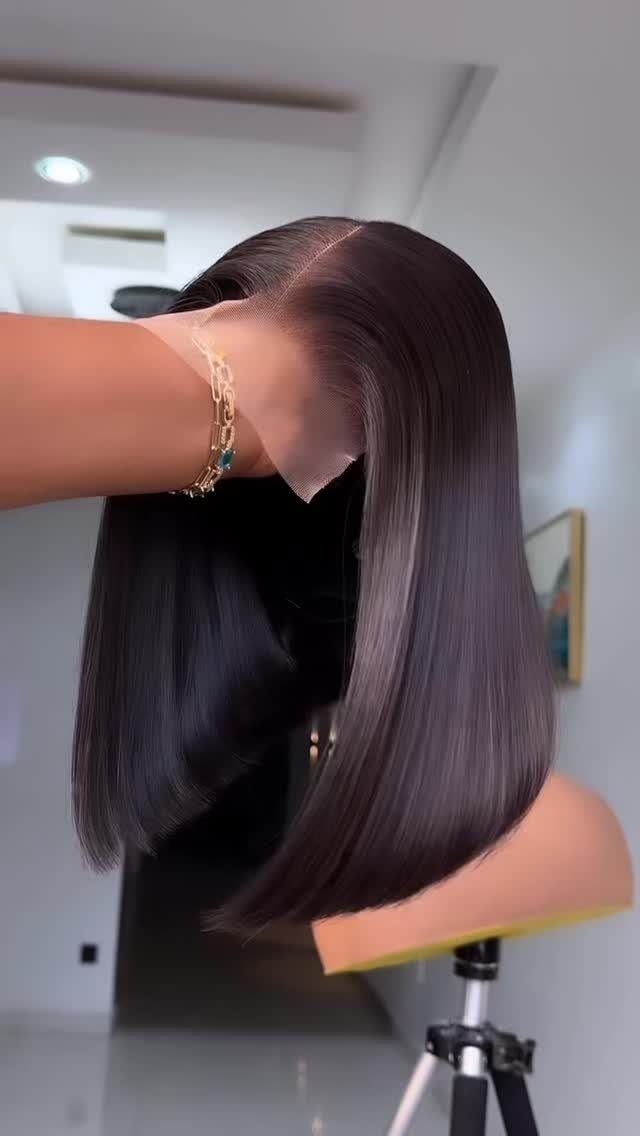
A lace front wig mimics a natural hairline with individual strands hand-tied into sheer lace that disappears against your skin.
The rest of the cap is wefted for durability, and the whole piece secures with adjustable straps, clips or adhesive depending on how permanent you want the hold.
Human hair wigs accept heat styling and color, synthetic stays prestyled and costs less.
Either type needs a cap that fits snugly without sliding, so measure your head circumference before ordering. Lace fronts give full coverage and a realistic part, and once it’s on, nobody knows.
Identify the Hair-loss Pattern
Women often see a wider part, diffuse thinning across the top, or less density at the crown. If you’re losing clumps suddenly or noticing bare patches, that points to a different cause and needs a doctor’s evaluation.
Normal shedding sits around 50–100 hairs a day. More than that, especially if it started after surgery, illness, childbirth or a stressful period, may be telogen effluvium, where follicles shift into the shedding phase all at once.
Gradual, pattern-based thinning that widens your part over time is usually androgenetic alopecia, driven by genetics and hormones.
Patchy loss suggests something else entirely. Get the pattern right and you’ll know which solutions actually fit.
Alopecia areata is a less common type of hair loss that affects about 2% of the population. It is an autoimmune condition in which the body attacks hair follicles.
Treatment Takes Consistent Use
Most treatments need months of consistent use before you see a difference, and stopping means losing what you gained.
Minoxidil can show early changes around 2 months, clearer progress at 4–6 months, and a proper read of what it’s doing closer to 12. Oral options run a similar clock, most needing a year or longer to deliver their full effect.
PRP typically requires a series of initial sessions, with improvement noticed after the second or third, then maintenance appointments to hold the result. Low-level laser devices usually need about 4 months of steady use before you see a shift.
Some treatments push weaker hairs out in the first few weeks, clearing the way for stronger ones to come through.
That’s normal. Early treatment matters because once a follicle stops working, restoring it becomes much harder.
Temporary Shedding May Resolve
If your shedding traces back to a single event—surgery, illness, a period of intense stress—it may be telogen effluvium, which typically rights itself once that trigger passes.
The hair loss shows up 2–3 months after the trigger, once stress hormones have disrupted the normal cycle and pushed more follicles into the shedding phase. Most cases improve within 3–6 months after the cause is removed.
Post-pregnancy shedding follows the same pattern as hormone levels return to baseline. Your body recovers, the cycle resets, and new growth resumes.
Chronic stress keeps cortisol elevated, which can impair scalp blood flow and weaken follicles over time. Managing stress won’t reverse genetic thinning, but it can stop a temporary problem from becoming a permanent one.
Frequently Asked Questions
What are the best hair vitamins for women?
If you’re low in biotin, iron or zinc, topping them up can help, but no supplement will push out new hair unless there’s a deficiency to fix.
They fill nutritional gaps that may be contributing to thinning, not reversing genetic or hormonal loss. Blood work showing low levels of iron or vitamin D makes supplementation more likely to help.
Can testosterone cause hair loss in women?
Yes. DHT, a testosterone derivative, gradually shrinks follicles in people whose roots are sensitive to it.
Women produce smaller amounts of androgens than men, but those hormones still affect the scalp, especially after menopause when estrogen drops and unmasks their effects. PCOS raises androgen levels and often leads to thinning.
What are the causes and treatments for severe hair breakage and thinning?
Female pattern hair loss, driven by genetics and hormones, is the most common cause of progressive thinning at the crown and part.
Treatments include minoxidil, oral medications, PRP injections, low-level laser therapy and hair transplantation, often combined to target different mechanisms. Sudden shedding after stress, illness or surgery may be telogen effluvium, which usually stops when the trigger is gone.
At what age does women’s hair start thinning?
Female pattern hair loss can begin between ages 20 and 40, though it’s more often noticed later.
Roughly two-thirds of women past menopause notice some degree of thinning, and half have visible loss by 50. Genetics and hormonal shifts influence when it starts and how quickly it progresses.
Can hormonal hair loss be reversed?
Sometimes.
How much regrowth you see depends on the cause, how advanced the thinning is and how early you start treatment. Starting treatment at the first sign of thinning gives you the best chance of keeping what you have.
Where should I turn for hair loss help?
Start with your primary care physician to rule out underlying conditions, medication side effects or hormone changes that could be triggering the loss. Blood work often helps pinpoint the cause.
How do you stop stress-related hair loss?
Managing stress can stop a temporary problem from becoming permanent, but it won’t reverse genetic thinning.
When stress never lets up, cortisol stays high, starving the scalp of blood and weakening follicles. If shedding continues despite lower stress levels, see your GP to rule out other causes.
How do you stop pregnancy-related hair loss?
Hormones need months to settle after pregnancy, and the shedding usually stops without intervention. Supplements might help strengthen what grows back, but check with your GP first if you’re breastfeeding.
How do you stop PCOS-related hair loss?
Treating the hormone imbalance driving the loss is the first step, since PCOS raises androgen levels that shrink follicles.
Your GP can talk through birth control, diet shifts, exercise and androgen-lowering drugs. Once hormone levels stabilize, hair growth often improves.





