Herbal hair growth uses plant-based oils, powders, and extracts applied to the scalp or taken as supplements to support thicker, healthier hair.
Results depend on the root cause of thinning: herbs may help when circulation, scalp inflammation, or DHT interference is the problem, but they won’t reverse follicle loss from genetics or untreated medical conditions.
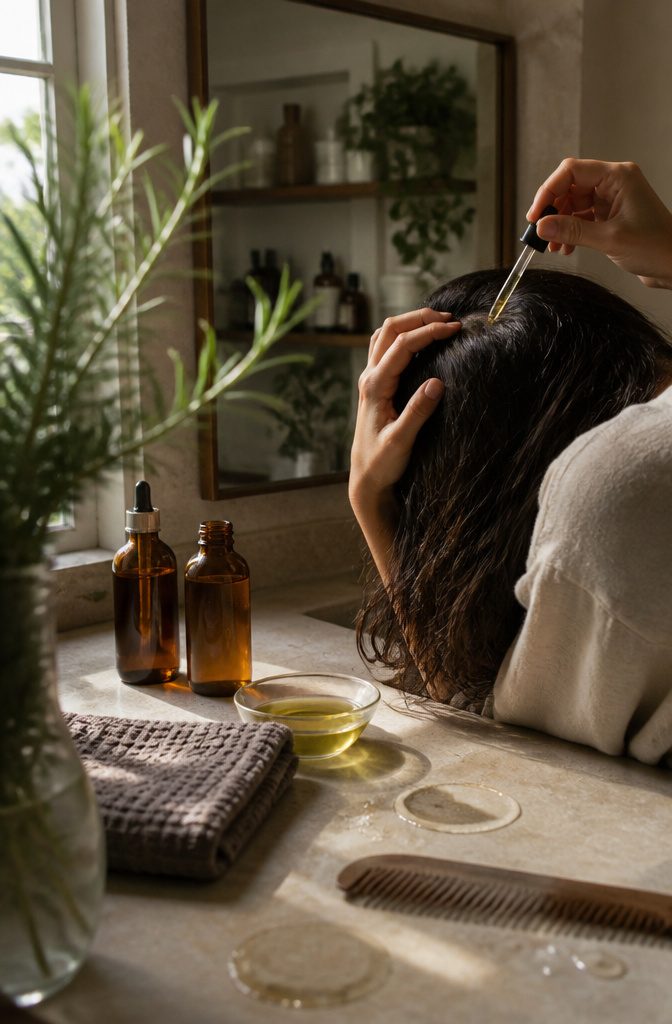
Rosemary oil, for instance, improves blood flow to the scalp when massaged in for five to ten minutes before shampooing.
1. Rosemary for Scalp Circulation
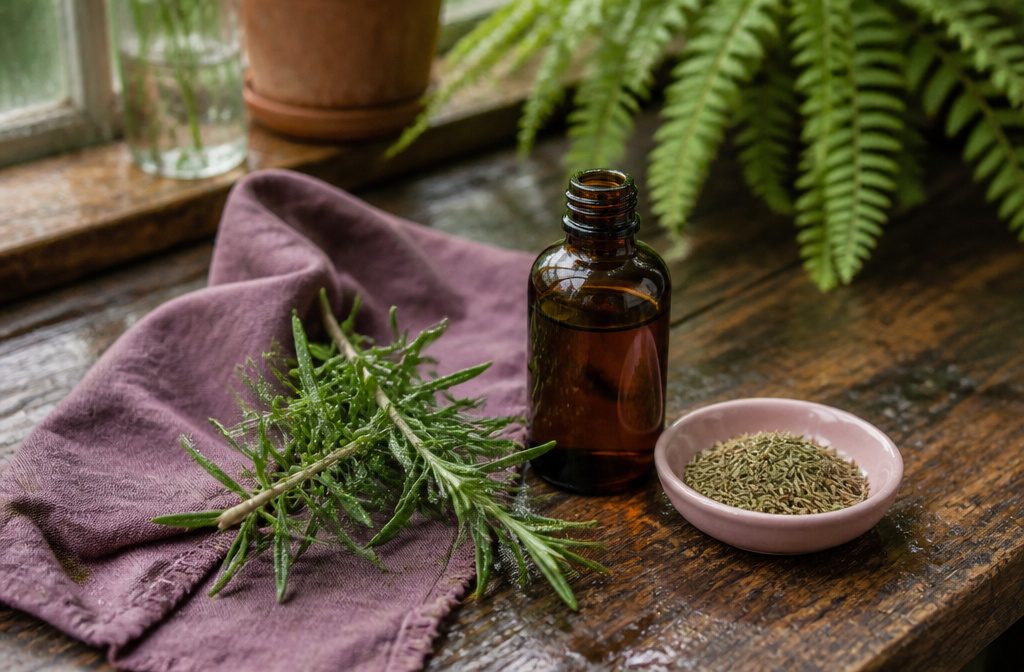
Rosemary oil shows up in a lot of herbal hair growth routines, and the reasoning makes sense: when you massage it into the scalp, it improves blood circulation, which in turn may support stronger growth.
The oil itself is antibacterial and packed with antioxidants, so it addresses scalp health at the same time.
A 2021 study in mice found that 1% herbal hair lotion helped increase hair growth.
Human studies are still thin on the ground, but the tradition goes back centuries and the method is straightforward enough to try.
Apply a few drops of rosemary oil directly to the scalp and massage gently for 5 to 10 minutes, then shampoo out with lukewarm water.
You can use it straight or mix it with a carrier oil like olive or coconut if you prefer a lighter dilution.
Some people steep rosemary as an infusion and use it as a rinse instead, which works if you want the benefits without the oil step.
2. Amla for Follicle Health
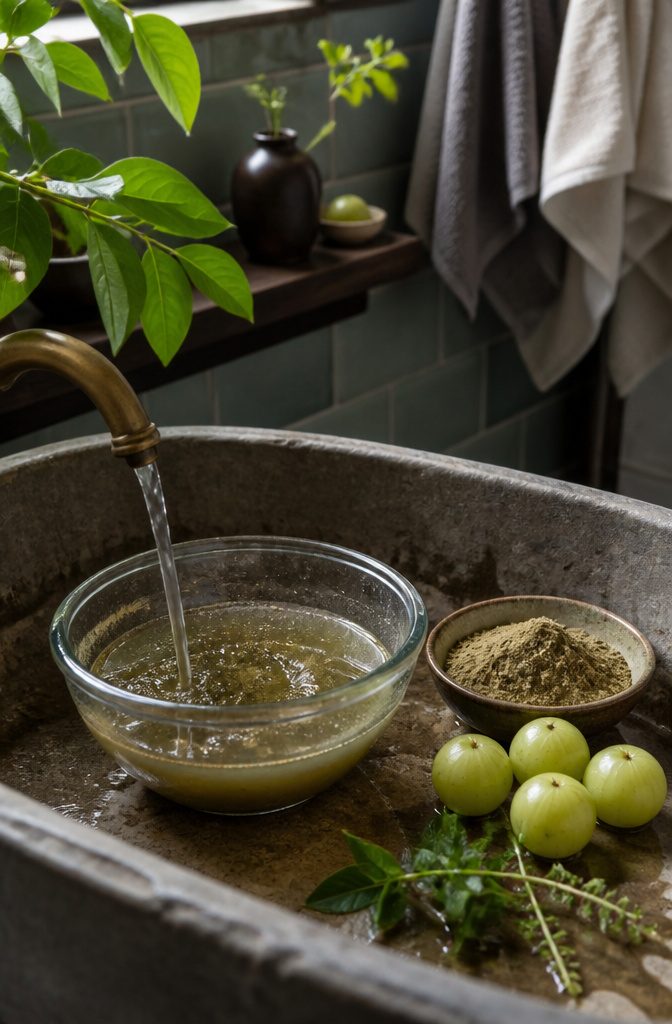
Amla, also called Indian gooseberry, delivers a concentrated dose of vitamin C and antioxidants straight to the follicle.
The vitamin C supports collagen production in the scalp, which keeps follicles anchored and functioning. That matters when shedding accelerates or hair starts to thin at the crown.
You can add amla powder to a hair rinse, mix it with tulsi leaves for a scalp mask, or look for it already blended into herbal oils and extracts.
The powder form lets you control the strength, but it stains light surfaces and needs thorough rinsing. Oils with amla skip the mess and layer easily under conditioner.
Amla also slows premature greying, though that takes months to notice and varies widely by person. The real draw is how quickly it clears dandruff and calms an itchy scalp, usually within two to three uses.
3. Hibiscus in Masks and Rinses
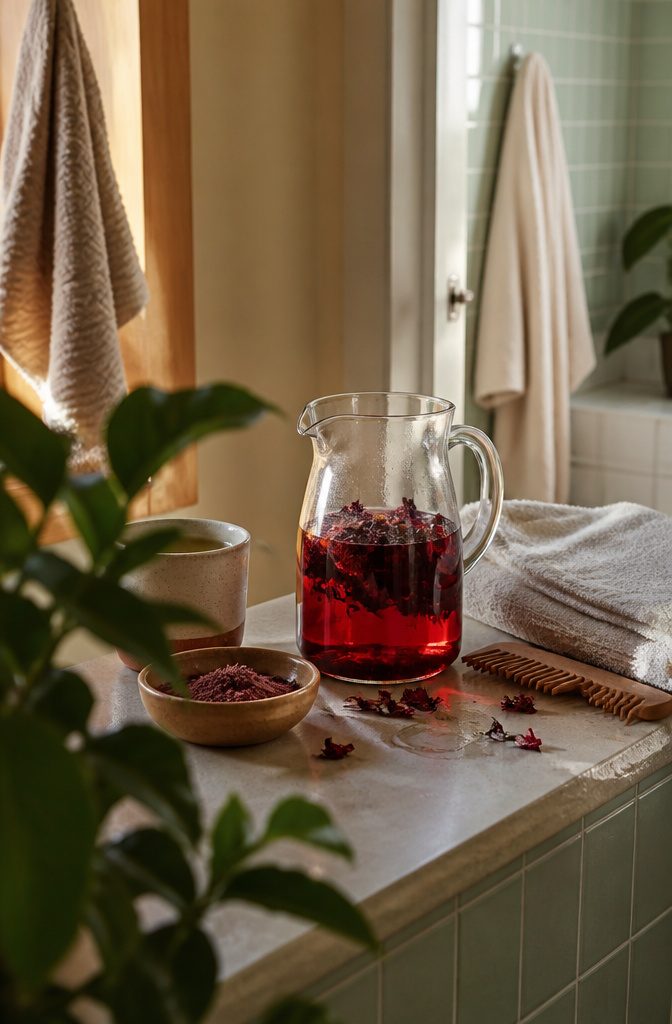
Chinese hibiscus (Hibiscus rosa sinensis) shows up in powdered form for masks, as an ingredient in shampoos, and brewed into rinses.
The flower is linked to shine, scalp care, and growth support in some studies on rats. The powder can be mixed with yogurt for a deep conditioning mask, or boiled with green tea for an antioxidant rinse that softens hair.
Dried petals or powder dissolve into warm water for a finishing rinse that leaves the scalp feeling less congested.
The form you pick depends on whether you want a treatment that sits on the hair or one that rinses through quickly, but all versions draw on the same traditional reputation for keeping hair thick and glossy.
4. Brahmi to Nourish Roots
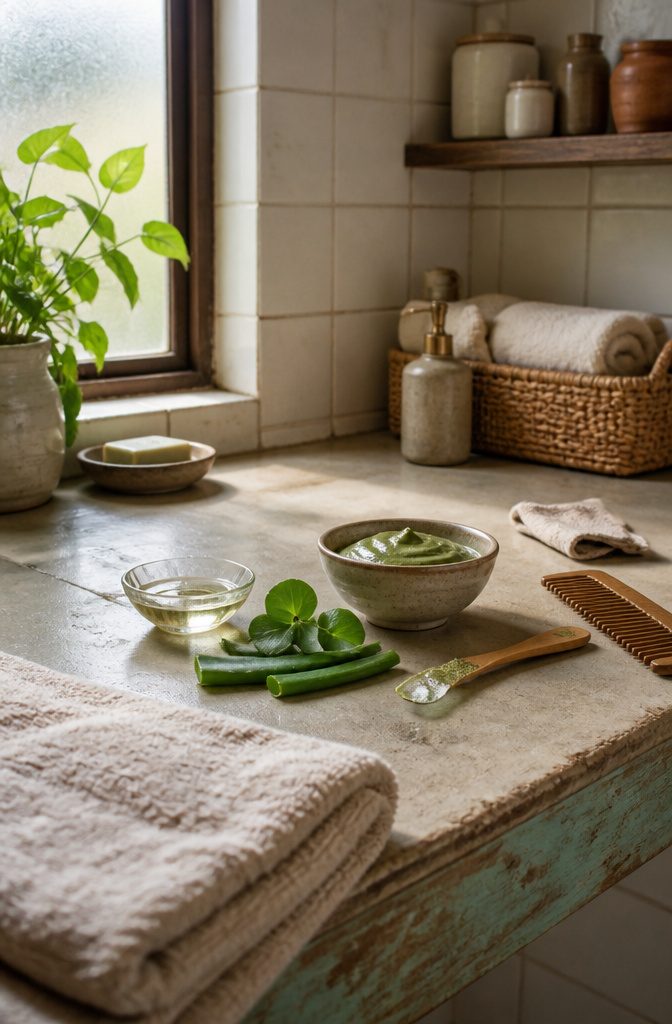
Brahmi is a creeping Ayurvedic herb that shows up in hair oils and masks for strengthening the follicle and reducing hair fall.
The alkaloids in Bacopa monnieri are thought to activate proteins responsible for hair growth, and when applied topically the herb forms a protective layer around the cuticle that cuts down on split ends.
I find it particularly interesting that brahmi is also linked to stress-related hair loss, which makes sense given its known calming effects on the nervous system.
You can use brahmi powder mixed with aloe vera for a soothing scalp treatment, or look for it as an ingredient in herbal hair oils blended with coconut, jojoba, or sweet almond oil as the carrier.
It locks in moisture and keeps the scalp clean without stripping natural oils, which matters if you’re dealing with dryness or irritation alongside thinning.
5. Neem for Scalp Irritation and Dandruff
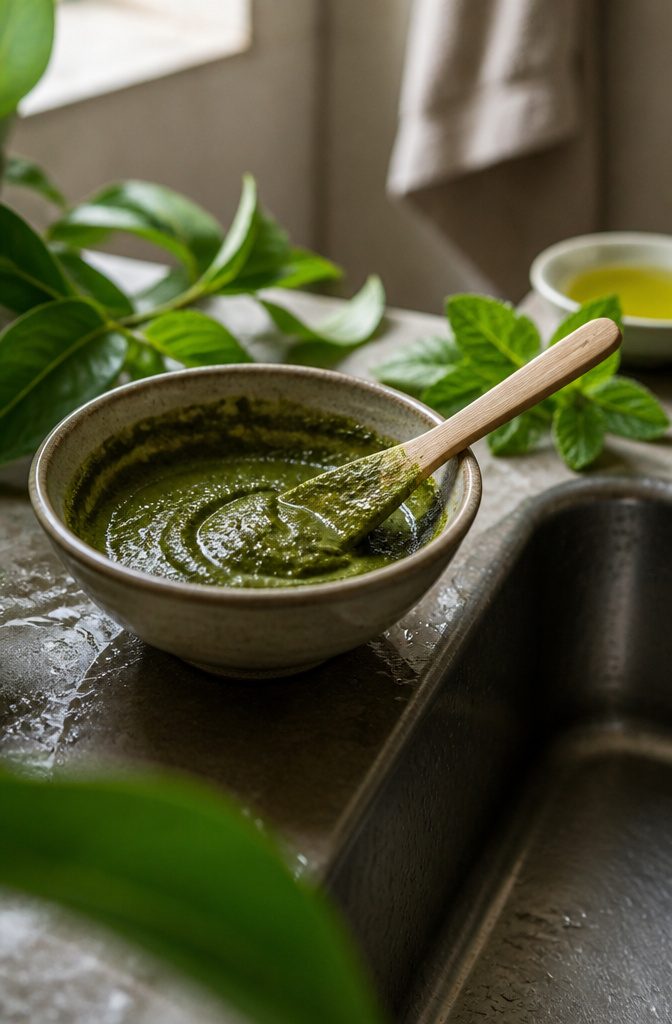
Neem treats dandruff, itching, and inflammation directly on the scalp.
It’s antimicrobial, antibacterial, and cooling, which makes it useful when the scalp is irritated or flaking. Fresh neem leaves can be steeped in warm water and used as a rinse after shampooing.
Neem powder mixed with plain water forms a paste thick enough to apply as a scalp mask; leave it on for twenty to thirty minutes, then rinse with a light shampoo before it dries completely.
For an oil blend that addresses dandruff, neem pairs well with tea tree and mint, all three known for calming an irritated scalp. Avoid blow drying after treatment if you want the most benefit.
6. Green Tea as a DHT-Related Rinse
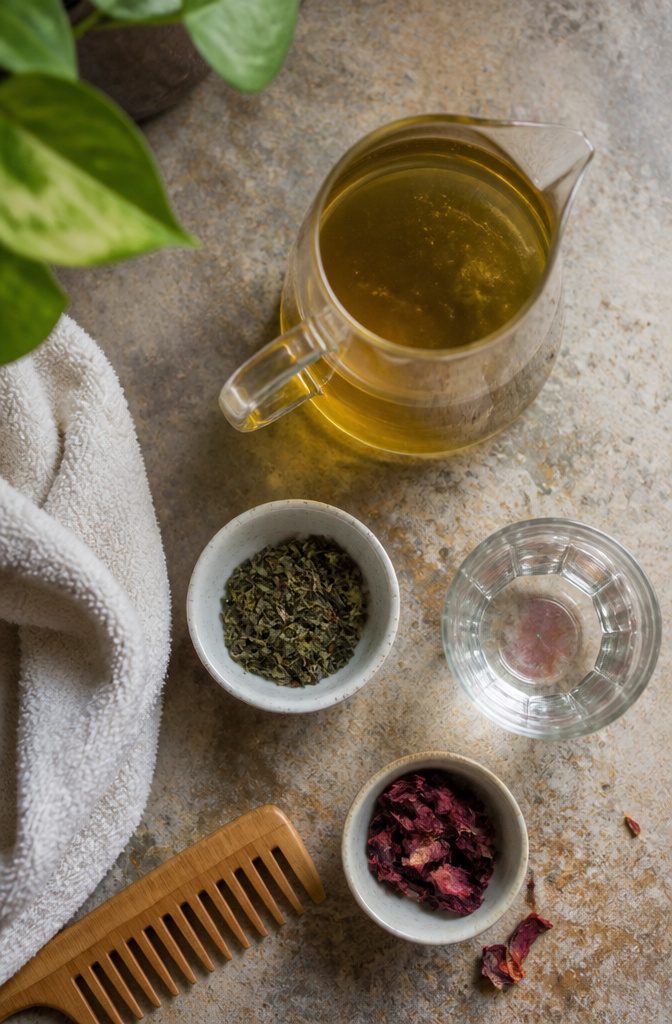
Green tea makes a good rinse for shine and bounce, and you can mix the powdered form with rose water to create a scalp mask.
The interest in green tea as a growth remedy comes from antioxidants that may block DHT, the hormone linked to pattern hair loss.
That makes it sound promising, but the growth study cited in most discussions was done on rats rather than people, so the evidence is thin.
I still think it’s worth trying if you already like herbal rinses.
Brew a strong cup, let it cool, and pour it over clean hair after shampousing, or work the liquid into your scalp and leave it for ten minutes before rinsing.
The antioxidant benefit is real even if the growth claim is speculative, and pairing green tea with hibiscus in a rinse adds softness. If your scalp runs oily, the astringent quality helps cut buildup without stripping.
7. Saw Palmetto to Block DHT
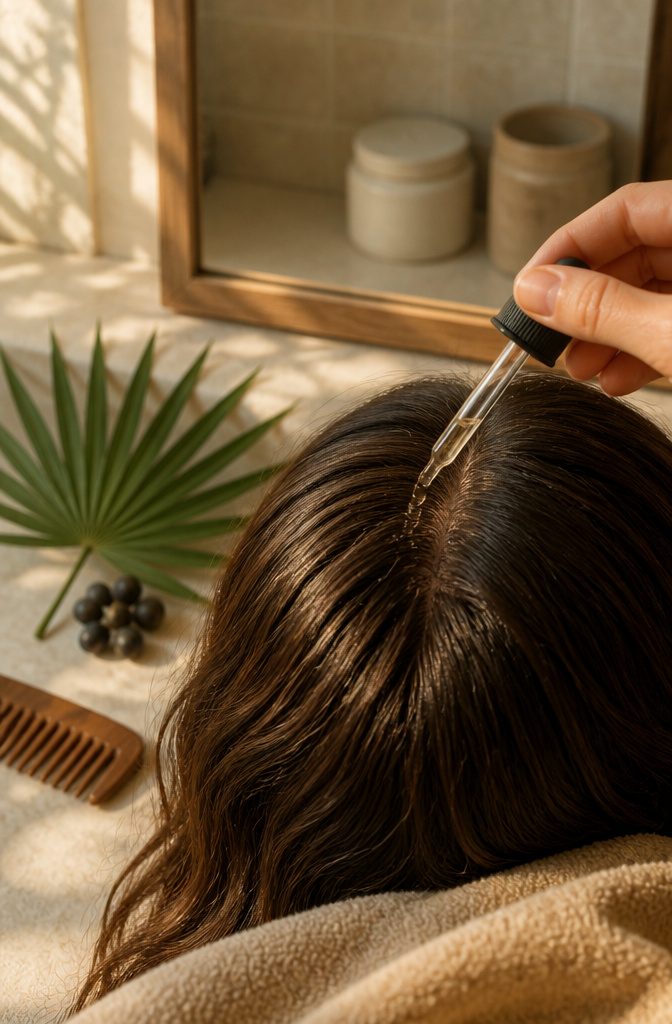
Saw palmetto (Serenoa repens) works by inhibiting DHT production, the testosterone byproduct that contributes to hair loss.
Studies show that regular use encourages hair follicle growth and reduces inflammatory responses that damage follicles and interfere with regrowth. The mechanism is straightforward: blocking DHT gives follicles room to function without that particular interference.
The herb comes as an oral supplement or a topical treatment.
Capsules work internally as a DHT blocker, while serums, shampoos and conditioners deliver saw palmetto directly to the scalp. Both forms have been shown to promote regrowth, so the choice depends on whether you prefer systemic support or targeted application.
I like that the topical route gives you control over where it goes, particularly if thinning is concentrated in one area rather than diffuse.
8. Moringa for Nutrient Support
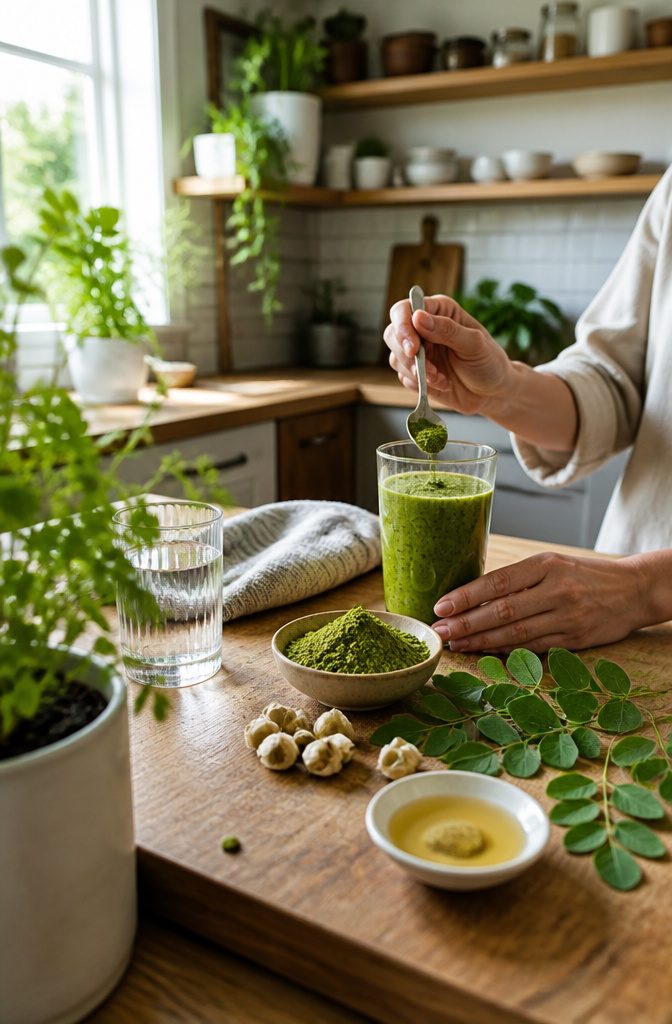
Moringa shows up in two forms: powdered leaf taken as a supplement and extract worked into hair masks or oils. The appeal is nutrient density.
Moringa leaf carries iron, vitamins A and E, and amino acids that hair protein relies on, so the reasoning goes that delivering those to the scalp or building them into the diet supports stronger growth from the root.
Topically, moringa extract appears in masks meant to improve circulation at the scalp and reinforce the follicle.
Internally, the powder is often stirred into smoothies or taken in capsules, the idea being that hair reflects what the body has to work with.
Whether moringa oil or leaf powder does more than a balanced diet paired with a decent scalp massage is harder to pin down, but the nutrient profile is real and the applications are straightforward.
9. Fenugreek in Masks and Oil Blends
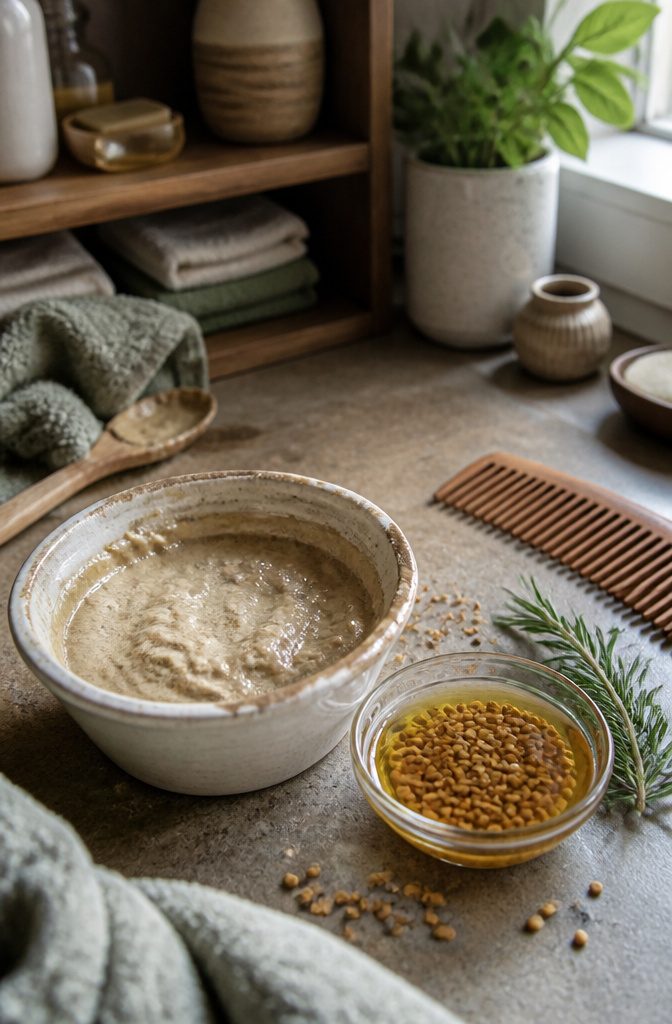
Fenugreek shows up in two main forms: ground into masks with coconut milk or soaked in olive oil alongside rosemary for a scalp treatment. The seed powder swells when wet, turning into a slippery paste that coats each strand.
Mixed with coconut milk, it works as a deep conditioner for dry or damaged hair. Infused in olive oil, it becomes a pre-wash treatment you massage into the scalp and leave for thirty minutes to an hour before shampooing.
The appeal is fuller, shinier hair with less shedding over time. Fenugreek ranks among the most effective natural options for encouraging growth, and the results tend to show in texture before volume.
Hair feels softer and looks glossier after a few applications, and breakage drops when the strand itself is better conditioned.
The oil blend takes longer to prep but stores for weeks; the mask goes on fresh each time but mixes in under a minute.
10. Ginseng and Follicle Activity
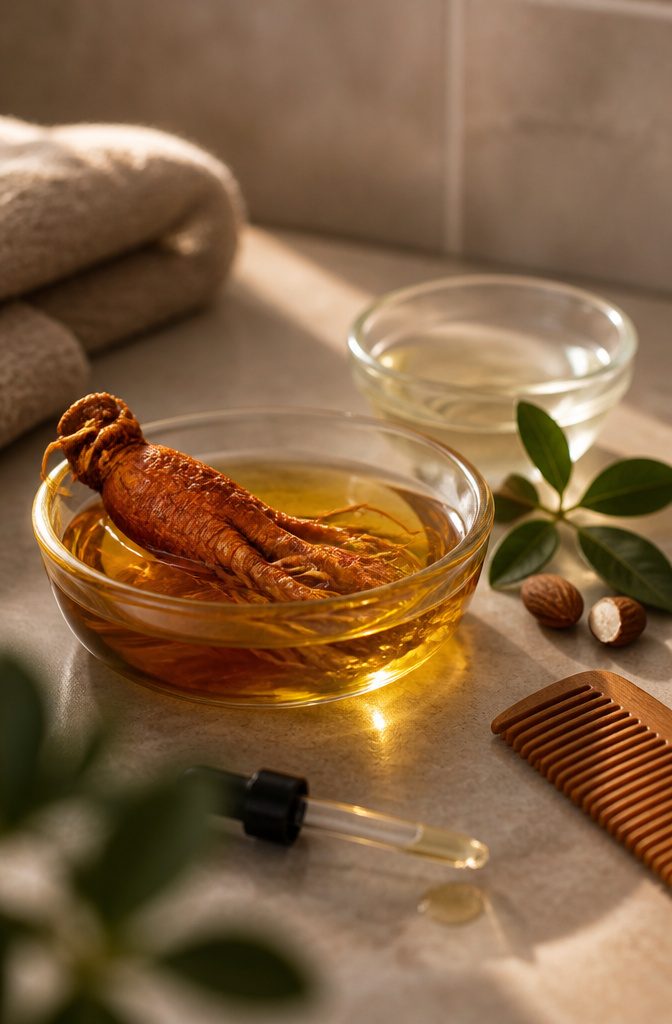
Red ginseng, or Panax ginseng, turns up in herbal hair oils alongside carrier bases like coconut, jojoba and sweet almond oil.
The proposed mechanism centers on saponins, compounds thought to inhibit an enzyme called 5α-reductase that links to male-pattern hair loss.
A 2021 study found red ginseng stimulated hair growth, though researchers aren’t certain whether the effect is direct or works by waking up dormant follicles indirectly.
I like that ginseng has some actual research behind it rather than folklore alone, but the evidence is narrow and the exact pathway unclear.
If you’re mixing your own oil or looking at a commercial blend, ginseng is a reasonable inclusion.
Just know that no herb regrows a full head of hair on its own, and if you take ginseng as a supplement you need to check it won’t interfere with medications you’re already on.
Hair Loss Has Multiple Causes
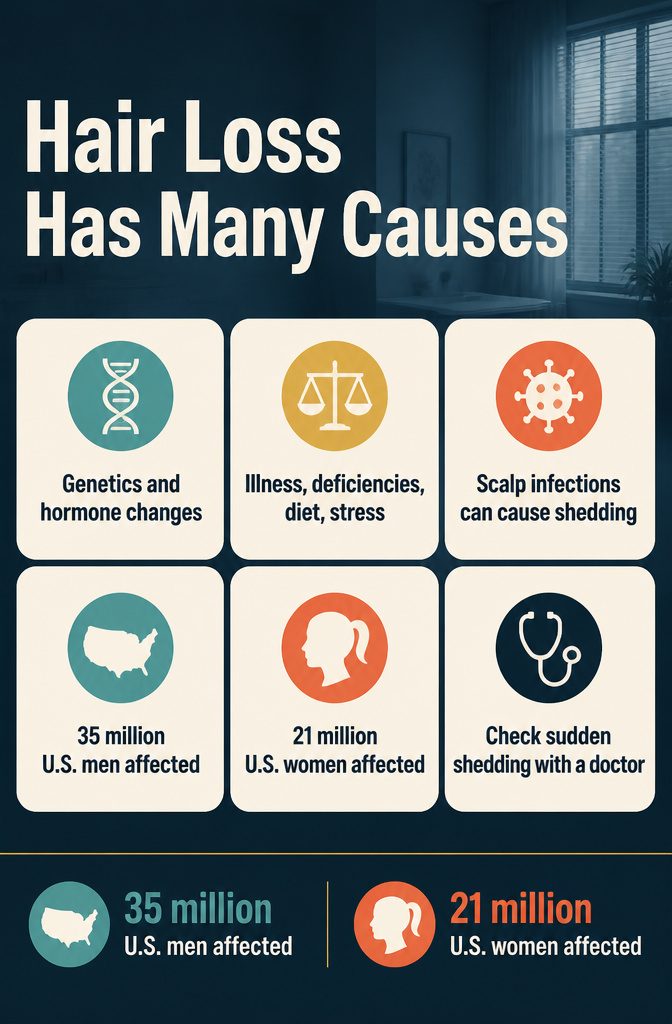
Hair loss doesn’t have one trigger.
Genetics, hormone changes, illness, nutrient deficiencies, diet, and stress all play a part, and around 35 million men and 21 million women in the United States deal with poor hair growth at some point in their lives.
Hormone shifts and vitamin gaps can thin hair just as easily as inherited pattern loss, and some scalp infections such as ringworm cause shedding too.
That variety matters because not every remedy fits every cause. If you’ve noticed sudden increased shedding, a doctor can check for underlying conditions and treat what’s actually driving the loss rather than masking it.
Herbs may support regrowth in some cases, but they aren’t a blanket fix. Identifying the cause first means you’re addressing the right problem, not just hoping a topical treatment covers all the bases.
Evidence Is Limited and Results Vary
The research base for herbal hair growth is still developing. Most studies call for more work, and many of the promising results so far come from animal trials rather than human ones.
That gap means the benefits seen in a lab may not translate directly to your scalp, and additional human studies are still needed before we can draw firm conclusions about efficacy or dosing.
Even when an herb shows promise, it cannot regrow a full head of hair if follicles have stopped functioning or if underlying health conditions are driving the loss.
Herbs can support existing follicles, improve scalp conditions that interfere with growth, and sometimes slow shedding, but they work within biological limits.
Results vary from person to person, and what helps one scalp may do little for another depending on genetics, hormone levels, and the root cause of thinning.
Application Methods Differ by Remedy
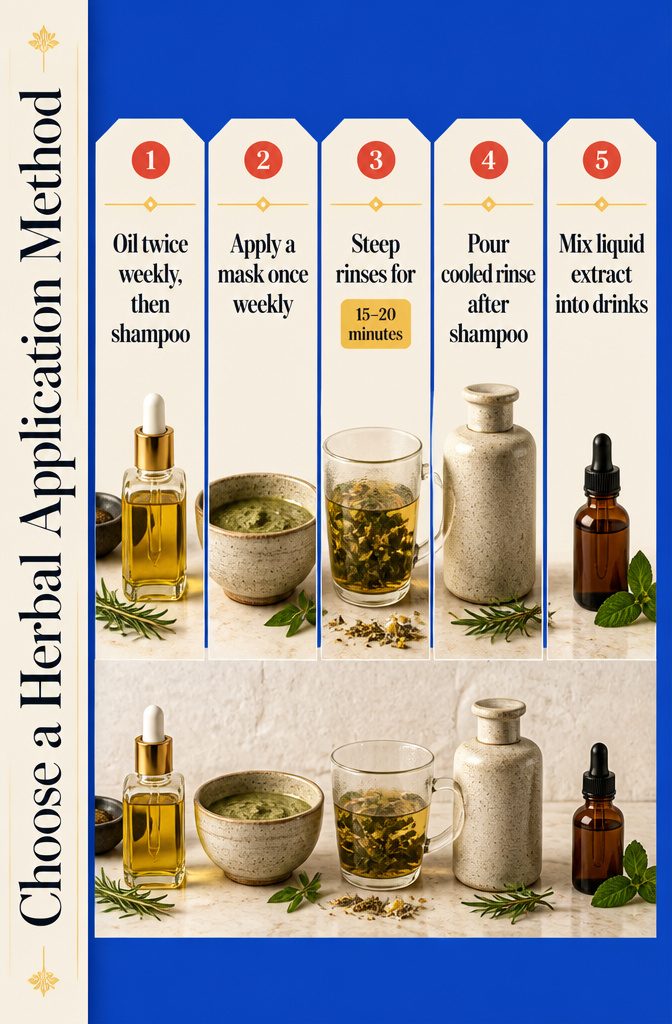
The same herb turns up in different forms depending on what fits your routine. You’ll find herbal ingredients as oils, supplements, shampoos, masks, rinses, teas, and extracts.
- Oil two times per week, then shampoo afterward. More frequent washing strips natural oils and slows growth.
- Apply a mask once weekly. Consistency matters more than intensity with herbs, since they work gradually.
- Steep rinses for 15–20 minutes when making your own. Pour the cooled liquid over hair after shampooing to add shine and soothe the scalp.
- Liquid extracts absorb faster than tablets and skip fillers, so they fit easily into drinks or smoothies.
- Topical serums, shampoos, and conditioners deliver ingredients directly to thinning areas. For blocking DHT, topical saw palmetto works as well as taking it internally.
Lighter oils like argan or jojoba suit fine hair, while coconut and castor oil handle thicker textures.
Scalp Massage May Improve Hair Health
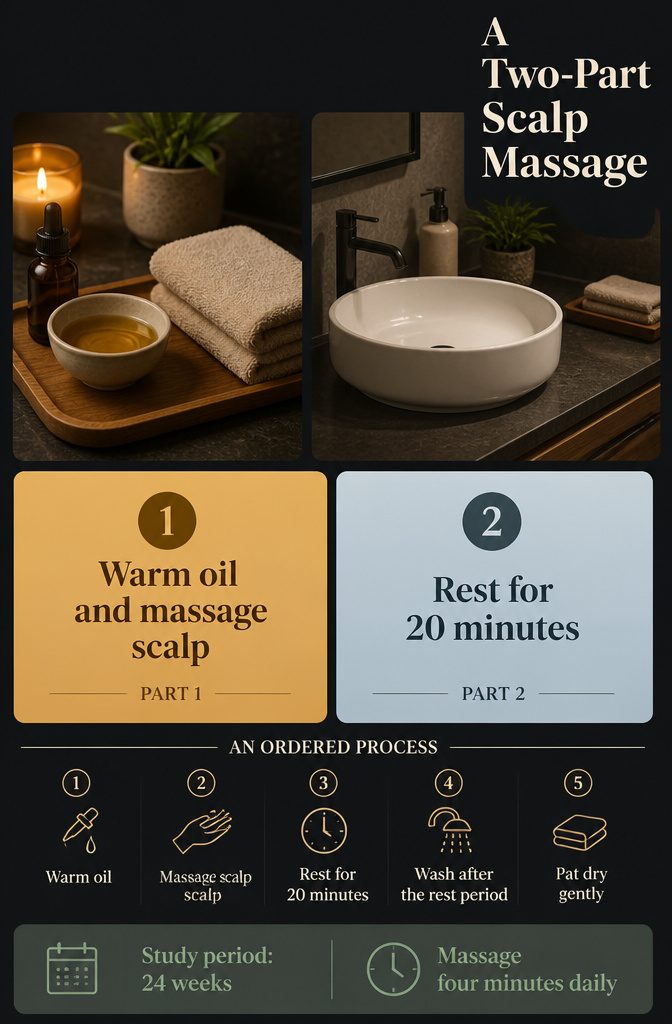
Studies on scalp massage for four minutes daily over 24 weeks showed improvement in hair growth among Japanese men, and separate research involving people with androgenic alopecia or chemotherapy-induced hair loss found that massage helped stabilize or improve regrowth compared to control groups.
The mechanism appears to be increased circulation to the follicles, which can deliver more oxygen and nutrients to the scalp.
Warm-oil massage is the traditional method, typically followed by 20 minutes of rest before washing.
I think of it as a two-part step rather than a quick rub during shampooing: the warmth helps the oil absorb, and the rest period lets it work into the scalp before rinsing.
Gentle pressure on the scalp itself is the goal, sometimes extending to the neck and shoulders to release tension that may restrict blood flow to the head.
Nutrition and Internal Health Support Topical Care
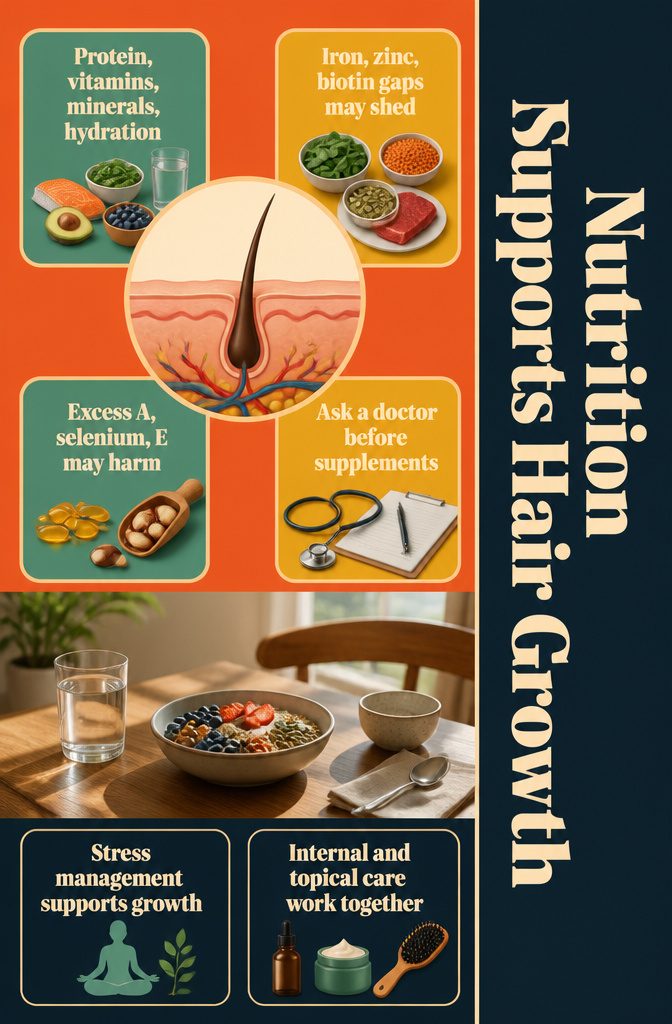
Hair growth starts before you touch a bottle or open a jar. Adequate protein, vitamins, minerals, and hydration give follicles what they need to produce strong strands, and circulation carries those nutrients to the scalp.
Deficiencies in iron, zinc, or biotin can stall growth or increase shedding, but loading up on supplements without knowing your levels carries its own risk: excess vitamin A, selenium, or vitamin E has been linked to hair loss in some people.
Talk to a doctor before starting anything, especially if you already eat a varied diet.
Chronic stress disrupts the growth cycle, and managing it matters as much as the products you reach for. Internal balance and topical care work together, not separately.
Frequently Asked Questions
What are the best natural herbs for promoting hair growth?
Rosemary, amla, hibiscus, brahmi, fenugreek, and saw palmetto are among the most studied herbs for herbal hair growth.
Rosemary improves scalp circulation, amla supports collagen production in follicles, and saw palmetto blocks DHT, the hormone linked to pattern hair loss. Each works through a different mechanism, so the best choice depends on what’s driving your thinning.
How do I make a DIY herbal hair rinse at home?
Steep herbs like rosemary, hibiscus, or green tea in warm water for 15 to 20 minutes, then let the liquid cool and strain out the solids.
Pour the rinse over clean hair after shampooing to add shine and soothe the scalp. You can combine herbs in one batch if you want multiple benefits in a single rinse.
Can I use herbal treatments if I have dandruff or an irritated scalp?
Neem clears dandruff and inflammation directly, usually within 2 to 3 uses.
You can steep fresh neem leaves as a rinse, mix neem powder with water for a scalp mask, or blend neem oil with tea tree and mint for an antimicrobial treatment.
All 3 herbs are antibacterial and cooling, which makes them useful when the scalp is flaking or irritated.
How often should I use herbal oils or masks for best results?
Apply herbal oils 2 times per week, then shampoo afterward, since more frequent washing strips natural oils and slows growth.
Use a mask once weekly. Herbs work gradually, so consistency matters more than intensity.
Are herbal hair products safe for all hair types?
Most herbs are gentle enough for any hair type, but you still need to match the carrier oil to your texture.
Lighter oils like argan or jojoba suit fine hair, while coconut and castor oil handle thicker strands. The herb itself is less likely to cause a problem than the base it sits in.
Which extract is good for hair growth?
Amla, moringa, hibiscus, and saw palmetto extracts all appear in herbal hair growth formulas.
Amla delivers vitamin C for collagen production, moringa supplies amino acids and vitamins that hair protein relies on, and saw palmetto blocks DHT. The best extract depends on whether you’re addressing nutrient deficiency, circulation, or hormone-related thinning.
Do hair growth liquids really work?
Liquid extracts absorb faster than tablets and skip fillers, so they fit easily into drinks or smoothies. Results depend on the formulation and consistent use over weeks or months, and liquids work best when paired with topical scalp care.
No liquid alone regrows a full head of hair if follicles have stopped functioning or an underlying health condition is driving the loss.
What are the side effects of hair growth tablets?
Some tablets cause digestive upset or skin irritation, depending on the person and the formula.
Excess vitamin A, selenium, or vitamin E has been linked to hair loss in some people, so loading up on supplements without knowing your levels carries its own risk.
Talk to a doctor before starting anything, especially if you already eat a varied diet.
How can I make my hair grow naturally?
Adequate protein, vitamins, minerals, and hydration give follicles what they need to produce strong strands, and circulation carries those nutrients to the scalp.
Pair that internal support with herbal oils or masks applied 2 times per week, and massage the scalp for 4 minutes daily to increase blood flow.
Managing stress matters as much as the products you reach for, since chronic stress disrupts the growth cycle.
What helps your hair grow faster?
Scalp massage for 4 minutes daily over 24 weeks showed improvement in hair growth among Japanese men, and separate studies found massage helped stabilize or improve regrowth in people with pattern hair loss or chemotherapy-induced shedding.
Nutrition, hydration, stress management, and herbal extracts all support the process, but hair grows only half an inch per month regardless of what you apply. Faster growth isn’t realistic, but healthier growth is.
What are the options for natural hair regrowth?
Scalp massage, herbal oils, masks, supplements, stress management, and nutrition all support regrowth, but the best approach depends on what’s causing the loss.
Genetics, hormone changes, nutrient deficiencies, and scalp infections each require different care. If you’ve noticed sudden increased shedding, a doctor can check for underlying conditions and treat what’s actually driving the loss rather than masking it.
Can you grow hair faster and thicker naturally?
Oils, masks, nutrition, and scalp massage can support thicker, healthier strands, but results take months to years and depend on the cause of thinning.
Hair grows only half an inch per month, so even after taking supplements it would take 5 to 6 years for a new strand to reach shoulder length from the scalp.
Natural remedies improve texture, reduce breakage, and may slow shedding, but they don’t produce overnight results.