Homemade hair masks range from a simple avocado and honey blend you can mix in under a minute to a textured paste that takes sectioning, careful application, and a shower cap.
If your hair is dry or coarse, reach for moisture-rich combinations like mashed avocado with a tablespoon each of honey and oil.
Egg yolk adds protein that coats each strand temporarily, but it needs cool water to rinse or it cooks, and the smell lingers unless you shampoo twice.
1. Avocado, Honey, and Oil Treatment
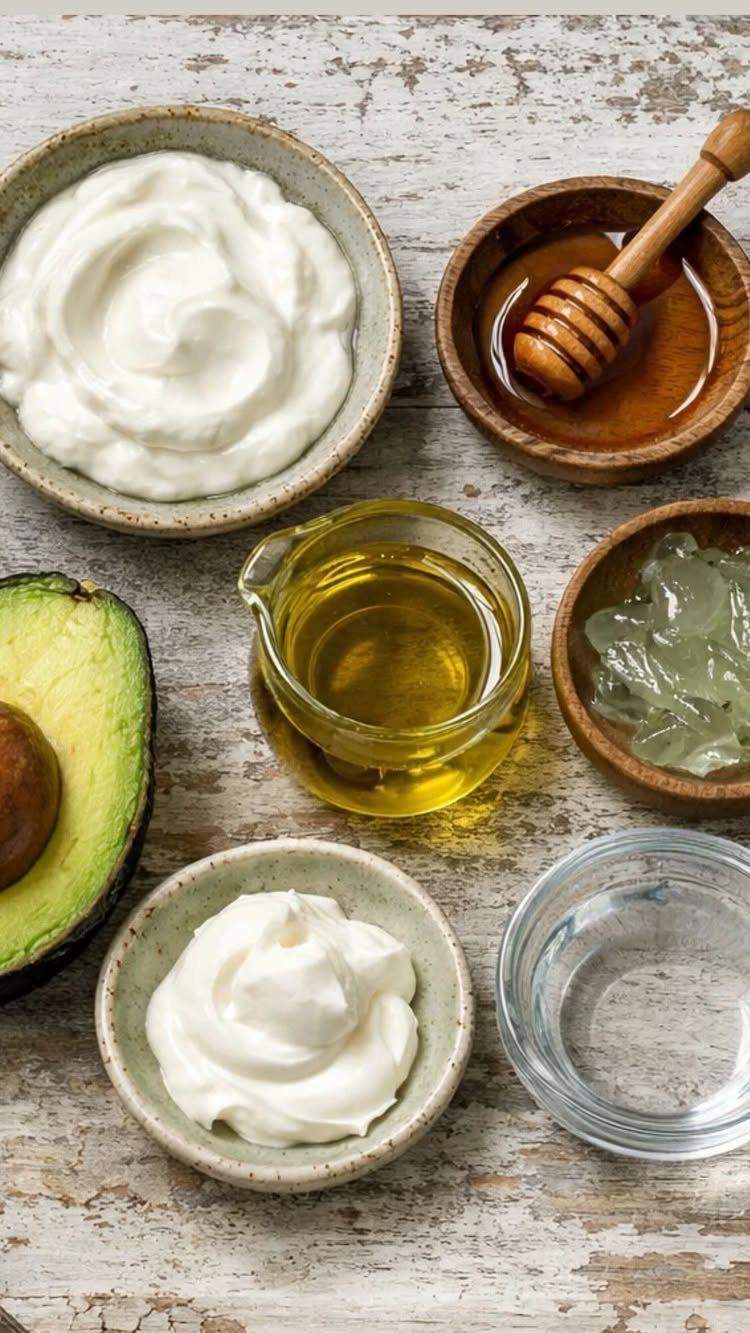
Mash half an avocado with a tablespoon each of honey and olive or coconut oil until smooth.
Apply it to damp hair from roots to ends, leave for 20 minutes, then rinse thoroughly with lukewarm water and shampoo twice to remove all the oil.
The avocado adds moisture and fatty acids, honey pulls in hydration, and the oil seals it in. This works best for dry or coarse hair that feels brittle or looks dull.
It’s messy and takes longer to wash out than a store-bought mask, but the ingredients are cheap if you already keep them in the kitchen.
2. Egg, Green Powder, and Oil
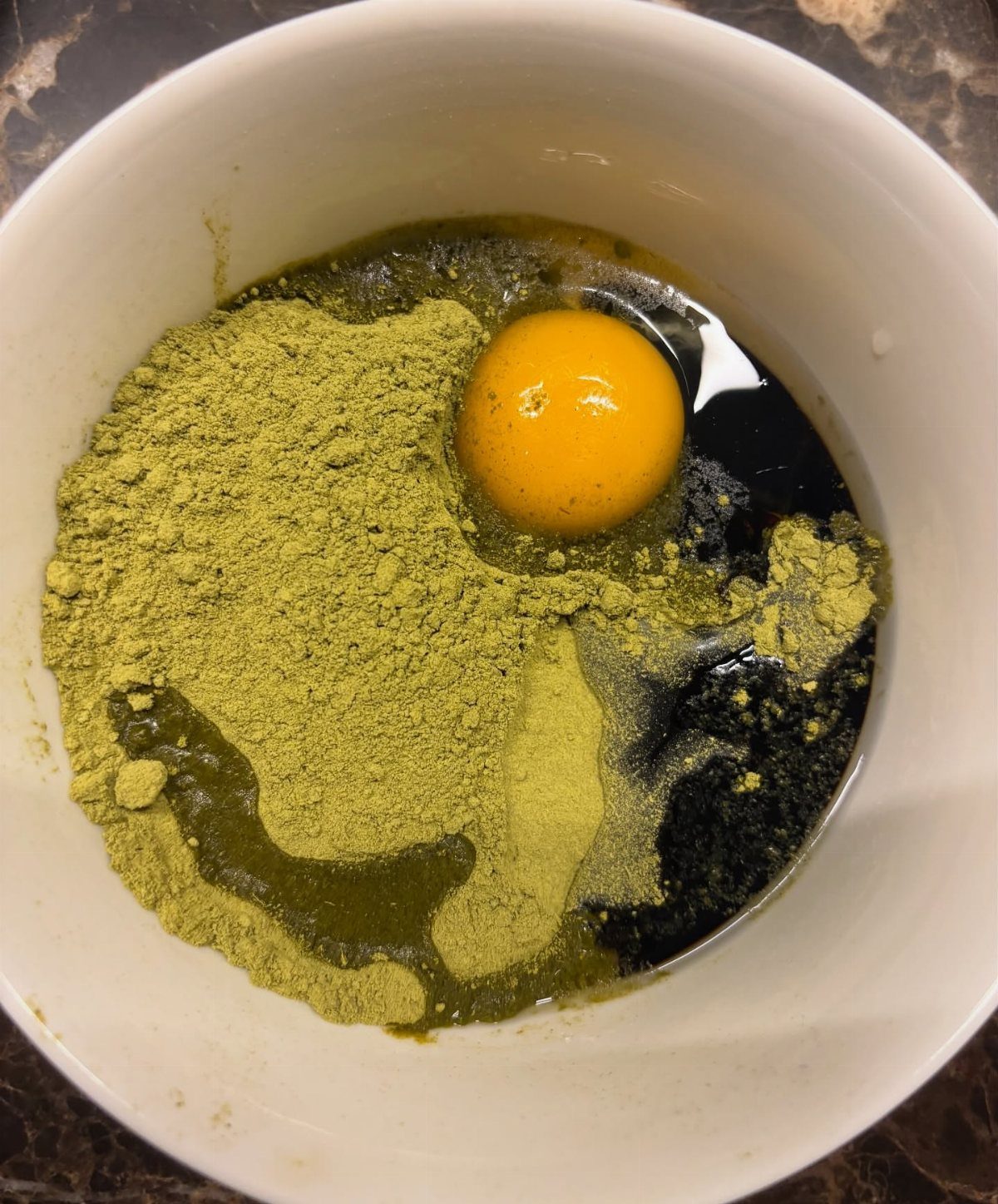
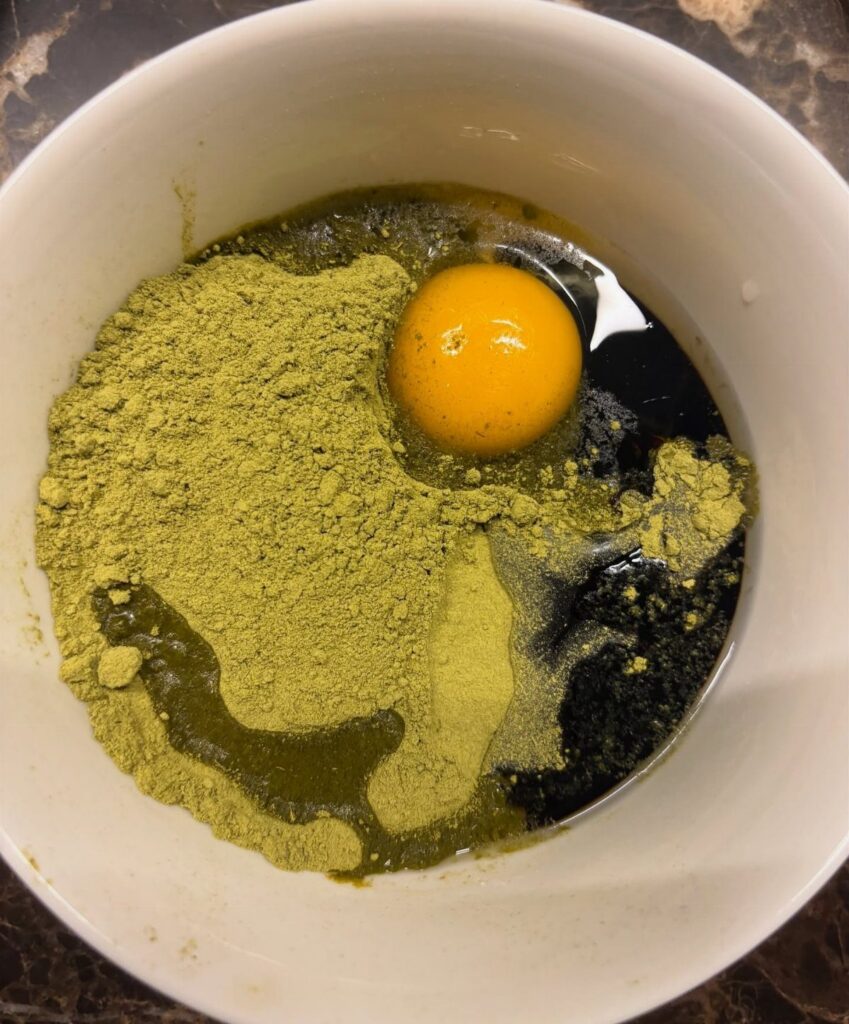
This one mixes raw egg yolk with powdered greens and oil, a protein-rich base combined with whatever herbal or vegetable powder suits your goal.
Egg yolk is high in protein and fats that temporarily coat each strand, and green powders like spirulina, matcha, or wheatgrass add vitamins and antioxidants.
Whisk the yolk first, then stir in about half a teaspoon of powder and a tablespoon of oil until smooth. Egg can smell strong and needs thorough rinsing, but the conditioning effect is immediate.
3. Textured Hair Paste Application
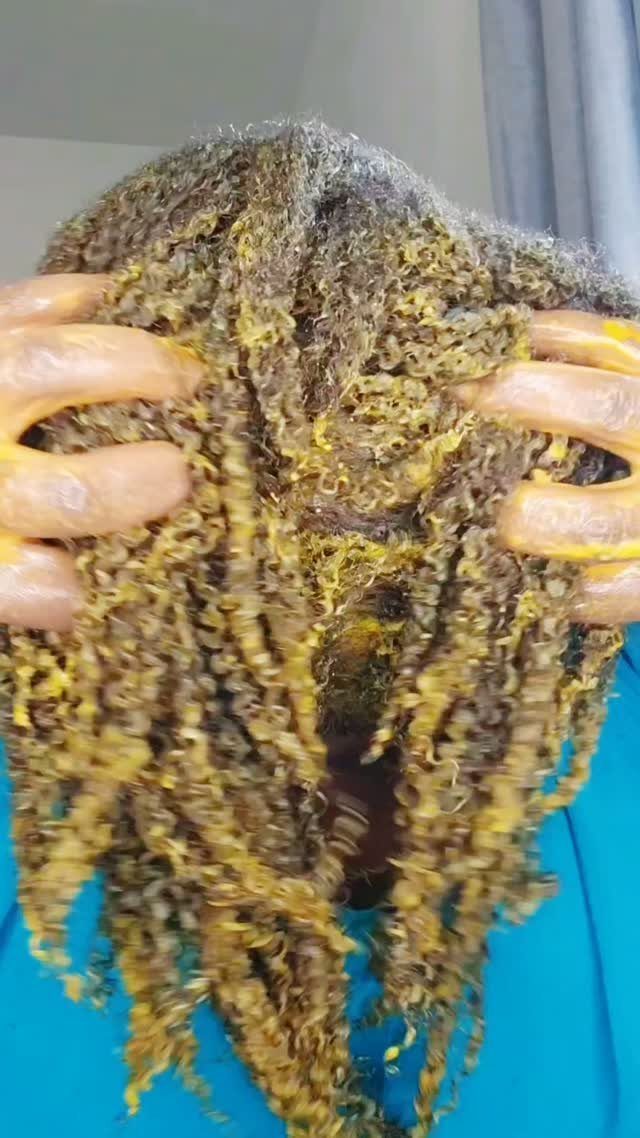
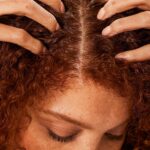
A thick, textured paste worked section by section through curly hair gives you control over where the treatment goes and how long it sits.
The yellowish-green color here suggests turmeric, matcha, or spirulina mixed with oil or yogurt, all of which can condition dry ends or soothe the scalp.
Mix your base (mashed avocado, banana, or Greek yogurt) with a tablespoon of your chosen powder and enough oil to get a spreadable consistency. Rinse thoroughly, shampoo twice if needed.
This method works best for coarse or high-porosity hair that needs deep moisture and doesn’t mind the cleanup.
4. Creamy White Conditioning Mask
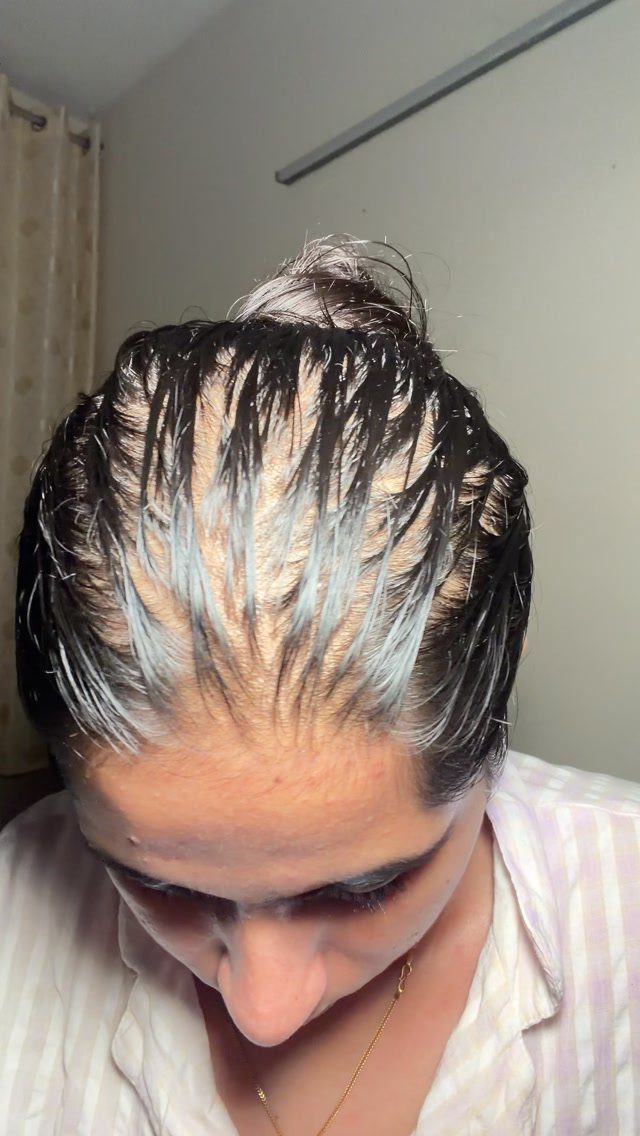
This is a straight conditioning mask, the kind you mix from yogurt or a commercial deep conditioner and apply all over.
The white creamy texture sits thick enough to hold hair up in a gathered bun, which keeps it out of the way while the treatment soaks in.
If you’re making it yourself, plain unsweetened yogurt or a mix of yogurt and coconut oil gives that thick white consistency. Apply generously from mid-length to ends, twist hair up and clip it, then leave for 20 to 30 minutes before rinsing.
The bun method contains the mess and frees your hands, which matters when most homemade masks drip.
Applying and Rinsing Masks
Start with clean, towel-dried damp hair for most masks. If you’re using a purely oil-based treatment, dry hair may absorb it better since oil can repel water.
Section long or thick hair with clips so you can work through it methodically.
Apply with your fingers or a small brush, starting at the roots if your hair is dry or you’re treating dandruff, or starting mid-shaft if your hair is oily.
Comb it through with a wide-tooth comb so the mask reaches every section.
Put on a shower cap to stop drips, then add a towel if you want extra warmth. If you used egg, keep the rinse water cool so it doesn’t cook.
Frequency and Color Cautions
Start slowly with homemade masks: weekly or fortnightly works for most concerns, or monthly if your hair doesn’t need frequent intervention.
Lemon dries strands, can irritate skin, and strips color from treated hair. If your hair is very light and you’re using green tea or vinegar, spot-test on a hidden section first to make sure it doesn’t shift the tone.
Honey, banana, and coconut oil hold moisture without compromising color, which makes them safer choices for bleached or dyed hair that already needs extra hydration.
Cautions and Realistic Results
Some pantry ingredients dry hair or sting the scalp, so test a small amount first. A dermatologist’s advice matters here: not every natural ingredient is gentle.
Pantry masks are less effective than formulated products for cleansing, conditioning, manageability, and detangling. They soften and add moisture, but they won’t match a commercial conditioner’s slip or control.
Rosemary and castor oil feel nice but lack proof they accelerate growth. If you’re looking for actual regrowth, minoxidil is the FDA-approved option that works.
Frequently Asked Questions
What is the best homemade mask for your hair?
No single mask wins for everyone; it depends on whether your hair is dry, oily, damaged, or fine. If your hair is fine, skip heavy oils and reach for yogurt or a lighter base that won’t weigh it down.
How long should I leave a homemade hair mask in for?
Leave most masks on for 20 to 30 minutes, which gives your hair enough time to absorb the treatment without creating unnecessary mess.
What is a hair mask?
A hair mask is a thicker treatment you leave on much longer than conditioner, sometimes 20 minutes, sometimes overnight. The ingredients are more concentrated, which lets them add moisture, soften strands, and address scalp issues in a way quick conditioner can’t.