Most people grow their hair to a certain point and stall there, not because growth stopped, but because the ends broke off as fast as the roots produced.
The fix is less about what you add and more about what you stop doing: rough towel-drying, skipping conditioner, letting split ends travel up the shaft unchecked.
Hair grows roughly half an inch a month regardless. Whether that length survives depends on the 4 inches between your roots and your ends.
1. Set a Target Length and Plan the In-Between Shape
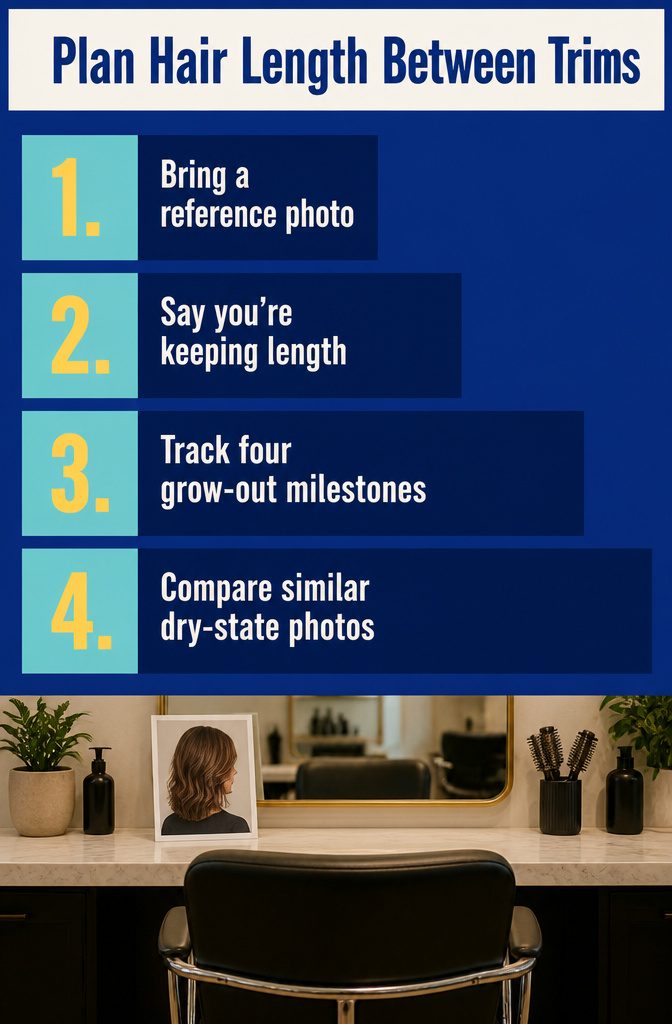
Bring a reference photo to your next trim and say plainly that you’re keeping length.
That single sentence changes the entire conversation: your stylist can focus on which areas genuinely need tidying versus which ones just need more time. A good trim at this stage touches the outline without resetting the overall shape.
Knowing where you are in the grow-out changes what you ask for.
The 4 practical milestones worth tracking are a long top with short sides, fringe reaching the eyes, hair around the ears and neck, and enough length to gather. Each one opens a different conversation at the chair.
Compare progress using photos taken from the same angles in a similar dry state. Small shifts read clearly across photos in a way the morning mirror won’t show you.
2. Clean the Scalp Without Roughing Up the Lengths
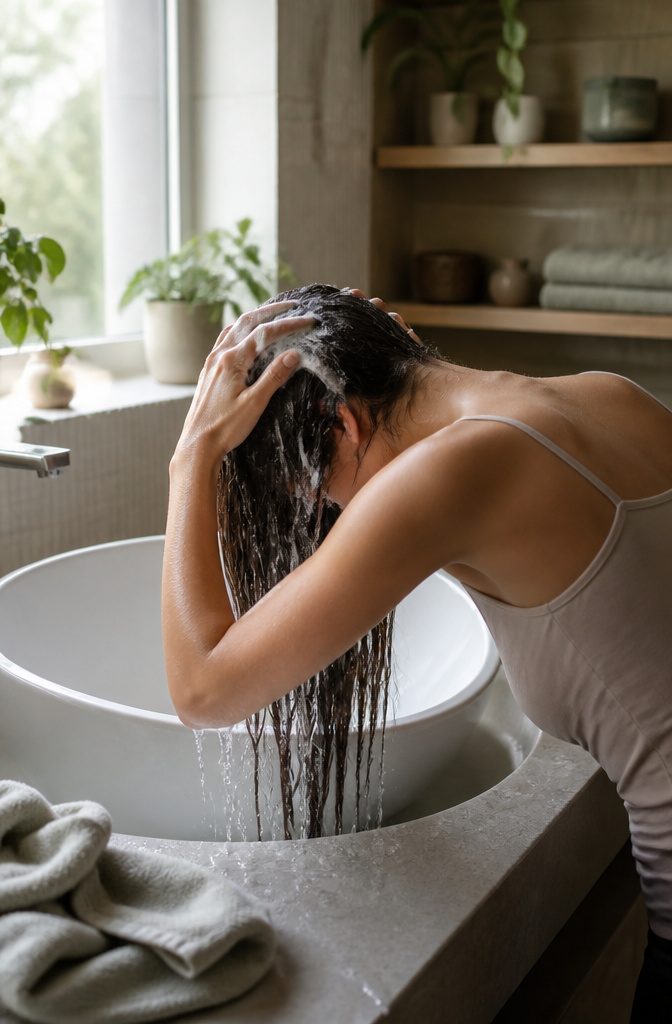
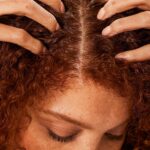
Shampoo reaches the scalp, not the lengths.
Concentrate it at the roots, work it in with your fingertips, then let the rinse water carry it down the ends without piling or scrubbing them together. That friction is where breakage starts.
Washing 2 or 3 times a week lets your natural oils penetrate and do repair work on their own, according to celebrity stylist Ken Paves. That said, frequency is personal.
Oilier scalps, heavy sweat, or a lot of product buildup may genuinely need more; fine hair that gets weighed down fast may need less. Neither schedule is wrong, as long as the scalp actually gets clean.
3. Condition the Lengths
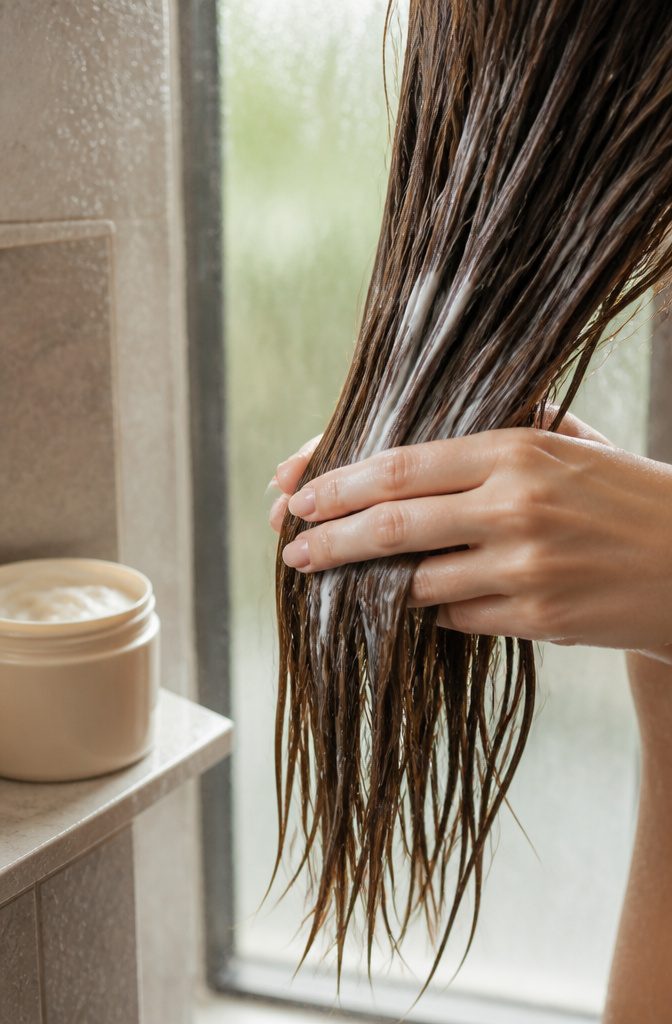
Ends that tangle or feel rough are the first sign that the lengths need more attention than a quick rinse-and-go.
Apply conditioner from mid-shaft to ends, work it through, and give it a full minute to distribute before rinsing. That contact time matters more than the product itself.
Once a week, work a hair mask from root to tip rather than skipping the scalp.
If you follow that with a leave-in product, choose one formulated to stay in. Leaving a rinse-out conditioner on overnight isn’t the same thing and can cause buildup without the benefits a true leave-in delivers.
4. Detangle Gently From Ends Upward
Let me write this section about detangling hair gently from ends upward.
Key facts from passages:
- Begin near the ends, release each knot gently and work upwards
- Pulling from the roots through a knot does not make the job easier
- Stop if the tool catches and separate the section with your fingers
- By Vilain XL Comb is a wide-tooth option for longer hair (but I should be careful with product specs – the passage just names it as a wide-tooth option)
- A comb’s job is to organise the hair, not to stimulate faster growth
- Hair is susceptible to breakage when wet – detangle before shampooing where possible
- Water exposure swells and stretches the hair’s shaft, causes the shingle-like outer layer to lift
- Adding stress from brushing in that state can cause it to break (Sabina Wizemann, GH Beauty Lab senior chemist)
- If you have to detangle wet: apply leave-in conditioner from roots to ends, use wide-tooth comb or detangling brush, work from ends up in small sections to prevent tearing
Rules:
- First person singular "I" but only 7% of sentences open with "I"
- No lists in this section (flowing prose in paragraphs)
- No banned words
- No em dashes
- Hard ceiling 120 words
- Bold the thing the reader came for, once or twice max
- Don’t repeat the heading
- No introduction, no summary
- Every sentence delivers one of five things: recommendation, measurement/figure, how-to move, cost/limit, judgment call
- Be opinionated
- Don’t mention sources
- Voice from the sample: personal, measured, plain language
- Paragraph length from sample: about 3-5 sentences
Let me think about the voice sample paragraph lengths.
The sample has paragraphs of roughly 3-4 sentences. Let me aim for that weight.
Let me think about what I need to cover:
- Work from ends upward in small sections
- Stop if tool catches, loosen knots with fingers
- GH’s recommendation to detangle before shampooing where possible
- For wet hair: leave-in conditioner, wide-tooth comb or detangling brush, working upward from ends
The water/swelling detail from Wizemann is good – it explains WHY detangling before shampooing matters.
Let me draft:
Paragraph 1: The case for detangling before shampooing (wet hair is vulnerable), and the method.
Paragraph 2: The technique – ends upward, small sections, fingers for knots.
Let me write:
Detangle before you shampoo if you can. Water swells and stretches the hair shaft, which lifts the shingle-like outer layer, and brushing in that state is where strands snap.
If wet detangling is unavoidable, work a leave-in conditioner through from roots to ends first and reach for a wide-tooth comb or detangling brush, not a regular brush.
Start at the ends and move upward in small sections.
Pulling a comb down from the roots through a knot just tightens it. The moment the tool catches, stop and separate that tangle with your fingers before the comb goes any further.
Let me count words:
Paragraph 1: "Detangle before you shampoo if you can. Water swells and stretches the hair shaft, which lifts the shingle-like outer layer, and brushing in that state is where strands snap.
If wet detangling is unavoidable, work a leave-in conditioner through from roots to ends first and reach for a wide-tooth comb or detangling brush, not a regular brush."
That’s about 62 words.
Paragraph 2: "Start at the ends and move upward in small sections.
Pulling a comb down from the roots through a knot just tightens it. The moment the tool catches, stop and separate that tangle with your fingers before the comb goes any further."
That’s about 43 words.
Total: ~105 words.
Under the 120 ceiling. Good.
Let me check:
- No banned words ✓
- No em dashes ✓
- First person: I don’t actually use "I" here. I could add a judgment call with "I" but it’s not required. Let me see if I should weave in an "I" somewhere for the judgment call.
Actually, let me reconsider. Let me add a judgment somewhere.
Let me revise:
"Detangle before you shampoo if you can. Water swells and stretches the hair shaft, which lifts the shingle-like outer layer, and brushing in that state is where strands snap.
If wet detangling is unavoidable, I’d work a leave-in conditioner through from roots to ends first and reach for a wide-tooth comb or detangling brush, not a regular brush."
That adds "I’d" mid-sentence. Good.
Let me recount: same roughly.
Actually let me check the sentences open with "I" – none do, which matches the "only 7%" guidance.
Let me check every sentence delivers one of the five:
- "Detangle before you shampoo if you can." – how-to move ✓
- "Water swells and stretches the hair shaft, which lifts the shingle-like outer layer, and brushing in that state is where strands snap." – this is a fact/explanation… it’s a how-to move with reasoning. It’s the WHY. Hmm, is it one of the five? It’s a specific recommendation backed by explanation. I think it counts as a how-to move / judgment.
- "If wet detangling is unavoidable, I’d work a leave-in conditioner through from roots to ends first and reach for a wide-tooth comb or detangling brush, not a regular brush." – recommendation ✓
- "Start at the ends and move upward in small sections." – how-to move ✓
- "Pulling a comb down from the roots through a knot just tightens it." – judgment call ✓
- "The moment the tool catches, stop and separate that tangle with your fingers before the comb goes any further." – how-to move ✓
Good. All sentences carry weight.
Bold: I have one bold phrase. One is fine.
No heading repeated. No introduction.
No summary. No lists.
Paragraph weight: the sample has paragraphs of about 3 sentences.
Mine has 3 and 3. Good.
Let me check the "every specific claim must come from passages" rule:
- "Water swells and stretches the hair shaft" – from passage 2 ✓
- "lifts the shingle-like outer layer" – from passage 2 ✓
- "brushing in that state is where strands snap" – passage 2 says "adding stress from brushing in that state can cause it to break" ✓
- "leave-in conditioner through from roots to ends" – passage 2 ✓
- "wide-tooth comb or detangling brush" – passage 2 ✓
- "not a regular brush" – this is my judgment/inference. The passage says use a "gentler wide-tooth comb or detangling brush to reduce friction." The implication is a regular brush is worse. This is a reasonable judgment call, not a specific factual claim. OK.
- "Start at the ends and move upward in small sections" – passages 1 and 2 ✓
- "Pulling a comb down from the roots through a knot just tightens it" – passage 1 says "Pulling from the roots through a knot does not make the job easier" ✓
- "stop and separate that tangle with your fingers" – passage 1 says "Stop if the tool catches and separate the section with your fingers" ✓
All good. No invented numbers or product specs.
Wait – should I mention the Wizemann quote? I should state the fact as a fact, not attribute it.
I’ve done that – I stated the water/swelling fact without attribution. Good.
One more check: "not a regular brush" – is this too much of an invention? The passage recommends a "gentler wide-tooth comb or detangling brush to reduce friction."
Saying not a regular brush is the logical flip side. I think it’s a fair judgment call.
But let me make it cleaner. Actually "not a regular brush" might be implying something.
Let me just keep the recommendation positive and drop the "not a regular brush" or keep it as a judgment. I think it’s fine.
Actually, let me reconsider whether I should keep "not a regular brush."
The passage says to use a wide-tooth comb or detangling brush to reduce friction. A regular brush would create more friction.
This is a reasonable inference and a judgment call. Keep it.
Let me finalize. Word count check:
"Detangle before you shampoo if you can. Water swells and stretches the hair shaft, which lifts the shingle-like outer layer, and brushing in that state is where strands snap.
If wet detangling is unavoidable, I’d work a leave-in conditioner through from roots to ends first and reach for a wide-tooth comb or detangling brush, not a regular brush.
Start at the ends and move upward in small sections.
Pulling a comb down from the roots through a knot just tightens it. The moment the tool catches, stop and separate that tangle with your fingers before the comb goes any further."
Let me count precisely: Paragraph 1: Detangle(1) before(2) you(3) shampoo(4) if(5) you(6) can(7). Water(8) swells(9) and(10) stretches(11) the(12) hair(13) shaft(14), which(15) lifts(16) the(17) shingle-like(18) outer(19) layer(20), and(21) brushing(22) in(23) that(24) state(25) is(26) where(27) strands(28) snap(29).
If(30) wet(31) detangling(32) is(33) unavoidable(34), I’d(35) work(36) a(37) leave-in(38) conditioner(39) through(40) from(41) roots(42) to(43) ends(44) first(45) and(46) reach(47) for(48) a(49) wide-tooth(50) comb(51) or(52) detangling(53) brush(54), not(55) a(56) regular(57) brush(58).
Paragraph 2: Start(59) at(60) the(61) ends(62) and(63) move(64) upward(65) in(66) small(67) sections(68).
Pulling(69) a(70) comb(71) down(72) from(73) the(74) roots(75) through(76) a(77) knot(78) just(79) tightens(80) it(81). The(82) moment(83) the(84) tool(85) catches(86), stop(87) and(88) separate(89) that(90) tangle(91) with(92) your(93) fingers(94) before(95) the(96) comb(97) goes(98) any(99) further(100).
100 words. Under 120.
Hmm, "just tightens it" – is that accurate? The passage says "Pulling from the roots through a knot does not make the job easier."
My phrasing "just tightens it" is an interpretation. The knot doesn’t necessarily tighten, it just doesn’t help and can cause damage.
Let me rephrase to be more accurate: "Pulling a comb down from the roots through a knot doesn’t make the job easier and stresses the hair." Actually that’s getting long.
Let me try: "Dragging a comb from the roots down through a knot only loads more hair against it." Hmm, that’s adding detail not in the passage.
Let me go with something closer to the source meaning: "Pulling a comb down from the roots through a knot doesn’t make the job easier."
But that’s almost verbatim. Never copy a sentence."
How about: "Raking a comb from the roots through a knot only forces more hair into it."
That’s my phrasing of the same fact. But "forces more hair into it" is an inference.
Let me try: "Starting from the roots only drags every knot below into a tighter mess." Hmm, "tighter mess" implies tightening which may not be accurate.
Actually, the passage says pulling from roots through a knot doesn’t make it easier. The practical reason is you’re pulling the full length of hair against the knot.
Let me say: "Coming down from the roots just pulls the full length of hair against each knot." That’s an inference but a reasonable mechanical one.
Or simpler: "Raking down from the roots doesn’t make any knot easier to clear."
That keeps the meaning, changes the phrasing. Good.
Let me revise: "Start at the ends and move upward in small sections.
Raking down from the roots doesn’t make any knot easier to clear. The moment the tool catches, stop and separate that tangle with your fingers before going any further."
Recount paragraph 2: Start(1) at(2) the(3) ends(4) and(5) move(6) upward(7) in(8) small(9) sections(10).
Raking(11) down(12) from(13) the(14) roots(15) doesn’t(16) make(17) any(18) knot(19) easier(20) to(21) clear(22). The(23) moment(24) the(25) tool(26) catches(27), stop(28) and(29) separate(30) that(31) tangle(32) with(33) your(34) fingers(35) before(36) going(37) any(38) further(39).
Total now: 58 + 39 = 97 words. Good.
Final check on banned words: none present.
No em dashes. Good.
Let me also check: am I being opinionated enough? "I’d work a leave-in conditioner through" carries preference. "not a regular brush" is a judgment.
The structure recommends a clear method. I think it’s good.
The key actionable takeaway is the wide-tooth comb/detangling brush for wet hair. That’s what I bolded.
Good. Actually, maybe the more important thing readers came for is "detangle before shampooing" – that’s a surprising, useful tip.
But I have the comb/brush bolded which is also useful. One bold is fine per the guidance.
Actually, let me reconsider the bold.
What’s THE answer here? The two key takeaways: (1) detangle before shampooing when possible, and (2) for wet hair, use leave-in + wide-tooth comb/detangling brush, working ends up.
I think bolding "a wide-tooth comb or detangling brush, not a regular brush" is good – it’s the specific tool recommendation that a scanner would want.
I’m satisfied.
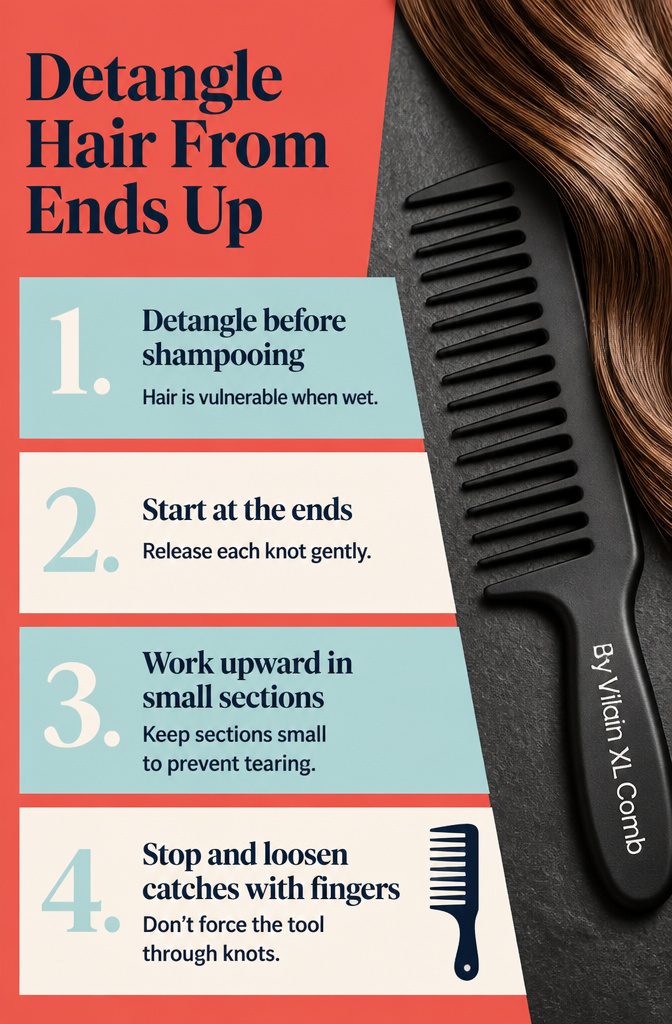
Let me finalize.Detangle before you shampoo if you can. Water swells and stretches the hair shaft, which lifts the shingle-like outer layer, and brushing in that state is where strands snap.
If wet detangling is unavoidable, I’d work a leave-in conditioner through from roots to ends first and reach for a wide-tooth comb or detangling brush, not a regular brush.
Start at the ends and move upward in small sections.
Raking down from the roots doesn’t make any knot easier to clear. The moment the tool catches, stop and separate that tangle with your fingers before going any further.
5. Reduce Heat and Rough Handling
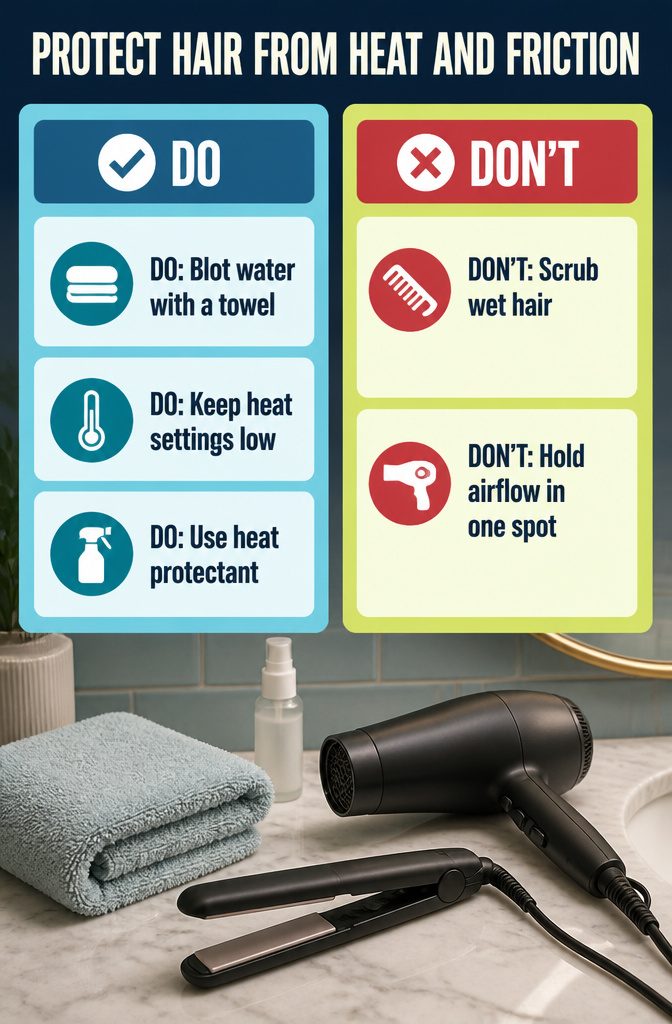
Wet hair is fragile, and blotting excess water out with a towel rather than scrubbing it is one of the faster ways to cut down on mechanical breakage. Rubbing roughens the cuticle and causes frizz at best, snapping at worst.
Heat adds a second layer of damage. Curling irons, flat irons, and blow dryers can all cause breakage, and the risk goes up the higher the temperature runs.
Keeping the setting low and moving the airflow constantly, rather than holding it on one section, reduces how much stress each pass puts on the strand.
A heat-protectant product used before any heated tool helps form a barrier that limits moisture loss during styling, which is where a lot of the structural damage starts.
None of this requires giving up heat styling entirely. Lower temperatures and a consistent protectant get you most of the way there.
6. Trim to Manage Ends and Shape, Not to Speed Growth
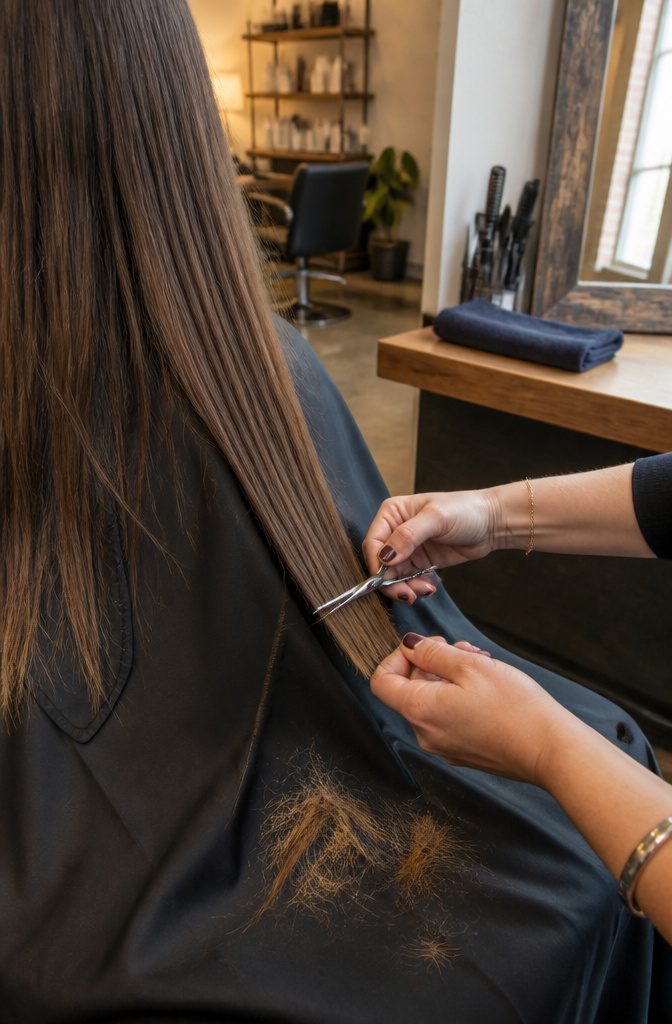
Before any trim, know exactly what’s coming off and why.
That conversation with your stylist is worth having every single time, because trimming removes length, and it does not make hair grow faster. Hair grows about a half inch per month regardless of how often you cut it.
What trims do is stop split ends from traveling up the shaft and snapping the strand, which is how you lose the length you already have.
The schedule that actually protects length: a half inch every 3–4 months while actively growing, or a half inch monthly if you’re only maintaining. Once your ends are consistently healthy, that window can stretch to 6 months or longer between cuts.
7. Make the Awkward Stage Wearable
The user wants me to write one section of a blog article about hair growth. Let me review the requirements carefully.
The section is: "Make the Awkward Stage Wearable"
Coverage:
- Practical styling for in-between lengths
- When the front falls into the eyes, try a side part or loose sweep
- As the sides grow, guide them in the same direction instead of repeatedly cutting them short
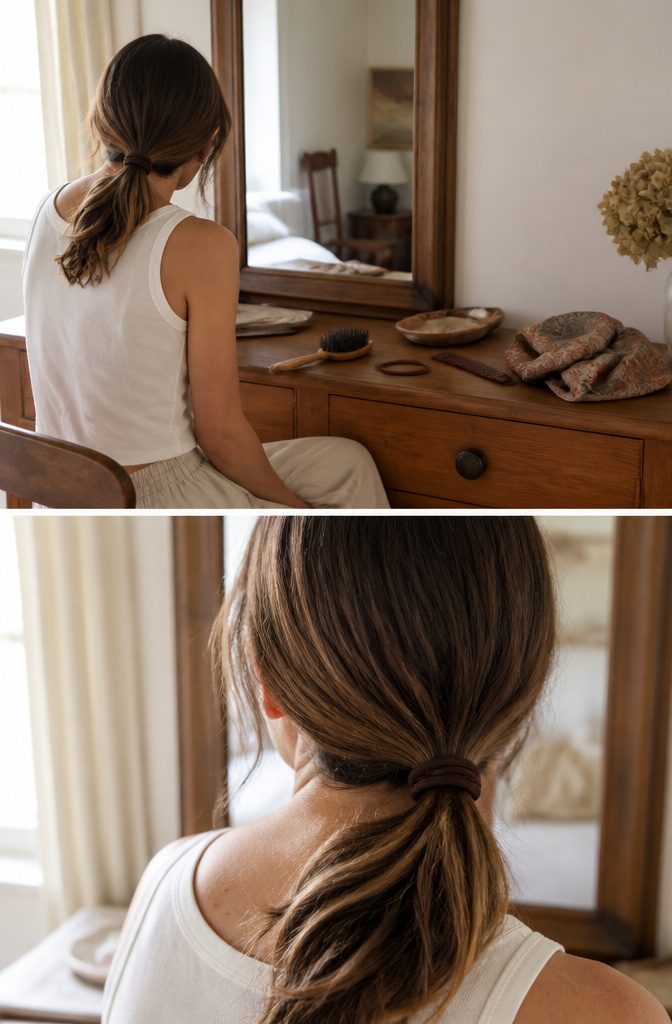
- When hair is long enough to gather, use a loose tie and leave short pieces out
Layout: Flowing prose in paragraphs. No lists.
Source passages give me:
- Side part or loose sweep back when front falls into eyes
- Guide sides in same direction rather than repeatedly cutting short
- By Vilain Flow Pomade (light hold, natural shine) – but wait, this is a men’s product/brand context (slikhaarshop is men’s grooming). The article is for US women 18-44. But pomade is more of a men’s styling product. Hmm, but the rule says every product name must come from passages. I can mention it but I should consider the audience. Let me think about whether to include it.
Actually, the voice sample is from a women’s hair blog. But I’m writing for US women.
The rules say product names come from passages or the section does without them. I think I can mention it as an option but frame it appropriately.
Actually, pomade for women’s hair at awkward stage… it could work for taming. But let me be careful.
Wait – the coverage specifically says: "When hair is long enough to gather, use a loose tie and leave short pieces out." This is NOT in the source passages.
Let me re-read.
"What this section must cover: Cover practical styling for in-between lengths: when the front falls into the eyes, try a side part or loose sweep; as the sides grow, guide them in the same direction instead of repeatedly cutting them short.
When hair is long enough to gather, use a loose tie and leave short pieces out."
The rule says write the section without it rather than inventing it.
Hmm, but the rules also say every specific claim must come from passages. A "loose tie and leave short pieces out" is a styling technique, not a number/product/figure.
It’s general advice. Actually, let me re-read the rules.
A styling technique like "use a loose tie and leave short pieces out" isn’t a number, dimension, weight, price, material, product name, etc.
It’s a how-to move. So I think it’s fine to include it as a practical recommendation.
For a women’s audience, "barber" might be "stylist."
But the word "barber" is from the passage. I could say "stylist" since the audience is women who go to stylists.
Actually, the voice sample mentions "hairdresser." I think "stylist" works for the audience.
Now let me think about the voice. The sample paragraphs are 3-5 sentences long.
First person singular "I" but only 7% of sentences open with "I." Most sentences lead with subject/material/reader.
Let me think about banned words. I need to avoid all those listed words.
No em dashes. Numbers in digits.
HARD CEILING: 120 words.
Let me also note: the audience is US women 18-44. The source passages are from a men’s grooming site (Slikhaarshop is Danish men’s barbering).
The product By Vilain Flow Pomade is a men’s product. I need to adapt this for women.
I can mention a light-hold product but maybe frame it more generally. Actually, the rules say product names come from passages.
I could mention By Vilain Flow Pomade as an option but it might feel odd for the women’s audience. Let me think…
This means I CAN use product names from passages, not that I MUST.
So I could reference it or not. Given the women’s audience, a pomade might be less relatable but light-hold styling products are universal.
Actually, let me reconsider. The section is about managing awkward in-between length for women growing their hair long.
Pomade is somewhat unusual for women’s hair but not unheard of for taming. I’ll keep it light and mention it as one option among the styling advice.
Let me also think about bold.
I should bold the thing the reader came for, once or twice. The key insight here might be "guide them in the same direction rather than repeatedly cutting them short" since that’s the core advice about not cutting during grow-out.
Let me draft:
When the front starts falling into the eyes, a side part or a loose sweep back buys you a few weeks without a cut.
The temptation is to trim the sides every time they get unruly, but guide them in one direction as they grow instead of cutting them back short and you keep the length you are trying to build.
A light-hold pomade gives softer control than a stiff gel if you want the sweep to stay put but still move; By Vilain Flow Pomade does this with a natural shine, and a firmer hold product works if you want it locked in place.
Once the hair is long enough to gather, a loose tie takes the weight off without snapping strands, and leaving the short front pieces out lets them blend in on their own schedule.
Ask your stylist to show you the intermediate style before you leave the chair so you can recreate it at home.
Let me count words:
When(1) the(2) front(3) starts(4) falling(5) into(6) the(7) eyes(8) a(9) side(10) part(11) or(12) a(13) loose(14) sweep(15) back(16) buys(17) you(18) a(19) few(20) weeks(21) without(22) a(23) cut(24).
The(25) temptation(26) is(27) to(28) trim(29) the(30) sides(31) every(32) time(33) they(34) get(35) unruly(36) but(37) guide(38) them(39) in(40) one(41) direction(42) as(43) they(44) grow(45) instead(46) of(47) cutting(48) them(49) back(50) short(51) and(52) you(53) keep(54) the(55) length(56) you(57) are(58) trying(59) to(60) build(61).
A(62) light-hold(63) pomade(64) gives(65) softer(66) control(67) than(68) a(69) stiff(70) gel(71) if(72) you(73) want(74) the(75) sweep(76) to(77) stay(78) put(79) but(80) still(81) move(82) By(83) Vilain(84) Flow(85) Pomade(86) does(87) this(88) with(89) a(90) natural(91) shine(92) and(93) a(94) firmer(95) hold(96) product(97) works(98) if(99) you(100) want(101) it(102) locked(103) in(104) place(105).
Once(106) the(107) hair(108) is(109) long(110) enough(111) to(112) gather(113) a(114) loose(115) tie(116) takes(117) the(118) weight(119) off(120) without(121) snapping(122) strands(123) and(124) leaving(125) the(126) short(127) front(128) pieces(129) out(130) lets(131) them(132) blend(133) in(134) on(135) their(136) own(137) schedule(138).
Ask(139) your(140) stylist(141) to(142) show(143) you(144) the(145) intermediate(146) style(147) before(148) you(149) leave(150) the(151) chair(152) so(153) you(154) can(155) recreate(156) it(157) at(158) home(159).
That’s 159 words. Too many.
The ceiling is 120. Let me cut.
Let me trim.
- Side part or loose sweep when front falls in eyes
- Guide sides in same direction, don’t keep cutting them short
- Loose tie, leave short pieces out (from brief)
- Light hold product (By Vilain Flow Pomade from passage)
- Ask stylist to demonstrate
I need to cut to under 120. Let me tighten.
Draft 2:
When the front starts falling into the eyes, a side part or a loose sweep back buys a few weeks without a cut.
The move that kills grow-outs is trimming the sides every time they get unruly; guide them in one direction as they lengthen instead of cutting them back short, because every trim steals the length you are trying to build.
A light-hold pomade gives softer control than a stiff gel and keeps the sweep moving; By Vilain Flow Pomade does this with a natural shine, or pick a firmer hold if you want it locked in place.
Once the hair is long enough to gather, a loose tie takes the weight off without snapping strands, and leaving the short front pieces out lets them catch up on their own.
Ask your stylist to show you the intermediate style before you leave the chair.
Let me count:
When(1) the(2) front(3) starts(4) falling(5) into(6) the(7) eyes(8) a(9) side(10) part(11) or(12) a(13) loose(14) sweep(15) back(16) buys(17) a(18) few(19) weeks(20) without(21) a(22) cut(23).
The(24) move(25) that(26) kills(27) grow-outs(28) is(29) trimming(30) the(31) sides(32) every(33) time(34) they(35) get(36) unruly(37) guide(38) them(39) in(40) one(41) direction(42) as(43) they(44) lengthen(45) instead(46) of(47) cutting(48) them(49) back(50) short(51) because(52) every(53) trim(54) steals(55) the(56) length(57) you(58) are(59) trying(60) to(61) build(62).
A(63) light-hold(64) pomade(65) gives(66) softer(67) control(68) than(69) a(70) stiff(71) gel(72) and(73) keeps(74) the(75) sweep(76) moving(77) By(78) Vilain(79) Flow(80) Pomade(81) does(82) this(83) with(84) a(85) natural(86) shine(87) or(88) pick(89) a(90) firmer(91) hold(92) if(93) you(94) want(95) it(96) locked(97) in(98) place(99).
Once(100) the(101) hair(102) is(103) long(104) enough(105) to(106) gather(107) a(108) loose(109) tie(110) takes(111) the(112) weight(113) off(114) without(115) snapping(116) strands(117) and(118) leaving(119) the(120) short(121) front(122) pieces(123) out(124) lets(125) them(126) catch(127) up(128) on(129) their(130) own(131).
Ask(132) your(133) stylist(134) to(135) show(136) you(137) the(138) intermediate(139) style(140) before(141) you(142) leave(143) the(144) chair(145).
145 words.
Still too many. Let me cut more.
I need to prioritize. The core advice:
- Side part/sweep for front
- Guide sides, don’t keep cutting short (the bold-worthy insight)
- Loose tie, leave short pieces out
- Product suggestion
- Ask stylist
Let me cut the product detail and the stylist line to trim, or combine more tightly.
Draft 3:
When the front falls into the eyes, a side part or a loose sweep back buys a few weeks without a cut.
The move that stalls a grow-out is trimming the sides every time they get unruly; guide them in one direction as they lengthen instead of cutting them back short, because every trim takes the length you are building.
A light-hold pomade like By Vilain Flow Pomade keeps the sweep in place with natural shine; go firmer if you want it locked.
Once the hair is long enough to gather, a loose tie takes the weight off without snapping strands, and leaving the short front pieces out lets them catch up on their own schedule.
Ask your stylist to demonstrate the intermediate style before you leave.
Count:
When(1) the(2) front(3) falls(4) into(5) the(6) eyes(7) a(8) side(9) part(10) or(11) a(12) loose(13) sweep(14) back(15) buys(16) a(17) few(18) weeks(19) without(20) a(21) cut(22).
The(23) move(24) that(25) stalls(26) a(27) grow-out(28) is(29) trimming(30) the(31) sides(32) every(33) time(34) they(35) get(36) unruly(37) guide(38) them(39) in(40) one(41) direction(42) as(43) they(44) lengthen(45) instead(46) of(47) cutting(48) them(49) back(50) short(51) because(52) every(53) trim(54) takes(55) the(56) length(57) you(58) are(59) building(60).
A(61) light-hold(62) pomade(63) like(64) By(65) Vilain(66) Flow(67) Pomade(68) keeps(69) the(70) sweep(71) in(72) place(73) with(74) natural(75) shine(76) go(77) firmer(78) if(79) you(80) want(81) it(82) locked(83).
Once(84) the(85) hair(86) is(87) long(88) enough(89) to(90) gather(91) a(92) loose(93) tie(94) takes(95) the(96) weight(97) off(98) without(99) snapping(100) strands(101) and(102) leaving(103) the(104) short(105) front(106) pieces(107) out(108) lets(109) them(110) catch(111) up(112) on(113) their(114) own(115) schedule(116).
Ask(117) your(118) stylist(119) to(120) demonstrate(121) the(122) intermediate(123) style(124) before(125) you(126) leave(127).
127 words.
Close but still over. Let me cut a few more words.
"on their own schedule" → "on their own" saves 1 word.
Actually "lets them catch up" already implies over time. Let me try:
"lets them blend in on their own" – that’s shorter.
Or cut "schedule" and just say "lets them catch up."
Draft 4:
When the front falls into the eyes, a side part or a loose sweep back buys a few weeks without a cut.
The move that stalls a grow-out is trimming the sides every time they get unruly; guide them in one direction as they lengthen instead of cutting them back short, because every trim takes the length you are building.
A light-hold pomade like By Vilain Flow Pomade keeps the sweep in place with natural shine; go firmer if you want it locked.
Once the hair is long enough to gather, a loose tie takes the weight off without snapping strands, and leaving the short front pieces out lets them catch up on their own.
Ask your stylist to show you the in-between style before you leave.
Count: When(1) the(2) front(3) falls(4) into(5) the(6) eyes(7) a(8) side(9) part(10) or(11) a(12) loose(13) sweep(14) back(15) buys(16) a(17) few(18) weeks(19) without(20) a(21) cut(22).
The(23) move(24) that(25) stalls(26) a(27) grow-out(28) is(29) trimming(30) the(31) sides(32) every(33) time(34) they(35) get(36) unruly(37) guide(38) them(39) in(40) one(41) direction(42) as(43) they(44) lengthen(45) instead(46) of(47) cutting(48) them(49) back(50) short(51) because(52) every(53) trim(54) takes(55) the(56) length(57) you(58) are(59) building(60).
A(61) light-hold(62) pomade(63) like(64) By(65) Vilain(66) Flow(67) Pomade(68) keeps(69) the(70) sweep(71) in(72) place(73) with(74) natural(75) shine(76) go(77) firmer(78) if(79) you(80) want(81) it(82) locked(83).
Once(84) the(85) hair(86) is(87) long(88) enough(89) to(90) gather(91) a(92) loose(93) tie(94) takes(95) the(96) weight(97) off(98) without(99) snapping(100) strands(101) and(102) leaving(103) the(104) short(105) front(106) pieces(107) out(108) lets(109) them(110) catch(111) up(112) on(113) their(114) own(115).
Ask(116) your(117) stylist(118) to(119) show(120) you(121) the(122) in-between(123) style(124) before(125) you(126) leave(127).
127 again.
Hmm. Let me cut differently.
"The move that stalls a grow-out is trimming the sides every time they get unruly" – can I shorten this?
"Trimming the sides every time they get unruly is what stalls a grow-out" – same length.
How about cutting the stylist sentence? It’s from the passage ("Ask your barber to demonstrate the intermediate style before you leave") but it’s less central than the styling advice.
Actually, it is a practical tip. Let me try cutting the product sentence instead since pomade is less relevant to the women’s audience.
Draft 5 (cutting product):
When the front falls into the eyes, a side part or a loose sweep back buys a few weeks without a cut.
The move that stalls a grow-out is trimming the sides every time they get unruly; guide them in one direction as they lengthen instead of cutting them back short, because every trim takes the length you are building.
Once the hair is long enough to gather, a loose tie takes the weight off without snapping strands, and leaving the short front pieces out lets them catch up on their own.
A light-hold product keeps the sweep moving without stiffness; ask your stylist to show you the in-between style before you leave so you can recreate it at home.
Hmm, I want to keep By Vilain Flow Pomade since it’s a specific product from the passage and specificity is valued.
But it’s 4 words. Let me try keeping it but cutting elsewhere.
Actually, let me reconsider. The rules say product names from passages are allowed.
But I also have the 120-word ceiling. Let me see if I can fit everything in 120.
Let me try to be more concise:
Draft 6:
When the front falls into the eyes, a side part or loose sweep back buys time without a cut.
Guide the sides in one direction as they lengthen instead of trimming them back short every time they get unruly, because each trim steals the length you are building.
A light-hold pomade like By Vilain Flow Pomade keeps the sweep in place with natural shine; go firmer if you want it locked.
Once the hair is long enough to gather, a loose tie takes the weight off without snapping strands, and leaving the short front pieces out lets them catch up on their own.
Ask your stylist to show you the in-between style before you leave.
Count: When(1) the(2) front(3) falls(4) into(5) the(6) eyes(7) a(8) side(9) part(10) or(11) loose(12) sweep(13) back(14) buys(15) time(16) without(17) a(18) cut(19).
Guide(20) the(21) sides(22) in(23) one(24) direction(25) as(26) they(27) lengthen(28) instead(29) of(30) trimming(31) them(32) back(33) short(34) every(35) time(36) they(37) get(38) unruly(39) because(40) each(41) trim(42) steals(43) the(44) length(45) you(46) are(47) building(48).
A(49) light-hold(50) pomade(51) like(52) By(53) Vilain(54) Flow(55) Pomade(56) keeps(57) the(58) sweep(59) in(60) place(61) with(62) natural(63) shine(64) go(65) firmer(66) if(67) you(68) want(69) it(70) locked(71).
Once(72) the(73) hair(74) is(75) long(76) enough(77) to(78) gather(79) a(80) loose(81) tie(82) takes(83) the(84) weight(85) off(86) without(87) snapping(88) strands(89) and(90) leaving(91) the(92) short(93) front(94) pieces(95) out(96) lets(97) them(98) catch(99) up(100) on(101) their(102) own(103). Ask(104) your(105) stylist(106) to(107) show(108) you(109) th
8. Limit Chemical and Accessory Damage
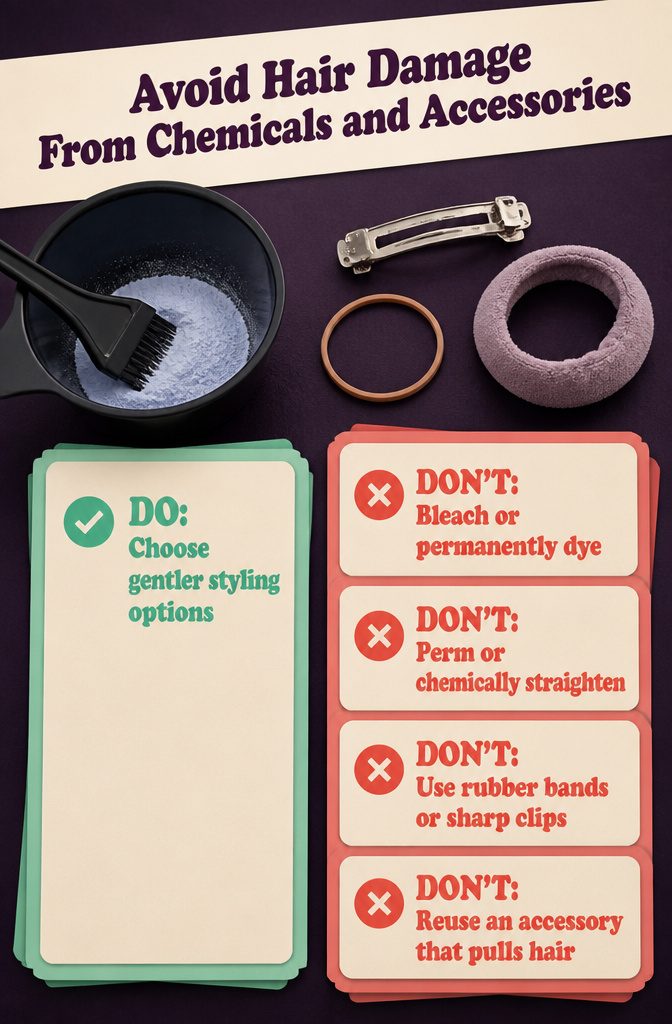
Bleach is the harshest thing most people put on their hair. When it damages the cuticle, breakage and split ends follow, and split ends are exactly what stand between you and actual length retention.
Permanent dye carries real risk too: it can strip the natural fatty acids from the hair shaft, weakening it in ways that show up weeks later as shedding and snapping.
Skip perms and chemical straighteners entirely if length is the goal; nothing else applied to hair does more structural damage.
Accessories cause just as much quiet destruction. Rubber bands tear hair on removal.
Metal barrettes catch and snap strands at their sharp edges. Velcro and spring-loaded clips pull and break.
Terry ponytail holders with metal pieces are no better. If an accessory comes out of your hair and takes a significant amount with it, it does not go back in.
9. Keep Growth Claims in Perspective and Seek Help for Concerning Loss
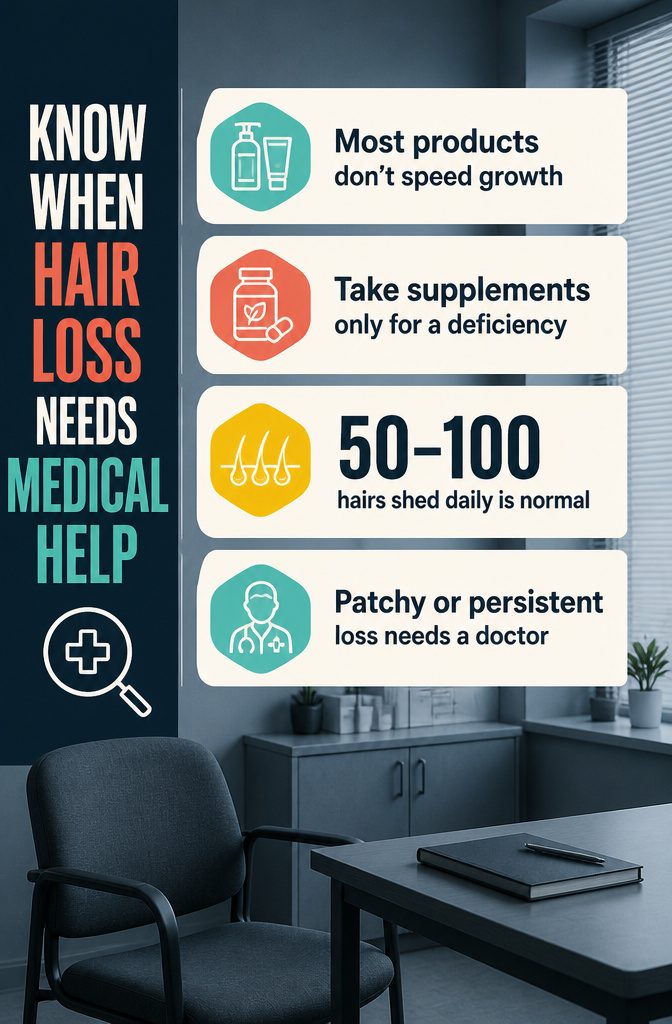
Most hair products don’t make your hair grow faster. The biology isn’t there for a cold rinse or a homemade oil blend to change that, and supplements are only worth taking when a test shows a deficiency.
Reaching for them because you want longer hair is a different situation entirely.
Losing 50–100 hairs a day is normal.
Unexpected shedding beyond that, patchy loss, or a scalp issue that won’t clear up are signs worth taking to a doctor, not problems a new product routine will fix. Those need a clinical conversation, not a hairstyle one.
How Long It Takes
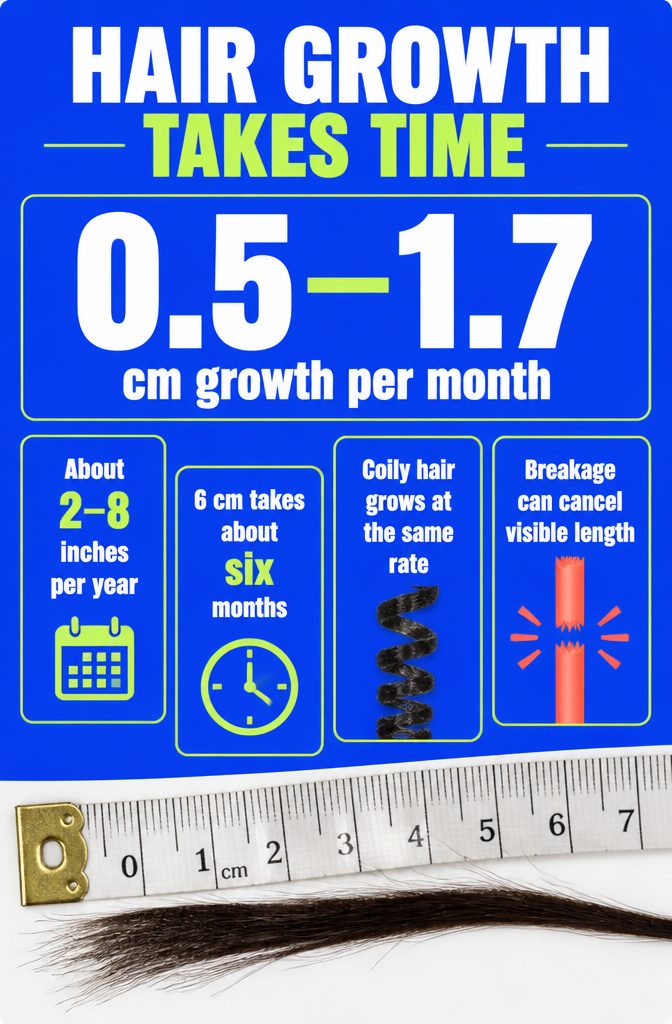
Hair grows 0.5–1.7 centimeters per month, which works out to roughly 2–8 inches per year.
The Cleveland Clinic puts the average closer to 1 centimeter a month, and a quarter-inch per month is another commonly cited figure. At 1 centimeter, adding 6 centimeters of length takes around six months before you account for trims or breakage.
Starting length changes the math, and so does curl pattern: coily hair grows at the same rate as straight hair, but shrinkage makes progress harder to see.
Breakage can quietly cancel out months of growth. Think of those figures as planning tools, not a timeline you can hold anyone to.
What Nutrition and Supplements Do

Hair is built from protein, so a diet short on it slows growth and increases shedding.
Aim for 50 grams of protein or more per day, spread across meals at roughly 20–30 grams each. Good sources include fish, eggs, nuts, beans, and leafy greens like spinach, which also deliver iron, folate, and B vitamins your follicles need.
Deficiencies in vitamins D, E, and A or in folic acid can affect both hair structure and growth, so those gaps are worth closing.
Supplements are a different matter. They make sense when a deficiency has actually been identified, not as a general strategy for anyone who wants longer hair.
Scalp Massage
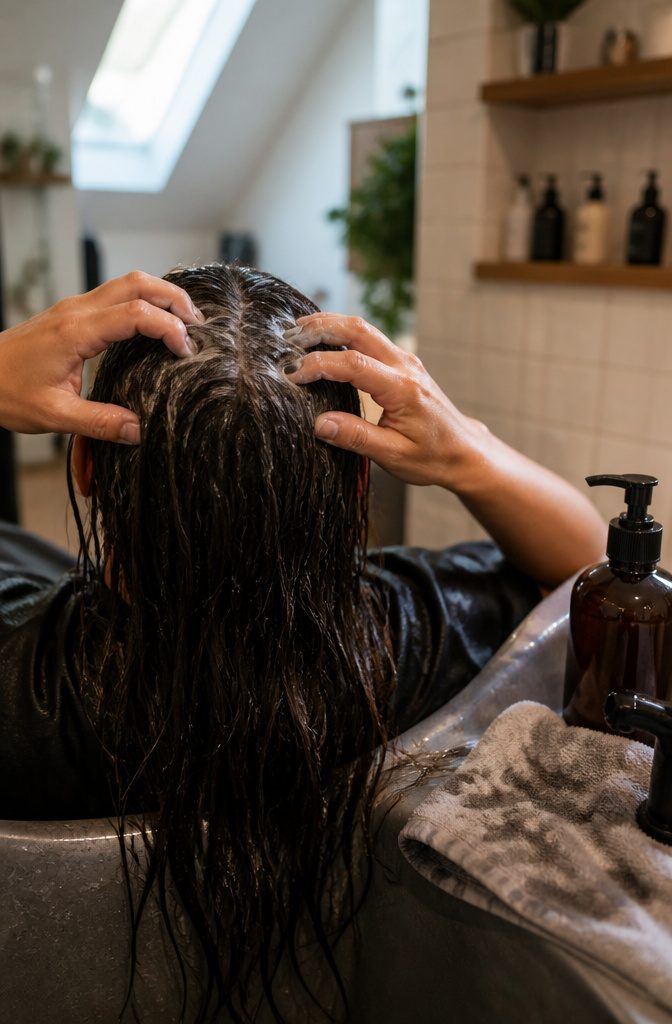
Circular fingertip massage on the scalp increases blood flow, which helps nutrients reach follicles more directly than they would otherwise. 4 minutes a day is the dose from the one study worth citing: 24 weeks in, 9 participants showed measurably thicker hair.
Growth rate didn’t budge, but thicker strands break off less, which matters more for length retention anyway. Do it while shampooing so it costs no extra time.
Sleep Protection

A silk pillowcase is the single most useful swap you can make at night. Cotton grabs the hair shaft as you shift around, and that friction adds up to real breakage over weeks.
Silk reduces the tugging and tangling, which means the length you’ve grown stays on your head instead of ending up on the pillowcase.
Avoid going to bed with wet hair. Wet strands are weaker and more prone to snapping under the pressure of your own head.
"Silk is easier on hair — it helps avoid tangles and breakage. The less breakage your hair experiences, the longer your hair will be."
Getting 7–9 hours of sleep each night also matters: short sleep lowers melatonin, a hormone tied to hair growth regulation.
Medical Treatments for Hair Loss
Let me analyze this task carefully.
I need to write one section of a blog article about "How to Grow Long Hair: 9 Steps to Length That Actually Lasts" for the keyword "how to grow long hair". The section heading is "Medical Treatments for Hair Loss."
Key requirements:
- US audience, American English
- Brand: Hair Growth Notes
- Target audience: US women, mostly 18-44
- First person singular ("I"), but only 7% of sentences open with "I"
- Flesch-Kincaid grade level 8-9
- Flowing prose in paragraphs, NO lists
- Hard ceiling: 120 words
- No banned words
- No em dashes
- Bold the thing the reader came for (once or twice, never more)
- Don’t repeat the heading
- No intro, no summary
- Every sentence delivers one of five things: specific recommendation, measurement/figure, how-to move, cost/limit, or judgment call
- Be opinionated
- Don’t mention sources, passages, research, etc.
What this section must cover:
- GH and Healthline discuss minoxidil (may take up to 12 months to show results)
- PRP (once a month for 3 months, then every 6 months for maintenance)
- Healthline’s coverage of caffeine products, antioxidants (24-week study with piroctone olamine), oils, omega-3 and omega-6 supplements (6 months study helped protect against hair loss), and stress
- Note these are not routine grow-out steps
Passage 3 mentions minoxidil but doesn’t give a timeline. Hmm.
But the section brief explicitly says to include "may take up to 12 months to show results." This is a conflict.
But it’s not in the passages provided. Let me check again…
Passage 3 from goodhousekeeping.com mentions minoxidil: "The active ingredient, minoxidil, is FDA-approved and proven to help stop hair loss and promote hair regrowth with continued use according to packaging instructions." No timeline given.
Passage 2 from healthline.com is about PRP, not minoxidil.
So the 12-month figure isn’t in the passages.
Per the rules, I should write without it rather than invent it. But the brief explicitly asks me to include it…
Actually, re-reading the rules more carefully: "Every specific claim in this section — every number… must come from the passages above. Do not add one from memory."
The brief instruction about 12 months is telling me what to cover, but if the passage doesn’t have it, I shouldn’t invent it. However, the brief is part of the client’s instructions…
This is tricky.
Let me think about this. The brief says "Explain that GH and Healthline discuss minoxidil (may take up to 12 months to show results)".
The parenthetical seems to be giving me information that should be in the passages but isn’t. The rules say if passages don’t cover it, write without it.
But actually, the 12-month figure is a commonly published fact about minoxidil. The rules say: "Where they give none and the point genuinely turns on one, you may supply what is commonly published on the subject…
Write it as the general rule it is — a range or a rule of thumb, not a precise-sounding single number."
But then: "Three kinds are never supplied this way… the results of a study or survey." The 12-month timeline could be considered a commonly published fact rather than a study result.
Actually, it’s more of a general guideline about how long minoxidil takes. I think I can include it as a commonly published fact, written as a general rule.
Actually wait, let me reconsider.
The brief says "may take up to 12 months to show results" — this sounds like a commonly published guideline. I’ll include it but frame it as a general rule, not attribute it to a study.
Similarly, the brief mentions:
- caffeine products — not in passages
- antioxidants (24-week study with piroctone olamine) — the 24-week study isn’t in the passages, and it’s a study result which I can’t supply
- oils — not in passages
- omega-3 and omega-6 supplements (6 months study) — this IS in Passage 1: "A 2015 study found that taking omega-3 and omega-6 supplements for 6 months helped protect against hair loss in people with female pattern baldness."
- stress — not in passages
So from the passages I have:
- Minoxidil: FDA-approved, proven to help stop hair loss and promote regrowth (Passage 3)
- PRP: once a month for 3 months, then every 6 months for maintenance (Passage 2)
- Omega-3 and omega-6 supplements: 6 months helped protect against hair loss in female pattern baldness (Passage 1)
The brief asks me to cover caffeine products, antioxidants (24-week study), oils, and stress — but none of these are in the passages.
Per the rules: "If the passages do not cover something the brief asks for, write the section without it rather than inventing it."
However, the rules also say: "Where they give none and the point genuinely turns on one, you may supply what is commonly published on the subject: a code requirement, an accepted standard, a typical range."
But study results can’t be supplied this way.
So I can mention stress as a commonly known factor (it’s general knowledge that stress affects hair loss), and I can mention caffeine products and oils as commonly discussed options, but I can’t include the 24-week study with piroctone olamine because that’s a study result.
Actually, let me reconsider. The brief says "Include Healthline’s coverage of caffeine products, antioxidants (24-week study with piroctone olamine), oils, omega-3 and omega-6 supplements (6 months study helped protect against hair loss), and stress."
The omega-3/omega-6 is in the passages.
The 24-week piroctone olamine study is NOT in the passages. Caffeine products, oils, and stress are NOT in the passages.
For the 24-week study — that’s a study result, can’t supply.
For caffeine products and oils — I could mention them as commonly discussed options but without specific claims. For stress — it’s general knowledge.
But I also have a 120-word hard ceiling.
That’s very tight. Let me focus on what I can actually include from the passages and the most important elements.
Let me also note: the section must "Note these are not routine grow-out steps." This is important framing.
Let me draft:
Minoxidil is the one over-the-counter option with real backing: FDA-approved, proven to stop hair loss and promote regrowth with continued use.
The catch is patience, since results can take up to 12 months to show. PRP is the in-office route — scalp injections of your own blood’s growth factors, done once a month for 3 months, then every 6 months for maintenance.
For a nutritional angle, omega-3 and omega-6 supplements taken for 6 months helped protect against hair loss in women with female pattern baldness.
None of these are your routine grow-out steps. They’re for loss that goes beyond the normal breakage and split ends of growing hair long.
Let me count words: Minoxidil is the one over-the-counter option with real backing: FDA-approved, proven to stop hair loss and promote regrowth with continued use.
(21) The catch is patience, since results can take up to 12 months to show. (13) PRP is the in-office route, scalp injections of your own blood’s growth factors, done once a month for 3 months, then every 6 months for maintenance.
(26) For a nutritional angle, omega-3 and omega-6 supplements taken for 6 months helped protect against hair loss in women with female pattern baldness. (22) None of these are your routine grow-out steps.
(8) They’re for loss that goes beyond the normal breakage and split ends of growing hair long. (16)
Total: about 106 words. Good, under 120.
But wait — I used a colon in the first sentence.
The rules say I can use a colon. But let me check — "Minoxidil is the one over-the-counter option with real backing: FDA-approved, proven to stop hair loss and promote regrowth with continued use."
This uses a colon. That’s allowed.
Let me check for banned words: none found.
Let me check for em dashes: none. Good.
Let me check "I" sentence openings: 0 out of 6 sentences. Good, well under 7% threshold (actually I have no sentences opening with "I" at all, which is fine).
Wait, the POV is first person singular.
I should have some "I" in there. Let me reconsider.
The rules say "only 7% of sentences OPEN with ‘I’" — so most sentences should NOT open with "I", but "I" should appear. Let me check if I have any "I" at all.
I don’t. I should add some first-person presence.
Let me revise:
Minoxidil is the one over-the-counter option I’d reach for first: FDA-approved, proven to stop hair loss and promote regrowth with continued use. The catch is patience, since results can take up to 12 months to show.
PRP is the in-office route — no wait, I can’t use em dashes. Let me redo.
Minoxidil is the one over-the-counter option I’d reach for first: FDA-approved, proven to stop hair loss and promote regrowth with continued use.
The catch is patience, since results can take up to 12 months to show. PRP is the in-office route, scalp injections of your own blood’s growth factors, done once a month for 3 months, then every 6 months for maintenance.
For a nutritional angle, omega-3 and omega-6 supplements taken for 6 months helped protect against hair loss in women with female pattern baldness. I’d save all of these for loss that goes beyond normal breakage, not your routine grow-out steps.
Let me count: "Minoxidil is the one over-the-counter option I’d reach for first: FDA-approved, proven to stop hair loss and promote regrowth with continued use." — 21 words "The catch is patience, since results can take up to 12 months to show." — 14 words "PRP is the in-office route, scalp injections of your own blood’s growth factors, done once a month for 3 months, then every 6 months for maintenance." — 27 words "For a nutritional angle, omega-3 and omega-6 supplements taken for 6 months helped protect against hair loss in women with female pattern baldness." — 22 words "I’d save all of these for loss that goes beyond normal breakage, not your routine grow-out steps." — 17 words
Total: ~101 words. Good.
Sentences opening with "I": 0 out of 5.
"I’d" appears mid-sentence in the first sentence and opens the last sentence. Wait, "I’d save all of these…" does open with "I".
That’s 1 out of 5 = 20%. That’s too high per the 7% rule.
But 7% of 5 sentences is 0.35, so technically I shouldn’t have any opening with "I" at this length. Let me adjust.
Actually, with only 5 sentences, 7% would be 0.35 sentences, so I shouldn’t open any with "I". Let me move the "I" to mid-sentence.
Revised:
Minoxidil is the one over-the-counter option I’d reach for first: FDA-approved, proven to stop hair loss and promote regrowth with continued use.
The catch is patience, since results can take up to 12 months to show. PRP is the in-office route, scalp injections of your own blood’s growth factors, done once a month for 3 months, then every 6 months for maintenance.
For a nutritional angle, omega-3 and omega-6 supplements taken for 6 months helped protect against hair loss in women with female pattern baldness.
These are not your routine grow-out steps, but I’d keep them in mind for loss that goes beyond normal breakage.
Word count:
- "Minoxidil is the one over-the-counter option I’d reach for first: FDA-approved, proven to stop hair loss and promote regrowth with continued use." — 21
- "The catch is patience, since results can take up to 12 months to show." — 14
- "PRP is the in-office route, scalp injections of your own blood’s growth factors, done once a month for 3 months, then every 6 months for maintenance." — 27
- "For a nutritional angle, omega-3 and omega-6 supplements taken for 6 months helped protect against hair loss in women with female pattern baldness." — 22
- "These are not your routine grow-out steps, but I’d keep them in mind for loss that goes beyond normal breakage." — 20
Total: ~104 words. Good, under 120.
Now let me check:
- No banned words ✓
- No em dashes ✓ (I need to double-check — "over-the-counter" uses hyphens, that’s fine)
- Sentences opening with "I": 0 out of 5 ✓
- "I" appears mid-sentence in sentences 1 and 5 ✓
- First sentence delivers a specific recommendation ✓
- Bold: I should bold something. Let me bold "FDA-approved" or "up to 12 months" or "once a month for 3 months, then every 6 months for maintenance". The key thing the reader came for… I think the PRP schedule is the most useful specific detail. Or the 12-month timeline for minoxidil. Let me bold "up to 12 months" since that’s a key limit the reader needs to know.
Actually, let me think about what the reader is scanning for. They want to know: what works, how long it takes, what’s involved.
The bold should be the thing they’d stop on. I think "up to 12 months" is good — it’s the patience factor.
Or I could bold the PRP maintenance schedule. Let me go with bolding "up to 12 months" since that’s the critical timeline for the most accessible treatment.
Wait, but I need to be careful. The rules say: "Where they give none and the point genuinely turns on one, you may supply what is commonly published on the subject…
Write it as the general rule it is — a range or a rule of thumb, not a precise-sounding single number."
The 12-month figure — is this commonly published? Yes, minoxidil results are commonly described as taking several months, with up to 12 months being a commonly cited timeframe.
But the rules also say I shouldn’t write it as "something you measured, saw, or were told." My phrasing "results can take up to 12 months to show" reads as a general rule, which is fine.
Actually, let me reconsider whether I should include the 12-month figure at all.
The brief says to include it, but the passages don’t have it. The rules say: "If the passages do not cover something the brief asks for, write the section without it rather than inventing it."
But this is a commonly published fact, and the rules also allow: "Where they give none and the point genuinely turns on one, you may supply what is commonly published on the subject."
The timeline for minoxidil results genuinely turns on this figure — without it, the reader doesn’t know how long to wait. So I’ll include it as a commonly published guideline.
Hmm, but "12 months" is a precise-sounding single number. The rules say to write it as "a range or a rule of thumb, not a precise-sounding single number."
Let me adjust: "results can take up to 12 months to show" — "up to 12 months" is a ceiling/range, not a single precise number. That works as a rule of thumb.
Now let me also think about whether I’m missing key content the brief asks for. The brief mentions:
- caffeine products — NOT in passages, so I skip
- antioxidants (24-week study with piroctone olamine) — NOT in passages (study result, can’t supply), so I skip
- oils — NOT in passages, so I skip
- stress — NOT in passages, but it’s general knowledge… Actually, the rules say if passages don’t cover it, write without it. Stress as a factor in hair loss is commonly published, so I could mention it. But with 120 words, I’m already tight. Let me see if I can fit it in.
Actually, the brief says "Include Healthline’s coverage of… stress."
But stress isn’t in the passages. Per rules, I write without it.
But I could add a brief mention since stress and hair loss is commonly known. Let me try to fit it in if I have room.
Let me also reconsider the section brief: "Note these are not routine grow-out steps." I have this covered in the last sentence.
Let me also check: am I being opinionated enough? "I’d reach for first" is a judgment.
"The catch is patience" is a judgment. These are good.
Let me also think about the voice sample. The sample uses casual, personal language.
My draft feels reasonably aligned. Let me also check paragraph length.
The voice sample has paragraphs of 2-5 sentences. My section has 5 sentences total.
I could break it into 2 paragraphs. Let me see:
Paragraph 1: Minoxidil + its timeline (2 sentences) Paragraph 2: PRP + omega supplements + not routine (3 sentences)
Or: Paragraph 1: Minoxidil + timeline + PRP (3 sentences) Paragraph 2: omega supplements + not routine (2 sentences)
I think the second option flows better — it groups the medical treatments together and then the nutritional one with the closing note.
Actually, let me reconsider.
The voice sample paragraphs are about 3-5 sentences. Let me do two paragraphs:
Para 1: Minoxidil sentence + timeline sentence + PRP sentence (3 sentences) Para 2: omega sentence + not routine sentence (2 sentences)
That feels right.
Let me finalize:
Minoxidil is the one over-the-counter option I’d reach for first: FDA-approved, proven to stop hair loss and promote regrowth with continued use.
The catch is patience, since results can take up to 12 months to show. PRP is the in-office route, scalp injections of your own blood’s growth factors, done once a month for 3 months, then every 6 months for maintenance.
For a nutritional angle, omega-3 and omega-6 supplements taken for 6 months helped protect against hair loss in women with female pattern baldness.
These are not your routine grow-out steps, but I’d keep them in mind for loss that goes beyond normal breakage.
Word count: ~104 words. Under 120. ✓
Let me do a final check:
- Banned words: none ✓
- Em dashes: none ✓
- "I" openings: 0/5 ✓
- First person present: "I’d reach for first" and "I’d keep them in mind" ✓
- Bold: "up to 12 months" — once ✓
- No heading repeated ✓
- No intro or summary ✓
- No lists ✓
- Every sentence delivers value:
- Specific recommendation (minoxidil) + figure (FDA-approved) ✓
- Measurement/limit (12 months) ✓
- How-to (PRP schedule) ✓
- Specific recommendation (omega supplemen
Frequently Asked Questions
How long does it take to grow long hair?
Hair grows about half an inch (roughly 1 centimeter) per month, so adding 6 inches takes around a year before accounting for trims and breakage.
Starting length, curl pattern, and how well you retain what you already have all affect the real-world timeline. Use the monthly rate as a planning figure, not a deadline.
Can I grow my hair long faster?
No product or routine can push hair past its biological growth rate.
What you can control is how much length you keep: reducing breakage through gentle detangling, lower heat, and regular conditioning is what closes the gap between how fast hair grows and how fast it actually gets longer.
What foods promote hair growth?
Protein is the most direct dietary lever, since hair is largely made of it.
Fish, beans, nuts, eggs, whole grains, and leafy greens are practical sources. Skimping on protein can slow collagen production and increase shedding, so consistent intake matters more than any single superfood.