Salt cuts through oil faster than sugar, so if your scalp feels greasy or coated between washes, reach for coarse sea salt mixed with a carrier oil.
Brown sugar and coconut oil exfoliate without pulling out the natural oils a dry or flaking scalp still needs.
Massage the mix into your scalp with your fingertips for 2 to 3 minutes, rinse until the water runs clear, then follow with shampoo if you used an oil-based version.
If your scalp is oily, scrub once a week; if it’s dry, stretch it to once every 2 or 3 weeks.
1. Honey and Sugar Scalp Scrub
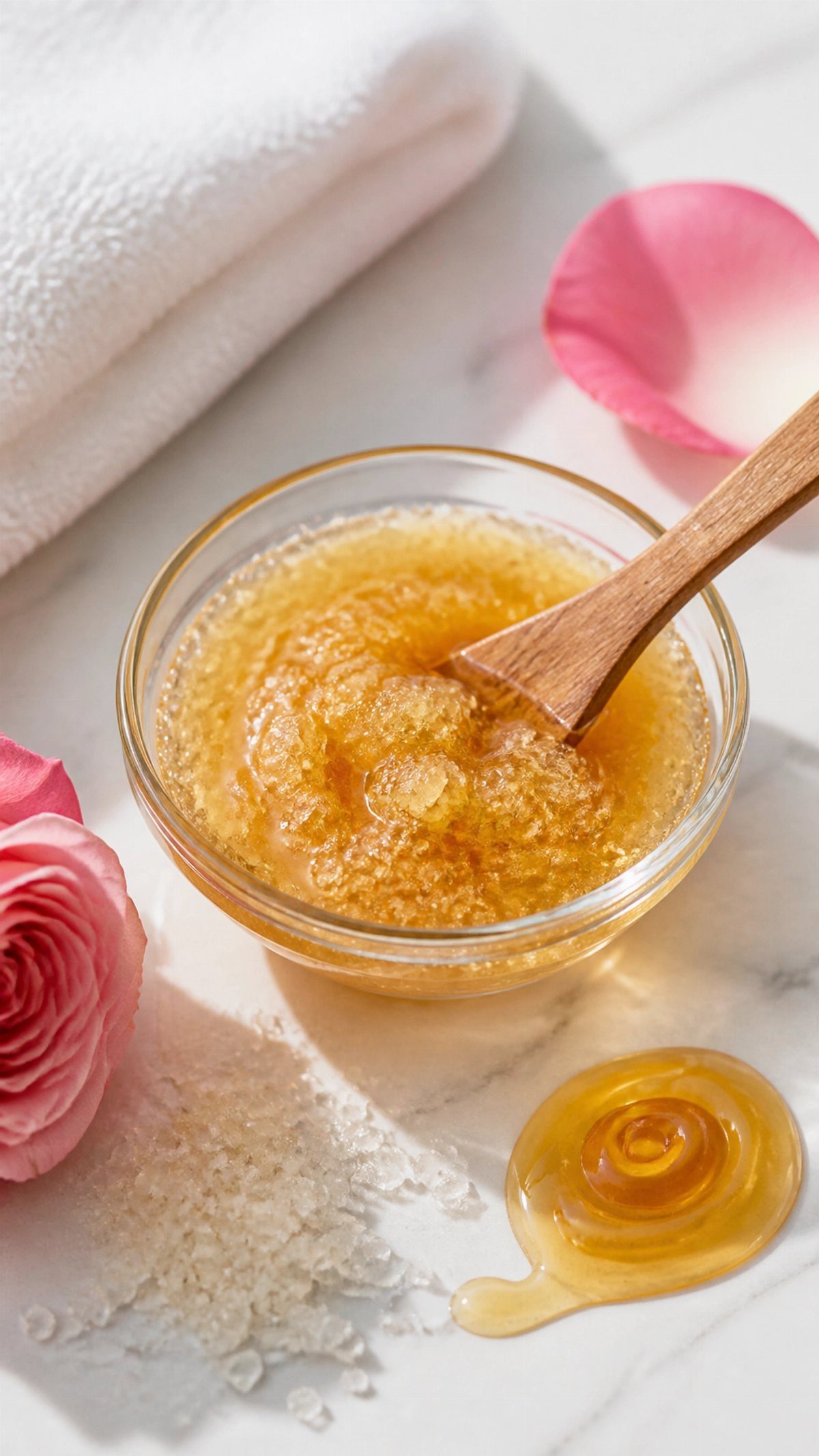
Stir raw honey into granulated sugar until the mix holds together but still feels gritty. The sugar provides the physical exfoliation while honey brings antibacterial properties that can calm irritation.
Apply it to damp hair in sections, working the scrub directly onto your scalp with your fingertips in small circular motions.
The honey makes this one stickier than a plain sugar scrub, so you’ll need a bit more patience rinsing it out.
2. Brown Sugar and Coconut Oil
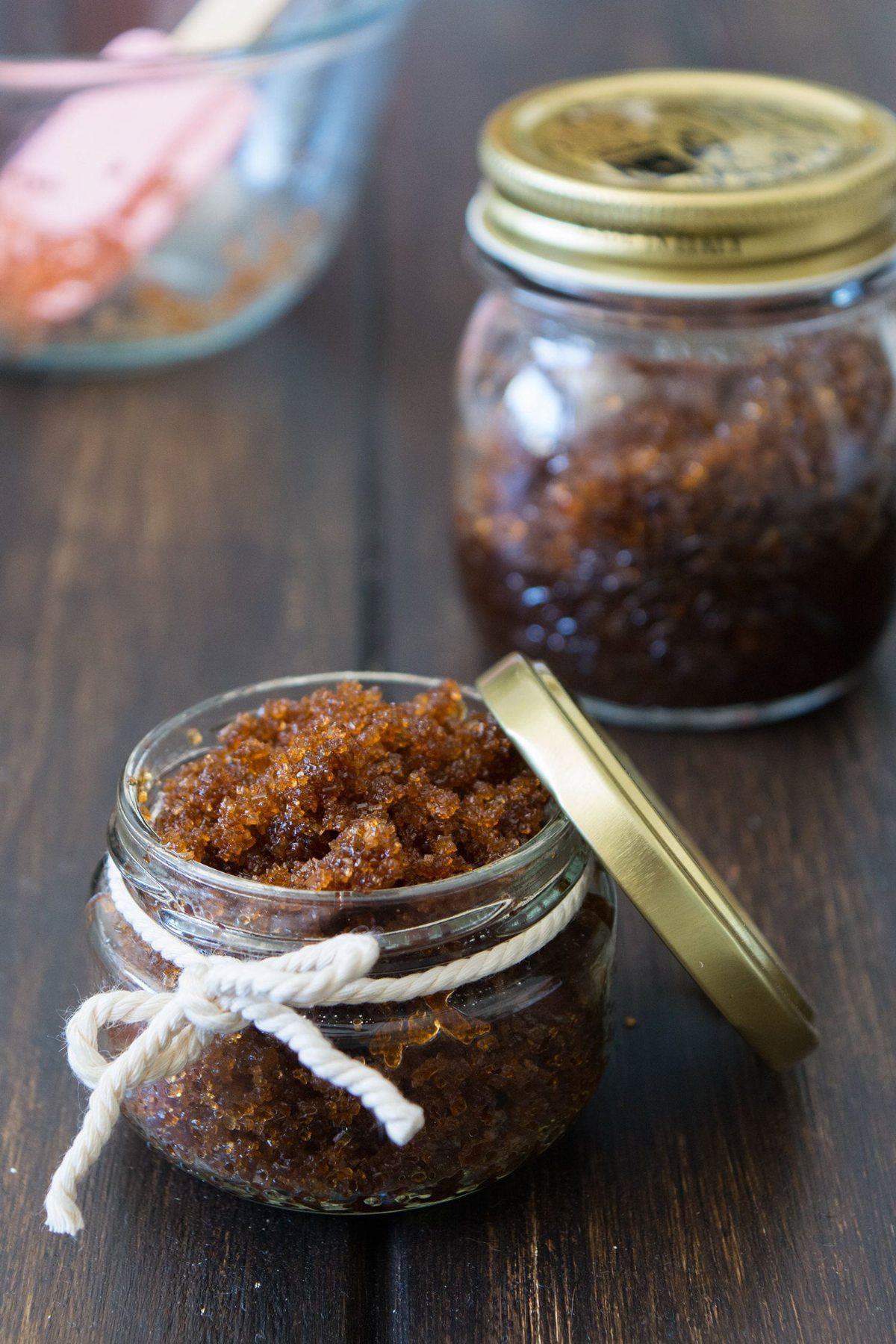
This scrub pairs brown sugar with melted coconut oil for a version that exfoliates while adding moisture. It’s aimed at dry scalps and mild flaking, where you want to remove buildup without stripping natural oils.
Warm the coconut oil until it melts, then fold in brown sugar to make a thick, crumbly texture.
Massage it into your scalp before shampooing, focusing on areas that feel tight or flaky. Rinse well.
The oil can weigh down fine hair, so if yours is thin or gets greasy quickly, use this sparingly or rinse twice.
3. Coffee Scalp Scrub
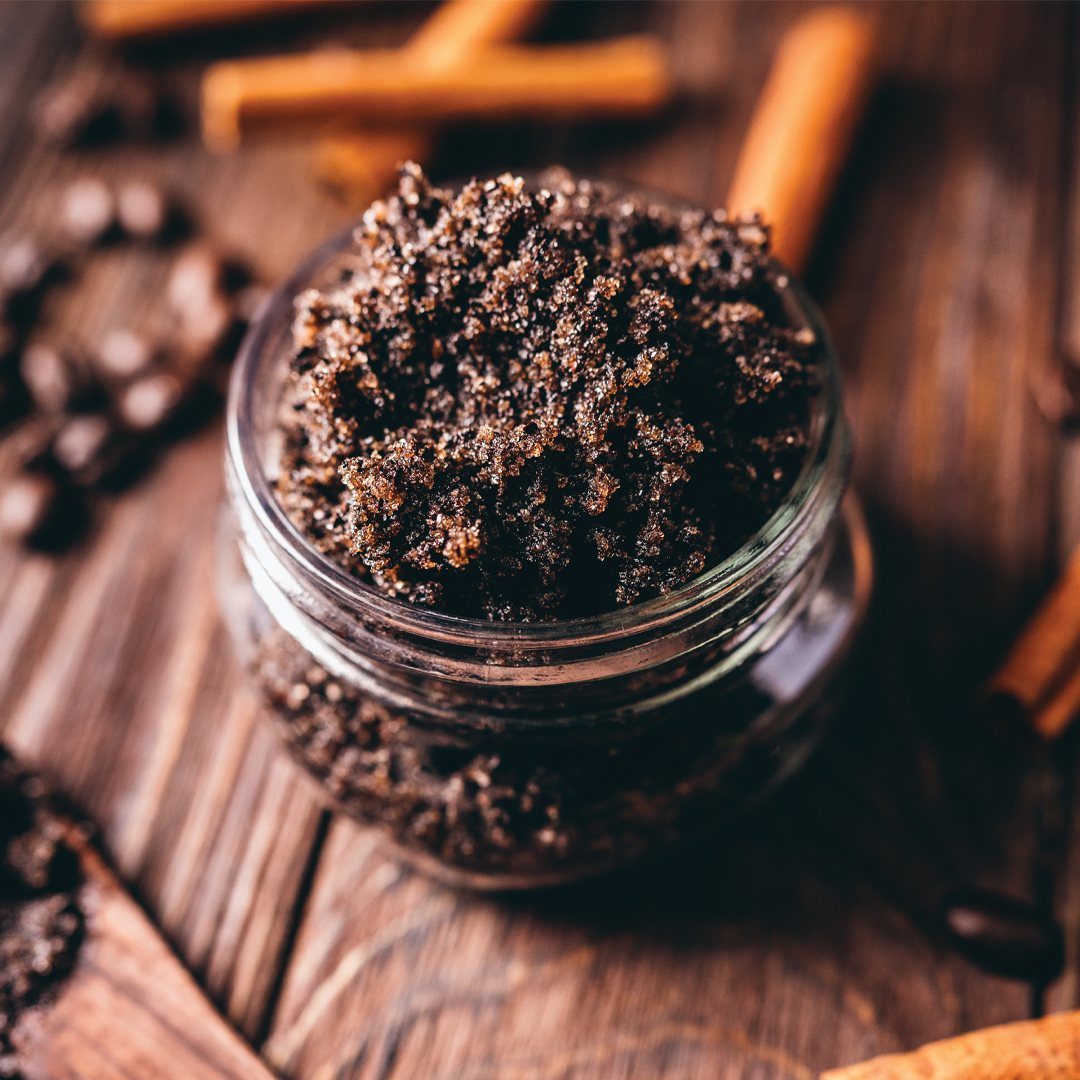
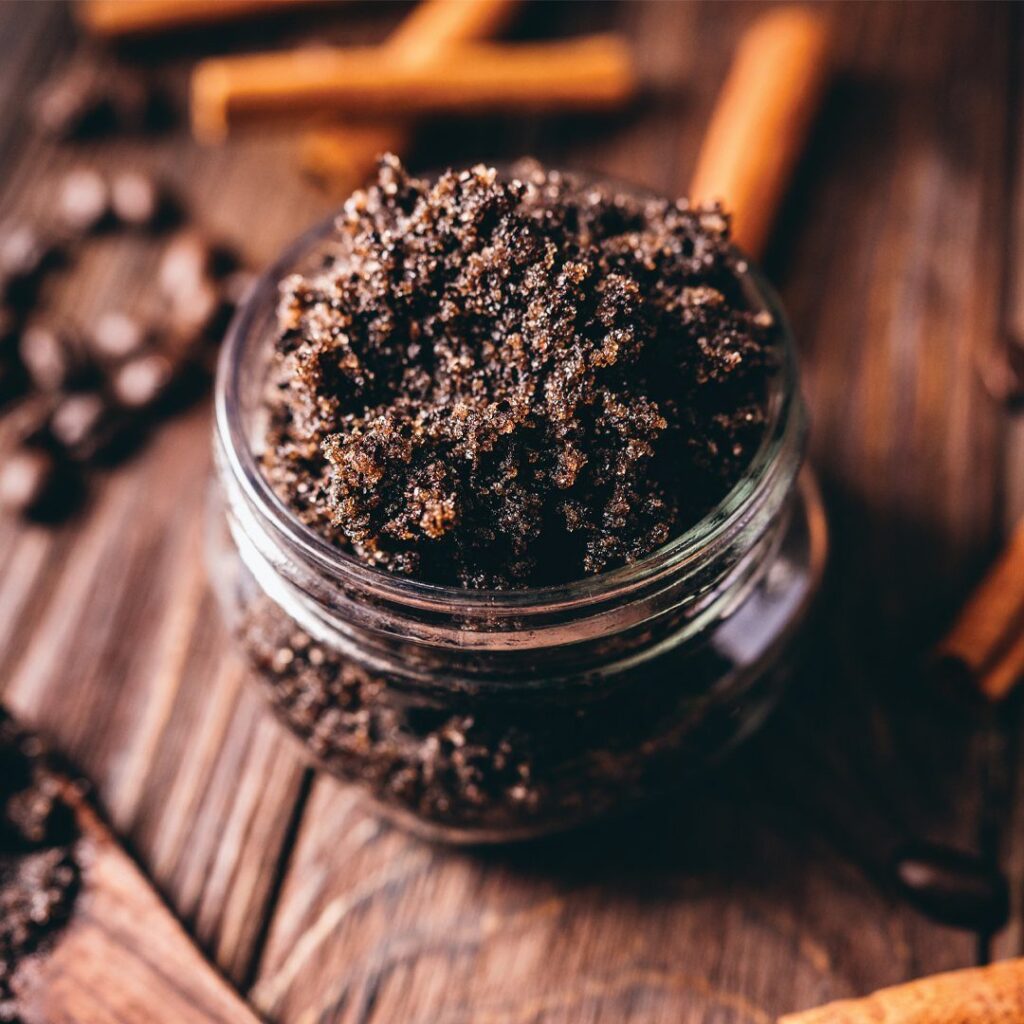
Used coffee grounds mixed with a carrier oil or conditioner give you a gritty scrub that’s often linked to circulation and hair growth claims. The caffeine is thought to stimulate the scalp, though the evidence is still limited.
Rub it into your scalp in circles, wait a few minutes, then rinse clean. The grounds are coarser than sugar, so go gently if your scalp is sensitive.
Coffee will stain light hair and anything it drips on, so apply it over the sink or in the shower.
4. Rosemary and Oil Scalp Scrub
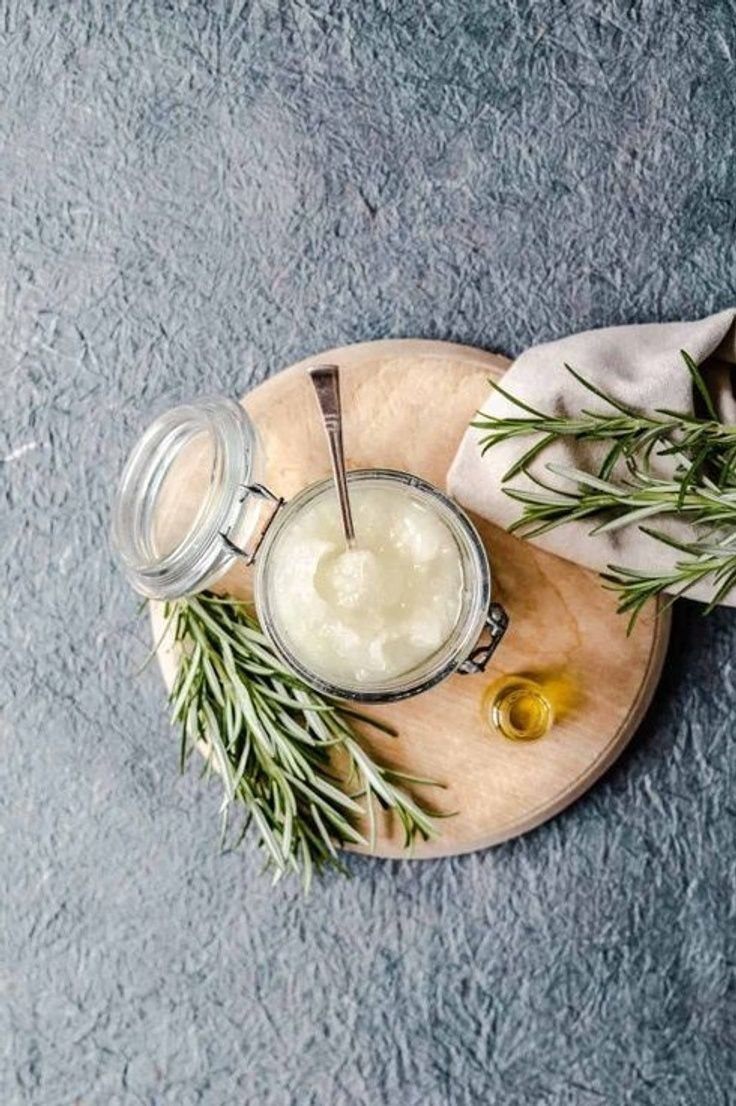
A white grainy base, likely coarse sea salt or sugar, is paired with fresh rosemary and a golden oil.
Rosemary oil is one of the few plant extracts with decent backing for hair growth, so this version targets thinning or sluggish growth alongside exfoliation.
Mix your salt or sugar with a carrier oil, then add a few drops of rosemary essential oil or steep fresh rosemary in warm oil first.
Salt scrubs are more abrasive than sugar, so skip this if you have cuts or very dry skin.
Gentle Application and Rinsing
Work it in with the pads of your fingers, moving in slow circles for 2 to 3 minutes. Pressing too hard or scrubbing fast defeats the point; you’re clearing buildup, not scouring a pan.
Rinse thoroughly so no grains remain.
Shampoo after if your recipe was oil-heavy or if you still feel residue. Condition as usual.
Skip anything with salt or lemon if you have cuts, scratches, or already irritated skin. The exfoliation will sting and slow healing rather than help.
How Often to Exfoliate
If you have an oily scalp that gets grimy fast, every 7 days hits the mark. Dry scalps do better with once every 2 to 3 weeks, since more frequent scrubbing can strip oils you need.
Anyone with reactive skin should start at every 2 weeks and monitor irritation before scrubbing more often.
Too much scrubbing strips moisture, irritates skin, and can kick sebum production into overdrive. Treat it like a reset, not a daily routine.
Scalp Needs and Scrub Choice
If your roots go greasy fast or feel sticky between washes, salt-based scrubs cut through oil better than sugar. Dry, tight, flaky scalps need gentler exfoliation paired with moisture, so softer sugar and oils make more sense.
Sensitive scalps react easily to strong ingredients; stick to mild exfoliants and soothing additions.
Dandruff that keeps coming back may respond to tea tree, neem, or apple cider vinegar, though overwashing, product reactions, yeast, eczema, and psoriasis can all cause flaking too.
Scalps coated with styling products or heavy oils need deeper cleansing, which coffee grounds or charcoal can provide.
Frequently Asked Questions
How can I exfoliate my scalp naturally?
Spoon a tablespoon of fine sugar or sea salt into your palm, add enough coconut or jojoba oil to make a loose paste, then work it through your scalp in slow circles before you shampoo.
Sugar is gentler for dry or sensitive scalps, while salt cuts through oil and buildup more aggressively. Add honey for antibacterial benefits, coffee grounds for circulation, or rosemary oil if you’re targeting hair growth.
What is a scalp scrub?
A scalp scrub is a treatment you make at home by combining a gritty ingredient (sugar, salt, ground coffee, finely milled oats) with something that moisturizes (oil, aloe vera gel, raw honey) to physically lift the dead skin, sebum and styling product that shampoo alone leaves behind.
The coarse particles loosen buildup, and the liquid or gel base lets them glide across your scalp without catching or pulling individual hairs. It works the same way a face scrub does, clearing out what regular shampooing leaves behind.
What causes dandruff?
Dandruff can come from a dry or oily scalp, overwashing that strips natural oils, irritation or reactions to hair products, yeast, eczema, or psoriasis.
An oily scalp produces too much sebum, often because overwashing kicks oil production into overdrive, while a dry scalp sheds flaky skin from lack of moisture. Persistent flaking that doesn’t respond to exfoliation or gentle shampoo may need medical treatment.