Most people clear dandruff in 4 to 6 weeks with a medicated shampoo, but the mistake is sticking with one active ingredient when the yeast stops responding.
Rotating between ketoconazole, selenium sulfide, and pyrithione zinc keeps Malassezia from adapting, and switching every few days works better than repeating the same bottle for weeks. The condition clears when the treatment changes with it.
1. Check Whether the Flakes Are Dandruff or Another Scalp Problem
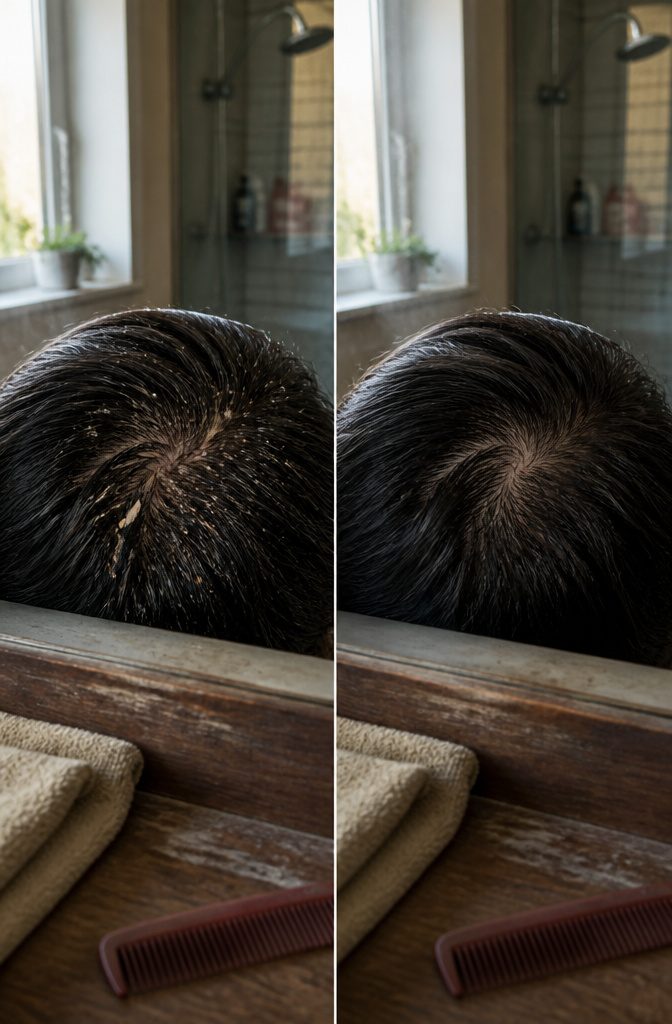
Before reaching for a treatment, look at the flakes themselves. True dandruff appears as larger white-to-yellow flakes with a slightly oily texture that cling to your scalp and hair instead of dusting off.
The scalp underneath tends to feel inflamed and itchy, especially around your hairline, crown, or behind your ears. You’ll usually see it on an oilier scalp, and redness often sits below the flaking.
Dry scalp produces smaller, white, powdery flakes paired with tight skin but no inflammation. The difference matters because dry scalp responds to moisture, while dandruff needs treatment aimed at the Malassezia yeast that causes it.
If you see thick, silvery scales with sharp edges, that points toward psoriasis rather than dandruff, and those symptoms belong in front of a dermatologist. The same goes for anything resembling eczema or contact dermatitis.
Product buildup can also mimic dandruff, producing flakes and itching when styling products clog follicles.
Cold weather and harsh shampoos strip natural oils and push dry scalp into flaking. Figuring out which one you’re dealing with decides what actually works.
2. Start With an Anti-Dandruff Shampoo
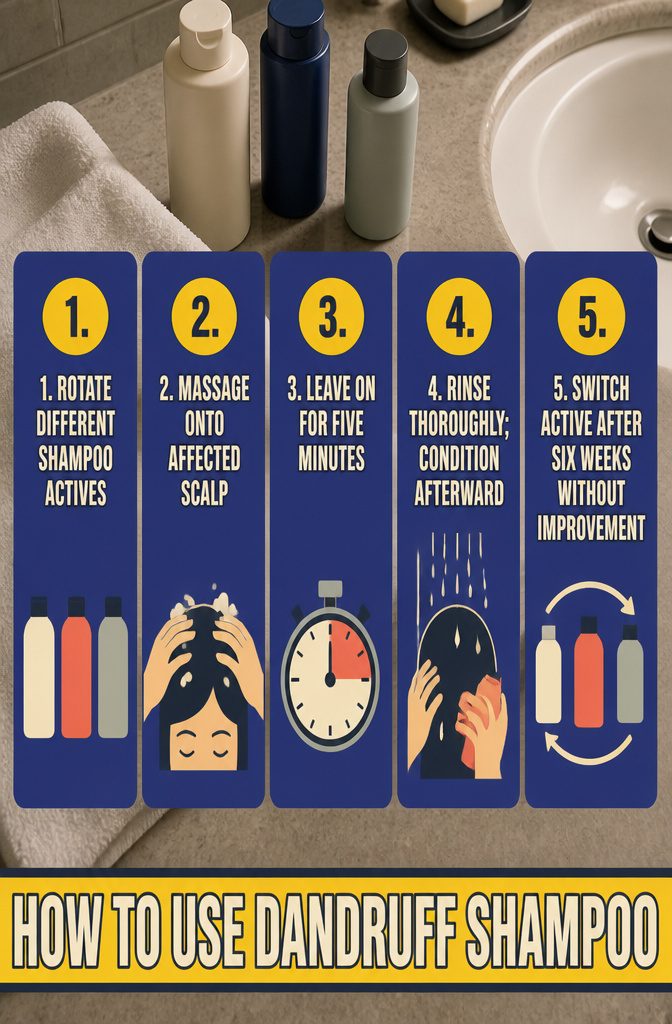
The starting point is an over-the-counter shampoo with ketoconazole, selenium sulfide, or pyrithione zinc as the active ingredient.
These three target the yeast that drives most dandruff, and rotating between them—one each day—keeps the yeast from adapting to a single formula.
Pick up two or three different actives and cycle through them rather than sticking with one bottle.
Apply the shampoo to the affected area and massage it in without scrubbing. The scrubbing does nothing useful and can irritate skin that’s already inflamed.
Leave it on for five minutes to give the active time to work, then rinse thoroughly. Conditioner goes on after, and lighter or color-treated hair benefits from a complete rinse since some actives can cause discoloration.
If you see no improvement after four to six weeks, switch to a different active ingredient rather than repeating the same one.
The lack of progress usually means the yeast or condition driving your flakes responds better to a different mechanism.
3. Choose Other Care According to the Suspected Cause
Once you have a shampoo working, the rest of your routine matters too.
If a product has been making your scalp itch or flake more than usual, stop using it and eliminate suspects one at a time until you know which one caused the reaction.
Conditioner applied to the scalp can sometimes trap oil and dead skin, so keep it on the lengths and ends if flaking gets worse after you condition.
Two home remedies come up often enough to mention.
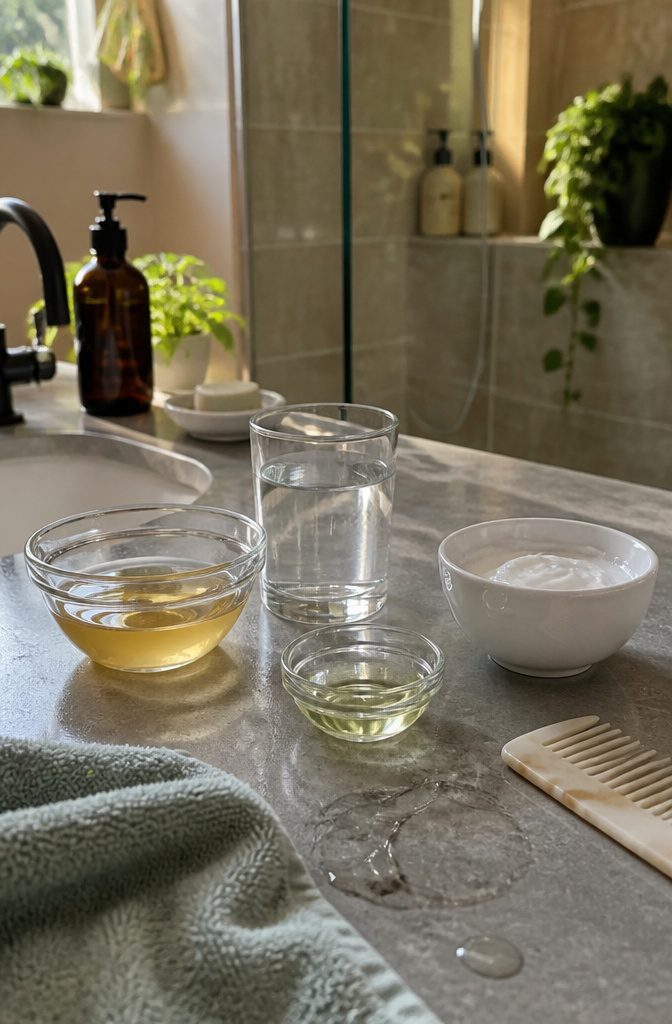
Diluted apple cider vinegar, mixed equal parts with water and left on the scalp for 15 to 20 minutes twice a week, is said to restore pH balance and make the scalp less hospitable to fungus.
Tea tree oil, 2 to 3 drops diluted and left for 20 to 30 minutes, is recommended for clearing and moisturizing the scalp.
Both have their advocates, though regulatory bodies including the FDA have not recognized any commonly used home remedy as an effective dandruff treatment.
The gap between what people try and what regulators approve leaves you choosing between anecdotal support and official silence.
4. Seek Medical Advice if Symptoms Persist or Worsen
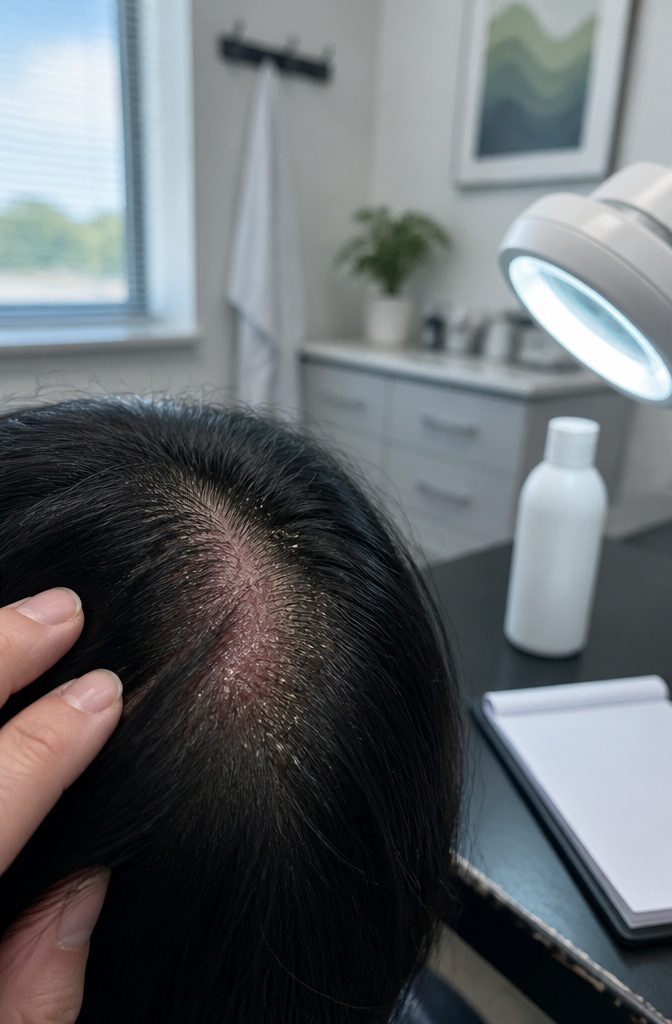
Most people clear dandruff with a medicated shampoo and a few weeks of regular use, but there are times when home care is not enough.
If your scalp shows marked redness, swelling, bleeding, oozing, or tenderness, contact a dermatologist rather than continuing to treat it yourself.
The same goes for noticeable hair loss alongside the flaking, or if nothing improves after four to six weeks of consistent treatment with an over-the-counter shampoo.
A dermatologist can confirm whether the flakes are actually dandruff or a different condition such as psoriasis or a fungal infection.
For stubborn cases, clinicians may prescribe prescription-strength shampoos such as 2% ketoconazole, or topical steroids to bring down itching and redness when the scalp is inflamed.
Yellow or greasy scales that spread beyond your scalp to your face or ears also warrant a visit.
What Causes Dandruff and What Triggers It
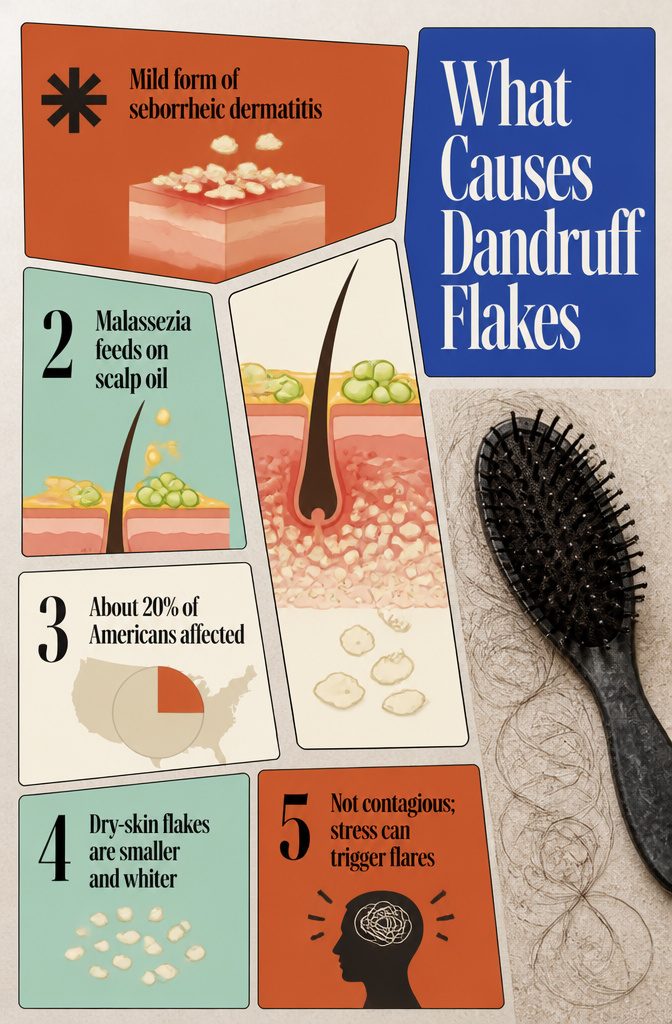
Dandruff is a mild form of seborrheic dermatitis, and the mechanism behind it is more about excess than deficiency.
The scalp produces oil, and a yeast called Malassezia that lives on everyone’s skin feeds on that sebum. When conditions favor the yeast, it overgrows, irritates the skin, and speeds up cell turnover.
Those shed cells clump together into the visible flakes that fall onto your shoulders. Around 20% of people in the United States deal with this at some point.
Dry skin can produce flakes too, but they look different: smaller, whiter, and drier rather than the larger, sometimes yellowish and oily flakes dandruff creates.
Cold weather worsens dry scalp, while stress, product buildup, and even things like pool chemicals or hot showers can trigger dandruff flare-ups.
Hormone shifts during puberty ramp up oil production, which is why dandruff often starts in the teens. The condition itself is not contagious.
Shampoo Actives and How to Choose One
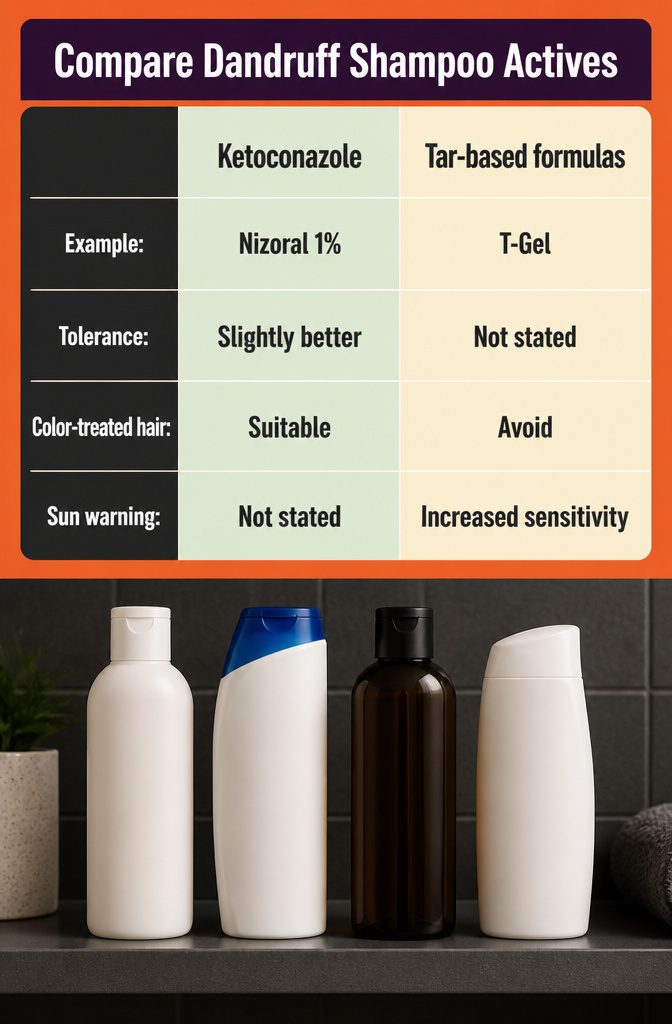
The four actives worth rotating are selenium sulfide 1% (Selsun Blue), zinc pyrithione (Head & Shoulders), tar-based formulas (T-Gel), and ketoconazole (Nizoral 1%).
One dermatologist I read from recommends keeping two or three on hand and switching between them daily, while another approach is to stick with one for 4–6 weeks before trying a different active if flakes persist.
Studies show ketoconazole to be slightly better tolerated than other ingredients.
— Allure
That tolerance advantage is why ketoconazole often gets the first shot, but dandruff responds differently from one scalp to another, so rotation gives you coverage if one active stalls out.
Tar shampoo carries two warnings: it makes your scalp more sensitive to sun (wear a hat outside), and long-term use can stain skin, hair, and nails.
Skip it entirely on color-treated hair. Once flaking clears, once-a-week maintenance is often enough to keep it gone.
Frequently Asked Questions
Is dandruff the same as dry scalp?
No.
Dandruff produces larger white-to-yellow flakes with an oily texture on an inflamed scalp, while dry scalp creates smaller, white, powdery flakes on tight skin without inflammation. The distinction matters because dandruff needs antifungal treatment, while dry scalp responds to moisture.
Can you get rid of dandruff?
Most cases clear with medicated shampoo and consistent use over 4 to 6 weeks. Dandruff is chronic for many people, so maintenance shampooing once a week often keeps it from returning once the flakes are gone.
What ingredients should I look for in an anti-dandruff shampoo?
Look for ketoconazole, selenium sulfide, or pyrithione zinc as the active ingredient. These 3 target the Malassezia yeast that drives most dandruff, and rotating between them keeps the yeast from adapting to a single formula.
How to get rid of dandruff fast at home?
Diluted apple cider vinegar left on the scalp for 15 to 20 minutes twice a week is often suggested, as is tea tree oil diluted and left for 20 to 30 minutes.
Neither has FDA recognition as an effective dandruff treatment, though both have anecdotal support.
Does dandruff cause hair loss?
Dandruff itself does not directly cause hair loss. Persistent scratching or severe untreated seborrheic dermatitis can contribute to temporary thinning or mild loss, so see a dermatologist if you notice hair falling out alongside flaking.
Is oiling hair good or bad for dandruff?
It depends on the type. Oils may help dry-scalp flaking but can worsen dandruff driven by excess oil and yeast overgrowth, since Malassezia feeds on sebum.
Why does my dandruff keep coming back?
Dandruff is a chronic condition caused by recurring Malassezia yeast overgrowth. Once flaking clears, once-a-week maintenance shampooing is usually enough to prevent it from returning.
How often should I wash my hair to avoid dandruff?
Use medicated shampoo once a day on affected areas until flaking clears, then cut back to once a week for maintenance. Daily use gives the active ingredient time to control the yeast, while weekly washing prevents recurrence.
Does stress worsen dandruff?
Yes. Stress is one of the triggers that can cause dandruff flare-ups, along with product buildup, hormone shifts, and environmental factors like pool chemicals or hot showers.
Can apple cider vinegar help with dandruff?
Diluted apple cider vinegar (mixed equal parts with water) left on the scalp for 15 to 20 minutes twice a week is said to restore pH balance and make the scalp less hospitable to fungus.
The FDA has not recognized any commonly used home remedy as an effective dandruff treatment, but it has anecdotal support.