The styles below range from quick cornrows and structured braided buns to all-over box braids and micro braids that take hours but move like loose hair, so you can match the look to your schedule, how long you want it to last, and how much tension your hairline tolerates.
Knotless braids taper from thin at the root to full a few inches down, which makes them gentler on fine hair or anyone prone to traction alopecia but adds time to the appointment since the gradual feed-in method is slow.
1. Braided Ponytail
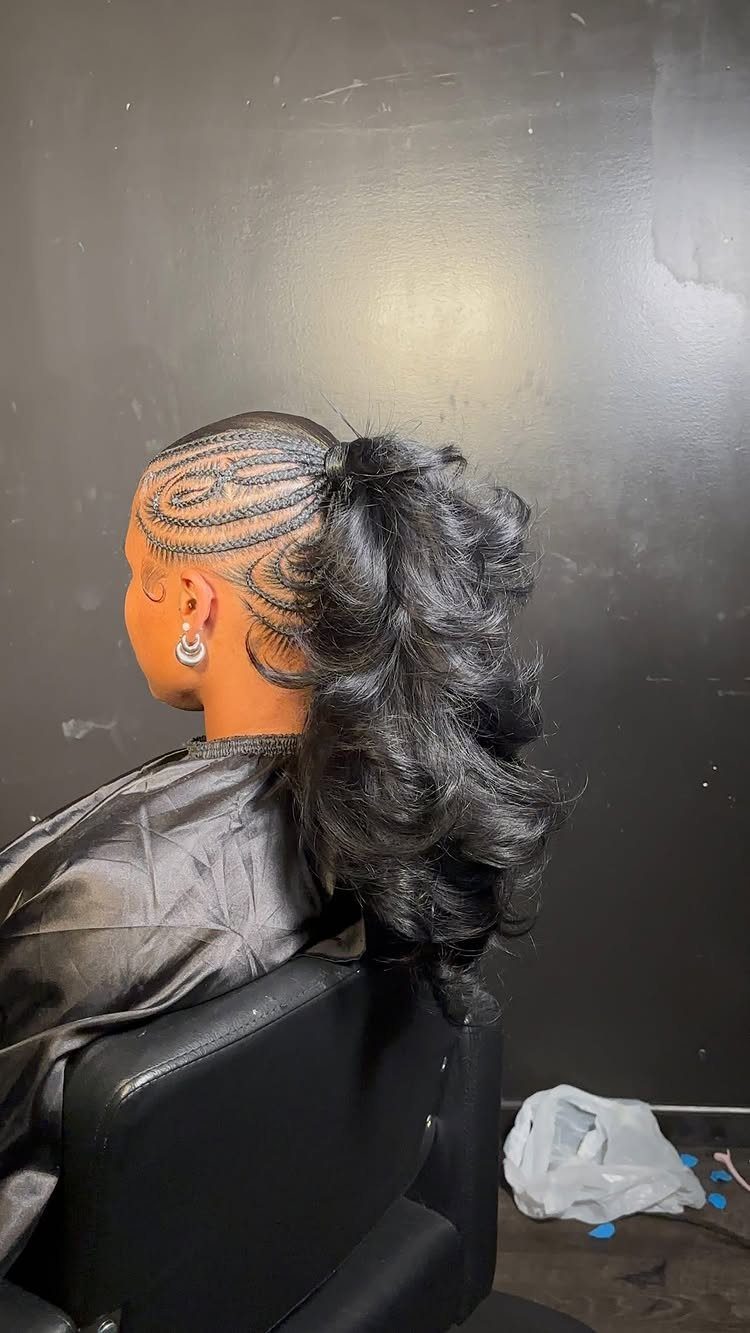
Scalp braids pulled into a ponytail give you one finished style instead of letting them hang loose.
The height you choose changes how much tension sits at your crown, so if your edges are sensitive or your scalp protests a high pony, wear it lower and secure it gently.
Placement matters too: feed-in braids that start at your hairline and curve back to the ponytail base sit flatter and pull less than braids that start further back and meet at a sharp angle.
For most styles (like box braids and cornrows), your scalp is more exposed than usual.
2. Knotless Braids
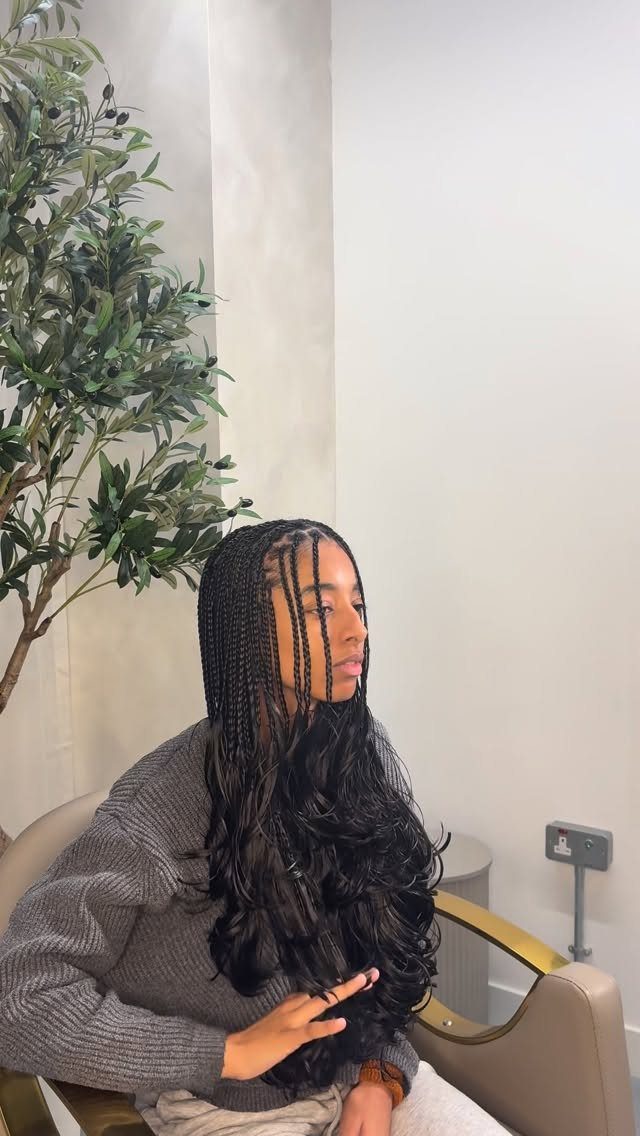
The braid tapers naturally from thin at the base to full a few inches down, which takes longer to install but puts far less strain on your edges and scalp.
That lighter tension makes knotless braids gentler on fine hair or anyone prone to traction alopecia. Plan for a long appointment, since the gradual feed-in method takes time.
3. Boho Box Braids
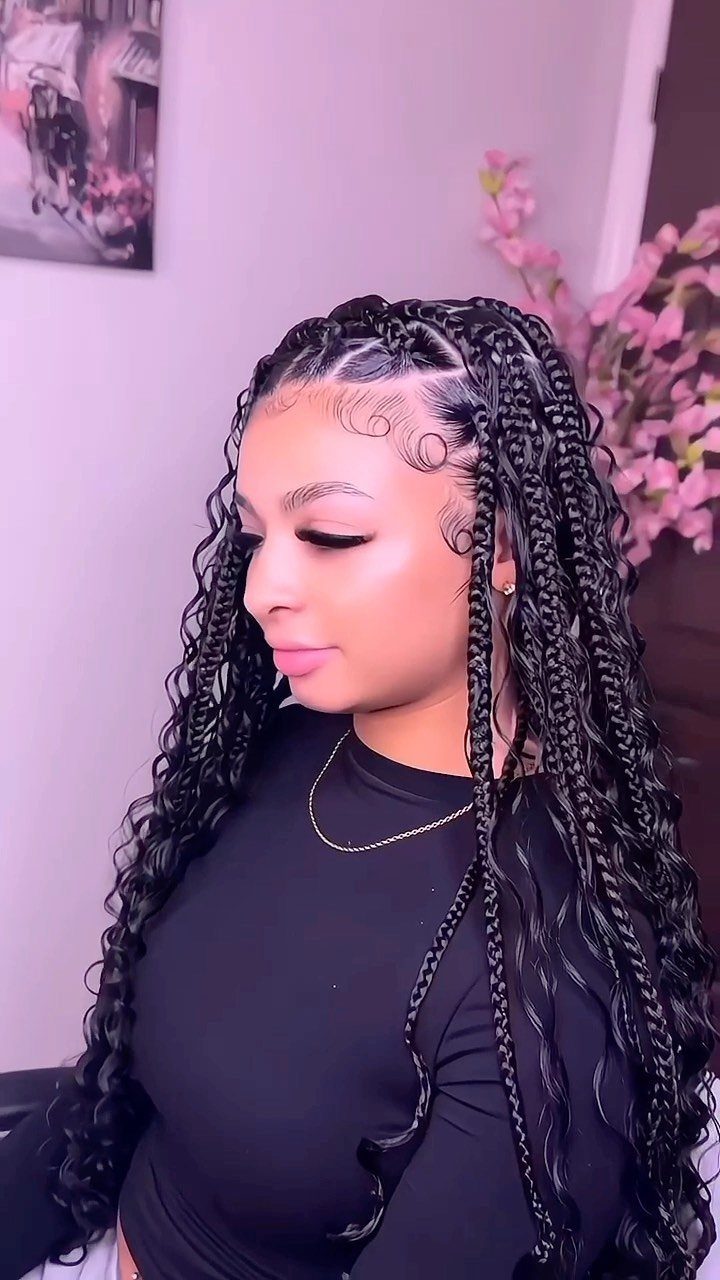
Box braids with loose curls or straight human hair left out through the length soften the look and add texture variation.
The loose sections are usually pulled from the extension hair as you braid, so you control how much is left out and where it falls.
Boho braids need detangling every few days because those loose sections tangle more easily than fully enclosed box braids.
4. Cornrows
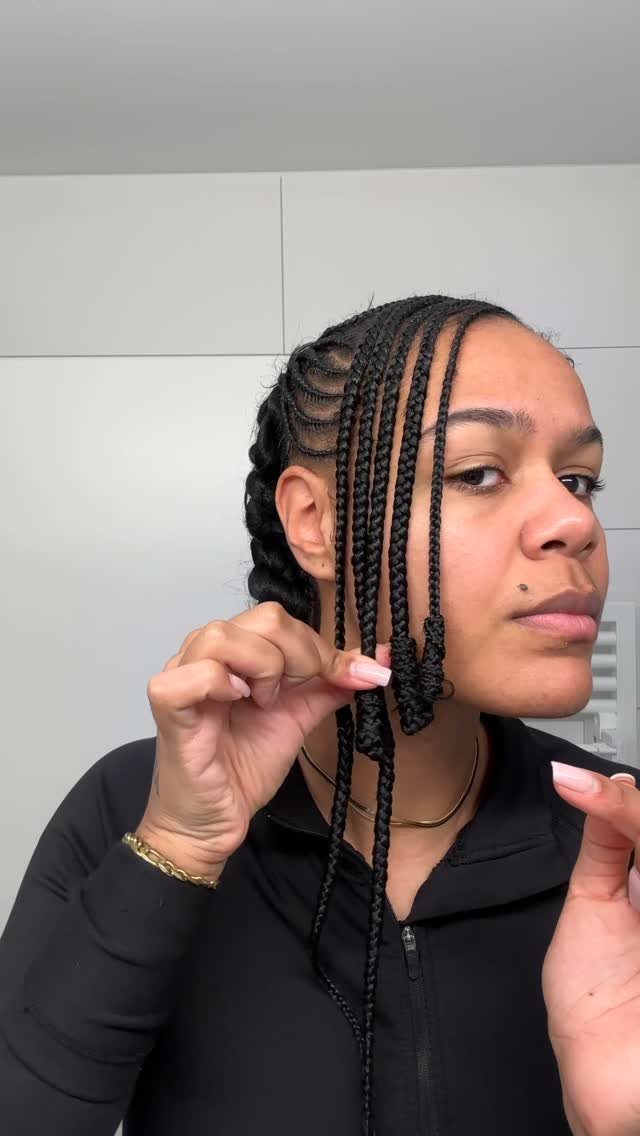
Braids plaited flat against the scalp in straight or curved rows stay close to the head and show off the pattern you choose.
The braid itself is built by picking up hair from the scalp as you go, so it lies flush instead of lifting away.
Cornrows can run front to back, side to side, or curve into shapes. They hold up well if you tie them down at night, and most textures work as long as you have enough length to plait.
5. Goddess Braided Bun
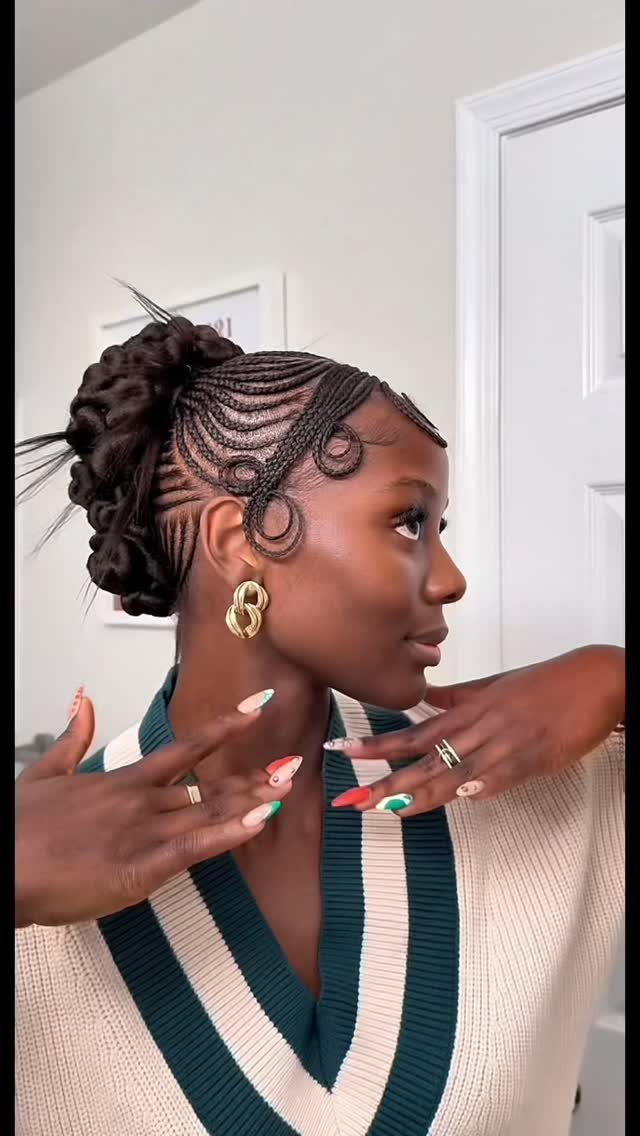
Goddess braids gathered and pinned into a bun at the back keep the braids off your neck and create one focal shape instead of loose lengths.
The bun can sit low, mid-height, or high depending on where you want the weight and how formal the occasion is.
Short open bobby pins placed in sideways, rather than straight up and down, hold the bun without pointing toward your scalp. That small shift in pin angle makes the style more comfortable to wear all day.
6. Braided Cornrow Bun
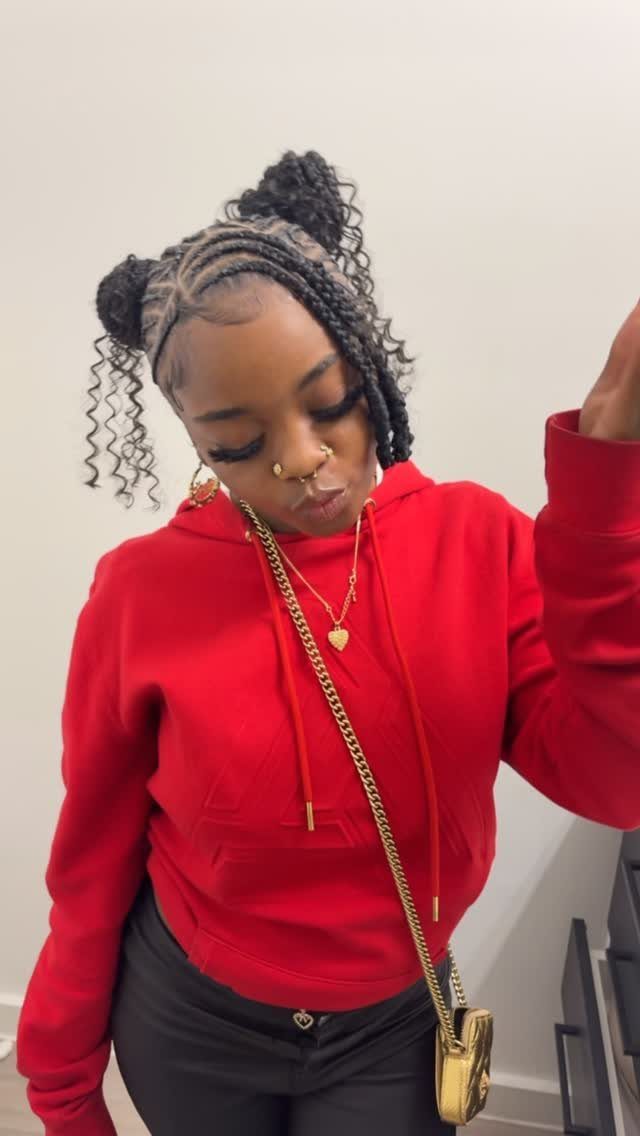
Cornrows gathered into a bun instead of left loose create one compact shape that keeps the braids secure and off your shoulders.
The bun can be a single knot at the crown or split into 2 smaller buns, which shortens the perceived length and gives the style a more playful shape.
This works best when the cornrows are already long enough to wrap and pin without pulling. If your natural hair is short, extensions built into the cornrows add the length you need to form a full bun.
7. Box Braids
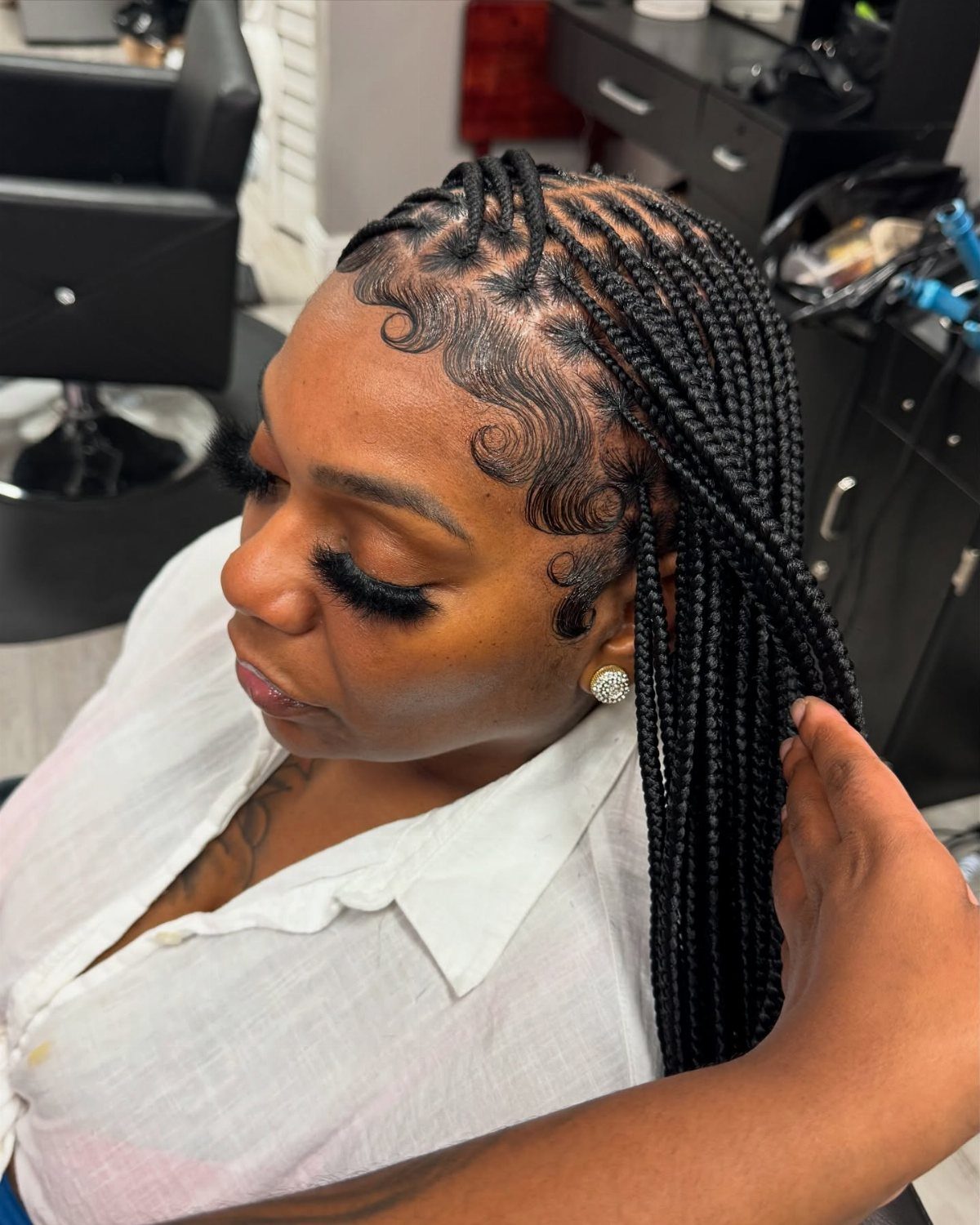
Each braid starts from its own square section, which is how box braids get their name.
The partings form a neat grid across your scalp, and the sections can run small, medium or large depending on how thick you want each braid.
Smaller sections mean more braids and a longer installation time, but the style lasts longer because each braid carries less weight. Larger sections finish faster and look bolder, though they may loosen sooner if your hair is fine or slippery.
8. Fulani Braids
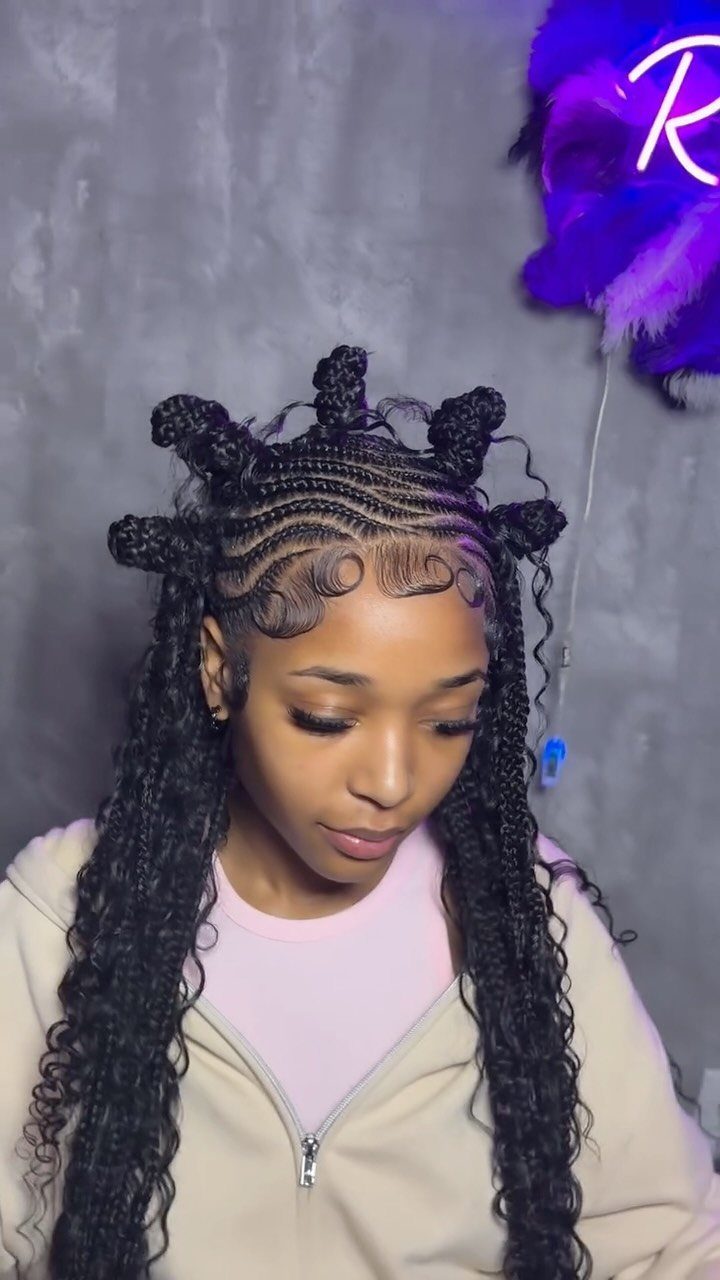
Cornrows sit along the front and sides of the head, then transition into individual braids that hang free at the back.
The combination gives you the sleek sculpted look of cornrows where your hair frames your face, with the movement and length of loose braids everywhere else.
Some versions add beads, cuffs or rings to the individual braids, or include a center braid that runs straight back.
The style works best when your natural hair or the extensions you use have enough length to support both the cornrow base and the hanging braids.
9. Dutch Braids
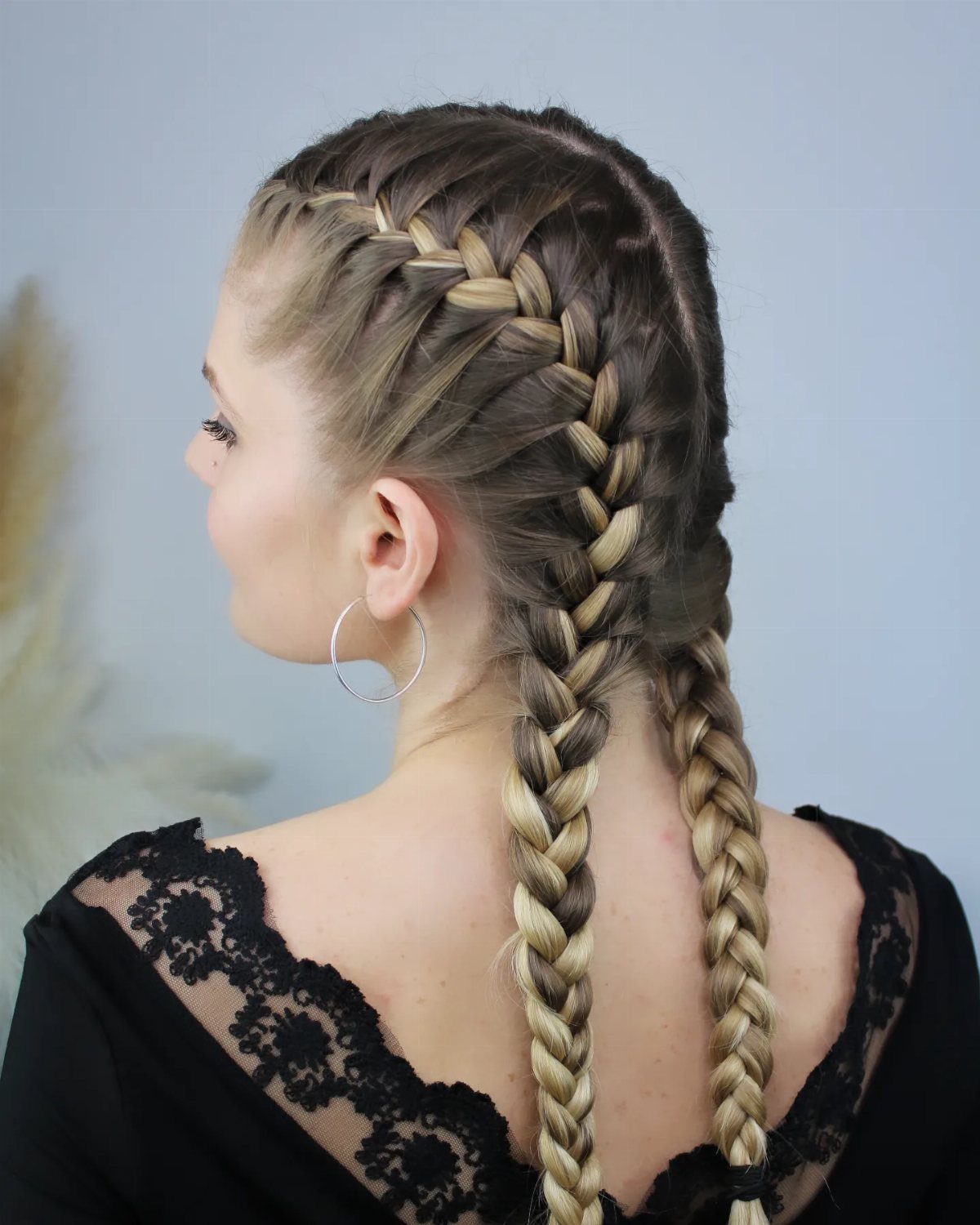
Crossing the strands under instead of over pushes the braid up and away from your scalp, so it sits raised like a ridge.
That change in weaving direction is the only difference between a Dutch braid and a standard three-strand plait, but the result stands out instead of lying flat.
Most people wear 2 Dutch braids running down the back, though you can braid just one down the center or along one side.
The raised shape shows up best on straight or wavy hair, where the braid’s texture contrasts with the hair around it.
10. Lemonade Braids
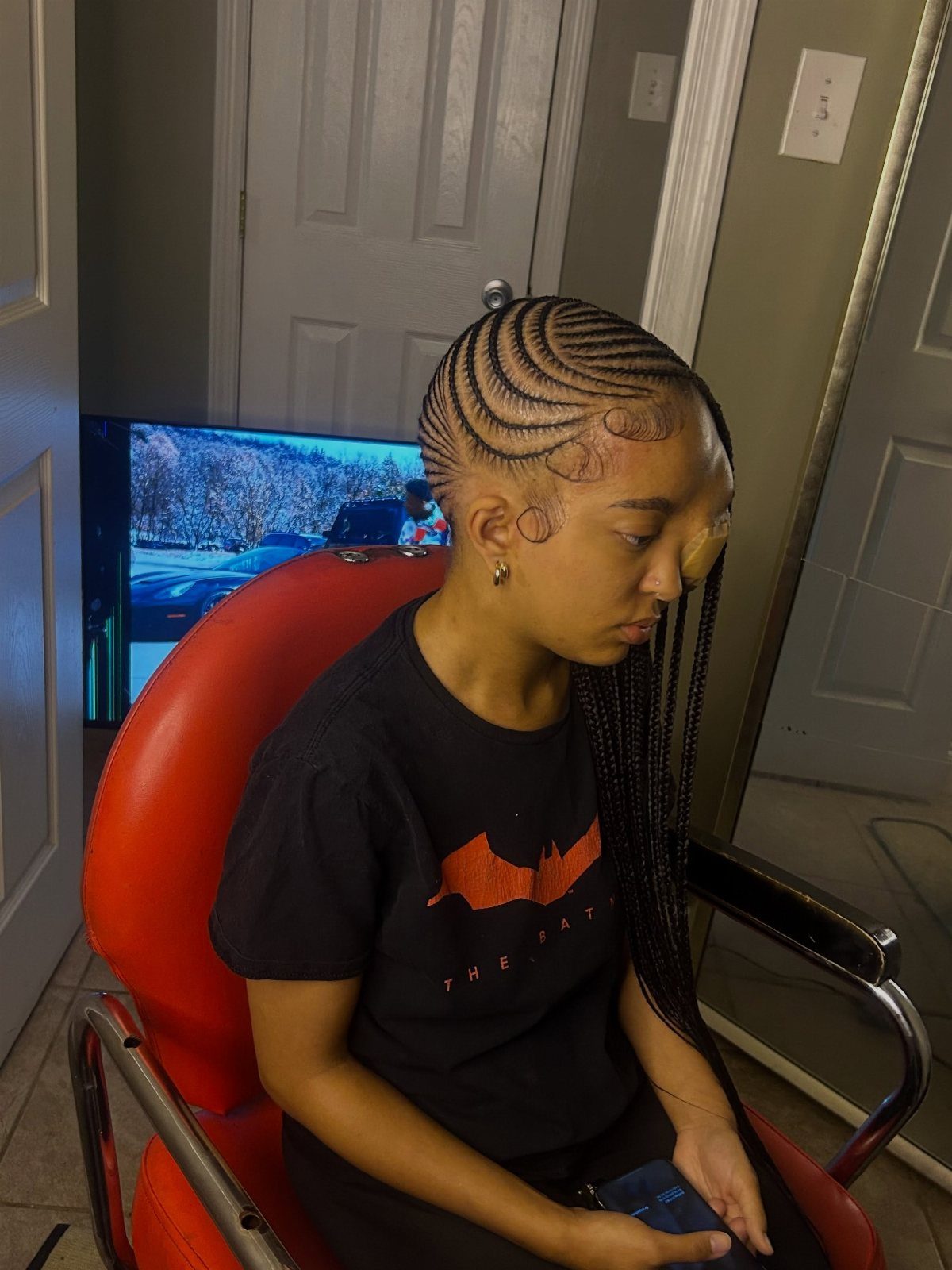
All the braids sweep to one side, so they curve across your scalp and fall over a single shoulder. The diagonal direction creates asymmetry and keeps the braids from sitting evenly on both sides of your head.
The style works when you want a side-part look that stays put.
Because the braids run at an angle, they pull slightly in that direction, so if your edges are already fragile, ask your braider to start them loose and avoid placing tension right at the hairline.
11. Micro Braids
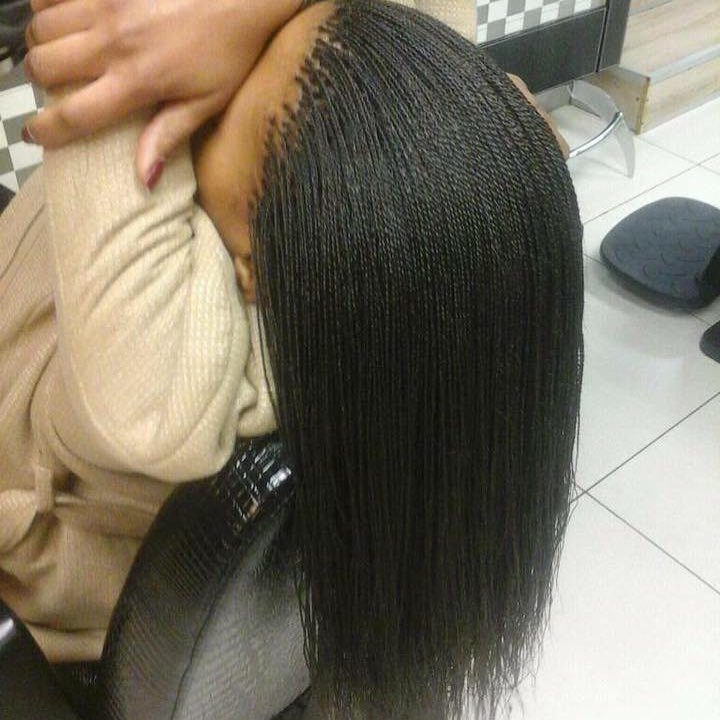
The plaits are thin enough that they move almost like loose hair, which gives you flexibility in how you style them but adds hours to the installation.
Each braid is less than a quarter inch wide, and a full head takes long enough that you’ll want to bring snacks and something to watch.
Micro braids hold up well if you keep them moisturized and tie them down at night.
The thin sections mean less tension per braid, which is gentler on your scalp, but the sheer number of braids means the overall weight can still add up if your hair is fine.
12. Braided Bob
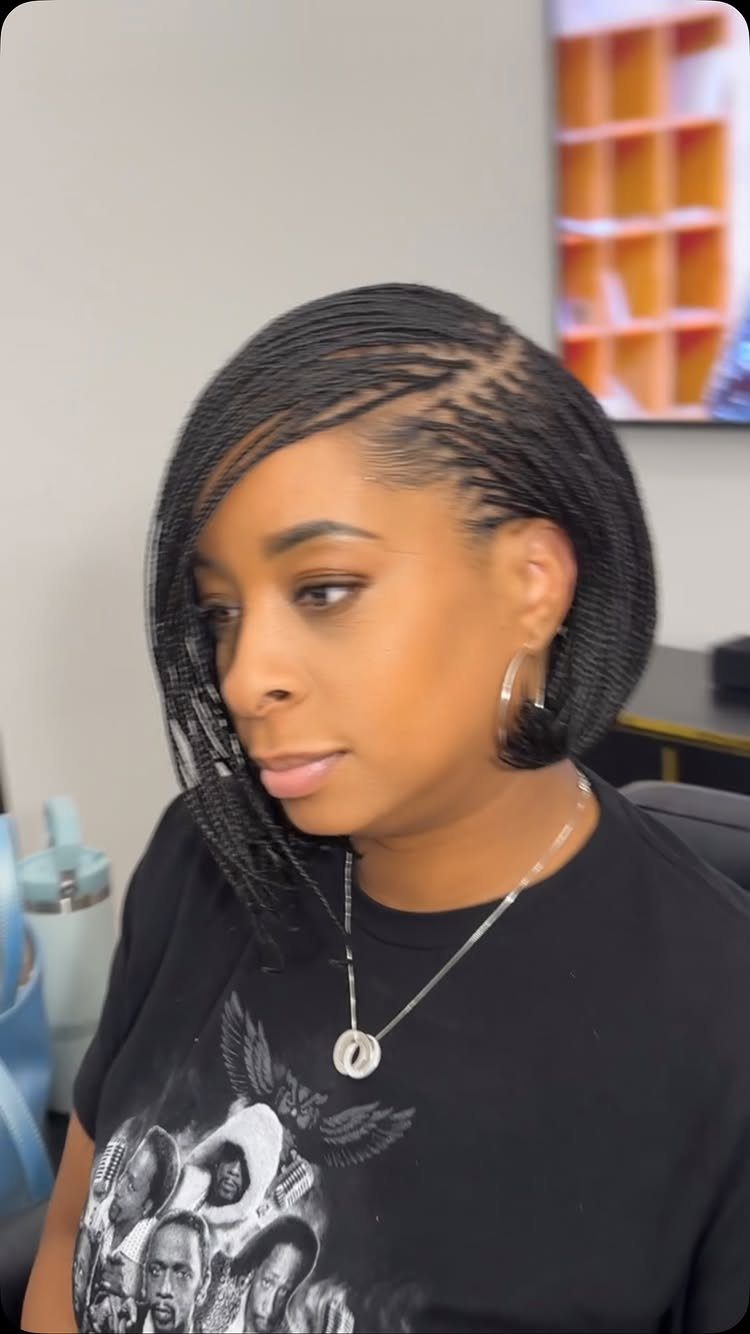
Cutting braids to bob length gives you the structure and low-maintenance of braids without the weight or styling effort that comes with long ones.
The shorter length also means fewer hours in the chair, since there’s less hair to braid in the first place.
A bob sits around chin to shoulder length, and you can angle it shorter in the back or keep it even all around.
The style still lasts several weeks, and you can pin it up or leave it down without the weight pulling on your scalp the way longer braids do.
13. Rope Braids
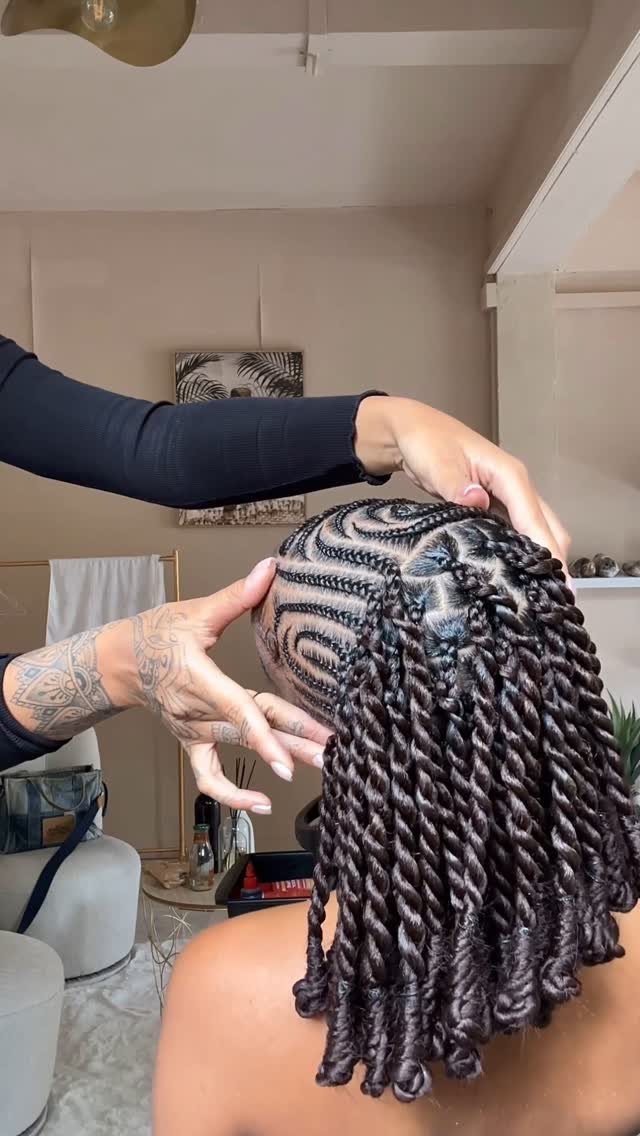
Two-strand twists wrapped around each other create a rope texture instead of the flat weave you get from plaiting.
The twist method is faster to install than box braids because you’re working with 2 sections instead of 3, though the finished style loosens more quickly if your hair is fine or freshly washed.
Rope braids unravel easily if they’re not secured at the ends, so use small elastics or dip the tips in hot water if you’re working with synthetic hair.
14. Half-Up Braids
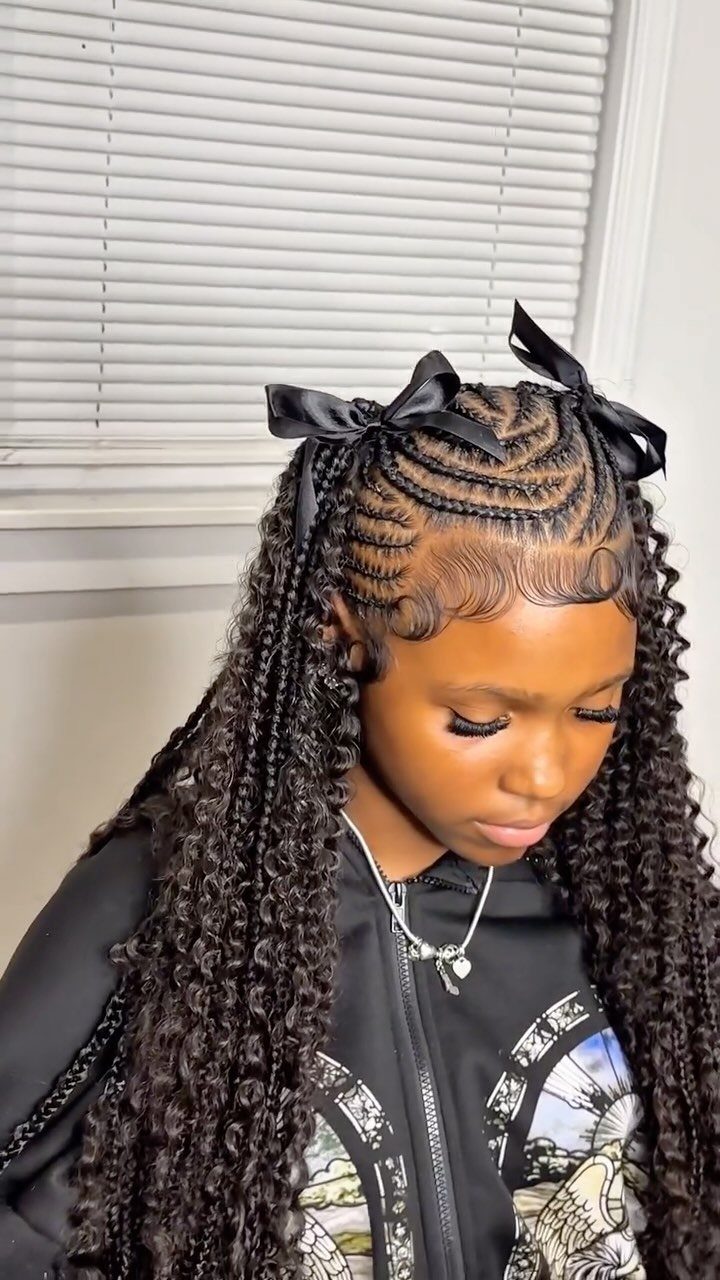
Gathering some braids at the crown and securing them while the rest hang free keeps hair off your face without committing to a full updo.
You control how much volume you want by choosing where the tie sits and how many braids you pull into it.
This works when you want the length and movement of loose braids but need your face clear for work or sport. The tie itself can be an elastic, a ribbon, or a decorative clip, and repositioning it takes seconds.
15. Braided Side Bun
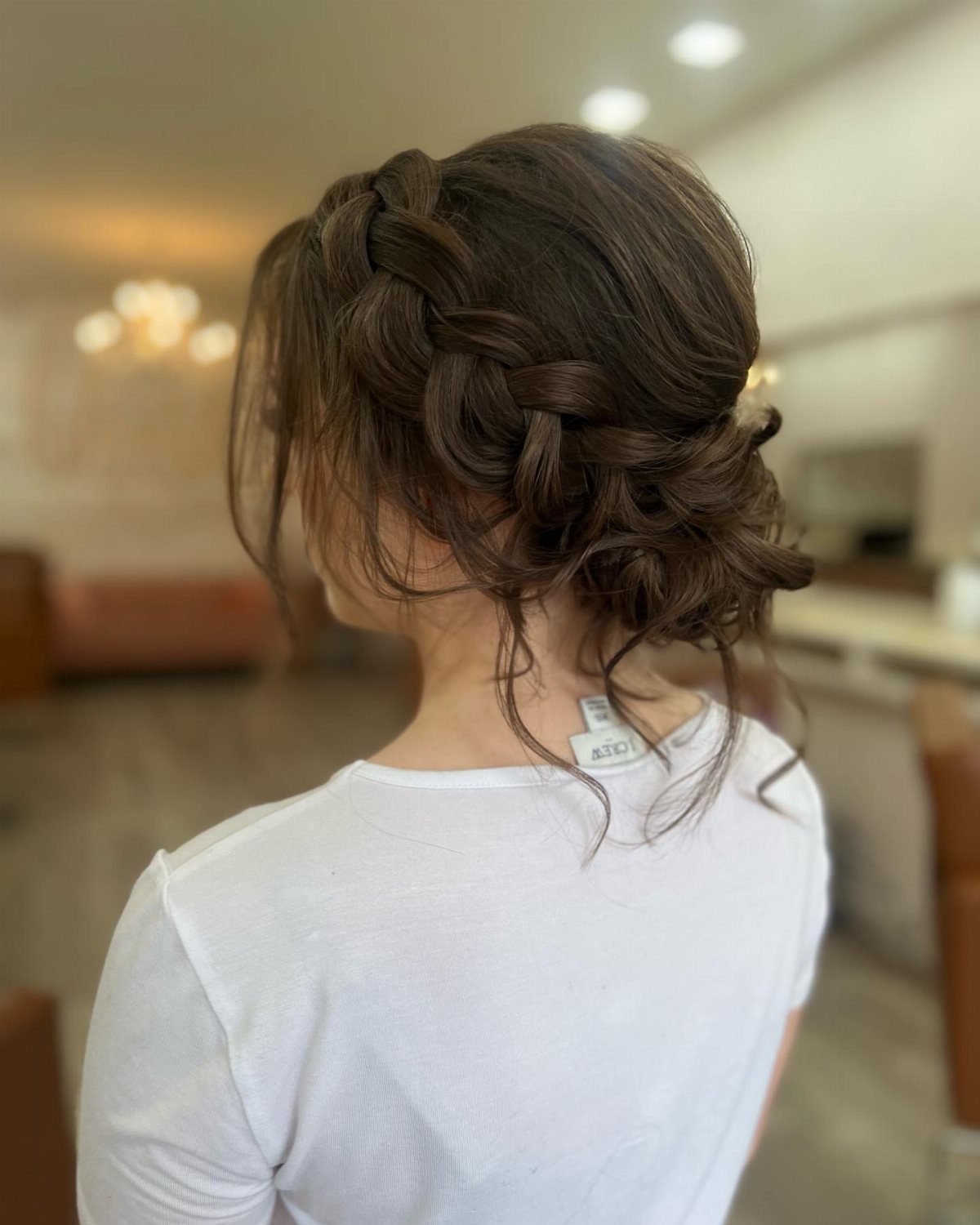
A single braid swept to one side and coiled into a bun gives you an asymmetric shape that sits lower and feels more relaxed than a centered style.
The braid can be tight or loose depending on how polished you want the finished bun to look.
Pin the bun close to your head if you’re wearing it all day, since a loosely anchored bun shifts and pulls.
Bobby pins tucked under the coil rather than straight through the braid hold better and feel less sharp against your scalp.
16. Stitch Braids
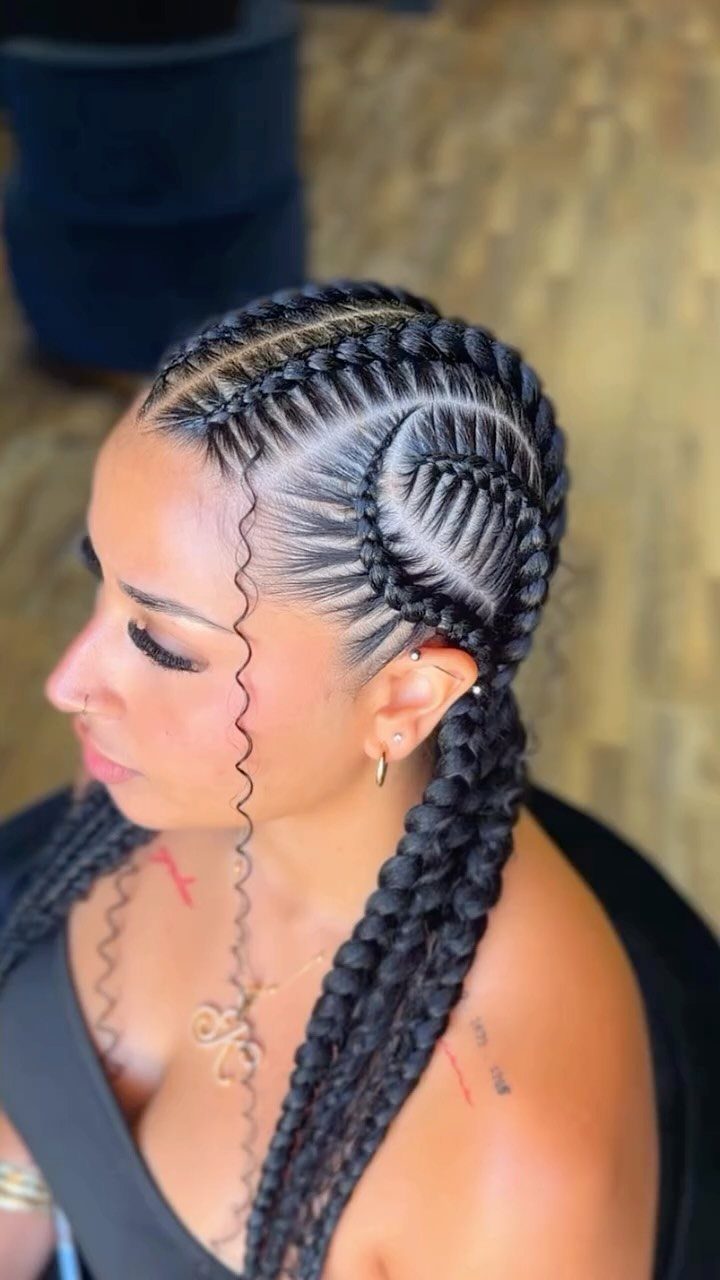
The partings between cornrows are so clean and even they look like stitching across your scalp. That precision comes from using the tail of a rattail comb to carve each part, not from how the braid itself is woven.
Stitch braids take longer to install than freehand cornrows because the parting step is slow and demands accuracy.
The finished look is sharper, and the braids themselves can run straight, curved, or in geometric patterns depending on how you lay out the partings.
17. Large Curving Braids
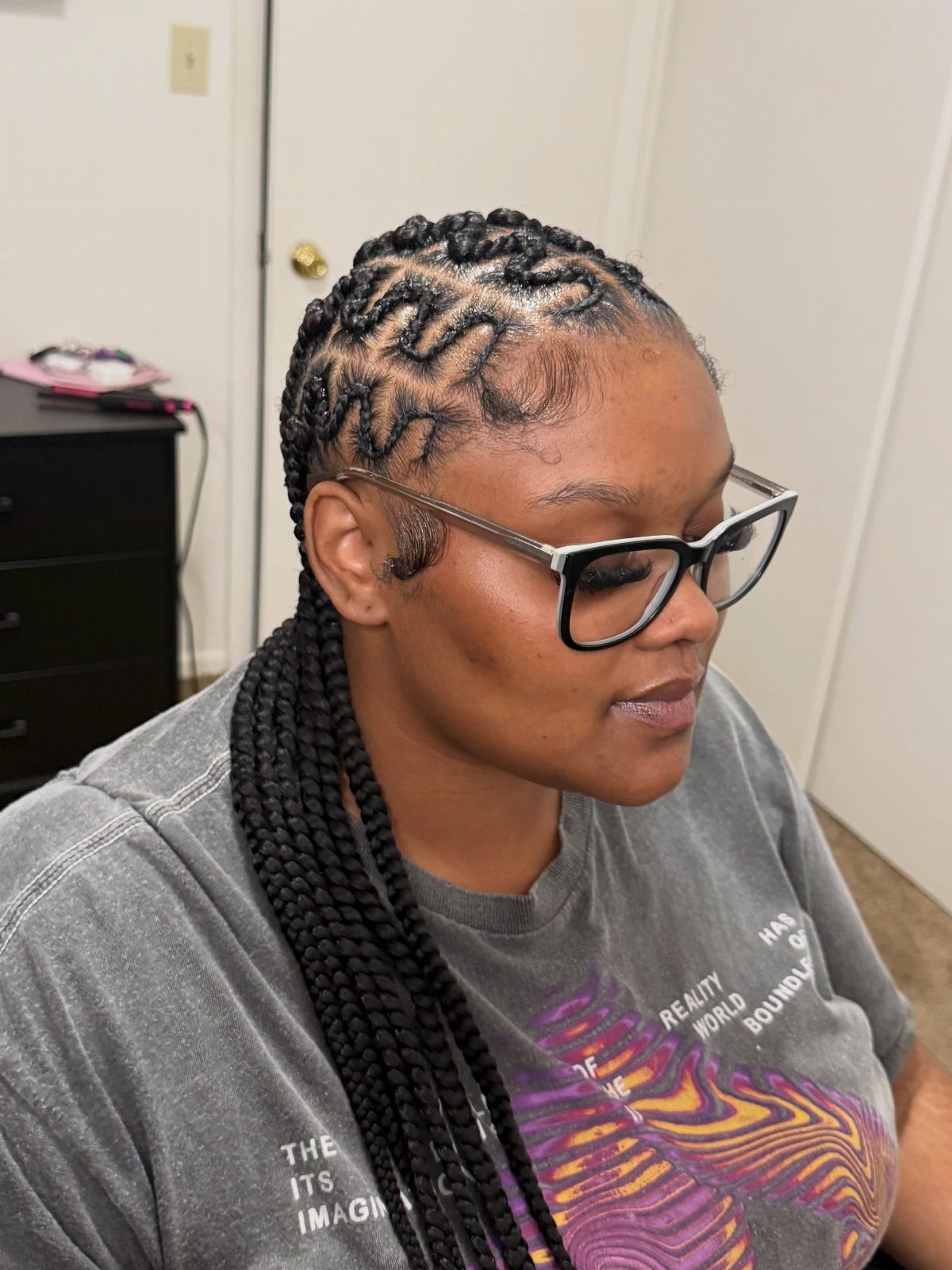
Thick cornrows that curve across the scalp create bold shapes that show up from across a room.
The curves can loop, spiral, or follow an asymmetric path, and mixing braid widths within the same pattern adds contrast without requiring a second technique.
Large braids finish faster than smaller ones, but they also loosen sooner because each braid carries more weight. If you want the style to last longer than 2 weeks, keep the scalp moisturized and tie the braids down at night.
18. Big-Little Goddess Braids
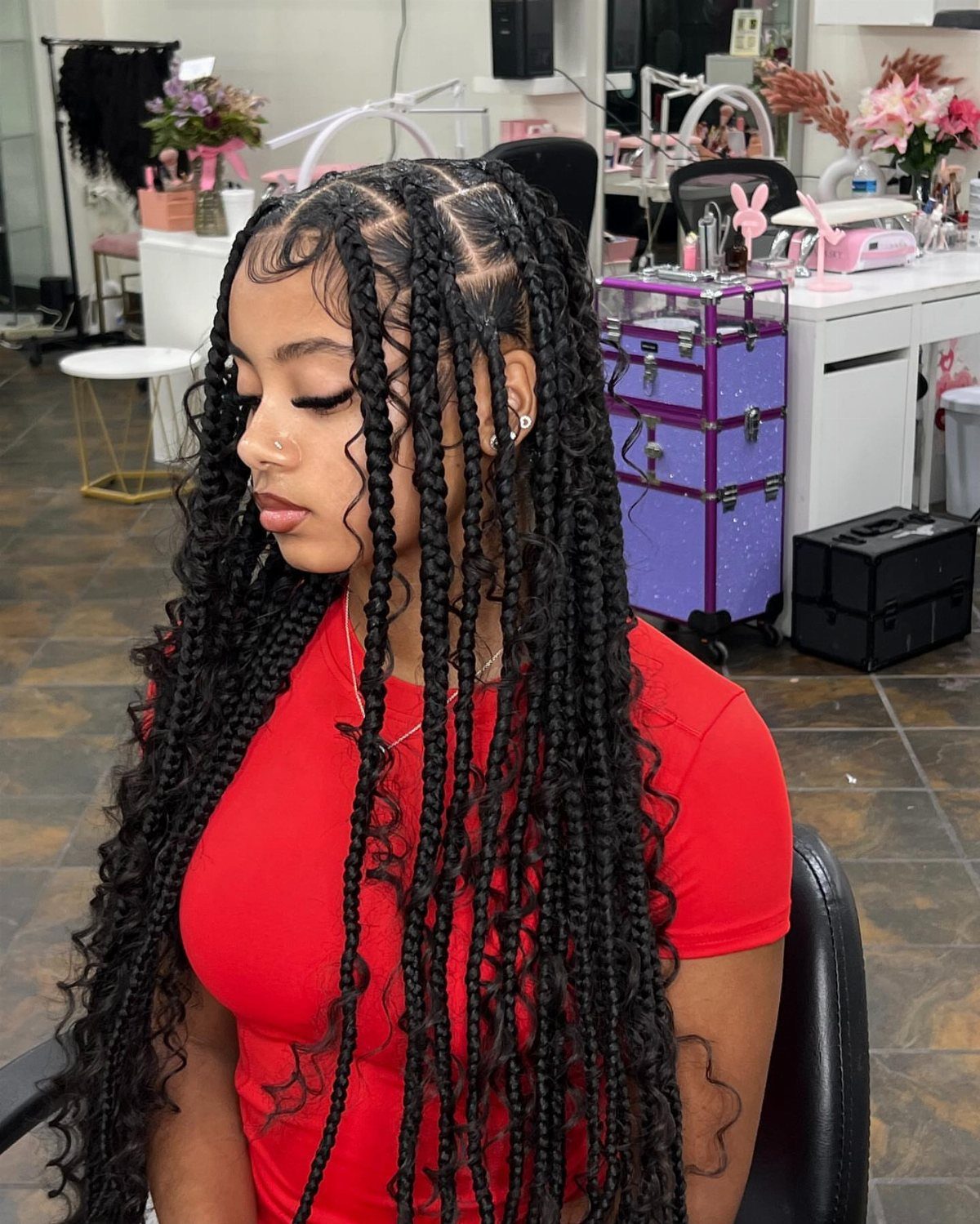
Thick goddess braids sit next to thin cornrows, so the size contrast becomes the design. The larger braids usually frame the face or run down the center, while the smaller ones fill in the sides or curve around them.
This style takes less time than an all-over small-braid look but still gives you intricate detail where it counts. The thick sections loosen faster, so plan to touch up or redo the style when you want it to stay neat.
19. Braids with Beads
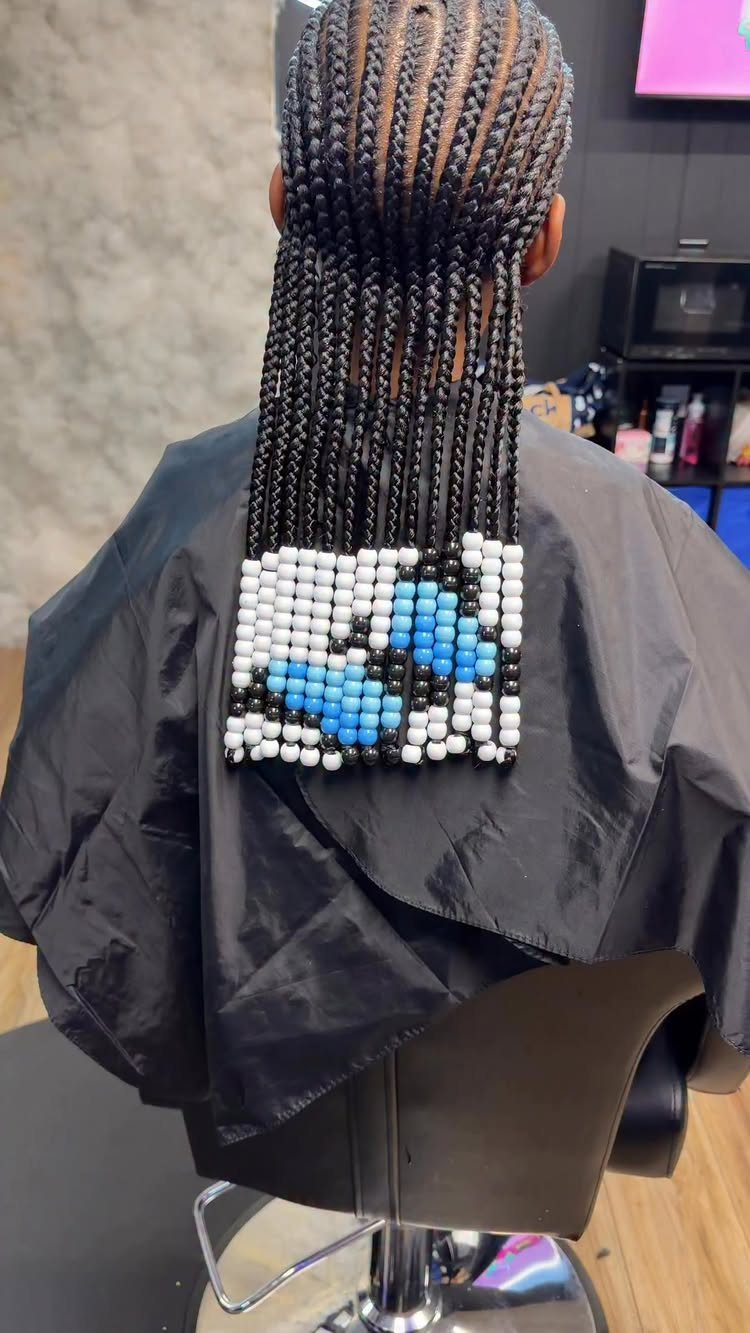
Beads on the ends add weight so the braids hang straight, and you can pick them to match or contrast without touching the braided hair itself.
The beads can match your outfit, sit in one color family, or alternate in stripes down the length.
Metal cuffs stay put on their own, but plastic pony beads need a small elastic or a knot below them to keep them from sliding off.
If the beads feel heavy after a few hours, remove a few or switch to lighter ones.
20. Jumbo Braids with Heart Shapes
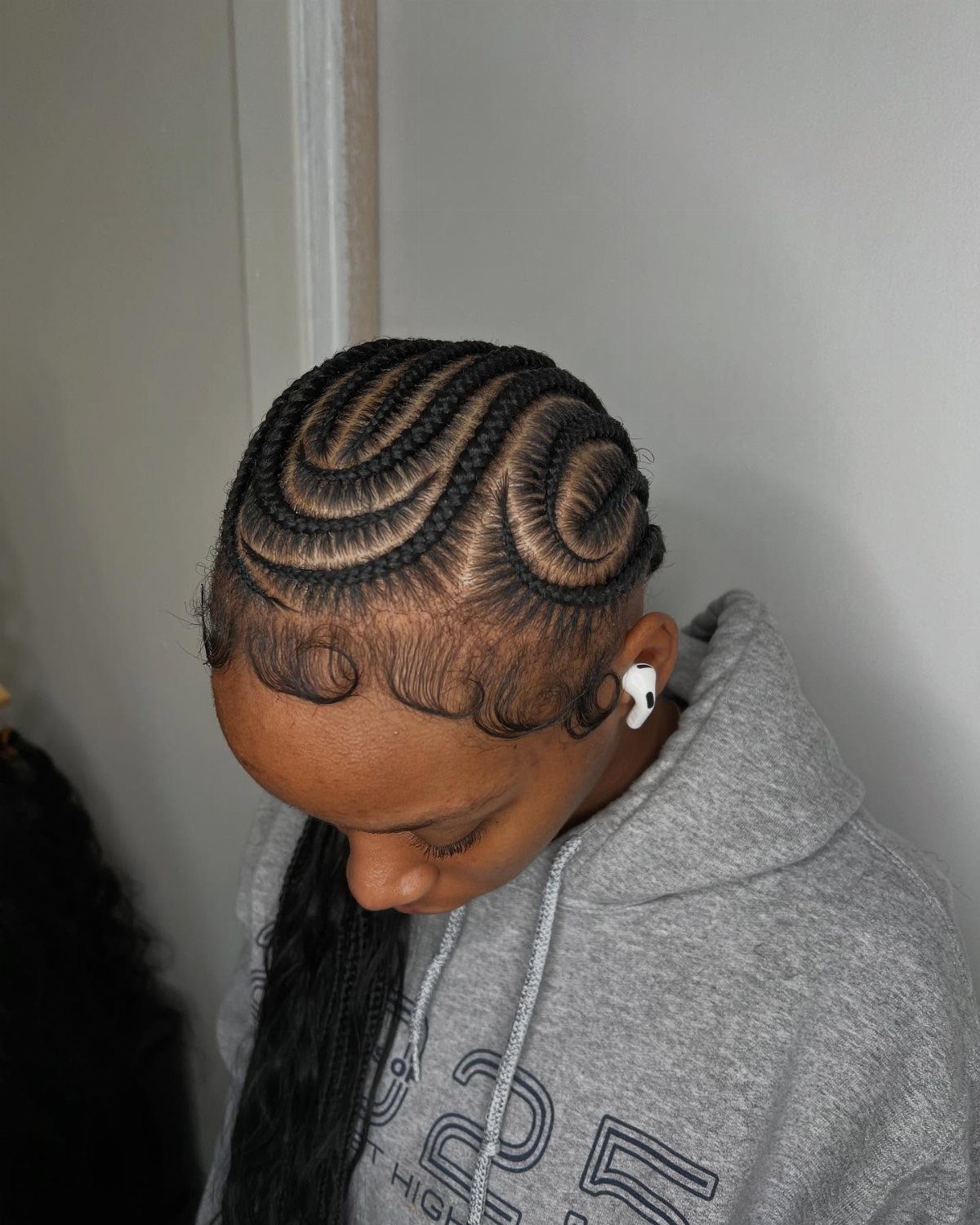
Jumbo braids parted into a heart shape turn the scalp design into the focal point instead of the braid size.
The heart sits where the partings meet, usually at the side or back of the head, and the thick braids fill in around it.
The shape holds as long as the cornrows stay tight. After that the partings blur and the heart loses definition, so plan to redo the style when you want the design crisp.
21. Butterfly Braids
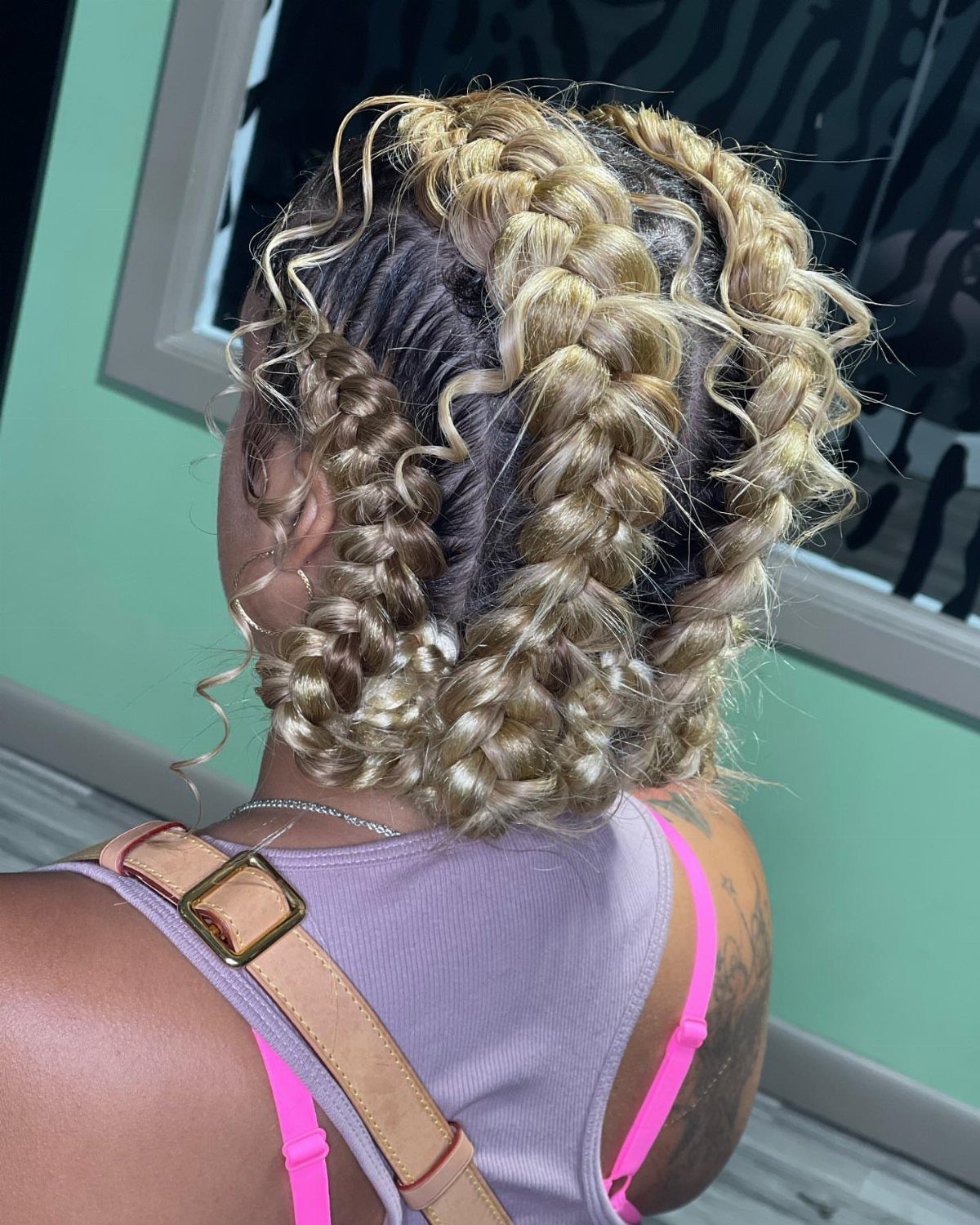
Thick braids loop and curve across the scalp in soft, irregular shapes instead of running straight back. The pattern looks organic rather than geometric, and leaving curly pieces loose along the braids adds texture that softens the whole style.
The loose curls tangle more easily than fully braided hair, so finger-detangle them every couple of days. The loops themselves sit flatter than a standard goddess braid because the curve distributes the weight differently across your scalp.
22. Long Goddess Braids
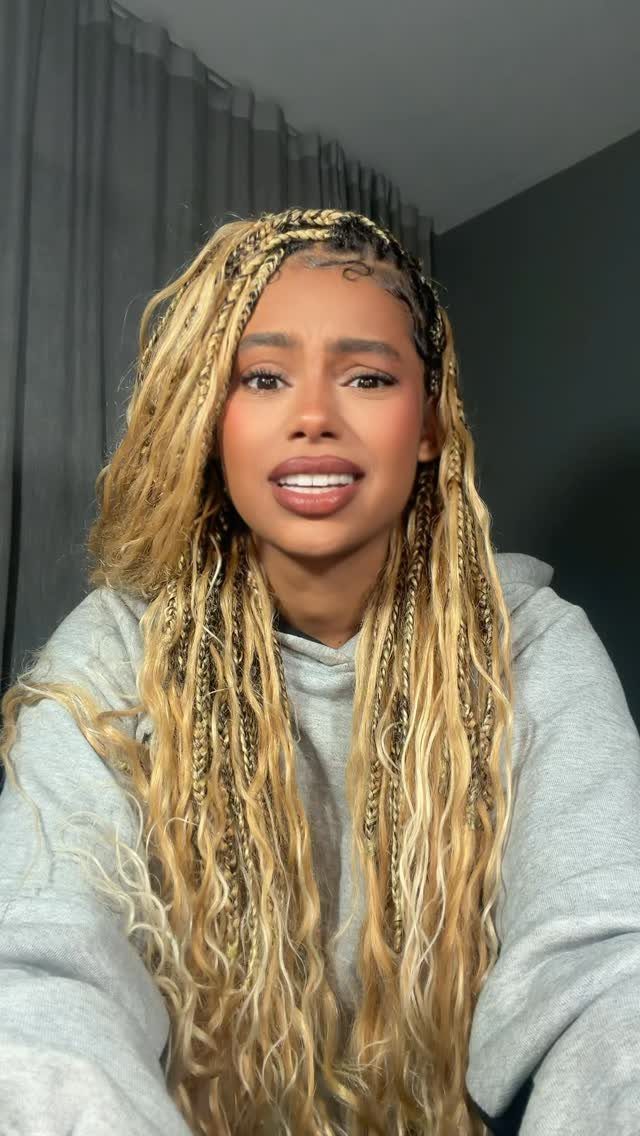
Goddess braids that fall past your waist give you the sculpted look of thick cornrows with length that moves.
The braids are built large and loose, so they take less time to install than smaller box braids but carry more weight once they’re in.
That weight pulls on your scalp if the braids are anchored too tight at the root, so ask your braider to start them loose. Wrapping the length in a scarf at night keeps the braids from tangling while you sleep.
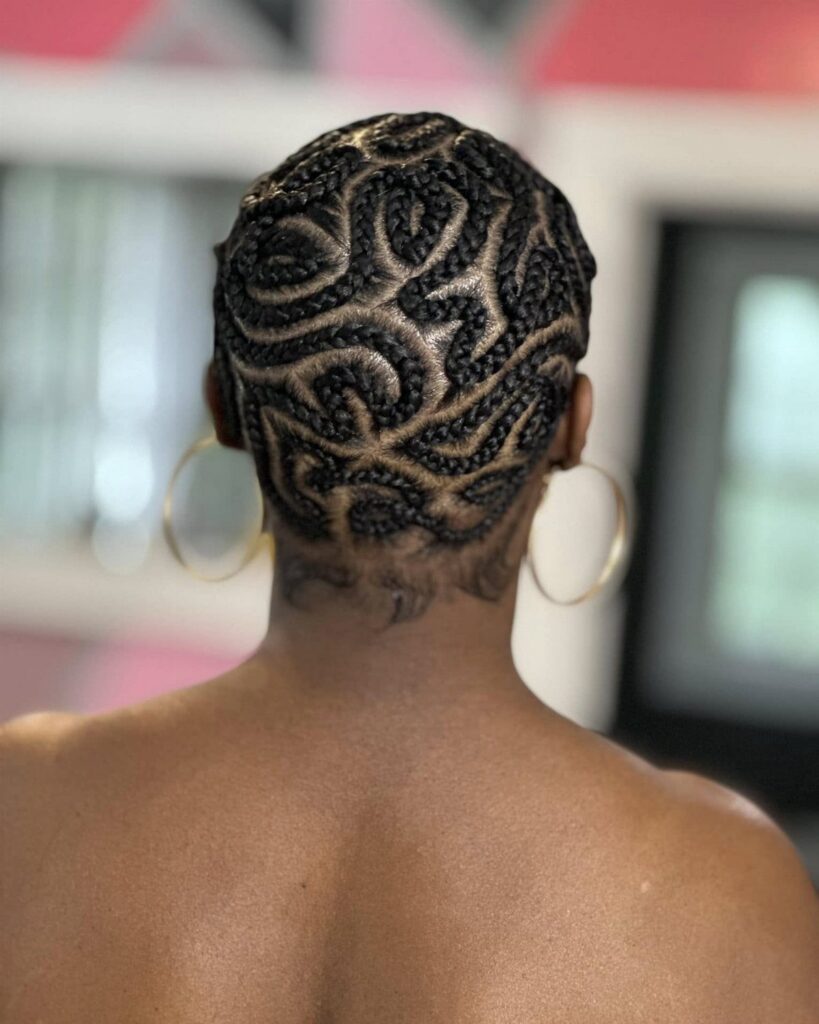
23. Patterned Cornrows
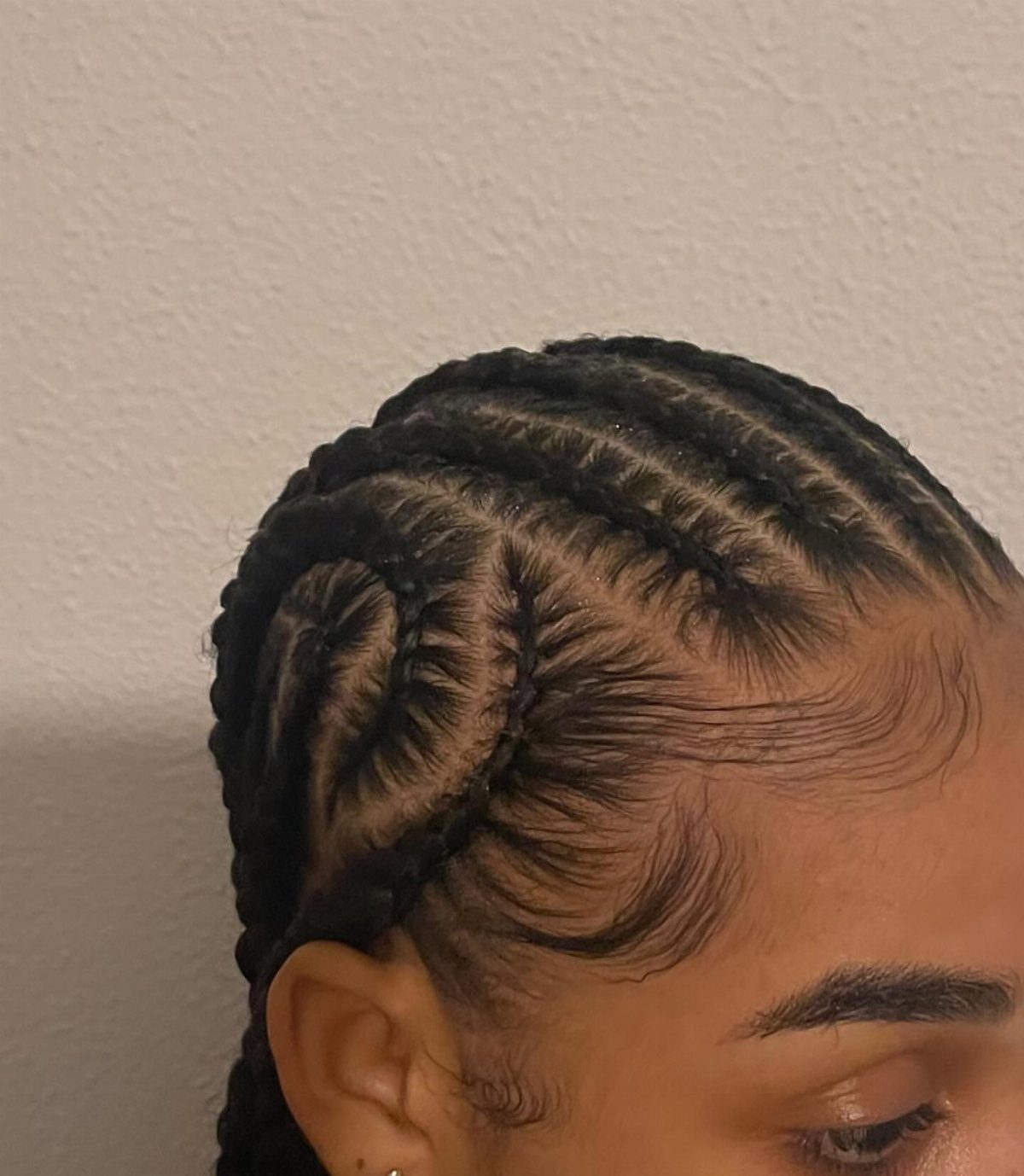
Curves, zigzags and loops in the parting lines turn the cornrows into a custom design that sits flush against your scalp.
The pattern is drawn with a rattail comb before any braiding starts, so the design stays sharp as long as the cornrows hold.
Geometric shapes show up best when the partings are wide enough to see clearly, which usually means spacing them at least half an inch apart.
Tight curves take longer to braid than straight rows because you’re adjusting the tension as the cornrow follows the shape.
Braid Upkeep and Wear Time
Box braids typically last 4–8 weeks, cornrows 2–4 weeks, and goddess braids 2–4 weeks.
Box braids and knotless braids outlast most other styles because the small sections hide regrowth longer. Jumbo braids don’t get that benefit.
What you do after installation matters just as much as which style you pick. Wrap your hair at night, keep your scalp from drying out, and shampoo every 10–14 days to keep the parts clean.
Don’t leave box braids in beyond 8 weeks.
Tension and Scalp Health
Braids should not hurt. If the root hurts, the braid is too tight and needs to be loosened or removed before it thins your hairline.
Too loose and the braid falls apart within days; too tight and you risk permanent hair loss along the edges. Find someone who braids with a steady, medium grip and flag any stinging or burning the moment you feel it.
Arrive at your appointment with clean hair. A braider gets the tension right from the start, so the style lasts the full 4–6 weeks instead of coming out early because your scalp itches or flakes.
Choosing by Time and Hair
Ask yourself how long your hair is, how much time you have for install and upkeep, and where you’re wearing it.
For protective styles that hold 4–6 weeks, I’d go with knotless braids or box braids. Crown braids and braided buns hold through a full day and night, which is why I pick them for formal events.
Styles braided at the ends instead of the scalp take 10 minutes or less: pigtails, fishtails, anything casual.
Straight-back cornrows give you a clean base for more detailed work on top. 2, 4, or 6 cornrows braided back is an under-2-hours style.
Frequently Asked Questions
How long do goddess braids last?
Most wearers get 2 to 4 weeks before the style needs redoing. Large braids carry less tension on each strand, so they frizz and loosen faster than smaller styles that grip the hair more tightly.
Which type of braids last longest?
Box braids and knotless braids last longest, usually 4–8 weeks with proper care. Their small sections hide new growth longer than jumbo styles, so the regrowth doesn’t show as quickly and the braids stay looking fresh.
What kind of hair should I buy for goddess braids?
Latched & Hooked non-toxic fibers or X-Pression work well, and regular Kanekalon is also an option. Test synthetic hair on a small patch of skin first if you’ve never used it, or rinse it with apple cider vinegar before installation.
What are the most popular braided hairstyles?
Boho and knotless box braids with loose curly pieces are highly requested right now. Side-swept cornrows in the lemonade style have held steady since that album dropped, and geometric cornrow designs are climbing fast.
What helps box braids last longer?
Keep your scalp hydrated with a light spray 2–3 times a week, and cleanse it every 2–3 weeks with diluted shampoo or a scalp cleanser. Follow with leave-in conditioner to keep the braids looking fresh and reduce buildup.
What are the pros and cons of box braids?
Box braids protect your hair and let you style them multiple ways, but installation takes hours and you need to watch the tension around your hairline to avoid breakage.
They’re more versatile than cornrows since you can wear them up or down.
Is hair shedding normal after removing box braids?
Some hair will come out when you take braids down because strands shed every day and collect while the braid holds them in.
Is it bad to wear box braids all the time?
Regular wear is fine, but take a 2-week break between installs to let your scalp and hairline recover. Between installs, spend time on your scalp and use protein treatments so the hair stays strong.