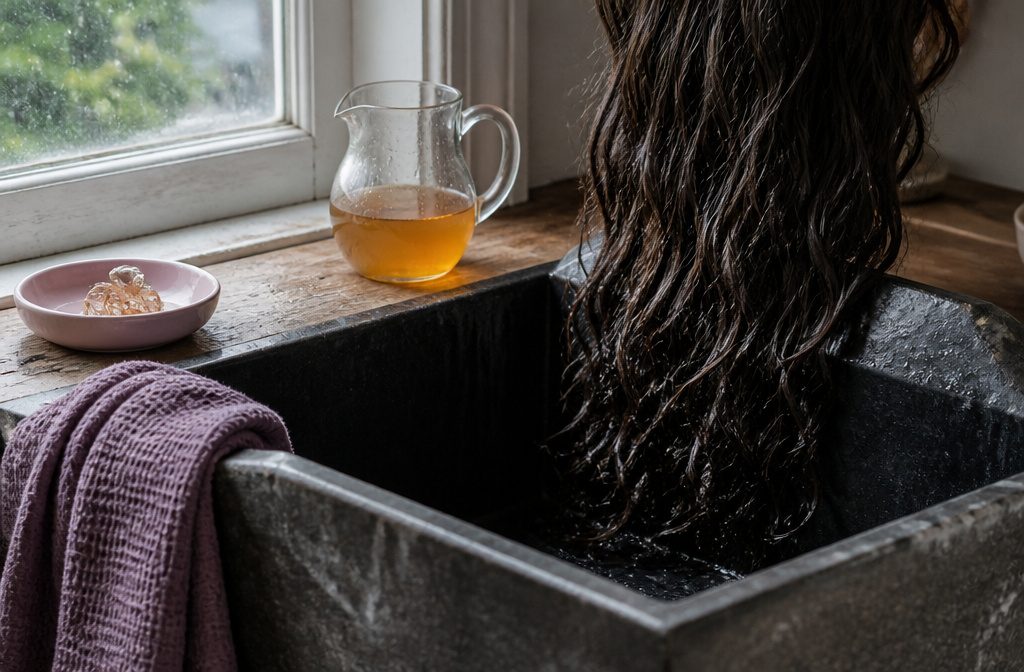
Apple cider vinegar brings hair’s pH down from the alkaline shift caused by shampoo or hard water, flattening the cuticle so strands reflect more light and tangle less.
That works best for oily or buildup-prone hair; dry, damaged or chemically treated strands can turn brittle with regular use, especially when the rinse sits longer than a few minutes or the dilution runs stronger than 2–4 tablespoons per 16 ounces of water.
Does Apple Cider Vinegar Help Hair and Scalp
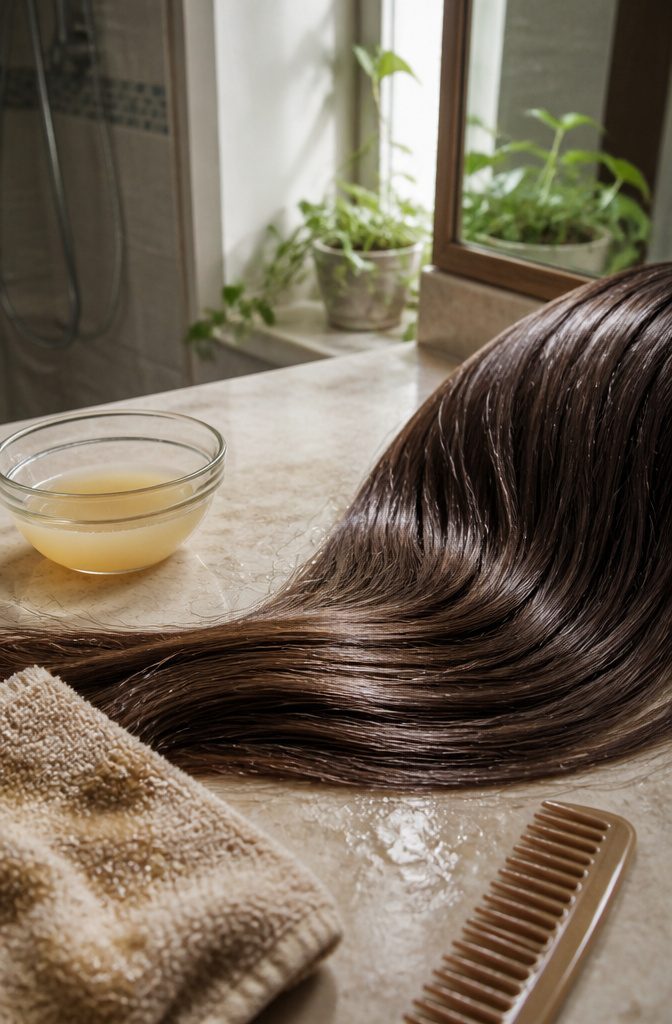
Apple cider vinegar sits at a pH of 2–3, which lines up reasonably well with hair’s natural pH of 3.67–5.5.
That acidity helps explain why ACV appears in so many routines: the low pH can smooth the cuticle after alkaline shampoos lift it, remove mineral deposits from hard water, and leave hair looking glossier and feeling lighter.
The shine boost and easier detangling are the most consistently reported effects.
The science specific to ACV and hair is thin.
Most of what gets repeated online rests on its acidity and anecdotal results rather than controlled studies. I have read claims ranging from buildup removal and frizz reduction to antimicrobial action and even blood circulation to the follicles.
The clarifying and pH-balancing claims hold up better across sources than the growth or dandruff-cure promises, which swing wider depending on who is writing.
Why Acidity and pH Matter for the Cuticle
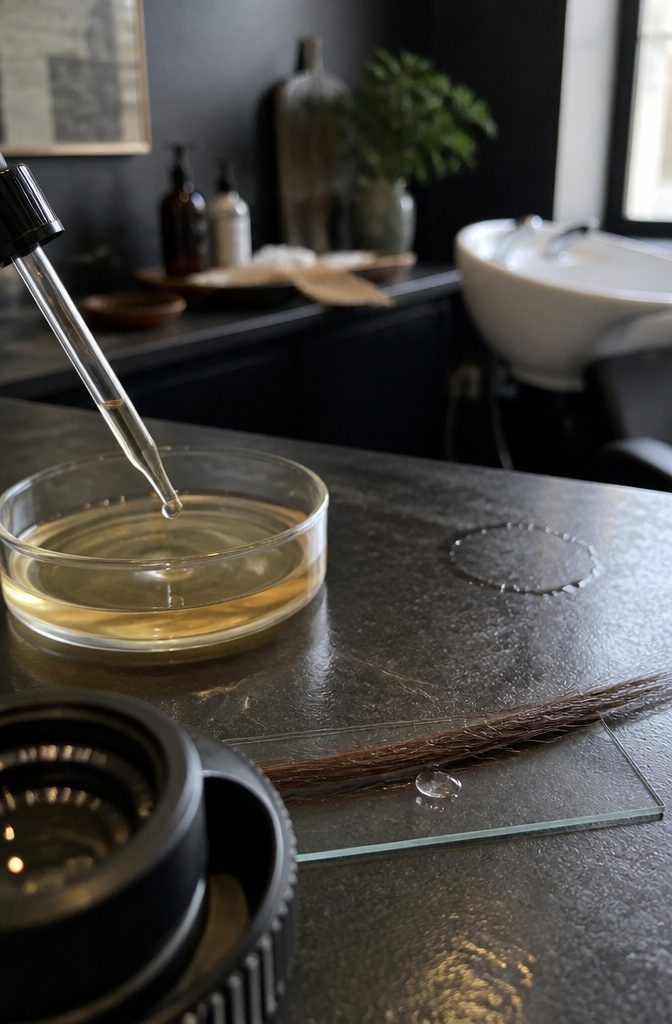
Hair’s natural pH sits between 3.67 and 5.5, which places it on the acidic side of the scale.
The scalp hovers around 5. When that acidity drops or shifts toward alkaline—anything above 7—the cuticle layer lifts and opens.
An open cuticle catches light poorly, tangles easily, and lets moisture escape. Hair that reads as dull, frizzy, or brittle tends to be more alkaline than it should be.
ACV’s pH falls between 2 and 3, making it highly acidic. The theory holds that applying something acidic to hair that has drifted alkaline—say, from a high-pH shampoo or hard water—helps flatten and close the cuticle again.
A closed cuticle reflects more light, holds moisture better, and reduces friction between strands. That translates to smoother, shinier hair with less breakage.
No published research has directly tested whether ACV regulates hair pH or closes the cuticle. The mechanism is proposed, not proven.
What we have is logic borrowed from general pH science and anecdotal reporting that it works. I think the plausibility is strong enough to try, but it remains a working theory rather than lab-confirmed fact.
Antimicrobial Claims and What the Research Says
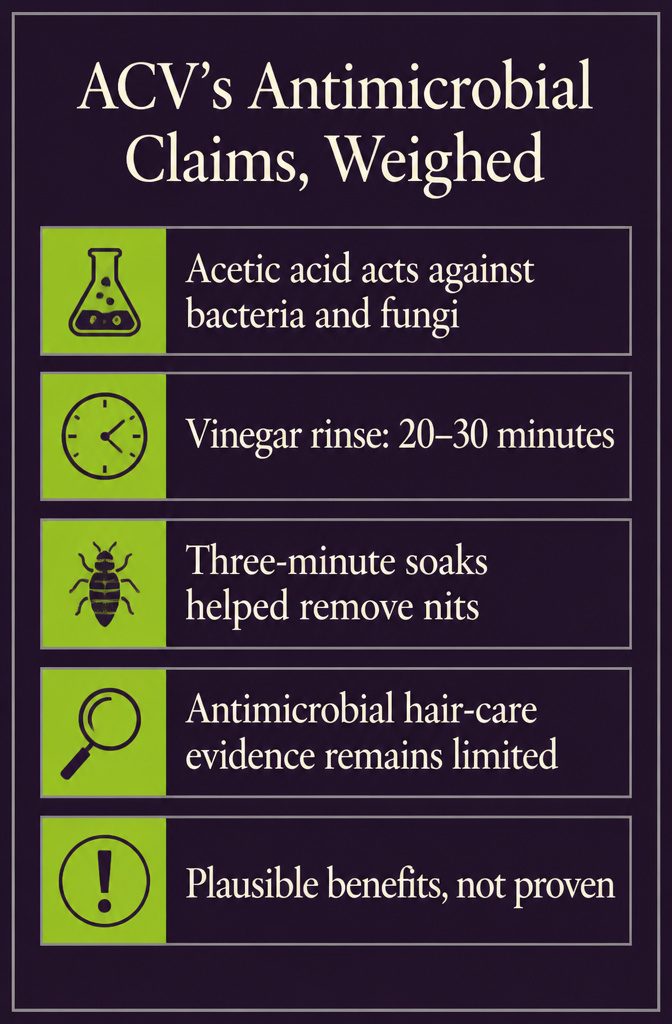
A 2021 review found that vinegar rinses for 20 to 30 minutes may offer antimicrobial benefits, and 3-minute soaks helped remove nits.
The acetic acid in ACV is cited as effective against various bacteria and fungi, which is why it turns up in recommendations for scalp health.
The theory is that regular use can help prevent infections or issues tied to microbial overgrowth, and that the slightly acidic pH can soothe scalps that feel itchy or congested.
That said, sources consistently note that evidence is limited.
There is not much scientific research specifically on ACV for hair care, so most of the antimicrobial claims rest on the known properties of vinegar rather than dedicated trials. The benefits are plausible, not proven.
Less Buildup, More Shine and Easier Detangling
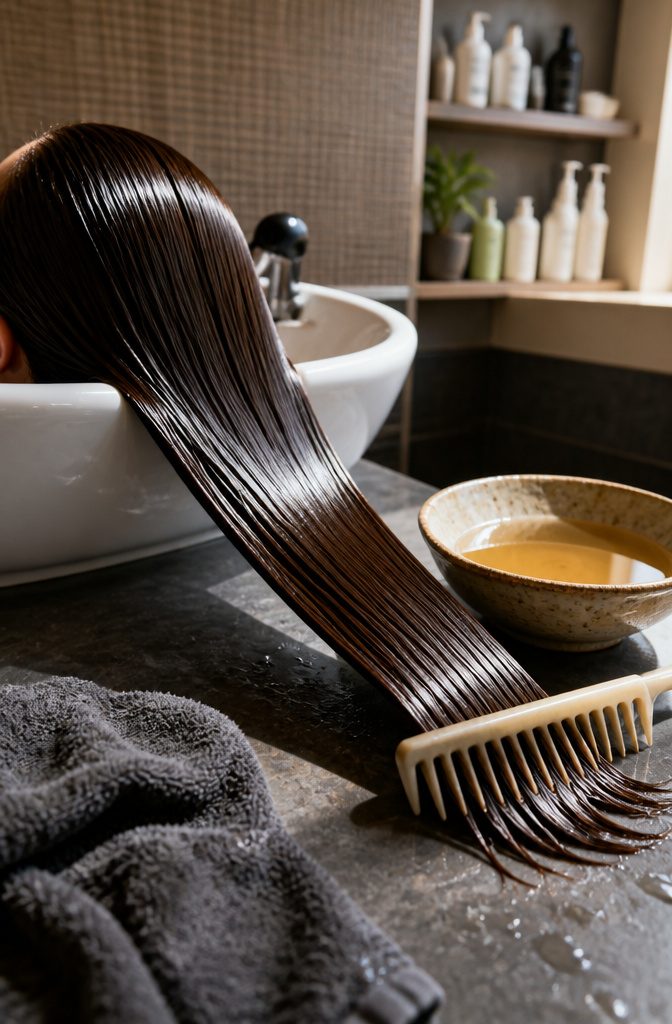
The polish claim is the one you see everywhere: ACV removes buildup from styling products, hard water minerals and scalp oil, leaving hair shinier, softer and easier to comb through.
The acidity is said to close or flatten the cuticle, which helps the strand reflect light and reduces friction when you pull a brush through.
I find this is where the experience feels most consistent across sources, probably because buildup is tangible and removing it does something visible.
The shine benefit leans on the same cuticle-smoothing mechanism. Flatter cuticle scales mean more even light reflection, less frizz and fewer snags during detangling.
Some sources add that ACV makes hair feel lighter because it strips away the silicone and polymer film left behind by conditioners and styling products, which can weigh fine hair down or make curls look dull.
Volume improves for the same reason.
Possible Help With Flakes, Itching or Hair Growth
Some people lean on ACV to calm an oily or flaky scalp, and a few claim it nudges along hair growth by lifting buildup and rebalancing pH.
The logic holds that a cleaner scalp gives follicles better odds, but the research backing those claims is thin and mixed.
ACV carries antibacterial and antifungal properties that may help with minor itching or surface buildup, yet it should not be treated as a fix for dandruff or any diagnosed scalp condition.
It is a condiment, not a medical treatment, and relying on it to solve inflammation or persistent flaking skips the step where a healthcare professional identifies what is actually wrong.
Who May Benefit and Who Should Be Cautious
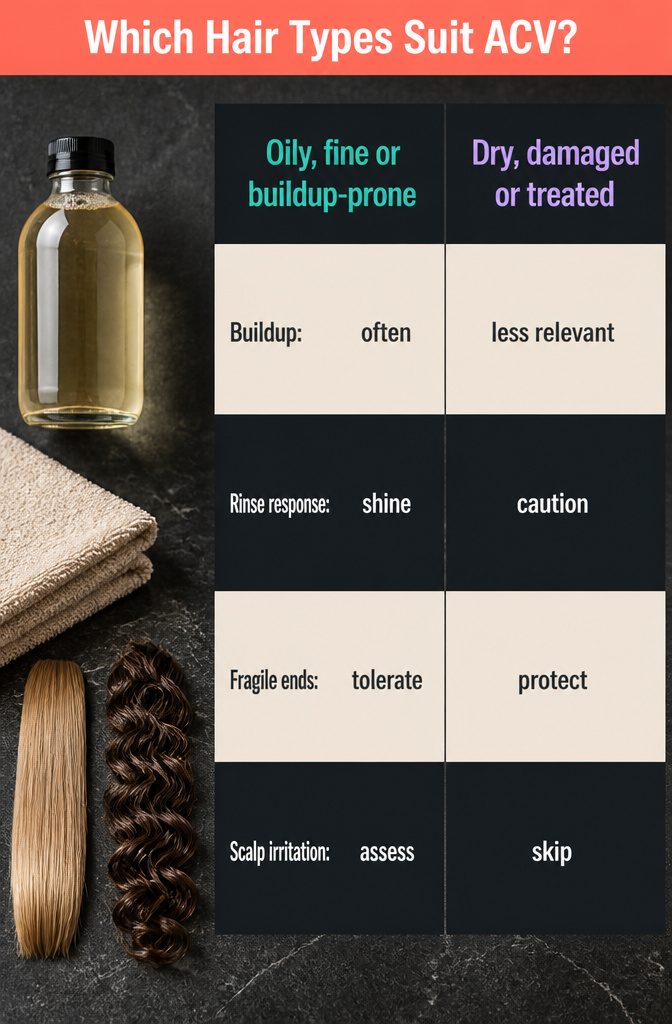
Oily, fine or buildup-prone hair responds well to a diluted rinse.
If you use a lot of dry shampoo, volumizing spray or leave-in product and wash every few days instead of daily, ACV cuts through the film that makes hair look flat and greasy.
Curly hair picks up buildup for the same reason: longer wash intervals. The clarifying power of the rinse brings back shine and movement.
Dry, damaged or chemically treated hair calls for more caution.
Very dry scalps can get worse with regular use, and high-porosity or bleached strands may react too strongly even when diluted. If your hair breaks easily, apply the rinse only at the roots and keep it away from fragile ends.
Sensitive scalps or any open cuts or irritation are also reasons to skip it or try a pre-formulated product with a gentler pH instead.
Porosity advice splits by source. Curlsmith describes medium-porosity hair as tolerant of any application method, while very porous hair requires lighter use.
NaturAll centers its recommendations on natural and curly textures but does not rule out other types. Fine hair that is naturally brittle or struggles to grow may fare worse, since the acid can tip dry strands into breakage.
A strand test on a small section lets you gauge whether your hair tolerates the rinse before committing to a full application.
Color-Treated Hair: Conflicting Advice
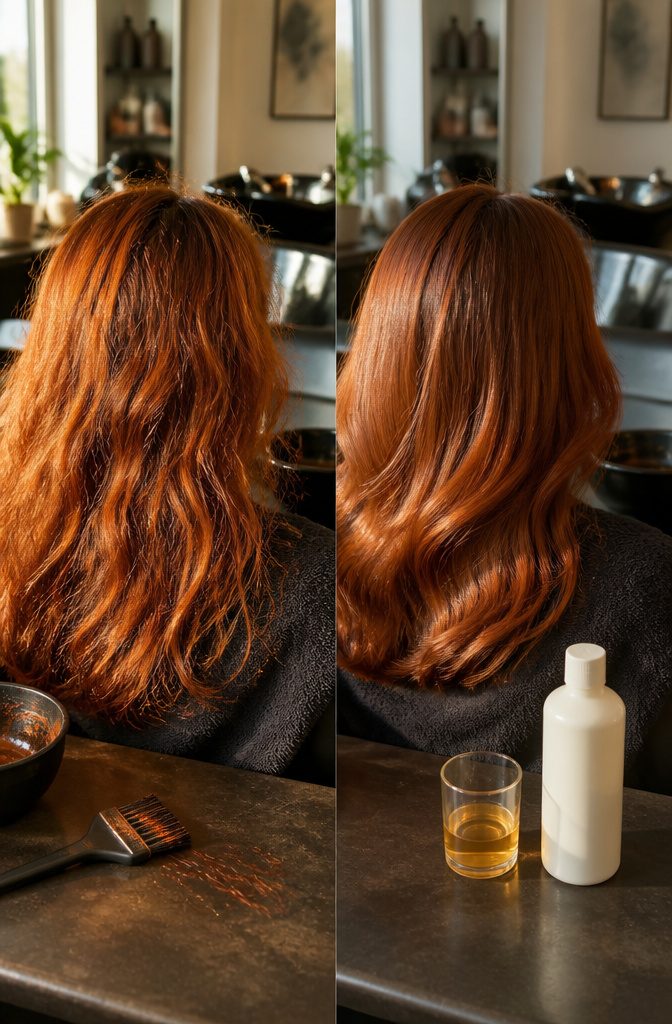
Several sources describe ACV as safe for color-treated hair, even protective.
Curlsmith, Coconuts and Kettlebells, and Hairlust all say that diluted ACV can remove buildup without stripping dye, and that its acidity helps seal the cuticle, which may keep color locked in longer than harsh clarifying shampoos do.
Hairlust specifically calls it a gentler alternative that maintains vibrancy.
Glamour takes the opposite view. In its list of potential side effects, it warns that the acidity may cause dye molecules to loosen, leading to faster fading.
That directly contradicts the cuticle-sealing argument, and it is the only source in the group to flag color loss as a risk worth thinking about before applying ACV to dyed hair.
Risks of Undiluted ACV and Overuse
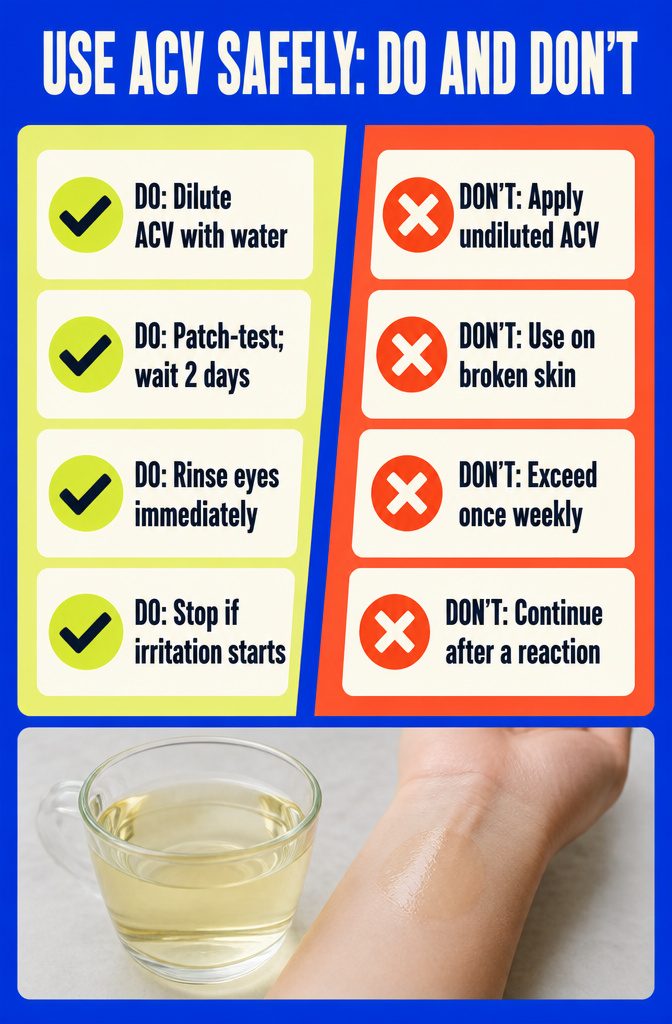
Undiluted ACV can irritate or burn the skin because of the acetic acid it contains. A 2015 case report documented scarring from a skin burn after a girl applied it to her nose.
The lesson is simple: always mix ACV with water before it touches your scalp, and keep it away from your eyes. If you do get any in your eyes, rinse immediately with water.
I recommend a patch test before your first rinse. Apply a small amount of diluted ACV to the inside of your wrist, then wait 2 days.
If you see redness, itching or a burning feeling, wash it off and skip the rinse altogether. Also avoid using ACV on broken skin or any area that is already irritated.
Overuse strips too much oil and leaves hair dry and brittle, so once a week is the ceiling for most people. If irritation happens during or after a rinse, rinse thoroughly with water and stop using it.
How to Dilute and Apply an ACV Rinse
The ratio sources recommend varies more than you might expect. Most settle between 2–4 tablespoons ACV in 16 ounces of water, though some prefer a 1:3 or 1:5 dilution (one part vinegar to three or five parts water).
One recipe calls for 1¾ cups water with ¼ cup ACV, another uses 100 mL vinegar in 500 mL water. If you have a sensitive scalp or fine hair, start weak and adjust up.
You can customize your ACV-to-water ratio to modify the intensity of the mixture, depending on your hair type and the seriousness of your scalp concerns.
— ELLE
That flexibility matters, because what works for thick, coarse hair can sting on a reactive scalp.
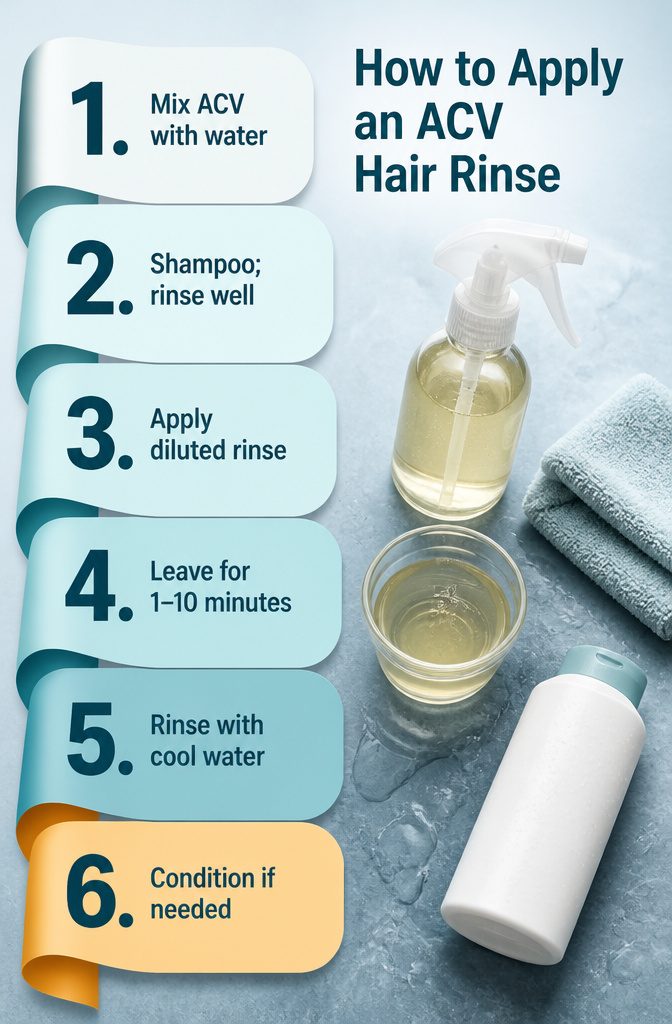
- Mix the ACV and water in a spray bottle, squeeze bottle or cup. Never apply it undiluted.
- Shampoo your hair as usual, then rinse well with warm water.
- Pour or spray the diluted rinse over your hair and scalp, working it through with your fingertips. Some people blot their hair first so it isn’t dripping.
- Let it sit for 1–10 minutes. Most sources land between 1–3 minutes, a few leave it on longer.
- Rinse thoroughly with cool or lukewarm water. Cool water helps close the cuticle.
- Condition if needed. Some hair types feel stripped without it, others skip this step entirely.
Optional additions include aloe vera gel or a few drops of lavender or rosemary oil, mixed into the diluted rinse before you apply it.
How Often to Use It
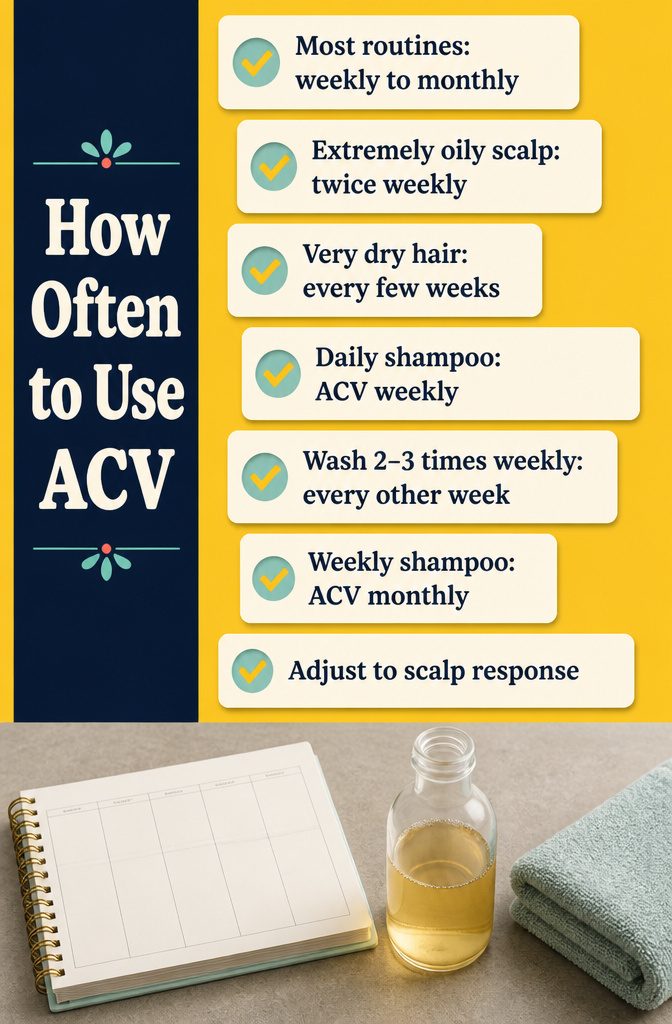
Frequency advice splits on hair type and wash routine. Most sources land between once a week and once a month, with oily hair getting twice-weekly treatments and dry or curly hair dropping to every few weeks.
Hairlust caps it at once or twice weekly and suggests adjusting based on how the scalp responds, while Glamour advises a few times a month for dry hair and watching how it feels from there.
Curlsmith ties the schedule to wash frequency: once weekly if you shampoo daily, every other week if you wash two or three times a week, monthly if you wash once weekly.
The logic treats ACV like a clarifying step rather than a daily routine product.
Federico Beauty flips the other direction for extremely oily scalps, suggesting twice weekly, and pulls back to every other week when hair is very dehydrated. The balance sits between clearing buildup and avoiding the dryness that overuse brings.
Formulated ACV Products as an Alternative
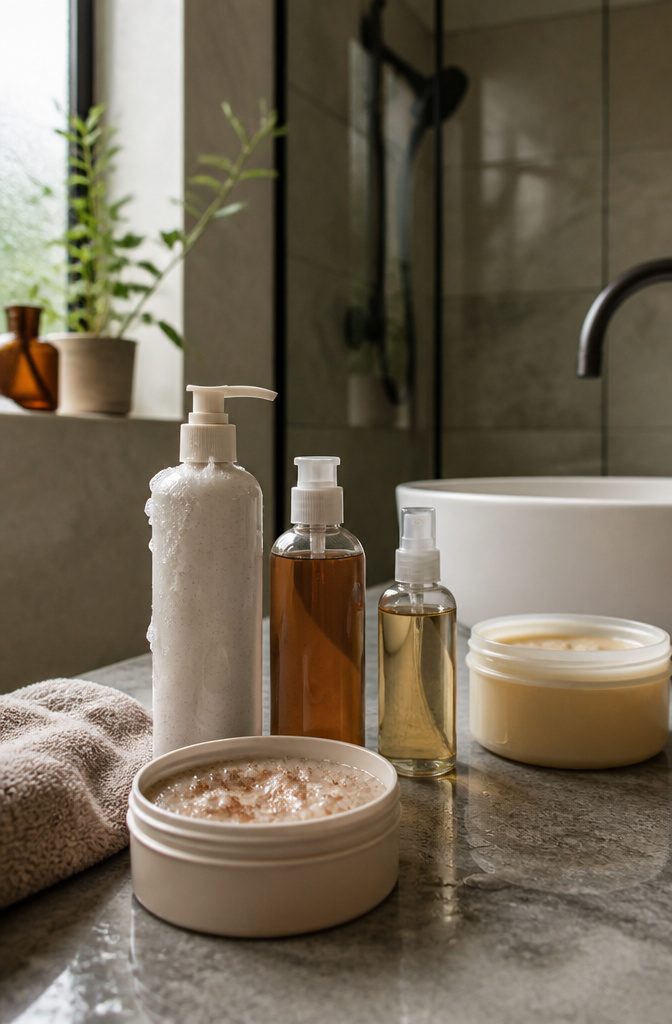
Formulated ACV Products as an Alternative
If DIY dilution feels risky, several shampoos and treatments deliver ACV in ready-to-use formulas. Curlsmith points out that products formulated with ACV sidestep the guesswork and acid burns that come with mixing your own rinse.
Options worth considering:
- R+Co Lost Treasure and The Rootist AHA+ACV blend ACV with other acids or botanicals for clarifying without straight vinegar harshness.
- Ouai Detox Shampoo offers a lathering clarifying wash if you prefer foam over a rinse.
- Renpure Clarify & Shine Serum packages ACV in a leave-in format.
- SheaMoisture Strengthen and Restore (13 fl. oz., rated 4.6 out of 5 on Amazon) pairs ACV with Jamaican black castor oil, shea butter and peppermint oil, making it a strong pick for curly, wavy or coarse hair that needs both clarifying and moisture.
- dpHUE Scalp Scrub exfoliates, rebalances pH and soothes sensitive scalps with ACV as the active ingredient.
- Hairlust Scalp Delight Detox Scrub (€33,95) removes dead skin cells and targets dry, itchy or oily scalp concerns in a sulfate-free scrub formula.
ACV Rinse Compared With Clarifying Shampoo
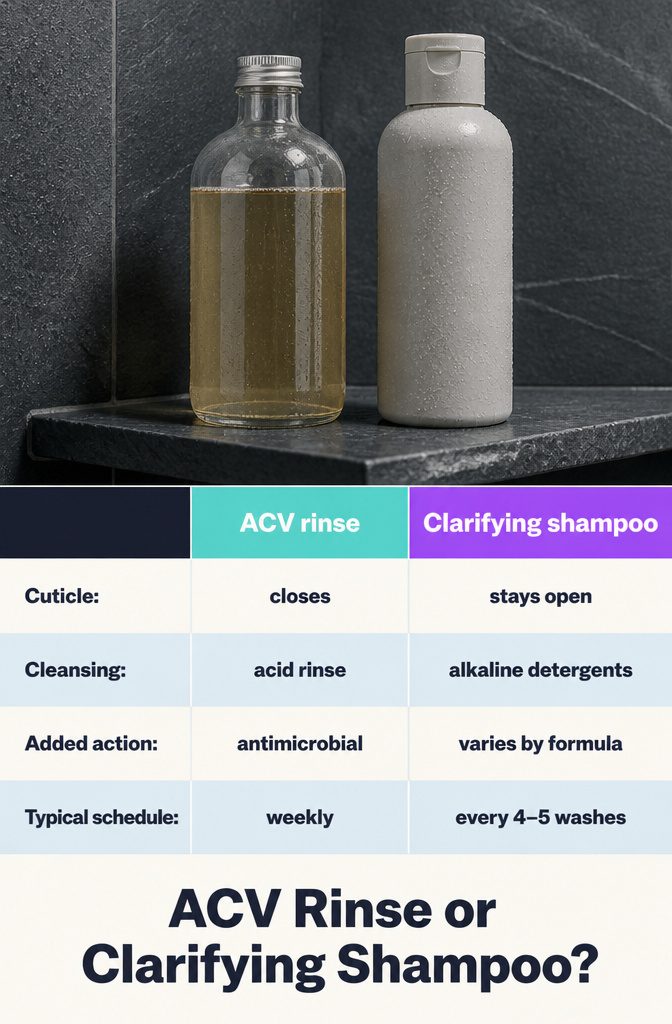
Both strip away styling product and mineral deposits, but ACV closes the cuticle after it clears buildup, while clarifying shampoos leave it open.
That open cuticle makes hair more vulnerable to dryness and color fade, and regular use can pull too much oil from the scalp.
The rinse brings antimicrobial properties along with the exfoliation, cutting down bacteria without the harsh alkaline detergents most clarifying formulas rely on. Some clarifying shampoos now include apple cider vinegar to soften the stripping effect.
Treat either one as a periodic reset, not a daily habit.
If you wash every day, an ACV rinse once a week handles buildup. Washing two or three times a week means stretching it to every other week.
Monthly is enough for once-a-week washers. Clarifying shampoo follows a similar rhythm, typically every four to five washes depending on how much product sits on your strands between rinses.
Which Type of ACV to Choose for a DIY Rinse
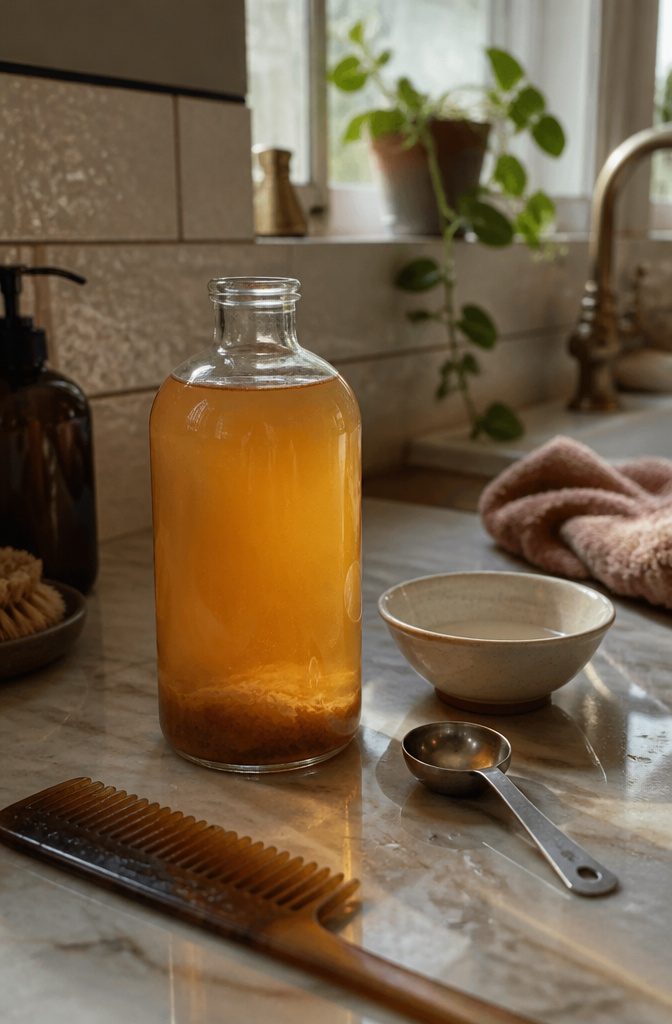
Raw, unfiltered, organic ACV is what I reach for when mixing a rinse at home. The bottle should look slightly cloudy rather than crystal clear, with fine sediment visible when you give it a shake.
That cloudiness is called the mother, a web of beneficial enzymes and bacteria that settles at the bottom. Clear, heavily filtered versions lose most of that material and deliver weaker results.
ACV typically contains around 5% acetic acid, which is enough to shift pH and clarify buildup without matching the harshness of pure vinegar.
The organic label matters less for performance than for avoiding synthetic additives you don’t want sitting on your scalp.
Look for a brand that lists raw and unfiltered on the front, shows visible strands suspended in the liquid, and skips anything that tries to stabilize or sweeten the product.
Frequently Asked Questions
Can Apple Cider Vinegar Benefit Your Hair?
It can help smooth the cuticle, remove buildup, and leave hair shinier and easier to detangle, mostly because of its acidity.
The pH-balancing and clarifying claims have more support than the growth or dandruff promises. Research specific to ACV and hair is thin, so most benefits rest on its low pH and anecdotal reports rather than controlled studies.
How do I use apple cider vinegar on my hair?
Mix 2 to 4 tablespoons ACV with 16 ounces of water in a spray bottle or cup.
Shampoo first, rinse, then pour the diluted mixture over your hair and scalp, working it through with your fingertips. Let it sit 1 to 3 minutes, rinse thoroughly with cool water, and condition if needed.
Do I use apple cider vinegar before or after shampoo?
After.
Shampoo your hair and rinse well with warm water, then apply the diluted ACV rinse. Some pre-shampoo treatments exist, but the standard method applies the rinse post-shampoo.
How long should I leave apple cider vinegar in my hair?
Most sources suggest 1 to 3 minutes, though some leave it on for up to 10 minutes. There is no official guidance, so start shorter and adjust based on how your hair responds.
Is apple cider vinegar good for frizzy hair?
It may help by increasing acidity and smoothing the cuticle, which reduces frizz. No direct research has tested ACV on frizzy hair, but the mechanism makes sense and anecdotal reports support it.
Is apple cider vinegar safe for color-treated hair?
Most sources say yes, when diluted. The acidity can seal the cuticle and keep color locked in longer than harsh clarifying shampoos do.
Does apple cider vinegar help with dandruff?
It may help with oiliness or flaking because of its antimicrobial properties, but it is not a medical dandruff treatment. If you have persistent flaking or scalp inflammation, see a healthcare professional instead of relying on a rinse.
Can I leave apple cider vinegar in my hair without rinsing?
No.
Rinse it out thoroughly to avoid dryness or irritation. Leaving it in can cause the scalp to become irritated or the hair to feel stripped.
What is the difference between ACV and a clarifying shampoo?
Both strip away styling product and mineral deposits, but ACV closes the cuticle after it clears buildup, while clarifying shampoos leave it open.
An open cuticle makes hair more vulnerable to dryness and color fade, and regular use can pull too much oil from the scalp.
What type of apple cider vinegar should I use on my hair?
Raw, unfiltered, organic ACV.
The bottle should look cloudy with visible sediment at the bottom, which is called the mother and contains beneficial enzymes and bacteria. Clear, heavily filtered versions lose most of that material and deliver weaker results.
What are the downsides of using apple cider vinegar on hair?
Undiluted ACV can irritate or burn the scalp, and overuse strips too much oil, leaving hair dry and brittle.
Dry hair, very porous strands, sensitive scalps, and open cuts or irritation are all reasons to skip it or use a pre-formulated product instead.