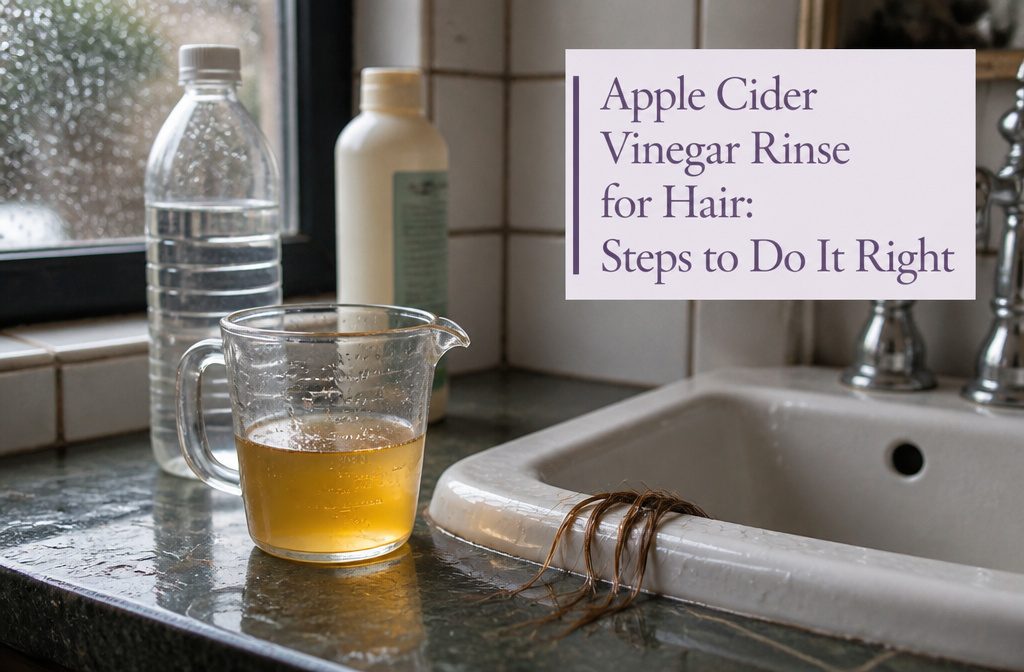
An apple cider vinegar rinse works by lowering pH to smooth the hair cuticle, which is why it adds shine and cuts down on frizz.
The standard mix is 2 to 4 tablespoons of ACV in 16 ounces of water, applied after shampooing and left on for 1 to 5 minutes before rinsing.
Undiluted vinegar is too acidic and will damage the hair shaft, so dilution matters more than most people expect.
1. Mix the ACV and Water
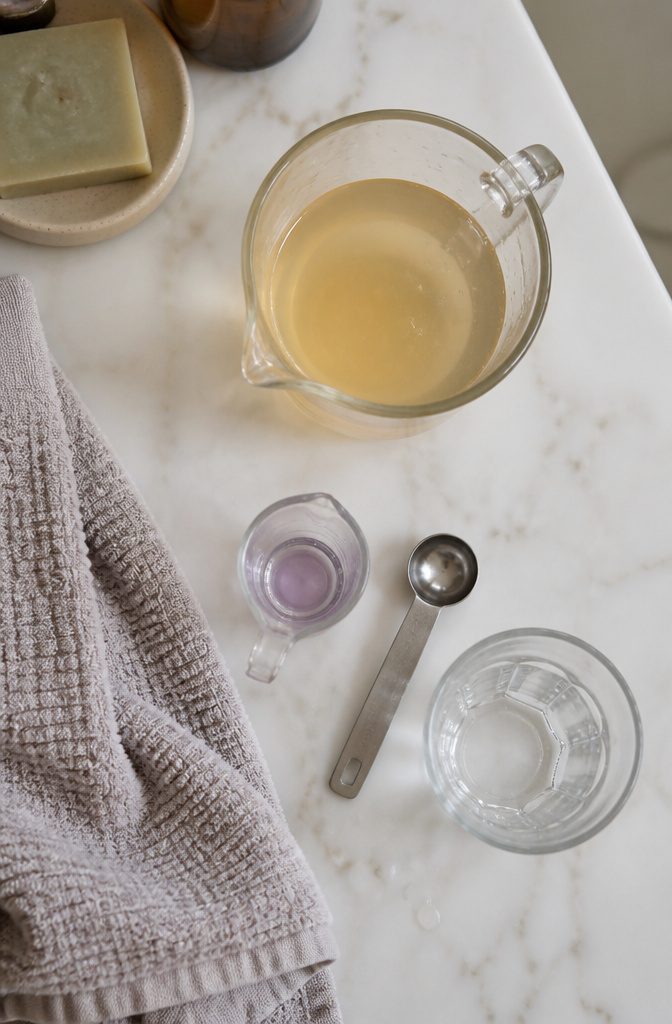
The standard dilution is 2 to 4 tablespoons of ACV in 16 ounces of water. That’s a safe starting point for most hair types and gives you the clarifying benefit without stripping the hair.
Some people prefer a gentler 1:3 ratio—one part ACV to three parts water—while others use a stronger 1:2 mix if their scalp is oily or they’re dealing with heavy buildup.
I find that adjusting the ratio lets you tailor the rinse to what your scalp needs, and it’s worth starting weaker if you’re not sure how your hair will react.
Never apply undiluted ACV.
Straight vinegar is too acidic and will damage the hair shaft and irritate the scalp. If you have short hair, halve the recipe—1 to 2 tablespoons in 8 ounces of water works just as well.
You can also add 2 to 3 drops of lavender essential oil to the mix to soften the vinegar smell, though the scent rinses out either way.
2. Shampoo First or Dampen the Hair
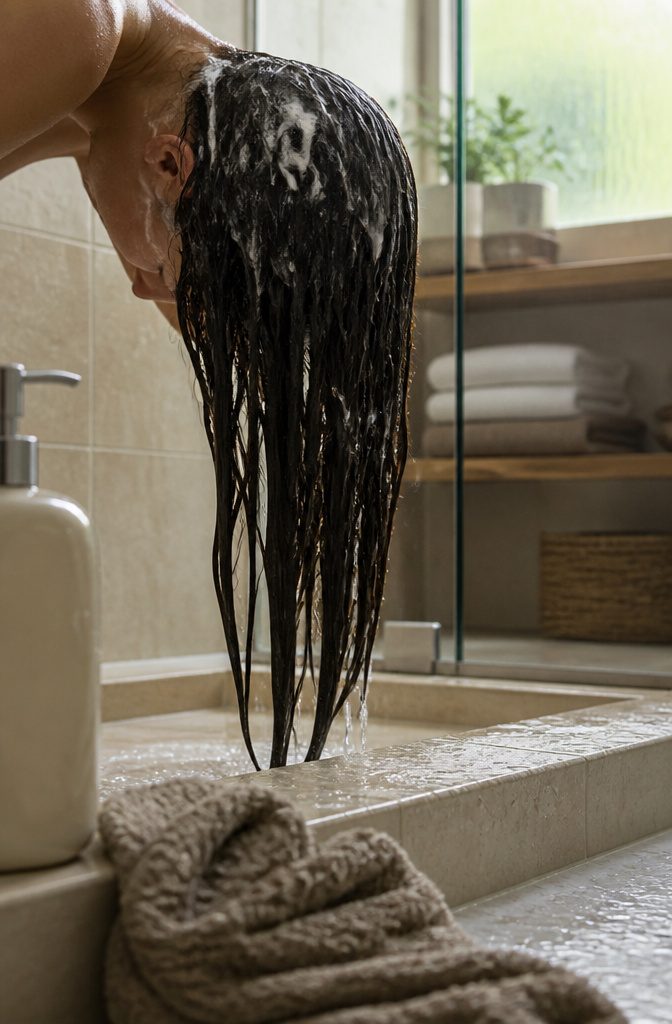
Most sources recommend shampooing your hair first, then applying the rinse while your hair is still wet.
The rinse functions as a treatment, not a replacement for shampoo or conditioner, so it sits somewhere in your usual routine rather than taking over completely.
A few allow application on unwashed but dampened hair if you prefer, though your hair still needs proper cleansing at some point to remove dirt and oil.
After shampoo and conditioning, pour the mixture over your hair and work it into the scalp.
— Glamour
That placement works for most hair types, but timing shifts depending on what your hair needs.
If you deal with serious buildup, use the rinse right after shampooing for a deep clean, then follow with conditioner. For dry hair, some apply conditioner first, rinse that out, then seal everything with the ACV rinse for shine.
In one video walkthrough, the creator applies it between two shampoos to lift buildup mid-wash. The common thread is that the rinse needs a few minutes of contact time to work, wherever you slot it in.
3. Pour It Over the Scalp and Lengths
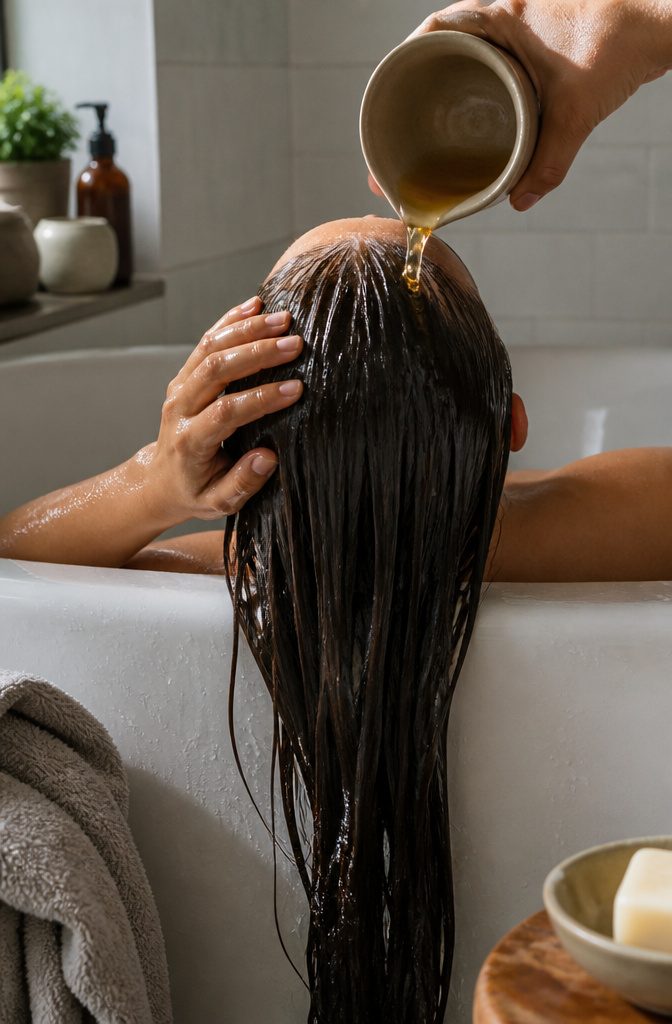
Lean your head back as you pour the mixture over your scalp, working it into the roots with your fingertips to avoid contact with your eyes.
Massage helps the rinse reach buildup where it sits thickest, especially if you use styling products regularly. Once your scalp is covered, pull the rinse through to the ends so it coats the full length of each strand.
Let it sit for 1 to 5 minutes depending on what your hair needs and what the product directions say. Store-bought rinses typically call for 3 to 5 minutes, while most homemade versions work in 1 to 2.
The waiting time gives the acidity a chance to break down residue and close the cuticle along the hair shaft. You can feel when it has been long enough: the hair starts to feel smoother under your fingers.
4. Rinse Thoroughly With Cool Water
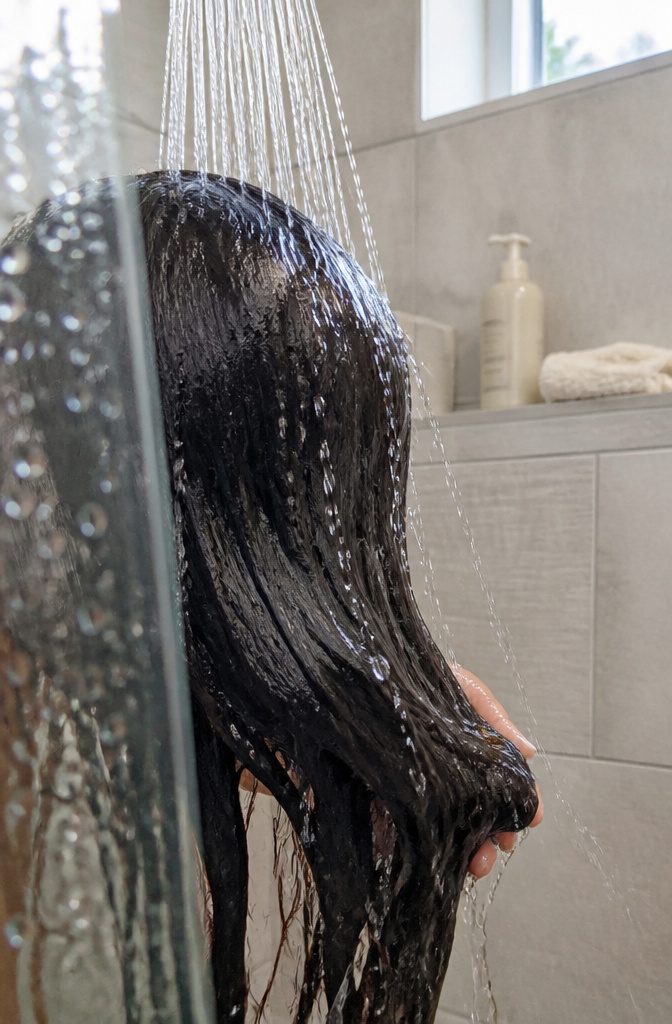
Rinse the mixture out with cool or cold water.
Cool water closes the cuticle after the vinegar has done its work, which helps lock in shine and reduce frizz. Whether you follow with conditioner is up to you.
Some people skip it entirely after an ACV rinse, especially if their hair feels soft enough without it. Others with drier hair still reach for a lightweight conditioner on the ends.
Frequency matters more than most people expect.
Start with twice a week at most, then adjust based on what your hair tells you. Thick hair can usually handle twice weekly; dry or fine hair might only need the rinse once every few months.
If you notice dryness, irritation, or a filmy buildup developing, pull back. The rinse works by stripping buildup, and overdoing it strips too much.
What the Rinse Does for Hair and Scalp
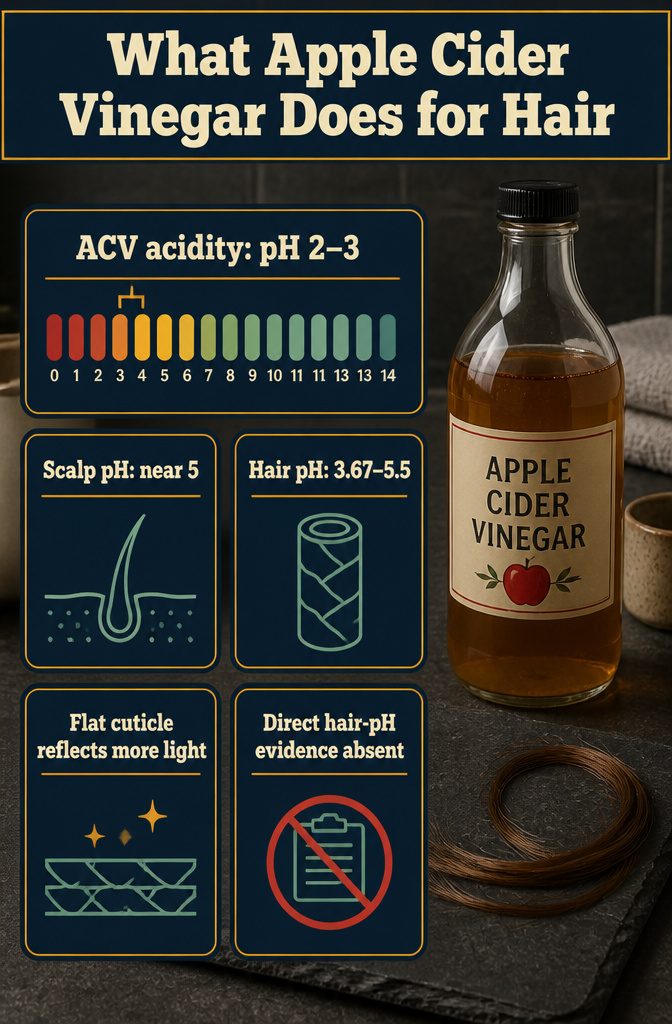
Apple cider vinegar sits around pH 2–3, which puts it well into acidic territory. Your scalp typically hovers near 5, and hair itself lands between 3.67 and 5.5.
That acidity matters because it influences how the cuticle layer behaves. When the cuticle lies flat and closed, hair reflects more light, tangles less, and holds onto moisture instead of fraying at the ends.
Many shampoos push the pH higher, toward alkaline, which can lift the cuticle and leave hair looking dull or feeling rough.
The idea behind an apple cider vinegar rinse is that its acidity brings things back down, smoothing the cuticle and restoring that flat surface.
The trouble is that research examining ACV’s direct effect on hair pH is absent, so the mechanism is more theory than proven pathway.
Beyond acidity, ACV has antimicrobial and anti-inflammatory properties, which is why some use it for dandruff, flaking, or general scalp itch.
It may help with the yeastlike fungus that feeds on scalp oils and triggers flaking, and it can dissolve buildup from styling products without stripping natural oils.
The evidence for these effects on the scalp is limited, though, so I’d keep expectations modest and watch how your own hair and scalp respond.
How Often to Use It by Hair Type
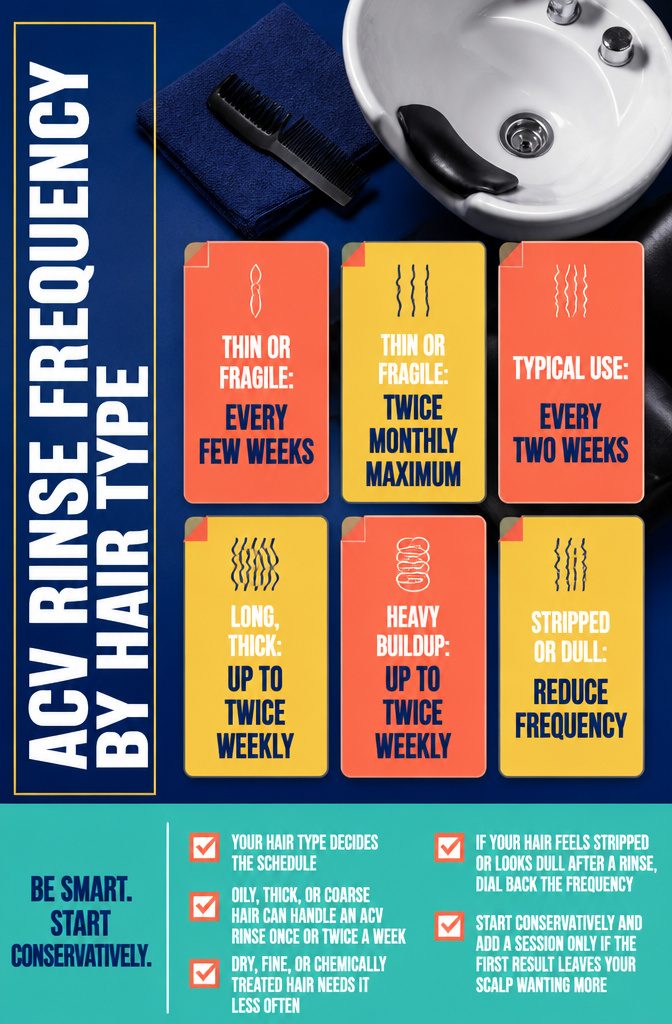
Your hair type decides the schedule. Oily, thick, or coarse hair can handle an ACV rinse once or twice a week, while dry, fine, or chemically treated hair needs it less often.
- Thin or fragile hair: once every few weeks, or twice monthly at most
- Typical use: once every two weeks
- Long, thick hair: up to twice weekly if buildup is heavy
- Severe scalp concerns (flaking, persistent itch): two to three times a week until it clears
If your hair feels stripped or looks dull after a rinse, dial back the frequency. Start conservatively and add a session only if the first result leaves your scalp wanting more.
DIY Rinse or Store-Bought Product
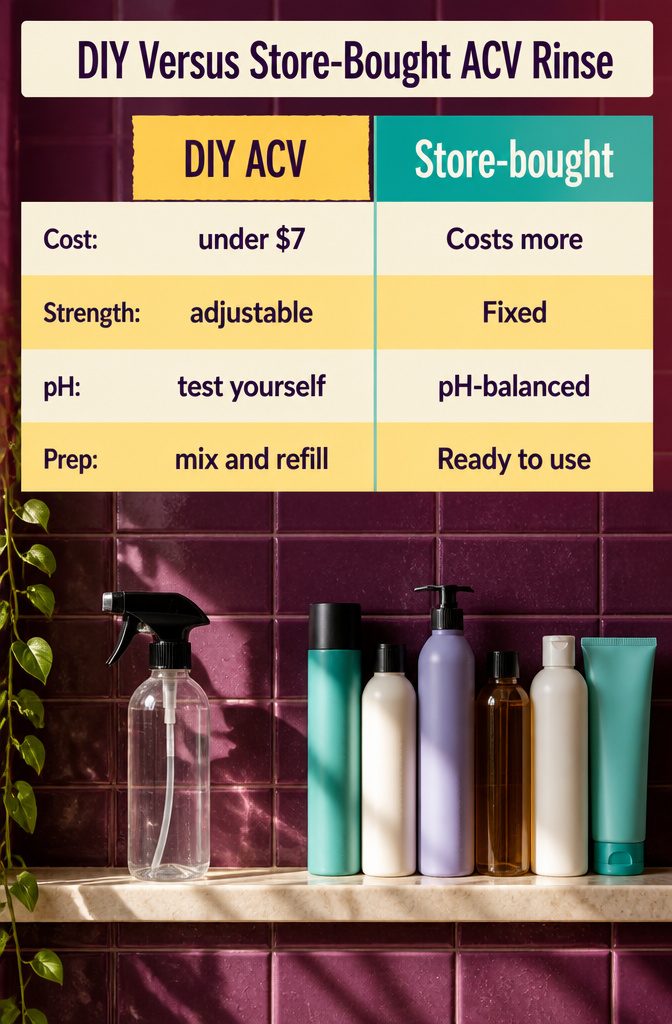
A homemade rinse costs less than $7 and lets you adjust the ratio depending on how oily your scalp is or how sensitive your hair tends to be.
Mix one part ACV with two parts distilled water, pour it into a spray bottle, and keep it in the shower.
I use Bragg’s for the DIY version because the quality stays consistent. The downside is the measuring and the bottle refilling, and you still have to guess at the pH unless you test it yourself.
Ready-to-use products skip that guesswork. R+Co Lost Treasure works as a weekly cleansing rinse that removes buildup without stripping color.
Pura D’or makes both a shampoo and conditioner with ACV already blended in, and you lather them in for two minutes like any other wash.
Rizos Curls offers a rinse formulated for textured hair, dpHUE has a revitalizing shampoo, and Aveeno’s in-shower rinse is designed for oily hair and goes on after shampooing but before conditioner.
Girl+Hair Clear+ comes ready to pour, so there’s no mixing or mess. Store-bought versions cost more and come in fixed strengths, but they’re already pH-balanced and ready to use without diluting.
Cautions for Color-Treated and Sensitive Hair
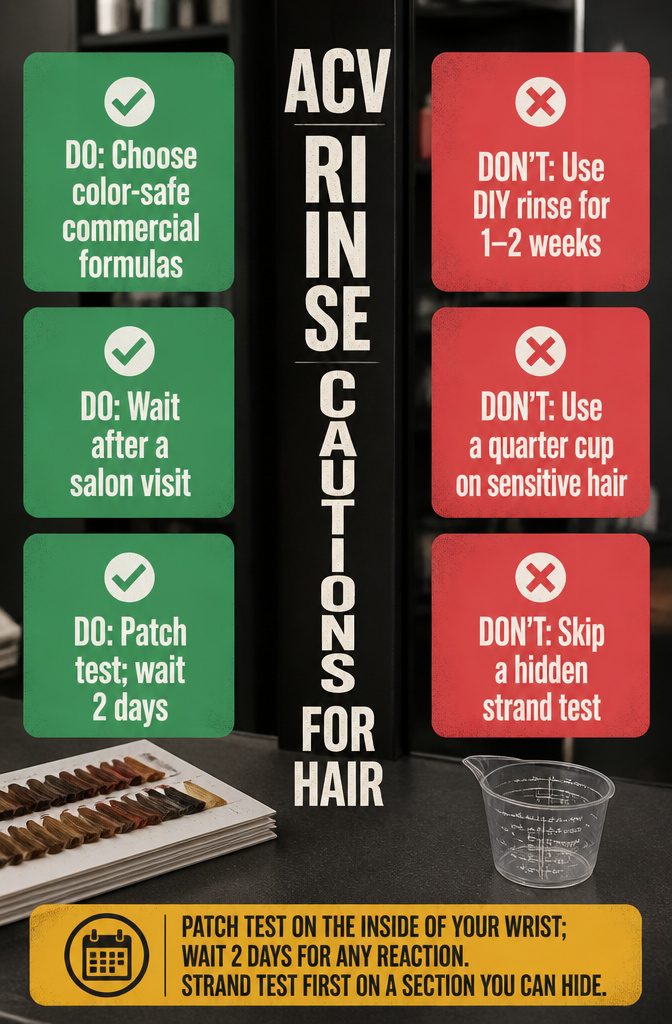
The guidance splits cleanly by who makes the rinse. Commercial formulas with added oils and color-locking blends are labeled safe for color-treated hair, and I’ve seen no reports of them stripping dye.
A straight DIY mix is more clarifying, and one source warns against regular use on colored hair while another says it’s fine and hasn’t affected tone after years of coloring.
The question is how fresh the color is and how processed the hair.
If you just left the salon, skip the rinse for a week or two. Chemically treated hair lifts its cuticle more easily, which lets dye molecules fall out and makes the strand more fragile overall.
For sensitive or very dry hair, cut the ratio to 2–3 tablespoons of ACV per cup of water instead of a quarter cup, or drop to 1 tablespoon if dryness is severe.
Patch test on the inside of your wrist and wait 2 days for any reaction before putting it on your scalp. If you’re uncertain how your hair will respond, strand test first on a section you can hide.
Frequently Asked Questions
Do I use apple cider vinegar before or after shampoo?
Use the rinse after shampooing.
The ACV rinse is a treatment, not a replacement for shampoo, so you apply it to clean, wet hair. Most people follow with conditioner after rinsing out the ACV, though you can skip it if your hair feels soft enough.
How long do you leave apple cider vinegar rinse on your hair?
Let it sit for 1 to 5 minutes depending on the product and your hair’s needs.
Store-bought rinses typically call for 3 to 5 minutes, while homemade versions work in 1 to 2. The waiting time gives the acidity a chance to break down residue and close the cuticle.
Can I use an apple cider vinegar rinse if I have color treated hair?
Commercial formulas with added oils and color-locking blends are labeled safe for color-treated hair. A straight DIY mix is more clarifying, and guidance splits on whether it strips dye.
If you just left the salon, skip the rinse for a week or two, as chemically treated hair lifts its cuticle more easily and makes the strand more fragile.
Is apple cider vinegar good for frizzy hair?
It may help by increasing acidity and flattening the cuticle, which reduces frizz.
Cool water after the rinse helps close the cuticle and lock in shine. No direct research has examined ACV’s effect on frizzy hair, so results vary by person.
How to use apple cider vinegar for scalp fungus?
Apply 2 to 4 tablespoons of ACV in 16 ounces of water to your scalp after shampooing, twice weekly.
ACV has antimicrobial and anti-inflammatory properties that may help with the yeastlike fungus that feeds on scalp oils and triggers flaking. Evidence for these effects is limited, so watch how your scalp responds.
What are the potential side effects of using apple cider vinegar on hair?
Overuse can cause dryness, breakage, scalp irritation, and color fading.
Never apply undiluted ACV, as straight vinegar is too acidic and will damage the hair shaft. If your hair feels stripped or looks dull after a rinse, dial back the frequency.
What type of apple cider vinegar is best to use on hair?
Raw, unfiltered, organic vinegar is best for a DIY rinse.
Bragg’s is a consistent choice. The quality stays reliable and the price sits under $7 for a homemade batch.





