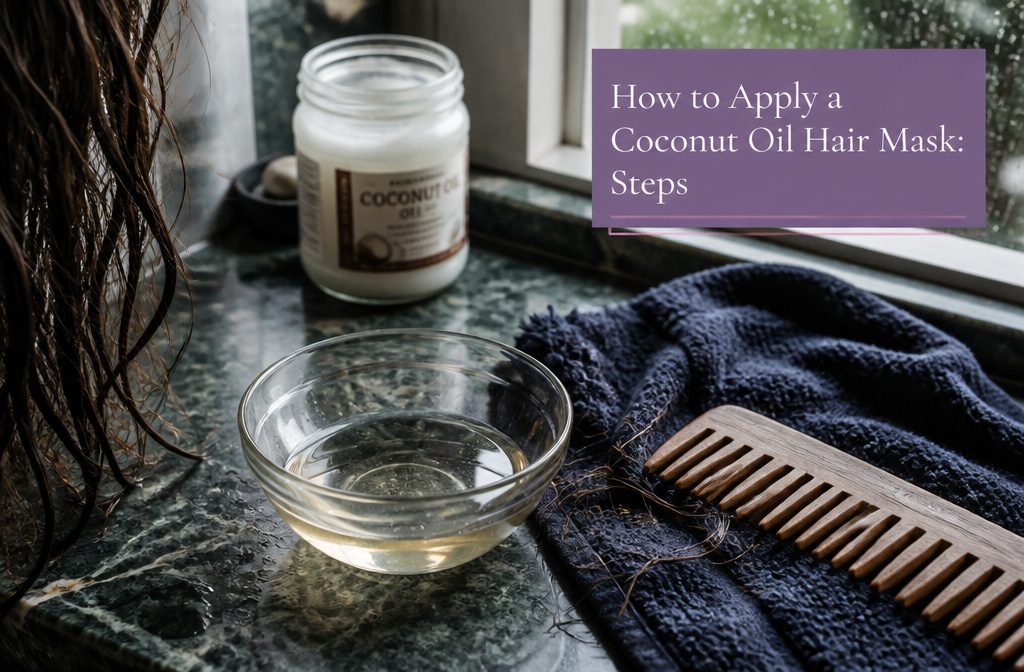
A coconut oil hair mask is melted coconut oil applied to dry or damp hair, left on for 15 minutes to several hours, then shampooed out.
The oil penetrates the hair shaft rather than sitting on the surface, which sets it apart from most conditioners, but too much leaves hair greasy and flat instead of soft.
A 2020 study found that applying it once or twice a week cut hair breakage by 65%.
1. Prepare and Detangle Your Hair
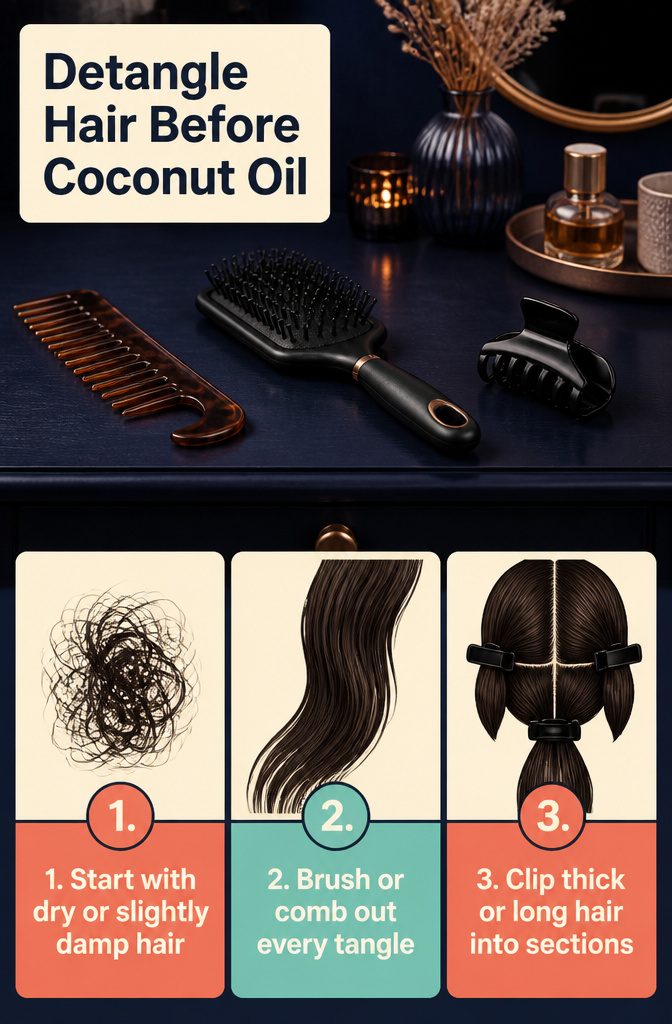
Start with dry or slightly damp hair. Dry hair lets the oil absorb without dilution, which is what most people reach for when applying this as a pre-shower treatment.
Slightly damp or even wet hair can work if that makes distribution easier, especially on thicker textures, but too much water weakens how well the oil penetrates.
Before you touch the coconut oil, brush or comb through your hair to remove tangles. You’ll be working the mask through in small sections, and trying to detangle while the oil is already in just spreads knots around.
If your hair is thick or long, sectioning it with a clip now saves you from missing patches later and keeps application even from roots to ends.
2. Warm the Oil and Mix Your Recipe
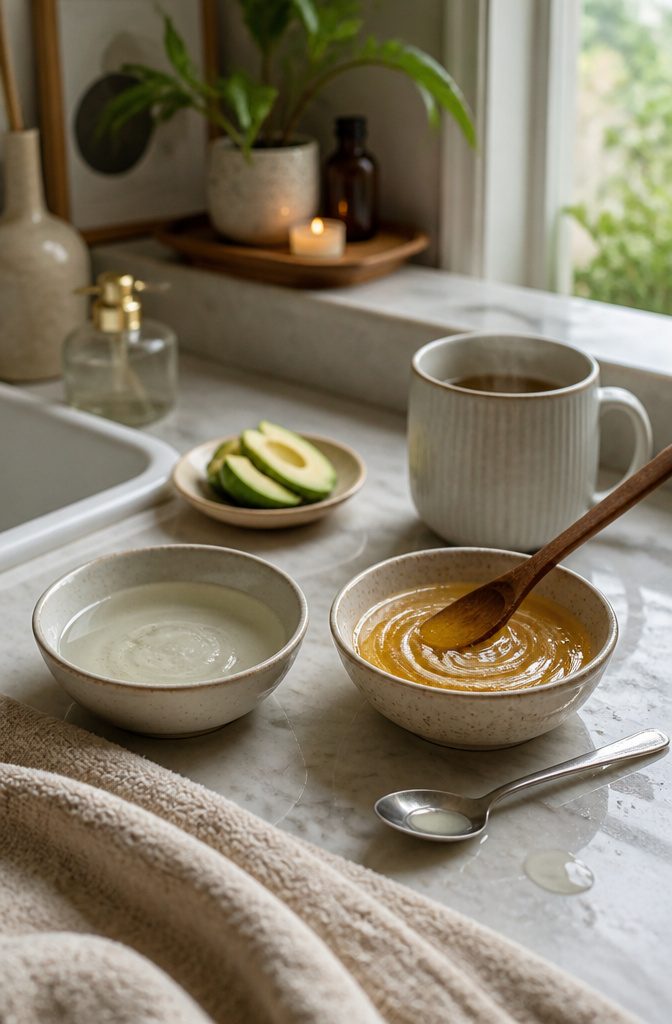
Start by warming about one to two tablespoons of coconut oil in your palm or in a small bowl.
The oil solidifies at room temperature, so you need it melted and runny before it spreads evenly. If you’re mixing in other ingredients like honey, avocado, or egg, combine them in a bowl first.
Honey and coconut oil sometimes resist blending, and gentle heat helps them come together without separation. A few seconds in warm water or a quick pass over low heat does it, though cold mixing works too if you stir persistently.
I prefer warming the oil alone in my hands when I’m keeping the mask simple, but the bowl method makes more sense for multi-ingredient recipes where you want everything uniform before you start applying.
3. Apply the Mask Where Your Hair Needs It
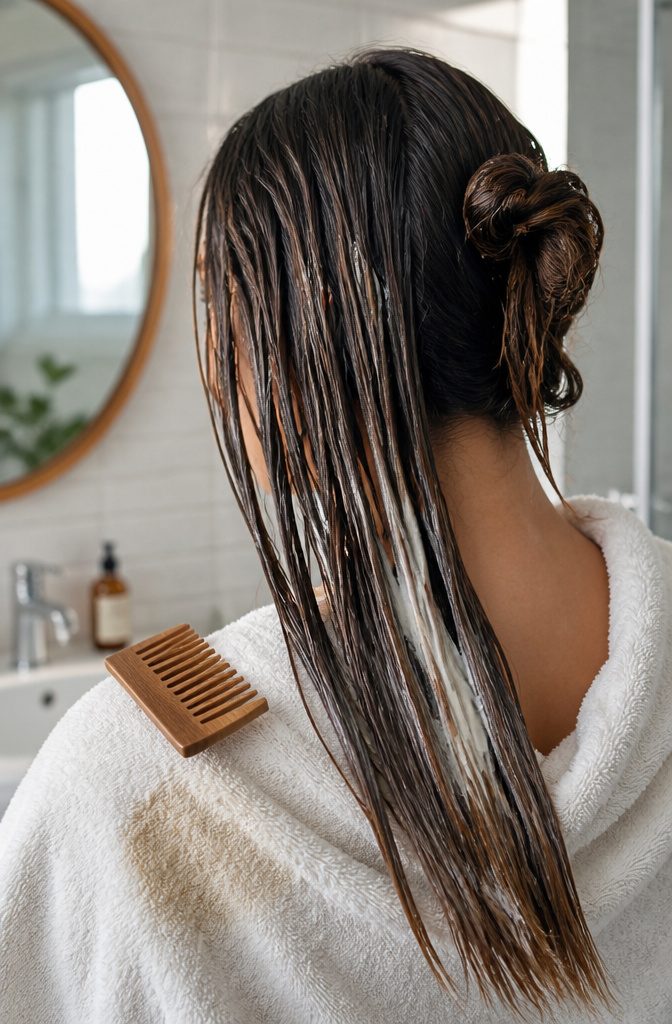
Work the oil through small sections starting either at the ends and moving up or at the roots and working down.
Both approaches get the job done, so pick whichever feels easier to manage. I find sectioning keeps every strand coated without missing patches near the nape or behind the ears.
Use more oil on the driest parts of your hair, typically the mid-lengths and ends, and less near the scalp.
If your scalp tends oily, concentrate the coconut oil from mid-shaft down and skip the roots entirely. Thin hair can get weighed down fast, so start light and add more only where it looks thirsty or frizzy.
Some recipes do call for scalp application, particularly overnight masks or treatments targeting dandruff. For those, massage the oil directly into the scalp for about ten minutes to work it in, then cover and leave it on while you sleep.
4. Distribute and Secure
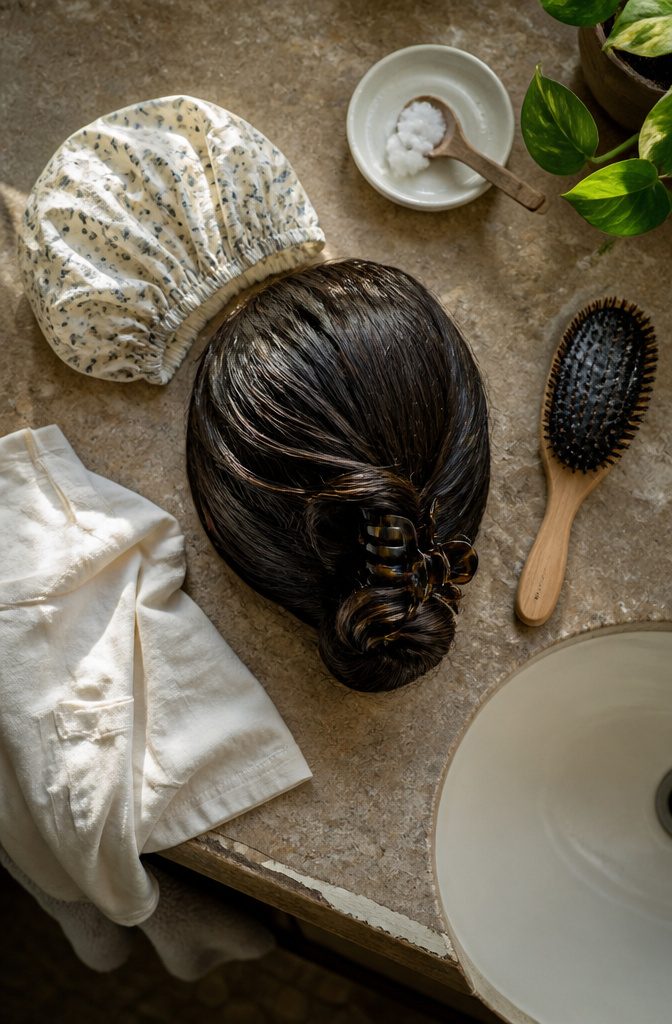
Once the oil is on, comb or brush through to coat every strand and push the oil into tangles.
A detangler brush works well here and keeps you from pulling. Then use your fingertips to massage the scalp in small circles, working the oil into the roots and spreading it where dryness or flaking sits.
Next, get your hair off your face and shoulders.
Twist it into a loose bun or low ponytail and clip it in place with a claw clip, or cover it with a shower cap to keep the oil from transferring to clothes and furniture.
A cotton T-shirt wrapped around your hair also works and breathes better than plastic if you plan to leave the mask on for hours. Containment matters more than pressure, so keep the twist loose and the coverage simple.
5. Leave It On for the Right Timing

Timing depends on the recipe and how much repair your hair needs. The simpler masks stay on 15–20 minutes, which is enough for a quick coconut oil and honey treatment or a mask with mashed banana or avocado.
Standard coconut oil treatments sit longer, typically 30 minutes to an hour, giving the oil time to penetrate the shaft. You can also leave it overnight if your hair is severely damaged or you want deeper conditioning.
One approach I’ve seen work well: apply the mask in the morning, tie your hair up in a bun, and rinse it out at the end of the day.
That gives the oil up to 24 hours to work without interrupting your routine. The longer you leave it on, the more saturated your hair becomes, but past a certain point you’re mostly adding rinse time without much extra benefit.
6. Rinse and Shampoo
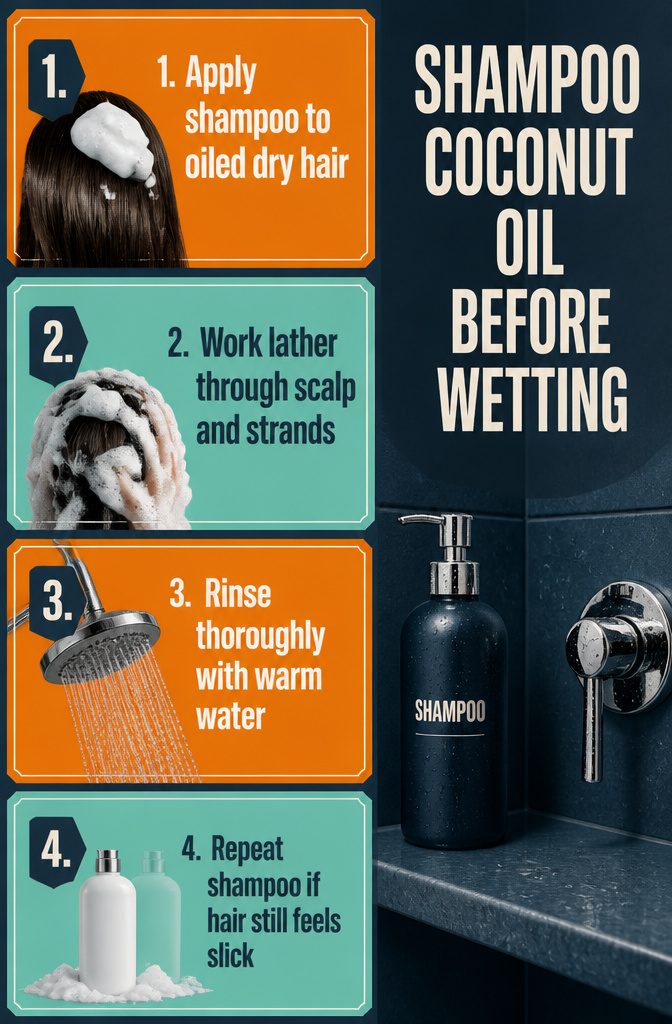
Rinse and Shampoo
Getting all the oil out takes more than a quick rinse. I apply shampoo directly to the oiled hair before wetting it, working the lather into the scalp and through the strands while everything is still dry.
That step cuts through the oil far better than shampooing already-wet hair, which can leave a greasy film behind.
Once the shampoo is worked in, rinse under warm water and repeat the shampoo cycle a second time if the hair still feels slick.
Too much residual oil weighs hair down and makes it look greasy rather than glossy. After the second rinse, conditioner often is not needed that day since the mask already delivered moisture.
What Coconut Oil Does for Hair and Scalp
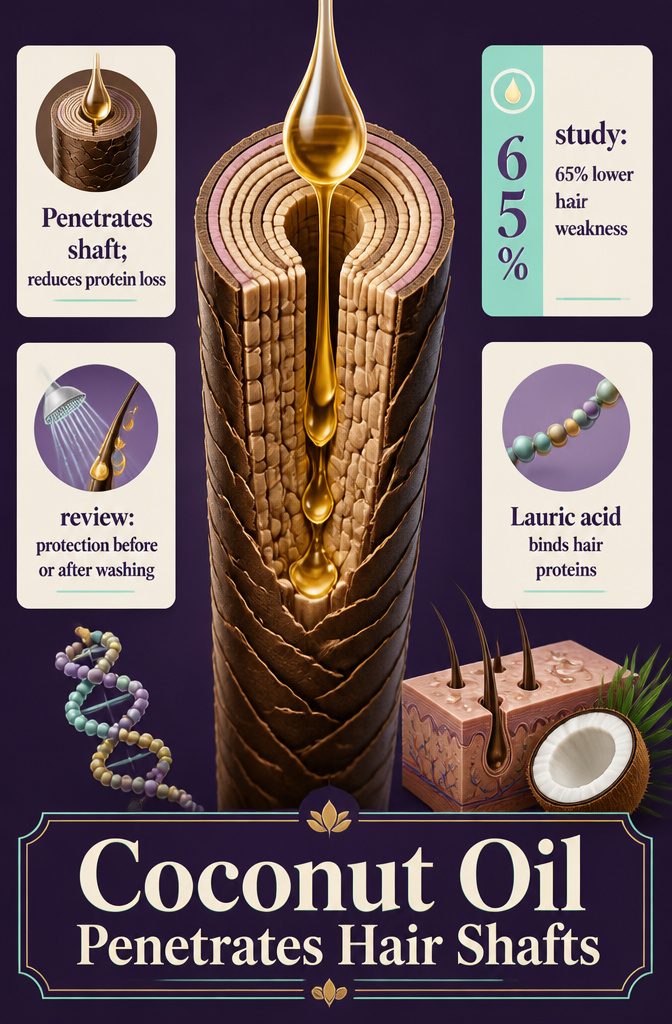
Coconut oil works because it can penetrate the hair shaft, not just sit on the surface. That makes it better at reducing protein loss than mineral or sunflower oil, both of which turn up in most commercial conditioners.
A 2017 review found coconut oil protected hair protein when used before or after washing, and a 2020 study reported 65% lower hair weakness in participants who applied it once or twice a week.
The lauric acid binds to hair proteins and prevents breakage during washing and styling.
Vitamins E, K and iron keep hair soft and shiny, and vitamin E soothes dry or itchy scalp. The oil also moisturizes, which cuts frizz and repairs heat or chemical damage.
Because coconut oil can penetrate the hair shaft and has the ability to add moisture, it may reduce the likelihood of friction-induced hair breakage.
The antimicrobial and antifungal properties may help with dandruff, and older studies suggest it works against scalp eczema. For scalp conditions, the moisture and the barrier it forms matter more than any single nutrient.
How Much to Use by Hair Type
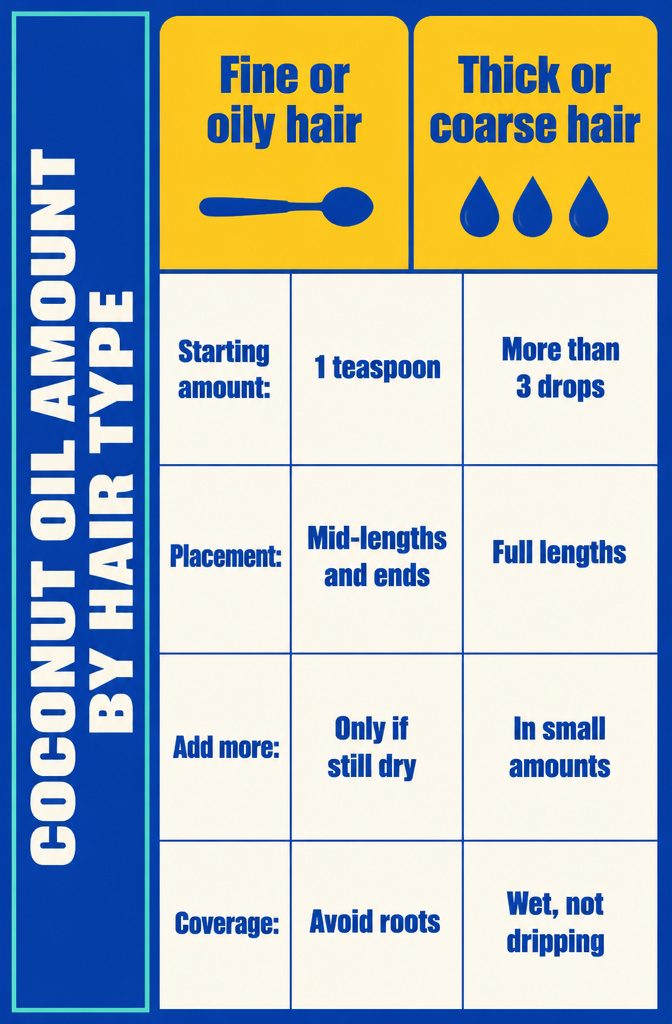
Start with one teaspoon if your hair is fine or tends to look greasy, then add more only if the first pass leaves it feeling dry.
Thin hair loads up fast, and too much oil sits on the surface rather than sinking in.
The same ceiling applies if your scalp already runs oily: keep most of the product on the mid-lengths and ends, where damage actually lives, and leave the roots alone.
Thick or coarse hair takes more. A single drop might disappear into fine strands, but three or more drops can still feel like too little on dense, textured hair.
I gauge it by coverage: if the section I’m working looks wet but not dripping, that’s about right.
Add in small amounts rather than pouring half the jar at once, because rinsing out excess coconut oil is a multi-shampoo job nobody wants.
Recipe Variations You Can Try
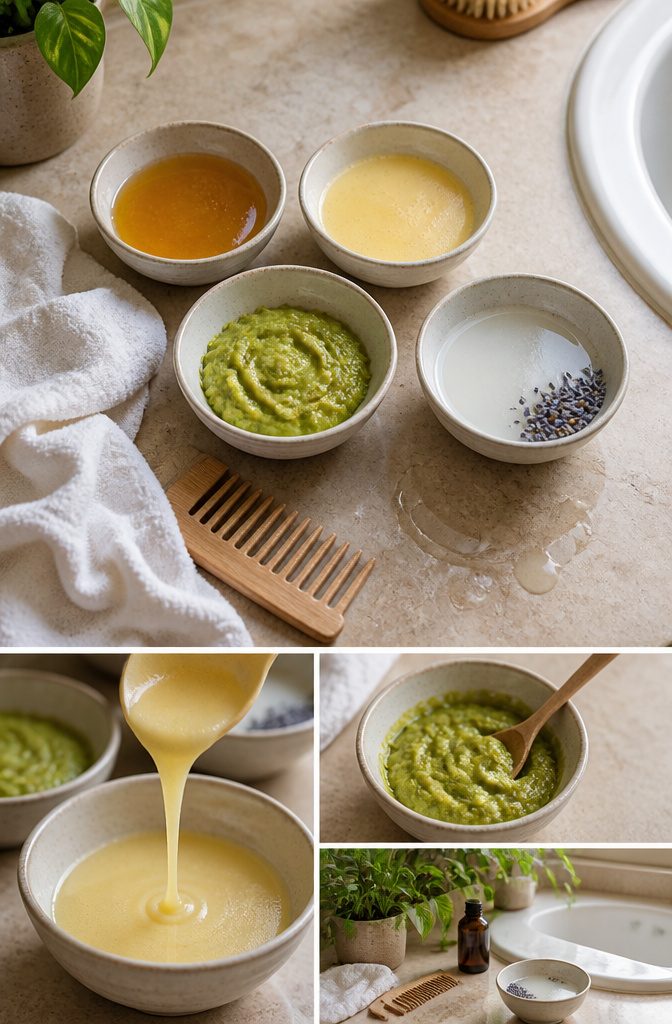
You can run a coconut oil hair mask solo or mix it with ingredients that add moisture, shine or scalp treatment. Plain melted coconut oil works on its own, but the combinations below shift what the mask does best.
Short lead paragraph, now the bulleted list with substance per bullet:
- Coconut oil and honey: 1 tablespoon of each, or 2 tablespoons oil to 1 tablespoon honey. Leave on 20–40 minutes. Honey is soothing and good for damaged hair.
- Coconut oil and egg: 2 tablespoons oil whisked with 1 egg, 15–20 minutes. The egg adds protein.
- Coconut oil and apple cider vinegar: 2 tablespoons oil and 1 tablespoon vinegar. Vinegar deep-cleanses and can brighten dull hair.
- Coconut oil with banana or avocado: Mash either into the oil for extra hydration, 15–20 minutes.
- Coconut oil with lavender essential oil: 1–2 tablespoons oil and 2–3 drops lavender for an overnight mask with a 10-minute scalp massage before bed.
- Coconut oil and lemon juice: 1 tablespoon oil and 1 teaspoon fresh lemon juice, 15 minutes, but lemon can irritate the scalp if yours is sensitive.
Optional additions: yogurt, vitamin E, argan oil, or one or two drops of another essential oil.
How Often to Use It
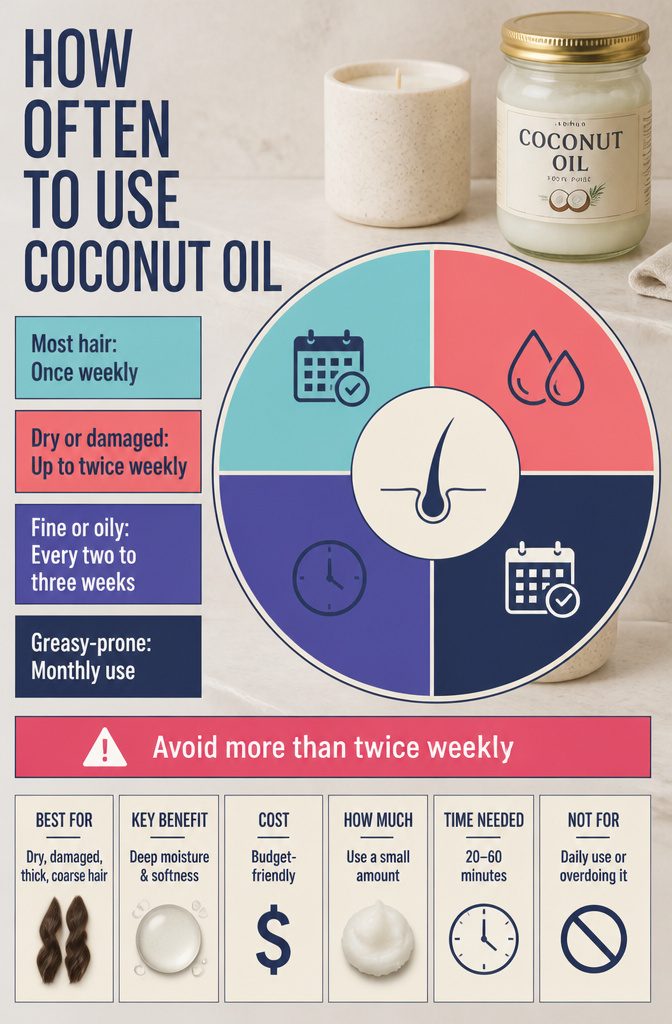
Start at once a week for most hair and dial up to twice weekly if your hair is dry or damaged.
Normal hair holds up well with a weekly mask, while fine or oily hair benefits more from spacing it out to every two or three weeks.
Monthly use works if your hair is prone to greasiness and you just want periodic deep conditioning rather than routine moisture.
I wouldn’t go daily. More than twice a week and you risk buildup that leaves hair looking limp rather than nourished, and coconut oil sits on the surface longer than lighter oils when you overdo frequency.
If you have thick, coarse, or heat-damaged hair, twice a week gives you visible softness without tipping into heavy or greasy territory. For thinner textures, biweekly keeps strands hydrated without weighing them down or making roots look flat by midday.
What to Watch For
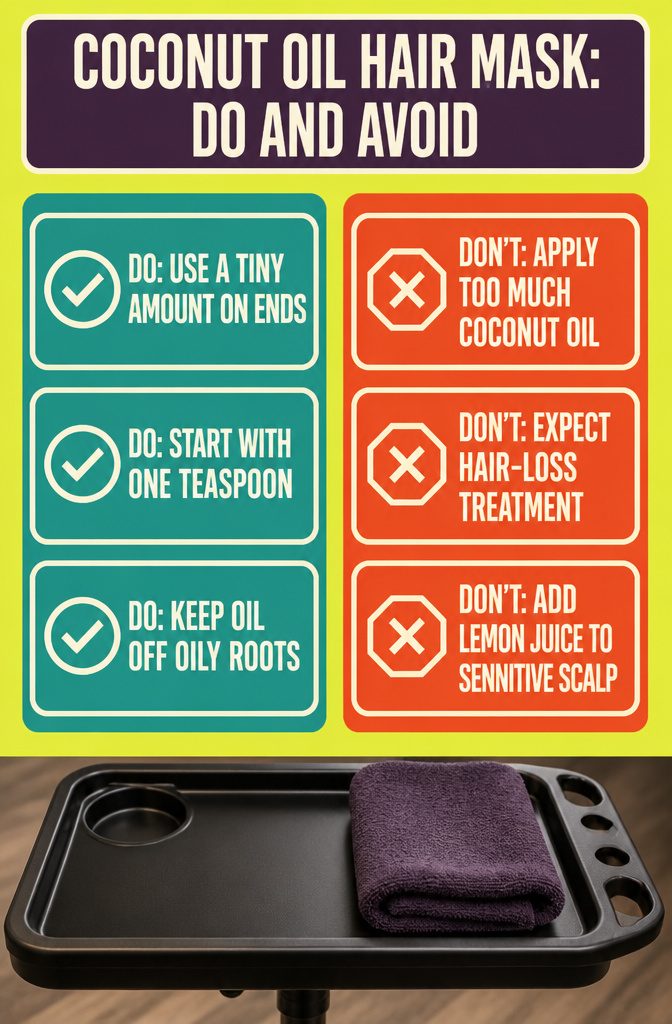
A few things can go wrong if you’re heavy-handed with the amount or placement.
- Too much coconut oil leaves hair greasy, flat and tangled, and the weight makes it harder to wash out completely. Oil also picks up dust and particles, so hair can look dirty faster than usual.
- Coconut oil does not treat or manage hair loss. It can soothe the scalp and add moisture to the follicle, but it won’t regenerate growth.
- If you add lemon juice to your mask recipe, be careful: it can irritate the scalp, especially if yours is already sensitive or dry.
- Using very little and applying only to the ends helps avoid greasy, tangled hair if you decide to use coconut oil as a leave-in. A tiny amount on the mid-lengths and ends combats dryness and split ends without the buildup.
If you have thin hair or an oily scalp, start with a teaspoon and work up from there only if you need more coverage.
Frequently Asked Questions
Should you put coconut oil on wet or dry hair?
Dry or slightly damp hair works best.
Dry hair allows the oil to absorb without dilution, while slightly damp hair can help with distribution on thicker textures. Too much water weakens penetration.
How long should you leave coconut oil in your hair?
Standard treatments sit for 30 minutes to 1 hour, while simpler masks need only 15–20 minutes.
You can leave it overnight for severely damaged hair or up to 24 hours if you want deeper conditioning, though the extra benefit past a few hours is minimal.
How often should you do a coconut oil hair mask?
Once a week works for most hair, twice weekly if your hair is dry or damaged. Fine or oily hair benefits from spacing it out to every 2–3 weeks, and monthly use is enough if your hair gets greasy easily.
How do I wash out a coconut oil hair mask?
Apply shampoo directly to the oiled hair before wetting it, working the lather through while everything is still dry.
Rinse with warm water and repeat the shampoo cycle a second time if hair still feels slick, since wet-first shampooing often leaves a greasy film.
How can a coconut oil hair mask help your hair?
It penetrates the hair shaft to reduce protein loss, which makes it better at preventing breakage than most commercial conditioner oils.
The lauric acid binds to hair proteins, while vitamins E, K and iron add softness and shine and cut frizz from heat or chemical damage.
Can I use coconut oil as a leave-in conditioner?
Yes, but use very little and apply only to the ends. Too much coconut oil leaves hair greasy, flat and tangled, and the weight makes it look dirty faster since oil picks up dust and particles.
Is it okay to use a coconut oil hair mask every day?
No, daily use risks buildup that leaves hair looking limp rather than nourished. More than twice a week and coconut oil sits on the surface longer than lighter oils, especially on finer textures.