Hair grows about half an inch each month, which means reaching shoulder length from a fresh start takes five to six years if the strand stays intact the whole way.
Most hair never makes it that far. The issue is usually breakage or early shedding rather than slow follicles, and the fix comes down to keeping each strand alive long enough to reach the length it’s capable of.
How Fast Hair Actually Grows
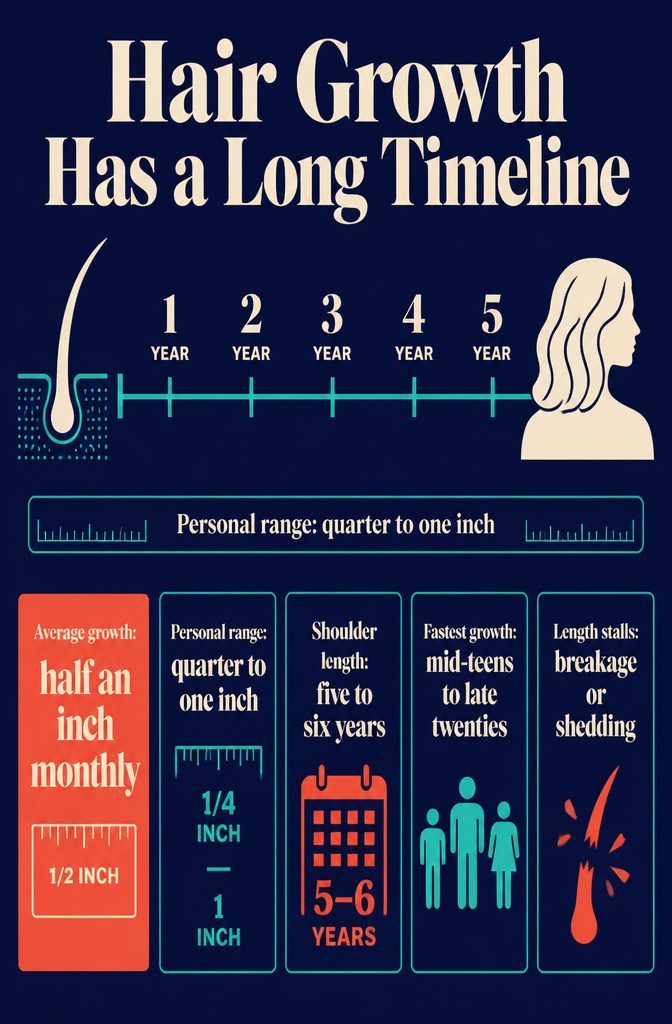
Hair grows about half an inch per month on average, though the range runs anywhere from a quarter inch to a full inch depending on the person.
Men tend to see slightly faster growth than women, and the rate picks up a bit in summer before slowing through winter.
Growth is fastest from the mid-teens through the late twenties, then slows considerably, with the sharpest drop arriving at menopause.
That half-inch average means a brand-new strand takes five to six years to reach shoulder length, assuming it stays intact the whole way.
The math matters when you’re judging whether a product or routine is actually working. If length stalls before then, the issue is usually breakage or shedding rather than sluggish follicles.
The Three Phases of the Growth Cycle
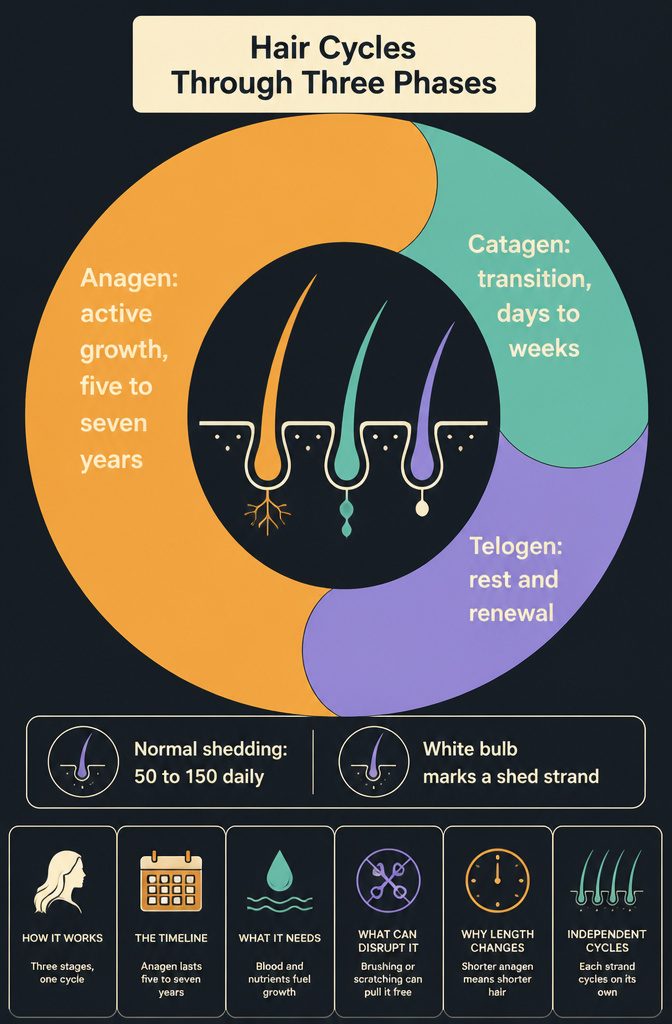
Every strand on your head moves through a three-stage cycle.
The anagen phase is the active growth window, lasting anywhere from five to seven years, during which the hair bulb attaches to the base of the follicle and pulls in blood and nutrients.
A new strand pushes upward, shoves out the old one, and keeps growing until something interrupts it or the clock runs out.
Next comes catagen, the transition phase. This lasts only a few days to a few weeks.
The bulb detaches from its blood supply, the follicle shrinks, and the strand loosens its grip. It stays in place but can pull free with brushing or scratching.
Finally, telogen is the rest phase. The follicle goes quiet, preparing to restart the anagen cycle.
The old strand falls out along with 50 to 150 others every day, a number that sounds alarming but counts as normal shedding. You can spot a telogen hair by the white bulb at the root, unlike one that snapped mid-shaft.
The 120,000 to 150,000 strands on an average head are all cycling independently, which is why you shed some and grow others at the same time.
Age and pattern hair loss shorten the anagen phase, which explains why hair that once grew past your shoulders now stalls at collarbone length.
1. Eat Enough Protein
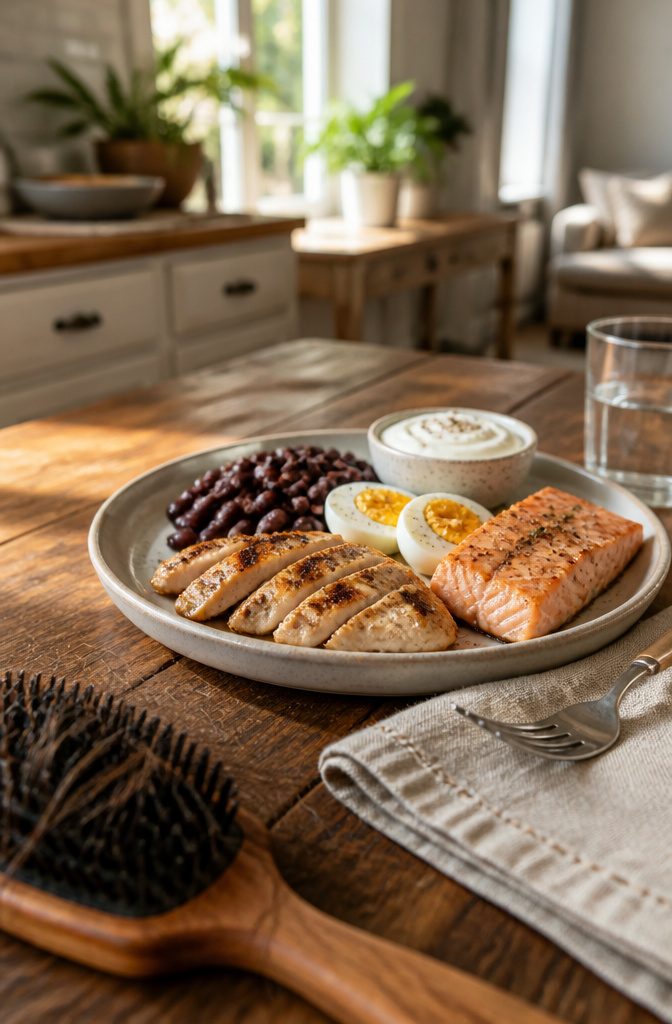
Hair is built from keratin, a protein, and that makes at least 45 grams of protein daily a practical minimum for keeping hair strong and reducing breakage.
Chicken, fish, eggs, lean meat, beans and Greek yogurt are all solid choices to hit that number. When protein intake drops too low, hair becomes weak and brittle, and you can lose strands altogether or notice the color fading out.
The body uses dietary protein to form keratin and boost iron levels, both of which matter for healthy growth.
I make sure most meals include a decent protein source rather than leaving it all to dinner, and the difference shows in how much less hair I find in the brush.
2. Get Enough Iron
Low iron shows up as more than tiredness. When your body can’t produce enough hemoglobin, the protein in red blood cells that carries oxygen everywhere it’s needed, the cells responsible for hair growth start to stall.
Women are at higher risk for iron deficiency, and it makes a measurable difference to how much hair you keep and how quickly new strands come in.
Iron is crucial for hair growth. When you don’t have enough, your body can’t produce hemoglobin for your blood. This is what takes oxygen to repair and grow your cells, including those that fuel your mane.
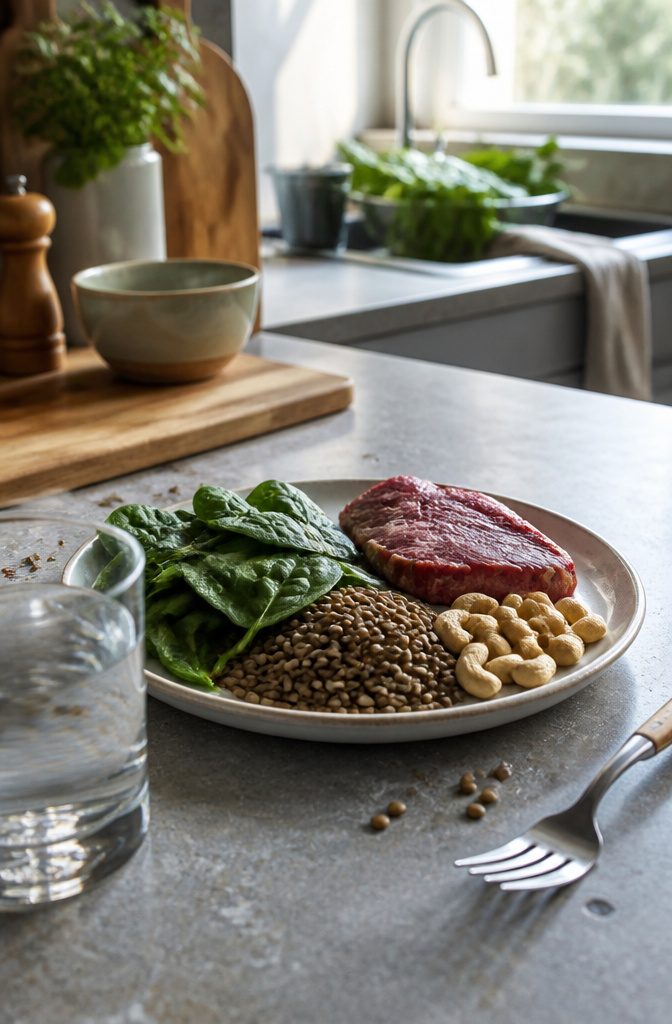
The easiest fix is getting more of it on your plate. Dark leafy greens like spinach, lentils, cashews and red meat all count as reliable sources.
If you suspect you’re running low, a blood test is the only way to confirm it. Book in with your doctor rather than guessing from how you feel.
3. Get Enough Zinc
Zinc supports the follicle and helps keep hair from shedding before it should.
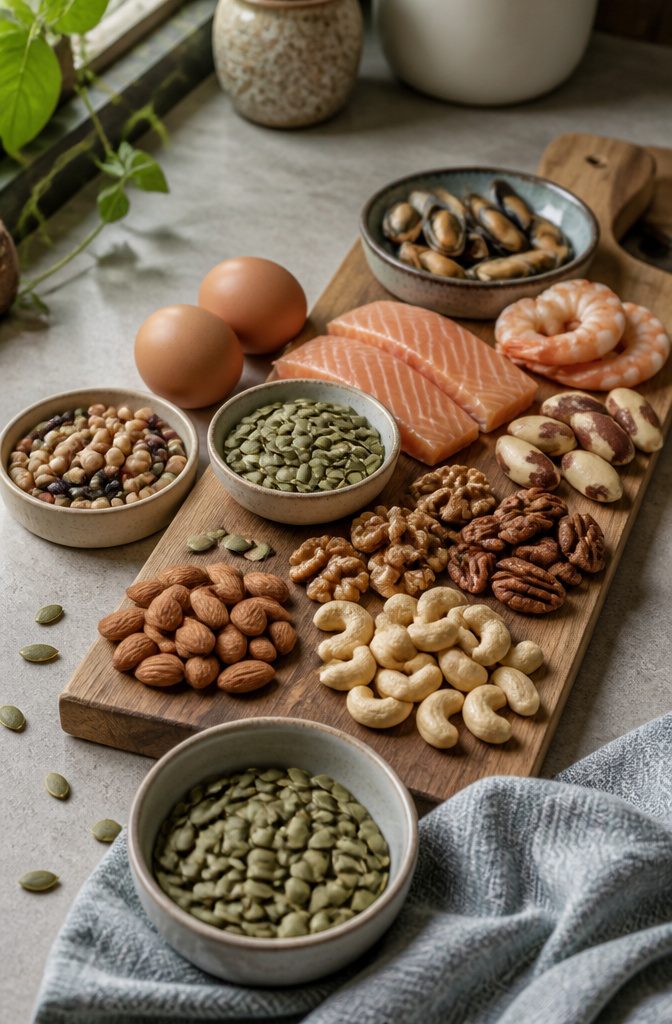
Your body can’t store it, though, so eating zinc-rich foods regularly matters more than a one-off effort. Pumpkin seeds, shellfish, fish, eggs and legumes all deliver it, and a few servings spread across the week will keep your levels steady.
Both too little and too much zinc can trigger hair loss, which makes food sources safer than high-dose supplements unless a blood test has confirmed you’re actually deficient.
If your diet already covers the bases, adding more won’t speed growth. Nuts like Brazil nuts, walnuts, pecans, cashews and almonds also contribute zinc alongside other minerals hair tissue needs.
4. Other Nutrients Hair Needs

Beyond protein, iron and zinc, hair follicles depend on a wider cast of nutrients to stay in the growth phase and produce strong strands. Most come from whole food rather than a pill.
- Vitamin A forms the sebum that keeps the scalp conditioned and prevents dryness, itching and flaking. Without enough, hair turns brittle. Orange and yellow vegetables like carrots supply it.
- Vitamin C builds collagen and helps the body absorb iron. Citrus fruits, kiwis and sweet potatoes are rich sources.
- Vitamin D supports healthy follicle production, which keeps the cycle moving. Eggs, oily fish and mushrooms provide it.
- Vitamin E protects hair and skin from sun damage. Plant oils, seeds, nuts, fruits and vegetables carry it.
- Biotin (vitamin H) strengthens hair texture and structure.
- Niacin supports general scalp and follicle health.
- Selenium regulates hormone levels that can trigger shedding.
- Amino acids produce keratin, the protein that makes up the hair shaft itself. Dairy, meat, pulses and eggs are the primary sources.
- Omega-3 fatty acids keep the scalp hydrated and hair shiny by supplying oils the body can’t make on its own. Salmon, sardines, mackerel, flaxseed, chia seed and walnuts all deliver them.
5. Supplements When Diet Falls Short
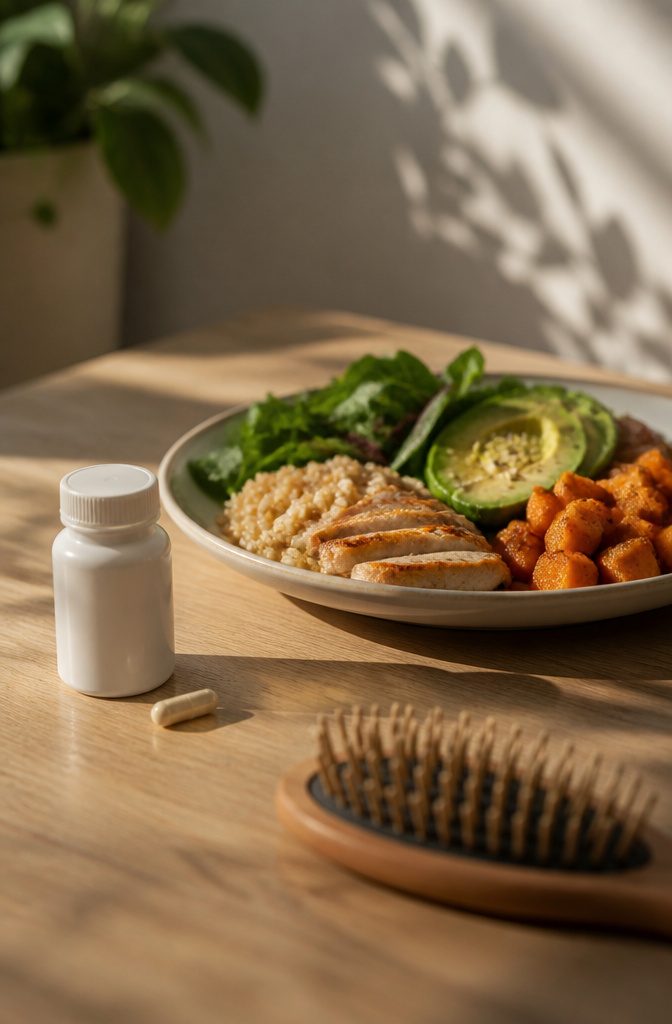
Supplements can fill a gap when your diet consistently lacks a particular nutrient or when bloodwork confirms a deficiency, but they are not a substitute for eating well.
A balanced plate that includes protein, leafy greens, whole grains and healthy fats already delivers what hair needs to grow. Where a true shortfall exists, a targeted supplement may help, but the improvement is slow and unpredictable.
Hair grows from the root, so any benefit from a supplement has to travel the length of the strand before you can see it at the ends.
That means waiting anywhere from one year to five before results show, and not every person responds the same way.
If you do take a supplement, choose one formulated for hair rather than a general multivitamin, and manage expectations. This is not a quick fix, and it will not override poor diet, chronic stress or rough handling.
6. Scalp Massage
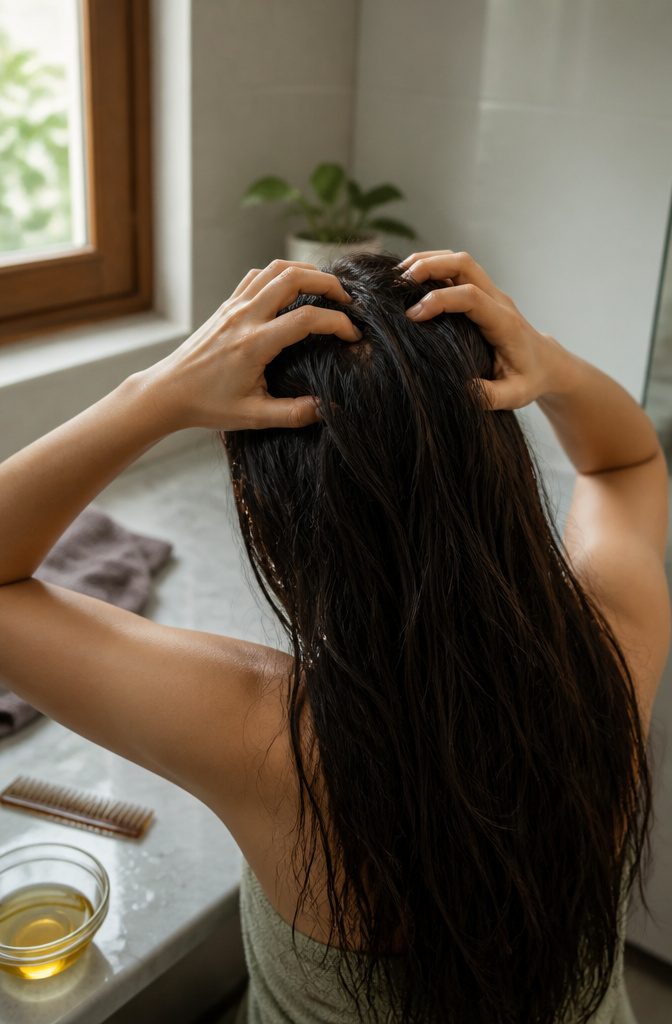
Massage lifts circulation to the follicles, which supports the delivery of nutrients your hair needs to grow. The motion itself matters: apply gentle pressure in small circles across the scalp, spending a minute or two working from the hairline back.
You can do this dry while sitting at your desk or in the shower when you shampoo, and the routine compounds over weeks rather than producing overnight change.
One technique worth trying is the Hairstory scalp exercise, which involves lifting your eyebrows and holding that position for one to two minutes.
It sounds strange, but the tension pulls the scalp forward and increases blood flow to the crown and hairline where thinning often starts first.
Adding oil turns the massage into a treatment. Peppermint, rosemary and pumpkin seed oil all support circulation when massaged into the scalp, and the oil itself conditions as you work it through.
Warm it slightly between your palms, press it into the roots, then massage for two to three minutes before shampooing out.
7. Wash Frequency by Hair Type
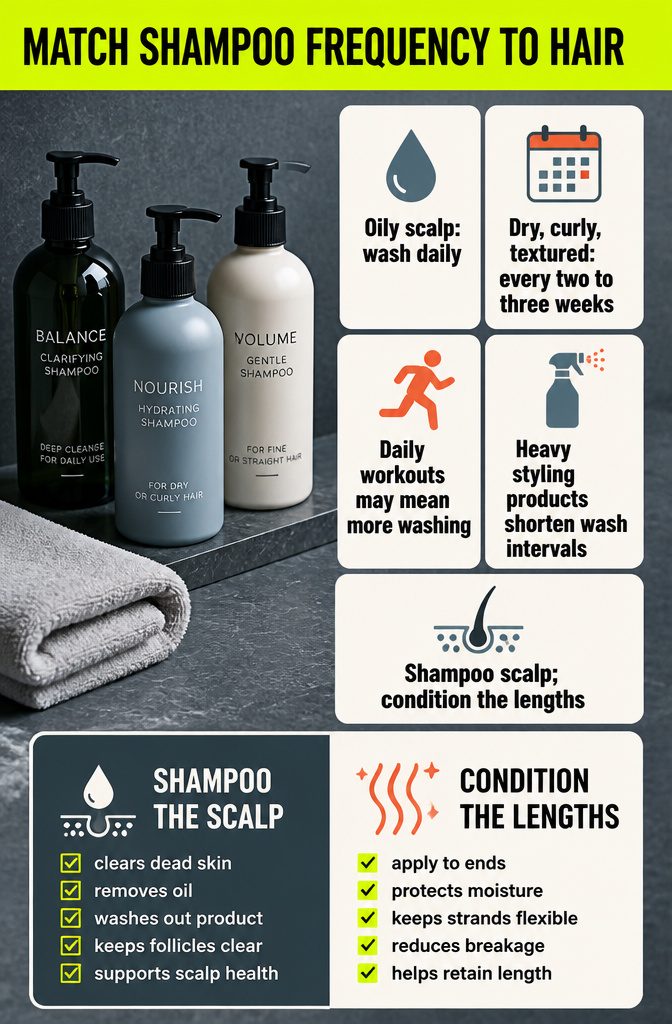
How often you shampoo depends entirely on whether your hair produces a lot of oil or very little.
If your scalp gets oily fast, daily washing keeps buildup from weighing down strands and blocking follicles. Dry, curly, or textured hair holds far less oil, so washing every 2–3 weeks is often enough.
Activity level changes the schedule too.
If you work out daily or use a lot of styling products, you may need to wash more often regardless of hair type. If you rarely sweat and skip heavy serums or sprays, you can stretch longer between washes.
The rule I follow: shampoo your scalp, not your lengths. That clears away dead skin, oil, and product without stripping moisture from the hair itself.
Conditioner goes on the ends for straight or fine hair, but dry or curly types benefit from conditioning the full length to keep strands flexible and less prone to breaking before they reach the length you want.
8. Shampoo and Conditioner That Match Your Hair
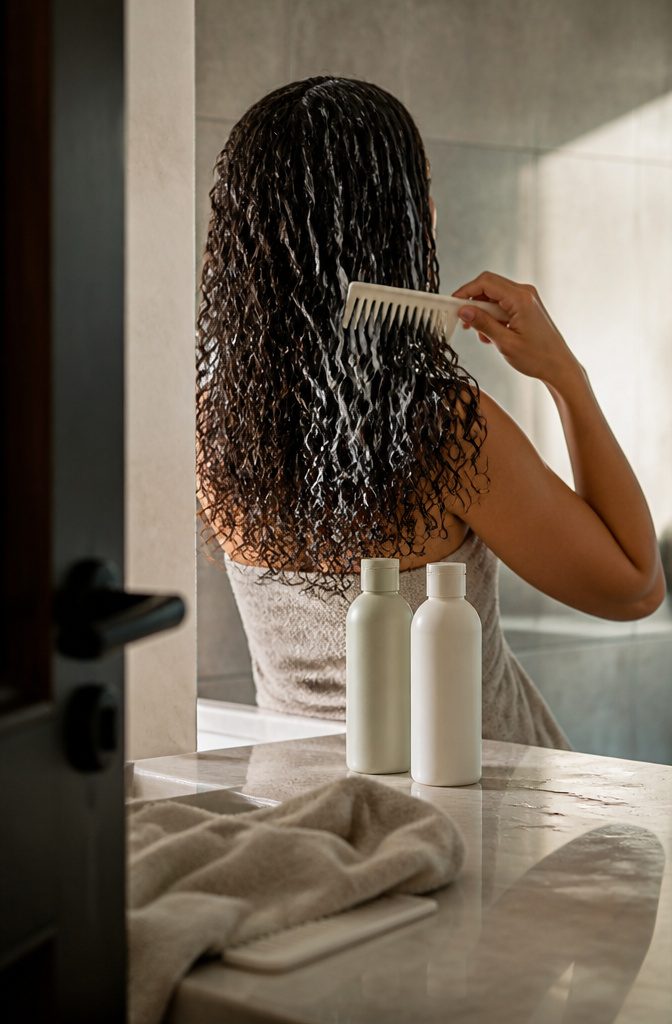
Matching products to hair type matters more than the brand name on the bottle. Oily hair needs daily cleansing; dry, textured, or curly hair can stretch shampooing to once every two to three weeks.
I look for products labeled for my specific hair type and avoid anything with ammonium lauryl sulfate or sodium lauryl sulfate on dry or color-treated strands, since harsh detergents strip moisture and cause damage.
Conditioner keeps hair soft enough to avoid breakage as it grows.
I comb it through for even coverage and leave it in for two to three minutes before rinsing. Fine or straight hair only needs conditioner on the ends, but dry or curly hair benefits from full-length application.
Sachajuan Thickening Shampoo and the Kérastase Résistance collection are both designed to strengthen hair and prevent breakage, which keeps each strand growing instead of snapping off mid-length.
9. Handle Wet Hair Gently
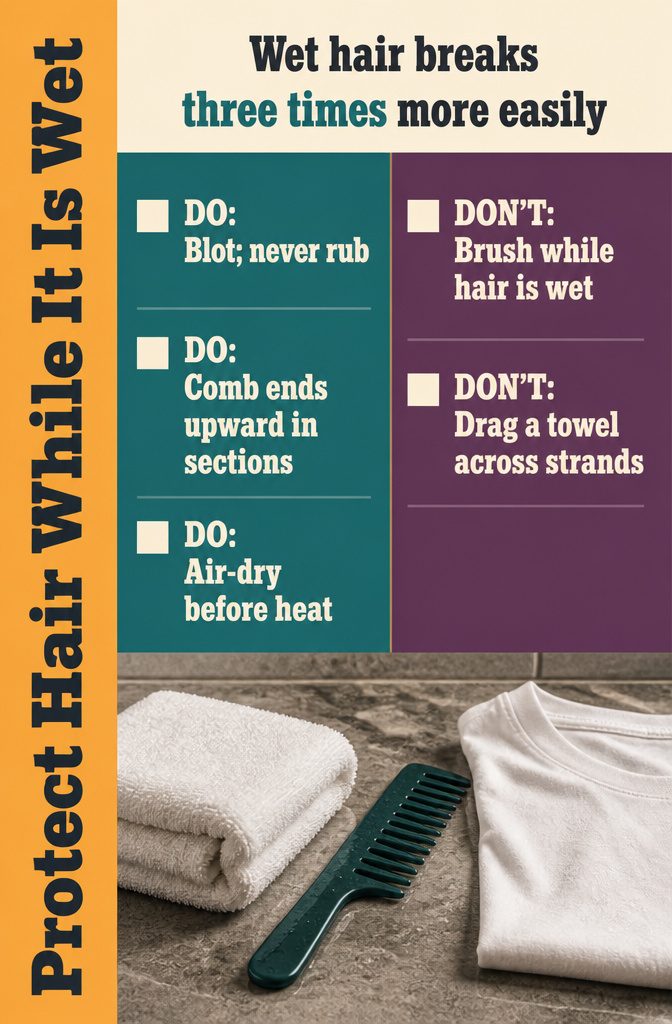
Wet hair is three times more vulnerable to breakage than dry hair, which means the two minutes after you step out of the shower carry more risk than the rest of your styling routine combined.
Rubbing with a towel is the most common mistake: the friction shreds cuticles and snaps strands before they have a chance to strengthen.
Blot instead, pressing a towel or t-shirt against your hair to absorb moisture without dragging it across the surface.
When you detangle, use a wide-tooth comb and start at the ends, working upward in short sections rather than pulling from root to tip in one stroke.
If your hair is thick and curly, the best time to comb is in the shower before you rinse conditioner; straight hair tolerates combing better after it has dried partway.
Let hair air-dry as long as you can stand it before applying heat, and avoid brushing altogether while it is still wet.
10. Limit Heat Styling
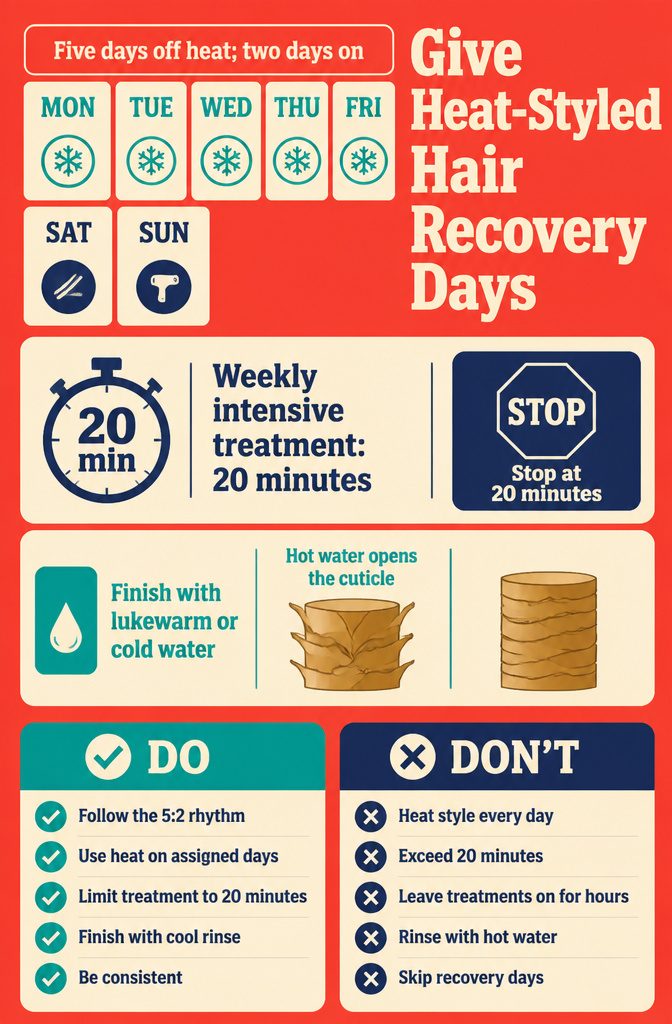
A daily pass with a flat iron or blow dryer pulls moisture straight out of the strand, and dry hair snaps instead of bending.
The 5:2 ratio borrowed from Women’s Health makes the math easy: five days off heat, two days on. That gives the cuticle time to close back down and hold on to what it needs.
If your hair already feels brittle from months of styling, NIOXIN Night Density Rescue and Kérastase Résistance both target heat-stressed strands by rebuilding from the inside.
A weekly 20-minute intensive treatment helps too, and stopping right at 20 minutes matters more than you’d think. Treatments stop working past that point, so leaving a mask in for hours won’t buy you anything.
One small tweak: rinse with lukewarm or cold water at the very end of your shower. Hot water opens the cuticle, which then makes breakage worse when you follow up with a dryer.
11. Trim Split Ends Regularly
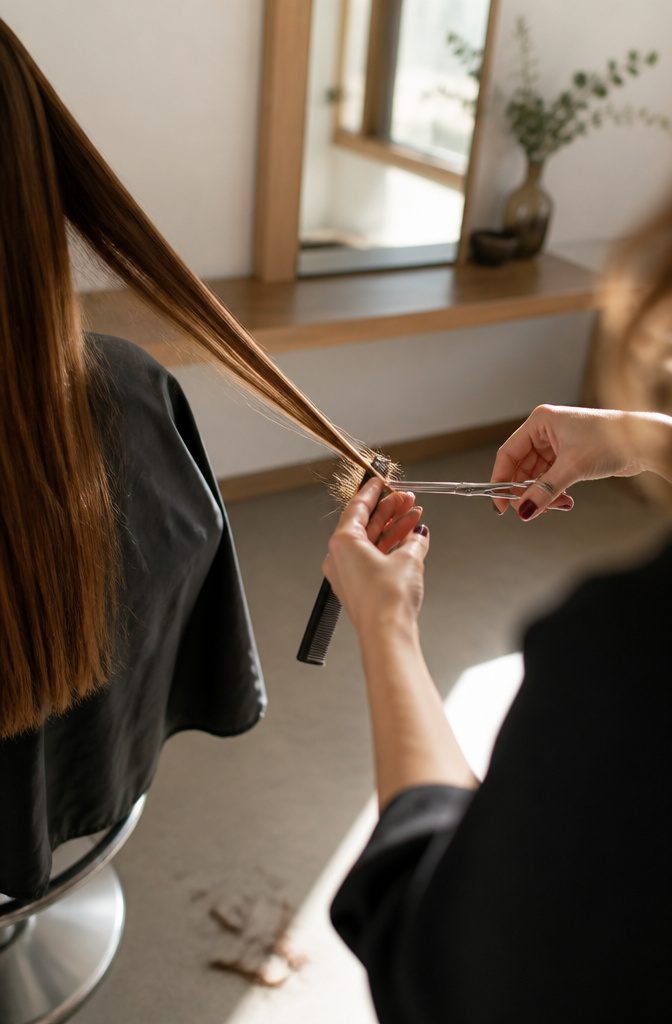
Split ends don’t just look frayed.
They travel up the hair shaft, breaking strands before they ever reach the length you’re after. The only fix is to cut them off before they do more damage.
The American Academy of Dermatology recommends trimming every 10–12 weeks. Stylist Jack Merrick-Thirlway pushes that a little tighter at every 8–10 weeks, pointing out that waiting six months means you’ll need six inches removed to get the hair looking healthy again.
For someone chasing aggressive length gains, trimming 0.8–1 inch every 10–12 days can keep splits from ever forming.
Which interval you pick depends on how fast your hair grows and how much split-end damage you’re dealing with now.
I lean toward the 10-week mark because it balances length retention with clean ends, but if your hair breaks easily or you use heat often, the tighter schedule wins.
12. Avoid Tight Hairstyles and Rough Handling
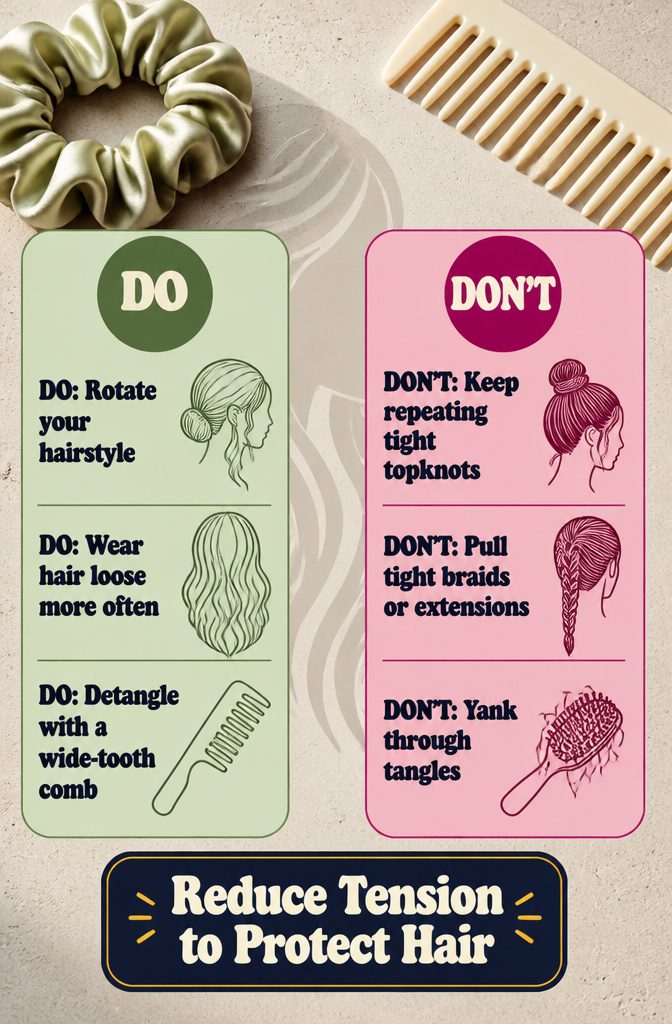
Tight ponytails, braids, buns and extensions all pull at the follicle, and that constant tension wears down the root over time. The hair that takes the stress breaks more easily, and in some cases stops growing back at all.
Traction alopecia is the formal name for it, and it shows up as thinning along the hairline or wherever the style pulls hardest.
I’ve started mixing up how I wear my hair each day rather than defaulting to the same topknot, and letting it hang loose more often. Stop asking the same section of your scalp to hold all that weight.
Rough brushing does similar damage, especially when your hair is dry and already prone to snapping. Yanking a brush through tangles tears the strand rather than smoothing it, and torn hair obviously cannot reach the length you’re aiming for.
A wide-tooth comb works better for detangling, and wet hair needs even gentler handling since it breaks three times as easily.
13. Natural Oils and Hair Masks
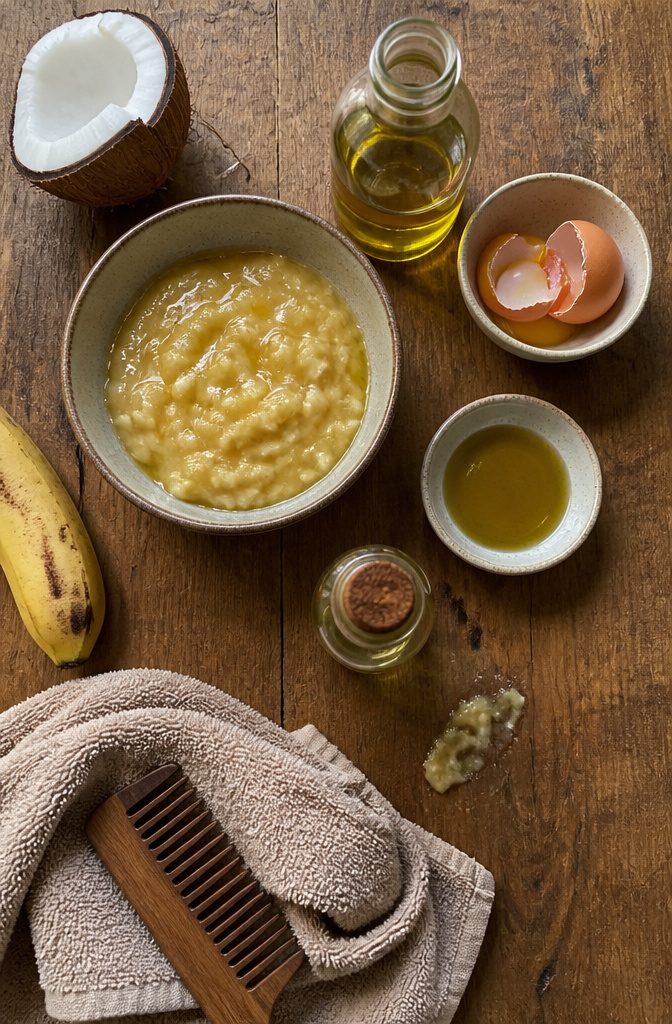
A few simple masks and oils show up often enough that they’re worth trying if you prefer a kitchen-shelf route.
- Castor oil is rich in vitamin E, which supports hair health and thickness. Apply it evenly to scalp and hair, leave on 30–60 minutes, then wash. Once or twice a week works. You can mix it with coconut or almond oil if you like.
- Olive oil delivers omega-3 acids that promote growth and add shine. Same timing: 30–60 minutes, once or twice a week.
- Egg mask: beat one or two eggs, smooth onto damp hair, leave 30 minutes, shampoo out. The protein helps.
- Banana mask: mash one ripe banana with 2 tablespoons olive oil, apply to scalp and hair, wash off after 20–30 minutes. Bananas bring minerals that help build collagen and soften hair.
These are home remedies, not guarantees, but the oils feel luxurious and the masks rinse clean.
14. Minoxidil for Hair Loss
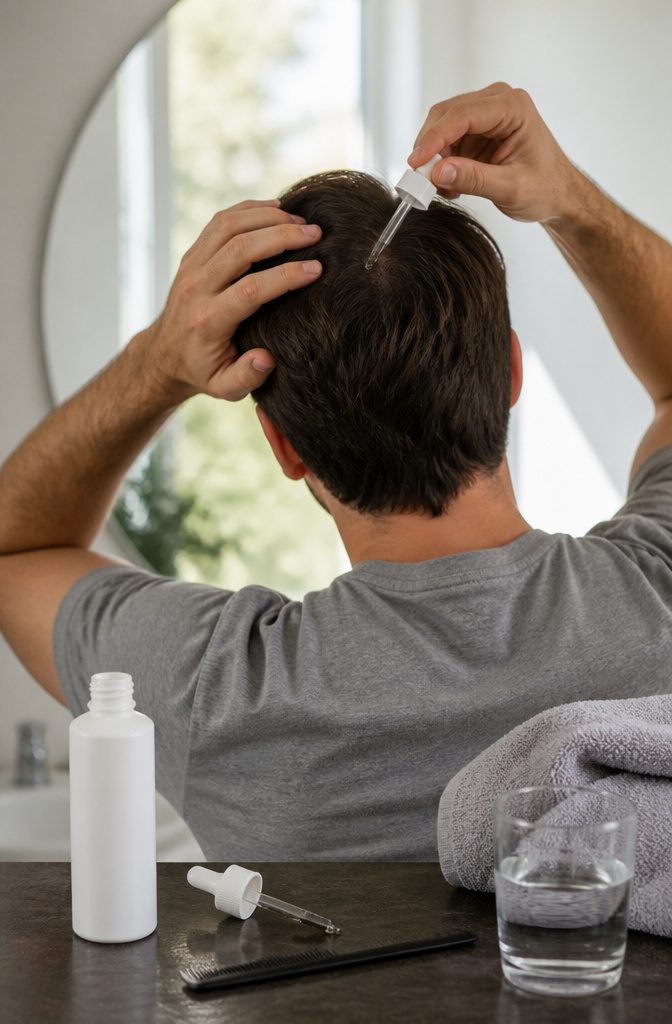
Minoxidil is the only over-the-counter medication for hair loss approved by the FDA, and it sits in a different category from everything else here.
This is a medical treatment for pattern hair loss, not a general growth booster for hair that’s already healthy.
It must be applied to the scalp every day, and if you stop, the hair loss resumes. The results can reverse faster than they arrived.
It’s sold as Rogaine or Theroxidil in both liquid and foam forms, in strengths of 2% and 5%. The treatment won’t bring back a receding hairline, but it does stimulate growth, slow shedding, and thicken what’s left.
That makes it useful if you’re losing ground rather than simply trying to grow longer hair. Daily application is the trade: miss it and the clock runs backward.
15. Scalp Health and When to See a Doctor
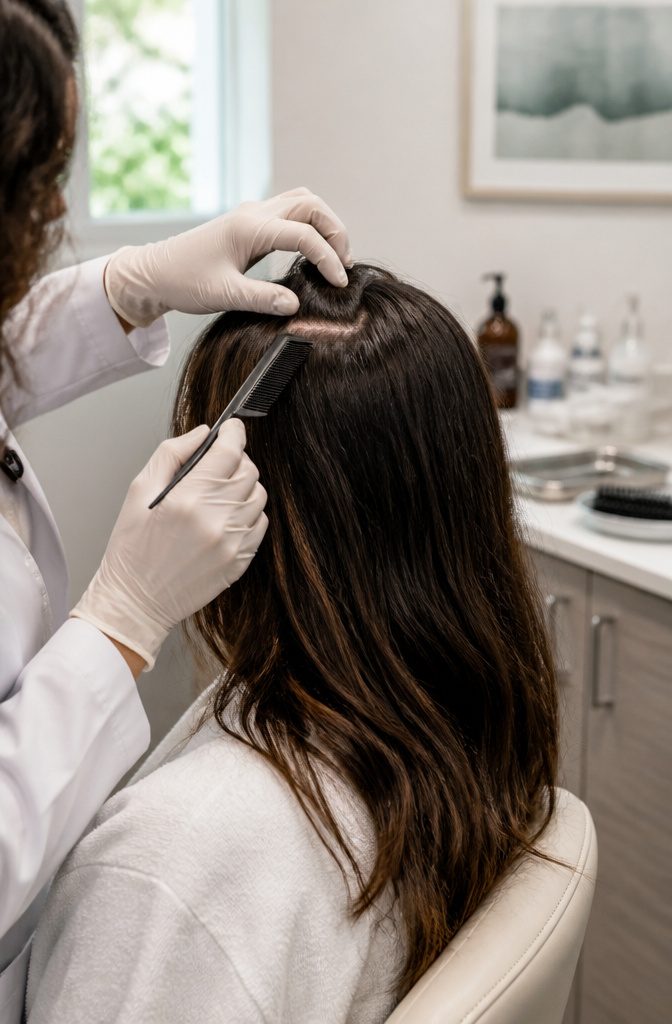
A healthy scalp gives hair the conditions it needs to grow without breaking or shedding prematurely. If you are losing more than 50–150 hairs a day, or if shedding persists for weeks, that warrants attention.
Patchy loss is another signal. So is an itchy or flaking scalp that does not improve when you change products.
Hair that stops growing entirely, or growth that slows dramatically from what your hair used to manage, can point to something clinical rather than cosmetic.
Genetics, hormones, medications, stress, and autoimmune conditions can all interrupt the growth cycle or push hair into a resting phase early.
Pattern hair loss shortens the active growth phase over time, which is why hair that once reached your waist may struggle to grow past your shoulders now.
A dermatologist can diagnose the cause and suggest medication or specialized treatment when product changes and supplements are not enough.
What Slows Growth Down
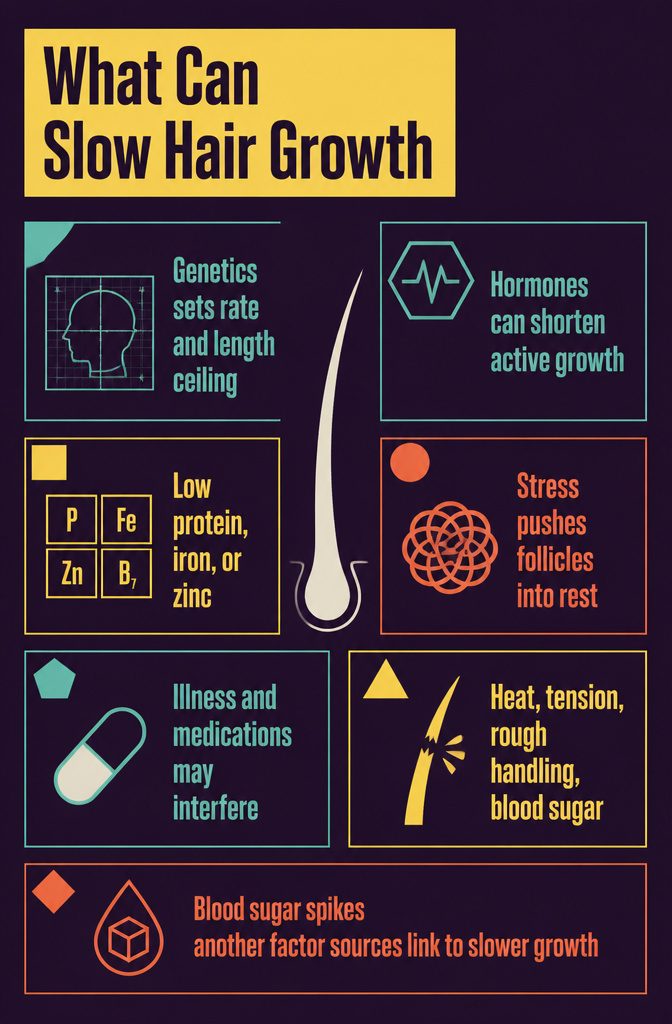
Before you can speed anything up, you need to know what’s working against you. Hair is a reactive tissue, and because your body can survive without it, growth takes a backseat when something else demands attention.
The main culprits:
- Genetics — the clearest ceiling. The rate at which your hair grows and the maximum length it will reach are both inherited, and no amount of oil or supplement will override that blueprint.
- Hormonal imbalances — including thyroid issues, pregnancy, and menopause. These shorten the active growth phase and make it harder to grow hair long.
- Nutritional deficiencies — particularly protein, iron, zinc, and certain vitamins. Hair is made mostly of keratin, which requires adequate dietary intake to form properly.
- Stress — chronic or acute, it pushes more follicles into the resting phase and slows new growth.
- Illness and certain medications — including cancer treatments, painkillers, antidepressants, blood thinners, and beta-blockers.
- Rough handling — aggressive brushing, tight hairstyles, and excessive heat all snap strands before they reach the length they’re capable of.
- Blood sugar spikes — another factor sources link to slower growth.
Most of us aren’t working at our hair’s full capacity. The tips that follow address these weak points one by one.
Frequently Asked Questions
How fast does hair grow on average?
Hair grows about half an inch per month on average, though the range runs anywhere from a quarter inch to a full inch depending on the person.
Men tend to see slightly faster growth than women, and the rate picks up a bit in summer before slowing through winter. Growth is fastest from the mid-teens through the late twenties, then slows considerably.
What are the three phases of the hair growth cycle?
The anagen phase is the active growth window, lasting anywhere from 5 to 7 years, during which the strand pulls in blood and nutrients.
Catagen is the transition phase, lasting only a few days to a few weeks as the bulb detaches from its blood supply.
Telogen is the rest phase when the follicle goes quiet and the old strand falls out, along with 50 to 150 others every day.
What causes hair to stop growing or grow more slowly?
Genetics set the clearest ceiling, controlling both growth rate and maximum length.
Hormonal imbalances, nutritional deficiencies (particularly protein, iron and zinc), chronic stress, illness, certain medications, and rough handling all interrupt the growth cycle or push hair into a resting phase early.
How does diet affect hair growth?
Hair is built from keratin, a protein, so at least 45 grams of protein daily is a practical minimum for keeping hair strong and reducing breakage.
Beyond protein, follicles depend on iron, zinc, vitamins A, C, D, E, biotin, niacin, selenium, amino acids and omega-3 fatty acids to stay in the growth phase and produce strong strands.
Does scalp massage help hair grow faster?
Massage lifts circulation to the follicles, which supports the delivery of nutrients your hair needs to grow.
Apply gentle pressure in small circles across the scalp, spending a minute or 2 working from the hairline back, and the routine compounds over weeks rather than producing overnight change.
Can stress cause hair loss or slow hair growth?
Stress can reduce oxygen intake to non-essential systems like hair, and severe physical stress from serious illness can push hair into a premature resting phase, temporarily halting growth.
Chronic stress pushes more follicles into the resting phase and slows new growth.
Why does hair stop growing as long as it used to?
Age and pattern hair loss shorten the anagen phase, which explains why hair that once grew past your shoulders now stalls at collarbone length. Hormonal changes, particularly at menopause, accelerate this slowdown.
What foods promote hair growth?
Chicken, fish, eggs, lean meat, beans and Greek yogurt deliver the protein hair needs to form keratin. Dark leafy greens, lentils, cashews and red meat supply iron, while pumpkin seeds, shellfish, fish, eggs and legumes provide zinc.
Salmon, sardines, mackerel, flaxseed, chia seed and walnuts all deliver omega-3 fatty acids that keep the scalp hydrated and hair shiny.