Protein supplies the amino acids your body uses to build keratin, the structural material that makes up roughly 95 percent of each hair strand.
When intake drops too low, follicles shift into a resting phase that ends in diffuse shedding two to three months later, though iron deficiency, stress, and hormonal shifts can trigger the same pattern.
Why Hair Is Protein
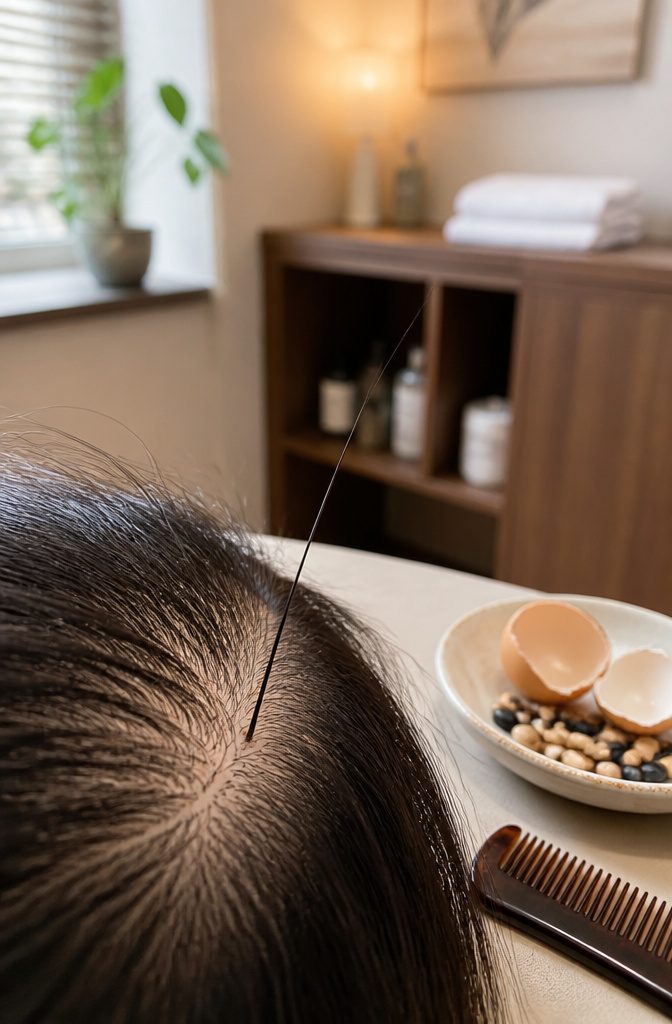
Hair is built from keratin, a structural protein that makes up as much as 95 percent of each strand.
Your body assembles keratin from amino acids, the smaller units that dietary protein supplies. When you eat protein—meat, fish, eggs, beans, dairy—digestion breaks it down into amino acids, which then enter circulation and become available for synthesis.
Hair follicles use those amino acids to produce keratin, and as new hair forms and pushes out from the scalp, keratin fills the cells and hardens into the shaft you see.
This matters because the follicle, buried in the scalp, is where growth happens. Dietary protein feeds that process.
The hair shaft itself, once it emerges, is metabolically inactive. Treatments applied to hair—conditioners, masks, leave-in keratin products—coat and temporarily reinforce the shaft, filling gaps left by heat or chemical damage.
They can improve appearance and reduce breakage, but they do not make hair grow faster. Growth depends on what the follicle has to work with, and that comes from what you eat.
What Inadequate Protein Does to Hair
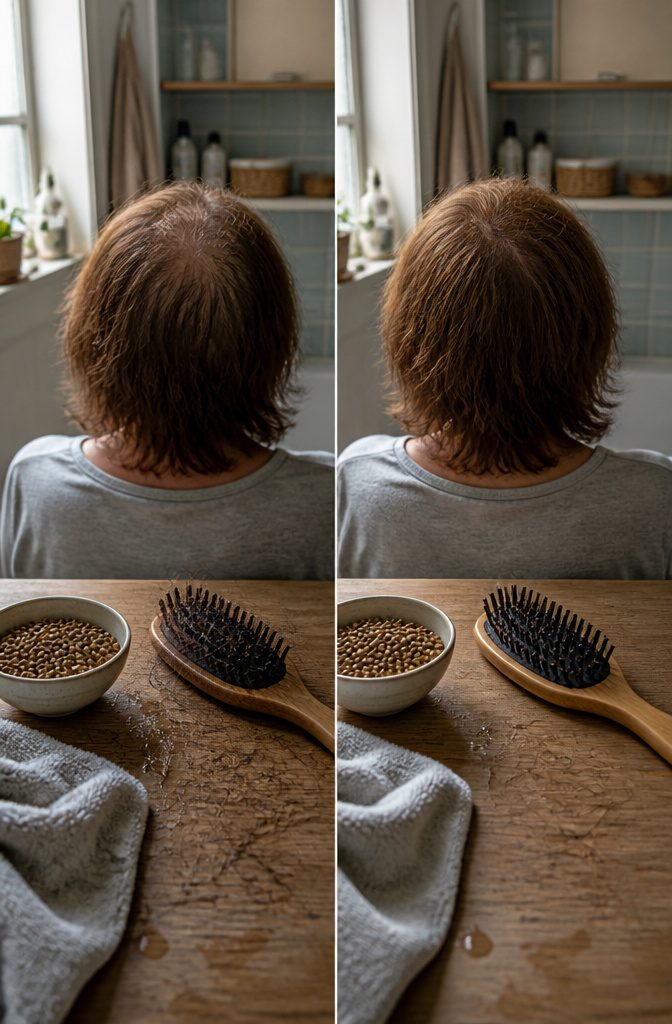
When protein intake drops too low or calorie restriction becomes severe, follicles shift into what dermatologists call telogen effluvium: a resting phase that ends with diffuse shedding across the whole scalp.
The body prioritizes muscle, organs, and immune function over non-essential processes like hair growth, so the follicles shut down early and the strands eventually fall out.
The shedding usually shows up two to three months after the nutritional stress, which makes the connection easy to miss.
You might notice dull, lifeless hair, strands that break more easily than usual, or thinning that becomes visible only months later once density drops enough to see.
Protein-related shedding is real and fixable, but it is only one possible trigger. Iron deficiency, zinc deficiency, vitamin D shortfalls, stress, illness, and hormonal shifts can all cause the same pattern of diffuse shedding.
If you are losing more hair than usual, the first step is a conversation with your doctor, not a protein shake.
How Much Protein Your Hair Needs
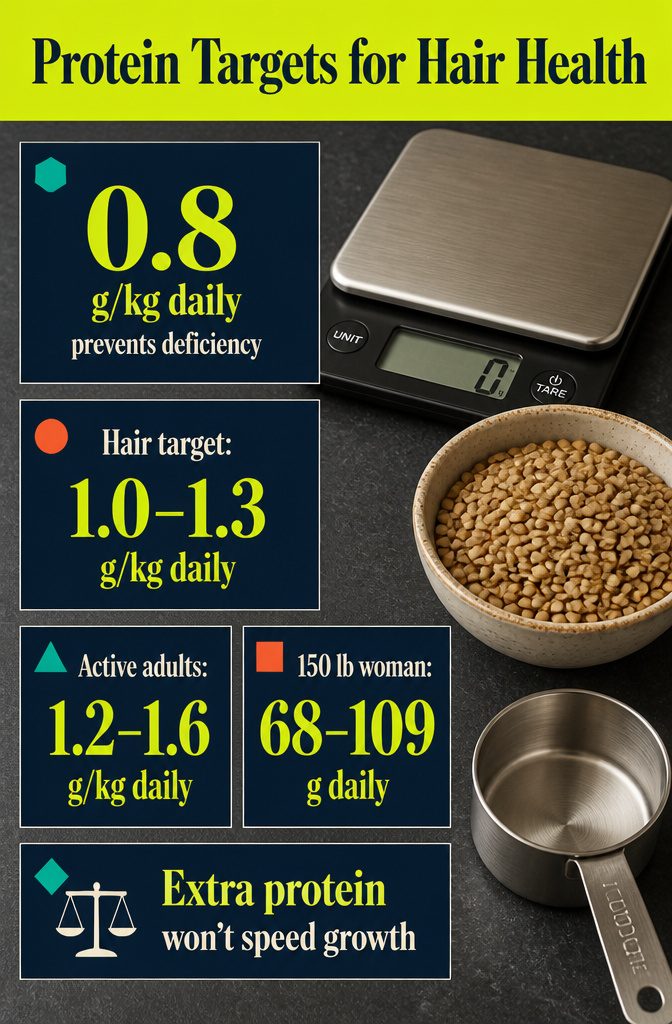
The baseline recommendation is 0.8 grams of protein per kilogram of body weight per day, the minimum to prevent deficiency in sedentary adults.
That figure is not built around hair growth. For hair health, the target sits higher: 1.0 to 1.3 grams per kilogram daily, and for active adults generally, 1.2 to 1.6 grams per kilogram.
A 150-pound woman falls somewhere around 68 to 109 grams of protein each day depending on where in that range she lands.
These numbers come from different places and they do not all agree on whether exceeding adequate intake does anything for hair.
Most agree that falling short can contribute to shedding and thinning, but several make clear that eating more protein than your body needs will not speed up growth or reverse pattern hair loss.
Food Sources That Supply Protein
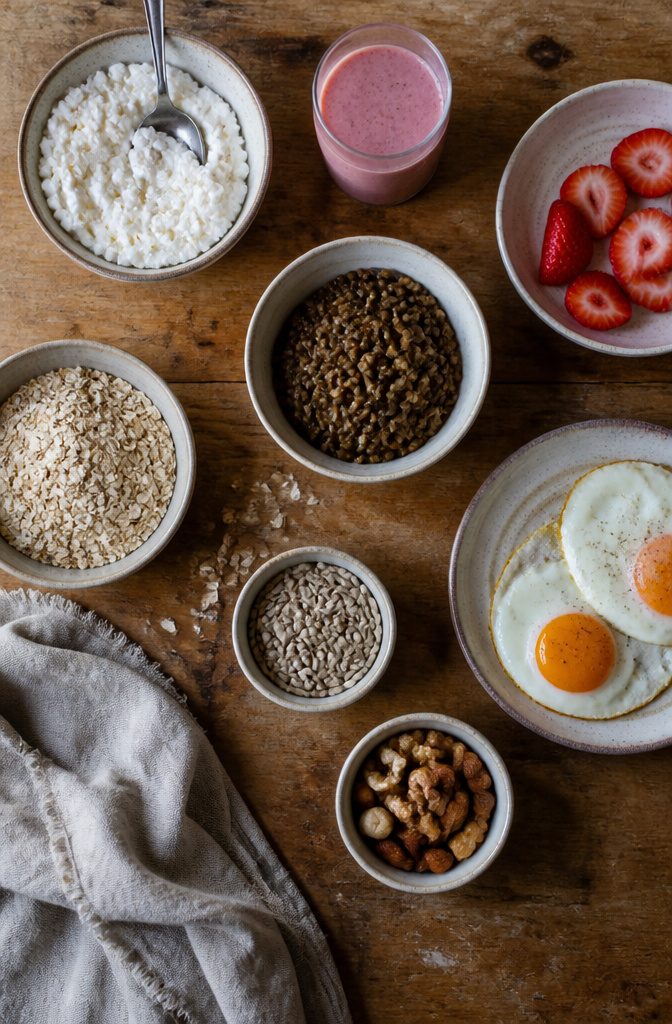
Getting enough protein from food covers most needs without supplementation. Protein sources break into two groups: complete proteins from animal foods and plant-based options that need combining.
Animal sources supply all essential amino acids in one go:
- Eggs, particularly egg whites, deliver the highest cysteine concentration of any common food
- Chicken and turkey
- Lean beef
- Dairy products, including cottage cheese
Plant-forward choices require more variety to cover the full amino acid profile:
- Sunflower seeds and lentils together provide reasonable cysteine when eaten throughout the day
- Chickpeas and other legumes
- Oats
- Nuts
The cysteine matters because it sits at the center of keratin synthesis, making it the most direct dietary input for hair shaft production.
One practical option: blend 2 tablespoons powdered peanut butter with ¼ cup water, ½ cup cottage cheese, ⅓ cup ice, ¾ cup strawberries, and ¼ cup plum or prune juice for a smoothie that covers protein at breakfast or between meals.
Protein Powders, Whey, Collagen, and Keratin Supplements
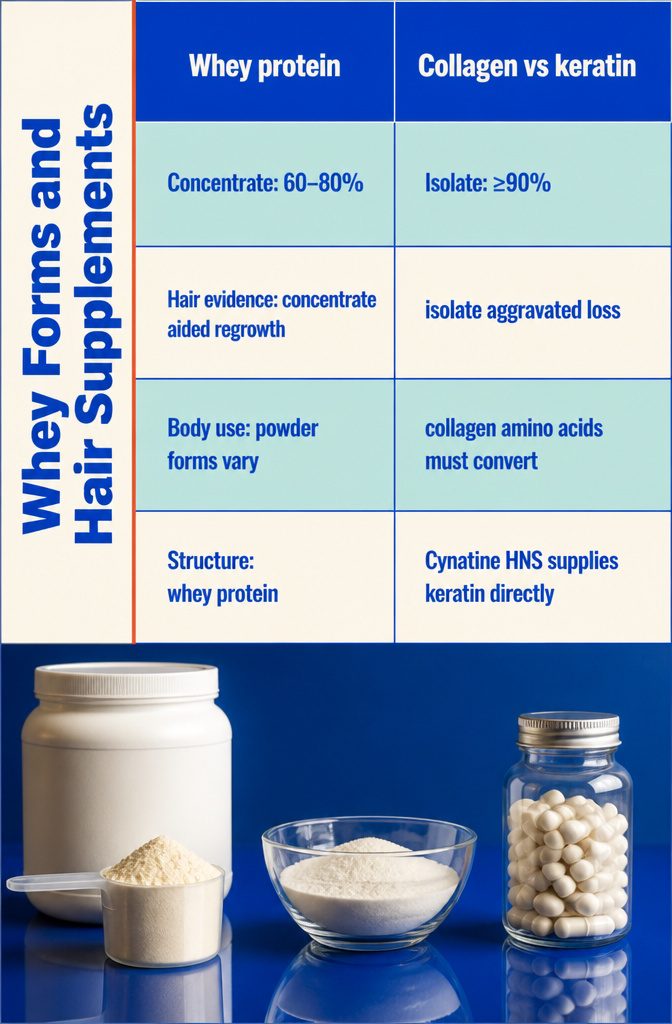
Protein powders differ in their effects on hair. Whey comes in three main forms: concentrate contains 60 to 80 percent protein, isolate is usually at least 90 percent, and hydrolysate is pre-digested for faster absorption.
A 2010 study of 100 men and women found that whey isolate caused more hair damage and aggravated hair loss, while whey concentrate aided hair health and regrowth.
That evidence is limited and the picture remains mixed, but it suggests the form matters.
Collagen supplements provide amino acids that can feed keratin synthesis, but they are not the same as taking keratin directly. The body still has to convert collagen’s amino acids into the cysteine-rich keratin structure that makes up hair.
Cynatine HNS is a bioavailable keratin supplement that supplies the keratin structure directly. The risk with any shake habit is an imbalanced diet overall, and some added ingredients in protein powders have been flagged as potential hair-loss concerns.
Protein Treatments Applied to Hair
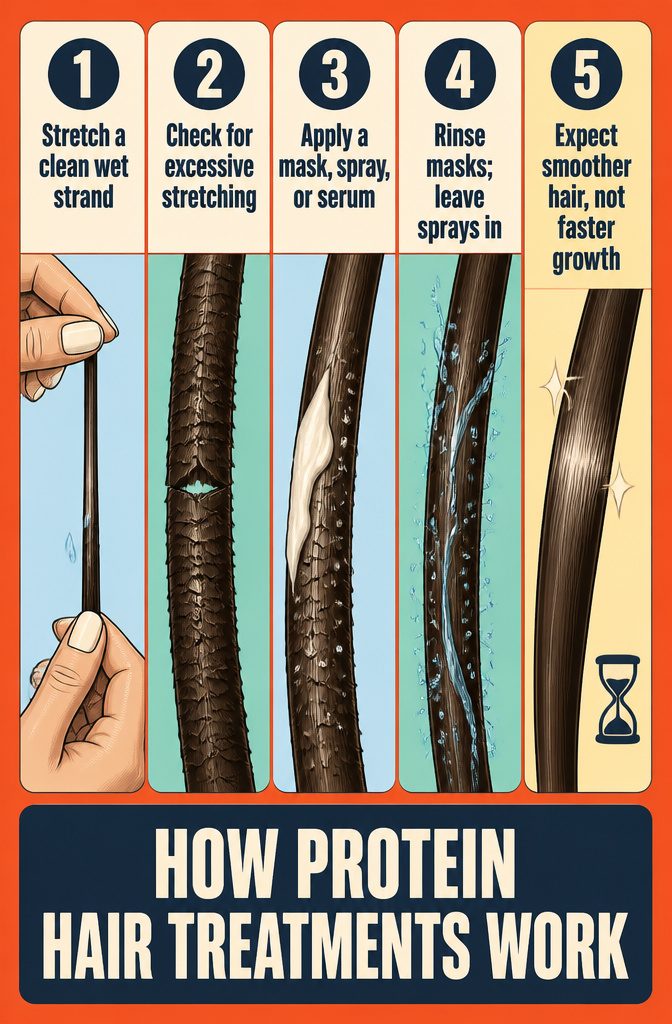
Protein treatments may strengthen strands and reduce breakage, but they do not make follicles grow hair faster.
These products work on the hair shaft itself, filling in microscopic gaps left by heat or chemical damage. The result is hair that looks shinier and feels smoother, though the improvement is temporary rather than permanent.
Treatments come as masks, sprays, and serums. Masks go on damp hair, sit for a set time, and rinse out.
Sprays and serums behave more like styling products and stay in. A quick stretch test tells you whether your hair would benefit: take a wet strand of clean hair and pull gently.
Healthy hair stretches to about 30 percent of its length before breaking. Hair that stretches much farther may need protein, while hair that snaps immediately likely needs moisture instead.
Signs of Protein Overload
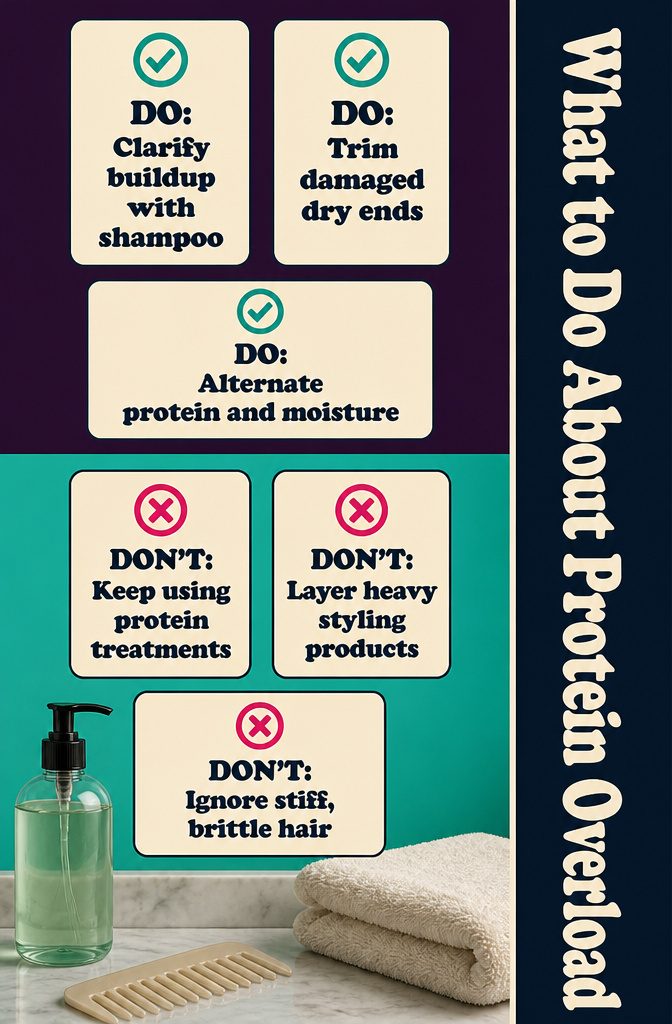
Too much protein on your hair feels like a problem you’d never associate with breakage, but it is one.
When keratin or hydrolyzed collagen builds up on the hair shaft from frequent treatments, hair turns stiff, dry, and brittle, and paradoxically breaks more easily than it did before.
Cleaning your hair and giving it a break from styling and hair treatments is the first step to repairing hair that has too much protein in it.
If you’ve been using products with silk protein or keratin and your ends feel rough or limp, that’s worth addressing.
What helps:
- Clarifying shampoo to strip the buildup from the cuticle
- A trim to remove the driest, most damaged ends
- A break from all protein treatments and heavy styling products
- Alternating protein-strengthening treatments with moisturizing treatments once you resume, so neither side overwhelms the other
Low-porosity hair struggles most with protein overload because the tightly closed cuticle resists absorption, leaving product sitting on the surface instead.
When Hair Loss Has Another Cause
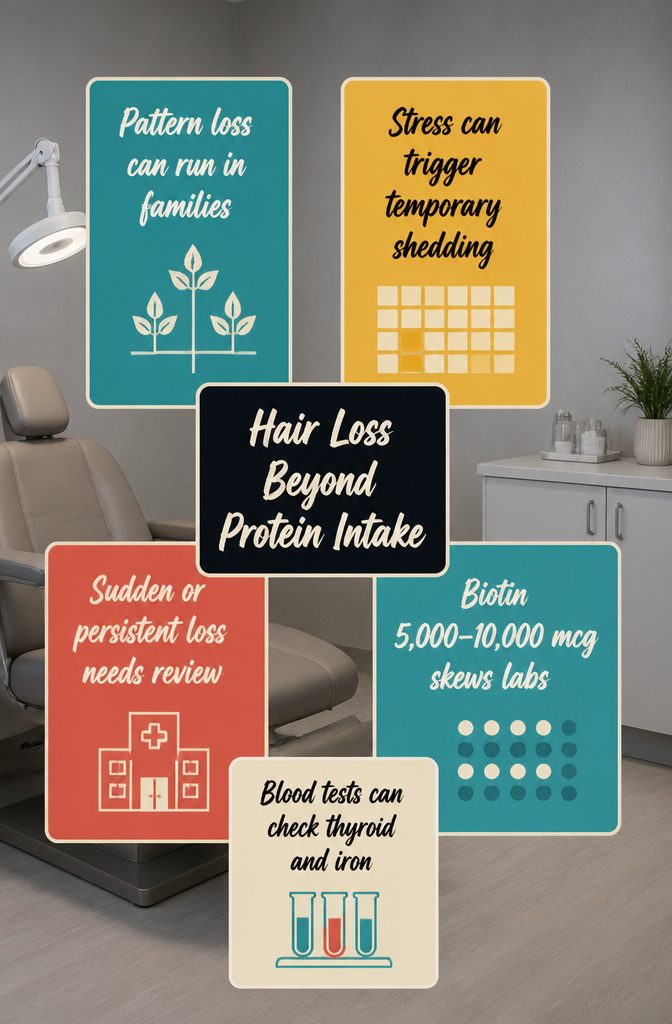
Not all thinning comes from what you ate or skipped. Pattern hair loss runs in families, and hormonal shifts after pregnancy, during menopause, or from thyroid conditions can thin hair independently of protein intake.
Significant stress can trigger telogen effluvium, a temporary shedding phase that floods the scalp with dormant follicles all releasing at once, even when nutrition is fine.
You should see a dermatologist or physician if shedding is sudden, persists beyond a few weeks, follows a noticeable pattern across the scalp, or arrives with fatigue, skin changes, or unexplained weight shifts.
A blood panel can rule out thyroid dysfunction, iron deficiency, or autoimmune triggers that no dietary tweak will fix.
One warning if you take biotin at high doses: supplements delivering 5,000 to 10,000 micrograms daily interfere with thyroid and cardiac lab assays, skewing results and masking real problems.
Frequently Asked Questions
Is hair 90% protein?
Hair is roughly 95% keratin, a structural protein your body builds from dietary amino acids. The follicle assembles keratin and fills each emerging strand with it, hardening into the shaft you see.
Will lack of protein cause hair loss?
Yes, when protein intake drops too low, follicles shift into a resting phase called telogen effluvium and shed diffusely across the scalp two to three months later. The body prioritizes organs and muscle over hair when protein becomes scarce.
What does protein deficiency hair look like?
Hair becomes dull, lifeless, and breaks more easily than usual. You may notice diffuse thinning that becomes visible only months after the nutritional stress, once enough density is lost to see it.
How much protein do I actually need for healthy hair?
1.0 to 1.3 grams per kilogram of body weight daily supports hair health, which puts a 150-pound woman at roughly 68 to 109 grams per day. The 0.8 g/kg baseline is a minimum to prevent deficiency, not a target for growth.
What foods can help strengthen hair?
Eggs, chicken, lean beef, and dairy provide complete proteins with all essential amino acids in one serving.
Plant sources like sunflower seeds, lentils, chickpeas, oats, and nuts need variety throughout the day to cover the full amino acid profile, especially cysteine.
Does whey protein cause hair loss?
No clear causal link exists, but one 2010 study found whey isolate caused more hair damage while whey concentrate aided regrowth. The evidence remains limited and mixed.
Can protein powder cause hair loss?
Protein powder itself does not cause loss, but an imbalanced diet from relying too heavily on shakes may push out other nutrients like iron, zinc, and biotin.
Some added ingredients in powders have been flagged as potential concerns for people already at risk.
Can too much protein cause hair loss?
Not directly, but excessive intake from concentrated supplements can create an imbalanced diet that contributes to thinning. The hair problem comes from what you crowd out, not from the protein itself.
Do protein supplements like collagen help with hair?
Collagen supplies amino acids that can feed keratin synthesis, but your body still has to convert them into the cysteine-rich structure that makes up hair. It is not the same as taking keratin directly.
Can eating more protein alone improve hair loss?
If protein deficiency is contributing, raising intake can help within three to six months as the follicle cycle reflects better nutrition. For pattern hair loss or hormonal thinning, protein alone will not reverse it.
Is hair loss always a sign of protein deficiency?
No.
Iron deficiency, thyroid dysfunction, hormonal shifts, stress, and pattern hair loss can all cause the same diffuse shedding. Protein shortfall is one possible trigger, not a universal explanation.
Will fixing my diet stop my hair loss?
If a documented nutritional deficiency is driving the shedding, correcting it usually resolves the problem. For pattern hair loss, diet helps but does not replace medical treatment.
Can stress cause hair loss even if my diet is perfect?
Yes. Significant stress can trigger telogen effluvium independently of nutrition, with shedding appearing two to three months after the event.
Do protein treatments really help hair grow faster?
No.
Treatments coat and strengthen the shaft, filling damage from heat or chemicals, but they do not make follicles produce hair faster. Growth depends on what the follicle has to work with internally.
How do I test if my hair needs protein?
Take a wet strand of clean hair and stretch it gently.
Healthy hair stretches to about 30% of its length before breaking. Hair that stretches much farther may need protein, while hair that snaps immediately likely needs moisture instead.





