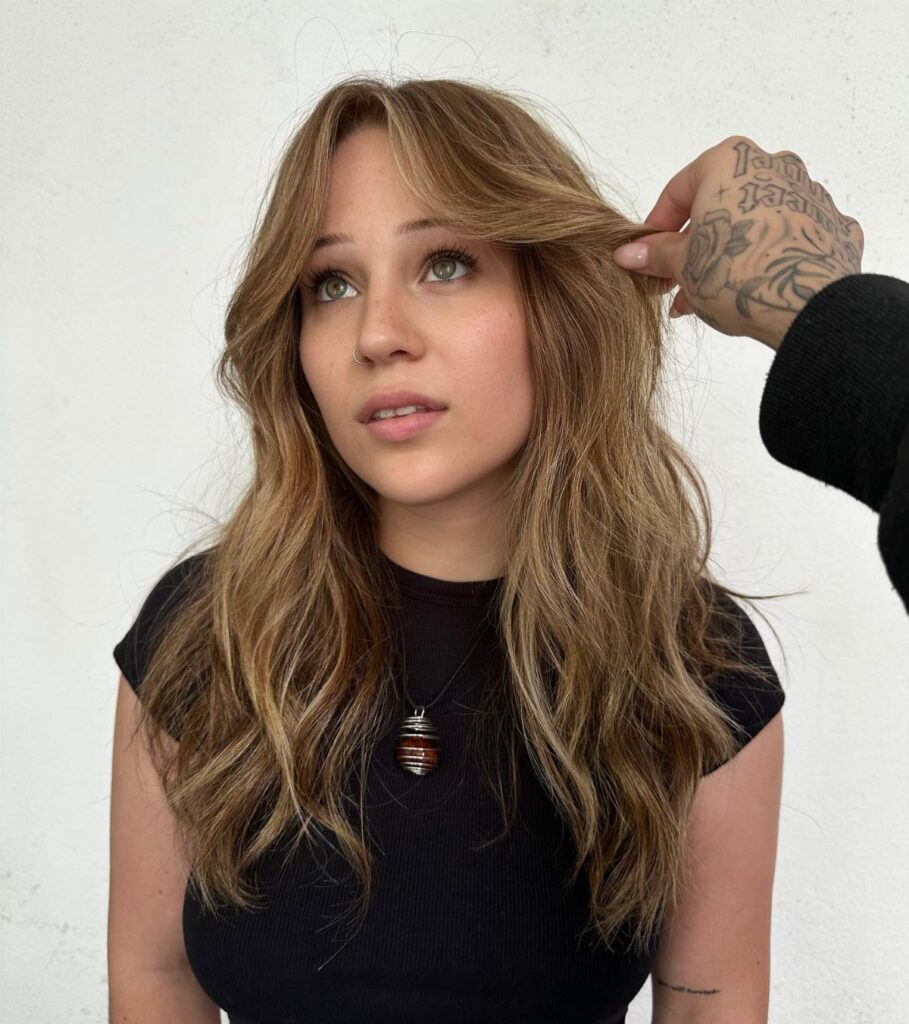
Wavy frizzy hair responds best to cuts that add internal layering without thinning the perimeter too much, letting each wave form on its own instead of clumping into one heavy mass.
1. Lob
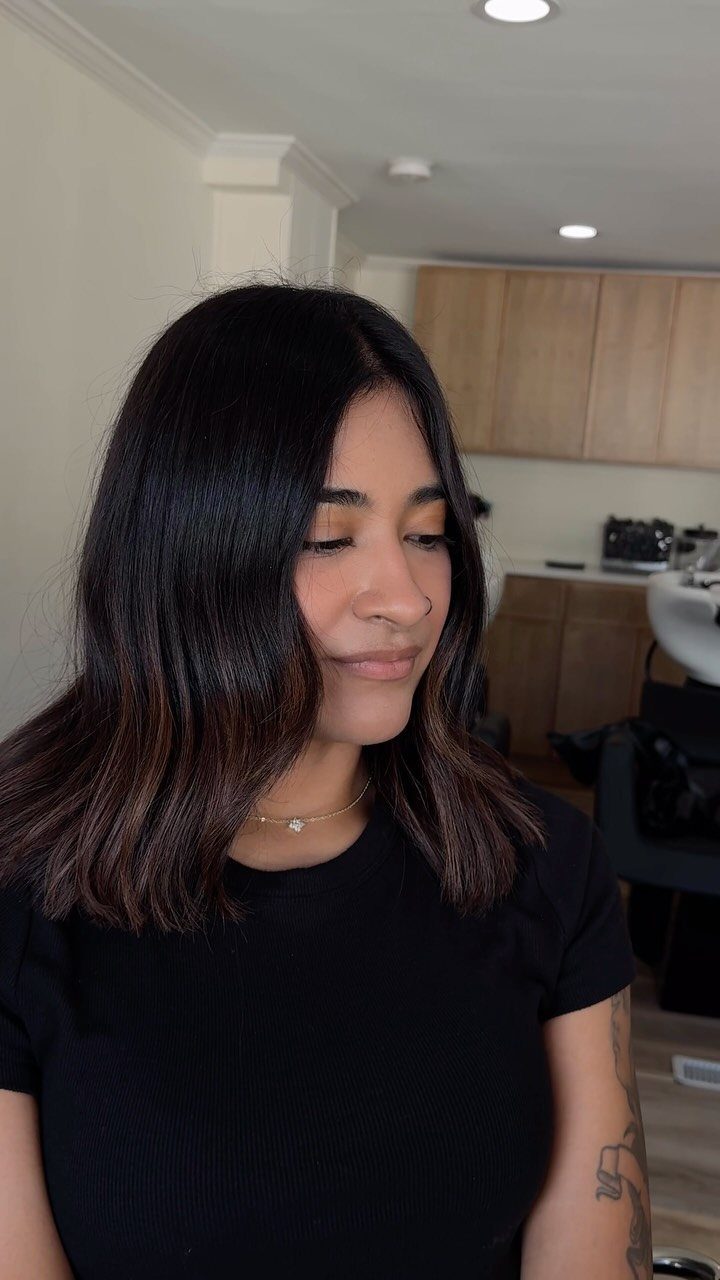
A lob lands between chin and collarbone, keeping enough length to pull back or tuck behind your ears.
That extra inch or two over a regular bob means more styling flexibility, and the blunt or lightly layered ends give wavy hair a clean finish without losing body.
A lob sits just above or at your shoulders, and if you want layers at all, keep them subtle.
The length weighs down some of the frizz without flattening your wave pattern, and you can still get it into a short ponytail on days when you need it off your face.
2. Shag
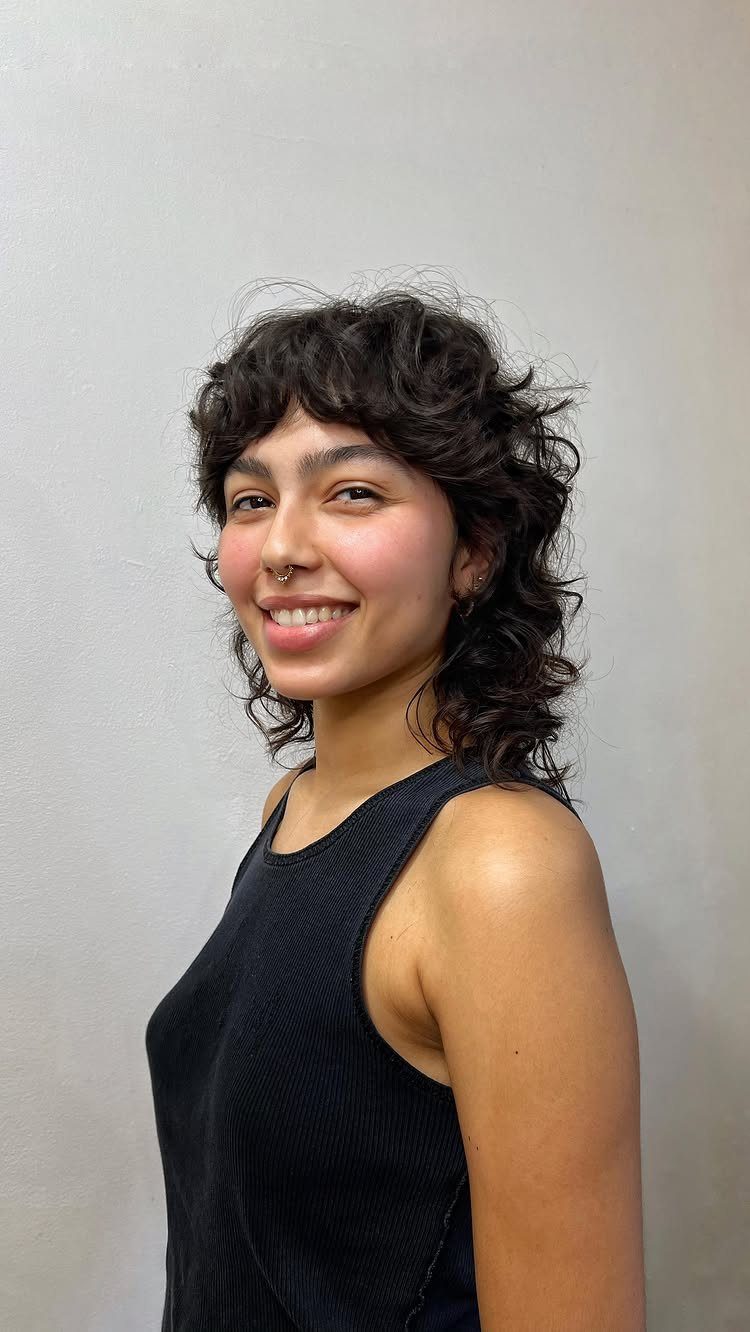
Layers start high and scatter through the length, giving each wave room to form on its own instead of clumping into one heavy mass.
The shag works with your texture rather than fighting it, so you spend less time smoothing and more time letting it fall where it wants.
Ask your stylist for choppy, disconnected layers and a slightly ragged perimeter. The lived-in look hides frizz better than a precise cut, and the added movement keeps wavy hair from sitting flat at the roots.
3. Short Shag with Fringe
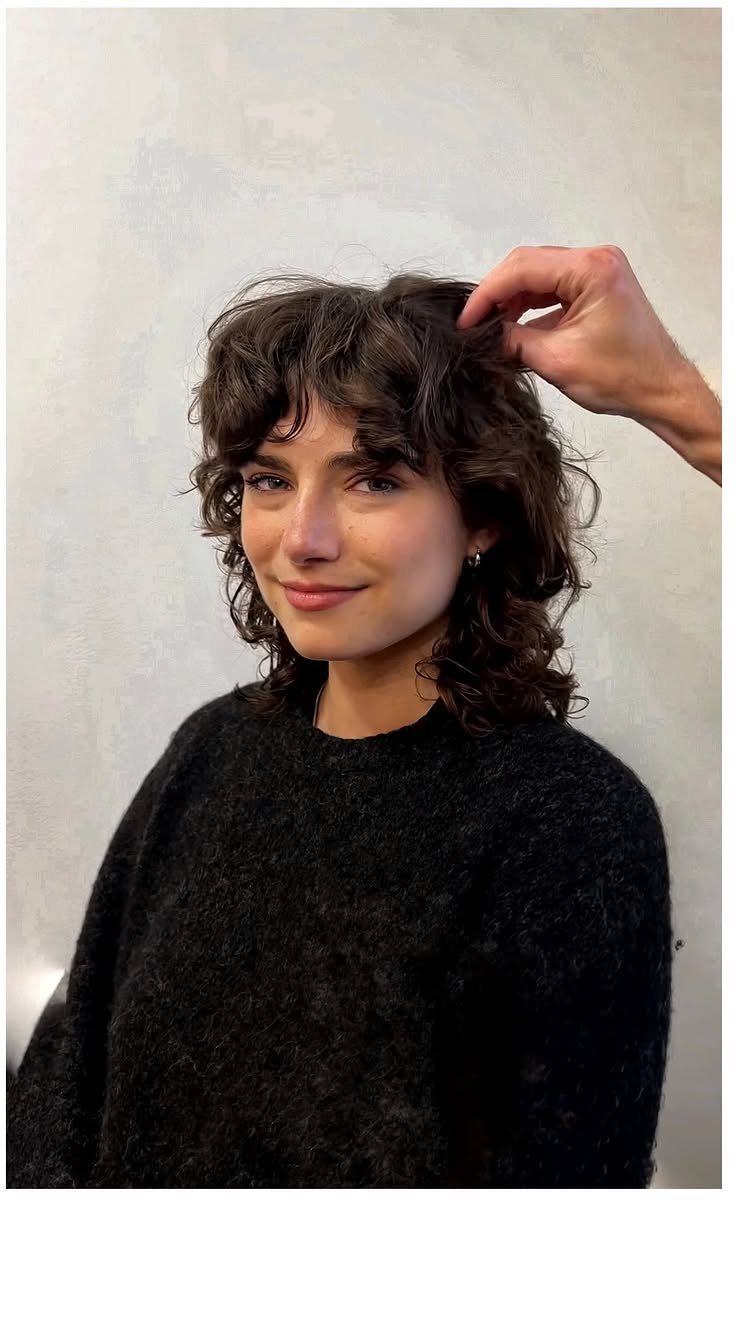
Layers begin near the crown and fan out quickly, lifting bulk away from the scalp and letting individual waves separate. The fringe breaks up the forehead line and adds another layer of texture at the front.
This cut works best when you keep the back short and the top longer, so the waves have room to curl without weighing each other down.
Ask for point-cut ends to soften the fringe, and plan on regular trims to keep it sitting just above or at your eyebrows.
4. Shaggy Bob
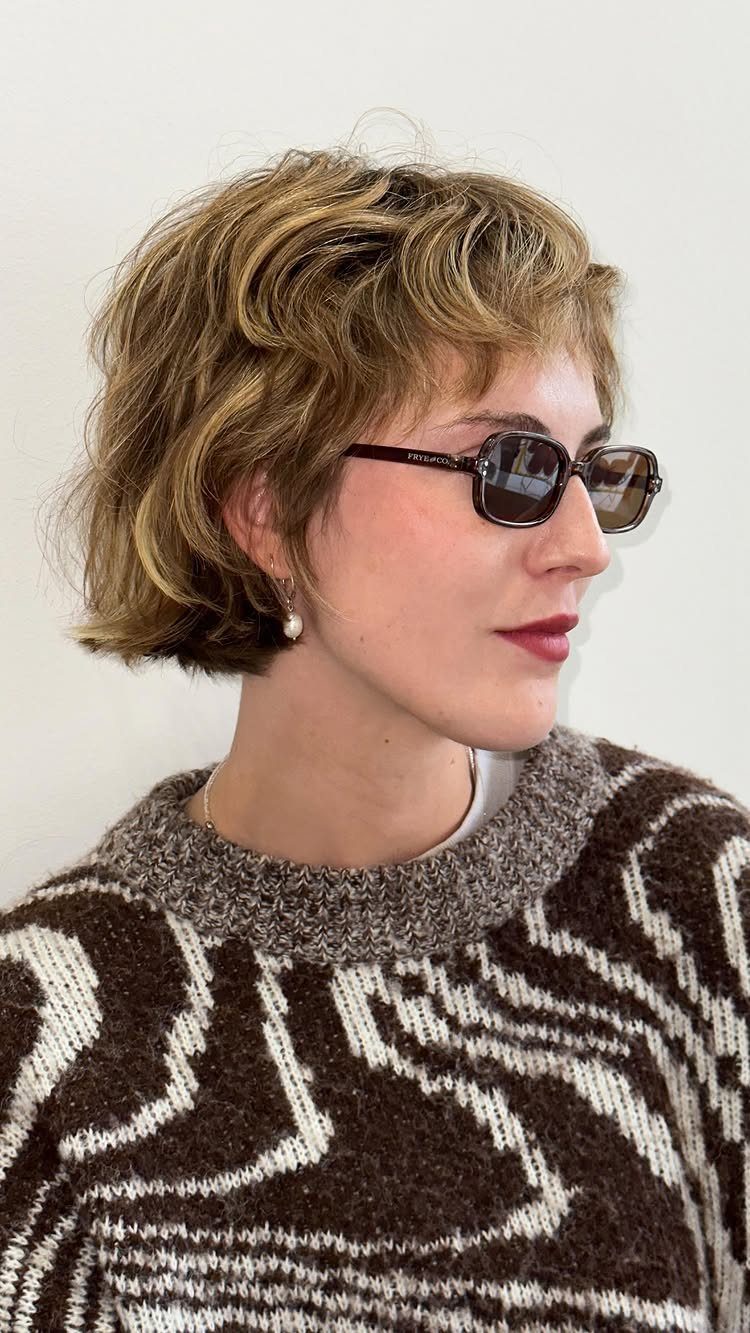
Longer pieces at the front and crown give this bob a shaggy, uneven perimeter that hides frizz and adds texture.
The layers are cut with more variation than a classic bob, so each section dries into its own wave instead of forming one uniform shape.
Ask for a bob that hits between your jaw and shoulders, with choppy layers concentrated around the face. The length still tucks behind your ears, but the uneven ends keep it from looking too polished or heavy.
5. Long Layers
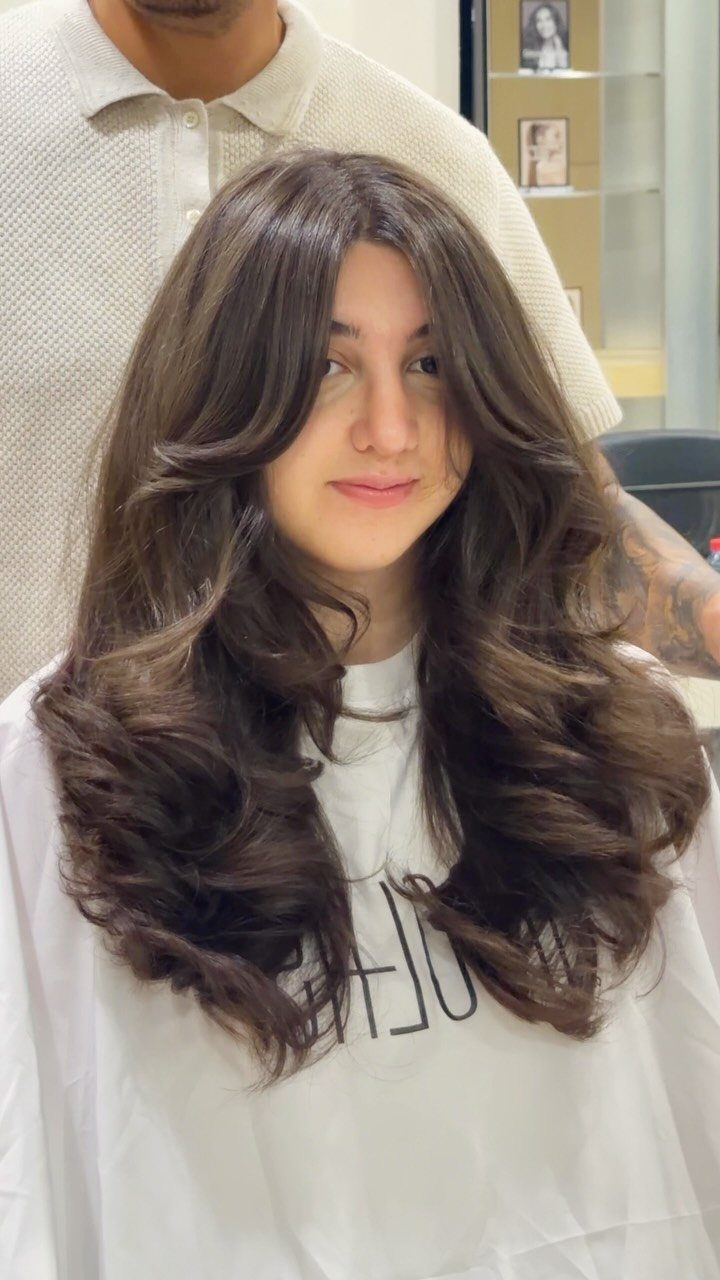
Layers cut into long hair reduce weight at the ends, so waves can form higher up the strand and move more freely.
The longest pieces stay at or past your shoulders, but the internal layering removes bulk without shortening the overall silhouette. Ask for long layers that start around your cheekbones or chin, depending on where you carry the most density.
This cut keeps your length while making wavy hair easier to dry and style, and it grows out evenly without creating a harsh line.
6. Pixie Cut
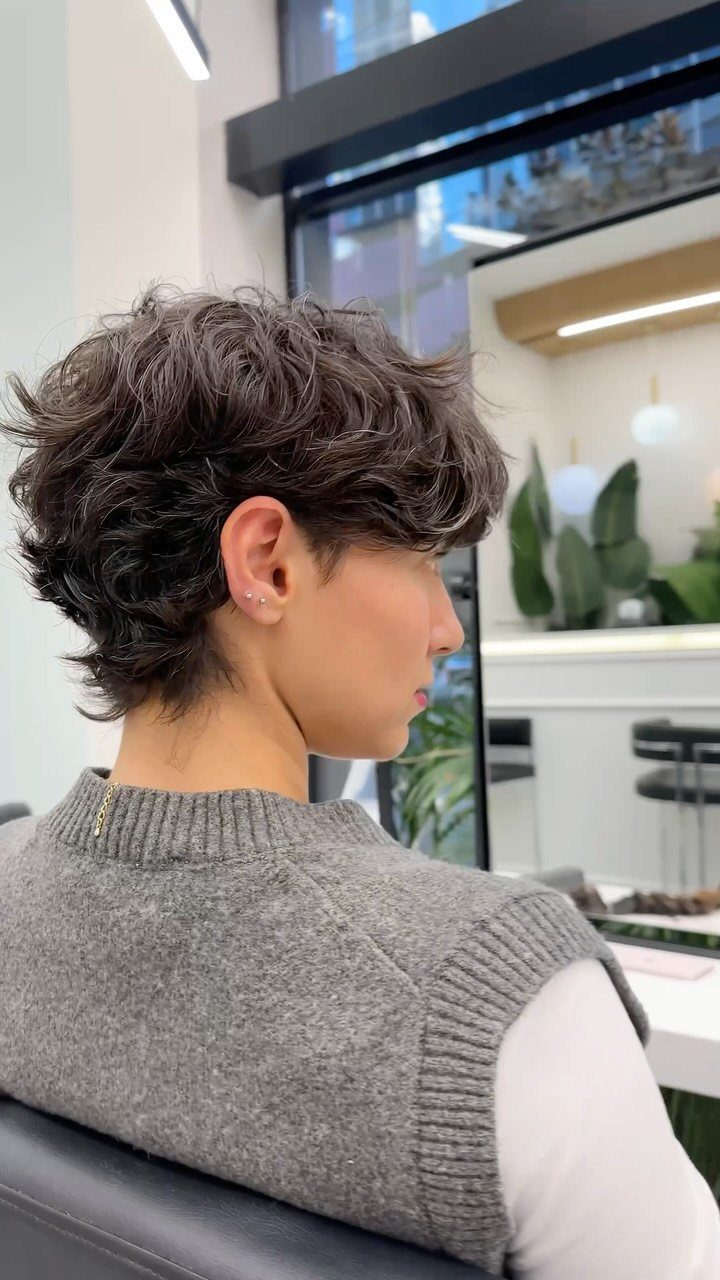
A pixie cut short on the sides and back, with slightly more length on top, can be shaped to follow your wave pattern instead of forcing it straight.
The shorter length means less weight pulling your waves flat, and you get more lift at the roots.
Ask your stylist to cut with the wave rather than against it, so there’s enough length on top for the texture to come through.
This cut needs regular trims to hold its shape, and styling usually takes a small amount of mousse or cream worked through damp hair.
7. Curtain Bangs
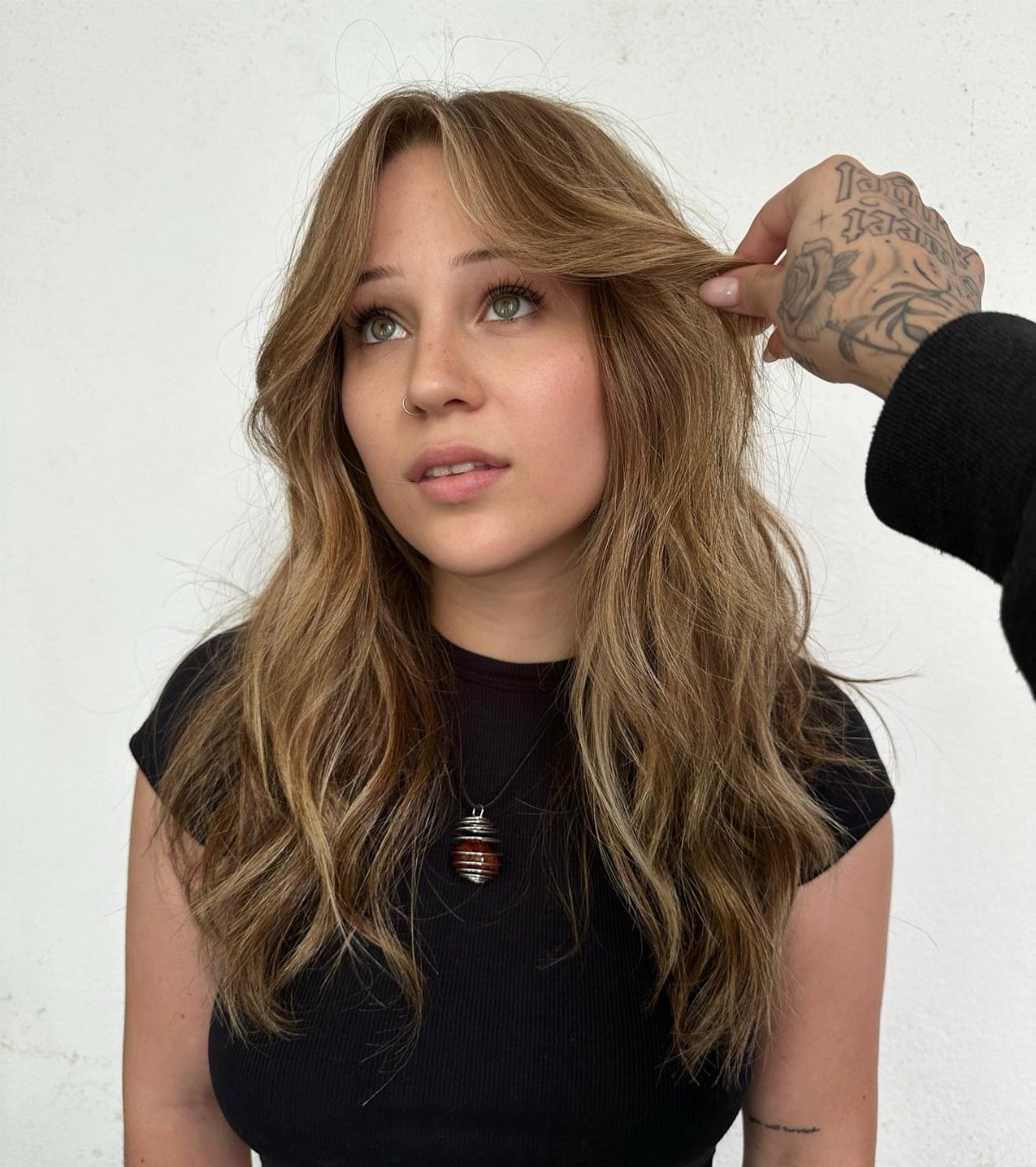
Parted at the center and cut longer at the sides, curtain bangs open outward to frame your cheekbones instead of sitting flat across your forehead.
The length gives wavy hair room to bend without looking blunt, and the softer perimeter blends into the rest of your hair as it grows. Curtain bangs work with most lengths and add shape without committing to a full fringe.
8. Long Bob

Cut to fall at or just past your collarbone, a long bob keeps enough weight to stretch out some of the wave while still giving you lift at the roots.
The slightly longer length means you can tuck it behind your ears or twist it into a low bun, and the blunt or lightly textured ends hold their shape without looking too polished.
This cut suits frizz-prone hair because the extra length smooths the surface tension, and it grows out evenly without an awkward in-between stage.
9. Curly Pixie
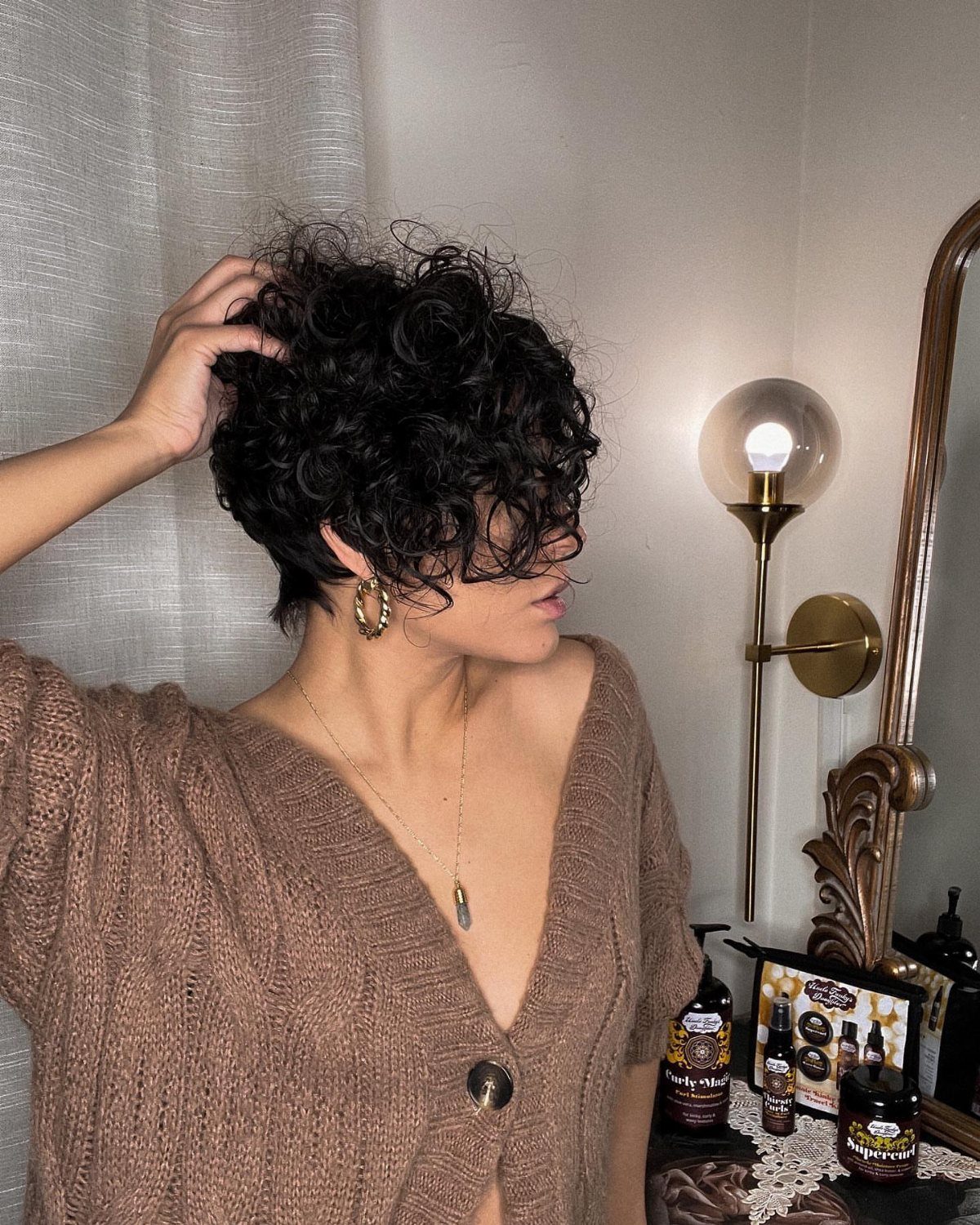
Short through the sides and back with length kept on top, a curly pixie lets your waves stack upward instead of pulling them flat.
The contrast between the cropped perimeter and the taller crown gives you volume where it reads most, and the shorter sides keep the shape clean around your ears and nape.
Ask for enough length on top to let your curl pattern form, and plan on styling with a lightweight mousse to hold the lift without weighing it down.
10. Tousled Curly Pixie
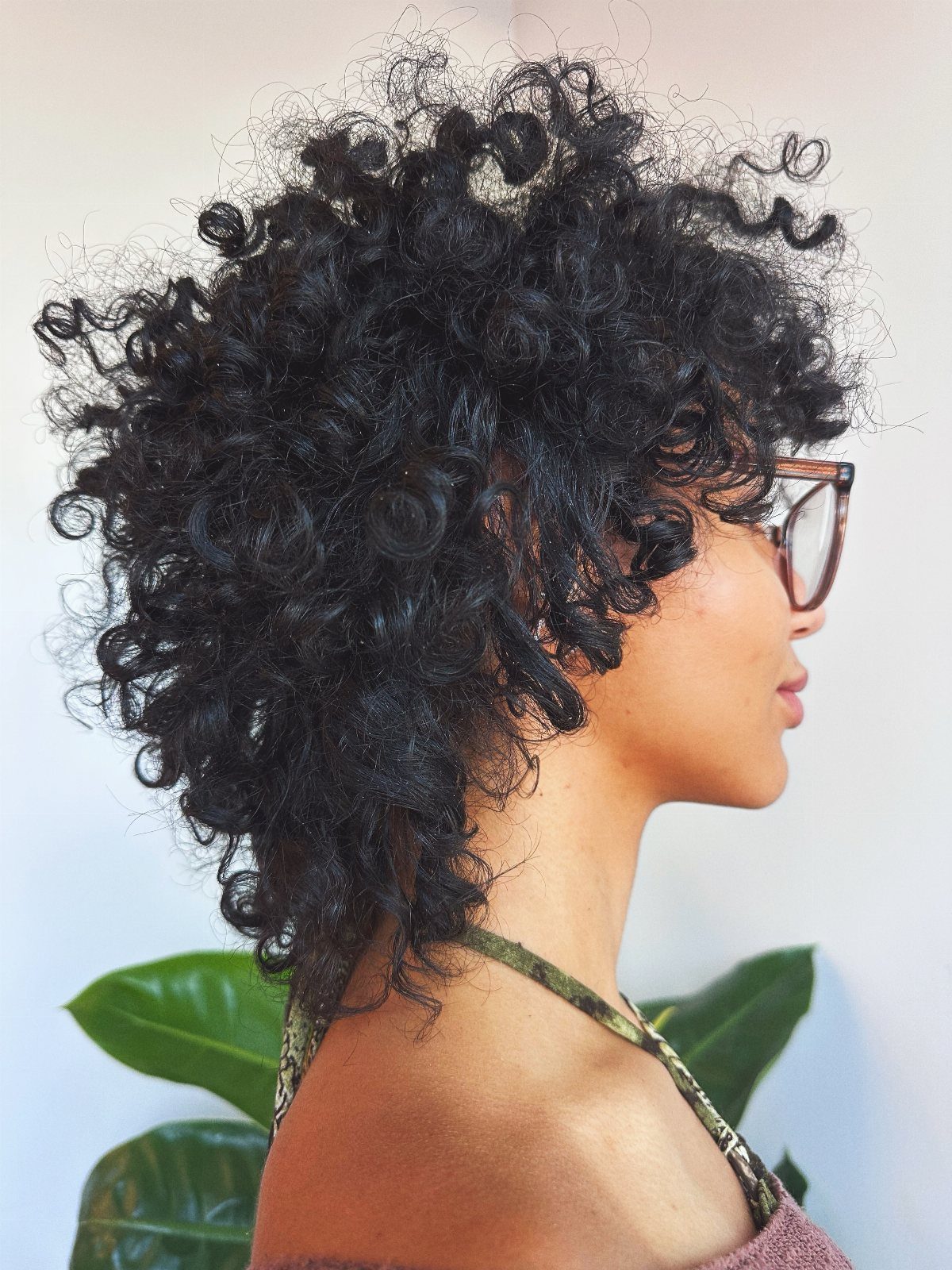
Longer than a tight pixie, this version keeps enough length on top and at the sides to let loose curls fall where they want.
The side bangs add softness at the temple, and the uneven perimeter hides any frizz that comes through as your hair dries.
Ask for a pixie that leaves more length on top, with the back and sides tapered shorter. This cut works best when you scrunch in a curl cream while your hair is damp and let it air-dry.
11. Wolf Cut
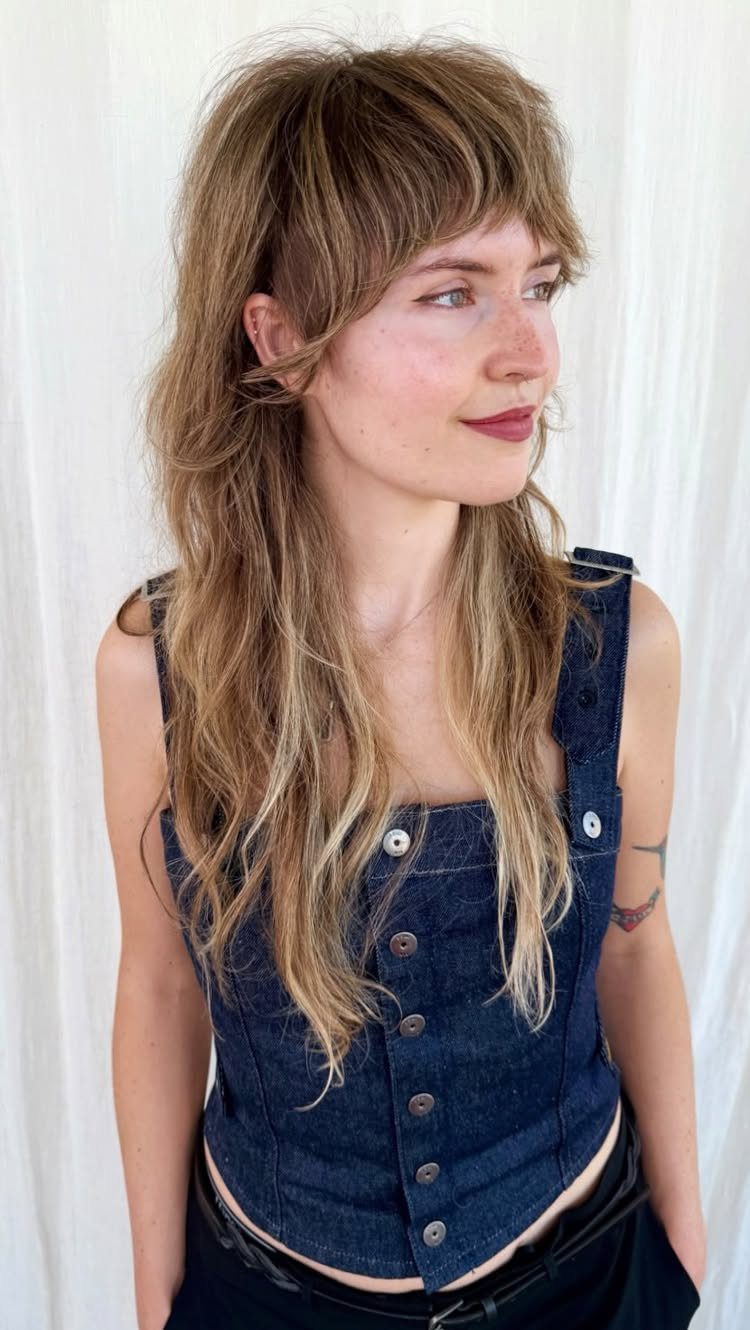
Choppy layers cut high at the crown and scattered through the length give this cut its shaggy, unfinished look.
The shorter pieces at the top lift away from your scalp, and the longer, disconnected ends keep the perimeter soft and textured.
Ask for layers that start near your cheekbones and fan out through the rest of your hair, with a fringe cut into the front if you want one.
The messier finish means frizz reads as texture, and the cut grows out without looking too polished or planned.
12. Face-framing Layers
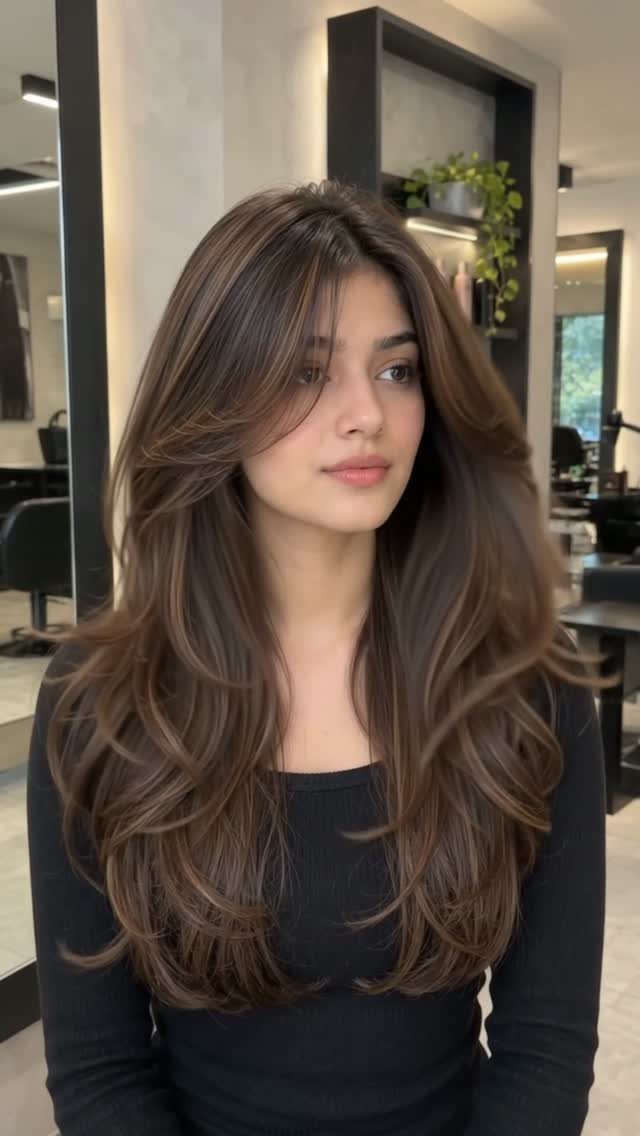
Layers cut around your cheekbones and jaw angle down to follow your face shape, pulling attention inward without shortening the rest of your hair.
The shorter pieces at the front lift and curl on their own, and the gradual transition keeps the layers from looking disconnected.
Ask for face-framing layers that start at your cheekbones or jawline and blend into longer lengths at the back. This cut adds movement near your face while keeping the weight and length you want everywhere else.
13. Short Curls with Wispy Bangs

Wispy bangs soften the forehead line and break up the face without adding weight, while the short curly length keeps volume high and easy to manage.
The highlights lift the color without flattening your wave pattern, and the lighter pieces catch more light as your curls move.
Ask for bangs cut thin and textured at the ends, so they sit soft rather than blunt across your brow. This cut air-dries well and needs minimal styling beyond scrunching in a curl cream while damp.
14. Textured Bob
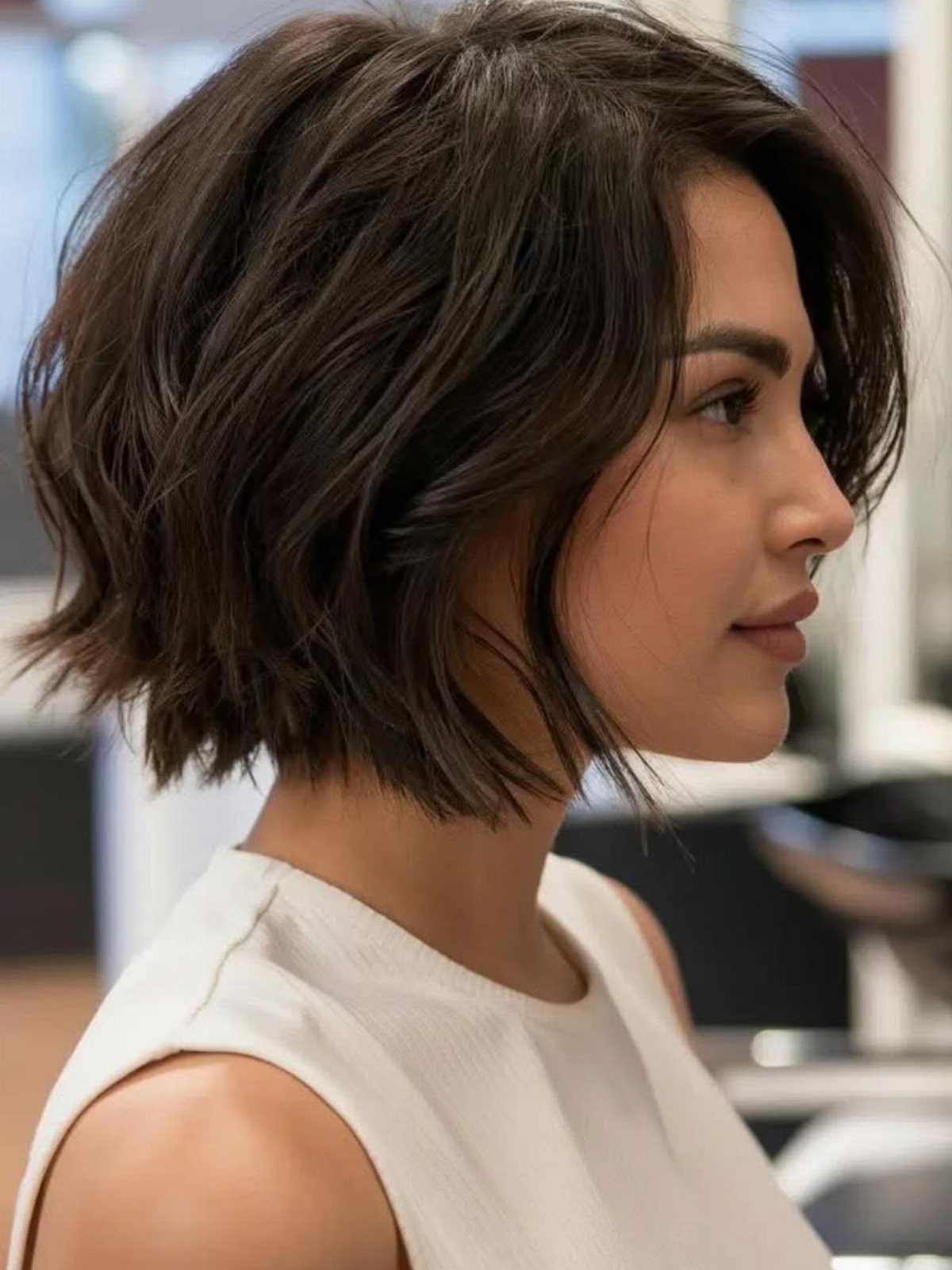
Feathered ends give this bob an airy finish that moves with your waves instead of sitting stiff and heavy.
The texturing at the perimeter softens the line, so frizz reads as part of the cut rather than something you need to smooth out.
The textured bob suits medium to thick hair and grows out without creating a hard shelf at the bottom.
15. Short Bob with Curly Waves
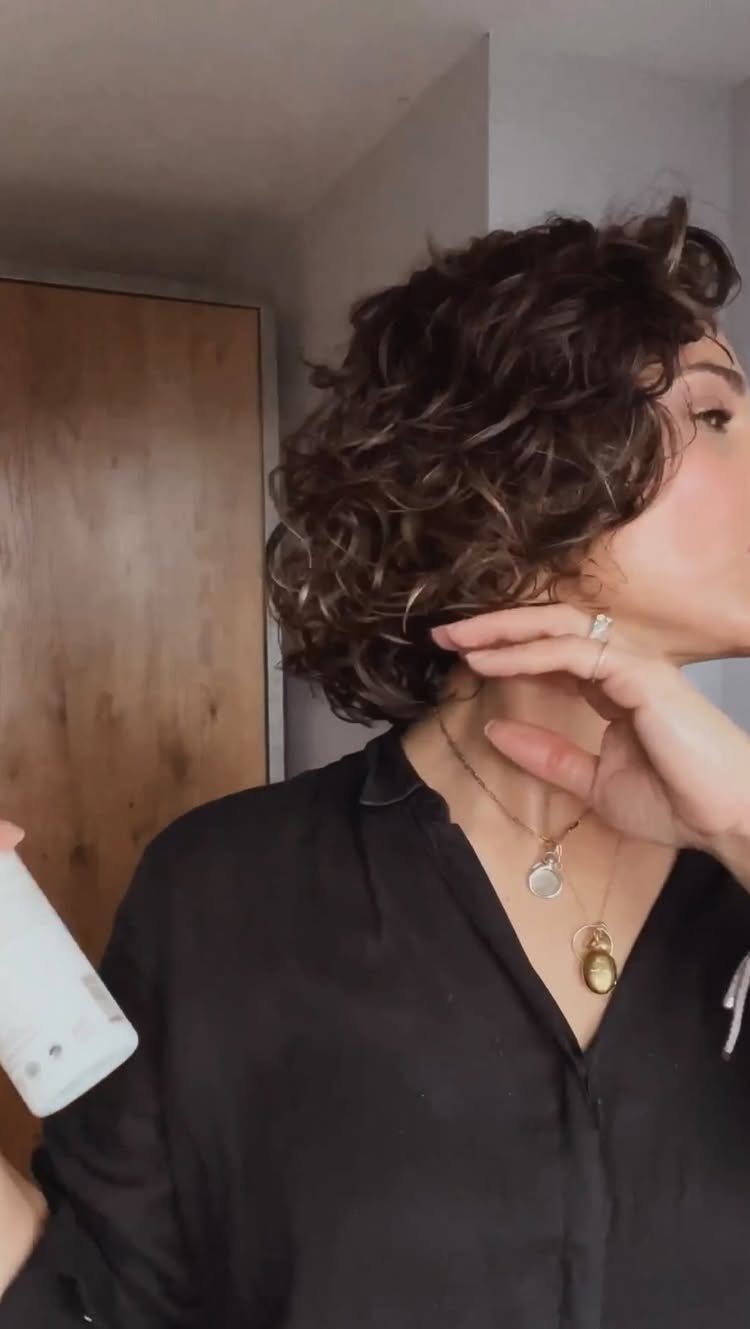
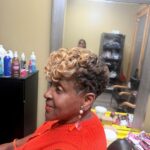
Cut short and shaped to sit close to your head, this bob lets tight waves stack into each other for fullness without excess length.
The caramel highlights add dimension and keep the color from looking flat, and the curly texture means you skip straightening entirely.
Ask for a bob that ends above your shoulders, with enough internal layering to remove bulk but not so much that it loses its rounded shape. Plan on diffusing to keep the curl pattern intact.
16. Butterfly Cut
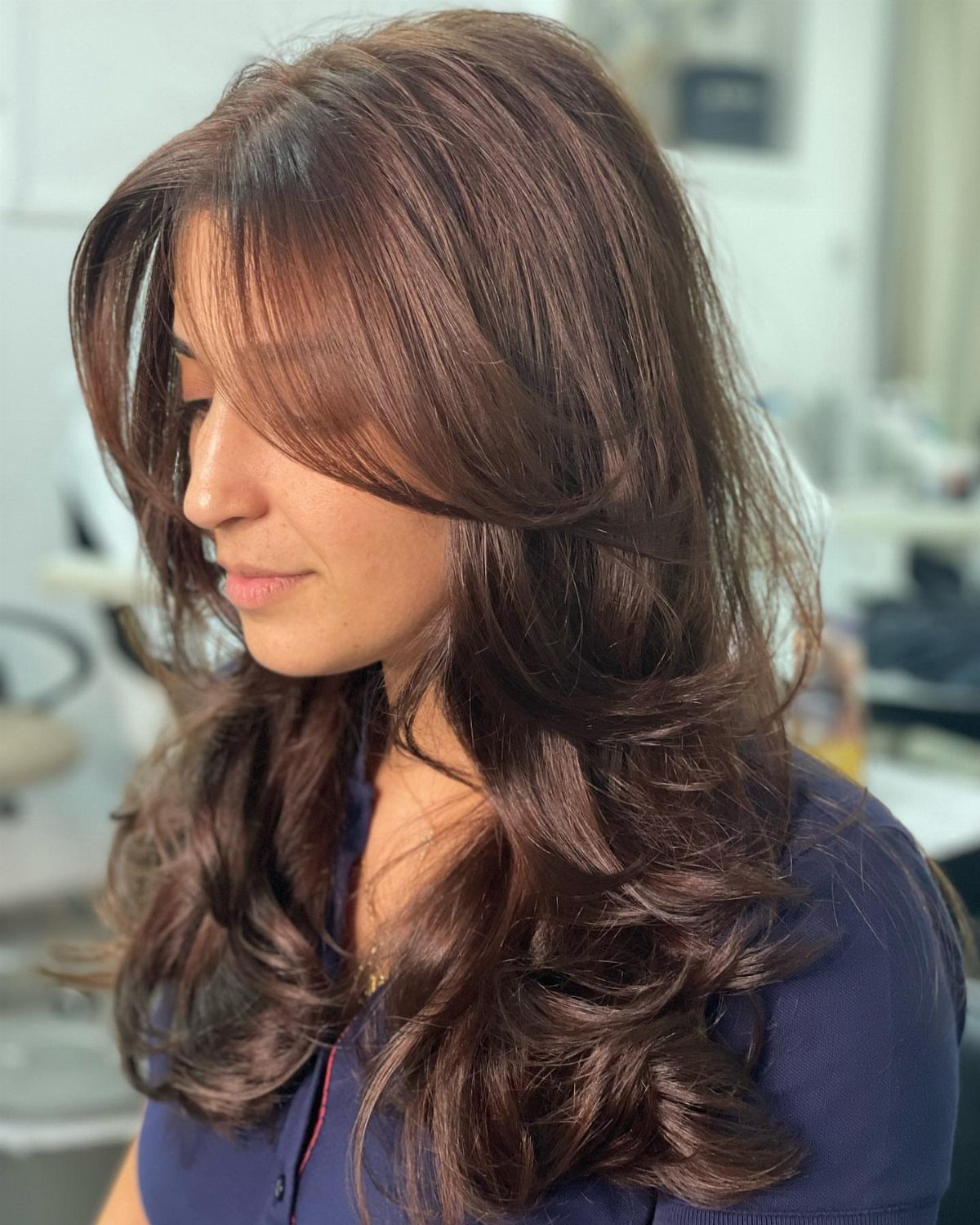
The layering fans out in a way that adds volume through the mid-lengths without thinning the perimeter too much.
Ask for face-framing layers that begin around your cheekbones and taper gradually into the rest of your hair, with the longest pieces left at collarbone or past it.
17. Bixie

Short through the back with longer, textured pieces on top, a bixie sits between a bob and a pixie and gives you more styling range than either one alone.
The layered top adds height, and the shorter sides keep it from looking too heavy or wide. Ask for a cut that tapers at the nape and leaves enough length on top to work with your wave pattern.
18. Jaw-length Bob

Cut to end right at your jawline, this bob frames your face without adding length past your chin.
The shorter cut reduces weight, so your waves can form higher up and hold their shape throughout the day. A soft fringe adds texture at the forehead and keeps the look from reading too blunt.
Ask for a bob that skims your jaw with lightly textured ends, and if you want a fringe, keep it wispy rather than thick. This cut suits fine to medium hair and air-dries quickly.
19. Wavy Shag with Air-Dried Finish
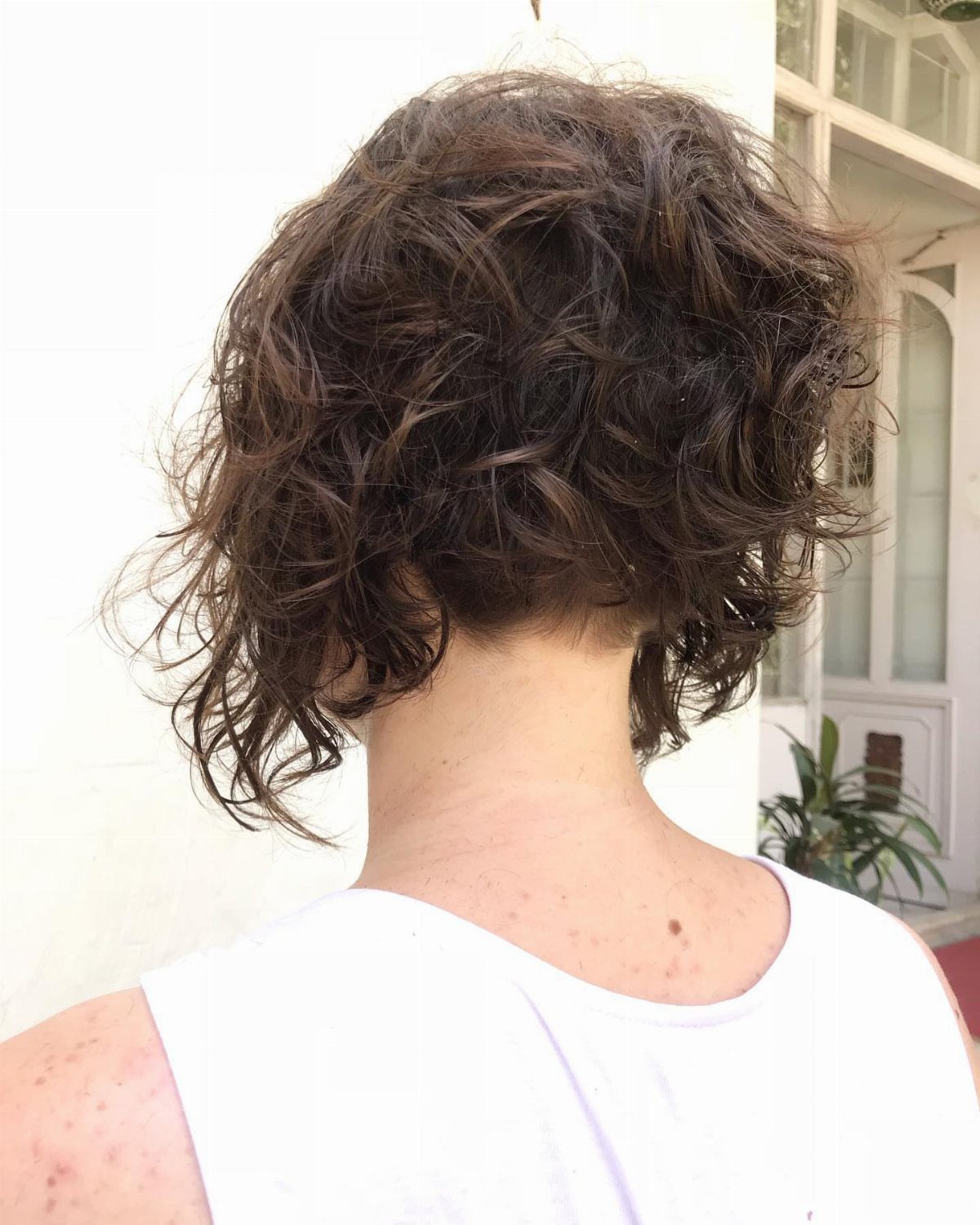
Choppy layers cut through the length give this shag enough separation that your waves can dry on their own without turning into a frizzy mass.
The uneven ends mean each section forms its own texture, and the messier finish reads as intentional rather than unkempt.
Air-drying works here because the cut removes enough bulk that your hair doesn’t sit heavy and damp for hours.
Scrunch in a light cream or mousse while it’s wet, then leave it alone. Any frizz that shows up reads as texture, not a problem you have to smooth out.
Choosing Layers for Frizz
Match the cut to where your frizz starts.
If humidity makes your hair swell, soft internal layers control bulk without leaving a hard edge at the perimeter. If dryness causes your frizz, blunt or softly tapered ends seal the strand and stop breakage from splitting farther up.
If your frizz comes from your natural texture, strategic layering and feathered edges let that movement look intentional instead of chaotic.
A mid-length cut with soft interior layering gives you room to see how your hair behaves before committing to something shorter or blunter.
Cut Waves in Natural Pattern
Wavy hair can shrink as it dries, and cutting it wet can leave you with a length or layer placement that looked right in the chair but sits wrong once your waves form.
Cutting short wavy hair dry lets you see where the texture falls, how much it pulls up, and whether the layers sit where you want them.
A blunt, single-length cut keeps all the weight at the ends and lets the wave itself be the shape.
This suits fine wavy hair because the lack of layering makes it look denser, and it needs only regular trims to stay even.
One of the biggest misconceptions about cutting wavy hair is that it should be cut the same way as straight hair, says Shahid Dilshad Pasha, master trainer manager at Davines India. “If you ignore the natural pattern, the cut can look uneven once it dries.”
— Vogue
Care for Frizz-prone Hair
Shampooing more often than every other day strips natural oils and leaves wavy hair drier and more frizz-prone. If your scalp gets oily between washes, a curl reset spray or dry shampoo can refresh your waves without a full wash.
Air-dry when you can. After washing, squeeze water out gently with a microfiber towel or soft T-shirt rather than rubbing with a regular towel, and if you do blow-dry, use a diffuser attachment to spread the heat.
While it’s still damp, work a leave-in conditioner or light serum through to seal down the cuticle.
A deep conditioner or hair mask once a week keeps long waves hydrated, and sleeping on a silk pillowcase reduces friction that pulls at your waves overnight.
Frequently Asked Questions
What to do when wavy hair is frizzy?
Wash every other day at most to avoid stripping the oils your hair needs, and squeeze water out with a microfiber towel instead of rubbing it dry.
Smooth a leave-in conditioner or serum onto damp lengths to lock moisture in, then let it dry naturally or diffuse on low heat.
A weekly deep conditioner and a silk pillowcase at night both cut down on the friction that makes frizz worse.
Should frizzy hair be layered?
Soft internal layers control bulk and let your waves form without piling into a heavy triangle, so frizz has less chance to build up at the ends.
When dryness is behind the frizz, a blunt or softly textured perimeter holds the cuticle flat and keeps damage from traveling up the strand.
Match the layering to where your frizz starts, and keep the perimeter soft rather than choppy if your hair tends to dry out.
Are layers good for wavy hair?
Cutting layers lifts weight off the root so waves spring up earlier and distribute volume more evenly instead of piling at the bottom.
Start long layers around your cheekbones or chin if you want to keep most of your length, or ask for choppy, scattered layers if you want more separation and lift at the roots.
A blunt cut works too if your hair is fine and you want it to look denser.